“My Mommy Needs a Boyfriend.” Maid’s Toddler Told the Mafia Boss — Then He Did the Unthinkable
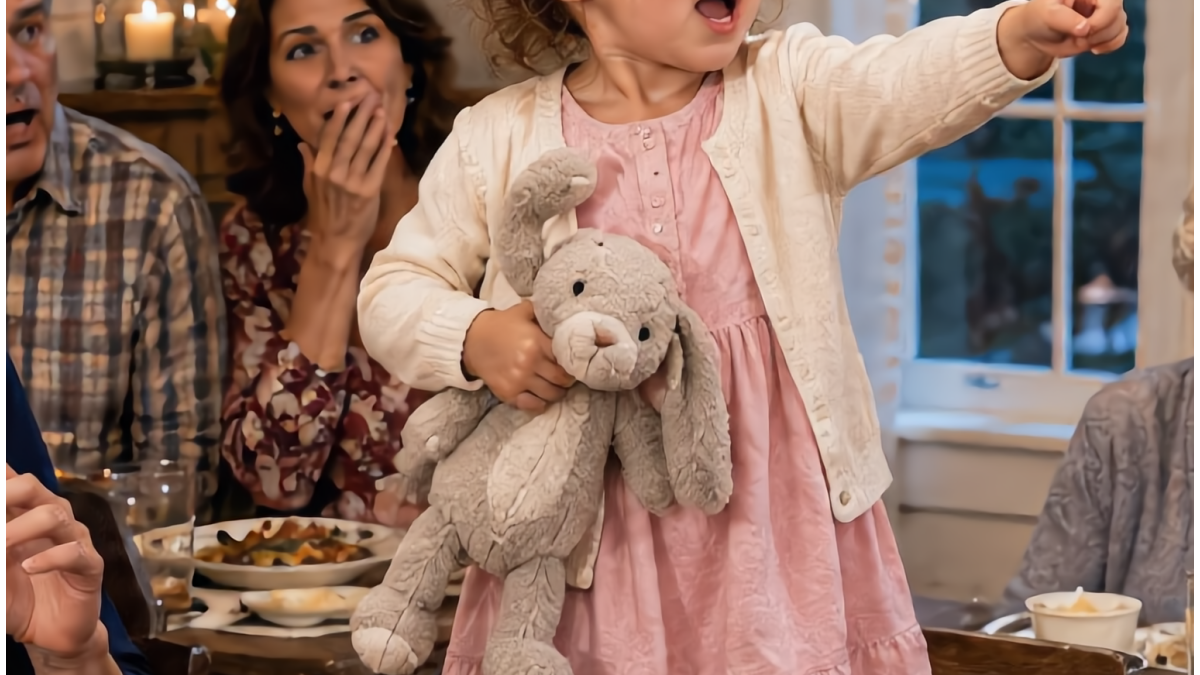
Sir, my mommy needs a boyfriend. The words were so small, so earnest, and so completely out of place in the marble foyer that Dominic Moretti wondered for one absurd second whether he had imagined them.
He had just come in from a meeting that had ended with three grown men refusing to meet his eyes.
His coat still carried the cold of Manhattan evening. His phone was vibrating somewhere inside it, and two members of his security detail had gone silent near the front doors because nobody interrupted Dominic when he walked into a room.
Nobody except Lily Carter. The little girl stood directly in his path in pink socks, one of them sliding halfway off her heel.
Gray stuffed rabbit tucked beneath one arm. Mr. Whiskers had a crooked button eye and the permanent exhausted expression of a toy that had survived being dragged through three years of childhood.
Lily looked up at Dominic with complete confidence. She was not afraid of the dark suit, the scar beneath his jaw, the heavy gold ring on his little finger, or the reputation that made men whisper his name more often than they spoke it aloud.
She only seemed concerned that he had not answered quickly enough. “Did you hear me?”
She asked. Dominic had been threatened with guns, subpoenas, betrayal, prison, and death. Nothing in his adult life had prepared him for this.
“I heard you.” Lily nodded, satisfied. “Good. Mommy needs one by Saturday.” Somewhere behind Dominic.
One of the guards coughed into his fist and immediately pretended he had not. Dominic slowly removed his gloves.
Why? Saturday. That was all the invitation Lily needed. Grandma Margaret was very sick. Aunt Emma was getting married in Pennsylvania.
Mommy had to go home for the wedding and Grandma worried because mommy worked too much and never went anywhere fun and sometimes cried after Lily was supposed to be asleep.
Lily explained all of this with the grave efficiency of someone presenting evidence in a case she expected to win.
Then she pulled a folded sheet of paper from beneath Mr. Whiskers. On it were three stick figures drawn in thick crayon.
One tall figure in black, one woman with long brown hair, and one tiny figure with yellow lines shooting from her head like a sun above the tall figure in uneven letters.
Lily had written friend. Grandma says mommy needs somebody kind, she said. And you’re kind when nobody’s watching.
A ceramic bowl struck the floor in the doorway to the service corridor and shattered.
Sophia Carter stood frozen beyond the broken pieces. A folded stack of linen still pressed against her cheSt. For one terrible moment, no one moved.
Then color rushed into Sophia’s face so fast it looked painful. Lily, the child turned.
Sophia set the linens down and crossed the foyer with the controlled speed of a woman trying not to run in front of her employer.
Sweetheart, what are you doing? Lily held up the drawing. Helping. Sophia closed her eyes for half a heartbeat.
Four years inside the Moretti estate had taught her the rules of invisible survival. Do your work well.
Keep your private life private. Never confuse courtesy with familiarity. Never forget that the men who came through those doors sometimes lowered their voices when they saw Dominic coming.
Sophia had obeyed those rules so completely that Dominic knew what time she brewed his coffee, but not what she dreamed about before life became a series of bills, shifts, school forms, medicine payments, and phone calls home.
Now her daughter had crossed every boundary Sophia had spent years protecting with one sentence.
Mr. Moretti, I am so sorry. She doesn’t understand what she’s asking. Lily frowned. Ido, Lily, Grandma wants to see you happy before she goes to heaven.
Sophia went still. The sentence landed harder than the shattered bowl. Her grip tightened around her daughter’s shoulder, but not in anger.
Dominic saw her swallow, saw her eyes shine, and immediately harden against it. “That’s enough, baby.”
She crouched, gathered Lily and Mr. Whiskers into her arms, then stood with an apology already forming.
Dominic spoke before she could give it. “How sick is your mother?” Sophia looked at him as though the question itself violated something.
“Sir, this is not your concern.” I asked how sick she is. His voice was not sharp.
That almost made it worse. Sophia’s gaze dropped. The doctors say a few months, maybe less.
Lily rested her cheek against Sophia’s shoulder. Grandma thinks mommy is lonely. Sophia’s mouth tightened.
We’re leaving now. She carried Lily toward the service stairs. Halfway there, Lily twisted around and called over Sophia’s shoulder.
Think about it. The small hand waved once. Sophia disappeared around the corner without looking back.
The foyer became quiet again, but not the same kind of quiet. Dominic looked down.
The crayon drawing had slipped from Lily’s hand and landed beside one of the broken pieces of ceramic.
He bent and picked it up. There was something almost offensive about the innocence of it.
The tall figure had arms far too long, a square body, and what appeared to be angry eyebrows.
Sophia’s stick figure had a blue dress. Lily had drawn herself between them, holding both their hands.
Dominic folded the page carefully and slipped it inside his coat. His phone vibrated again.
This time he answered. Marco Bellini’s voice came through immediately. Victor Romano’s people confirmed the waterfront meeting for Saturday.
They want you there personally. Dominic walked toward his study. Who asked for me? Romano’s nephew first, then Romano himself sent word through two intermediaries.
That means he wants everyone to notice who shows up and who doesn’t. Dominic opened the study door.
Anything else? Marco hesitated. Someone has been asking questions about your schedule. Nothing direct. Could be posturing.
Dominic looked through the tall windows toward the garden below. Increase the outside watch. Already did.
A pause. You sound distracted. I’m not. Marco had known him too long to argue with a lie delivered that flatly.
I’ll bring the files tonight. Dominic ended the call. On his desk sat a glass of scotch poured before he had left that morning, untouched.
Beside it was a framed photograph that had remained face down for years. Dominic turned it over.
Isabella Moretti smiled back at him from a summer afternoon in Little Italy. Flower dusting her cheek, one hand lifted as if she had been caught mid-aru.
His mother had spent most of his childhood working two jobs and most of his adulthood pretending not to know what kind of man he had become.
She had never asked for money she had not earned, never asked for protection, never asked him to leave the life he had chosen.
She had asked for one thing on the last day of her life. Come upstairs, sit with me.
Dominic had been across the street finishing a negotiation he had told himself could not wait.
The nurse called three times. On the fourth call, he answered. By the time he reached Isabella’s room, he was 8 minutes too late.
8 minutes. Dominic had built an empire out of decisions measured in seconds. Yet those 8 minutes had ruled him for years.
Below stairs, Sophia locked the door of the narrow staff room and sat on the edge of Lily’s bed.
Lily watched her carefully while twisting Mr. Whiskers by one gray ear. “Am I in trouble?”
Sophia wanted to say yes. She wanted to tell her daughter never to approach Dominic like that again.
Never to speak about Grandma. Never to expose the small humiliations Sophia kept hidden after bedtime.
Instead, she saw fear beginning to gather behind Lily’s eyes and pulled her close. “No, you were trying to help.”
He didn’t say no. He also didn’t say yes. Maybe he’s thinking. Sophia almost laughed despite herself.
Mr. Moretti has more important things to think about. Lily leaned back. More important than grandma?
Sophia had no answer that would make sense to a child. Her phone buzzed on the small table.
Emma. She waited until Lily began arranging toys beneath the blanket, then stepped into the hall and answered.
Her sister’s voice carried wedding noise in the background. Someone moving chairs. Their father arguing about weather.
A dog barking somewhere near the porch. Then Emma lowered her voice. Mama had another bad night.
Sophia pressed her hand to the wall. Is she worse? She’s weaker. The doctor came this morning.
Emma hesitated. Soph, I need you to be prepared. She might not have months. Sophia closed her eyes.
Emma continued gently. Just come home. Don’t worry about Dad. Don’t worry about bringing anybody.
Mama only wants you and Lily here. That should have relieved her. It did not.
Sophia could already picture Margaret sitting in the old kitchen, pretending not to watch the driveway, pretending she had not spent years worrying that her oldest daughter was alone in New York raising a child whose father had vanished before the hospital bills stopped arriving.
“I’ll be there,” Sophia whispered. “And bring the recipe book,” Emma said. “Mama wants you to help with the cake.”
After the call, Sophia stood in the hallway until she could trust her face again.
Dominic did not sleep much that night. Marco arrived with the waterfront files and left after midnight.
The meeting on Saturday was not ceremonial. Victor Romano had been testing boundaries for months, pushing into shipping contracts and labor agreements Dominic had spent years controlling.
If Dominic failed to appear, Romano would read it as either weakness or insult, possibly both.
Marco had explained that twice. Dominic understood the consequences the first time. Still, after the house went quiet, he found himself taking Lily’s drawing from his coat and setting it beside the folder marked Romano.
Two versions of his life lay next to each other on the desk. One had shipping routes, names, percentages, leverage, and men who measured respect by what another man was willing to destroy.
The other had three crooked stick figures holding hands. Near dawn, Dominic closed the Romano folder without signing the final instructions.
He went downstairs himself, something he had not done before the staff arrived in years.
He made coffee badly, poured it black, and sat at the marble kitchen island as the first gray light began to soften the windows.
Sophia entered just after 4, and stopped so abruptly that the keys in her hand struck the door frame.
Dominic was sitting where she normally laid out breakfast trays, sleeves rolled to his forearms, a cup of coffee in front of him that looked untouched.
“Sir.” She glanced at the clock as if hoping it would explain him. “I’m sorry.
I didn’t realize you needed anything this early. Sit down, Sophia. It was the first time she could remember him saying her name without attaching an instruction to it.
She did not sit. If this is about yesterday, Lily will not approach you again.
I’ve already spoken to her. Sit. This time she obeyed. Her hands folded tightly in her lap.
Dominic watched her for a moment. In meetings, silence made people reveal more than questions did.
Sophia did the opposite. She became stiller. The wedding is Saturday. Yes. Pennsylvania. Yes, your mother may not have much time.
Sophia’s jaw tightened. That’s what my sister says. Dominic placed one hand on the counter.
His father’s signate ring caught the kitchen light. Let me go with you. Sophia stared at him.
I’m sorry. To the wedding. Why? Because your daughter asked me for the first time.
Disbelief overcame caution. My daughter is three. I noticed she also thinks rabbits can understand English.
Mr. Whiskers has shown good judgment so far. Sophia blinked. Dominic was not smiling, which made the line strangely more ridiculous.
A sound escaped her before she could stop it. Half laugh, half breath, he continued.
I’ll go as your boyfriend for the weekend. Your mother sees what Lily wants her to see.
After that, we come home and nothing changes unless you want it to. Sophia’s expression closed again.
No. Dominic waited. No, sir. I appreciate whatever this is, but I’m not taking pity from you, and I’m not turning my mother’s last weeks into a performance.
Then don’t do it for pity. What else would you call it? Dominic looked at her steadily.
A favor from someone who understands what it costs to arrive too late. That stopped her.
He did not explain the sentence. Not yet. Instead, he gave her the terms before she could think of reasons to fear them.
She controlled every detail of the story. He would not touch her unless she agreed beforehand.
If she wanted the arrangement to end, one word ended it. Her job remained hers whether she said yes or no.
And no one in the house would ever hear that this conversation happened. Sophia searched his face for the trap.
And what do you get? A weekend in Pennsylvania? You expect me to believe that’s all?
No, I expect you to decide whether you trust me enough to let your mother have one peaceful weekend.
Before Sophia could answer, soft feet padded into the kitchen. Lily appeared in pajamas, hair wild around her face, Mr. Whiskers dangling from one hand.
She saw Dominic, then Sophia, then the two coffee cups. Her entire face brightened. Did he say yes?
Sophia covered her eyes with one hand. Dominic looked at Lily. Your mother hasn’t. Lily walked to Sophia, rested both hands on her knee, and whispered loudly enough for the entire room to hear.
Mommy. Grandma will be so happy. Sophia looked down at her daughter, then across at the man she had spent four years believing lived behind walls no one could cross.
She thought of Margaret at the kitchen window in Pennsylvania. She thought of Emma’s voice.
She thought of eight words Dominic had spoken with more weight than anything else that morning.
Someone who understands what it costs to arrive too late. One weekend, she said, “My rules.”
Dominic nodded. “Your rules.” Lily threw both arms into the air. I knew it. Dominic’s phone began vibrating on the counter.
Marco’s name filled the screen. Dominic answered without taking his eyes from Sophia. Marco spoke immediately.
I need your final confirmation for Saturday. Romano’s waiting. Dominic looked at Lily, who was already explaining to Mr. Whiskers that they were going to Grandma’s wedding with mommy’s new boyfriend.
Then he looked at Sophia. I won’t be there. Silence came through the phone. Boss, they’ll notice.
Dominic’s gaze stayed on the woman across from him. Then let them notice. By Friday afternoon, Sophia had discovered that pretending to date Dominic Moretti required more planning than she had expected and less dignity than she would have preferred.
She sat in a second floor sitting room she had dusted hundreds of times, but never once used for herself.
A legal pad balanced on one knee while Dominic occupied the chair across from her, with the patient expression of a man enduring a negotiation he had not yet decided whether he respected.
Lily sat on the carpet between them, building a crooked tower from wooden blocks, while Mr. Whiskers watched from the arm of the sofa.
Sophia had begun with rules because rules were easier than feelings. First, no expensive gifts.
Dominic’s eyes moved to the garment box resting unopened on the side table. That arrived before the rule existed.
Then I’m making it retroactive. Efficient. Second, you don’t pay for anything related to my family unless it’s something you would normally pay for as my boyfriend during this weekend.
Dinner, gas, maybe coffee. You are not replacing my mother’s roof, paying Emma’s wedding bill, buying my father a tractor, or quietly solving anything because you can.
Dominic leaned back. Your father needs a tractor. That is not the point. I’m gathering information.
Don’t gather that information. He gave a small nod, conceding the territory for now. Third, Lily is not part of the lie.
We do not tell her anything complicated. She thinks you are coming because you are my friend and that is enough.
Lily looked up from the floor. Boyfriend. Sophia closed her eyes. Friend. Boyfriend. Friend. Dominic’s mouth moved slightly.
Sophia pointed at him. Do not encourage her. I haven’t said anything. Your face did.
Lily stacked another block and announced. Boyfriends have three jobs. Sophia turned slowly. Do they?
Yes. Carry the bags. Listen until mommy is done talking and never say mommy is wrong when mommy is driving.
Dominic considered this with the seriousness he normally reserved for contracts. What if she is wrong?
Lily stared at him as though he had revealed a tragic lack of education. That’s why you need practice.
Sophia laughed before she could stop herself. The sound surprised all three of them, but Dominic most of all.
He had heard her laugh politely with staff with Lily. Once with the gardener when a hose had burst across the courtyard.
He had never heard this version. Unguarded and warm enough to change the atmosphere of the room.
Sophia caught him watching and immediately looked back at the legal pad. Fourth, touching Dominic’s expression returned to neutral.
Necessary for the performance. Within reason, define reason. She lifted her hand as though demonstrating evidence, holding hands.
Maybe your hand at my back if someone is watching. An arm around me if it makes sense.
Nothing you haven’t cleared with me. Understood. And no pet names unless we agree on them firSt. Also understood.
You cannot call me sweetheart. Wasn’t planning to. Honey is worse. Agreed. Baby is impossible.
Sophia. She looked up. I have successfully completed business negotiations with men from four countries.
I believe I can survive a weekend without calling you baby. Lily raised one hand from the carpet.
Daddy calls Aunt Emma pumpkin. Sophia nearly dropped the pad. Grandpa. Grandpa calls Aunt Emma Pumpkin.
Lily nodded as if that had obviously been what she meant. Dominic looked toward the window, but not quickly enough to hide the amusement in his eyes.
The cover story took another hour. Sophia refused to invent a romance so elaborate that one question from Aunt Ruth would collapse it.
They would say they had met at a charity event through one of Dominic’s construction companies.
They had been seeing each other for several months, but had kept it private because Sophia did not want Lily introduced to anyone casually.
That last part was true enough to sound natural. Dominic would describe himself as working in construction and real estate, which was also true.
Although, in the same way, saying a storm involved weather was technically true. Sophia warned him about her aunt.
Ruth will ask where you grew up, what church you went to, what your mother cooked, whether you’ve been married, what you earn, why you aren’t married now, whether you want children, and probably your blood type if dinner lasts long enough.
Should I prepare documentation? Do not joke. She might ask for it. They covered birthdays, favorite foods, coffee orders, the name of Sophia’s elementary school, Emma’s fianceé, Jacob, Henry Carter’s lifelong distrust of men who wore shoes too clean for farm soil, and Margaret’s habit of feeding guests until they surrendered.
Dominic learned that Sophia hated olives, took tea with lemon but no sugar, preferred old movies to new ones, and had once broken her wrist falling from a barn roof at age 12 after Emma dared her to jump to a haystack.
You jumped? He asked. I was 12. That doesn’t answer the question. Yes. And missed the haystack by enough to make the lesson memorable.
He stored the detail away. Sophia noticed how quickly he remembered everything. It made her uneasy in ways she could not explain.
Men like Dominic survived by observing people. She had simply never imagined becoming one of the people he studied.
When it was his turn, Sophia found the process stranger. Favorite food? My mother’s Sunday gravy.
That’s not a food. That’s an entire afternoon. Exactly. Favorite drink? Coffee. You own enough scotch to open a bar.
I didn’t say scotch. Birthday. He told her. Favorite movie? Dominic paused. I don’t have one.
Everyone has one. I don’t. Favorite song? No. That was not a yes or no question.
I know. Sophia studied him. What do you do for fun? He stared at her long enough that she lowered the pen.
That bad? She asked. I work. That is not fun. It can be. No. That is what people say right before they become impossible to invite anywhere.
Lily nodded from the carpet. Mommy says working too much makes your face tired. Sophia covered her mouth.
Dominic touched one hand to his jaw. Is my face tired? Lily examined him. A little angry too.
Lily. But nice angry. Dominic looked at Sophia. Useful distinction. The exchange should have felt absurd.
Instead, something in Sophia softened and worried her immediately. She had spent years interacting with Dominic through routines.
Coffee at 6:00, breakfast at 7:00, study cleaned before noon, guests announced, trays placed, doors closed.
She knew the weight of his suits when she carried them to the cleaner, and which newspapers he left folded unread, she did not know whether anyone had ever asked him what he did for fun.
Later, when Lily wandered off with Mr. Whiskers to find crayons, Sophia opened the garment box Dominic’s assistant had sent up that morning.
Inside lay a dark green dress so perfectly cut that Sophia did not need to see the label to know it cost more than anything hanging in her closet.
She touched the sleeve once, then folded the tissue paper back over it. I’m not wearing this.
Dominic was standing near the fireplace reading a message on his phone. Why? Because I can’t afford it.
You don’t have to. Exactly. He put the phone down. It was meant to make the weekend easier.
It makes it harder. How? Sophia closed the box. Because if I walk into my parents house wearing something my mother knows I could never buy, she’ll know something is wrong.
And because I need to feel like myself, not like someone you dressed for a role.
Dominic looked at the box, then at her. What will you wear? A navy dress I bought last spring.
For what? I was going to wear it to a nursing school information session. The words slipped out before she could stop them.
Dominic’s attention sharpened, but his voice did not. You were planning to go back? Sophia shrugged too casually.
Planning is a generous word. You wanted to. I wanted to be a nurse before Lily was born.
What changed? She gave him a look that said the answer should have been obvious.
Her father left. My mother got sick. Rent existed. Life happened. Do you still want it?
Sophia folded her hands over the box. Wanting something and being able to build a life around it are different things.
Dominic could have offered money. She saw the impulse pass through him and braced herself to reject it.
Instead, he asked, “If money weren’t the problem, would you still want it?” She looked at him.
“No offer followed, no solution, just the question.” “Yes,” she said after a moment. “I think I would,” Dominic nodded once and left the answer where she had put it.
“That, more than generosity would have unsettled her.” Near sunset, Marco arrived with a leather folder beneath one arm and found Dominic in his bedroom placing a folded sweater into a plain duffel bag.
He stopped at the threshold. You’re packing yourself apparently. Should I alert the press? Dominic ignored him.
Marco entered and placed the folder on the dresser. Romano’s people confirmed the waterfront meeting went ahead without you.
He sent two lieutenants instead of showing himself. Expected. He also asked why you weren’t there.
Dominic zipped one side of the bag and nobody answered. Marco’s tone shifted. Someone photographed the gray SUV this morning when the driver took it for fuel.
Dominic looked up. Same people. Can’t prove it. Camera caught a man standing across the street.
He left before our team got to him. Plate. Rental car. Fake identification. Dominic went still.
Route tomorrow changes twice. No standard detail. You and I are the only ones who know the final departure time until 1 hour before.
Marco nodded. I’d rather send two cars behind you. Two visible. That’s the point. Not in a town where Sophia’s family thinks I own a construction company.
Marco studied him for a second. You could cancel. No, boss. If Romano is testing, then he sees me leave.
Marco’s expression hardened. That tells him Saturday mattered less to you than wherever you’re going.
I’m aware that is information. Dominic looked toward the open closet where his black suits hung in precise rows.
Then I’ll deal with what he does with it. Marco knew when the conversation was over, but he did not move immediately.
14 years, he said. I’ve watched you miss funerals, holidays, two surgeries, and once your own birthday dinner because business came firSt. Now a three-year-old draws you with a crayon, and suddenly Victor Romano can wait.
Dominic gave him a flat look. Careful. Marco lifted both hands. I’m only observing. Observe somewhere else.
Marco almost smiled. Have a good weekend, boss. Marco. He stopped at the door. Double the watch on the Carter property once we arrive.
Quietly. Marco’s amusement vanished. Already started. Downstairs. Sophia packed the navy dress, two sweaters, a pair of sensible shoes, Lily’s flower girl dress, three changes of clothes for a child who could somehow stain anything within minutes of wearing it, and Margaret’s old handwritten recipe book.
She ran her thumb over the worn cloth cover. Inside were recipes written in blue ink, margins crowded with corrections, substitutions, and notes from three decades of family meals.
Emma had asked for it because Margaret wanted the wedding cake made from the same recipe she had used for both daughters childhood birthdays.
Sophia placed the book carefully between folded clothes. Lily climbed onto the bed carrying Mr. Whiskers.
He needs a bag. He can ride with you. He gets car sick. Sophia stared at the rabbit.
He has never been sick in a car. Because I hold him then continue doing excellent medical work.
Lily seemed satisfied by this explanation. A knock sounded at the open door. Dominic stood in the hallway.
No jacket, plain dark sweater, leather watch instead of the gold one Sophia usually saw on his wriSt. Somehow that made him look less like the owner of the estate and more dangerous in an entirely different way because now he looked almost ordinary.
The car leaves at 6, he said. I know. His eyes went to the navy dress hanging beside the closet.
Your dress? My dress? He nodded. Good choice. Sophia looked at him suspiciously. You’ve never seen me wear it.
You chose it. He walked away before she could decide how to answer. Before sunrise the next morning, the estate was washed in blue gray light.
The silver SUV waited at the front steps instead of Dominic’s usual black sedan. No driver stood beside it.
Dominic loaded the bags himself. Sophia paused when she realized he intended to drive. You don’t have someone for this?
I do. Then why are you driving? Because your father is already going to distrust me.
Arriving with a chauffeur seems inefficient. She almost smiled. You’ve been studying. I was told there would be questions.
Lily climbed into the back seat with Mr. Whiskers buckled beside her using a spare seat belt she had demanded for his safety.
Sophia settled into the passenger seat and watched the iron gates open. Dominic started forward.
The Moretti estate receded behind them, then disappeared around the corner. For the first several minutes, nobody spoke.
Manhattan was only beginning to wake. Delivery trucks gathering at curbs, street lights fading against the first pale edge of morning.
Lily filled the silence eventually by asking whether cows slept standing up, whether Pennsylvania had dragons, and whether Dominic knew how to make pancakes shaped like rabbits.
He answered the first question cautiously, rejected the second on lack of evidence, and admitted complete failure on the third.
Sophia looked out her window to hide a smile. As they merged onto the highway, Dominic glanced once into the rearview mirror.
A dark sedan had entered the lane two cars behind them. It stayed there through the next exit, then the next.
Dominic said nothing. Several miles later, it disappeared behind a truck and did not return.
Sophia continued talking to Lily, unaware. Dominic kept both hands steady on the wheel, but the warmth of the morning had already changed.
Somewhere behind them, someone now knew exactly which direction he had chosen. By the time Manhattan had collapsed into Highway, and the skyline had shrunk to a gray line behind them.
Lily had asked 17 questions, changed the subject 12 times, and decided Mr. Whiskers needed his own turn choosing the music.
Dominic had expected the drive to Pennsylvania to feel like an interruption. 4 hours stolen from a life in which every minute was normally assigned a purpose before he woke.
Instead, the further they went, the more the city seemed to loosen its grip on him.
Traffic thinned. Concrete gave way to stretches of bare trees and low winter fields. Gas stations appeared miles apart instead of every block.
Lily talked until even she ran out of words, then pressed her cheek against the side of her car seat and watched the landscape with the solemn attention of someone discovering that the world was larger than New York.
Sophia sat beside Dominic with both hands wrapped around a paper cup of coffee from a roadside stop.
Still not entirely comfortable with the fact that she was no longer sitting several feet behind him waiting for instructions.
The difference between employer and employee had been suspended for one weekend, but habits built over four years did not disappear because two people agreed to hold hands in front of relatives.
She caught herself calling him sir twice in the first hour. The third time, Dominic glanced sideways.
If your aunt hears that, the construction story dies before dinner. Sophia sighed. Fine, Dominic.
It was the first time she had said his name to his face without a title.
Something about it changed the space inside the car. Not much. Just enough that both of them noticed.
Lily noticed more. Say it again. Sophia looked over her shoulder. What? His name. It sounded funny.
Dominic’s mouth moved. Thank you, Lily. You’re welcome, Dominic. The child said his name with effortless ownership, as if she had been doing it for years.
An hour later, after Lily announced that Mr. Whiskers was tired, tucked the rabbit beneath her chin, and finally fell asleep.
The car became quiet in a different way. Sophia looked back once to make sure her daughter’s head was supported, then turned forward.
She talks when she’s nervous. She talks when she’s awake. Sophia smiled. That, too. Dominic kept his attention on the road.
She asked if I had a mother. Sophia’s expression softened. I heard. You nearly answered for me.
I thought she might be pushing too far. She wasn’t. There was no irritation in his voice.
Sophia waited. Dominic did not volunteer more and she decided not to pull on a thread he had not offered.
Instead, she watched farmland roll past and said, “My mother will like you. You sound concerned.”
I am. Why? Because Margaret Carter can decide a stranger belongs to the family before he has taken off his coat.
Then she starts feeding him. That sounds manageable. You have never seen my mother feed someone.
She considers refusal a personal insult. I’ve negotiated shipping contracts with men who carried weapons to dinner.
Mama is worse. Dominic glanced at her. Noted. Sophia looked at him for a second longer than she meant to.
Without the suit jacket, without staff around him, without the estate framing every interaction, he seemed younger, still guarded, still hard around the edges, but human in a way she had rarely allowed herself to imagine.
They stopped at a diner just over the Pennsylvania line because Lily woke hungry and immediately declared that she would not survive another mile without pancakes.
The place had red vinyl booths repaired with silver tape, a long counter lined with stools, and a coffee machine that sounded as if it had been operating since before Sophia was born.
Dominic attracted attention without trying. He was too controlled for the room, too precisely put together even in a plain sweater, but no one recognized him.
That seemed to surprise him more than he admitted. A white-haired waitress set menus on the table, looked from Sophia to Dominic to Lily, and smiled.
Well, aren’t you three a beautiful family? Sophia opened her mouth automatically. Actually, we’re practicing, Lily said.
The waitress paused. Sophia shut her eyes. Dominic looked down at the menu. Practicing? The waitress asked, delighted.
Lily nodded. He’s learning boyfriend things. Sophia could feel heat climb into her face. She means.
I’m still in training, Dominic said. The waitress laughed so hard she had to set the coffee pot down.
Honey, all men are. She walked away before Sophia could recover. Across the table, Dominic unfolded his napkin.
That went well. We have been in Pennsylvania for 8 minutes, and the story is holding only because nobody knows what story Lily is telling.
He almost smiled. Lily was already studying the pancake section. While Lily attacked a rabbit-shaped pancake the cook had made after hearing the situation, Dominic asked Sophia about nursing.
He did it casually enough that she did not realize where the conversation was going until she was already answering.
I started prerequisites before Lily was born. Anatomy, biology, statistics. I had applications ready for two prograMs. And then Sophia cut a piece of pancake for Lily.
And then I got pregnant. Her father said we’d figure it out. She said the sentence without bitterness, which somehow made the disappointment inside it more obvious.
Did you? For a while, then figuring it out mostly meant me figuring it out.
Dominic said nothing. Sophia appreciated that. Most people filled silence with advice. Her father offered judgment.
Emma offered reassurance. Friends used to tell her she was strong until the word began to feel less like praise and more like permission for everyone to keep handing her things to Carrie.
Dominic simply waited. She continued because he had not tried to rescue her from the sentence.
He left before Lily turned one. Mama got sick not long after. I had rent, child care, medical bills back home.
A nursing program stopped looking like a plan and started looking like a luxury. Dominic stirred his coffee once.
If money weren’t the problem, would you still want it? Sophia recognized the question from the day before.
You already asked me that. I’m asking again. She looked at him. Yes. Why? That was harder.
Sophia glanced at Lily, who was making syrup rivers with the back of her fork.
Because when mama first got sick, I hated how helpless everyone sounded. Doctors would explain something and my father would nod even when he didn’t understand.
Emma would cry in the parking lot because she was afraid to ask the wrong question.
I kept thinking, “If I knew more, maybe I could make the room less frightening.”
Dominic absorbed that quietly. That sounds like more than a job. It was supposed to be.
He could have offered tuition, a place, a solution large enough to make her defensive.
He did none of those things. Then maybe it still is. Sophia looked down at her coffee.
Maybe it was the first time in years that the word did not feel ridiculous.
When the waitress returned with the bill, Lily slid out of the booth, came around to Dominic’s side, and climbed onto the seat beside him without asking.
She took the folded crayon drawing from her little backpack. Somehow, it had returned to her possession after Sophia had discovered it missing from the foyer.
I made it better. Dominic unfolded it. The original three figures were still there, but Mr. Whiskers had been added at the bottom in gray, drawn almost as large as Lily.
That’s more accurate, Dominic said. Lily tapped the tall figure. You keep it. Why? So you don’t get lost from us.
Sophia stopped with her hand halfway to her purse. Dominic did not look at her.
He folded the page once, then slid it carefully into his wallet behind a card holder made of dark leather.
All right. Lily nodded, satisfied, and returned to Sophia’s side. Nothing else was said about it, but for the next 20 m, Sophia found herself thinking about a man who could have slipped the drawing into the nearest trash can and instead placed it among the things he carried closest to him.
The final hour passed through smaller towns, roads that curved instead of obeying Manhattan grids, and fields where old barns leaned into the wind.
Sophia began pointing things out without realizing she was doing it, the elementary school, where she had broken a window with a softball.
The church where Emma had once played an angel in a Christmas pageant and forgotten every line.
The diner that used to be an ice cream parlor. The pharmacy where Margaret had worked for six years after Henry’s farm nearly failed.
Dominic listened to all of it. He asked few questions, but the ones he asked were specific enough that Sophia knew he was not merely being polite.
When they turned onto the dirt lane leading to the Carter House, her voice faded.
The old white farmhouse stood at the end beneath two enormous maple trees. Porch wrapped in strings of warm lights for the wedding.
Folding chairs were stacked beside the barn. A handmade sign reading, “Emma and Jacob leaned against the fence because one side had fallen loose.”
Sophia exhaled slowly. “Ready?” Dominic looked at the house, then at the figures already appearing on the porch.
“No,” Sophia laughed. “Good answer,” he glanced at her. “Let’s go anyway.” Emma reached the SUV before Dominic had fully shut off the engine.
She yanked Sophia into an embrace, nearly pulling her off balance, then dropped immediately to her knees to hug Lily.
Look at you. You got taller. No, I didn’t. Then I got shorter. Lily accepted this explanation.
Emma stood, turned toward Dominic, and visibly tried not to stare. You must be Dominic.
And you’re Emma? Good. She told you my name. That’s promising. Sophia gave her sister a warning look.
Emma, I’m behaving. A man emerged from the barn, wiping his hands on a faded cloth.
Henry Carter was tall, even with age, beginning to bend him slightly at the shoulders, his face browned by weather, his hands rough enough to make Dominic’s look almost ornamental despite everything those hands had done.
Henry approached without hurry and held out one hand. Dominic took it. Henry’s grip tightened.
Dominic’s did not change. Construction, Henry said. It was not a question. Construction and real estate.
Henry looked down at Dominic’s clean boots. City construction mostly. Henry held the handshake one second longer.
You ever put up a fence? Yes. Yourself? Dominic paused. Not recently. Henry released his hand.
Well see what kind of man you are? Emma groaned. Dad, please don’t make him repair something before dinner.
Henry looked at the sagging wedding sign. Wasn’t planning to. He walked away. Sophia covered her face.
Dominic watched him go. I think that went well. You and Lily have the same definition of well.
Margaret appeared in the doorway before Sophia could answer. Everything else stopped mattering. The illness had taken more from her since Sophia’s last visit than the phone calls had prepared her for.
She was smaller, her cardigan hanging from narrow shoulders, a soft scarf covering what chemotherapy had taken from her head.
But her eyes were unchanged. They found Sophia first, then Lily, then Dominic. Sophia crossed the yard quickly and wrapped her arms around her mother.
Margaret held her with surprising strength. Lily joined from below until all three were tangled together.
When Margaret finally released them, she looked at Dominic. He stepped forward and extended his hand.
She ignored it completely and embraced him. Dominic froze for perhaps half a second before carefully putting one arm around her.
“Thank you for coming,” Margaret whispered. Thank you for having me. She leaned back and studied his face.
Her gaze was too clear to be fooled easily. You’re the one making my girl smile.
Sophia immediately said, “Mama.” Margaret did not look away from Dominic. He glanced at Sophia, then back to her mother.
I’m trying. Something in Margaret’s expression changed. Not belief exactly. Permission. Then come inside. You’re too thin.
Dominic, who had never in his adult life been described that way, looked at Sophia.
She murmured. I warned you. Dinner turned the farmhouse into controlled chaos. Emma’s fianceé, Jacob, arrived carrying beer and was instantly recruited by Henry to move tables.
Aunt Ruth arrived with two casserles, a purple coat, and the conversational subtlety of a search warrant.
She had Dominic’s childhood neighborhood, marital history, work schedule, dietary preferences, church attendance, and opinion on children under interrogation before the soup bowls were cleared.
Dominic answered calmly while Sophia kicked his ankle under the table whenever an answer threatened to sound too polished.
Lily spent most of the meal pressed against his side, explaining every relative in whispers that were louder than ordinary conversation.
Margaret watched everything from the end of the table. Henry watched Dominic. He noticed when Dominic stood before anyone asked to steady Margaret as she rose.
He noticed Dominic move her chair away from a draft without announcing it. He noticed when Lily’s rabbit lost its loose button eye and Dominic crouched beside her with a needle Aunt Ruth produced from somewhere inside her handbag trying to repair Mr. Whiskers while three children supervised.
“You know how to sew?” Sophia asked. Dominic frowned at the thread. “No, that’s reassuring.”
“I know how a needle works.” 5 minutes later, the button sat slightly crooked but secure.
Lily inspected it, then kissed Dominic on the cheek. He looked more startled by that than he had by any question Aunt Ruth asked.
After dinner, Henry found Dominic alone near the porch rail and handed him a beer.
They sat without speaking for nearly a minute, looking over the dark field beyond the barn.
Finally, Henry said, “Sophia doesn’t need saving.” Dominic turned the bottle slowly between his hands.
“I know.” She’s had people treat her strength like an excuse to leave her with everything.
Don’t be one more. Dominic looked toward the kitchen window. Sophia was inside laughing with Emma while Lily stood on a chair beside Margaret, flower already on her nose.
I understand. Henry studied him. Do you? Dominic met his eyes. More than I’d like to.
Henry accepted that without asking for explanation. He took a drink, then stood. Fence post by the barn leans left.
Dominic looked up. Is that a test? Everything’s a teSt. Henry went inside. Sophia came out later after the house quieted, carrying two blankets.
She handed one to Dominic and sat beside him on the old porch swing. The cold had sharpened and the sky above the farm held more stars than New York ever allowed.
For a while they said nothing. Then Sophia asked, “What did you mean this morning about arriving too late?”
Dominic’s hand stopped on the neck of the beer bottle. He could have answered vaguely.
Instead, he looked out across the dark field and told her about Isabella, about the hospital, about the meeting he had believed could not wait.
About three unanswered calls and the fourth he finally took. I was 8 minutes late, he said.
That’s all. Sophia’s voice was quiet. That’s not all. Dominic said nothing. That’s what you’ve been punishing yourself with ever since.
He looked at her. Sophia seemed surprised by her own words, but did not take them back.
Lily asking you to come with us reminded you of her. Your mother reminded me there are moments you don’t get to reschedule.
Sophia rested her hand on the wooden arm of the swing. After a moment, Dominic’s knuckles touched hers.
Neither moved away. For what it’s worth, she said, “I’m glad you came.” Dominic looked down at their hands.
“So am I.” Across the road, beyond the last fence line, headlights appeared between the trees.
A dark sedan moved slowly past the Carter property, too slowly for the empty country road.
Dominic lifted his head. He had seen the same shape outside the diner that morning.
By the time he stood, the car accelerated and disappeared around the bend. Sophia followed his gaze.
What is it? Dominic watched the empty road for another second. Nothing I’m sure of.
That was true, but only barely. Behind them, laughter drifted through the farmhouse windows. Somewhere inside, Margaret began humming while Emma washed dishes.
Lily called for Sophia. Dominic looked once more toward the road, then back toward the warm light spilling across the porch.
For the first time since leaving New York, he understood that he had not merely stepped away from his world for a weekend.
He might have brought part of it with him. Wedding morning began before sunrise with the kind of chaos that belonged only to houses where too many people loved one another in too little space.
Someone had misplaced the ribbon for the bouquets. Jacob’s mother called twice about the weather.
Aunt Ruth had already taken over one corner of the kitchen and was issuing instructions no one had asked for.
Henry had been sent outside because his pacing was making Margaret nervous, which meant he now paced the porch instead.
Lily ran through the hallway in one sock. Mr. whiskers tucked beneath her arm, announcing to anyone who would listen that she was going to be the flower boss.
Sophia stood at the kitchen counter with flour on her hands. Margaret’s old recipe book propped open beside a mixing bowl, and for the first time since arriving, she felt almost like the girl who had once lived here.
Her mother sat nearby, wrapped in a pale blue cardigan, thinner than Sophia wanted to look at directly, but alert enough to correct every measurement.
“Not that spoon,” Margaret said. “The wooden one.” Sophia stared at the three wooden spoons in the jar.
Mama, they’re identical. They are absolutely not. Which one? Margaret pointed. That one. Sophia chose one at random.
Margaret narrowed her eyes. You never could follow instructions. Sophia smiled despite herself. You taught me.
For a few minutes, they worked in silence. The old recipe moving between them like something alive.
Margaret had made this cake for birthdays, graduations, anniversaries, and funerals. It was too dense by modern bakery standards, too sweet by Sophia’s taste, and Emma had refused every suggestion to replace it.
She wanted their mother’s cake. She wanted the kitchen to smell like childhood one more time.
Margaret watched Sophia fold batter into the pan, then said, “He isn’t really your boyfriend.”
Sophia’s hands stopped. She looked toward the doorway instinctively, but Dominic was outside with Henry trying to rescue a string of lights that had twisted itself around a porch poSt. Mama.
Margaret lifted one shoulder. I’m sick, not stupid, Sophia lowered her voice. Please don’t tell Emma.
I’m not planning to tell anyone. Then why say it? Margaret studied her daughter with the unnerving patience of someone who had known every version of her.
Because I don’t care whether he was your boyfriend when he got here. Sophia looked down at the batter.
It’s complicated. Everything worth having is complicated. That sounds like something Aunt Ruth would put on a pillow.
Margaret smiled. Then don’t tell her I said it. She reached across the table and touched Sophia’s wriSt. I don’t need you to build me a pretty lie because you think I’m afraid to die.
Sophia’s throat tightened. Mama, I’m afraid of plenty. Dying is just one of them. But what worries me most is that you keep proving how strong you are by refusing to let anybody stand beside you.
Sophia looked away. Margaret continued gently. So, I’m not asking whether that man is real.
I’m asking something easier. Do you feel safe when he’s in the room? Sophia’s first instinct was to say she did not know.
The second was to think about Dominic answering every one of Lily’s questions on the drive, listening while Sophia talked about nursing school, fixing a crooked button eye because it mattered to a child, and standing on the porch in the dark with 8 minutes of grief still living inside him.
“Yes,” she said. Margaret nodded as if that answer told her more than any label could.
Then start there. Outside, Dominic had discovered that Henry Carter considered a man’s character measurable by how he behaved around defective extension cords.
One string of wedding lights had tangled itself so thoroughly around a porch beam that cutting it would have been easier.
Henry refused. They still work. Dominic held the ladder steady. You’ve tested them last Christmas.
That was almost a year ago. Henry looked down. Electricity changed since then? Dominic almost smiled.
Henry climbed another rung. Hand me the pliers. Dominic did. 10 minutes later, the problem had grown worse.
Another loop had caught around a nail. Henry had begun muttering at the lights as if they were personally disrespectful.
And Dominic finally took the ladder himself. Move. Henry stepped aside. Thought city construction involved supervisors.
Usually good. You could use the exercise. Dominic climbed, untangled the cord, discovered the nail had pierced the insulation, and came back down.
It needs replacing. Henry frowned. It worked last year. It could also burn down your porch this year.
Henry considered that. Fair. He handed Dominic another coil from the shed. They worked side by side without conversation until Henry said, “My wife likes you.”
Dominic kept his eyes on the wire. “She’s kind. She’s dangerous when she likes people.”
“I’ve noticed.” Henry grunted. Sophia gets that from her. Dominic glanced toward the kitchen window.
Sophia stood inside with her mother, hair tied loosely back, flower dusted across one cheek.
Guess what? Thinking love means work, Henry pushed one plug into an outdoor socket. The lights came on in a warm line across the porch.
Margaret has spent 30 years cooking for people when she’s tired, calling them when she’s sick, fixing what she can reach.
Sophia watched that and decided carrying things is how you love somebody. Dominic looked at the lights.
And you disagree? I think sometimes loving somebody means taking weight out of their hands before they ask.
Henry turned toward the barn. Problem is, Sophia hates being helped. Dominic watched him go.
I noticed that, too. By noon, the farmhouse had transformed. Folding chairs lined the yard.
Wild flowers filled old glass jars. Emma appeared in her wedding dress at the top of the stairs and began crying before anyone else could.
Sophia cried because Emma cried. Margaret cried because both daughters were crying. Henry claimed there was dust in his eye and was ignored.
Lily spun in her flower girl dress until she fell into Dominic’s legs and demanded a verdict.
Do I look like a princess? Dominic crouched and straightened the ribbon at her shoulder.
You look like the boss of every princess in the country. Lily accepted this as fact.
Sophia came down a few minutes later in the navy dress she had chosen herself.
Dominic had seen her in uniforms, winter coats, jeans, work clothes, and once in an old sweatshirt, carrying a feverish lily through the hallway at 3:00 in the morning.
None of those memories prepared him for the woman walking toward him now. The dress was simple, the silver locket at her throat, the only jewelry she wore, her hair loose around her shoulders.
She slowed when she caught him staring. Too much? No. Dominic realized the answer came too quickly.
Sophia’s mouth curved. That was almost convincing. I wasn’t pretending. The room seemed to narrow around them.
Before either could say more, Margaret appeared with one hand braced against Emma’s arm. Dominic crossed the room automatically.
May I? Margaret shifted her weight toward him. He offered his arm and guided her down the porch steps one at a time.
Sophia followed several feet behind, watching his hand stay open beneath her mother’s elbow, never rushing, never making Margaret feel fragile.
Something inside her gave way so quietly she almost missed it. The church stood at the end of a narrow country road surrounded by maples and weathered headstones small enough that half the guests had to squeeze closer in the pews.
Sunlight fell through stained glass and strips of red and blue. Emma walked down the aisle on Henry’s arm.
Jacob cried before she reached the first row. Aunt Ruth cried louder. Lily scattered flower petals unevenly.
Forgot halfway through that she was supposed to keep moving. Then had to be whispered forward by three different relatives.
Dominic sat beside Sophia with Margaret on her other side. During the vows, Margaret’s hand found Sophia’s and held tight.
When Emma promised to stay through sickness, disappointment, fear, and whatever came after, Sophia felt her mother’s fingers tremble.
Dominic saw it, too. Without thinking, he reached across Lily and laid his hand palm up on the pew between himself and Sophia.
He did not take hers. He only left the choice there. Sophia looked down at it.
Then she placed her fingers in his. No one around them noticed except Lily, who immediately smiled like someone whose private investigation had just produced evidence.
The reception filled the church hall with music, food, children slipping beneath tables, and relatives who believed volume was a form of affection.
Dominic moved through it all with an ease he had not expected. Nobody wanted anything from him except conversation.
Nobody asked what ports he controlled, which union owed him a favor, or what Victor Romano intended to do next.
Jacob handed him a beer and asked whether he had ever built a deck. Aunt Ruth made him try three kinds of pie.
Henry silently passed him a chair when Margaret needed to sit. Sophia watched him from across the room and understood why the weekend had become dangerous in an entirely different way.
She could imagine this. Not the exact farmhouse or the country road, but the shape of it.
A man Lily trusted someone beside her at a family table. A second pair of hands when life became too heavy.
That possibility frightened her more than the original lie because lies were temporary by agreement.
Wanting something was harder to control. When the band slowed after dinner, couples drifted onto the small dance floor.
Dominic found Sophia near the wall. This seems like one of the parts we should have practiced.
We practiced holding hands, not dancing. Can you dance? Enough. That sounds ominous. He held out his hand.
Sophia looked toward Margaret. Her mother pretended not to notice. Lily made no such effort.
She waved both arms at Sophia until Aunt Ruth gently pushed them down. Sophia put her hand in Dominic’s.
They stepped onto the floor. At first, every movement felt like rehearsal. His hand rested at her back exactly where she had told him it could.
Her palm settled on his shoulder. A safe distance remained between them. Then the music softened.
The room blurred. Dominic stopped counting what would look convincing. Sophia stopped thinking about who might be watching.
His thumb moved once against the fabric at her waiSt. Her eyes lifted. You’re better at this than you admitted.
I’ve had practice. With whom? That sounds dangerously close to jealousy. That sounds dangerously close to confidence.
You brought me here as your boyfriend. Fake boyfriend. Dominic’s gaze held hers. Right. The word should have restored the boundary.
Instead, it exposed how thin the boundary had become. The song ended, but neither moved immediately.
Around them, couples separated, laughing and reaching for drinks. Sophia realized Dominic’s hand was still at her waiSt. He realized she had not stepped away.
Sophia, he said quietly. It was not a question, but it carried one. She could have ended it with a joke.
She could have moved back. She could have reminded him of her rules. Instead, she closed the last small distance herself.
Dominic waited until he was certain. Then he kissed her. No cheering erupted because most of the room did not notice at firSt. It was not theatrical, not long, not meant to convince anyone.
That was what made it dangerous. Sophia’s fingers tightened against his shoulder. Dominic’s hand shifted slightly at her back, careful even now.
When they separated, neither spoke. Lily had seen everything. She stood beside Aunt Ruth with both hands over her mouth before declaring at full volume, “I knew it.”
Half the room turned. Sophia closed her eyes in humiliation. Dominic looked toward Lily. “You knew what?
Everything.” Aunt Ruth laughed so loudly the musicians lost their place. For anyone listening who has ever watched a child understand what two adults were feeling before the adults themselves admitted it, you already know how impossible it is to argue with that kind of witness.
The moment might have remained warm if Dominic’s phone had not vibrated in his pocket.
He almost ignored it. Then he saw Marco’s name. Excuse me. Sophia caught the change in his expression before he turned away.
Dominic stepped into the narrow hall beside the coat room and answered. Talk. Marco’s voice was low.
A courier left something at the estate gate. 20 minutes ago. No return address. I had it opened under protocol.
Dominic’s body went still. What is it? A photograph of what? Marco did not answer immediately.
You, Sophia, the child. At the wedding. Dominic looked through the open doorway. Lily was trying to drag Sophia toward the dessert table.
Margaret sat nearby, smiling at them. When was it taken? This afternoon. Long lens from across the road.
Dominic’s hand tightened around the phone. Anything written? One line. Marco read it exactly. Now I know what made you miss Saturday.
The warmth drained out of the hallway. Dominic turned toward the windows at the far side of the reception hall.
Beyond the glass, the country road lay empty beneath the fading light. No sedan, no movement, nothing.
That was worse. Romano. Almost certainly. How did it get through? We’re working it. Do not send men into the hall.
Keep them outside the property line. Nobody alarms the family. Marco’s voice hardened. Boss, if Romano knows who they are, “I know.”
Dominic ended the call. He remained alone in the hallway for two seconds long enough to understand the cost of the decision he had made in his kitchen in New York.
Then Sophia appeared at the doorway. One look at him erased her smile. “What happened?”
Dominic could have lied. He could have told himself it would protect her for another hour, another night, another peaceful memory with her mother.
Instead, he remembered the rule she had not needed to say aloud. Do not decide her life for her.
He took out the phone, opened the photograph Marco had forwarded and handed it to her.
Sophia stared at the image of herself dancing with Dominic while Lily stood nearby. Beneath it was the message.
Now I know what made you miss Saturday. Her face changed slowly. Who sent this?
Dominic looked toward the room where her family was laughing. A man who just learned something I should never have allowed him to learn.
The drive back to New York began in silence. Lily had cried when they left the Carter house, then cried harder when Margaret stood on the porch waving until the SUV disappeared around the bend.
20 minutes later, she fell asleep with Mr. Whiskers crushed against her chest, exhausted by a weekend too large for a three-year-old heart.
Sophia sat beside Dominic staring through the passenger window, but she was not watching the fields.
The photograph from the wedding remained on his phone between them like a fourth passenger.
Dominic had explained Victor Romano in the simplest terms he could manage without lying. Rival organization, waterfront dispute, a man who had been probing Dominic’s business for months.
A man who now knew exactly why Dominic had missed the Saturday meeting. Sophia listened without interrupting until he finished, then asked, “When did you first think we were being followed?”
Dominic kept his eyes on the road. “Yesterday morning, her head turned.” “At the diner?
Possibly before. And the car outside my parents house last night. I saw it. Sophia stared at him.
You told me you weren’t sure. I wasn’t. That is not the same as telling me you suspected someone connected to your world was following us.
I had no confirmation. You didn’t need confirmation to give me information. Dominic’s grip tightened slightly on the wheel.
If I had told you there might be a threat without knowing what it was, you would have spent your sister’s wedding terrified.
You don’t know what I would have done, Sophia. No, you don’t get to decide that for me.
Her voice stayed low because Lily was sleeping, which made the anger inside it sharper rather than softer.
You brought me and my daughter into a situation where someone may have been watching us.
And then you made the decision that I was better off not knowing because you wanted me to have a nice day.
I wanted your mother to have one peaceful weekend. So did I. But she is my mother.
Lily is my child. That means I decide what risks I take with them. Dominic said nothing.
Sophia turned toward him fully. Do you understand what I’m saying? Yes. Say it. He glanced at her.
I should have told you the moment I suspected the car might be connected to me, even if you weren’t sure.
Even then, Sophia looked forward again. A few seconds passed. You don’t protect me by deciding what I’m allowed to know.
The sentence stayed in the car long after she stopped speaking. Dominic had spent most of his life making decisions for other people.
Men came to him because he saw threats first, calculated outcomes faster and acted before everyone else had finished arguing about what should be done.
That instinct had kept people alive. It had built the walls around his estate, his organization, his name.
Sitting beside Sophia, he understood for the first time that the same instinct could become another kind of cage.
You’re right, he said. Sophia looked at him, perhaps expecting qualification. None came. From now on, if something concerns you or Lily, you know when I know.
She studied him carefully. Even if you think telling me will scare me. Yes. Even if you think I’ll make a decision you don’t like.
Dominic took a breath. Yes. Sophia leaned back against the seat. The anger did not disappear, but something inside it settled.
Good. Several miles passed before Dominic spoke again. For what it’s worth, I’m sorry. Sophia looked at the road ahead.
That was almost normal. Don’t get used to it. The corner of her mouth moved, but only slightly.
They reached Manhattan after dark. Security at the Moretti estate had doubled so quietly that anyone unfamiliar with the house might not have noticed, but Sophia saw the extra man at the side entrance, the second vehicle parked beyond the gate, the new camera angled toward the street.
Dominic did not insult her by pretending otherwise. He told her exactly what Marco was doing and why.
That honesty made the danger more frightening, but it also made it bearable. The next morning, Sophia knocked on Dominic’s study door, wearing the same clothes she normally wore to work, yet carrying no cleaning schedule and no list of household supplies.
Dominic looked up from his desk, come in. She closed the door. I’m resigning. He did not look surprised.
As housekeeper, yes, she sat without being asked this time. I can’t work for you and figure out whatever this is at the same time.
She gestured between them. If I’m angry with you, I don’t want to wonder whether I’m also angry with the man who signs my paycheck.
If I say no to something, I don’t want there to be even one part of me wondering whether my job depends on the answer.
Dominic nodded slowly. Agreed. That easy? No. That clear? He opened a drawer and removed a folder.
I had Marco prepare options. Sophia’s eyes narrowed. Of course you did. You and Lily can remain here while the Romano issue is active.
After that, if you want your own place, I’ll have security evaluate it. In the meantime, I can arrange a monthly allowance until you decide what comes next.
No. Dominic stopped. Sophia, you lasted 9 seconds. I’m offering stability. You’re offering to replace one paycheck with another one that comes with even fewer boundaries.
Then call it temporary support. No. She leaned forward. I have savings. Not enough for forever, but enough to breathe.
I checked the nursing programs last night. That caught him. You did? There’s a prerequisite course starting next month, two evenings a week.
If I can get through that, I can apply for the accelerated program in the spring.
Dominic felt the immediate urge to ask for the school name, tuition, admissions office, every obstacle between her and the degree.
Then remembered the conversation in the car. What do you need from me? Sophia seemed briefly surprised.
Nothing yet. Security isn’t optional while Romano is watching. I know. And if you need someone with Lily while you’re in class, she hesitated.
Child care would help. Then that not a nanny you hire without asking me. I heard the first lecture.
Good. Dominic leaned back. You’re certain about resigning? Completely. Then you’re no longer my employee as of this morning.
Sophia stood. That feels strange. How? I’ve spent four years knowing exactly why I was allowed in this room.
Dominic looked at her for a long moment. You don’t need a reason anymore. Sophia’s expression softened before she could stop it.
She left without answering. 3 days later, Dominic took Sophia and Lily for coffee in Central Park under enough discreet protection to invade a small country.
Sophia knew the men were there because Dominic had shown her who they were before they left.
Two walking behind at a distance, one ahead, a car circling nearby. She hated it, but she preferred knowing to guessing.
Lily had no interest in security arrangements. She wanted hot chocolate, pigeons, and the privilege of holding both adults by one hand as they walked.
Dominic had suggested a restaurant the night before. Sophia had rejected it. If we are going to try one real date, I don’t want six forks and a waiter who knows your blood type, so they sat on a bench with paper cups while Lily chased leaves nearby under the watch of two men pretending not to be bodyguards.
Dominic looked almost suspicious of the ordinariness. “You’re uncomfortable,” Sophia said. “I’m sitting on public furniture.
You’ve negotiated with armed men. Armed men are predictable, and park benches aren’t. There could be gum.”
Sophia laughed. Dominic looked at her over the rim of his cup. “This is your idea of romance.”
“You agreed to training?” Lily ran back and thrust a yellow leaf into Dominic’s hand.
“For you?” He accepted it solemnly. “Thank you.” She ran off again. Sophia watched him tuck the leaf into the breast pocket of his coat instead of dropping it when Lily turned away.
You know she’s going to keep doing that. Doing what? Giving you things. Dominic watched Lily.
I’ll make room. The words were quiet enough that Sophia almost pretended not to hear them.
Across Brooklyn, Victor Romano was learning that Dominic Moretti had begun closing doors. For months, Dominic had been shrinking the gray edges of his empire one piece at a time, moving money into legitimate construction, property development, logistics, and long-term investments.
He had done it slowly enough that most outsiders saw nothing but ordinary restructuring. Victor saw the pattern because the waterfront routes Dominic abandoned were the same routes Victor wanted.
A man leaving the old business created opportunity. A man leaving it cleanly threatened everyone who depended on the old system remaining dirty.
Saturday’s missed meeting had confirmed something Victor had suspected. Dominic’s attention was no longer absolute.
The wedding photograph explained why. He’s not distracted. Victor told the man gathered in the back room of a Brooklyn social club.
He’s changing. One lieutenant asked. That makes him weaker. Victor looked at the photograph of Sophia holding Lily while Dominic stood beside them.
Eventually, but first it makes him dangerous. Men with nothing to lose protect power. Men who suddenly have something to lose start tearing down the house so their families don’t have to live in it.
He tapped the photograph. If he finishes what he started, half the waterfront becomes useless to us.
Victor did not want Sophia because she was a woman Dominic cared about. He wanted what she represented.
The reason Dominic might actually complete his exit. Find out where the line is, Victor said.
Then make him choose which side of it he wants to keep. Sophia noticed the black sedan the following afternoon.
She was leaving an orientation appointment for the nursing prerequisite program with Lily beside her and one of Dominic’s security men half a block behind.
The sedan stood across the street with its engine running. She might have ignored it if she had not seen the same scrape above the rear wheel outside a pharmacy 2 days earlier.
Instead of staring, she kept walking. Lily, give me your hand. Something in her voice made the child obey immediately.
Sophia passed the car without turning her head and silently repeated the visible part of the license plate until she reached the next corner.
Then she called Dominic. He answered on the first ring. Where are you? Outside the nursing center.
Black sedan across the street. Same one I saw near the pharmacy Tuesday. Plate ends in 64K.
There’s a scratch above the left rear wheel. Dominic was already standing. Security has you?
Yes. Go inside the coffee shop on the corner. Marco sending another car. Dominic, I’m not hiding anything.
I’m telling you the plan. Sophia heard the correction in his tone. Okay. 10 minutes later, the sedan disappeared.
Marco traced the partial plate to a rental registered through a shell company that connected three layers later to a freight brokerage Victor Romano had used before.
This time, Dominic did not tell Sophia not to worry. He showed her the information himself.
That evening, an envelope arrived at the estate gate. No stamp, no courier waiting to be questioned.
Marco opened it under security protocol while Dominic and Sophia stood together in the study.
Inside was a single photograph. Sophia saw it firSt. For a moment, she could not understand why the image frightened her more than the wedding photograph had.
It showed no weapons, no threat, no men watching from shadows. It was simply the Carter farmhouse in Pennsylvania in late afternoon light.
Henry stood beside the barn carrying a bucket. Emma’s car was parked near the porch.
Through the kitchen window, Margaret could be seen sitting at the table. Someone had taken the picture that morning.
On the back, five words had been written in black ink. We all have something to lose.
Sophia stopped breathing. Dominic reached for the photograph, but she did not let go. Her fingers tightened until the paper bent.
You said, “I know when you know.” Yes. Then tell me everything now. Dominic looked at Marco, then back at her.
There would be no more protecting Sophia with silence. No more choosing the size of the truth on her behalf.
He pulled out the chair beside his desk. Sit down. Sophia did. Dominic remained standing.
All right, he said. Everything. Dominic told Sophia everything he could tell her without pretending the past was cleaner than it was.
He explained Victor Romano’s interest in the waterfront, the shipping routes Dominic had been closing, the construction companies and real estate holdings he had been moving toward legitimacy, and the simple fact that men like Victor did not see retirement as retirement.
They saw it as abandoned territory. Sophia sat across from him with the photograph of her parents’ farmhouse on the desk between them, listening without interrupting until Dominic reached the part that mattered moSt. “Victor doesn’t need your family for leverage because he wants them,” he said.
He needs them because he wants me to reopen what I’m shutting down. Sophia looked at the photograph again.
Margaret was barely visible through the kitchen window. So, this is because you’re trying to leave partly and because you missed that meeting.
Dominic did not soften it. Yes, for us. Yes. Sophia leaned back and closed her eyes for several seconds.
Anger came first, but fear sat beneath it. Fear for Henry, who would greet a stranger at the gate with suspicion, but no idea what kind of danger could be standing behind him.
Fear for Emma and Jacob, newly married and still living close enough to the farm to stop by almost every day.
Fear for Margaret, who had spent the last year fighting an illness that did not care whether anyone else was trying to threaten her.
They need protection. Marco already has two men in Pennsylvania. Do my parents know? They think there were break-ins in the county and the insurance company recommended extra patrols.
Sophia looked at him sharply. So, we’re lying to them. We’re not telling Margaret that a criminal organization may be watching her house while she’s dying.
That wasn’t my question. Dominic accepted the correction. Yes, we’re lying to them. Sophia stood and crossed to the window.
The city stretched below in hard winter light, full of people going to work, carrying groceries, arguing over parking spaces, living ordinary lives without needing to know which black sedan had followed them twice.
I hate it. So do I. But telling Mama the whole truth would terrify her.
Yes. Sophia turned around. Then the lie stays small. No invented stories beyond what’s necessary.
Henry gets enough information to take security seriously. Emma, too. Dominic nodded. Agreed. She pointed at him.
And if the threat changes, I know before you decide whether I can handle it.
You know when I know. Good. The sentence had become their rule now. And Dominic understood that breaking it once would cost more than an argument.
The next 48 hours were less dramatic than fear usually looked from the outside. No cars crashed through gates.
No anonymous caller whispered threats. Instead, Marco moved people quietly into position, altered routes, changed guard rotations and replaced two members of the estate’s external security after discovering one had a cousin who occasionally worked for a company linked to Victor.
Dominic accelerated the closure of the Brooklyn waterfront corridor despite three senior men warning him against it.
They gathered in his study late Tuesday evening, all of them old enough to remember when Dominic had inherited chaos and turned it into order.
One of them, Carlo Venti, put both palms on the desk. You shut Pier 4.
We lose 12% of the quarter. Dominic did not look up from the papers in front of him.
Then lose it. Pier 7 goes with it. Yes. Two crews are going to walk.
Pay them out. Carlos stared. With what? My money. That silenced the room. Another man spoke carefully.
Boss. Romano is pushing because he thinks you’re weak. If you close more ground now, you prove him right.
Dominic finally looked up. No, I prove that he cannot force me to keep a business I no longer want.
And if he takes the territory, he can have empty docks. Carlos jaw tightened. You spent 15 years building this.
Dominic’s eyes moved toward the study door. Beyond it faintly, Lily could be heard laughing somewhere down the hall.
I know exactly how long it took. No one argued after that, but Dominic saw what the decision cost them.
Loyalty had always been easiest when money moved upward. Closing routes meant fewer envelopes, fewer favors, less power.
Men who had once praised discipline began calling it surrender. Dominic signed the orders anyway.
By morning, three freight contracts were terminated. Two storage facilities were being sold, and a network Victor expected to inherit had begun disappearing before he could claim it.
Sophia refused to let the threat turn her life into a locked room. Her nursing program orientation was scheduled for Thursday.
And when Dominic suggested postponing it, she gave him the look that had already taught him to reconsider certain sentences before finishing them.
You said suggest, she said. I did. Good, because I’m going. Security goes with you.
Fine. Route changes. Fine. You check in when you arrive and when you leave. Sophia crossed her arMs. Anything else?
Dominic considered adding three more conditions, then remembered he was learning. No, you’re improving. The morning of the orientation, Marco personally reviewed the route.
Two vehicles shadowed from a distance. One man entered the nursing center before Sophia and checked every exit.
Another waited across the street. Sophia disliked every second of it. But once she sat inside a classroom with 20 other applicants, listening to an instructor describe clinical rotations, prerequisites, and the brutal schedule ahead, something inside her settled.
She took notes. She asked questions. When the instructor mentioned the emotional strain of emergency care, Sophia thought briefly of Margaret’s hospital rooms, of panic held behind polite medical language, and knew with a certainty she had not felt in years that she wanted this, not because Dominic had asked whether she still did.
Not because life had suddenly become easier, because the desire had survived everything that tried to bury it.
When orientation ended, she texted Dominic one sentence. “Still want it?” His reply came less than a minute later.
“Good. No offer, no money, no attempt to turn her decision into something he could manage.
She smiled at the screen and put the phone away. Victor responded to the waterfront closures the same afternoon.
A warehouse Dominic’s legitimate logistics company used in Queens received an anonymous fire threat that forced an evacuation.
Nothing burned. The point was not damage. The point was reach. Then Henry Carter called Sophia to complain about a very polite young man who had been sitting in a car near the farm road for 3 hours.
One of Marco’s men, Sophia, nearly laughed from relief before remembering why he was there.
“Dad, let him sit. Why? There have been thefts around some properties connected to Dominic’s company.
He’s being overly cautious,” Henry grunted. “Your boyfriend is always overly cautious.” Sophia hesitated at the word boyfriend.
“Usually could be worse habits behind him.” Margaret coughed. Sophia’s chest tightened. “How is mama?”
Henry’s voice changed. “Tired. Put her on. Margaret came to the phone a minute later and complained that Sophia called too often, which meant she was pleased.
They talked about Emma’s wedding photographs, Lily’s newest drawing, and whether the cake recipe needed less sugar next time.
Sophia said nothing about Victor. When the call ended, guilt stayed with her. She understood why the truth was dangerous.
She also understood why Dominic had once convinced himself silence could be a form of protection.
The breach came from somewhere. Neither Dominic nor Marco had been looking hard enough. A security dispatcher named Anthony Vale had worked through a subcontractor for nearly 6 months.
He had passed background checks, had no visible connection to Victor, and had access only to transportation schedules rather than the people being protected.
What nobody knew was that Anthony owed nearly $80,000 to an underground gambling operation. Victor controlled indirectly.
When the debt was called, Anthony paid with information, not names, not at first, roots, departure windows, vehicle descriptions, the kind of details that looked harmless until they were assembled by someone patient.
Marco discovered the leak only after a routine audit showed that Anthony had accessed Sophia’s Thursday movement plan twice from a terminal he should not have been using.
By then, Thursday was over. Marco called Dominic immediately. We have a compromised dispatcher. Dominic stood from the conference table where he had been reviewing legitimate construction bids.
Sophia home Lily too. Dominic checked the time. Lock the estate already happening. Marco’s voice remained hard.
There’s another route in the system. Tomorrow morning nursing center followup. Dominic’s stomach tightened. Cancel it.
Then he stopped. Sophia’s rule. Information first decision together. No, I’ll tell her. Sophia listened, went pale, and still refused to disappear indefinitely.
The follow-up was a simple records appointment she could reschedule, so she did. What she would not cancel was taking Lily to the pediatric clinic afterward for a vaccination appointment that had already been postponed twice.
Dominic offered to bring the doctor to the estate. Sophia shook her head. No. Why?
Because Lily already thinks the world changes when adults are scared. I don’t want every normal thing in her life happening behind guarded gates.
This isn’t about proving something. I know. It’s about choosing what fear gets to take from us.
They compromised. Different clinic, different departure time. Marco would create the route himself and give it directly to the drivers minutes before departure.
What they did not know was that Victor no longer needed the official route. Anthony had already provided the vehicle description and the general pattern of Sophia’s movements.
Victor’s people only needed patience. The pediatric appointment ended shortly before noon. Lily emerged furious about the injustice of needles, but rapidly improved when Sophia promised hot chocolate.
Two protection men remained close. Another waited in the car, and a second vehicle shadowed the block.
The plan should have been enough. Three streets away, a delivery truck stopped sideways across an intersection after appearing to lose a wheel.
Traffic locked behind it. A city utility van pulled up. Two men in reflective jackets climbed out and began waving vehicles around.
The first security car was diverted weSt. The second became trapped behind a bus. None of it looked dramatic enough to trigger immediate panic.
That was the point. Sophia and Lily were already walking toward a cafe less than half a block away when Sophia noticed the black van.
It was parked illegally near a hydrant with the engine running. She saw no logo.
The side windows were painted dark. A man stood beside it pretending to check his phone.
Sophia’s body reacted before her mind finished the thought. Lily hand. Lily reached up. Sophia turned toward the nearest crowded storefront instead of the waiting car.
The man moved too. Another appeared behind them. Sophia did not run. Running with Lily would turn uncertainty into a chase, and the second man’s hand had already slipped beneath his coat.
He came close enough that only Sophia could hear him. Keep walking. No screaming. We don’t want the child hurt.
Sophia’s blood seemed to leave her body, but her voice stayed level. Lily, look at mommy.
The little girl did. We’re going to play a listening game. You do exactly what I say.
Lily’s eyes widened. Okay. Sophia squeezed her hand once. She looked at the van, then at the street, counting everything she could.
One man left-handed, one limp. Utility truck still blocking the security car. Smell of diesel.
Salt in the cold air stronger than it should have been this far inland. She let them guide her toward the van because fighting beside traffic with a gun close to Lily’s body was not bravery.
It was gambling. The side door opened. Sophia lifted Lily inside first, using the motion to pull Mr. Whiskers from beneath the child’s arm.
He dropped, Lily cried. Sophia deliberately did not retrieve him. The rabbit landed near the curb.
Breadcrumb one. A man grabbed Sophia’s elbow and pulled her inside. She twisted sharply as if resisting, but her real target was the silver locket at her throat.
The chain snapped. One half remained in her fiSt. The other fell through the open door and disappeared beneath the edge of the sidewalk.
Breadcrumb, too. The door slammed. A cloth covered Sophia’s eyes. She heard Lily begin to cry.
Mommy, I’m right here. Sophia pulled her close before her wrists were bound. Listen to my voice.
Nothing else. The van moved. Sophia started counting. Right turn, 30 seconds. Left, long, straight stretch.
Stop. Another right. Railroad tracks beneath the tires 47 seconds later. She counted again. She listened to traffic fade, then return, then fade once more.
Somewhere in the distance came the deep horn of a freight vessel. Not a car, not a train.
Water. The air entering through the vents smelled of diesel, rust, and harbor salt. Sophia repeated the sequence in her head until numbers became rhythm.
She had spent years thinking the part of her that wanted nursing school belonged to another life.
Now she used the same instinct she had always imagined needing in an emergency room.
Observe first, panic later. 23 minutes after the abduction, Marco reached the curb where the security team had lost them.
He saw Mr. Whiskers before anyone said a word. The gray rabbit lay on its side beside the hydrant, button eye staring upward.
Marco picked it up, then spotted something silver beneath the curb. Half of Margaret’s locket chain.
He closed his fist around it and understood immediately. Sophia had not dropped these things by accident.
His phone was already in his hand when he called Dominic. They have them. Dominic said nothing.
Marco continued. But Sophia left us a trail. In the back of the moving van, blindfolded and holding Lily against her side.
Sophia counted another turn and whispered into her daughter’s hair. Remember what I told you?
We listen. We wait. We stay together. Lily’s small fingers clutched her sleeve. Is Dominic coming?
Sophia swallowed the fear in her throat and kept her voice steady. Yes. Outside, the van rolled toward the waterfront.
But until he gets here, we help ourselves. By the time the van stopped, Sophia had counted nine major turns, two long straight stretches, one railroad crossing, and a final descent that made her ears tighten slightly, as though they had gone beneath an overpass or down toward lower ground.
She heard gulls before the door opened. Not many, three or four calling somewhere beyond metal walls.
The harbor smell was stronger now, mixed with old oil, wet concrete, and something chemical that reminded her of industrial cleaner.
When the men pulled her out, she stumbled once on purpose and let the toe of her shoe drag across the ground.
Broken asphalt, then a metal threshold, then concrete again. Inside, footsteps echoed high above them.
Warehouse, large one. The air moved differently here. Cold drafts from somewhere near the ceiling.
Lily whimpered beside her and Sophia immediately turned toward the sound. I’m here. A man pushed her shoulder.
Keep moving. Sophia did. She counted stairs next. 12. Landing. Seven more. Second floor probably.
They were taken into a smaller room where the echo disappeared. A chair scraped. Someone tied Sophia’s wrists behind it, then her ankles.
Lily was placed in another chair close enough that Sophia could hear every breath. The blindfold stayed over Sophia’s eyes, but one of the men removed Lily’s because the child had started crying hard enough to make herself cough.
Mommy, I don’t like this. Sophia forced her voice into the same tone she used when Lily had a fever or woke from a nightmare.
I know, baby. I need you to listen to me. Can you do that? Yes.
Tell me what color Mr. Whiskers is. Lily sniffed. Gray. How many eyes does he have?
Two. One is crooked. Who fixed it? Dominic. Exactly. So when you get scared, you think about Mr. Whiskers and his crooked eye.
We’re going to see him again. One of the kidnappers muttered something under his breath.
Sophia listened. Two men in the room. One closer to the door, one heavier breathing near Lily.
Another voice came from the hallway, then faded. She shifted her wrist carefully and felt the chair frame metal beneath peeling paint.
On the right side, something sharp where a bolt head had split the surface. Not enough to cut rope quickly, but enough to work against it if she had time.
She began moving one wrist by fractions of an inch whenever the men looked away.
At the Moretti estate, every room connected to Dominic’s study had been turned into a command center.
Marco had maps spread across the long table. Enzo worked through traffic feeds, shipping records, warehouse ownership files, toll cameras, and every private security camera they could access legally or otherwise.
Dominic stood at the center of it all without sitting. Mr. Whiskers lay on the table beside half of Margaret’s broken locket chain.
Nobody touched either one. Marco replayed the route possibilities for the third time. The van went south first, then disappeared after the utility diversion.
We have six possible corridors toward the waterfront. Dominic looked at the map. Sophia counted on leaving things behind.
Marco nodded, which means she’s observing now, too. That mattered. Dominic knew Sophia would not waste energy trying to overpower armed men while Lily was beside her.
She would watch. Remember, wait. He had seen that discipline in smaller things for years without understanding what it was.
Enzo looked up from the laptop. We have something. A camera near the edge of Red Hook had caught a dark van matching the general shape 28 minutes after the abduction.
No visible plate, but the right rear light was dimmer than the left. Another camera six blocks away caught what might have been the same vehicle.
Direction? Dominic asked toward the old industrial zone. Marco leaned over the screen. That still leaves too much ground.
Dominic’s phone rang. Unknown number. Every voice in the room stopped. Marco reached for the trace equipment as Dominic answered.
Moretti. Victor Romano sounded almost cheerful. Dominic. I was beginning to think New York had forgotten how to make a man nervous.
Dominic’s face did not change. Put Sophia on. Victor chuckled. Straight to business. That’s what I always admired about you.
Put her on. A pause. Then the sound changed as though the phone had been moved.
Sophia’s voice came through faintly but clear. Dominic. He closed his eyes for less than a second.
Are you hurt? No. Lily. Scared. Not hurt. Victor took the phone back. There. Proof of life.
Now we can behave like adults. Victor did not shout. He did not threaten Lily directly.
That made him worse. He spoke as if they were negotiating a property line. Dominic would reopen the waterfront routes he had closed.
Pier 4 and Pier 7 would resume operations under the old agreements. Dominic would transfer control of two freight corridors to companies Victor selected.
And by the following morning, Dominic’s own people would be informed that Victor’s organization had final authority over the disputed waterfront.
I don’t just want the docks, Victor said. I want them to watch you give them to me.
Dominic let silence stretch. Marco had already started timing the call. Enzo was tracking network hops, but Victor had routed the signal through too many layers for a direct location.
And in return, Dominic asked, the woman and the child walk out alive before sunrise.
Dominic looked at the map. You expect me to trust your word? No, I expect you to understand leverage.
Dominic needed Victor talking. You’re asking for territory I’m already shutting down. Victor laughed softly.
That’s the problem. You think you can leave the table and take the tablecloth with you?
Some of us still intend to eat. Dominic’s gaze moved to Marco. Marco wrote one word on a pad and turned it around.
Time. Dominic continued. You followed me to Pennsylvania because I missed one meeting. Not because you missed it.
Because you had never missed one before. Victor paused, enjoying the point. Then I saw why.
In the warehouse, Sophia heard the call through a speaker somewhere outside the room. Victor wanted her to hear every word.
She kept rubbing the rope against the broken metal edge behind her chair. Slowly, quietly, her right wrist was beginning to burn.
She ignored it. Lily whispered. “Mommy, is that the bad man?” Sophia said. “Don’t listen to him.
Listen to me.” The heavier breathing guard shifted in his chair. A faint plastic click followed.
Then a short hiss. Inhaler. Sophia stored the detail. The man near the door asked, “You good?”
“Fine.” The answer came with a weeze. Dominic deliberately repeated Victor’s terms, forcing clarification. Every extra sentence gave Enzo more sound to analyze, and Marco more time to compare possibilities.
Behind Victor’s voice came a low mechanical hum, not steady. It cycled every 40 seconds or so, rising and falling like an old ventilation system, struggling to maintain pressure.
Enzo raised one finger. He had heard it, too. Then, faintly beneath Victor, a horn sounded.
Long, too short, another long. Marco looked toward Enzo. Harbor traffic pattern. Enzo was already searching.
Victor continued unaware. You have until 4 in the morning to announce the transfers. If I don’t see movement by then, we stop being polite.
Dominic’s voice remained flat. You heard either of them and you get nothing. There he is, Victor said softly.
That’s the Dominic I remember. But tell me something. When did you start believing you could become someone else?
Dominic looked at the broken locket chain. When did you start believing you knew me?
Victor’s voice hardened for the first time. I know enough. A man spends 15 years making everyone afraid to touch him.
Then one woman and one little girl walk into the picture and suddenly he’s closing routes, canceling meetings, giving money back to people who should be grateful they were ever paid.
You’re not leaving the business, Dominic. You’re betraying it. You think the business is alive?
I think it remembers who built it. Then it can remember me gone. Victor went silent.
Dominic had found the nerve. Good. Anger made men careless. 4 in the morning. Victor said, “Don’t disappoint them.”
The call ended. The room erupted into controlled movement. Enzo isolated the horn pattern to a section of the Brooklyn waterfront where freight vessels used a specific channel before dawn.
Marco cross-referenced warehouses with old ventilation systems, active electrical consumption, and known connections to shell companies that had ever touched Victor’s organization.
Seven locations became four. Four became three. One was too far from the railroad crossing Sophia would have passed.
Another had been demolished internally and had no usable second floor. The third was an abandoned marine parts warehouse near Red Hook.
Owned on paper by a corporation that had stopped filing taxes 6 years earlier, but had suddenly drawn significant power for the past two weeks.
Enzo pulled up archived photographs. Old ventilation units on the north side. Same cycling pattern could fit.
Marco leaned closer, loading access from the east alley, roof hatch on the south, Dominic asked.
Anything tying Victor directly? Enzo shook his head. Not enough for certainty. Dominic stared at the building plan.
Then get certainty in the warehouse. Sophia finally felt the rope around her right wrist loosen enough to rotate her hand.
She stopped immediately when the guard nearest the door turned. Lily’s breathing had become fast again.
Mommy, look at me, baby. I can’t see you. The sentence nearly broke her, but Sophia kept her voice steady.
Then listen. In through your nose, out through your mouth. Slow. Lily tried. The guard with asthma shifted.
Inhaler clicking again. Sophia asked. She needs water. She’s fine. She’s three. She’s hyperventilating. No answer.
Sophia sharpened her tone. If she passes out, you explain that to Victor. Or you bring water.
The second guard cursed and left the room. One guard now, the asthmatic one. Sophia continued speaking to Lily while she worked her right hand free by millimeters.
You remember grandma’s song? Lily nodded. Sophia began humming it quietly. Margaret’s old lullabi filled the small room, gentle enough to calm a child, repetitive enough to cover the faint rasp of rope against metal.
The guard’s breathing worsened. He stood, crossed toward a table, and set his inhaler down while pouring water from a bottle into a paper cup.
Sophia tilted her head as if listening only to Lily. The guard approached, bent toward the child, and loosened one side of Lily’s restraint so she could lift the cup.
Sophia’s right hand slipped free behind the chair. She did not move it. Not yet.
The door guard returned before she could do more. Sophia slid her hand back into position, holding the rope loosely so it still looked secure.
The second man said, “Boss wants them moved in 20 minutes.” Sophia’s pulse changed. “Moved where?
Another room? Another building?” If Dominic was tracking them, movement could erase every clue. She needed more.
One captor wore a dark work jacket. When he turned, Sophia saw the edge of a faded patch through the gap beneath her blindfold.
Two letters and part of a symbol. M. Men s inside a circle. She repeated it silently.
Marine service, doc company, something old. The men left again, arguing in the hallway about a vehicle that had not arrived.
Sophia pulled her hand free completely. She bent forward, reached down, and began working at the knot around one ankle.
Lily whispered, “Mommy, very quiet now. Are we leaving?” Sophia looked toward the thin strip of light beneath the door.
“We’re getting ready.” Enzo found the logo 12 minutes later in an archive of dissolved waterfront companies.
Marston Shipping Services. The company had closed 9 years earlier. One of its last registered maintenance facilities was the Red Hook warehouse already at the top of their liSt. Marco looked at Dominic.
That’s enough for me. Dominic did not move. What’s the alternative location? None that matches all three clues.
Enzo pointed to the screen. Rail crossing from the abduction route. Harbor horn. Ventilation system, electrical spike, Marston logo, same site.
Dominic reached for his coat. Marco stopped him with one sentence. You’re not leading the entry.
Dominic looked at him. You’re too close to this. That’s not your decision. Then make it yours before emotion makes it for you.
For a moment, the old Dominic might have ended the argument with rank. Instead, he looked at the warehouse layout.
Fine. You lead the first team. Enzo coordinates. I stay in the command vehicle until we have visual confirmation.
Marco nodded once. It was the most reluctant agreement Dominic had ever given him. Teams moved.
Cars left the estate in staggered intervals. No sirens, no lights, no parade of force Victor could see coming.
At the warehouse, Sophia freed one ankle, then the other. She crawled behind Lily’s chair and began loosening the child’s rope with trembling fingers she forced to stay precise.
When I say go, you hold my hand and you do not let go. Lily nodded, tears streaking her face.
Is Dominic here? Sophia listened. Nothing yet, except the ventilation hum and footsteps in the corridor.
Not yet. A lock turned outside. Sophia slipped her hands behind her back and sat down just as the door opened.
The aszmatic guard stepped in. Time to move. Far below, somewhere in the building, every light went out at once.
The ventilation system died midcycle. Darkness swallowed the room. The guard cursed. Lily gasped. Sophia’s hand closed around hers.
Outside the warehouse, Marco’s first team moved toward the rear entrance while a second team crossed the roof.
In the command vehicle, Enzo whispered, “Power is down. We have movement on the second floor.”
Dominic stared at the live tactical feed for one second. Then another voice came through the radio.
Child visible. Woman moving. They’re out of the chairs. Dominic opened the vehicle door. Marco’s warning crackled through his earpiece.
Boss, stay where you are. Dominic stepped into the cold harbor air and looked at the dark warehouse ahead.
No. He closed the door behind him and started walking. The first shots inside the warehouse sounded nothing like they did in movies.
No booming echo, no dramatic pause, only short violent cracks swallowed by metal walls and the sudden shouts of men who had lost the advantage of darkness.
Sophia did not wait to understand which side was winning. The instant the lights died, she pulled Lily out of the chair, kept one hand over the child’s mouth to stop a terrified scream, and moved toward the strip of cold air she had noticed beneath a service door earlier.
The asthmatic guard lunged blindly toward them. Sophia shoved the empty chair into his path.
Metal struck his knees. He cursed and fell hard enough for the inhaler in his pocket to skid across the floor.
Sophia found the service handle, yanked it open, and discovered a narrow passage lined with pipes and electrical conduits.
Hold my hand,” she whispered. Lily grabbed her so tightly it hurt. Don’t let go for anything.
They moved. Behind them, the guard recovered and shouted. Sophia heard footsteps entering the room they had just abandoned.
Then a voice ordering someone to stop. Another gunshot cracked. Lily flinched. Sophia kept going.
She had no idea whether Dominic’s people were 10 ft away or three floors below.
She only knew remaining where Victor expected them to be would make them easier to control.
The passage turned sharply, descended four metal steps, then opened beside a stairwell. Sophia remembered the captors bringing them up 19 steps in total.
She had been right. Second floor. She looked down through the railing and saw beams of tactical lights cutting through darkness below.
Men moved fast, disciplined, silhouettes appearing and vanishing. She could not tell who belonged to whom.
A voice from behind shouted, “There!” Sophia pulled Lily toward the wall. The man who had guarded the door appeared at the far end of the corridor, pistol raised.
He had not seen the armed team below yet. His eyes were fixed only on Sophia.
She looked above him and saw a red metal box mounted beside a pipe manual fire alarm.
Next to it, an old suppression valve with a steel handle. She had no plan beyond noise and confusion.
She reached up and pulled both. The alarm exploded through the building. A second later, ancient sprinklers coughed overhead, then burst into life.
Water hammered the corridor. The gunman jerked as freezing spray blinded him. Sophia shoved Lily down behind the stairwell wall just as a beam of white light swept upward.
Sophia. The voice came from below. Not Dominic. Marco. Relief nearly weakened her knees. Here.
She shouted. Second floor. The gunman fired toward the stairwell. Marco’s team answered, forcing him backward.
Sophia curled herself over Lily and waited until two men reached them. Move now. Marco ordered.
Keep low. Sophia looked past him. Where is Dominic? Marco did not answer immediately, and that told her enough.
Dominic entered through the east loading bay less than 30 seconds after Marco’s first team breached the second floor.
He had ignored three separate commands to remain outside, and Enzo had stopped wasting breath trying to send him back.
Through his earpiece came fragments, hostages moving, second floor contact, east corridor compromised, one shooter retreating toward offices.
Dominic climbed the stairs two at a time until he saw Marco at the landing and behind him.
Sophia crouched around Lily. Everything inside him stopped. She was soaked by the sprinklers, one wrist raw and bleeding where rope had burned through skin.
Hair plastered to her face. Lily’s cheeks were wet with tears. They were alive. Dominic crossed the remaining distance.
Sophia reached him firSt. She did not hesitate, did not care who was watching, only hit his chest with both arms around him and held on.
Lily came between them a second later. Dominic folded both of them against himself. 3 seconds.
No more. He felt Lily’s small hands clutch the back of his coat. Sophia’s breath shook against his neck.
Then Marco said, “We have to move.” Dominic released them and pushed Lily into Sophia’s arMs. “Rear exit!”
Marco takes you. Sophia looked at him. “You’re coming with us.” “In a minute.” “No.”
The word carried more force than fear. “You do not get to decide that alone.”
Dominic heard the rule beneath it. Even now you know when I know. You decide with me.
He looked toward the corridor where Victor’s remaining men were retreating. Victor is still inside.
If he gets out, this happens again. Sophia’s face changed. Then let Marco handle him.
Before Dominic could answer, movement flashed behind her. A man burst from a side room at the far end of the corridor.
Weapon already rising toward Sophia. Dominic did not think. He moved. One step placed his body between the barrel and the woman holding Lily.
The shot struck him high along the left side beneath his ribs. The vest caught the round, but the impact felt like being hit by a steel hammer swung with both hands.
Air vanished from his lungs. He heard Sophia scream his name, his knees bent, then locked again.
Marco’s men dropped the shooter before he could fire twice. Dominic pressed one hand to his side.
I’m fine. Sophia saw his face and knew immediately he was not. Sit down. Sophia’s voice changed.
Dominic had never heard that tone from her before. It was not the frightened voice of a woman waiting for protection.
It was command. Sophia, move. You were hit. Vest stopped it. That doesn’t mean nothing happened underneath.
She shoved Lily into Marco’s arms before he could proteSt. Take her downstairs now. Lily reached for her.
Mommy. Sophia grabbed the child’s face gently. I’m right behind you. Go with Marco. Marco looked at Dominic.
Dominic nodded once. Lily disappeared down the stairs, crying his name. Sophia pulled Dominic’s coat open.
No bullet wound penetrated the vest, but beneath it, his breathing was too shallow, and one side of his torso was already swelling.
“Can you take a deep breath?” “Yes,” he tried. Pain cut him short. Sophia’s face hardened.
“No, you can’t. You may have broken ribs. Something could be bleeding inside.” Dominic looked toward the corridor.
“Victor, you are not dying in a warehouse because you need the last word. This isn’t about the last word.
Then prove it by staying alive. Another voice came through Dominic’s earpiece. Enzo. Victor is contained in the north office.
One exit. Roof team has the window side. We’ve also got his server room. Marco’s people are copying everything.
Dominic listened. Evidence. Victor’s records, names, payments, routes, the infrastructure. Dominic had spent years believing men like Victor could hide forever.
Sophia saw the calculation begin behind his eyes. Whatever you’re deciding, decide faSt. Dominic steadied himself against the wall.
Help me stand. Absolutely not, Sophia. She stared at him. If you fall, I leave you where you land.
Fair. She put his arm over her shoulder despite herself, and together they moved only far enough to the top of the stairwell where medics from Dominic’s team were coming up.
He stopped them with one hand. Two minutes. Sophia nearly exploded. Dominic two. He turned toward Enzo’s voice in his earpiece.
Keep the servers intact. Nobody destroys anything. A pause. Understood. And Victor still inside. Dominic looked down at Sophia.
You were right in the car. About what? Protection isn’t deciding for someone else. His breathing tightened.
I’m going to finish this differently. The office door at the north end of the second floor stood open when Dominic reached it with one medic shadowing him and Sophia refusing to remain behind.
Marco had returned from getting Lily into the secure vehicle and met them halfway, furious until Dominic told him the plan.
Victor stood inside beside a desk, drenched from the sprinklers. Gray hair flattened against his forehead, one hand hovering near a pistol he had not yet dared touch.
Two of Marco’s men held positions behind him. Victor looked at Dominic’s vest, then at Sophia and smiled with exhausted contempt.
There he is, the family man. Dominic entered slowly. Every breath hurt now. Step away from the gun.
Victor laughed. You came all this way to tell me that. Step away. Victor’s hand remained near the pistol.
What are you going to do, Dominic? Arrest me. The word amused him. You think handing me to the government makes you clean?
You think one woman and one little girl erase 15 years? Dominic said nothing. Victor saw the silence and pushed harder.
Go ahead, kill me. That’s what the old Dominic would do. That’s what everyone out there expects.
And when you do, you prove exactly what I told you. You can dress yourself up for Sunday dinner.
Let a child draw pictures of you. Pretend you’re building houses instead of burying people.
But underneath all of it, you are still me. Dominic looked at the pistol on the desk.
It would have been easy. Easier than the lawyers. Easier than investigations, easier than letting Victor speak in court about people Dominic had known, deals he had made, structures he had once controlled.
Dead men created silence. Living men created consequences. Marco stood at the doorway holding a hard drive recovered from Victor’s server room.
“We have enough,” he said quietly. “Payments, shell companies, extortion records, the kidnapping route, probably enough to bury him federally.”
Victor’s smile weakened. Dominic understood what Marco had not said. Those records might touch old Moretti business, too.
Turning Victor over meant surrendering control over what came next. Dominic could protect the empire or protect the chance to become someone capable of walking away from it.
Victor finally reached for the pistol. Dominic drew faster. For one long second, the barrel pointed directly at Victor’s cheSt. Sophia stopped breathing.
Victor stared at him and almost smiled again. There you are. Dominic lowered the gun.
No. Victor’s face changed. What? You don’t get to decide what kind of man I become.
Dominic looked at Marco. Call the federal contact. Give them the location and the evidence.
Everything connected to Romano. Marco understood the weight of the word everything. Some of it may lead backward.
I know. Victor stared at Dominic as if mercy offended him more deeply than death.
Dominic turned away. I’m done here. He made it down one flight of stairs before his body collected the debt he had been refusing to pay.
His vision narrowed. The warehouse tilted. Sophia saw it before he did. Dominic, he reached for the railing and missed.
She caught one side of him while Marco caught the other. This time, Dominic could not pretend.
Pain had become pressure, deep and hot beneath the vest, and each breath arrived shorter than the one before.
Sophia dropped to her knees beside him as the medics cut the vest away. Stay with me.
Dominic’s eyes found hers. Lily, safe you. I’m right here. She pressed her hand where the medic directed, watching Dominic’s color drain beneath the warehouse lights.
Don’t close your eyes. Wasn’t planning to. You are terrible at following instructions. His mouth almost moved.
Training. Tears filled Sophia’s eyes, but her hand remained steady. Outside, authorities were already being routed toward the warehouse through channels Marco had prepared.
Victor Romano was alive, contained, and about to face a system Dominic had spent most of his life avoiding.
None of that mattered to Sophia as they lifted Dominic onto a stretcher. Lily stood beside the armored SUV under Enzo’s coat.
Mr. Whiskers somehow back in her arms after Marco had carried the rabbit from the estate.
The moment she saw Dominic, she tried to run to him. Sophia caught her. He needs the doctor’s baby.
Lily stared at the oxygen mask over Dominic’s face. Is he broken? Dominic heard her.
With effort, he lifted two fingers from the stretcher. Not yet, little one. Lily began crying.
Sophia climbed into the ambulance beside him and held his hand while Lily was placed safely with Marco in the vehicle behind them.
Dominic’s fingers weakened around hers as the doors closed. “Stay with me,” Sophia said again.
His eyes opened once more. Trying, the ambulance tore away from the waterfront. By the time they reached the private hospital entrance, Dominic could no longer answer her.
The doors opened. Doctors pulled the stretcher out at a run. Sophia followed until a nurse stopped her at the operating room doors.
Dominic disappeared beneath white lights without looking back. For the first time since Lily had walked into the marble foyer and asked the wrong man for an impossible favor.
Sophia could do nothing but stand still and wait. Dominic survived the night, but survival did not arrive dramatically.
There was no sudden opening of his eyes while Sophia begged him to come back.
No doctor bursting through a door with miraculous news. There were only hours measured by fluorescent light.
The slow movement of a clock above the waiting room television and nurses passing through double doors with expressions trained not to promise anything.
The round had not penetrated the vest, but the impact had fractured two ribs and damaged a blood vessel badly enough to cause internal bleeding.
Surgeons stopped it. Then they waited to see what his body would do next. Sophia remained in the chair closest to his room after they finally allowed her upstairs.
Her scraped wrist had been cleaned and bandaged. Lily slept curled across two chairs beneath Marco’s coat.
Mr. Whiskers trapped beneath her chin. Marco stood at the window making quiet calls to lawyers, federal contacts, security teams, and men who had spent years assuming Dominic Moretti would always be there to tell them what came next.
Victor Romano had been taken into federal custody before sunrise. The warehouse servers had yielded exactly what Marco hoped and exactly what Dominic had understood they might.
Evidence against Victor’s organization, records of the kidnapping, extortion payments, shell corporations, names, routes, and old transactions that touched parts of the Moretti network, too.
The decision Dominic made in that warehouse could not be taken back. Marco could bury nothing without betraying it.
By morning, attorneys were already preparing for subpoenas, seizures, interviews, audits, and losses that would have terrified the Dominic of 5 years earlier.
Sophia heard pieces of those conversations but did not ask what the empire would coSt. She was looking through the glass at the man who had finally decided an empire was not worth preserving at any coSt. Near noon, Lily woke, rubbed her eyes, and looked through the same window.
When can he come home? Sophia pulled her onto her lap. The question was so ordinary that it hurt more than anything else.
Weeks earlier, Lily had gone to Dominic because she thought her mother needed a boyfriend.
Now, she did not ask whether he would still pretend, whether he would still visit, or whether he was still mommy’s friend.
She asked when he was coming home. Sophia kissed the top of her head. When he’s strong enough.
Lily considered that answer. We should tell him where home is. Sophia looked through the glass again.
I think he knows. Dominic woke the following evening. Sophia was sitting beside him with a nursing program handbook open in her lap.
Though she had read the same paragraph so many times, the words no longer meant anything.
His fingers moved first beneath her hand. She looked up and found his eyes open.
For several seconds, neither of them spoke. Then his gaze shifted toward the empty chair near the wall.
“Lily,” his voice was rough with Marco getting something to eat. Dominic closed his eyes briefly in relief.
“You stayed.” Sophia almost laughed at the stupidity of the observation. “Where did you think I was going?”
“You had reasons.” “I still have reasons.” He looked at her again. Sophia leaned closer, keeping her voice quiet, and that is why we need to talk before either of us mistake surviving for solving everything.
Dominic listened. She told him she loved him. She did not dress it up, did not wait for a perfect moment, and did not make the confession conditional on what he could provide.
“I love you,” she said. “But Lily cannot grow up in a life where a playground needs armed surveillance and every strange car might mean someone has decided we are leverage.
I cannot build my future around wondering which part of your past is coming through the door.
Dominic’s face tightened, not defensively, but because he knew she was right. I’m ending it.
Sophia shook her head. Don’t say that because you nearly died. I started before you.
He told her what he had never fully explained. For almost 2 years, he had been moving legitimate companies away from the criminal machinery beneath them.
Closing routes, transferring employees, paying pensions, selling businesses whose books could never survive daylight. The work had begun because he was tired.
Lily and Sophia had not created the desire to leave. They had given him a reason to finish.
Romano is gone, he said. I could take back everything he touched. Half the men waiting outside expect me to.
I won’t. Sophia searched his face. What does that actually mean? It means we cooperate where we have to.
We lose money. Some holdings get seized. Some men walk away angry. We close what remains.
Marco moves everyone willing to go clean into construction, logistics, property management. The rest get paid and leave.
No new routes, no replacements, no rebuilding under another name. And if someone comes after you because of it, then I deal with that legally or I accept the consequences of what I built.
He took a shallow breath against the pain. But I’m not asking you to trust a promise made from a hospital bed.
Watch what I do after I leave it. Sophia’s eyes filled despite herself. That might be the first intelligent thing you’ve said all week.
Dominic managed the faintest smile. High praise when Lily returned carrying a paper bag almost as large as her torso.
She stopped at the doorway, saw his eyes open, and rushed forward before remembering halfway there that injured people could break.
She slowed to a careful walk, climbed onto the edge of the mattress, and pressed her ear gently against his chest above the bandages.
Still working, she announced. Dominic looked at Sophia. Apparently, Lily lifted her head. Good, because you have to come home.
Dominic’s eyes stayed on Sophia when he answered. I intend to. The next months did not transform Dominic into another man overnight.
They stripped away the places where he could pretend he already was one. Federal investigators took records.
Attorneys spent weeks negotiating what could be surrendered without implicating people who had worked only in legitimate companies.
Two warehouses were seized. Three contracts disappeared. Several old associates left furious. One threatened to expose Dominic and discovered there was far less left to expose than he had imagined because Marco had spent two years documenting the transition properly.
Dominic sold profitable assets to fund severance and retirement packages for men who agreed to walk away.
Construction and property development became the center rather than the cover. Enzo took a legitimate operations role.
Marco, to his visible discomfort, received business cards naming him chief operating officer. Dominic spent more time with lawyers than with bodyguards.
Some investigations remained open. Some consequences would take years to settle. He accepted that. Sophia watched all of it before she allowed herself to believe him.
Then she began her prerequisite course. Two evenings a week she sat in a classroom learning anatomy while Dominic stayed with Lily.
He did not hire a nanny behind her back. He learned dinner, bath, pajamas, the exact voice required for Mr. Whiskers when the rabbit participated in bedtime stories, and the painful truth that a three-year-old could negotiate for one more glass of water longer than most businessmen negotiated a contract.
Margaret weakened steadily. Sophia and Lily returned to Pennsylvania whenever they could, and Dominic went when Margaret asked for him.
On one quiet visit, Margaret sat with Sophia beside the kitchen window while Henry slept in the next room.
“You chose him?” She asked. Sophia understood what her mother meant. Not whether Dominic had rescued her.
Not whether Lily adored him. Not whether fear had made gratitude look like love. “Yes,” Sophia said.
“I chose him.” Margaret smiled. “Good.” She died 12 days later with Henry holding one hand and Emma holding the other peacefully enough that Sophia’s last conversation with her was not about death at all.
It was about whether the cake recipe needed less cinnamon. Grief came without spectacle. Dominic did not try to solve it.
He made coffee nobody drank. Took Lily outside when Sophia needed silence. Sat beside her when she did not.
And kept the promise he had once made to Margaret without repeating it every time the weight became heavy.
Five months after the warehouse, Dominic asked Sophia to marry him in the kitchen of the Moretti estate after Lily had gone to bed, and Sophia had finished studying for an exam.
There were no musicians, no restaurant clothes for privacy, no diamonds presented before an audience.
He simply placed a small box beside her textbook and said, “I know better than to make decisions for you, so I’m asking.”
Sophia laughed and cried at the same time. You are improving. Is that a yes?
Yes. After she accepted the ring he had chosen with Emma’s help, Dominic placed a second object in her palm.
His father’s old signate ring, the heavy gold band with the M cut deep into its face.
He had stopped wearing it months earlier. This used to mean one thing, he said.
I’d rather it mean family. Sophia closed her fingers around it and kissed him before he could say anything else.
6 months after the wedding in Pennsylvania, the Moretti estate looked almost exactly as it had on the evening.
Lily first approached him. The same marble foyer, the same black stone floor, the same staircase curving beneath tall windows.
Yet nothing sounded the same. A pair of tiny shoes lay abandoned near the door.
One of Lily’s drawings had replaced an expensive painting in the hallway. Margaret’s recipe book rested open on the kitchen counter.
Mr. Whiskers sat propped beside a bowl of flour with both button eyes still slightly crooked.
Sophia was at the table surrounded by nursing notes while Lily stood on a chair helping measure ingredients for Margaret’s cake.
Dominic came in from the construction office carrying a folder of permits instead of territorial reports.
He stopped in the kitchen doorway. Lily did not look up. She was concentrating on a measuring cup with both hands.
Daddy, can you reach the flower? Dominic did not move for half a second. Sophia lifted her eyes from her notes.
She heard it. He knew she heard it. Neither of them said anything. Lily finally looked over impatient.
Daddy. Dominic crossed the kitchen, reached to the high shelf, and handed her the flower.
Here you go, little one. Thank you. Lily turned back to the bowl as if she had been calling him that forever.
Dominic stood beside Sophia. Her hand found his. On the wall behind them hung Lily’s old crayon drawing, framed now.
Three uneven figures holding hands beneath the crooked word, friend. Nobody corrected it. They no longer needed to.
What makes a story like this stay with us is not the violence, the money, or even the danger.
Those elements create tension, but tension fades quickly once the threat is gone. What remains is a quieter fear.
The possibility that we can spend years building a life that looks complete from the outside while never noticing how empty it has become on the inside.
Power can hide loneliness surprisingly well. Dominic’s world makes that fear easier to see because everything around him exaggerates it.
He has security, property, loyalty, influence, and the ability to make other people change their plans with a phone call.
Yet, none of those things answers the simplest question a child brings into his house.
Who waits for you when the work is finished? That question is uncomfortable precisely because it applies far beyond men who live behind guarded gates.
Most people do not build criminal empires, but many of us become skilled at constructing smaller fortresses.
Work can become one. Routine can become another. Pride can do it. So can grief.
The walls are often reasonable at firSt. They protect us from disappointment, dependence, embarrassment, or the chance of losing someone again.
The problem is that a wall built to keep pain outside eventually becomes very good at keeping everything else outside, too.
That is why the smallest detail in this story may also be the most unsettling.
A child’s drawing. It costs nothing. It carries no authority. It contains no sophisticated understanding of adult relationships.
Yet, it says something the adults have spent years avoiding. Lily draws people holding hands because children often reduce life to what adults complicate.
Who stays near you? Who listens? Who comes back? Who belongs beside whom? The simplicity is almost embarrassing.
Adults like to believe we recognize the important moments while they are happening. Usually, we do not.
We expect transformation to announce itself with a dramatic decision, a confession, a disaster, or a final chance.
More often, it begins with something easy to dismiss. A question at breakfast, an invitation we almost refuse, a phone call we nearly ignore.
Someone sitting beside us without asking us to explain why we are tired. Only later do those moments reveal their actual weight.
That uncertainty is part of why the story lingers. We cannot know in advance which ordinary moment will become the dividing line between before and after.
Dominic can measure business risk, read opponents, calculate consequences, and control rooms full of dangerous people.
What he cannot calculate is the significance of a little girl trusting him. None of us can.
Human life refuses to label its turning points while we still have time to choose differently.
There is another fear underneath that one. Being too late. Not merely late to a hospital room or a final goodbye, but late to our own lives.
Late to tell someone what they mean to us. Late to stop treating exhaustion as ambition.
Late to admit that independence has turned into isolation. Late to become the parent, partner, sibling, or friend we assumed we would somehow have time to become later.
Time rarely warns us before it changes the terMs. Stories built around illness sharpen that fear because illness strips away the illusion of unlimited postponement.
A healthy family can keep saying next summer, next Christmas, when work slows down, when money is easier, when things settle.
A serious diagnosis destroys that language. Suddenly, the future becomes measurable. People are forced to decide what deserves space.
Now, that pressure can feel cruel, but it also reveals how much of ordinary life depends on pretending there will always be another chance.
Margaret’s presence matters for that reason. Her greatest influence is not that she gives anyone permission to love.
It is that her limited time makes everyone else’s excuses look smaller. She does not need perfection from the people around her.
She needs presence. That distinction is easy to understand and difficult to practice. Many people spend years trying to become worthy of love when the people who love them would often prefer that they simply arrive.
The unresolved question the story leaves behind is whether a person can truly change once love gives them a reason to.
Stories often answer this too easily. A dangerous man meets the right woman, becomes gentle, and the past disappears behind a new front door.
Real change is less cinematic. It costs money, status, habits, certainty, friendships, and sometimes the identity a person spent decades constructing.
Wanting a different life and being willing to pay for it are not the same thing.
That is why the most meaningful choice is not a romantic declaration. It is the acceptance of consequence.
A person cannot become new by pretending the old life never existed. He can only decide what he will continue feeding.
That difference matters. Redemption, if the word means anything, cannot be a reward handed out because someone finally discovers tenderness.
It has to involve surrendering whatever made tenderness impossible in the first place. Sophia’s role complicates the fantasy in an equally important way.
Love does not require her to become grateful enough to stop asking questions. Protection does not mean surrendering information, agency, or judgment.
Her insistence on knowing what affects her and her child is not resistance to love.
It is part of what makes love possible. Without that boundary, safety would simply become another form of control wearing a kinder face.
That tension feels close to ordinary life because control rarely introduces itself as control. It often arrives disguised as concern.
Someone says they did not tell us because they did not want us to worry.
They made the decision because they knew what was beSt. They solved the problem before we could object.
Sometimes those choices come from genuine love. That does not automatically make them harmless. Good intentions can still remove another person’s right to choose.
The story also stays because Lily sees belonging before the adults do. Children do not understand the social architecture surrounding Dominic and Sophia.
She does not care who employs whom, who owns the house, who is dangerous, who has money, or which relationship would be considered appropriate.
She notices who listens when her mother speaks. She notices who fixes the rabbit. She notices who comes when she is afraid.
Her definition of family is behavioral before it is official. That may be the most ordinary detail of all.
Families are often formed long before anyone names them. They form in rides home, medicine brought at midnight, meals reheated for someone arriving late, school pickups, repaired toys, quiet chairs beside hospital beds, and the repeated decision to show up again.
Ceremony can recognize belonging. It cannot manufacture it. The important work usually happens before anyone has agreed on what to call the relationship.
There is something unsettling in that too because it means our lives may already contain relationships more important than we admit.
A person we call a friend may have become family years ago. A child may already trust someone with a role that no adult has discussed.
A parent may be waiting for a conversation both sides keep postponing. Naming these things can feel dangerous because names create obligations.
But avoiding the name does not erase the bond. Grief gives the story its final weight because love does not cancel loss that matters.
A weaker ending would suggest that finding a new family somehow compensates for losing part of the old one.
Human experience does not balance itself that neatly. Joy and grief occupy the same room all the time.
A person can receive the answer to one prayer on the same morning another hope disappears.
Happiness does not make morning less legitimate. Perhaps that is why the image of a recipe book matters as much as any expensive inheritance.
Ordinary objects become containers after someone dies. Handwriting, stains, corrections in margins, a song hummed while cooking, an old photograph on a wall.
None of these things are valuable in the way institutions measure value. Yet they can hold a person more faithfully than monuments do.
Memory often survives through things nobody would think to ensure. And that returns us to the central discomfort of the story.
We are often very good at recognizing what the world tells us is important. Money is important.
Reputation is important. Career is important. Security is important. Winning is important. The difficult part is recognizing the things whose value becomes obvious only when they are threatened or gone.
A child’s voice, a mother’s phone call, a seat at a crowded table, someone expecting you home.
No story can promise that recognizing those things protects us from loss. It cannot. People still die.
Relationships fail. Some choices come too late. Some consequences cannot be repaired by love, however sincere.
That lack of guarantee is precisely what gives attention its value. Showing up matters because there is no contract promising that the moment will repeat itself.
We love inside uncertainty, not after uncertainty has been removed. So what stays after the story ends is not the fantasy that one good relationship can save a person from everything.
It is the more difficult possib that being loved can expose what a person is willing to change and being needed can reveal what power never could.
The final question is therefore not whether Dominic found a family. It is whether we would recognize our own invitation before the moment passed and became another thing we wished we had answered differently.








