Lord Snowdon’s Hidden Will: ‘Every Heirloom Goes Directly to Catherine, Not Camilla’
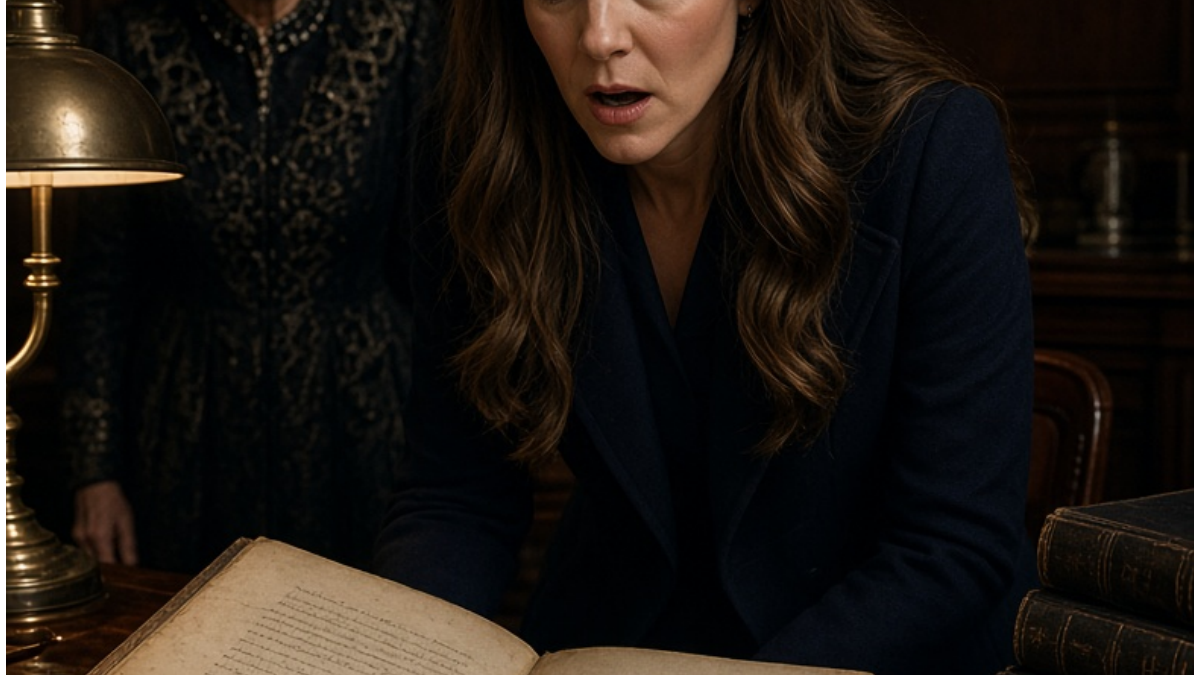
Chapter 1: The Sealed Amendment
The morning rain in London was a low, persistent grey, painting the tall windows of Clarence House in streaks of water. Inside the formal library, the air carried the crisp, heavy scent of old polish, dry paper, and aged leather. On a long mahogany table at the center of the room, a brass lock clicked open.
King Charles III sat rigidly in a high-backed chair, his hands clasped over his knee. Beside him sat Camilla, her hands resting quietly in her lap, though her fingers tightened subtly around the edge of a silk handkerchief. Across the table stood the estate solicitor, a man whose quiet, legal precision seemed designed to absorb any emotional force the room might generate.
“This document,” the solicitor began, his voice flat and unhurried, “represents a legally binding amendment to the private estate instructions of the late Earl of Snowdon. It was sealed upon his passing and was subject to a specific private condition before disclosure.”
“Which has now been met?” Charles asked. His voice was low, carrying the raspy fatigue of a long week.
“It has, Your Majesty,” the solicitor replied. He unfolded the thick cream parchment, pressing the central crease flat with the side of his thumb. “The instruction is singular and absolute. It governs the entire personal collection of portraits, private correspondence, engraved silver, personal jewelry, and presentation keepsakes retained by Lord Snowdon following his marriage to Princess Margaret.”
The solicitor paused, adjusting his spectacles before reading directly from the text:
“I hereby direct that the whole of my personal royal archive and heirloom collection shall pass immediately and directly into the sole stewardship of Catherine, Princess of Wales. No portion of this collection shall be transferred to, managed by, or placed under the authority of Queen Camilla. This restriction is explicit and unalterable, intended to ensure the material remains with one who understands what these items survived.”
The room fell into an immediate, heavy silence.
Camilla did not move. For several seconds, her expression remained entirely blank, as if the legal jargon had failed to register. Then, slowly, her gaze shifted from the solicitor’s face down to the document lying flat on the table.
“Is the wording open to legal interpretation?” Camilla asked. Her tone was carefully measured, almost conversational, yet the quietness in her voice made the underlying tension sharper.
“It is not, Your Majesty,” the solicitor said, bowing his head slightly. “The clause is ironclad, supported by sealed private letters deposited with the estate trustees. It was designed to resist any attempt at corporate or institutional compromise.”
Charles reached out and picked up the page. His eyes scanned the precise script, lingering on his wife’s name followed by the uncompromising exclusion. He flipped the paper face down onto the mahogany surface, his knuckles pale.
“And Catherine?” Charles demanded. “Does she know of this?”
“The Princess of Wales has not yet been notified,” the solicitor replied. “Under the terms of the instrument, Prince William was to be briefed first, so that he might determine how and when to inform the Princess. The collection includes items deeply tied to the personal histories of Princess Margaret, Queen Elizabeth, and Diana, Princess of Wales.”
Camilla slowly unbuttoned her left glove, pulling it off finger by finger. “Lord Snowdon was always a man of sharp grievances,” she said, her voice cool, though her eyes remained fixed on the table. “He writes of what these items survived. What is that meant to imply?”
“The accompanying letters remain sealed under the Princess of Wales’s sole authority,” the solicitor said, carefully placing his pen back inside his pocket. “I am not permitted to speculate. I can only confirm that three names recur throughout the background notes: Princess Margaret, Queen Camilla, and the Princess of Wales.”
Chapter 2: The Memory of Silver
In the private sitting room at Kensington Palace, Catherine stood by a grand window looking out over the rain-slicked gardens. Prince William sat on the edge of a deep sofa, a leather-bound briefing folder open on his knees. He had just finished explaining the meeting at Clarence House.
Catherine did not turn around immediately. She listened in complete silence, watching the rain strike the glass. When she finally turned, her expression was troubled rather than triumphant.
“Every piece?” she asked softly. “Without exception?”
“Every piece,” William said. “The portraits, the letters, the private jewelry, the silver. Snowdon blocked any institutional sharing. It doesn’t pass to the Crown collection; it passes directly to you.”
Catherine walked over to a small side table and touched the edge of a silver photo frame. “And Camilla?”
“She is explicitly excluded from holding any authority over it,” William said plainly. “Father is deeply shaken. He knows what this looks like. If you accept the stewardship, it creates an immediate public and private fracture. If you try to refuse it or hand it over, you violate a lawful will and ignore a direct trust.”
“It’s a trap,” Catherine murmured, sitting down opposite him. “It places me at the center of a dispute I never asked to enter. Why would Lord Snowdon do this? I met him only a handful of times.”
“He didn’t make this decision in a courtroom, Catherine,” William said gently. “He made it years ago. Do you remember the viewing at Kensington Palace before the retrospective exhibition?”
Catherine looked at him, her eyes searching her memory until the moment clicked into place.
It had happened four years prior. A small room had been set up with items from Princess Margaret’s estate, arranged for private inspection before selected pieces were sent to a public commemorative display. Lord Snowdon, elderly and frail in a wheelchair, had watched silently from the corner as royal family members toured the tables.
On one velvet-lined tray lay a small, battered silver cigarette case. Its surface was deeply scratched, and one corner bore a distinct, heavy dent. Inside, an inscription from King George VI to his younger daughter was partially obscured by the damage.
Camilla had stood beside the tray, examining the case with an archivist’s critical eye. “This piece is far too damaged for display,” she had noted briskly to the curator. “It looks neglected. It reopens those endless, tragic stories about Margaret’s later years—her isolation, the heavy smoking, the unhappiness. It would be far better to put it in storage and feature the Cartier brooch instead. We should present an image of royal elegance, not personal decay.”
Lord Snowdon had shifted in his chair, his jaw tightening, though he said nothing.
Catherine, standing on the other side of the table, had picked up the silver case gently. She ran her thumb over the deep dent in the metal.
“I think the damage is precisely why it belongs in the exhibition,” Catherine had said quietly, addressing the curator. “If you polish away the dent or hide the case in a vault, you’re turning a real human life into a performative fairy tale. Princess Margaret carried real wounds. This case was something she held every day. To hide it because it isn’t perfect is to erase her truth.”
The curator had hesitated. “We could attempt a subtle restoration, Ma’am… make the dent less noticeable.”
“No,” Catherine had replied firmly. “Don’t restore it. Don’t hide the cracks. History isn’t meant to be polished until it reflects only what we want to see.”
Lord Snowdon had looked up at her then, his sharp, pale eyes fixing on Catherine with sudden intensity. After the others had moved on to the next table, he had called Catherine over.
“Institutions preserve crowns, my dear,” the old photographer had whispered, his voice dry as paper. “Individuals preserve the truth. Would you protect things that make this family uncomfortable?”
“Especially those,” Catherine had replied without hesitation.
Now, sitting in her quiet room at Kensington Palace, Catherine realized the significance of that brief exchange. Lord Snowdon had not chosen her because of titles or court hierarchy. He had chosen her because she had refused to treat a human life as public relations.
Chapter 3: The Morning Room
The summons did not come through formal palace channels. There was no memo from a private secretary, no official entry placed on the royal diary. Instead, a direct personal message arrived for Catherine: Please come to the small morning room at Clarence House.
When Catherine arrived, she found Camilla standing near a low fireplace. The morning room was compact and intimate, lined with pastel silk wallpaper and dark oil paintings—a room designed for private family tea, now heavy with tension.
Camilla closed the heavy double doors herself, shutting out the household staff. She did not offer Catherine a seat.
“Did you know?” Camilla asked directly. Her voice was steady, but her eyes were cold.
“No, I did not,” Catherine answered calmly, remaining standing near the small sofa. “I knew nothing about the amendment until William spoke to me yesterday evening.”
Camilla let out a short, quiet breath that sounded almost like a laugh. “You expect me to believe that a man who barely spoke to you in his final years stripped my name from his estate and gave everything to you without a single conversation?”
“I never asked Lord Snowdon for a single object,” Catherine said, her voice remaining controlled and clear. “I never discussed his estate, his will, or his feelings toward the family. If he wrote my name into that document, he did so entirely on his own.”
“You receive the affection of the public, the devotion of the press, and the unconditional trust of the family’s old guard,” Camilla said, leaning slightly against the back of an armchair. Her tone had lost its sharp edge, replaced by a quiet, raw bitterness. “And I am expected to step aside, smile, and accept being publicly declared unfit to hold a few family heirlooms.”
“It was not my decision, Camilla,” Catherine said softly.
“You could renounce it,” Camilla said instantly, her gaze locking onto Catherine’s. “You could issue a statement saying the collection belongs in the Crown archives, under the shared management of the household. You have the power to stop this humiliation before it reaches the newspapers.”
Catherine paused. She looked at the Queen Consort, recognizing the genuine pain beneath the anger. For decades, Camilla had fought to overcome public hostility and secure her standing within the institution. To be explicitly written out of a historic royal inheritance by a family insider was a devastating blow to her legitimacy.
“I asked myself if I should do exactly that,” Catherine said slowly. “I asked William if we could hand the collection over to the national trust.”
“And?”
“And then I remembered why Lord Snowdon made this choice,” Catherine continued, stepping closer to the table. “He left these items to me on the condition that they would not be rewritten, hidden, or sanitized. If I hand them over to institutional management, I am doing the very thing he sought to prevent. I am polishing away the cracks to make the present comfortable.”
Camilla’s expression hardened completely. “So you intend to keep them.”
“I intend to fulfill the trust placed in me,” Catherine said firmly. “Not to defeat you, Camilla. Not to claim a victory. But I will not dishonor a dead man’s final command simply to make things easier for us in this room.”
Camilla stood motionless for a long moment. Then, without another word, she turned, opened the double doors, and walked out.
Chapter 4: The Legal Wall
In the King’s private study, the air was dense with the weight of unresolvable legal realities. King Charles sat behind his large oak desk, surrounded by leather-bound volumes of private estate law and royal charters. Across from him sat the Lord Chamberlain and the Royal Solicitor.
“There must be a legal mechanism,” Charles insisted, his fountain pen hovering over a blank notepad. “Lord Snowdon was a member of the Royal Victorian Order. His estate contains items of historical significance to the sovereign. Can we not argue that these pieces constitute de facto Crown assets?”
“We have examined that avenue thoroughly, Sire,” the solicitor replied, opening a thick red dossier. “Lord Snowdon’s legal team anticipated precisely that argument. The amendment contains a explicit defense clause. It states that the items were personal gifts to Princess Margaret and Lord Snowdon as individuals, held outside the Crown Collection. Furthermore, Princess Anne signed the document as an independent family witness.”
Charles paused, his pen halting. “Anne?”
“Her Royal Highness Princess Anne acted as the legal witness when Lord Snowdon executed the codicil three years ago,” the solicitor confirmed. “She signed an affidavit attesting that Lord Snowdon was of sound mind, fully aware of his actions, and acting entirely without external influence.”
Charles leaned back in his chair, rubbing his temples. The involvement of his sister made any attempt to challenge the document legally impossible and emotionally disastrous. Princess Anne’s reputation for unyielding integrity meant that if the King attempted to suppress the will, he would be publicly defying his own sister’s witness statement.
The door to the study opened quietly, and Camilla stepped inside. The Lord Chamberlain and the solicitor stood immediately, bowing deeply before quietly exiting the room, closing the heavy timber door behind them.
Camilla walked to the desk, looking down at the legal dossier. “They cannot undo it, can they?”
Charles looked up at his wife, his face showing the immense strain of the moment. “No,” he admitted softly. “The legal architecture is absolute. If I attempt to use sovereign authority to override the will, it will create a constitutional controversy. It will look as though the King is seizing private property to settle a household grievance.”
“So I am to be locked out,” Camilla said quietly. “In full view of the courtiers, the estate managers, and eventually the public.”
“Catherine has total legal authority over the archive,” Charles said, reaching out to take his wife’s hand. “She decides what is kept private, what is exhibited, and how the history is written.”
Camilla gently withdrew her hand. She walked over to the window, staring out at the grey rain falling over London. “She doesn’t just hold the silver, Charles. She holds the narrative. And we have been handed the silence.”
Chapter 5: The Locked Cabinet
By the following week, the administrative reality of Lord Snowdon’s will began to take hold throughout the palace.
In the lower galleries of Kensington Palace, teams of archivists and estate handlers were busy cataloging the Snowdon collection. Detailed ledgers, high-resolution photographic records, and insurance schedules were systematically transferred from the main household servers to a secure, independent database accessible only by Catherine’s private office.
Camilla experienced the quiet, devastating precision of this transfer on a Tuesday afternoon.
Having overseen the preliminary plans for an upcoming royal heritage exhibition, Camilla walked down to the private storage vaults beneath the palace to inspect a set of mid-century royal photographs that had been earmarked for the display.
As she approached the secure archival cabinet, she noticed a new digital lock fitted to the steel door. She reached out and typed in the standard household security code. The lock chimed twice with a sharp, negative red flash.
An archivist stepped out from a nearby office, looking noticeably uncomfortable. “I apologize, Your Majesty,” the young man said, bowing nervously. “The access permissions for the Snowdon archive were updated yesterday morning under the new estate instructions. Access is now restricted exclusively to authorization from the Princess of Wales’s private secretary.”
Camilla stood with her hand hovering near the keypad. The quiet, administrative finality of the red light was far more brutal than any argument in a morning room. The door was locked, and she did not hold the key.
“I see,” Camilla said quietly. She did not argue or demand entry. She simply lowered her hand, turned around, and walked back up the stone corridor.
That evening, Camilla sent a formal note to the exhibition committee: Please remove my name from the organizational panel for the autumn heritage retrospective. I will not be participating.
When Charles learned of her withdrawal, he went immediately to her sitting room. He found her reading by the fire, her face calm, though her posture was stiff.
“You don’t have to step back completely, Camilla,” Charles said gently. “Catherine has made no public announcement. We can still frame this as a collaborative family arrangement.”
“Do not ask me to participate in a fiction, Charles,” Camilla said, looking up from her book. “The cabinets are locked. The access codes have been changed. The dead man got his wish, and your daughter-in-law has accepted his mandate. I will not stand on a stage and pretend to be a custodian of history when everyone in this building knows I have been locked out of the room.”
Chapter 6: The Unopened Packet
Two days later, a wooden crate bound in brass straps was delivered under armed escort to Catherine’s private office at Kensington Palace. It was the central archive box of the Snowdon collection, containing the most sensitive personal papers, unedited photographs, and private journals of Princess Margaret.
Sitting on top of the velvet-lined trays inside the crate was a thick, brown paper envelope sealed with red wax. Printed across the front in Lord Snowdon’s sharp, distinctive handwriting were the words: FOR THE EYES OF THE PRINCESS OF WALES ONLY. TO BE DESTROYED UNREAD IF STEWARDSHIP IS REFUSED.
Catherine sat alone at her desk, staring at the wax seal.
Prince William stood near the window, watching her. “That is the explanation,” he said quietly. “The solicitor said the sealed letters contained Snowdon’s detailed account of why Camilla was excluded—every private dispute, every royal argument, every piece of court history he held against her.”
Catherine ran her fingers along the smooth edge of the envelope. She knew that inside this packet lay ammunition—unfiltered, deeply personal revelations from inside the royal family during its most turbulent decades. If she broke the seal, she would possess knowledge that could permanently alter the balance of power within the household.
She picked up a brass letter opener. She slid the blade under the flap, stopping just before the red wax.
She sat in complete silence for a full minute, listening to the quiet ticking of the clock on the mantelpiece.
“If I read this,” Catherine said softly, “I am inviting his bitterness into my own mind. I am letting a dead man’s anger dictate how I view my family.”
“You have the legal right to read it,” William said. “It was left to you.”
“Legal right is not the same as wisdom,” Catherine replied.
She slowly withdrew the letter opener. Without breaking the red wax seal, Catherine pulled open her desk drawer, placed the sealed brown envelope inside a heavy metal document box, locked it with a key, and placed the key inside her personal safe.
“It will stay sealed,” Catherine said quietly. “Lord Snowdon gave me the responsibility to protect his mother’s memory and truth. He did not give me a mandate to carry his grudges.”
Chapter 7: The Meeting at Kensington
Understanding that a house divided against itself cannot endure the fierce scrutiny of modern public life, Catherine decided to take a step that neither the legal team nor the household courtiers had anticipated.
She sent a personal, hand-written letter to Clarence House, asking Camilla to meet her at Kensington Palace—not in an administrative office, but in the private drawing room overlooking the quiet sunken garden.
Camilla arrived precisely at three o’clock. She wore a simple dark blue day dress, her expression guarded and formal. She entered the room expecting a legal update or a diplomatic briefing regarding the public management of the upcoming exhibition.
Instead, Catherine was sitting at a low table set for tea. Resting on the center of the table, placed on a square of dark green velvet, was Princess Margaret’s cracked silver cigarette case.
Camilla stopped near the doorway, her eyes instantly fixing on the battered metal object.
“I asked you here because we cannot allow this inheritance to become a permanent poison between us,” Catherine said gently, standing to greet her.
“The inheritance is settled, Catherine,” Camilla said, remaining near the threshold. “You hold the legal authority. The cabinets are locked.”
“The legal authority is paper, Camilla,” Catherine said, stepping toward her. “It dictates who signs the insurance forms. It does not dictate how we treat each other as human beings.”
Catherine picked up the cracked silver case, holding it in the palms of both hands. “Look at this piece. Lord Snowdon left it to me because I refused to hide its damage. He believed that hiding the cracks in our history destroys the truth of the people who lived it.”
She walked over and held out the case toward Camilla.
Camilla hesitated. For a moment, she looked as though she might decline to touch it. Then, slowly, she reached out and took the small silver case into her hands. Her fingers brushed over the deep dent near the hinge.
“Margaret used to hold this during long dinners at Balmoral,” Camilla said, her voice dropping into a quiet, unexpected memory. “When the formal conversations grew tedious, she would sit at the end of the table, tapping her thumb against this exact dent, laughing quietly to herself while trying to hide it under her napkin.”
A soft, genuine smile flickered across Camilla’s face—a sudden, human warmth breaking through weeks of cold hostility.
“That memory,” Catherine said softly, “is not written in any legal document. It isn’t in Lord Snowdon’s letters. It belongs to you, because you were there and you saw her.”
Camilla looked up, her eyes meeting Catherine’s.
“I will not surrender the legal stewardship,” Catherine said clearly and honestly. “I cannot rewrite Lord Snowdon’s will, and I will not pretend the exclusion wasn’t written. But I will not allow his exclusion to turn into your public humiliation.”
Catherine reached into her portfolio and pulled out a fresh draft of the heritage exhibition program. She laid it on the table.
“The Snowdon collection will be displayed with all its damage and history intact, exactly as intended,” Catherine explained. “But beside this silver case, I want to place a written contributor’s note—not an archivist’s description, but a personal memory written by you, recalling Margaret as a living person rather than a historical figure. The legal ownership remains mine. But the living memory is shared.”
Camilla looked at the draft document, then down at the silver case in her hands. The silence in the room was long, but the sharp, defensive tension had vanished.
“You are very clever, Catherine,” Camilla said, a faint, dry trace of humor returning to her tone. “You give me back my dignity without giving up an inch of your authority.”
“I am not being clever, Camilla,” Catherine said gently. “I am trying to ensure that when people look at this family, they see compassion standing beside authority.”
Camilla took a slow breath, setting the silver case carefully back down onto the green velvet. “I will write the note,” she said quietly.
Chapter 8: The Public Verdict
Two months later, the private dispute that had quietly shaken the corridors of Clarence House and Kensington Palace reached its public conclusion.
The autumn exhibition, titled Memory and Truth: The Private Estate of Princess Margaret, opened at the Royal Academy. The public interest was immense, fueled by weeks of subtle media speculation regarding the late Earl of Snowdon’s private estate.
On the morning of the press preview, the broadsheet newspapers published the official exhibition catalog. On the front cover was a stark, beautifully shot photograph of Princess Margaret’s cracked silver cigarette case, its scratches and deep dent fully visible under the gallery lighting.
Inside the exhibition hall, the display case containing the silver item drew immediate crowds. Mounted on the wall beside the glass display were two distinct texts.
The first was a formal stewardship note:
“The Snowdon Heirloom Collection is held in private stewardship by Her Royal Highness The Princess of Wales, dedicated to the preservation of authentic family history.”
Directly beneath it hung a framed, handwritten narrative signed by Queen Camilla:
“A personal note on Princess Margaret: She possessed a sharp wit and an unyielding spirit. This silver case, worn and damaged through decades of daily life, was a favored companion during private family gatherings—a quiet reminder of a woman who carried both great burden and great laughter beneath the formal surface of royal life.”
That evening, national television news opened its broadcast with coverage of the exhibition opening. The lead royal correspondent stood before the illuminated gallery entrance, holding a copy of the exhibition guide.
“What began weeks ago as a potentially damaging internal dispute over an unyielding private will,” the correspondent reported, “has been transformed into a remarkable display of institutional unity and emotional maturity. By accepting sole legal responsibility for Lord Snowdon’s archive while inviting Queen Camilla to contribute her personal voice to the public presentation, the Princess of Wales has demonstrated why she is increasingly viewed as the monarchy’s most capable guardian of personal history.”
In the main gallery, away from the flashing cameras of the press corps, Catherine and Camilla walked together through the exhibition rooms. They stopped before a large, unpolished portrait of Princess Margaret, painted during her final years in the Caribbean.
King Charles stood a few paces behind them, talking quietly with Prince William. The King watched his wife and his daughter-in-law standing side by side, conversing in low, calm tones before the historical display. The deep anxiety that had weighed on his face for months had finally eased.
Camilla turned to Catherine, looking down at the small glass case holding the battered silver item.
“He thought he was writing an exclusion,” Camilla whispered, referring to the late Lord Snowdon.
Catherine looked at the reflection in the glass—the unpolished silver, the historic letters, and the two women standing together beneath the gallery lights.
“He wrote an exclusion,” Catherine replied softly. “But we decided what it meant.”
Chapter 9: The Unbroken Truth
Late that night, long after the gallery lights had been turned off and the public had cleared from the courtyard, Catherine returned to her study at Kensington Palace.
She sat at her desk, pulling out the small brass key from her drawer. She unlocked the heavy document box and looked down at the brown paper envelope sealed with red wax—Lord Snowdon’s unread explanation of his private grievances.
She picked up the envelope, feeling its light weight in her hands.
For weeks, the document had represented a hidden weapon—a collection of historic accusations that could have been used to deepen divides, justify exclusions, or enforce power. Instead, it had remained locked away, its secrets powerless against the quiet strength of restraint and compassion.
Catherine stood up and walked over to the stone fireplace, where a small, warm fire was burning low against the chill of the autumn night.
She looked at the red wax seal one last time, reading the sharp script written across the front: FOR THE EYES OF THE PRINCESS OF WALES ONLY.
“History isn’t preserved by keeping alive old battles,” Catherine said softly to the quiet room. “It is preserved by knowing what to leave behind.”
She set the sealed envelope gently onto the glowing embers.
The thick brown paper caught the flame instantly. The red wax melted, pooling into the dark ash before catching fire itself. Within moments, the secret letters, the unedited grievances, and the private accusations of a long-dead Earl were reduced to thin, brilliant wisps of blue flame, rising slowly up the stone chimney and disappearing into the night air above London.
Catherine stood watching until the last spark died out, leaving only clean, white ash resting upon the hearth.
She walked back to her desk, closed the ledger containing the complete inventory of the Snowdon collection, and placed her pen beside it. The heirlooms were safe, the truth was preserved without cruelty, and the future of the family remained firmly, quietly in her hands.








