Floyd Patterson | The Original Mike Tyson
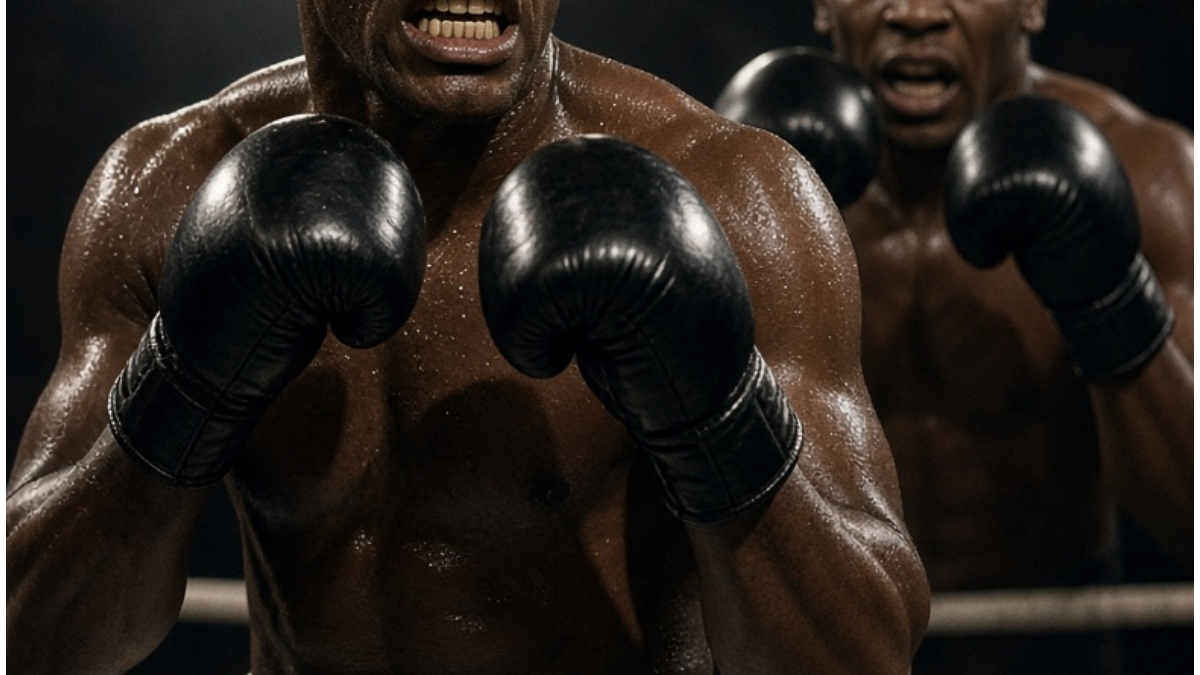
**I remember looking in the mirror before going to the fights, and I said: “You probably will not come back as the winner. You will probably be defeated again. But when they raise his hand, he’s going to have difficulty getting it up.” Which meant I was going to give him a very tough fight.**
In the 1980s, the world witnessed the meteoric rise of a fighter under 6 ft in height who, with an unusual boxing stance, could let loose rapid clusters of punches with such speed that was unfathomable for a man in the heavyweight division to possess. But before the name Mike Tyson became universally known, he was tucked away in obscurity under the tutelage of legendary trainer Cus D’Amato, learning the famed peekaboo boxing style.
Exactly 30 years before Tyson would lay claim to the heavyweight title and bring his style to the main stage, another D’Amato-trained fighter stood atop the heavyweight division — one with equal fame, fortune, and fast hands: Floyd Patterson. With athleticism and a stature comparable to his peekaboo successor, Patterson in the ring was as violent and as ruthless as they come. As with all practitioners of the style, he preemptively moved his head, never stayed stationary, and waited for an opening in his opponent’s defense to present itself before unleashing a hurricane of leather blows, wailing away at his unconscious foe until they finally toppled over.
“Left and right like a tiger. Unbelievable. Unbelievable handspeed. I never saw a heavyweight with quicker hands. Floyd Patterson — the fastest heavyweight. Punching accuracy. Handspeed ever.”
“Oh, right away Harrison goes down.”
“The onlyest man that would have a chance of beating me is Floyd Patterson. Who could you name better than Floyd Patterson?”
Watch Patterson’s old familiar peekaboo style, implanted in him by Cus D’Amato: the hands up in front of the face, the elbows reasonably close together. There was a time when Floyd was as punishing a puncher as you could want to see. He had the swiftest hands in boxing, superb combinations of blows. He is really out to stop it fast.
While he may have been an earlier graduate from the same school as Iron Mike, his demeanor couldn’t have been more different. He was an introverted, reclusive champion, ill at ease in the limelight — a soft-spoken figure of elegance who fought cleanly and lived cleanly, never flaunting nor gloating.
Heavyweight champion of the world: Floyd Patterson.
“Floyd, we met on a few occasions, but we never really got intimate with each other. We never spoke. He’s a very quiet and innate person. He doesn’t speak at all. If you’re in the room with him, you’d be surprised if he said three words. He doesn’t speak. Very quiet and polite person. He doesn’t speak. And it’s just a privilege for me to be around him. He didn’t have to talk.”
He was wholeheartedly welcomed by the public and rubbed shoulders with the dignitaries of the world. But when society as a whole objected to one man being given a chance at the title, Floyd, believing in fair play, decided to go against their wishes, knowing that it would likely mean the end of his championship reign. Yet he still marched willingly towards his execution. That is integrity.
Rainy Day Boxing brings you Floyd Patterson: a boxing legend.
Floyd was born January 4th, 1935, and just like Tyson, he was a Brooklynite — a hypersensitive boy who was bullied mercilessly for his shabby clothing, malnourished appearance, and complete lack of social skills. At school he was the butt of all jokes, and his classmates’ laughter was so crushing for his self-esteem that he preferred to spend his days in solitude, hidden in dilapidated abandoned buildings. Eventually a truancy officer caught him, and he was sent to a reformatory school. It was there that he discovered he had a knack for boxing, and as his obsession with the sport grew, he began to get a taste for greatness.
When he returned home, the shy 14-year-old walked into Cus D’Amato’s gym and professed that he wished to become a boxer. D’Amato was a man who could discover boxing immortals in the chrysalis, and Patterson was an unmistakable prodigy.
“We’re speaking of a fighter who was full of enthusiasm and interest and dedication, and as I said, the punching power to knock out anyone he hit. I didn’t care who you are — he could hit anybody on the chin and take him out.”
At that time, perhaps the most dazzling knockout artist ever seen in the amateur circuit. His opponents had to be something special just to hear the final bell. With murderous intent in every punch, he poleaxed each foe on his way to claiming a gold medal in the 1952 Olympic Games.
“I do know anyone who’s won Olympic titles must have skill, competitive spirit, and other qualities necessary to be a champion.”
Fans saw Patterson as a hot favorite to go all the way, but the boxing experts found his phlegmatic disposition concerning and took issue with how cordial he was with opponents. There was the notion that fighters mustn’t be meek or timid, and that it’s better they be mean and brash.
“We’ve heard this word ‘viciousness’ — that a fighter has to have a vicious attitude before he goes into the ring. Now, how do you feel about that?”
“Well, not in all cases. No, I disagree with that.”
Critics were especially vocal about their doubts of the 21-year-old Patterson when he was scheduled to fight Archie Moore for the vacant heavyweight title.
“Some of the writers are saying that you’re not ready for Moore. What do you think of that?”
“Well, my manager thinks I am. If he does, I do too.”
“I was sure, having made a study of Archie Moore — the extraordinary trait-like defense which involved it: his arm would be across his body and his other arm across, and he would watch. As long as the man is in this position, I asked Pat: stay close. I said, now the only way he can hit you, he’s got to pull his hand back, his arm back to strike. That will leave the punch exposed. If you’re close enough, the moment he does this, hit him. Hit him, and automatically his left hand will go back to cup. When he moves this hand back, hit him here. This goes, and you leave him right there all night. That’s what happened.”
Patterson standing directly in front of Archie without getting hit was comparable to a swimmer being able to swim without getting wet. Moore, being the trickiest fighter in the game, knew how to manipulate opponents into making the moves he wanted them to make. But Archie had never encountered this new peekaboo style and was perplexed by Patterson making defensive maneuvers even before Moore had decided to strike.
“You can see that this kid certainly learned his trade. Floyd is too fast for Archie, and he has that good peekaboo defense, and he jabs. Now Floyd is still looking for that opening. There’s a terrific left hook — drops Moore. What a shot. Archie doesn’t know where he is. It’s all over. There’s your new champ. Did this guy grow up?”
Floyd had come a long way to stand at the top of the world, and for men in that position the fame and adulation can be intoxicating. But that was not the case for Patterson. He remained an unassuming man of modesty. Nothing from his past was beneath him. To the public, Floyd was representative of all that was right with the world.
For three decades Floyd held the title as the youngest man ever to win the heavyweight championship. But another distinction that Patterson holds is that of all the heavyweight champions, none were knocked down as many times in their career as he was. He may not have had a granite chin, but there was no quit in Floyd, as he arose from the canvas more times than any other man.
In his fifth title defense, his determination was on full display as Patterson was floored seven times in the third round. It was a shocking sight for the audience to see such a champion being continuously sent to the floor, but he never allowed himself to stay down, eventually being finished on his feet.
Floyd had never enjoyed being seen as special, nor had any desire to stand out in the crowd — and now he stood out as a failure. Just as he had once removed himself from society by hiding in vacant houses, Patterson again decided to hide himself from the world. He withdrew to his home, closed the blinds, and stayed indoors for months, leaving the house only on a few occasions while wearing a disguise.
In his self-imposed exile, Floyd watched the new champion belittle him on television every chance he got. For the next nine months, Patterson lived a monastic existence, training in solitude. No man at that point had ever regained the heavyweight championship after losing it, despite many of the greatest champions having attempted to do so. Ex-champions were expected to come up short. But in the days before the rematch, those around Patterson said that he had a rage in his eyes that they had never seen in him before.
Floyd fought with a detached viciousness, showing no signs of compassion as he battered the man who robbed him of his pride and title.
“Down. Left. Go. Eight. Nine. History is made. History is made.”
Leaping across the ring, he delivered a picture-perfect left hook that left his foe lying on the canvas, unconscious and twitching. Redemption was gained in front of 50,000 spectators, and history had its first-ever two-time heavyweight champion of the world — an achievement as prodigious as the punch he landed.
While the heavyweights of the ’50s were significantly smaller than today’s heavyweights, Floyd was considered small for the division even back then. While Patterson was defending his title another two more times, a new legitimate threat to his title was on the rise: a musclebound ex-convict named Sonny Liston, who would ultimately put an end to the era of small heavyweights.
Floyd was a civil-rights dream representative. His image helped calm Americans’ fears of integration, and he was an active supporter in the cause, always present at rallies and protests. However, with his criminal record and known ties to the Mafia, Liston unsettled White America. The NAACP and even President Kennedy also felt Liston fed into the stereotype of the Black menace and disapproved of him being given a chance to challenge for the title.
“Do you feel that Liston is a capable opponent?”
“I’m sure. Sure I feel that. He’s a bit above and beyond. I personally think that he has every right to fight for the championship despite his unfortunate background.”
Patterson would have faced no criticism for sidestepping Liston, but remembering that he had also shown little obedience to the law in his formative years, he believed that rehabilitation and redemption were possible for a man like Sonny. He also knew that defending your title against the worthiest challenger is an obligation that a champion cannot circumvent.
“The inevitable question: what next? Sonny Liston. As of now, Sonny Liston is the number-one contender. I’ve always said that if there is another man out there that can really, honestly beat me in a fair and square fight — as much as it hurts — I’d rather see him with the title than me.”
If Patterson seemed to have a pre-acceptance of his defeat, it’s because he knew the outcome the moment he decided to give Liston a chance. As he squared off against his menacing foe, he was overwhelmed by the reputation, losing the ability to follow any pre-planned strategies. Nothing could stop the title from changing hands. After only 2 minutes and 6 seconds, Patterson’s time as champion had come to an end.
“I am very, very sorry. I thought of what happened here tonight. I had hoped I could give all of you, as well as the people all over the world, a much better fight. I think that if the public give Sonny, like I’ve always said, a chance, I think that he will wear the championship probably just as good as I have — if not better. I think he has qualities that are good. Give him a chance.”
Floyd, with his never-say-die attitude, fought on, and it was in the next decade that he would prove his legitimacy as a truly great fighter in the heavyweight division. Against this new generation of heavyweights he was sometimes outweighed by up to 30 lb, making his speed even more problematic for opponents. An aging Patterson gave champion Jimmy Ellis a sound beating, but was robbed that night of being a three-time world champion.
In ’65 he fought Muhammad Ali with a slipped disc, rendered immobile, yet he refused to quit as Ali taunted and tagged him for 12 rounds. A rematch between the pair in the ’70s showed what a healthy Patterson was capable of, giving perhaps the finest display of the peekaboo style of boxing.
“Floyd did connect there, and the crowd loves it. That left by Floyd. That right of Patterson. Patterson connected again. Patterson is really up for this fight. Patterson quick to take advantage of Ali there, and now it’s no fluke. Patterson’s making a good fight of this fight. Crowd yelled as Floyd got in a right. Fighting courageously. This crowd belongs to Floyd P.”
As is the unfortunate case for many fighters, Floyd’s losses have better survived than have his victories. But he made his bones by knocking out formidable men in the toughest division while not being a true heavyweight himself. A gentleman who was anything but gentle in the ring, he was exactly the champion that his generation hungered for. To be a champion truly accepted by the people, one must wear the crown with the dignity that the title demands — and perhaps no champion represented the sport with more integrity and honor than Floyd Patterson did.
“He ever hurt you?”
“Twice — with a hard left hook, a right punch, and a body punch. Of all, he’s a good fighter. He’s done so much for the game. Fought in France for the world heavyweight title. And I think that Floyd Patterson is the fastest thing on two feet.”
“I’m sure you’re happy over Patterson’s attitude, his willingness to fight you. He said some nice things about you, Sonny.”
“Yes, he did. I really was surprised that he stood up for me like he did.”
“Ladies and gentlemen, a great young champion and a fine young citizen. Let’s have a very big hand for Floyd Patterson.”








