A Navy SEAL Bought a Ranch for $10 — Then Found a Girl Hiding From a K.i.l.l.e.r
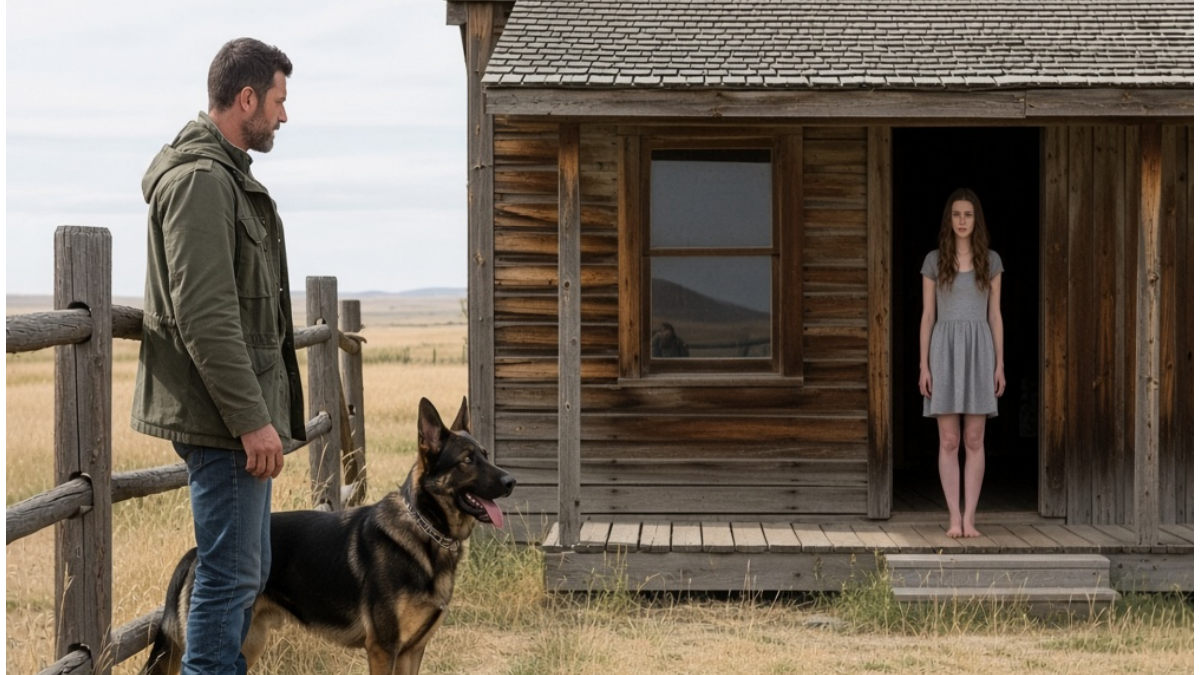
After years as a Navy Seal, all he wanted was land, silence, and a fresh start.
So, when he found 100 acres in Montana selling for just $10, he didn’t ask too many questions.
But the first night he unlocked the door, he realized something wasn’t right. There was someone already inside, a young woman, hiding in fear.
And what she told him would pull him into a secret involving betrayal, murder, and a fight for justice that no one in that small town wanted reopened.
The town of Red Hollow, Montana, had a way of shrinking under the sky. In late October, the wind came down from the mountains, sharp and restless, dragging thin sheets of dust across the empty highway.
The grasslands surrounding the town stretched for miles in dull gold and brittle brown, broken only by skeletal fences and the occasional windbent pine.
By 4:00 in the afternoon, the temperature had already begun to drop, and the clouds hung low and metallic, promising an early froSt. It was the kind of place where silence felt permanent, where people minded their own business, where stories died quickly.
Jack Turner preferred it that way. He drove into Red Hollow in a dented navy blue pickup that had seen better decades.
The truck engine rattled when idling, but it still ran steady like its owner. Jack was 36, broad shouldered and built lean rather than bulky, the kind of strength carved by endurance instead of display.
His dark hair was cut short, military precise. A faint scar ran from the corner of his jaw toward his ear, half hidden beneath a trimmed but rugged beard.
His eyes were gray blue, steady and observant, the kind that assessed exits in any room without seeming to look.
He had been a Navy Seal for 13 years. Combat had shaped him in ways that didn’t show on the surface.
He moved quietly. He rarely spoke more than necessary. Loud noises made his shoulders tighten before he could stop them.
He slept lightly. He trusted slowly. The war had ended for him 18 months ago.
The quiet had not. In the passenger seat sat Rex. Rex was a 5-year-old German Shepherd, sablecoated with a thick black saddle pattern over his back and tan legs dusted in road dirt.
His ears stood tall and alert, one slightly nicked at the edge from an old training injury.
His amber eyes were intelligent and watchful. He had once been part of a military working dog unit trained in detection and tactical support.
When Jack left the service, Rex left with him. The dog’s temperament mirrored his handler.
Disciplined, calm, and intensely loyal. Rex did not bark unnecessarily. He observed first, acted second, protected without hesitation.
They had been through gunfire together. That bond did not fade. Jack parked outside the small county office building where faded white letters read Gallatin County Property Administration.
Inside, the clerk barely looked up when Jack signed the final document transferring ownership of 100 acres of disputed land for $10.
The ranch had been locked in legal limbo after the death of one of its co-owners.
Taxes unpaid, operations halted. The surviving partner had consolidated assets quickly. No one wanted to touch it.
Jack did. $10 bought him land no one else wanted. Privacy, distance, a place quiet enough that maybe, just maybe, the past wouldn’t follow.
By dusk, Jack and Rex were driving through the rusted front gate of Carter Ranch.
The property spread wide and uneven beneath the cold sky. The main house stood weathered, but intact, white paint peeling at the edges, porch boards grayed by years of wind.
A red barn leaned slightly to one side in the distance. Beyond that, rolling pasture disappeared into treeine.
Rex lifted his head before the truck engine fully died. His posture shifted subtly, ears forward, body still.
Jack noticed. “What is it?” He murmured. Rex did not bark. He stared at the house.
Jack stepped out, boots crunching on gravel. The air smelled like dry wood and old hay.
No smoke from the chimney. No vehicles nearby. No visible movement. But Rex moved ahead firSt. He approached the porch, nose low, inhaling deeply.
His muscles were tense now. Jack unlocked the front door with the key given by the county clerk.
The hinges creaked. The interior smelled of dust and abandonment. Furniture remained. Couch, wooden table, a bookshelf missing half its shelves.
Faint light filtered through thin curtains. Rex stepped inside firSt. He paused. Then came a low growl.
Not aggressive. Warning. Jack’s body shifted instinctively, weight balanced, senses sharpening. There was someone here.
From the far corner of the living room near the fireplace, a figure flinched. A young woman crouched against the wall, arms wrapped around herself.
She looked like she had been there for some time. Jack did not move closer.
He slowly removed his gloves, set them on the table, pulled a wooden chair back deliberately, and sat down.
Rex, understanding the cue, lowered himself to the floor beside Jack. His head rested between his paws, though his eyes never left the woman.
“My name’s Jack Turner,” he said evenly. His voice was low, controlled. “This is Rex.
He won’t hurt you.” The woman’s breathing was fast at first, shallow. She looked to be in her mid20s, around 5’6, slender but not frail, with long chestnut brown hair that fell loosely around her shoulders.
Strands stuck to her face as though she had been sweating from fear. Her skin was pale from lack of sunlight, freckles faint across her nose.
Her green eyes were sharp despite exhaustion. She wore a faded denim jacket over a gray sweater, jeans dusty at the knees, no makeup, no jewelry.
She looked like someone who had been living quietly, carefully. “You’re not with him?” She asked.
Her voice trembled slightly, but carried strength beneath it. Jack shook his head once. “I bought this place today.
$10. County sale. Silence lingered. Rex shifted slightly, then lay fully on his side, exposing his belly in a gesture of non-threat.
The movement was deliberate, trained, gentle. The woman noticed her shoulders lowered by a fraction.
“My name is Emily Carter,” she said slowly. She stood cautiously, revealing that she was barefoot.
There was a scrape along her left ankle, partly healed. She kept distance, but she was no longer pressed against the wall.
This ranch used to belong to my family. Jack did not interrupt. My father, Thomas Carter, co-owned it with Robert Hayes.
When she spoke her father’s name, something softened in her face. Thomas Carter had been, she explained, a steady man in his early 50s, broadshouldered with sunbred skin and hands permanently rough from work.
He had thick silvering hair and a habit of humming old country songs while fixing fence posts.
He trusted too easily, especially those he called friends. Robert Hayes was different. Mid-4s, cleancut, always wore pressed shirts, even on the ranch.
Smooth smile, sharp jawline, no facial hair. The kind of man who shook hands firmly while calculating profit margins behind his eyes.
He was charming, Emily said. People liked him. My father trusted him. A month ago, there had been an explosion in the generator shed behind the barn.
The official report called it a mechanical failure. Fuel line rupture, accidental ignition. Thomas Carter died instantly.
Robert Hayes handled everything after that. Funeral, insurance paperwork, asset transfer. Too quickly. Emily’s jaw tightened as she spoke.
They said it was an accident. But my father knew that generator better than anyone.
He maintained it every week. He would never have ignored a leak. Jack studied her carefully.
No hysteria, no exaggeration, just conviction. Why are you hiding here? He asked. She hesitated.
Because I told Robert I didn’t believe it was an accident. The room grew colder.
Somehow he looked at me, she continued, and told me, “Grief makes people imagine things.”
Her eyes hardened. But then someone tried to follow me home two nights later. Rex lifted his head slightly at the change in her tone.
“So I came here,” she said before everything was legally transferred. Before he locked it down.
I thought maybe if I stayed quiet. Her voice faltered. Jack leaned back slightly in the chair.
Not relaxed, just grounded. The wind rattled the window panes. I don’t think my father died in an accident, Emily said.
I think Robert killed him. Silence filled the space between them. Rex slowly rose and walked toward her, stopping a few feet away.
He sat calm, watching. Emily looked at the dog. After a moment, she extended a cautious hand.
Rex sniffed, then nudged gently against her fingers. Jack watched carefully. The tension in her shoulders eased for the first time.
Outside, the Montana wind swept across the empty pasture, carrying the first bite of winter with it.
Inside the old ranch house, under a dim ceiling light and a sky heavy with coming frost, three lives had just collided, and the truth about Thomas Carter’s death had only begun to surface.
The wind did not ease that night. It pressed against the ranch house in long, restless gusts, slipping through cracks in the old window frames and carrying the scent of frost across the fields.
Inside, Jack had started a small fire in the stone fireplace. The flames cast shifting shadows across the worn wooden floorboards.
Emily sat on the edge of the couch, hands wrapped around a chipped ceramic mug of coffee Jack had made from supplies he kept in the truck.
Rex lay near the doorway, positioned where he could see both the front entrance and the hallway.
A habit born from training, not comfort. Jack remained seated in the wooden chair across from her, elbows resting lightly on his knees.
He had not asked too many questions yet. He knew better than to rush someone reliving trauma.
You said your father suspected Robert, he began quietly. When did that start? Emily looked into the fire before answering.
About 6 weeks before he died. Thomas Carter, she explained, had always handled the operational side of the ranch, livestock, equipment maintenance, land management.
Robert Hayes handled contracts, buyers, financial reporting. At first, small discrepancies appeared in quarterly statements, missing revenue from cattle shipments, feed invoices that didn’t match delivery logs.
Thomas wasn’t an accountant, but he knew the ranch’s margins by heart. He started keeping his own records, Emily said.
Handwritten notebooks, comparing them to Robert’s digital reports, she swallowed, and they didn’t match. Thomas had confronted Robert once casually over lunch in the ranch office.
Robert dismissed it as clerical error, blamed a third party accounting firm, but Thomas wasn’t convinced.
That was when he installed the camera. It wasn’t paranoia, Emily clarified quickly. He wasn’t afraid for his life.
He just wanted proof. The device had been small, no larger than a matchbox, embedded discreetly inside a smoke detector casing mounted near the ceiling of his office.
It was angled toward his desk and the seating area where meetings were held. The system recorded to a micro SD card stored inside the unit.
My dad wasn’t techsavvy, she said faintly, but he wasn’t naive either. He had asked a local electronic store owner to help him select something discreet.
That man was Harold Whitmore. Harold Whitmore was in his early 60s, tall but slightly stooped from years behind a counter.
His hair was white and thin, combed neatly to one side. He wore wireframed glasses and flannel shirts year round, sleeves always rolled to mid forearm.
His demeanor was mild, patient, one of those men who listened more than he spoke.
Harold had once worked as a communications technician for the Air Force before retiring to Montana.
Technology didn’t intimidate him. “He showed my dad how to install it,” Emily said. Told him how to check the storage card.
Dad said he just wanted something simple. Jack nodded once. Did Robert know about it?
No. The night of the explosion had started with a meeting. The camera recorded nearly 40 minutes of conversation.
Emily remembered the date because she had left town earlier that day to stay with a friend in Bosezeman.
The footage, she said, showed her father seated behind his desk wearing his usual work jacket, dark brown canvas with a torn cuff.
Robert stood across from him, dressed unusually formal for the ranch, button-down shirt, clean boots.
They were arguing, she said, not shouting at first, just tents. Thomas accused Robert of diverting cattle sale payments to a separate account.
Robert denied it. Then the tone shifted. Robert leaned forward across the desk and said clearly, “If you push this, you’ll regret it.”
Jack’s jaw tightened slightly, though his posture did not change. Emily’s fingers trembled slightly as she continued.
“My dad told him he was going to the bank in the morning.” According to the timestamp on the recording, Thomas stood and walked toward the door, telling Robert to leave the property.
Robert did not leave immediately. The camera showed him standing alone in the office after Thomas exited.
He remained there for nearly 15 minutes. During that time, Robert opened the desk drawer.
He removed a folder. He walked to the wall cabinet where maintenance schematics were kept.
He took out a laminated blueprint of the generator shed. “That shed,” Emily said softly, “is where the explosion happened.”
Robert was seen placing something small into his coat pocket. “The resolution wasn’t high enough to identify the object.”
Then the footage ended abruptly. “The storage card was full,” she said. Jack processed that carefully.
“What time was that?” Around 8:40 p.m., the generator shed exploded at 9:47 p.m. Thomas Carter had reportedly been performing a routine inspection when it happened.
No one else was present officially. Jack stood and walked slowly to the window, staring out into the darkness of the ranch.
Rex lifted his head, tracking Jack’s movement. “Did anyone review that footage?” He asked without turning around.
Emily shook her head. No, I never got it. She explained that 2 days after the funeral, she returned to the ranch to collect personal iteMs. The office had already been cleared.
Robert claimed he had archived important paperwork, but the smoke detector casing remained on the ceiling.
Her father had once joked, half smiling over a beer, that if anything ever goes sideways, the office will know.
She didn’t understand what he meant until after the explosion. I went back one night to check, she said, but Robert had changed the locks.
Jack turned back toward her. Is the building occupied now? No, he shut operations down.
Said legal issues made it too risky to continue. Convenient. Rex rose and walked toward Emily again, sitting beside her this time.
She absently rested her hand on his back. The dog remained still but alert, sensing tension in the room.
If that card is still in the unit, Jack said evenly. It’s evidence. It’s also trespassing, Emily replied quietly.
Jack gave a faint, humorless exhale. >> I’ve done worse things for worse reasons. His tone wasn’t proud, just factual.
Emily studied him carefully in the fire light. The lines around his eyes deepened when he was thinking.
There was restraint in him. Discipline layered over anger. “What are you planning?” She asked.
He met her gaze directly. I’m planning to confirm whether that camera still exists. Outside, the wind intensified, rattling the barn doors in the distance.
Rex’s ears twitched at the sound. Jack looked toward the hallway leading to the back exit of the house, already mapping approaches in his mind.
Distance from treeine to office, wind direction, visibility under cloud cover. He had not come to Montana looking for a fight, but injustice had a way of finding him anyway.
If the footage shows what you described, he said finally. That’s motive. That’s preparation. That’s threat.
It’s not murder, Emily said softly. No, Jack agreed. But it’s the beginning of it.
The fire crackled between them. Somewhere beyond the pasture, a coyote howled. And in the dark silence of Carter Ranch, a decision was forming.
The sky over Carter Ranch turned iron gray. By late evening, a storm was building somewhere beyond the mountain ridge, though no thunder sounded yet.
The air felt heavy, colder than the forecast had predicted. Wind pressed low across the grasslands, bending the brittle stalks in waves that looked almost like movement in the dark.
Jack stood beside the barn, adjusting the strap of a small black pack across his shoulder.
He wore dark jeans, a charcoal thermal shirt, and a worn field jacket from his service years.
No insignia left on it. His boots were mud ready, but quiet. He had left the truck parked behind the barn to avoid headlights reflecting across the pasture.
Rex stood at his side, posture alert but steady. “You stay close,” Jack murmured. Rex’s ears flicked once in acknowledgement.
The ranch office was nearly half a mile across open ground, positioned near the old livestock pins and the generator shed that had exploded weeks earlier.
The building itself was a low rectangular structure with a single porch light that no longer worked.
Windows were dark. Jack had spent the afternoon walking the perimeter at a distance, studying patterns.
Tire tracks near the gravel drive indicated occasional traffic. Fresh cigarette butts near the fence line suggested someone had been on watch recently.
Robert Hayes wasn’t careless. They moved along the tree line, keeping low. Jack chose the western approach downwind.
The wind carried their scent away from the property. Halfway across the pasture, Rex froze.
Jack stopped instantly. Rex lowered his head slightly and gave a soft huff through his nose.
Movement ahead. Jack crouched and scanned. A figure stepped out from the shadow near the equipment shed.
The man carried a flashlight and wore a thick brown jacket over flannel, jeans tucked into work boots.
He was large, well over 6 feet, with a heavy build that suggested years of manual labor rather than gym training.
His beard was full and untrimmed, stre with gray. His hair, hidden under a trucker cap, looked thinning at the edges.
This was not Robert Hayes. The man walked with a slow, deliberate pace, shining his flashlight along fence posts and ground edges.
Security, Jack whispered under his breath. Rex shifted slightly, but remained silent. The man’s name, as Jack would later learn, was Carl Benton.
Carl was 48, a former oil field worker laid off two years earlier. He had taken the job watching the Carter property for steady pay.
He was not cruel by nature, but he was loyal to whoever signed his checks.
Divorce had hardened him. Financial instability had made him cautious. Tonight, he was simply doing his job.
Jack waited until Carl turned his back and moved toward the far gate before crossing the final stretch of open ground.
They reached the back wall of the office unnoticed. The window on the east side had a warped frame, old wood swollen from years of weather.
Jack tested it gently, unlocked. He slid it open slowly, inch by inch. Rex remained outside at first, watching the field.
Only when Jack gestured did he leap silently through the window after. Inside, the air smelled stale.
The office was smaller than Jack had imagined. A wooden desk stood near the center.
Filing cabinets lined one wall. A corkboard with faded ranch maps hung above a side table.
Nothing appeared disturbed. Jack looked up. The smoke detector was still mounted to the ceiling.
His pulse steadied, not quickened. He positioned a chair quietly beneath it and climbed up.
The casing was older plastic, slightly yellowed. He twisted it carefully. The unit detached. Rex shifted beneath him, nose lifting.
Jack lowered the device and opened the casing with a small multi-tool from his pocket.
The micro SD card was still inside, untouched. A slow breath left his lungs. Then Rex’s posture changed.
Ears up, body stiff. Footsteps outside. Jack moved quickly, but without panic. He slipped the card into a protective sleeve and slid it into his inner jacket pocket.
The empty camera housing went back into place. No sign of tampering. The beam of a flashlight cut across the window frame.
Carl’s voice muttered outside. “Thought I heard something.” Jack extinguished his small pen light instantly.
Rex gave a low, controlled growl, not loud, but deliberate. Carl’s flashlight paused. “Who’s there?”
The man called. Jack moved toward the back exit. The rear door opened directly toward the tree line.
He eased it open. The hinge creaked slightly. Carl’s flashlight swung toward the sound. “There!”
Carl shouted. The chase began. Jack ran low and fast toward the trees. Rex stayed at his flank.
Behind them, Carl’s boots pounded against gravel. A second voice shouted from near the driveway.
Another guard, this one thinner, quicker. He emerged from behind the shed carrying a radio.
His name was Luke Mercer. Mid20s, narrow face, short blonde hair shaved close at the sides.
He had a restless energy about him. The kind of man who acted first and questioned later.
Former high school athlete who never left town. He spotted Jack disappearing into the woods.
Heading west, Luke yelled. Jack did not turn back. The forest swallowed them quickly. Branches snapped underfoot.
Rex suddenly veered sharply to the right, crashing deliberately through brush. Jack continued straight. The sound split.
Carl followed the heavier noise. Luke hesitated, uncertain which direction to choose. Rex circled wide in a practiced arc, then doubled back silently to Jack’s side.
Once they were deeper in the trees, Jack shifted course toward a shallow creek bed he had mapped earlier that day.
Cold water reached his ankles as he stepped in, using the stream to break scent and obscure tracks.
Rex followed without hesitation. Behind them, shouting grew distant. Flashlights flickered between trunks, but the storm wind began to rise.
Within minutes, the forest was alive with noise. Branches whipping, leaves scattering. Jack and Rex moved steadily through the darkness, using terrain rather than speed.
By the time they reached the outer boundary of Carter Ranch again, no voices followed.
Jack crouched beside a fallen log, listening. Nothing but wind. Rex pressed lightly against his leg.
Good work, Jack murmured, running a hand along the dog’s neck. They returned to the ranch house just as the first thin drops of rain began to fall.
Inside, Emily stood abruptly when the door opened. Her face paled at the sight of damp leaves stuck to Jack’s jacket.
“You found it?” She asked. Jack reached into his pocket. He held up the small plastic sleeve containing the micro SD card.
Yes. Rex shook water across the floor and then settled by the door again, resuming his silent watch.
The storm finally broke overhead, thunder rolling across the Montana plains. Jack looked at Emily steadily.
Now we see what your father recorded. The chapter ends with the successful retrieval of the memory card containing the camera footage.
The storm passed before dawn. By morning, Carter Ranch sat beneath a washed out sky.
The grass darkened by rain and the air sharp with the scent of wet earth.
Puddles had formed along the gravel drive, reflecting the pale light of early sun. The world looked cleaner, but nothing inside the ranch house felt simple.
Jack had not slept. He sat at the kitchen table with a laptop open in front of him, a compact SD card reader connected by a short cable.
Rex lay beneath the table, chin resting on Jack’s boot, steady and awake despite the long night.
Emily stood across the room, arms folded tightly around herself. Jack inserted the card. The screen flickered.
A series of video files appeared, timestamped, dated. He clicked the most recent one. The footage was grainy, but clear enough.
The office interior, the desk, the wall cabinet. Thomas Carter appeared firSt. Broad shoulders, graying hair tied loosely at the back, his movements calm, but visibly strained.
Robert Hayes entered moments later. Even on camera, Robert carried himself with confidence that bordered on entitlement.
His dark hair was neatly combed, his jaw clean shaven, his posture straight. He had the controlled expression of a man used to negotiating to winning.
The argument unfolded exactly as Emily had described, voices sharp, words cutting, Robert’s hand striking the desk.
If you go to the bank with this, he said clearly, you’ll regret it. Emily inhaled sharply at the sound of her father’s voice.
The footage showed Thomas standing, pointing toward the door. Robert remained after Thomas exited. Jack paused the frame.
There, he said quietly. Robert opened the drawer. He removed the schematic of the generator shed.
He placed something into his coat pocket. He stood alone in the room for several long minutes before leaving.
The video ended. Emily covered her mouth. That’s enough, she whispered. It’s not proof of murder, Jack said evenly.
But it’s intent, threat, preparation. He shut the laptop gently. We need law enforcement. Sheriff Daniel Brooks arrived that afternoon.
Daniel Brooks was 52, tall and lean, with a face carved by years under Montana sun.
His skin was weathered, lines deep at the corners of his eyes. He wore a gray Stson hat and a tan uniform jacket slightly worn at the elbows.
His mustache was thick and silver, trimmed precisely. Brooks had been sheriff in Gallatin County for 12 years.
Before that, he served as a deputy for nearly two decades. His reputation was steady, not flashy, not corrupt.
A widowerower for 5 years after losing his wife to cancer, he carried a quiet patience and a sense of moral clarity that rarely wavered.
He stepped inside the ranch house and removed his hat respectfully. You’re the new owner, he asked Jack.
Jack Turner. Brooks studied him briefly. The posture, the eyes. Military. Yes, sir. Brooks nodded once.
Let’s see what you’ve got. They watched the footage together. Brooks did not interrupt. He leaned slightly forward, elbows on knees, expression unreadable.
When the clip ended, he exhaled slowly. “That’s motive,” he said. He looked at Emily.
“You’re willing to give a statement?” She nodded firmly. “Yes.” Brooks removed a small notepad from his jacket pocket.
“We’ll reopen the case.” Within 48 hours, the sheriff’s office secured a warrant for a forensic re-examination of the generator shed site.
Detective Laura Martinez joined the investigation. Laura Martinez was in her late 30s, medium height with a compact, athletic build.
Her dark hair was pulled into a low bun at the nape of her neck.
She had sharp brown eyes and a measured way of speaking that suggested she chose words carefully.
A thin scar crossed her left eyebrow, a souvenir from a traffic stop gone wrong years earlier.
She had a background in forensic analysis before transferring to field investigation. Methodical, detailoriented, unimpressed by theatrics.
Standing in the debris field of the old shed, she crouched beside a bent metal valve.
“This wasn’t a random rupture,” she said, gloved fingers tracing the fractured line. She pointed to tool marks.
See this manual adjustment? Pressure override. Brooks frowned. You’re saying someone tampered with it? I’m saying this didn’t fail on its own.
Jack stood at a distance with Emily watching. Rex sat beside them, eyes scanning the perimeter out of habit.
Over the next week, Martinez supervised a full forensic reconstruction. Lab results confirmed residue patterns inconsistent with accidental mechanical failure.
The pressure valve had been partially loosened prior to ignition. The ignition source deliberate. Meanwhile, financial investigators reviewed ranch accounts.
Discrepancies surfaced immediately. Funds diverted to shell accounts. Unauthorized transfers. Robert Hayes’s signature on documents Thomas had disputed weeks earlier.
Brooks returned to the ranch house one evening as the sun dipped low behind the hills.
“It’s enough,” he said quietly. Emily’s hands trembled slightly. “You sure?” Brooks nodded. With the footage showing threat and possession of schematics, the forensic findings, and the financial fraud trail, we have probable cause.
Jack remained silent. Where is he? Emily asked. At his house in town. Robert Hayes was arrested just after sunset.
When deputies arrived, he stood on his porch wearing a pressed navy sweater and dark jeans.
Hands in his pockets as though he had expected them. His face remained composed. “What is this about?”
He asked evenly. Sheriff Brooks stepped forward. “Robert Hayes, you’re under arrest for the murder of Thomas Carter, destruction of property, and financial fraud.”
For the first time, something flickered behind Robert’s eyes. Anger. You don’t have proof. Brooks met his gaze steadily.
We have enough. Handcuffs clicked into place. Neighbors watched from behind curtains. Robert did not resiSt. Back at Carter Ranch, the wind had finally gone still.
Emily stood on the porch, arms wrapped around herself as patrol vehicles disappeared down the gravel road.
Rex sat beside her, pressed gently against her leg. Jack stepped out to stand beside them.
“It’s over,” she asked. “For now,” he replied. She exhaled shakily. “Not relief, release.” Justice had not come swiftly, but it had come.
Inside the ranch house, the laptop still sat on the kitchen table, the final frame of Thomas Carter frozen on screen.
The evidence had spoken, and Robert Hayes had been taken into custody for intentional homicide, property sabotage, and financial fraud.
The chapter ends with Robert’s arrest and the reopening of justice for Thomas Carter. The official transfer papers arrived in early November.
By then, Frost had claimed the mornings at Carter Ranch. The fields glittered silver at dawn, and breath came out in thin white clouds.
The sky stretched pale and distant, and the mountains wore a faint dusting of snow that warned of what was coming.
Emily Carter stood at the kitchen table, holding the finalized deed, her name printed clearly as sole owner.
Her fingers traced the ink as if it might disappear. For the first time since her father’s death, the land was legally hers again.
Jack watched quietly from across the room. He had already packed half his belongings back into the truck.
The plan had been simple from the start. Help her secure justice. Leave. He wasn’t meant for staying.
But winter arrived faster than expected. The first blizzard hit before Thanksgiving. It began as a steady snowfall in the afternoon, soft and manageable.
By nightfall, the wind turned violent. Snow moved sideways, erasing fence lines and burying the gravel drive within hours.
The barn roof groaned under weight. Emily stood near the window, anxiety tightening her features.
“We don’t have enough feed stored,” she said. “Dad always stocked an extra month. Robert’s financial sabotage had left supply orders incomplete.
Jack pulled on his coat without responding. Rex was already standing. Outside, visibility dropped to almost nothing.
Jack moved through the storm with deliberate precision. Shovel strapped across his back. Rope tied around his waist anchored to the porch railing.
A technique learned in Arctic survival training. Rex stayed at his side. Head low against the wind, thick coat catching snow along his back.
At 5 years old, Rex was in his prime. Strong, disciplined, resilient. His paws cut through drifts without hesitation.
They reached the barn and forced the doors open. The cattle inside shifted nervously. Jack worked steadily, reinforcing support beams and redistributing hay.
When one of the smaller cabs slipped near the gate, Rex responded instantly, positioning his body to guide the animal back toward cover without barking or startling it.
It was controlled hurting. Instinct sharpened by training. By dawn, the storm eased. The ranch still stood.
The financial problems surfaced next. Emily met with Margaret Holloway, the regional bank officer overseeing rural property loans.
Margaret Holloway was in her late 40s, tall and composed with straight blonde hair cut precisely at shoulder length.
She wore tailored suits even in smalltown Montana, and her pale blue eyes carried the firm, steadiness of someone accustomed to saying no.
Years earlier, Margaret had lost her family farm when her own father defaulted on loans after drought seasons.
Since then, she believed in structure, not sympathy. She sat across from Emily at a polished oak desk.
“You’re inheriting more than land,” Margaret said calmly. “There’s outstanding debt from operational losses. Taxes were delayed during the legal freeze.”
Emily’s shoulders stiffened. How much? Margaret slid the paper across. The number was heavy. Jack remained silent beside her.
We can restructure, Margaret continued, her tone practical, but income must resume within 90 days.
Winter did not allow 90 days of easy income. The pressure mounted. One night in December, Jack woke abruptly.
His breathing was uneven. The ceiling above him blurred into memory. Sand colored walls, not wood.
The distant crack of wind outside became something else in his mind. Gunfire. He sat upright in bed, pulse racing.
Before the panic could deepen, Rex was there. The dog climbed halfway onto the mattress, pressing his weight against Jack’s cheSt. Warm, solid, real.
Jack placed a hand against Rex’s thick fur, grounding himself. “It’s just wind,” he whispered horarssely.
Rex remained until his breathing steadied. Across the hallway, Emily heard the movement, but did not intrude.
In the morning, she simply placed the mug of coffee on the table beside him without comment.
The wolves came in January. Tracks firSt. Large deliberate impressions near the outer pasture fence.
Rex noticed before anyone else. His posture changed during the afternoon check of the livestock, head high, nose testing the air repeatedly.
At dusk, distant howls rolled across the plains. Emily’s face went pale. Jack loaded a rifle, not to hunt, but to deter.
They positioned lanterns near the perimeter fence. Near midnight, Rex’s low growl signaled movement. Two gray shapes approached through drifting snow.
Rex did not charge blindly. He moved along the fence line, barking once, sharp and commanding.
The wolves hesitated. Jack fired a warning shot into the air. The predators retreated. The livestock remained unharmed.
Rex returned, Snow clinging to his muzzle, eyes alert but calm. “Good boy,” Emily whispered, kneeling to wrap her arms briefly around his thick neck.
In February, a different danger emerged. Emily had begun using the old storm cellar beneath the ranch house to store emergency supplies.
One evening, as she descended with a lantern, Rex followed but stopped halfway down the steps.
He began pawing at the door frame and whining sharply, an unusual sound for him.
Jack stepped forward immediately. He knelt near the cellar entrance and inhaled, faint gas. A small propane line feeding the backup heater had developed a leak.
Had Emily gone down alone with a lantern, ignition would have been immediate. Jack shut off the valve and ventilated the space.
Rex remained tense until the air cleared. It was not dramatic, but it was decisive.
Spring approached slowly. Snow receded in uneven patches. Emily stood one morning at the edge of the pasture, watching sunlight spread across the thawing land.
Jack walked up beside her. I was going to leave after the transfer, he admitted quietly.
She nodded. I know. He looked across the field where Rex trotted ahead, inspecting fence posts like a silent foreman.
I haven’t slept through the night in years, Jack said. Not until here. Emily turned toward him.
I don’t need saving, she said gently. But I could use a partner. The word lingered.
Not dependency, not rescue. Partnership. Jack considered the barn they had reinforced together. The cattle still alive despite storMs. The debt plan structured but manageable.
The quiet evenings where silence no longer felt empty. For the first time since leaving the service, he did not feel like a man passing through.
He felt anchored. Rex ran back toward them, tail cutting through the air in broad arcs.
Jack looked at Emily. “All right,” he said simply. The wind across Carter Ranch no longer felt hostile.
“It felt like something to work with. The $10 ranch had become more than disputed land.
It was a place where justice had been restored. A place where winter had tested resolve, a place where a soldier found reason to stay.
And where slowly a family began to take shape. The chapter ends with Jack choosing to remain as Emily’s partner in rebuilding Carter Ranch.
Sometimes what looks like coincidence is something far greater. A ranch sold for $10. A soldier searching for silence.
A young woman hiding from injustice. A loyal German Shepherd who never left his side.
On the surface it was survival. But underneath it was something deeper. Alignment that no human could have arranged so precisely.
Jack didn’t come to Montana looking to rescue anyone. Emily didn’t expect help to walk through her front door.
Yet, at the exact moment fear could have taken over, help arrived. Was it luck or was it providence?
Scripture reminds us in Romans 8:28, “And we know that in all things, God works for the good of those who love him.
Sometimes God does not remove the storm. Sometimes he sends someone to stand beside you in it.
Sometimes he sends courage, sometimes truth, and sometimes he sends a quiet protector with four paws and unwavering loyalty.
Jack found purpose not in battle, but in rebuilding. Emily found justice not through revenge, but through truth.
And through it all, there was a reminder that even in grief, even in loss, even in betrayal, God can restore what was stolen.
In our daily lives, we all face winters, financial pressure, grief that lingers longer than expected, fear of the unknown, nights when sleep doesn’t come easily.
We may not be defending a ranch in Montana, but we are fighting battles in our hearts.
And often the miracle is not dramatic. It is a second chance. It is strength when we thought we had none left.
It is someone choosing to stay. If you are walking through your own storm right now, remember this.
God may already be working behind the scenes in ways you cannot yet see. Justice may take time.
Healing may come slowly, but faith plants seeds long before the harvest appears.








