Couple Kidnapped On Honeymoon — The Groom Survived, But Police Found THIS On His Phone…
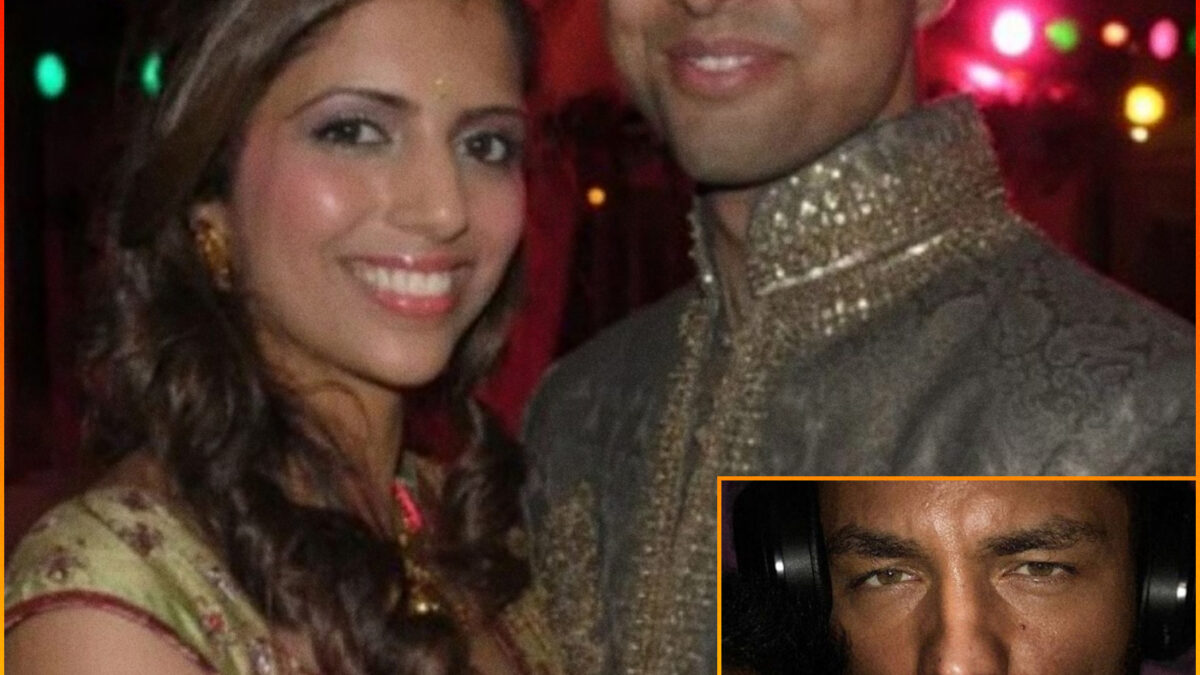
Some names and details in this story have been changed for anonymity and confidentiality.
Not all photographs are from the actual scene.
South Africa, Cape Town, November 13th, 2010.
About 20 hours and 30 minutes.
A dark minivan is slowly moving through the gloomy streets of the Google slum, a criminal area where tourists don’t dare to enter even during the day.
Inside are a newlywed couple from the United Kingdom, 31-year-old Shrian and 28-year-old Annie Dwani, who have just started their luxurious honeymoon.
Suddenly, armed men block the car’s path.
Within seconds, screams are heard.

Shrian is roughly thrown onto the muddy roadside, and the car and his wife disappear into the night.
The next morning, she is found dead with a single gunshot wound to the neck.
At first glance, this is a typical street robbery that ended in tragedy.
But very soon, investigators will find evidence that will make the whole world shudder.
The most terrible predator in this story could be hiding not in the dark alleys of Africa but sitting in the back of a taxi hiding his deadly plan behind the perfect smile of a loving husband.
Mumbai, India, the end of October 2010.
In a prestigious area of the city, a wedding is taking place that looks more like a high-budget movie project than a regular family event.
The celebration lasts exactly 3 days.
300 guests from all over the world are invited, and the total cost of the celebration is estimated at a staggering 200,000.
Everything looks flawless.
Huge banquet halls are flooded with soft lavender light.
Luxurious traditional outfits are embroidered with precious stones.
And golden jewelry is dazzling.
The newlyweds are at the center of the luxury.
31-year-old Shrien Dwani, a successful businessman from Bristol, takes the microphone and sings a hit from the ‘ 90s for his 28-year-old wife while slow dancing.
This is the zenith of their public happiness.
A perfect picture captured by dozens of cameras.
However, behind this dazzling facade lies a completely different reality.
The tension between the newlyweds is felt even before they have exchanged vows.
According to the testimonies of relatives who would later be included in the case file, including Sneha Mashru, Annie’s cousin, the bride had serious doubts about this marriage.
Sneha would recall how in the closed rooms of a luxury hotel away from the cameras, Annie tearfully confessed her reluctance to go on the honeymoon.
She complained about Shrien’s coldness and detachment.
The word divorce came out of her mouth before the wedding flowers had even wilted.
This latent anxiety, like a deep crack in a massive foundation, was the first harbinger of the disaster that was already waiting for them on another continent.
On November 7th, 2010, the couple arrived in Cape Town, South Africa.
They stay in a five-star hotel where a night stay costs hundreds of pounds.
It would seem that the change of scenery and African exoticism should smooth out the sharp edges of their relationship.
On November 13th, the third day of their honeymoon, the couple decides to have dinner at a restaurant in Somerset West, a picturesque town 30 m from Cape Town.
In the restaurant, according to the staff, they order seafood, have a quiet conversation, and absolutely nothing betrays the approaching tragedy.
At about 20:00, they leave the restaurant and get into a taxi.
Returning to the hotel turns into a fatal step.
According to Shrien’s later testimony, he suddenly suggests to his wife that they see real Africa.
Not the polished tourist postcards, but the real harsh life of the local population.
Their driver, Zola Tongo, who drives a spacious silver Volkswagen minivan, is directly instructed to deviate from the safe route.
The car turns toward Guugalthu, one of the most dangerous criminalized areas on the outskirts of Cape Town.
They pass the notorious Barcelona settlement.
Outside the car windows, the light of the street lamps instantly disappears, replaced by the dark outlines of shacks made of corrugated metal and rotten boards.
The luxury of Mumbai remains in another universe.
Absolute poverty and despair reign here.
At about 23:00 and 30 minutes at one of the dark unregulated intersections in the heart of Google, taxi traffic is suddenly blocked.
Out of the pitch darkness, two armed men run up to the car.
Chaos ensues.
Aggressive shouts are heard and the sound of broken glass is heard.
The criminals are acting extremely boldly.
The muzzle of a firearm is rigidly placed against Shrien’s head.
In his official statement to the police, the British businessman will claim that the attackers acted purposefully and shouted, “We’re not going to hurt you.
We just want the car.”
The hijackers acted with lightning speed, leaving no time for reflection.
The driver was the first to be thrown out of the car at gunpoint.
One of the attackers immediately jumps behind the wheel.
The other gets into the back seat and holds the frightened couple at gunpoint, threatening to k!ll them.
The car abruptly moves off, tires screeching loudly as it plunges into the tangled maze of Google’s narrow streets.
After driving for several miles in an unknown direction through the darkness of the slums, the kidnappers suddenly and sharply slam on the brakes.
The back door of the minivan opens and Shrien is forced to the dark side of the road.
He falls to the dirty asphalt, rolling in the dust, but remains completely unharmed.
The dark minivan with its engine roaring instantly disappears into the night, taking a frightened Annie with it forever.
31-year-old Shrien Dwani is left alone in the middle of a hostile criminal neighborhood.
His perfect wealthy life seems to be shattered in just a few minutes.
And the thick night silence of the African slums hides a terrifying conclusion which a stolen car is hurtling toward right now.
November 14th, 2010 begins in an atmosphere of suffocating, almost paranoid anticipation.
Nervous tension reigns in the offices of the Cape Town Police Department.
The South African authorities are under tremendous pressure.
Only a few months ago, the country successfully hosted the FIFA World Cup, investing huge amounts of money in security.
The disappearance of a young foreigner in a notorious slum threatens to create a major scandal that could scare away tourists forever.
Meanwhile, within the safe confines of the police station, Shri Dwani is playing his part.
According to the protocols, he looks like a man mad with grief.
Speaking to investigators, the Britain keeps repeating the same thing as if it were a memorized text.
The armed men looked him straight in the eye, swore not to harm them physically, and insisted on demanding only material possessions and an expensive car.
There was a vague hope in the air that this was a standard kidnapping and that the criminals would soon contact him with demands for a large ransom.
However, at 7:00, 50 minutes in the morning, this fragile hope is irrevocably shattered by harsh reality.
In the remote sector of Lingu West, located on the very outskirts of the ungoverned settlement of Hyelicha, a new day begins.
A local resident walking down a dusty street past corrugated metal shacks notices an abandoned vehicle.
It’s the perfectly clean silver Volkswagen minivan that all the patrols have been searching for since last night.
A frightened passer by does not dare to come closer and immediately calls the police.
It is on this muddy road that an event occurs that turns the whole story around and turns the case of an armed robbery into a brutal murder investigation.
The first patrol crews arriving within minutes instantly surround the area with bright yellow tape pushing the crowd away.
Officers with their weapons drawn approach the car, peering through the tinted windows into the back seat.
They see the lifeless body of Annie Dewani.
The woman is dead.
The crime scene is recorded by forensic experts with maximum procedural accuracy.
A detailed examination of the scene and the subsequent autopsy at the city morg reveal shocking details of her last moments.
Annie died of a single gunshot wound.
Forensic experts establish a deadly trajectory.
The bullet fired at extremely close range slid across the skin between her chest and left shoulder.
Entered the left side of her neck, ruthlessly severed vital arteries, pierced her spinal cord, and exited through her back.
The nature of the wound indicated that he died instantly from catastrophic blood loss.
Experts note that this was not an accidental shot in the dark or a result of panic.
It was a coldblooded, targeted execution.
Forensic experts working with the car are carefully compiling a list of missing items.
It would seem that superficial evidence points to a classic robbery.
A well-known brand watch, a white gold bracelet with diamonds, an exclusive designer handbag, a modern smartphone, and a luxurious wedding ring worth £25,000 were missing.
The total value of the stolen property is estimated by law enforcement at 90,000 rand, which is approximately $6,000.
However, an autopsy reveals a fact that completely changes the direction of the investigation.
The woman had not been sexually assaulted.
There were no marks on her body that would indicate an attempted rape.
For the family thousands of miles away from South Africa, this becomes the only small consolation in their boundless grief.
Her father, Wenod Hinda, upon learning the terrible news of his daughter’s death, falls to his knees with furious sobs in the waiting room of the international airport, ignoring the stairs of hundreds of passengers.
But for experienced homicide detectives, the absence of a rape attempt is a huge red flag.
The logic of the street crime crumbles before our eyes.
Why didn’t the brutal armed robbers having dragged a completely defenseless woman into an isolated criminal area rape her?
Why, having a representative of a wealthy family in their hands, did they not demand a ransom for her?
Why did they shoot her at point blank range like professional hired killers and simply abandon an expensive car that could have brought them considerable money on the local black market?
The coldbloodedness of the shot was too much like the fulfillment of a well-thoughtout order.
Carefully analyzing Shrien’s testimony that the criminals allegedly only wanted the car and promised not to k!ll them, the investigators begin to sense a piercing falsity.
The grieving widowerower’s story begins to burst at the seams under the inexurable weight of forensic evidence.
And the eyes of the police detectives slowly but inevitably turn from the dark streets of Google to the only person who got out of that damn car alive and completely unharmed.
Dear viewers, before we continue to dive into the dark details of this tangled case, I have one important request for you.
Please take a second to subscribe to the channel, leave a comment below this video, and like it.
This is how the platform’s algorithms work.
Your activity helps promote the video, allowing many more people to see our documentary investigations.
Your support is invaluable and allows the channel to exist and grow.
And now let’s get back to the dark events in South Africa.
November 16th, 2010.
Exactly 3 days after the fatal shot, Shrian Dwani is already leaving South Africa in a hurry.
He is boarding an intercontinental flight to take the body of his murdered wife back to the UK.
In his official statements, he explains this departure by the urgent need to be close to his family and receive condolences in a safe environment.
While Shrien is high in the sky, thousands of miles away from the crime scene, an unprecedented police operation is unfolding in Cape Town itself.
An elite unit of law enforcement launches the most aggressive investigation yet.
The country’s authorities feel a tremendous reputational threat and are determined to find the perpetrators at any cost.
On November 17th, taxi driver Zola Tongo sits down in front of investigators in an interrogation room.
He continues to persistently play the role of an innocent victim.
According to the interrogation protocols and transcripts, the driver monotonously repeats the same memorized story.
The attack was unexpected.
The armed men threatened him with physical violence and threw him out of the car onto a dark roadside first.
However, the experienced detectives sense a clear falsity in his every word.
They begin to act methodically.
On the same day, a group of investigators goes to the luxury five-star hotel where the British couple was staying and officially seizes the servers with the CCTV footage.
This footage becomes a real information bomb and shatters the alibis of the key players in the case.
The digital video dated November 14th, just a few hours after Annie’s bloody body was found in the criminal district, clearly shows a secret meeting between Shrian Dewani and Zolola Tongo.
The meeting takes place in a remote back room of a hotel away from staff and prying eyes.
In these silent black and white shots, Shrien, who had just lost his beloved wife the previous night, appears strikingly calm.
His movements are precise and deliberate.
He looks around cautiously, checking for any bystanders, and quickly hands the driver a white plastic bag.
As investigators would find out later, this bag contained exactly 1,000 rand in cash, which is equivalent to about 90 sterling.
The absence of sound in the video only enhances the ominous nature of the scene.
A difficult, unspeakable question hangs in the police office.
Why would a grieving widowerower secretly meet with the taxi driver who led them into a deadly trap and surreptitiously hand over the cash?
Along with analyzing the video footage, the police quickly get on the trail of the perpetrators of the bloody crime.
Based on cell phone billing data and tracking the activity of cell towers in the slums, the technical department identifies two local residents.
On November 17th, heavily armed riot police break down the door and brutally arrest Holle Mani.
The very next day, on November 18th, cold police handcuffs are snapped onto the wrists of his accomplice, Maziva Madota Quab.
The ring around the organizers of this demonstrative murder is rapidly narrowing.
Zolola Tongo, having learned that both of his accompllices are already locked in cells and that the investigation is in possession of incriminating video footage from the hotel’s back room, realizes the absolute inevitability of his exposure.
His perfectly planned lie collapses like a house of cards in a hurricane.
Feeling that the invisible noose of justice is tightening around his neck, he urgently hires a private lawyer and voluntarily surrenders to law enforcement.
On November 20th, the calm and calculating British businessman who looked like a cold-blooded director of this drama on the surveillance footage suddenly finds himself at the center of a huge international criminal scandal.
The grieving widowerower instantly turns into the main suspect in a brutal conspiracy.
But what the taxi driver tells the prosecutor’s office on audio will make even the most experienced detectives shudder and completely changed the course of the whole story.
December 7th, 2010 will forever be remembered in the history of South African forensic science as the day when the original official version of the Google tragedy was finally destroyed.
In the massive dark woodframed hall of the Western Cape High Court, absolute almost ringing silence reigns.
Dozens of journalists from all over the world are waiting with baited breath for the main witness to take the stand.
Defense lawyers, prosecutors, and the judge take their places.
The spotlight is on taxi driver Zola Tongo, who just a few weeks ago tearfully told the police how he had miraculously survived a brutal armed attack.
Now realizing the overwhelming weight of the evidence against him, he decides to change his tactics.
Tongo agrees to cooperate with the investigation as part of a formal plea agreement under section 105 of the local criminal procedure.
When Tongo begins to speak under oath, his monotone voice sounds like a sentence.
He drops a real information bomb.
There was no sudden carjacking.
The entire attack from the first to the last second was a carefully planned staging.
And the worst thing about these testimonies is that the customer of this brutal theatrical performance was not a local criminal authority, but Shrien Dwani himself.
According to the driver, the man who publicly mourned his young wife in front of TV cameras personally developed this coldblooded plan with the sole purpose of getting rid of Annie forever.
According to the official court transcripts, Tongo reproduces the chronology of the plot in detail.
He claims that during one of the trips, Shrien openly offered him exactly 15,000 rand for the physical elimination of his wife.
This amount, equal to approximately 1,300 sterling, was a cynical price for the life of a 28-year-old woman.
The driver admits that he had no experience in organizing contract k!llings.
So he turned to the receptionist of the five-star Monday hotel for help.
It was this employee who was well-versed in the criminal world of Cape Town who acted as an intermediary.
Quickly found local killers Mongeni and Miva Modu Quab who did not hesitate to do the dirty work for a portion of the promised fee.
During the interrogation, Tongo also reveals the secret of the video recording from the hotel’s back room.
The thousand rand in a white plastic bag secretly handed over by Shrien was only part of the payment.
A kind of advance for his role in orchestrating this bloody spectacle.
The case is gaining unprecedented resonance because of the legal compromises that the South African justice system has been forced to make to solve this crime.
In exchange for detailed and exhaustive testimony against a wealthy client, the taxi driver receives 18 years in prison instead of the 25 or even life sentence provided by law.
His accomplice also strikes a favorable deal with the investigators.
He agrees to testify against a British businessman in exchange for a guaranteed 25 years behind bars.
But the public is most shocked by the fate of the receptionist Monte Molumbo.
The man who actually connected the driver with the ruthless killers and coordinated their actions in cold blood is granted full immunity from prosecution by the prosecutor’s office.
All of this is done only to ensure that he can freely testify as the main prosecution witness.
Society and legal experts instantly find themselves facing a deep moral and ethical paradox.
In order to get to the alleged foreign puppeteer, the state openly makes deals with the direct perpetrators, the people who put a bullet in the neck of a defenseless woman.
Is it possible to trust the words of hardened bandits who are ready to point a finger at anyone to significantly mitigate their own sentence and avoid the death penalty?
However, the heavy machine of African justice is already running at full capacity.
And it is impossible to stop this inevitable process.
Based on the confessions received, the South African authorities acted with lightning speed.
An international arrest warrant was immediately issued for the British citizen.
On December 8th, 2010, the day after Tongo’s sensational testimony, the British police detained Shriand Dewani in his hometown of Bristol.
The official wording sounds like an absolute verdict on his reputation.
Suspicion of conspiracy to murder.
The Dewani family reacts immediately to the threat.
They hire one of the most famous and expensive PR agents in the UK, Max Clifford.
He immediately makes a loud, aggressive statement to the world press, calling all the accusations absolutely absurd, fabricated, and obscene.
Investigators in Cape Town and London are piecing together the evidence, but the prosecution’s logic is missing the most important fundamental detail.
In the detectives offices, the same question is constantly being asked.
Why would a young, fabulously wealthy businessman order the brutal murder of his wife just a few weeks after their luxurious wedding?
What dark secret could make a person take such a desperate step?
Detectives will start looking for the answer to this key question in the suspect’s personal past, not even realizing that the darkest corners of his life will shock the world even more than the fact of the bloody crime itself.
After the high-profile arrest of a British businessman in his hometown, the world’s media space is gripped by media hysteria.
Journalists, criminologists, and investigators on both sides of the equator are asking themselves the same fundamental question that haunts everyone.
Why?
Why would a young, successful, and incredibly wealthy man order the brutal murder of his beautiful wife just two weeks after a luxurious wedding in India, which cost a staggering £200,000.
The logic of an ordinary self-serving crime did not work here at all.
Money was not the motive because Shrien Dewani had plenty of it.
His business was booming.
The answer to this dark mystery is slowly beginning to emerge.
Not from the material evidence left in the interior of the abandoned minivan or from street surveillance footage.
It’s hiding in the darkest, most hidden corners of the global internet.
It turns out that behind the flawless, polished facade of an ideal husband and respected entrepreneur, Shrien led a deeply secretive double life, carefully hidden from his family.
Full of dirty secrets, investigative units specializing in cyber crime begin to piece by piece to reconstruct the suspect’s longdeleted digital footprint.
This invisible virtual archive becomes the very dark portal leading to the dungeon of his true desires.
The detectives discover his once very active profile on a specialized closed dating site.
The user’s nickname left no room for ambiguity and directly indicated very specific sexual preferences.
And it was at this key moment when the police were piecing together the scattered digital evidence into a single picture that a live witness came forward.
Leopold Lyser, a 43-year-old German escort worker based in Birmingham and well known in professional circles as the German master, addresses the British press and law enforcement.
Lyser gives official testimony that has the effect of an unexloded bomb in society.
He states on the criminal record that he personally met with Shrien to provide paid intimate services at least three times between 2009 and 2010.
According to a detailed reconstruction of the conversations based on the testimony of the escort, their secret meetings were not always limited to physical contact.
During the confidential conversations in the semi darkness of the hotel rooms, Shrien looked extremely depressed and emotionally exhausted.
He constantly complained about the tremendous psychological pressure from his large conservative family, which literally forced him to enter into a traditional marriage in order to maintain the clan’s impeccable reputation at all costs.
According to Licer, the businessman frankly admitted that he desperately needed to find a way out of this hopeless situation as he was suffocated by the need to live a total lie, but at the same time panicked to go against the unwavering will of his parents.
Lyser’s wakeup call came about 3 weeks after the bloody events in South Africa.
When he logged onto a dating site, he noticed that the profile of his regular client had suddenly and completely disappeared.
Guided by professional curiosity, or some vague premonition, the escort sent his former client a short text message on his cell phone asking if he was okay.
The response came quickly and was as dry as possible, devoid of any emotion.
Shrian wrote that he was very, very busy and would get back to him later.
Shortly after this short correspondence, when Lyser accidentally saw his client’s face on the front pages of national newspapers in the gruesome context of the investigation into Annie’s brutal murder, he instantly put all the pieces of the puzzle together.
Realizing who this man really is and what exactly happened that night in the slums of Google, the escort makes a cynical but extremely pragmatic decision.
He sells the exclusive rights to the story to a famous British tabloid for £18,000, turning his client’s dirty secret into the biggest global sensation of the year.
For the griefstricken Hindocha family, these newspaper articles become another absolutely devastating blow, which hits them harder than the news of the girl’s death.
The father of the murdered Annie, Vinod, cannot stand it and speaks to the numerous press with a fierce statement full of unbearable pain.
With tears in his eyes, he asks right into the lenses of the cameras, “What father in the world would allow his beloved daughter to marry a man who sleeps with men?
This whole wedding was a cynical fake, a rehearsed drama, and I am going to condemn it.
My daughter left this world for nothing.”
For nothing.
For the whole family, it becomes crystal clear that their cheerful girl was just a beautiful decoration, a powerless tool to create an ideal public image.
The motive for this brutal crime suddenly takes on completely new, incredibly frightening outlines.
Anna’s contract k!lling no longer looks like an act of spontaneous hatred.
It appears as the worst act of human cowardice.
According to the new finalized version of the prosecution, Shrienne was firmly held hostage by the rigid cultural traditions and social taboss of his community.
Instead of finding the courage to honestly call off the wedding, come out and face social disapproval, he deliberately chose a different path.
He decided to become an untouchable, griefstricken widowerower forever, hiding his secret at the expense of the life of an innocent young woman.
The picture of the crime looks eerily complete.
The British police have the main suspect firmly in their grasp, and the evidence they have collected seems absolutely irrefutable.
The South African authorities are already preparing official documents to transfer the arrested man to a detention center in Cape Town.
But the prosecutors, confident of their victory, do not even suspect that the most important battle in this case will unfold not in interrogation rooms, but in the securely locked white wards of psychiatric clinics.
The next few years would turn a dynamic criminal investigation into a grueling, drawn out and unprecedented legal war between two states, South Africa and the United Kingdom.
The authorities in Cape Town, with the signed confessions of the accompllices and an international warrant in hand, are continuously sending official requests.
They categorically demand the immediate extradition of Shri and Dwani so that he can stand trial for organizing the brutal murder.
However, a brilliant, incredibly expensive team of London lawyers stands in the way of South African justice.
The British businessman’s defenders are well aware that the evidence base in Africa is too dangerous for their client.
So, they are building an absolutely impenetrable line of defense.
It is not based on refuting the facts of the crime or an alibi, but solely on medical reports and multi-page psychiatric examinations.
According to official medical documents that lawyers regularly provide to London judges after the nighttime tragedy in Google, Shrien developed extremely severe post-traumatic stress disorder accompanied by deep paralyzing clinical depression.
The court in London, having carefully studied the conclusions of leading British psychiatrists, makes an unprecedented decision.
The magistrates rule that the suspect’s current unstable mental state and extremely high risk of suicide make it physically impossible for him to be safely transported and given a fair trial in another country.
Thus, extradition is officially blocked for many years.
Shrian Dwani is safely hidden from the flashes of journalists cameras and uncomfortable police interrogations.
He is regularly transferred from one closed psychiatric clinic to another.
At the court hearings in London, the lawyers skillfully paint a tragic picture before the judges.
They describe their client as an empty shell of his former self, as a deeply ill patient who does not respond to medication at all and barely understands what is happening around him.
For the family of the murdered Anna, who are forced to helplessly watch this endless procedural red tape from abroad, this period becomes a real psychological hell.
They openly call this endless process of medical examinations and appeals legal torture.
The girl’s father has repeatedly publicly pleaded with the British courts to give them the only opportunity to hear the truth under oath.
The family refuses to believe in Shrien’s sudden insanity and believes that the thick walls of elite psychiatric hospitals are just a convenient millions of pounds paid safe haven from a cold African prison.
Meanwhile, while London lawyers argue over diagnosis and drug dosages, in South Africa, local courts continue to methodically hand down harsh sentences to the perpetrators of the night’s attack.
In November 2012, Holele Mani, the man who, according to the investigation, directly pulled the trigger, was brought to trial.
After a short trial, he is found guilty of premeditated murder.
The judge sentences the killer to life in prison despite one tragic medical fact.
Many suffers from an inoperable fatal brain tumor.
He would never be released and would die in a closed prison hospital in October of 2014.
However, it is during these trials of local bandits that extremely disturbing, gloomy details suddenly surface, forcing many experts to rethink the entire course of the investigation.
The lawyers of the convicted killers make shocking official statements in the courtroom.
They claim under the criminal record that the South African police acted in ways that were infinitely far from basic legality.
According to their testimony, detectives of the elite unit used brutal physical torture against detainees.
In particular, they systematically beat the suspects with a heavy police flashlight during hours of night interrogations in the basement of the department.
The defense insists that these brutal methods were used for one specific purpose, to force the uneducated local criminals to testify against a wealthy British businessman.
These gruesome statements cast a first but very thick shadow of doubt on the overall quality of the South African investigation and the absolute reliability of the very confessions on which the entire foundation of the prosecution is firmly based.
This is the first dangerous crack in the prosecution’s flawless case.
However, the ruthless legal machine has already gained inevitable inertia and continues to move forward.
The British authorities have been scrutinizing the case for years, but even the enormous resources of the defense are not unlimited.
Only in April 2014, after prolonged forced treatment and dozens of rejected appeals of the highest level, the British judicial system finally exhausts all possible legal grounds for further refusals.
The medical board recognizes the suspect’s condition as sufficiently stable and suitable for full participation in the trial.
The yearslong battle of medical diagnosis suddenly ends in defeat for the defense.
Under the cover of strict secrecy and under the heavy guard of armed officers, Shri and Dwani is put on board a private jet.
He leaves the safety of British soil forever.
Heading towards the harsh justice system of South Africa.
Ahead of him is not just another court hearing, but the real uncompromising trial of the decade, during which two completely opposite versions of the bloody truth will clash in the courtroom, and neither side realizes how fragile and vulnerable their most important trump cards will suddenly be.
October 2014.
The tense, almost electric atmosphere reigns in the spacious, heavy oak panled courtroom of the Western Cape High Court.
The trial, which the world press has already loudly dubbed the case of the decade, is about to begin.
Hundreds of journalists, cameramen, and crime reporters from different continents are crammed into the press benches, capturing every detail.
The state prosecution radiates absolute, unshakable confidence in its victory.
Thick folders with documents are neatly laid out on the prosecutor’s desks.
Signed confessions from three direct accompllices in the crime, digital copies of video recordings from the hotel back room where the money was allegedly transferred, and their main trump card, the collected evidence of the defendant’s scandalous double life.
It seemed that the trap was completely closed and the British businessman was doomed to spend the rest of his days in a harsh African prison.
However, on the first day of the hearing, something happened that the prosecutors did not expect at all.
Shrian Dwani makes a lightning fast and extremely unexpected tactical move.
Instead of nervously defending himself against the dirty accusations of the yellow press, he reads out an official statement in front of dozens of TV cameras and a crowded room.
In it, he openly acknowledges his bisexuality and directly confirms the facts of repeatedly turning to men for intimate services on a paid basis.
This step instantly knocks the main psychological trump card out of the prosecution’s hands.
The shock that the prosecutors were counting on to influence the court was completely neutralized.
The mystery is no longer a mystery and thus has lost its destructive power forever.
Next, an elite defense team led by experienced and ruthless cross-examination lawyer Francois Vanzel takes over the case.
He begins to methodically, step by step, tear apart the prosecution’s carefully constructed case into small pieces.
Vanzale demonstrates to Judge Janette Traverso that the testimony of key witnesses who have made generous deals with the investigation is full of gaping logical holes and outright lies.
Taxi driver Zolola Tongo confidently claimed under oath that he had coordinated all the details of the contract k!lling with Shrien via hidden text messages.
However, when the defense presents the results of an independent computer analysis of both cell phones to the court, the shocking truth emerges.
The technical experts do not find any such messages.
They simply never existed in digital nature.
The next person to come under a crushing barrage of cross-examination is the receptionist Monday.
His story under pressure from Vanzale turns out to be so contradictory that it finally undermines any trust in the quality of the police investigation.
Driven to a standstill by uncomfortable questions from his lawyer, openly admits on the court transcript that he deliberately lied under oath in the previous trials of the killers.
He did so solely to cunningly conceal his real much more significant role as the leader of this criminal group.
The court’s reaction was immediate and extremely harsh.
An enraged judge Traverso officially and irrevocably stripped Mumbalombo of his previously promised state immunity from prosecution.
Subsequently, Judge Traverso deals the prosecution another, this time absolutely critical blow.
She categorically forbids the inclusion of the testimony of the so-called German master and a large folder with Shrien’s personal emails in the case file.
The judge makes a strict procedural ruling.
The sexual orientation of the accused does not legally prove his motive for k!lling his young wife.
Her cold, steelely words addressed to the pale prosecutor echo in the courtroom.
The fact that he is bisexual is irrelevant.
You can’t sneak in the back door what you couldn’t bring in the front door.
The milliondoll motive, artificially inflated by tabloid gossip, crumbles to dust.
The final nail in the coffin of the prosecution is driven in by an independent forensic and ballistic examination.
The defense with the help of leading experts convincingly proves that the trajectory of the fatal bullet indicates a completely different course of events in the dark taxi.
According to their scientifically based theory, the firearm was fired accidentally during a desperate physical struggle in a confined space.
Annie resisted until her last breath and fought desperately with her captors for her expensive designer handbag.
Vanzale convinces the court that the tragedy in Guggaletu was a common, brutal, but extremely unsuccessful kidnapping for ransom that went wrong precisely because of the brave victim’s unexpected resistance.
There was no contract k!lling, only the uncontrolled panic of inexperienced street robbers and a fatal shot in the dark.
In December of 2014, Judge Janette Traverso made a sensational historic decision.
She officially declares that the prosecution’s case, based entirely on the testimony of admitted criminal liars and straw men, is so weak that the case should be dismissed early, even before it reaches the defense stage.
Shrian Dewani is fully acquitted of all criminal charges.
All restrictions are immediately lifted and he is released right in the courtroom.
However, while the British businessman surrounded by a tight ring of security makes his way through the crowd of stunned reporters to the first breath of free air, a heavy, eerie feeling of absolute injustice remains in the room.
Because the real solution to that bloody African night is now in danger of disappearing forever.
Immediately after the short but decisive word acquitted was heard in the tense high courtroom.
Shriwani does not waste a single minute.
As a matter of principle, he does not give joyful interviews to reporters who are on duty around the clock outside the massive doors of the courthouse and does not look into the lenses of television cameras.
Under the reliable cover of private security, he quickly gathers his belongings, silently gets into a tinted car and drives at high speed to the Cape Town International Airport.
On the same day, he boards a transcontinental plane, leaving South Africa forever.
A country that had almost turned into a lifelong stone prison for him.
The British businessman returns to his native Bristol, hiding from public scrutiny behind the high fences of his family’s estate and leaving a trail of destroyed lives far across the ocean.
For the Hindocha family, this unexpected judicial ending means the absolute crushing destruction of all their hopes for higher justice.
Anna’s relatives, who have spent years flying to the grueling court hearings from another continent, are left alone with a deep black sense of emptiness.
Their desperate struggle for years ended in a total procedural collapse.
The father and family never received direct answers to their most painful questions.
What exactly was Shrien secretly discussing with the taxi driver in the back room of the hotel before the tragedy?
Why did he so carefully conceal his dual identity, allowing a young, naive girl to enter into this fatal marriage?
According to the family’s bitter statements to the world press, the British legal system impeccably protected the rights of the accused.
But the African judicial machine completely failed to protect the rights of the brutally murdered woman.
The fates of the other direct participants in this bloody drama are different, but none of them get a happy ending.
The killer, Holele Mani, who according to the official version of the investigation, made that single fatal shot to the neck, is never released.
He slowly fades away and d!es in a closed prison hospital from a severe brain tumor, forever taking the true motives of that night into the damp earth.
The former receptionist of the elite Mande and Balumbo Hotel, whose sworn testimony was officially recognized by the court as a manipulative lie, is publicly deprived of the promised state immunity.
Driven into a dead end, he confesses to local journalists.
My life is completely destroyed by what I did.
I cannot sleep at night.
I am constantly haunted by the shadows of the past.
His reputation has been destroyed and he faces the threat of new criminal charges for perjury.
Taxi driver Zola Tongo, the man whose revelatory confession actually launched this global scandal, nearly sending Shrien to the gallows, eventually receives his cynical bonus for cooperation.
Despite loud public outcry and enormous indignation from the victim’s family, a special commission decides to grant him parole.
After serving only part of his sentence, he walks the streets of Cape Town as a free man, but with the eternal stigma of being the organizer of the murder.
The second armed shooter, Maziva Mado Cuave, continues to monotonously serve his long sentence in a harsh cell in a South African prison.
His only dim prospect is to be released no earlier than 2027.
Meanwhile, the gloomy slums of Google continue to live their harsh, marginalized lives.
The dirty roadside in the Lingalletu West neighborhood, where the abandoned minivan with Annie’s lifeless body was found that cold morning has become just another forgotten spot on the metropolis’s bloodstained criminal map.
The Diwani case ruthlessly exposed a deep crisis in South Africa’s legal system.
Law enforcement officials came under a devastating barrage of international criticism for risking to build a high-profile prosecution solely on the shaky words of hardened criminals.
The system allowed the criminals to openly trade the truth for lighter sentences, making dirty deals that naturally fell apart under the microscope of a skilled defense.
This documentary narrative leaves us face to face with a fundamental insoluble dilemma.
Was the British businessman really a cold, calculating psychopath who ingeniously organized the murder of his own wife by someone else’s hands for a ridiculous amount of cash and then masterfully exploited the incompetence of the local police to get away with it.
Or perhaps the reality is much more frightening in its brutal simplicity and he was just a tragic victim of circumstance.
A man whose perfect life was suddenly broken by ordinary street robbers and desperate investigators simply made him the perfect scapegoat, torturing the necessary testimony out of the real killers.
The real undisputed answer to this terrible question is most likely known to only one person.
This man now lives a quiet, private life in the UK.
Meanwhile, Anna’s last secret, her unspeakable fear and pain, will forever remain a silent ghost, safely locked away in the dark, cold African Night.








