She Said “You Owe Me Rent”… I Offered Something She Never Expected
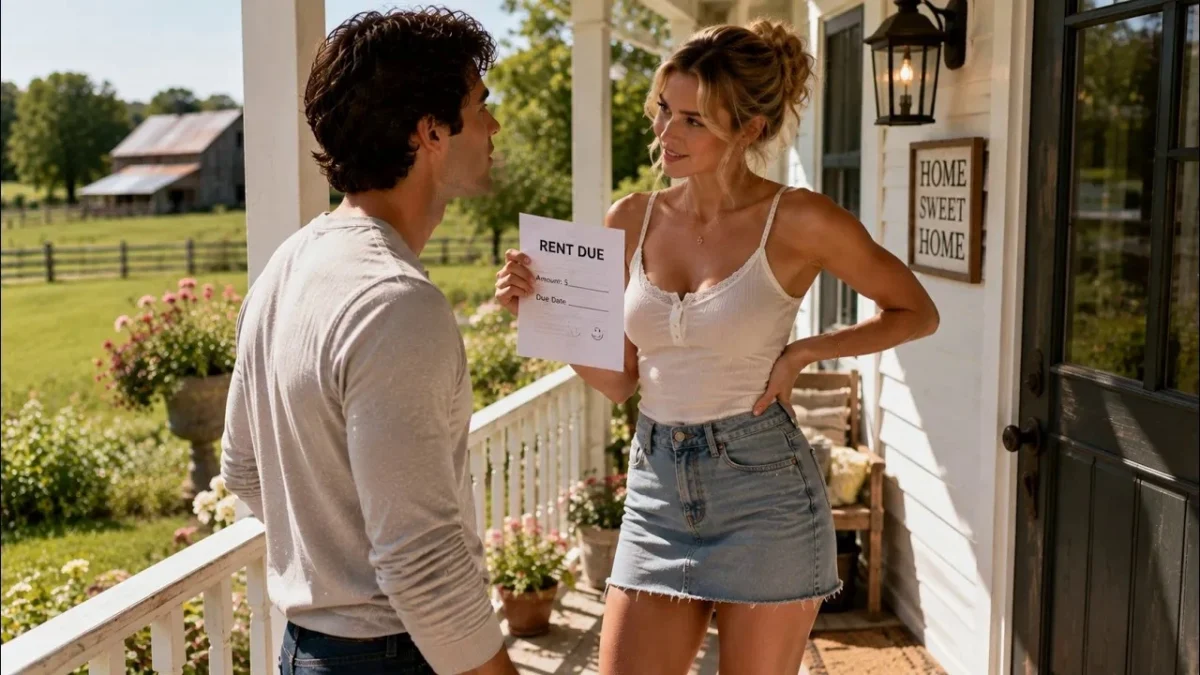
You owe me rent, she said calmly. Her voice was soft, but it cut through the night like a knife.
We were on the porch, the rain tapping on the roof, the grape vines wet and shining in the glow of the small lamp between us.
Marlene sat in her usual chair, a mug of tea in her hands, her brown eyes steady on mine.
My heart was beating too fast. I wrapped my fingers around my own mug just to keep them from shaking.
I should have just said I would pay. I should have nodded, gone back to my room and kept things simple.
But nothing about this house or about her felt simple anymore. So I looked at her and asked, “What if I gave you something better?”
Before I tell you what she said, I should tell you how I ended up here in the first place.
My name is Josh. I am 25, fresh out of the University of Washington with an architecture degree that still has not done much for my bank account.
Seattle is rough when you are broke. It rains a lot. It is expensive. The city feels busy and cold at the same time, like it does not care if you stay or leave.
After graduation, I stayed in the dorms for a few weeks. I was living on instant noodles and cheap coffee, doing small freelance design jobs.
I made floor plans for tiny offices and startup spaces, whatever people would pay for.
It helped, but it was not enough for a real apartment. My classmates were posting pictures of new lofts with city views.
I was just trying to make sure my car did not die. I needed a place that was cheap and quiet, somewhere I could think and work, not a party house, not a basement with mold.
After days of looking at listings that were way out of my price range, I was close to giving up.
Then I saw the flyer. It was taped to the window of a laundromat near my favorite coffee shop.
The paper was a little wet from the rain. The ink had smudged in spots, but I could still read it.
Room for rent. Second floor, private utilities included. Quiet tenant wanted. Must respect privacy. Contact Marleene.
There was only an email at the bottom. No phone number, no website. It felt old and a little strange, like something from another time.
But I was desperate. I took a picture of the flyer and sent her a short email right there on my phone.
Hi, my name is Josh. I just graduated from UW and I am looking for a room.
I saw your flyer. Is it still available? I did not think she would answer.
In this city, landlords wanted proof of income and perfect credit and probably your soul, but an hour later, my phone buzzed.
Come by tomorrow, 6:00 p.m. I do not promise anything. I choose my tenants carefully.
That was it. No dear, no thank you, just those lines. The tone was firm and a little cold.
I pictured an older woman with gray hair and a sweater, maybe a cat on the couch and a long list of rules.
Still, I wrote back that I would be there. The next day, I drove out to her place.
It was in a quiet suburb just outside Seattle. The streets were lined with big old trees.
The houses looked like they had seen years of rain and stories. It was nothing like the glass towers downtown.
The air smelled like wet earth and leaves. Marlene’s house was two stories with wood siding and a sagging front porch.
Grape vines climbed up one side and curled around the railing. There was one warm light in the front window.
It was not fancy, but it was clean. Lived in. Real. I knocked my hand a little damp from the rain and nerves.
The door opened and any picture I had in my head vanished. Marlene was not old at all.
Maybe 43, maybe a little younger. Her brown hair was pulled back in a loose bun with a few strands falling around her face.
She wore a white button-up shirt with the sleeves rolled up and dark pants that moved softly when she walked.
Her feet were bare. Her skin was pale from the Seattle light, and there were faint lines at the corners of her eyes, but they only made her look more real.
Her eyes were the thing that hit me. Deep brown, sharp, not unkind, but careful, like she was used to looking through people, not just at them.
“You’re Josh?” She asked. “Yeah,” I said, wiping my hands on my jeans. “Hear about the room.”
“Come in,” she said. You can see it, but do not get your hopes up.
I am picky. Inside, the house smelled like cedar and rain. The floors creaked, but not in a bad way.
A mug of tea sat on the counter. There were books stacked on a side table and a half-finish sketch on the coffee table.
It felt like someone actually lived here, not like a staged rental. She led me up a narrow staircase to the second floor.
The room was small, but it felt perfect. A single bed with a quilt, a simple desk by a wide window, a shelf with a few old novels.
Outside the window, I could see the backyard, all green, with grape vines and a small garden, dark and wet from the rain.
It is quiet up here, she said, leaning on the door frame. I needed to stay that way.
No parties, no loud music, no guests coming and going. I live alone. I like my space.
That is fine, I said. I could already imagine myself at that desk late at night sketching plans.
I am not a party guy. She watched me for a moment like she was trying to see if I meant it.
800 a month, she said. Utilities included. One month trial. If it works, we talk again.
If it does not, you go. I can do that, I said, my heart beating a little faster.
I think I’m exactly what you are looking for. She did not smile, but the corner of her mouth moved a little like she might.
“We will see,” she said. I moved in the next day. My whole life fit into my old Honda.
A duffel bag of clothes, a box of books and sketch pads, my laptop, a cheap lamp.
It did not take long to unpack. The room looked almost the same when I finished, like it was waiting for me, and not surprised at all that I came.
The first week was quiet. I woke up early, worked at my desk, and listened to the rain on the window.
Marlene moved through the house like a ghost. I heard the soft sound of her steps, the clink of dishes in the kitchen, the back door opening when she went to the garden.
Sometimes I saw her outside in a faded sweater, hands deep in the soil. Sometimes she sat on the porch at night with a book and a glass of red wine, jazz playing low from a small speaker.
She always looked calm, but there was something under it. Something that felt like a weight.
We did not talk much. A short morning in the kitchen, a nod when I passed her on the porch, but every time I noticed a little more, the way her fingers wrapped around her mug, the soft curve of her lips when she smiled a tiny bit, the way the house seemed to fit around her.
I told myself I was just getting used to my landlord, that it was normal to notice someone you lived with.
Then the email came. We need to talk about the rent tonight. 8:00 p.m. Porch.
My stomach dropped. I checked my bank app three times. I was up to date.
I had not broken any rules. Still, my hands would not stop shaking as the clock crept toward 8.
At 8:00 p.m., I stepped out onto the porch. The air was cool and damp.
The grape vines dripped from an earlier shower. Marlene was already there, sitting in her chair.
The small lamp casting a warm circle of light around her. A teapot and two mugs sat on the table.
She poured tea into one cup, then into the other, and slid one toward me.
“Sit,” she said. “I did.” She watched me for a long second, her eyes soft but unreadable.
Then she said it in that calm, steady voice that had started to feel like the sound of this house.
You owe me rent. Quote, My heart started racing. I almost blurted out that I would find the money that I could pick up more work.
Instead, I took a breath, looked at her across the table, and heard myself say the words that would change everything.
What if I gave you something better? For a second, she did not react. The rain filled the space between us, steady and soft, tapping on the porch roof and sliding down the grape leaves.
The lamp hummed, casting a warm circle of light over her face. Marlene’s fingers tightened around her mug, and her eyes searched mine like she was trying to see if I was joking.
“Something better,” she repeated, her voice calm, but there was a small shift in it, like a crack in the surface.
“And what would that be, Josh?” My throat felt dry. I had not thought that far.
The words had just come out, pulled by the fear of losing this place, of losing the quiet, of losing whatever strange thing had started to grow between us.
I glanced down at my hands, then back at her. “You said you choose your tenants carefully,” I said slowly.
“You said you do not really need the money. Not like some landlords do. I think what you really want is someone who makes this house feel less empty.”
Her eyes sharpened at that like I had stepped a little too close to something private, but she did not shut down.
She just leaned back in her chair, the sweater slipping slightly off one shoulder, and watched me.
“You have been here what, a month?” She asked. “You think you have me figured out already?”
“No,” I said quickly. “I do not, but I see things. The garden, the music, the books, the sketches.
The way you sit out here at night and listen to jazz like you are waiting for something that is not coming.
Her gaze dropped to the grape vines, then back to my face. The calm in her eyes shifted into something else, something softer, but also more dangerous.
You are not wrong, she said quietly. This house is quiet. Sometimes too quiet. She set her mug down with a soft clink, then folded her hands in her lap.
I do not need someone to fix that for me. She added, I am not looking for a savior.
I am not lonely in the pathetic way people like to imagine. Quote, I know I said, you’re strong.
You own this place. You take care of it. You take care of yourself. But even strong people want to hear another voice sometimes.
Her lips twitched at that like she was fighting a smile. So your offer, she said.
What is it? Quote. I took a breath. Let me pay less rent, I said.
And in return, I give you time. Every night, 10 minutes, I read to you anything you want.
My designs, a book, something real, something that makes this house feel alive again. The words felt wild, coming out of my mouth, but also right.
I had not planned them. They were just there, sitting in my chest, waiting for a chance.
She went very still. For a long moment, the only sound was the rain and the distant hiss of cars on the wet street.
Then she laughed once, a short low sound, not mocking, but surprised. You think that is better than money?
She asked. For you? I said. Yeah, I do. She stared at me like she was trying to decide if I was brave or stupid.
Maybe both. Then she looked past me out into the dark yard, her jaw tightening.
Someone used to read to me,” she said, her voice softer now, almost like she was talking more to herself than to me.
“Every night on this porch, poetry, stories, even stupid jokes from the paper. It made this place feel warm.”
Then he left, and all I had left was the silence and the bills. Her fingers traced the rim of her mug, slow and careful.
“I kept the house,” she went on. “I kept the garden. I kept the quiet.
I told myself I liked it, that it was easier. No mess, no noise, no one to leave again.
She looked back at me and for the first time her gaze was not sharp or guarded.
It was open, tired, honest. Do you know what happens when a house is too quiet for too long, Josh?
I shook my head. It starts to feel like it is only half alive, she said.
Like it is waiting for someone to breathe into it again. My chest achd. Then let me give you that, I said.
Not forever, not some big promise. Just 10 minutes at a time. Her eyes held mine, and I could feel her weighing my words.
Weighing me. How much is your rent now? She asked. 800, I said. You know that.
If we do this, she said slowly. If you read to me every night, real things, not fake chatter, not some script you find online, I cut it in half.
400. You show up. You are honest. You do not treat it like a game.
My heart jumped. I can do that, I said quickly, her gaze sharpened again. Do not answer fast just because you are broke, she warned.
This is not nothing. Reading is a kind of intimacy people forget about. I am asking you to let me hear your voice when you are not hiding behind small talk.
I swallowed, feeling the weight of it now. She was right. It was not just about rent.
It was about letting her into my head a little, letting her hear what I thought, what I dreamed, what I was scared to say.
“I get it,” I said. “And I still want to do it.” She held my eyes for another long, heavy second.
“Okay,” she said finally. “We start tomorrow. Nine pages m bring something that matters to you, not some fake thing to impress me.”
The corner of my mouth pulled into a nervous smile. “Yes, ma’am,” I said. She rolled her eyes lightly.
“Do not call me ma’am. It makes me feel like an old teacher.” “My name is Marlene.
Use it.” “Marlelene,” I said, and her name felt strange and warm in my mouth, like I’d been saying ma’am, even in my head till now.
She stood up, gathering the mugs. Our fingers brushed for a moment when I handed her mine.
And even that light touch sent a small jolt up my arm. “You can go,” she said, her voice back to calm but not cold.
“I have to clean up. Try not to overthink this.” “Too late,” I muttered as I stood.
She heard it, and a small smile flickered over her lips before she turned away.
Back in my room, I stared at my shelves. Books, sketch pads, old notebooks. I pulled down one of the sketch pads where I had written notes about houses I wanted to design one day.
Not for clients, for myself. Houses with wide porches, big windows, warm light. Houses that felt like they were made for living, not for showing off.
My chest was tight. This was what I had offered her, a piece of myself.
Night after night. When nine pages m came, I was more nervous than I had been for any exam.
The porch was the same as always, but it felt different now, like the air was thicker.
Marlene sat in her chair, a blanket over her lap, the lamp casting a soft halo around her.
“No tea this time, just a glass of red wine by her hand. The jazz was playing low in the background.”
“You are on time,” she said. “Good. Thought you might evict me if I was late.”
I joked weakly. She gave me that almost smile again. Sit down, Josh. I sat, my sketch pad in my hands.
My fingers left faint smudges of graphite on the edge of the paper. What did you bring?
She asked. Notes, I said. My own. About houses I want to design one day.
Not for clients, for me. Her eyes warmed at that. Then read, she said. Let me hear what your world sounds like.
So I started. I read about a house with a big porch facing the sunset, where the light turned the wood golden in the evening.
I read about a kitchen that always smelled like bread, with open shelves and plants in the windows.
I read about a small upstairs room with a wide window and a desk where someone could sit and sketch while the rain hit the glass.
At first, my voice shook. I stumbled on my own words, hearing how raw they sounded out loud.
But after a minute, it evened out. The more I read, the more the porch faded, and the more I felt her listening.
She did not interrupt. She did not comment. She just watched me, eyes half closed, like she was letting the pictures settle inside her.
When I finished, I closed the sketch pad and looked up, my heart beating fast.
That was 10 minutes, I said. Probably more. It was, she said. And it was good.
You mean the designs? I asked. She shook her head. I mean, hearing you, she said softly.
The way you want things. The way you imagine light and space. It tells me more about you than any small talk could.
Heat rose to my face, but not in a bad way. It was strange being seen like that.
Not from what I had done, but from what I dreamed about. Same time tomorrow?
I asked. She nodded. Same time. Bring something else. But keep it real. Quote. I stood to go, my legs feeling oddly light, like I had been running.
At the doorway, I turned back. Marlene, I said about the rent. She raised a brow.
Yes. 400 feels like too little for what you’re getting, I said before I could stop myself.
She smiled then, a slow, quiet smile that made her look younger for a second.
“Trust me, Josh,” she said. “I am getting exactly what I asked for.” That night, lying in bed listening to the rain, I realized something.
This house was not just a roof for me anymore. It was turning into something else.
A place where my voice mattered. A place where hers did, too. And 10 minutes a night did not feel like payment.
It felt like the beginning of something I did not have a name for yet.
Our deal was simple. 10 minutes a night for half the rent. But after a while, it stopped feeling like a deal.
Those 10 minutes became the part of the day I waited for. The rest of the hours were gray and quiet.
Work at my desk. Emails, sketches for clients who cared more about square footage than light.
The city side in the distance, always wet, always busy. Then nine pages m would creep closer, and my chest would get tight in a different way.
Most nights we met on the porch. The lamp glowed warm. The grape vines shifted in the wind.
The rain made a soft curtain around us. Marlene would sit in her chair with a blanket over her lap and a mug of tea or wine in her hands.
I would sit across from her with a notebook or book, my heart pounding like I was about to go on stage.
At first, I read notes about houses, ideas for porches and windows, kitchens that felt like hugs, rooms that caught the morning light.
She listened with her eyes half closed like she could see the spaces in her mind.
Then I ran out of neat designs and started bringing messier things. Pieces of a journal I never meant to share.
Short lines I wrote when I could not sleep. Half poems about feeling lost and tired and 25 with no real plan.
Sometimes I stumbled, sometimes my voice cracked. Marlene never laughed. She just stayed with me word by word.
She never gave long comments. That was not her way. Sometimes she just nodded. Sometimes she said, “Read that line again.”
And I would trying not to shake. The more I read, the more I watched her, too.
I noticed how her shoulders dropped a little when I started. How her fingers relaxed around her mug.
How when something hit her, her jaw tightened just for a second. It felt like our lives were slowly spilling onto the wooden boards between us, one sentence at a time.
One night, about 6 weeks in, I brought something different. It was not about a house.
It was about her. I did not write her name. I was not that bold.
But I wrote about a woman behind a door I do not know how to open.
Someone who lives in a quiet place, who walks barefoot through a house she loves, who is strong and calm and carries a loneliness she thinks no one sees.
Someone I am afraid to want because I am scared I will lose her or break her or both.
I almost did not read it. I almost grabbed something else. But when nine pages m came and I saw her waiting in the porch light, hair loose, sweater falling off one shoulder, I knew I could not lie.
Not to her, not to myself. So I read it. My voice shook on the first line.
By the second, my throat felt tight. When I got to the part about being afraid to open the door, my chest hurt so bad I had to pause.
I forced myself to finish and then closed the notebook, staring at my hands. I did not dare look up.
Silence stretched between us. The jazz played low in the background. The rain hit the steps.
I could hear her breathing. Finally, I lifted my head. Marlene was looking at me in a way she never had before.
Not soft, not guarded, just open. Her eyes shone in the lamplight like she was holding back tears and anger and something else I did not know how to name.
She did not say thank you. She did not say it was good. She did not say anything.
She stood up. Her blanket slipped a little. The sweater shifted on her shoulder. For a second, I thought she might walk toward me.
Instead, she turned and walked back into the house without a word. The screen door clicked shut behind her.
The porch felt colder all at once. I sat there with my notebook in my lap and stared at the empty chair, my heart pounding hard and sick.
I replayed the words in my head and felt stupid, too honest, too young, too much.
After a while, I went back to my room, dropped the notebook on my desk, and lay on my bed, staring at the ceiling.
The house creaked. The rain tapped the glass. I did not sleep. In the morning, something was outside my door.
A sheet of thick sketch paper folded once. I picked it up with shaky hands and opened it.
It was a drawing. Simple but clean. A room with a wide window. Sunlight spilled across a wooden floor.
There was a bed with a quilt, a small desk by the window. Outside, through the glass, I could see a garden, wild and green.
It looked a lot like my room. At the bottom, in neat handwriting, was one line.
If you want to draw a different life, start with this. Marlene, my chest tightened so hard it almost hurt.
I read that line over and over until the words blurred. It was not a speech.
It was not a promise. But it was an answer. She had heard me. And she was not running.
Not really. That night, I went to the porch early. I did not bring my notebook.
I brought a thin book of poems I found in a used shop. The cover was worn.
The pages smelled like dust and time. It felt right. Marlene was already there when I stepped out.
Her hair was down. Her hands were wrapped around her mug like she needed the warmth.
“Hi,” I said, my voice softer than I meant. “Hi,” she said. We looked at each other for a long second.
It felt like trying to cross a river with one step about last night, I started.
She held up a hand. “You read something real,” she said. “More real than I was ready for.
That is not your fault. I did not mean to make you uncomfortable, I said.
You did not, she answered. You made me feel seen. That is different. That is harder.
She took a breath. I stopped painting because someone told me it was not enough, she said.
That it did not pay. That it did not matter. I believed him. Then he left anyway.
I kept the house. I lost the part of me that made it feel like mine.
She tapped the drawing I had folded and tucked into my pocket. When I drew that, she said, it was the first time in a long time I felt like I was making a room for something new.
Not for a client, for a person, for you. For me, I do not know.
My throat closed. I did not trust myself to speak. So read, she said softly.
Not to pay me back, just because I like hearing you. It reminds me that this place is not just walls and bills.
So I read. The poems were simple. Some about houses, some about rain, some about hands that keep holding on even when they are tired.
My voice found its rhythm again. Her shoulders relaxed. The porch felt warm. After that night, something between us changed.
Nothing big at first. Still no hugs, no long touches, no names whispered in the dark.
But the air was different. When I passed her in the kitchen, her fingers brushed mine sometimes when she handed me a mug.
When I came home from a coffee shop, I would find a plate of cookies on the counter with a sticky note that said, “For the tenant,” with a small smiley face drawn in the corner.
Her eyes stayed on me a little longer. My eyes stayed on her a lot longer.
Then the storm came. It rolled in late one evening, heavy and loud, the rain hitting the house like it was trying to get in.
The sky turned almost black. The wind shook the grape vines. I was at my desk trying to work, but I could not focus.
The lights flickered once, twice. Then they went out. The house dropped into dark. I grabbed my phone and used the screen to find a small flashlight in my bag.
The hallway felt longer than usual. As I moved toward the stairs, the wood creaked under my feet.
There was a warm flicker in the kitchen. Marlene sat at the table with a single candle burning between us.
The small flame lit her face in golden shadow. Her hair was loose and messy.
She wore a baggy sweater that slipped off one shoulder. The jazz was off. All I could hear was the storm and her slow, steady breathing.
Power is out, she said. I noticed, I said, my voice shaking a little. You okay?
She nodded, but her eyes looked far away. It happens, she said. Old house, old wires, nothing new.
I set the flashlight down and sat across from her. The candle light made everything more quiet, even the storm.
No reading tonight, I asked. Not yet, she said. Just sit. So, we sat. The candle burned slowly.
The rain hammered the roof. Josh, she said after a long pause. Have you ever found a place you are afraid to stay in?
Not because it is bad, but because you are scared you will never want to leave.
Her voice was so soft I almost missed it. But it hit me like a punch.
Yeah, I said. I think I am sitting in it right now. She looked up at me then really looked.
Her eyes were shining in the candle light. I am scared too, she said. Scared you will leave like everyone else.
Scared this house will go back to being just walls and quiet and my own voice echoing back at me.
My chest achd. I wanted to reach across the table and pull her close. I wanted to tell her all the things I was not brave enough to say.
Instead, I did the only thing I could. I reached out and laid my hand over hers.
Her fingers were warm and shaking. For a second, I thought she would pull away.
She did not. She turned her hand and laced her fingers through mine, holding on like the table was the only thing keeping us steady.
“I am not going anywhere,” I said, my voice low. “Not yet.” The storm raged outside.
The power stayed off. The candle burned lower. We sat there, hands joined, saying nothing.
But in that quiet, something loud happened. The line between landlord and tenant blurred. The space between us closed.
We still had not kissed. We still had not said the words out loud. But in that dark kitchen, with the storm pressing against the windows and our hands locked together over the candle, I knew the truth.
We were both already in too deep. The morning after the storm, the power came back like nothing had happened.
The fridge hummed, the lights flicked on. The house went back to normal sounds, but nothing felt normal anymore.
I walked into the kitchen and found Marlene at the counter pouring coffee into two mugs.
The candle from last night was a small pool of hard wax near the sink.
Her hair was tied back again. “The baggy sweater was gone, replaced with her usual white shirt and jeans.
On the surface, she looked the same. Inside, I knew we were not.” “Coffee?” She asked like we just shared a quiet evening and not a storm that shook the walls.
“Yeah,” I said. “Thanks.” She slid a mug toward me. Our fingers brushed and both of us froze for half a second.
Her eyes flicked up to mine, then away. “Sleep okay?” She asked. “Not really,” I said.
She gave a small breath of a laugh. “Me neither.” We didn’t talk about the way our hands had stayed locked on the table.
We didn’t talk about her, saying she was scared I would leave. We didn’t talk about how I had said I wasn’t going anywhere.
We just drank coffee in the morning light, pretending it was any other day. The readings went on like before.
Nine pages m on the porch, jazz low, lamp on, grape vines moving in the dark.
I brought poems, notes, little pieces of my head and heart. She listened with that same still focus.
Sometimes she smiled. Sometimes she looked like she wanted to say something and held it in.
We were careful with our bodies, but not with our words anymore. The more I read, the more the line between us blurred.
I started to know when a poem would hit her. I could feel it in the way she inhaled, the way her fingers tightened on the mug.
One day, everything tilted again. It was a Tuesday afternoon. The sky was flat and gray.
I was at my desk working on a layout for a small office. When an email popped up from a firm I had sent my portfolio to months ago and forgotten.
We like your work. Are you available for a junior designer position in Portland? Full-time benefits.
Start date in 3 weeks. My heart jumped. This was the thing I had been hoping for.
A real job, a real shot, a chance to stop living from freelance check to freelance check.
Then my stomach dropped. Portland. Another city, another state, new streets, new sky, new life, no marlene, no porch, no grape vines and jazz.
I stared at the screen while the rain started up again outside. It sounded different now.
Louder, heavier. I didn’t tell her that night or the night after. Or the night after that.
I kept reading. She kept listening. But I stumbled more. My voice caught in places it never did before.
She watched me with a small crease between her brows like she could sense something shifting even if I didn’t say it.
On the third night, I stood on the porch with my book closed in my hands and couldn’t pretend anymore.
Marlene, I said, “I need to tell you something.” She set her mug down slowly.
“Okay,” she said. “Tell me.” “I got a job offer,” I said, “At an architecture firm.
It’s good. Real work. A real future. Her eyes softened at once. That’s great, she said.
You deserve that. Where is it? Quote. Portland, I said. The word hung there like a weight.
Her face tightened just a little. Her fingers curled in her lap. She looked past me toward the dark yard, then back.
When? She asked. 3 weeks, I said. If I take it. She nodded slowly. You should take it, she said.
I don’t know, I answered. I don’t want to just walk away from this from you, from what we have here.
She leaned back in her chair, eyes on me, steady and sad at the same time.
Josh, she said, her voice quiet but firm. This house was never meant to be a cage for you.
I will not let it become one. I will not let me become one. That’s not what this is, I said.
You’re not a cage. No, she asked. Then what am I? The question cut. I looked at her in the porch light and saw all of it at once.
The way she moved through this house like it was part of her. The way she kept her loneliness tucked under her calm.
The way she looked at me when I read like I was giving her back part of herself.
You’re the first place I’ve felt like I could breathe since I left school. I said, “You’re the one person who makes my voice feel like it matters.
You’re not a cage. You’re the thing I don’t want to leave.” The quiet after that felt thick.
My heart was pounding so hard it almost hurt. Marlene’s jaw worked like she was holding back a rush of words.
“You’re 25,” she said finally. “You have a whole life out there. Work, people, places you haven’t even seen yet.
I am 43. I have a garden and a house and a past I am still trying to make peace with.
Quote, she paused, then added, if you stay because of me, you will resent me one day.
If you go because of you and find your way back here, that is different that I can live with.
What if I don’t come back? I asked. Her eyes shone in the lamplight, but her voice stayed steady.
Then at least I got a season, she said. A season where this house was alive, where someone sat on this porch and read to me and made me remember I was more than someone’s ex, more than someone’s landlord.
She swallowed hard. I won’t take that from you by asking you to stay. I wanted to argue to say I could have both a job and her Portland and this house.
But we both knew that was not how it worked. I could not live in two places at once.
I could not build a future if I was always looking back at the porch.
Can I at least be honest? I asked. Please, she said. That is the one thing we promised.
I don’t want to go, I said. But I know I need to. And I am scared.
Of Portland, she asked. No, I said of leaving you. She closed her eyes for a second like the words hit hard.
When she opened them, there was something new there. Not just sadness, not just strength, decision.
She stood up and walked around the small table between us, stopping in front of my chair.
Up close, I could see the faint specks of paint still on her fingers, the small line at the corner of her mouth when she tried not to smile.
“Stand up,” she said. I did. We were close enough now that I could feel her breath.
The lamp cast shadows across her face, softening her features. The rain had quieted to a fine, steady mist.
“For the record,” she said, her voice low, “I do not make deals like this with just anyone.
I do not cut rent in half for any boy with sad eyes and house sketches, and I do not let just anyone see me on storm nights.”
“I know,” I said. “Good,” she whispered. Then she did what we had both been holding back from.
She reached up, took my face in her hands, and kissed me. It was not rushed, not wild.
It was slow and sure, like we were both trying to memorize it. Her lips were warm.
Her hands were steady. The whole house felt like it leaned in with us. When she pulled back, her forehead rested against mine.
“That is all I get,” she said softly. “For now, a kiss I can remember.
A few months I will not regret. A house that feels full when I think of it.”
Tears stung my eyes. I wrapped my arms around her and held her close, breathing in the scent of rain and tea and something that felt like home.
“I will write you,” I said. “I will call. I will come back if I can.
Do whatever you need to do,” she answered. “Just don’t make me the excuse for not living your life.”
I left 3 weeks later. I packed my duffel and my books and my sketches.
I loaded my old Honda. The house watched me peel away pieces of myself and put them into boxes.
Marlene stayed busy with dishes and laundry and garden tasks that did not really need doing.
The morning I left, I found a folded note on the kitchen counter in her neat handwriting.
Thank you for letting me hear your voice. You made this house feel like a home again.
Do not stop drawing. Do not stop reading out loud, even if no one is listening.
M I wrote her back before I walked out the door. Marlene, thank you for letting me in.
I do not know where I am going yet, but I know every house I design will have a porch where someone can sit and read at night.
That part is yours, Josh. Portland was busy and bright and new. The job was good.
The people were kind. I learned a lot. I stayed late. I drank bad office coffee.
I drew buildings that other people would someday walk through. At night, my apartment felt empty.
There was no creek of old wood, no smell of wet grape vines, no jazz from a small speaker.
I found myself reading out loud sometimes anyway, just to hear my own voice in the room.
Months passed. Then one rainy afternoon, I drove back to Seattle to pick up a box I had left in a storage unit near Marleene’s neighborhood.
The sky was the same heavy gray it had always been. The streets were still lined with old trees.
My chest tightened as I turned down her block. Her house looked the same. Wood siding, sagging porch, grape vines thick and green.
The porch light was on. I almost kept driving. It felt safer not to know.
Safer to let the house stay in my memory as it was, but my hands turned the wheel before my brain could vote.
I parked and walked up the steps, my shoes wet on the wood. The front door was locked, but when I glanced through the window, I could see the kitchen.
There was a single sheet of sketch paper on the table. The back door was always the one we used.
I walked around, knocked once, then tried the handle. It opened. “Marlelene,” I called, not too loud.
No answer. I stepped inside, heart in my throat. The house smelled like coffee and rain and paint.
It felt like someone had just walked out of the room. On the table was the drawing.
Her house. This house. Two windows open. One facing the garden. One facing a faroff line that could have been the horizon or another street.
Light poured out of both. At the bottom in her neat handwriting were the words, “I negotiated the rent.
You still owe me 10 minutes a night. Next time, read from my shoulder, not across the table.
I stood there, the paper trembling in my hand, while the sound of rain filled the room.
I did not know when next time would be. I did not know how often I could drive the hours between Portland and this quiet block outside Seattle.
I did not know what life would look like in a year or five. But I knew this.
There was a porch that would always feel like mine. There was a woman who had once said she was scared I would leave.
And there was a note on a drawing that felt less like a demand and more like a promise.
“You owe me rent,” she had said. “What if I gave you something better?” I had answered, standing in that kitchen with her sketch in my hands and the rain on the roof I knew I already had.
And somehow so had








