She Fell From the Ridge — The Cowboy Who Carried Her Became Her Only Hope Wild West Love
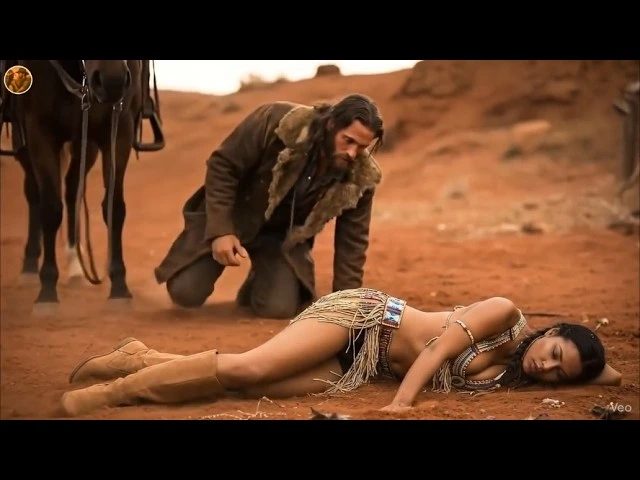
Quiet. You’re all right. She fell from the ridge. The cowboy who carried her became her only hope.
The fall Arizona territory 1,878. The afternoon peeled away slowly from the red cliffs as if someone were dragging the last veil of dust off the day.
Elias Crane led his gray mare down a dry wash, the animals hooves knocking on loose rock, steady and patient.
The sound carried far, lonely percussion against the ribs of the desert. He had been on the trail for 3 days, trading coffee and ammunition for salt and tobacco in the nearest settlement.
The faces there always looked too long, too curious. They remembered he had once been a soldier.
They remembered the wrong kind of things. Elias didn’t talk much. The war had taken that from him.
Out here, silence was cleaner than conversation. When the wind shifted, it brought something with it, a sound that wasn’t wind.
A cry sharp and short cut the air from above the ridge, followed by a heavy thud somewhere down the slope.
Elias froze, hand, brushing the revolver at his belt eyes, narrowing toward the cliffs. He waited.
Nothing, only the hush of the desert, endless and cruel. Then faintly a broken gasp.
He climbed. The rocks scraped his palms. The air burned with heat. And when he reached the narrow ledge, he saw her, a young Apache woman, half buried in dust.
Her body twisted one leg bent wrong beneath her skirt. Her hair spilled over her shoulder black against the red ground.
Blood darkened the edge of her moccasin. For a long moment, Elias only stared. He’d seen plenty of bodies before on battlefields in burned out barns, but this one still breathed.
He should have walked away. Harboring an Apache was enough to get a man hanged in town.
Yet there she was, skin trembling with each shallow breath mouth opening around a word he couldn’t understand.
He knelt. The smell of iron filled his nose. Easy now, he muttered. Though she couldn’t hear him, he tore a strip from his shirt and wrapped the wound tight.
She cried out a sound more animal than human. Her eyes fluttered open wide and terrified.
For a heartbeat he saw himself reflected there, some weather-beaten stranger framed in the ruin of a dying day.
Quiet, he said. You’re all right. It was a lie, but it steadied his hand.
When the bleeding slowed, he lifted her. She weighed little light as regret. The slope back to the valley was steep.
His boot slipped. His shoulder burned. The mayor followed behind patient ears flicking. Every few steps he could feel her breath against his neck, hot and shallow.
By the time he reached his cabin, the sun was gone. The horizon glowed a thin vein of gold, then fell dark.
Inside the cabin smelled of wood smoke and loneliness. He laid her on his bed, stoked the fire until the logs hissed.
Steam rose from the pot where he poured whiskey and water. The air turned sharp with it.
He cleaned the wound, splinted the leg with pine sticks, wrapped it with linen cut from an old undershirt.
She didn’t wake, only flinched now and then when the pain moved through her. He could see how young she was, 20 maybe, and how the desert had already carved lines at the corners of her eyes.
When the work was done, Elias sat on the floor beside the fire elbows on his knees.
The wind outside slid under the door like a ghost. He reached for the tin cup, poured himself a swallow of the whiskey that hadn’t boiled away.
Across the room, the woman stirred. The fire light trembled over her face. She whispered something, two syllables, soft and strange.
He listened, though he couldn’t make sense of it. Maybe it was a prayer. Maybe it was her name.
The mayor snorted outside, restless. Elias Rose checked the door, then turned back to her.
She had fallen silent again, but her chest still rose slow and uneven. He stood a long while watching the flames lick up the chimney, watching their light crawl across the walls that had been bare too long.
The sound of the fire was the only heartbeat in the room. Finally, he whispered almost to the fire itself.
“Nobody gets saved twice, but maybe she will.” The wind answered, carrying the smell of dust and rain from somewhere far off the scent of a world that hadn’t yet given up on mercy.
The cabin knight held the valley like a closed fist. Wind scraped along the windows, prying for cracks in the wood.
Inside the cabin, flickered with the weak pulse of the fire. Elias dozed in a chair near the hearth boots, still on hat pulled low.
He wasn’t used to sleeping in the presence of another soul. Every creek of the floorboards made him twitch awake when he finally stirred for good gay dawn had begun to seep through the cracks between the shutters.
The woman was still there. Her leg bound her face pale against the coarse blanket.
For a moment Elias thought she was gone. Then he saw the rise of her chest, slight but there.
He rose stiffly, poured water from a kettle and wiped his face with a cold rag.
Outside the desert was still half asleep. The world painted in the same color as ash.
The air smelled of juniper and frost. He fed the fire, then crouched beside the bed.
“Still here,” he said quietly. Her eyelids fluttered. Two eyes dark as wet stone opened and fixed on him.
She tried to move, but pain caught her halfway. Her lips parted. He heard a breath that might have been a word.
“Don’t,” he said, palms raised. “You’re safe.” She didn’t understand that much was clear. Still something in his tone made her stop fighting.
She stared at him, searching for the shape of threat. He pointed to himself. Elias.
Then after a pause, he pointed at her. You? She blinked, confused. Then murmured something that sounded like Nasha.
The sound was fragile, but it stayed in the air like a tiny bird refusing to die.
“Nasha,” he repeated. His voice softened around it. She nodded once, then looked away, exhausted.
He mixed a bit of dried meat into a pot with water and coffee grounds, the only stew he could manage.
The smell filled the cabin, harsh but warm. When he carried the bowl toward her, she tensed again, ready to fight.
Elias stopped short of the bed and set it on the table instead. He gestured slow and deliberate to show he meant no harm.
She watched him like a cornered deer. Only when he stepped back did she reach for the spoon, trembling.
The first sip made her cough, but she kept going as though hunger had been waiting for permission.
Elias leaned against the wall and studied her without speaking. She was young, but not fragile.
Muscles along her arms spoke of work, not weakness. Her hair was thick with dust and twigs.
In the fire light, her skin glowed the color of rain. Dark earth. When the bowl was empty, she set it down and sank back onto the bed.
Her eyes closed before he could say another word. Elias stood there a while listening to the fire.
He told himself he would take her to the nearest trading post once she could stand.
That was the right thing. That was the lawful thing. But law had never been kind out here.
He remembered how soldiers used to talk how they’d ride into a village, burn it down, and call it victory.
He’d quit before the war finished. Too tired to pretend there was honor left in killing.
He went to the door and opened it. Morning light fell across the valley, cold and white.
The wind ran its fingers through the grass, whispering through the sage. He saw the line of his own tracks leading back up the ridge.
They looked like the trail of a man who didn’t yet know where he belonged.
By afternoon, the fire had dwindled. He added more wood, checked her bandage. The swelling had gone down.
She stirred, muttering something in her language, short rhythmic syllables. Her hand brushed his wrist by accident, and he froze.
Her fingers were small warm now. For an instant her eyes opened and met his no fear, just exhaustion and a strange fragile trust.
Elias cleared his throat, withdrew his hand. “Youll walk again,” he said quietly, even though she couldn’t understand.
“You will.” The light outside began to turn gold. He sat in his chair again, the fire crackling between them two strangers sharing the same silence.
The wind sighed through the cracks, carrying the scent of pine smoke and rain. She whispered once more that same word, nausea.
Then she slept. Elias leaned back, staring into the flames until their shapes blurred. He realized with something close to shame that the sound of her breathing made the cabin feel alive again.
He hadn’t meant for that to happen. Outside, the desert stretched endless and unforgiving. But inside, for the first time in years, something human had begun to stir a faint warmth against the long cold of his solitude.
The long night, by the third evening, the wind had turned mean. It came down off the ridge in long shuttering breaths, dragging sheets of sand that hissed against the cabin walls.
Elias had nailed the shutters shut and packed cloth into the door seams, but the dust still found its way through.
It always did. He moved like a man trying not to wake a ghost. Slow, quiet, careful.
The Apache girl slept fitfully, her legs swelling beneath the splint. Fever had started the night before.
Her skin shone with sweat, and her breath came shallow. He changed the cloth on her head every few hours, whispering curses at the storm outside, at the army at himself.
“Don’t you die,” he said once, not sure who he was talking to. The fire fought the wind’s breath sputtering but alive.
He added another log and sat down again. Outside the desert vanished into red dust and night.
Inside the air felt thick with heat and sickness. He watched her face lips trembling eyes rolling beneath half-shot lids.
She was caught between worlds and he could do nothing but sit sentinel over the space between them.
He poured a swallow of whiskey into the tin cup, then another for her. Just a few drops on her lips.
She flinched but swallowed. Her voice cracked in her throat the sound of a wounded bird.
He wanted to say something, anything. But what words were there to bridge a life like his and a life like hers?
He’d spent years learning silence. It was the only language that had never lied to him.
Hours passed. The storm pressed harder. Sand scraped the window like nails. He told himself stories just to fill the dark about the war about Maria his wife.
How she used to hum at the stove sleeves rolled hair braided down her back.
She died in childbirth in a year when rain never came. Elias had buried her under the mosqu tree by the creek that no longer ran.
He hadn’t spoken her name since. Not until now when the fevered girl on his bed muttered it in a whisper that wasn’t hers.
He looked up sharply. What did you say? She didn’t answer, just moaned softly, words tangled in Apache.
But the sound of Maria hung in the air like smoke curling through him. He rose, moved to her side, and dipped the rag again.
Easy, he murmured. Her skin burned under his hand. He brushed her hair back, and saw the line of a scar near her temple, old and pale.
Whoever she was, she had survived worse than falling from a ridge. The storm howled again.
For a moment he thought he heard voices men shouting far off or maybe the ghosts of wind.
He stood at the door peered through the crack. Nothing but the shifting blur of sand.
When he turned back, she was awake, barely but awake. Her gaze locked on him wild at first, then dimming as she recognized the shape of his face in the fire light.
She said something slow broken English. Fire hurts. Elias blinked. You understand me? She frowned, struggling.
Too hot. He hesitated, then opened the flu a little wider. The flame dropped low shadows crawling up the wall.
She exhaled a shiver rolling through her body and whispered another word, one he didn’t catch.
He sat again. You rest. Silence stretched between them, soft as breath. An hour later, she stirred eyes half open.
Why? Help. The question stunned him. He looked down at the hands that had done it.
The ones that had killed the ones that now tried to heal. Didn’t think, he said.
Just did. Her mouth curved faintly, not quite a smile. Fool, she whispered. Maybe, he said, leaning back.
The wind wailed like a train somewhere beyond the ridge. The sound brought an ache he hadn’t felt in years.
A loneliness that wasn’t empty, but full of memory. He found himself talking again, voice barely above a murmur.
I was a soldier once. Thought we were fixing something. We weren’t. We just broke it different.
She didn’t understand every word, but she listened. The shape of his voice seemed to calm her.
He reached for the coffee pot, poured what little was left into the pan, and said it near the coals.
Steam rose, smelling of bitterness and smoke. “I’ll get you home when you can walk,” he said.
Her eyes drifted shut, and she murmured something like, “Home? No.” Elias frowned. You got nowhere to go.
No answer, just her breathing slow and fragile. He sat through the long night, adding wood to the fire each time it threatened to die.
The cabin filled with shadows that moved when he didn’t. At some point, he realized he was humming low tuneless, something Maria used to hum.
It sounded strange in his throat, like a memory borrowed from someone better. When dawn finally came, the storm had passed.
The world outside was ghostly white with dust. Every ridge softened. The girl slept her fever broken.
The air smelled of ash and clean light. Elias opened the door, blinking against the brightness.
Wind carried the faintest scent of rain, the kind that never reached the ground. Behind him, a small sound, her voice weak but clear.
Elias, he turned. She was awake, her eyes clearer than they’d ever been. For a second, he thought he saw Maria in them, then realized it wasn’t memory.
It was life. “Yeah,” he said quietly. “I’m here.” Outside, the desert was still waiting.
Inside, something had changed. Not healed, not yet, but mending the way the land does after a storm.
The riders, by midm morning, the wind had died. The world seemed to have exhaled and then forgotten how to draw breath again.
The air was so still that Elias could hear the faint tick of the stove metal cooling.
A small stubborn sound in the silence. Nasha slept her breathing steady now, one hand resting over the rough blanket.
The fever had left her face pale but calm. She looked younger in that piece, less like someone chased by war, more like a girl who’d once laughed under open sky.
Elias rose quietly, his joints stiff from two nights of half sleep on the cabin floor.
The room smelled of cedar smoke, boiled beans, and sweat dried into cloth. For the first time in days, he stepped outside.
The desert after a storm always looked cleaned of sin. Red earth washed pale sky scoured to a hard enamel blue.
He filled a pale from the sistern splashed his face and felt grit in his teeth when he drank.
The taste of dust never left a man out here. It just changed its name.
From up the slope, he could see the ridge where he’d found her. The sandslide had already erased most of the mark’s hoof prints blood, even the outline where she’d fallen.
The desert was merciful that way. It forgot fast. He was turning back toward the cabin when he caught it.
The sound of hooves faint, but certain carried low through the stillness. Two riders working their way down the trail from the east.
Slow, deliberate, the way men ride when they’re looking for something, not someone. The kind of looking that ends with a gun drawn.
Elas watched for a breath, counted the rhythm of the hoof beatats. Then he went back inside.
Nasha stirred as he pushed the door shut. Her eyes opened, clouded but alert. What is it?
She asked, her words rough but understandable now. Writers, he said. Her eyes widened. She tried to sit up, but a flash of pain cut her short.
Soldiers could be. He crossed to the corner, lifted the rifle from its peg near the door.
It was an old Springfield rust on the barrel stock, worn smooth, where his palm had lived once too often.
He hadn’t fired it since winter, and the thought of doing so again made his stomach twist.
He wasn’t a fighting man anymore. Not really, but he knew what would happen if they found her here, what they’d call it, harboring, treason, gallow.
He crossed to the stove, pried up the trap door beneath it. The hollow space below was small dug years ago to store jerky and tools when bandits came through.
It smelled of earth and iron. You stay there quiet, he said. Nasha hesitated, breathing hard.
You help again. He met her eyes. Don’t make me regret it. Something like gratitude flickered in her expression.
You already not regret. He wanted to tell her she didn’t know him. That regret had followed him longer than the wind.
But there wasn’t time. He helped her down, covered the hole with the folded rug, then dragged a crate over it.
The place looked no different from before. He poured himself coffee and sat by the table.
His hands were steady, but his heart wasn’t. He could feel the pulse in his throat like a second clock counting down.
The knock came soft but certain. Morning crane. A voice called Got a report. A band of Apaches passed through here yesterday.
You seen anything? Elias Rose opened the door slow. Two men sat their horses in the sunlight, badges dull under their dusted coats.
One, he recognized Deputy Lang, a man with a voice like gravel and eyes like broken glass.
The other was new, a kid with freckles and a smile that didn’t reach his eyes.
“Can’t say I have,” Elias answered. “A storm blew half the desert through here, though.
You’ll lose your horses if you ride too far.” Lang squinted past him into the cabin.
“You’ve been alone all that time, Crane. Same as always.” The deputy leaned forward in the saddle, sniffing the air like a hound.
Smells like stew. Beans, Elias said evenly. You want some Lang’s mouth twitched, half amusement, half suspicion.
You always were a strange one. Army doesn’t send word anymore. Elias shook his head.
Haven’t been army for 10 years. The younger man swung off his horse, kicked at the dust.
Tracks up the ridge say someone fell. Blood, too. You sure you haven’t had visitors?
Elias’s pulse slowed. The kind of calm that only came when trouble had already arrived.
“If I had,” he said, “you’d see their bodies. You think I’d hide someone.” The kid looked uncertain, eyes flicking toward Lang for cue.
Lang just stared, measuring him. The silence stretched until the wind dared to return, nudging a dry weed across the yard.
Finally, Lang spat a thin line of tobacco, into the dirt. If you do see any of them, Apache or otherwise, you send word to town.
You know what they did near Santa Cruz last month? I heard Elias said. Langs expression didn’t change.
You done? The deputy smirked, tugged his res for now. The horses turned hooves crunching over the gravel, fading into the distance until all that was left was dust hanging like ghosts between the hills.
Elias stood there a long moment, watching the horizon, until the last flicker of sunlight swallowed them whole.
Only then did he go back inside. The cabin seemed smaller somehow, the air thick with all the words he hadn’t said.
He moved the crate aside, peeled up the rug, and lifted the trap door. Nasha lay curled in the dark eyes.
Why? They’re gone, he said quietly. She blinked, the tension in her shoulders, easing just enough for her to breathe.
He helped her climb out her hands cold and shaking. “They kill me,” she whispered.
“Not if I can help it. Why, he didn’t have an answer ready.” He thought of the war of the smell of burning canvas and the sound of men screaming under their own flag.
He thought of Maria’s grave, how the river had taken it the spring after she died.
He thought of the things he’d done in uniform, how mercy had become a language no one spoke.
Maybe it was guilt. Maybe it was something simpler, an old reflex to protect what the world had already decided to destroy.
“I guess I’ve had enough dying on my hands,” he said. Finally, she studied him for a long moment, face unreadable.
Then she nodded once, solemn as a prayer. As the day stretched thin and gold toward evening, the desert came alive again.
Wind slipped down the ridge, teasing loose strands of her hair as she sat near the fire.
Elias cooked quietly beans again a bit of dried venison cut into thin strips. The sound of the ladle against tin was the only speech between them.
They ate from the same bowl, passing it back and forth in silence. When she looked up, her gaze met his and didn’t flinch this time.
There was something steady in it now, something that made him think of ground after rain, fragile, but capable of bearing weight again.
Outside, the riders were long gone. The wind carried away their scent, their threat, but the silence that followed was in peace.
It was something heavier, like a vow they hadn’t spoken, but both understood. That night, Elias couldn’t sleep.
He sat by the window with the rifle across his lap, watching the horizon fade into darkness.
The desert never really slept. It just pretended, letting its ghosts whisper beneath the sand.
Each gust of wind raised a curl of dust from the ridge like the earth, remembering what it had taken.
Behind him, Nasha murmured in her sleep words in Apache soft as prayer. He caught only one safe.
He turned the word over in his mind. It felt foreign on his tongue, like something he’d forgotten how to pronounce.
But the more he thought of it, the more it sounded real. He stayed awake till dawn, not because he feared the writers would return, but because for the first time in years, he’d been given something worth guarding.
When the morning light came thin and gold, it spilled across the floor and touched her face.
Elias let the rifle rest beside him and watched the sun climb. For the first time in a long time, safe didn’t sound like a lie.
It sounded like a promise, the return of pain. The morning came too quiet. The kind of stillness that makes a man’s skin itch like the desert itself was holding its breath and daring him to move first.
Elias woke before dawn to the sound of shallow gasps. For a second he thought it was his own breathing, the kind that comes when a nightmare refuses to let go.
But then he turned and saw her. Nasha lay twisted in the blankets, her face slick with sweat.
Her mouth moved soundlessly as though she were arguing with some ghost that would not leave her be.
He touched her shoulder, and the heat under his palm, made him curse softly. The wound in her leg had gone red again, angry and wet to the touch.
Fever had come back with vengeance, crawling up from the limb like a slow fire.
He tried the compress cold water clean cloth, but she groaned, pushing his hand away weakly.
“Burns,” she whispered, her eyes glassy, unfocused. He pulled back the blanket. The bandage was soaked through edges dark.
When he peeled it away, the smell hit first, sour, and wrong. The flesh beneath had begun to swell, a hard red ridge, spreading outward.
Infection, the kind that didn’t forgive. Elias stepped back, throat tight. He’d seen this before in the field, the slow rot that took men piece by piece, the way they begged to be shot before it reached the heart.
He remembered the color, that sick shine of dying skin. His mind went to the trading post 20 mi east.
They’d have carbolic acid bandages, maybe ladum, if the gods were feeling kind. He looked down at her again.
Nasha had drifted into a restless half-sleep murmuring words. He didn’t know the syllables sliding like water between teeth.
He knelt beside her brushed damp hair from her forehead. “I’ll be back,” he said quietly.
“You hear me? You hold on.” She didn’t answer. Her breathing came quick and shallow the sound of someone trying to stay tethered to this world.
By sunrise, he was already in the saddle, the bays hooves chewing at the hard pan earth.
The land glared white under the early light flat stretches of sand broken by scrub and the thin silver bones of dried creek beds.
Every hoofbeat raised dust and memory. He rode hard the way a man rides when the thing chasing him isn’t behind but inside him.
He thought of her face when he found her on the ridge eyes defiant even through the pain.
Thought of her hand gripping his coat when he carried her into the cave. He had not prayed in years, but the rhythm of the ride became one.
Anyway, just let me get there. Just let me get back. Hours passed. The sun climbed high and burned the color out of the sky.
Sweat stung his eyes salt on raw skin. Somewhere between the dry creek and the cottonwood grove, he saw them two riders cresting the horizon like vultures circling heat.
Lang and the kid from before. He cursed under his breath. Cut north into broken country where the aoyos twisted like scars.
The mayor stumbled once on loose rock, caught herself, kept running. Elias leaned low, whispering to her, urging quiet.
The riders followed at a distance, black silhouettes, winking in and out of the glare.
He rode until the land bled into dusk. The light went soft and strange the way it does before night takes the last of color.
When the trading post appeared a squat square of wood against the empty world, it looked almost like salvation.
“Old man Petty was outside locking the door. His beard shone white in the twilight.
Need carbolic and bandages,” Elias said, swinging off the horse before the dust even settled.
Petty squinted at him. “Somebody hurt fell.” Elias lied. The old man’s frown deepened. “You sure it’s not one of them?”
Elias stared silent. The kind of stare that makes another man remember his own cowardice.
Petty hesitated, then grunted and disappeared inside. He came back with a tin of disinfectant and a roll of linen.
$2. Elias tossed a silver piece on the counter. That’s all I got. That’s enough, Petty said quickly, pocketing it.
He leaned forward. Heard talk. The deputies are hunting again. Best keep your head down, Crane.
Elias nodded once turned to leave. He didn’t make it 10 paces before the sound of hooves reached him fast close.
Two silhouettes rode in from the east dust trailing behind them like smoke. Lang’s voice carried across the flat in that slow mocking draw.
Crane, you left in a hurry for a man who’s got no company. Elias didn’t answer.
He swung into the saddle kicked hard. The mayor bolted. Shouts followed. A gunshot cracked and a splinter jumped off the fence post beside his leg.
He didn’t shoot back, just rode. The desert blurred past in streaks of gold and shadow.
The wind tore at his coat flattened his hatbrim. He heard Lang curse behind him.
A sound swallowed by distance and nightfall. The chase faded until only the pounding of his own heart remained.
By the time he reached the valley, the moon was climbing pale as bone. His arm throbbed.
He hadn’t noticed the grays until the sleeve stuck to him wet and dark. Each breath burned in his throat, the metallic taste of fear and blood mingling.
He saw the cabin light flickering faintly through the cracks in the shutters and felt something inside him unclench.
He pushed through the door, stumbled in. The air smelled of smoke and sickness. Nasha lay half-conscious eyes rolling under lids, skin shining with fever sweat.
He dropped the tin and linen on the table, tore the lid open with shaking hands.
The sharp sting of carbolic filled the room. “Stay with me,” he muttered, doussing the wound.
She cried out, body jerking against the pain. Her hands shot out, gripping his wrist hard enough to draw blood.
He kept working jaw tight, wiping away the pus, wrapping clean linen around angry flesh.
He talked while he worked nonsense mostly. The sort of words men use when they’re too scared to be quiet.
Almost done, he said. You’re too damn mean to let it take you. You hear me?
Too mean. When he finished, she lay trembling, the fever still burning through her, but not as wild.
Elias sank back against the wall chest heaving. The adrenaline drained out of him all at once, leaving him heavy and shaking.
Blood seeped through the hole in his sleeve, dark as oil. Nasha blinked up at him, dazed.
“You hurt.” “Not bad,” he said, though his voice betrayed him. “You go far, far enough.”
Her hand drifted toward him, fingertips brushing his arm. “Why?” She whispered. “You could leave.”
He smiled small and tired. “Could, didn’t.” For a long time, she just looked at him.
Then she said his name soft, uncertain, as though testing its weight. “Elias,” he swallowed.
It sounded different from her mouth. Less like a name, more like a vow. She fell asleep soon after.
He sat beside her until her breathing slowed until the fever’s rhythm eased from frantic to steady.
The moonlight reached through the window and laid its pale hand across her face. Elias cleaned his own wound with what was left of the carbolic.
The burn made him hiss through his teeth, but he welcomed the pain. It meant he was still alive to feel it.
He tore a strip from his undershirt and bound the arm tight. Then he fed the fire.
The coals were low, sullen things. He poked them back to life, added kindling until the orange spread, throwing long, restless shadows across the walls.
For the first time since he’d left the ridge, he let himself breathe. Outside, coyotes began their nightly chorus, distant, mournful, echoing through the canyon.
He used to hate that sound. Tonight, it felt like company. When he looked back at her, she was still her face, slack in peace that looked borrowed.
He thought of how small she’d seemed when he carried her in, and how fierce she’d been, even half de@d.
It humbled him, that stubborn spark she carried. The hours between midnight and dawn were long.
He dozed, sitting up rifle across his knees. Every time she stirred, he reached out half, expecting the fever to return.
It didn’t. The color in her cheeks softened. The sweat dried. Just before dawn, a thin light crept in through the window slats.
He poured water into a tin cup and drank. His arm throbbed steady. His body achd, but there was a strange quiet inside him like the kind that comes after confession.
Nasha stirred. Her lips moved, breathcatching. Then, like a whisper carried from another world, she spoke wind.
Still here, Elias looked toward the open window where a faint breeze slid through, carrying the smell of sage and rain far off in the hills.
“Yeah,” he said softly, “Still here.” Her brow smoothed and she slept again. When the first streak of sunlight touched the floorboards, he watched it crawl slowly, warming the room inch by inch, until it reached her hand.
The light lingered there, brightening her skin. He felt something tighten in his chest, something close to gratitude.
He wasn’t a praying man. But that morning, Elias Crane found himself whispering a thanks to no one in particular, to the wind, to the desert, to whatever mercy still bothered to pass by his door.
For the first time in years, he didn’t feel like a man waiting to die.
He was simply waiting for her to wake. Dwar 6. The morning below the ridge.
Morning came soft and gold. Light filtered through the cracks in the shutters, painting the cabin floor in thin bars of warmth.
For a long time, Elias didn’t move. He sat by the hearth boot, still dusty from the night’s ride, watching the breath rise and fall in Nash’s chest.
The fever had broken for good. Her face, once drawn tight with pain, had eased.
The red in her leg had faded to pale. She slept like someone who’d fought too long just to rest.
Elias rubbed the back of his neck, feeling the crusted sweat, the dull ache that comes after.
Fear loosens its hold. He’d ridden through the canyon, and back again under moonlight, following his horse’s instinct more than his own.
Every hour since had been a prayer spoken without words, when she finally stirred, Dawn had turned the air thin and blue.
Her lashes fluttered, and the first thing she saw was him slumped against the wall eyes, half shut arm wrapped in a bloodstained bandage.
“You look de@d,” she murmured her voice rough with sleep. “He gave a tired smile.”
“Not yet.” Her gaze fell to his arm. “You hurt. Got clipped. Doesn’t matter.” She studied him a moment longer, as if measuring the truth of that, then said quietly, “You went for medicine.”
Elias shrugged. “Seemed you were too stubborn to die.” Nasha’s lips twitched the closest thing to a laugh he’d ever seen from her.
The sound was soft, shy, but real. It stayed in the room like a secret too delicate to touch.
He helped her sit up, propping a blanket behind her back. The air smelled of cedar smoke and the faint sweetness of boiled sage.
Outside the valley was waking the cry of a hawk the shuffle of wind. Through sage the slow drip of snow melt sliding from the roof.
The world felt newly washed as if it too had been fevered and finally cooled.
She drank the water he brought, then leaned back eyes tracing the pattern of sunlight crawling along the wall.
“Long time since I see sun like this,” she said. Elias followed her gaze. The ridge loomed beyond the window black and jagged its edge, still bruised with shadow.
You’ll walk again soon, he said. I can get you to the river. After that, your people, maybe.
Her brow furrowed. No people left. He didn’t answer. There wasn’t anything to say to that.
Only the hush of mourning, honest, and unforgiving. After a moment, she reached for something beneath the blanket and drew out a small bundle of leather and twine.
When she unwrapped it, a charm fell into her palm. A thin circle of braided grass with a feather tied to its edge.
She turned it once between her fingers, then held it out to him. “What’s this?”
He asked. “Promise,” she said. “For safe hands.” He hesitated. “You don’t owe me anything.”
She shook her head. “Not give.” The feather was pale gray, tipped in white, the color of the hawks that hunted above the cliffs.
He took it gently, careful not to break the twine. It’s beautiful. Nasha smiled faintly.
Means you belong to wind now. Wind remembers. He wasn’t sure he understood, but he felt the truth of it anyway.
The wind had carried too many things from him over the years. Names, faces, laughter.
Maybe it was time it brought something back. That afternoon he cut two pine limbs and shaped them into crutches.
His knife rasped softly against the wood, the rhythm steady, almost meditative. Each stroke carried its own small prayer, that she’d stand again, that his hands could still make something meant to help not harm.
When he sanded the bark away, the sap bled sweet and clear. Nasha watched him from the doorway, her hair loose around her shoulders.
When he finished, she reached for the crutches and tried them. The first step jarred through her body, sending pain flashing across her face, but she didn’t stop.
You’ll tear the stitches, he warned. She looked back over her shoulder breath quick. Then I learn again.
By evening, she could make it from bed to door without falling. She stood there a while, looking out at the valley below the same ridge that had tried to kill her, now quiet under the dying light.
Her skin glowed bronze against the sunset, her outline thin but upright like a sapling that had refused to break.
Elias joined her, leaning against the doorframe. The sky burned orange and red into the clouds, the same colors that had stained her skin when he first found her.
For a long time, they said nothing. “World looks different from down here,” she said softly.
“Maybe that’s the point,” he replied. A hawk crossed above them, its shadow sweeping over the cabin roof.
She followed it with her eyes until it vanished toward the river. “I used to think wind was the voice of the de@d,” she said.
“Now maybe it’s the voice of what still lives.” He turned the feather charm between his fingers.
“Then I reckon it’s been trying to talk to me for a while.” She smiled a slow, careful thing that looked borrowed from another life.
“You listen now.” They stood together until the light thinned and the first star blinked out over the ridge.
When the chill crept in, she turned toward him, eyes dark but steady. “You could leave now,” she said.
“No one stop you.” He met her gaze. “I’m not sure I want to.” Something in her face eased relief maybe, or recognition.
The silence between them grew warm. Inside the fire caught again, small but alive. He added another log, and the room filled with the scent of smoke and pine resin.
Nasha sank back onto the bed, tired, but smiling faintly. Elias sat near the hearth, the feather charm turning slow in his fingers, glinting whenever the fire breathed.
Outside wind came down the ridge, soft as a sigh. It passed through the open door, touched his hair, and was gone.
For a long while he listened to her breathing to the murmur of the night returning.
The valley stretched out below, endless and waiting. The ridge that had once been a place of pain now stood like a guardian keeping watch.
When he looked back at her, she was already asleep, her breath steady and sure.
He rose quietly, stepped to the doorway, and watched the horizon bloom with starlight. The land glowed faintly under the moon, all dust and silver and forgiveness.
For the first time in years, he felt the weight in his chest loosen. The world hadn’t changed, but something in him had.
He reached into his pocket and closed his hand around the charm. The feather brushed his skinlight, fragile alive.
“Wind remembers,” he whispered, tasting the words. And beneath the ridge, where he had found her two lives once broken, began quietly to








