My Wife Missed My Mother’s Funeral For Her Ex’s Birthday… I Walked Away From Her Forever
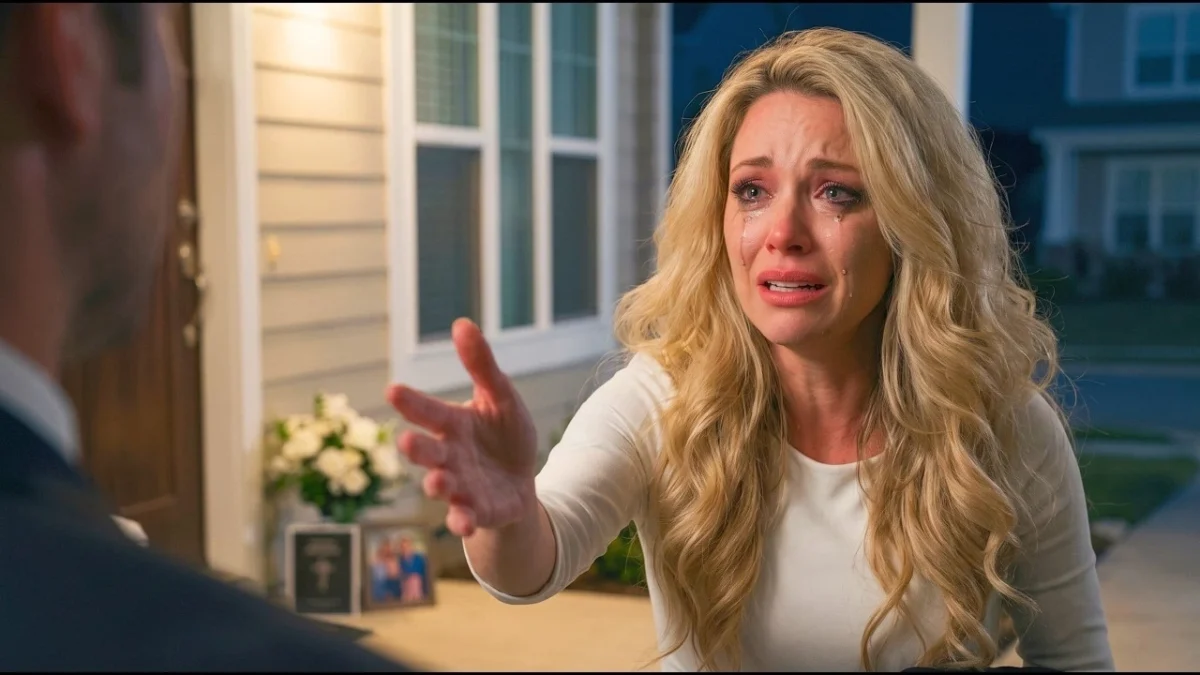
My mother died on a Tuesday morning. I called my wife three times before the funeral home even picked up the phone.
She didn’t answer once. When she finally walked through our front door 2 days later, she was wearing a dress I’d never seen, and she smelled like someone else’s house.
I didn’t yell. I didn’t ask where she’d been. I already knew the answer would be a lie.
So instead, I just watched her lips move and counted how many times she looked away from me.
That’s when I understood something was very, very wrong. My name is Nathan Brooks. I’m 34.
For six years, I thought I had a good marriage. Not a perfect one. No marriage is perfect, but a good one.
Solid. The kind you don’t think about too hard because you don’t need to. I met Emily at a mutual friend’s barbecue.
She laughed loud and easy. The kind of laugh that made a room feel warmer.
I was an electrician. Steady work, decent pay. She managed a boutique clothing store downtown.
We weren’t rich, but we weren’t struggling either. We had a small house with a crooked mailbox I kept meaning to fix, a dog named Biscuit, and a Sunday routine of pancakes and bad reality TV.
Emily had an ex-boyfriend named Marcus. She’d mentioned him a handful of times over the years.
Always in that dismissive way, people talk about a chapter they’ve closed. We dated in college.
It ended badly. He wasn’t good for me. I never had a reason to think about him.
Exes exist. Everyone has them. I had two myself. My mother, Diane, lived 40 minutes away in the house I grew up in.
She was 61, healthy as far as any of us knew. Still working part-time at the community library because she said retirement made her feel useless.
Emily and my mother got along fine. Not best friends, but fine. They’d cook together at Thanksgiving.
My mother would tease Emily about her taste in reality shows, normal stuff. I want to be honest about something before I go further.
Our marriage wasn’t without friction. I worked long hours. Emily sometimes said she felt like she came second to my job.
I’d apologize, promise to do better, and then fall right back into 12-hour days because the mortgage didn’t pay itself.
She wasn’t wrong to feel neglected sometimes. I own that. But feeling neglected and what came next are two very different things.
And I want you to understand that before you judge either of us too quickly.
Here’s the first thing that felt off months before any of this happened. Emily got a new phone.
Nothing strange about that. Her old one had a cracked screen for a year, but she set it up herself in the bathroom with the door locked.
And when I asked if she needed help transferring her contacts, she said she’d already handled it.
That was new. She used to hand me her phone constantly, to look up directions, to show me a text from her sister to let me pay for something through an app while she drove.
After the new phone, she stopped doing that small thing. I noticed it and let it go the way you let go of most small things in a marriage because you trust the person you married.
Then on a Tuesday morning in March, I got a phone call that changed everything.
My mother had suffered a massive stroke in her sleep. She never woke up. She was gone before the ambulance made it to the hospital.
I don’t remember driving to her house. I don’t remember most of that first hour.
What I do remember is calling Emily once, twice, a third time straight to voicemail every time I texted her mom died.
Call me now. No response for 6 hours. When she finally called back, she said her phone had died and she’d been out running errands and hadn’t noticed.
I was too shattered to question it that day. I needed my wife. I needed someone to hold on to.
She came to the house that evening, hugged me, cried real tears or tears that looked real, and told me she’d help with everything, the funeral arrangements, calling relatives, all of it.
2 days later, on the morning of my mother’s funeral, Emily was gone. I woke up at 6:00 a.m.
To get ready, and her side of the bed was empty and cold, like she’d left hours earlier.
I found a note on the kitchen counter. Something came up with my sister, I’ll meet you there.
No call, no explanation of what something meant. I tried calling straight to voicemail again.
I stood at my mother’s graveside that afternoon in a black suit, holding my father’s hand.
He’s 72 and doesn’t do well with strong emotions. And my wife was nowhere in that crowd of 40 people who loved my mother enough to show up.
My aunt asked me twice where Emily was. I said she was running late. By the time the service ended, she still hadn’t shown.
That night, I sat alone in our living room until nearly midnight, waiting. When Emily finally walked through the door, she wasn’t wearing the black dress she owned for exactly this kind of occasion.
She was wearing something new, something that still had the confident, put together look of a night out.
And when she hugged me to apologize, I caught it. Faint, unfamiliar cologne that wasn’t mine.
“Where were you?” I asked her. Not a question, a statement. She said her sister had a crisis.
Some vague story about a car breaking down 2 hours away. No cell signal. A whole afternoon lost.
I wanted so badly to believe her that for about 10 seconds, I almost did.
Then I noticed something small, something that would keep me up for the next three nights straight.
Her sister lives four blocks from us. I didn’t confront her that night. I was too exhausted, too raw from burying my mother to start a fight I didn’t have the strength for, but I didn’t forget what she’d said either.
Her sister Kayla lives a 5-minute drive away in an apartment complex I’ve been to a dozen times.
There is no version of car trouble 2 hours away that starts and ends four blocks from our house.
I let it sit for 2 days. I told myself grief was making me paranoid that I was looking for something to be angry about because I needed somewhere to put all this pain that had nowhere else to go.
That’s a real thing that happens to people. I know that. So, I gave Emily the benefit of the doubt, at least on the surface.
But quietly, I started paying attention. Her phone, which used to sit face up on the kitchen counter, started living in her purse, screened down, purse zipped.
She began taking calls in the bathroom with the fan running. Twice that week, she said she was grabbing dinner with a coworker and came home smelling like she’d showered right before walking in the door.
I’m not a suspicious person by nature. I don’t think I’d ever gone through Emily’s phone in 6 years of marriage.
It felt like a violation, the kind of thing insecure people do. But grief strips away a lot of your normal filters.
And I found myself standing in our bedroom one night while she was in the shower looking at her phone on the nightstand face down.
And I didn’t touch it. I want to be honest about that. I didn’t touch it that night.
I wasn’t ready yet. What I did instead was call Kayla directly. Not to accuse her of anything.
I just wanted to ask how she was doing after the car trouble as a normal caring brother-in-law would.
Kayla paused on the phone for a beat too long. What car trouble? I said the day of the funeral.
Emily said, “Your car broke down and she was stuck with you for hours.” Another pause.
Then Kayla said carefully, “Nathan, I was at work all day.” I didn’t see Emily at all that week.
I thanked her, hung up, and sat with that for a long time. Here’s what I want you to understand about that moment.
I didn’t explode. I didn’t call Emily screaming. I sat in my truck in the driveway for almost 40 minutes, staring at the garage door, trying to figure out what kind of person misses their mother-in-law’s funeral to lie about visiting her own sister.
That kind of lie doesn’t happen by accident. You don’t confuse helping my sister with car trouble with whatever she’d actually been doing.
That’s a story someone builds in advance. I decided I needed proof before I said anything because I already knew if I confronted her with nothing but Kayla’s word against hers, she’d find a way to spin it.
Maybe blame Kayla for misremembering. Maybe cry and say I was interrogating her during the worst week of my life.
I’d seen enough of that dynamic in other people’s marriages to know how it goes when you accuse without evidence.
You lose the moral high ground and somehow you become the villain for asking questions.
So, I waited. I watched. And 3 days after my conversation with Kayla, I noticed something I couldn’t explain away.
Emily’s location on our shared family plan, something we’d set up years ago, mostly for roadside emergencies, a feature neither of us ever really used or thought about, was still active.
I’d honestly forgotten it existed until that week when I opened the app out of some instinct I can’t fully explain.
Maybe just needing to feel like I had some kind of control over anything at all.
The history showed her at the boutique during work hours like normal. It showed our house.
It showed the grocery store. But on the day of the funeral from 10:00 in the morning until nearly 11 at night, her phone had been at a residential address about 20 minutes from our house.
Not a hospital, not her sister’s apartment, not anywhere close to a highway breakdown. I sat with my mother’s obituary still open in a browser tab on my laptop and I typed that address into a different search bar.
The property record came back to a name I recognized immediately because Emily herself had told me about him years ago back when we were still new enough that we shared everything back before locked phones and showers before dinner.
Marcus, I didn’t confront her that night either. I know how that sounds, but I needed to understand the full shape of what I was dealing with before I said a single word.
Because the moment I said something, she would know I knew and whatever truth still existed would disappear behind a wall of damage control.
So, I kept collecting. I pulled up our joint credit card statement online, something I hadn’t looked at closely in months because Emily usually handled the household budgeting.
Buried in a list of grocery runs and gas station charges. I found a payment to a florist 2 days before my mother died.
$110. Not the kind of thing you buy for a co-orker’s birthday. I also found dated the same week as the funeral.
A charge from a wine bar 20 minutes from Marcus’ address for two people. At 7:00 in the evening, hours after the service had ended, and she still hadn’t come home.
I want to be clear about something. I wasn’t hunting for a smoking gun to justify blowing up my marriage.
I was trying to find out if I was wrong. Part of me, even with everything stacking up, still wanted an explanation that made sense.
People do desperate things when they love someone. I wanted Emily to have a reason, even a bad one that wasn’t this.
She didn’t give me one because I never had to ask her directly. 4 days after the funeral, I finally understood everything.
And I understood it because of something almost embarrassingly ordinary. Her best friend, Priya, called our house phone by mistake, meaning to reach Emily’s cell, and I picked up.
Priya didn’t know it was me at first. She said, “Hey, is M around?” I wanted to ask how the big Marcus birthday thing went.
She never texted me back. I said very calmly, “What birthday thing?” There was a long telling silence on the other end of the line.
Then Priya, sounding like she just realized she’d made a terrible mistake, said she had to go and hung up.
I didn’t need anything else after that. The florist charge, the wine bar receipt, the location data, Kayla’s confirmation that there had been no car trouble, and now Priya confirming the words Marcus and birthday in the same sentence on the exact day my mother was buried.
My wife had missed my mother’s funeral to celebrate her ex-boyfriend’s birthday. I sat at our kitchen table for a long time after that call.
Biscuit came and put his head on my knee the way he does when the house feels too quiet.
I didn’t cry, which surprised me. I think I’d already done most of my crying over my mother, and there wasn’t much left over for this.
What I felt instead was something colder, clearer. I thought about confronting her right then.
The second she walked in the door, I wanted to. Every part of me wanted to throw the receipts on the table and demand she explain herself while I watched her scramble for a lie that would finally finally hold together.
But I made myself stop and think it through because I know myself. If I confronted her in that raw, furious state, it would become about my anger instead of her actions.
She’d cry. I’d feel guilty for yelling during the worst week of my life. And somehow the conversation would end with me comforting her.
I’d seen it happen to men I know. I wasn’t going to let it happen to me.
So instead, when Emily got home that night, I asked her evenly how her week had been.
She said it had been hard being there for me, watching me grieve. She said it like she meant it.
She looked me in the eye when she said it. That’s when I understood something else.
Something almost worse than the affair itself. My wife could lie to my face the same week she lied about my own mother’s funeral without so much as a flicker of hesitation.
I told her I was tired and going to bed early. I did not confront her that night, not because I was afraid, because I wasn’t ready to let her know what I knew.
Not until I decided exactly what I wanted to do about it. I gave myself one week to think clearly before I did anything.
Because the decisions I made in that week were going to matter for the rest of my life.
And I refused to make them while I was still half buried in grief and rage.
The first thing I did was talk to a lawyer, not to file anything yet, just to understand where I stood.
Our house was in both our names, but I’d inherited a small amount of money from my grandfather years ago that had stayed in an account under just my name, untouched.
My lawyer told me that was good, that it would stay separate as long as I didn’t commingle it, and advised me to document everything I already had.
The credit card statements, the location history, screenshots of the family plan app before Emily could think to disable it.
I want to be honest that this wasn’t about punishing her financially in some dramatic movie villain way.
I wasn’t trying to take her for everything she had. I just needed to protect myself and understand my actual legal position before I said a single word out loud because once I confronted her, I knew our marriage was already over.
I needed to walk into that ending prepared, not blindsided a second time. The second thing I did was quietly gather more proof in case she tried to claim later that this was some one-time lapse in judgment during a hard week.
I asked around carefully without tipping my hand. A co-orker of Emily’s, someone I’d met a few times at store holiday parties, mentioned completely unprompted in the middle of a normal conversation that Emily had taken several long lunches over the past few months, longer than her usual break.
That lined up with something I’d noticed myself but hadn’t put together. Months of small absences, small lies, long before my mother ever died.
This wasn’t a single moment of weakness in a moment of chaos. This had been going on for a while.
That mattered to me. It changed the shape of my anger. It wasn’t just that she’d chosen Marcus over my mother’s funeral in one terrible, selfish afternoon.
It was that she’d been choosing him in smaller ways for months while I had no idea, while I thought we were just going through a rough patch that long work hours had caused.
The third thing I did was decide how I wanted the confrontation to go. I didn’t want to scream.
I didn’t want to throw anything or say something I couldn’t take back. I wanted her to understand clearly and calmly that I knew everything and that there was no version of an explanation that was going to save this.
Meanwhile, Emily had no idea any of this was happening. She went to work. She came home.
She made comments about how proud she was of me for holding it together after my mother’s death.
She started talking carefully, almost testing the water, about maybe taking a weekend trip with the girls the following month.
I knew exactly which girls she meant. I let her keep talking. I let her keep believing she’d gotten away with it.
It wasn’t easy. Every night I sat across from her at dinner, I thought about the florist receipt, the wine bar, Pria slip on the phone.
I thought about standing at my mother’s grave alone, but I kept my face steady because I needed one more piece of information before I was ready to end this the right way.
I needed to know if it was really over between her and Marcus, or if this had become something more permanent than an affair, something she was planning to eventually choose over our marriage entirely.
So, on a Thursday evening, when Emily told me she was going to help Kayla with something after work, I didn’t argue.
I didn’t ask questions. I simply said, “Okay, have a good time.” Then I got in my truck and I drove to the address I already knew by heart.
I parked across the street from Marcus’ house, the same house Emily’s phone had sat in for 13 hours on the day of my mother’s funeral.
Her car was already in the driveway, not for a quick errand, parked, settled in like she planned on being there for a while.
I sat in my truck for almost 20 minutes before I got out. Not because I was afraid of what I’d find.
I already knew in every way that mattered, but because I wanted to walk up to that door as the calmst version of myself, not the wounded, furious man who’d buried his mother alone 3 weeks earlier.
Emily answered the door herself, not Marcus. Her face went through about four different expressions in 2 seconds.
Confusion, then recognition, then fear, then something that looked almost like relief, like some small part of her had been waiting for this moment to finally arrive.
Nathan, she said, this isn’t what it looks like. I didn’t raise my voice. I said, “I know exactly what it looks like.
Emily, I’ve known for weeks. I laid it out for her calmly, one piece at a time.
The florist charged, the wine bar receipt for two, the location data from the day of the funeral.”
Kayla’s confirmation that there had been no car trouble. Pria’s phone call, the co-workers comment about the long lunches, months of them, long before my mother ever passed.
She tried denial first, said I was misreading everything, that I was making assumptions during a hard time.
When that didn’t land, she shifted to explaining. She said she’d been feeling neglected for a long time, that I worked too much, that Marcus had reached back out during a lonely stretch, and she hadn’t meant for it to become what it became.
She said at one point that she still loved me. I let her finish. Then I told her something I’d rehearsed in my head every night that week, not because I wanted it to sound dramatic, but because I needed to say it exactly right one time and mean every word.
I understand feeling neglected. I take responsibility for the ways I let you down in this marriage.
But I buried my mother alone, Emily. You weren’t stuck with car trouble. You weren’t crying with your sister.
You were here at his birthday party while I stood at a graveside with no one beside me.
That’s not a mistake made in a moment of weakness. That’s a choice. And you kept making it for months long before she died.
She cried. She said she was sorry that she’d end things with Marcus completely, that we could go to counseling, that she’d do anything to fix it.
Here’s the part I want you to really hear. I almost believed her. Grief does strange things to a person’s judgment.
And some small exhausted part of me wanted so badly for this to have a version where I didn’t have to lose my wife on top of losing my mother in the same month.
I told her I needed time. I left that night without saying it was over.
For 4 days, I wrestled with that guilt. I kept thinking about the good years, the pancakes on Sunday mornings, the way she used to laugh.
I told myself maybe I’d reacted too fast, too harshly. In a week when I wasn’t in my right mind, I actually drove back to our house one evening, ready to tell her I wanted to try.
She wasn’t home, I called her. No answer. I checked the family plan location one more time, already knowing somehow exactly what I’d find.
Her phone was back at Marcus’s address. Not for a quick conversation to end things.
She’d been there for 6 hours. I drove over. This time, I didn’t sit in the truck deliberating.
I walked straight to the door and knocked. Emily opened it wearing his t-shirt and behind her I could see a bag of her clothes already sitting by the couch like she’d started moving pieces of her life into his house days ago.
There was no lie left to tell. No explanation that could survive what I was looking at.
I came here because I regretted losing you. I told her I’m leaving because I finally understand I never really had you.
I turned around and walked back to my truck. She called my name twice. I didn’t stop.
The divorce took 5 months because I’d protected my inheritance early and documented everything before I ever confronted her.
The settlement was straightforward and fair. Nothing dramatic, nothing that required a courtroom battle. I kept the house.
She moved in with Marcus permanently, at least for a while. It didn’t last. Word eventually got back to me through mutual friends that Marcus had discovered Emily was also texting another man behind his back, some guy from her gym, and he ended things with her within a couple of months.
She lost her stability, lost the support of people who used to make excuses for her, and lost the husband who even after everything had genuinely been willing to try.
As for me, I sold the house eventually. Too many memories in every room, and moved into a smaller place closer to my father, who I’d started seeing every Sunday for dinner, something we never used to make time for.
I picked up woodworking again, a hobby I dropped a decade ago. I started sleeping through the night.
About a year later, I met someone new slowly without rushing anything. And for the first time in a long time, I wasn’t waiting for the other shoe to drop.
I don’t think about Emily much anymore. When I do, it’s not with rage. It’s just a quiet understanding that some people will choose you every single day, and some people will only choose you when it’s convenient.
And you don’t always find out which kind you married until the worst moment of your life shows you the truth.
Sometimes the most satisfying ending isn’t watching someone get destroyed. It’s watching them finally receive the bill for everything they broke and realizing there’s no one left willing to pay it for them.
That’s all for today on Cheating Lady Files. Like, subscribe, and tell me in the comments, would you have walked away this calmly?








