My Wife Made a 28-Point List of My Flaws to Fix — I Made My Own List with One Point
I was sitting at the kitchen table that evening, half bored, half busy, finishing up a few work emails on my laptop.
It wasn’t glamorous, just me, a cup of coffee that had gone cold an hour ago, and the hum of the fridge filling the silence.
That’s when Martha walked in. And not just walked in, she entered. If you’ve been married long enough, you know what I mean.
There’s a certain kind of walk your wife has when she’s been planning something in her head all day and you’re about to get it delivered straight to your face.
She had that look, eyebrows slightly raised, lips pressed into a line that wasn’t quite a smile, but definitely wasn’t neutral either.
The kind of look that says, “I’m about to improve your life against your will.”
In her hand was a folded piece of paper. She placed it down on the table with the kind of ceremony you’d expect if she were signing a peace treaty between two countries at war.
Except in this case, the two countries were Martha, the all- knowing, and me, the hopelessly flawed husband.
We need to talk, she said, sliding into the chair across from me. Now, if you’re a guy, you know those four words are the most efficient way to ruin your evening.
We need to talk is never followed by about how great you are and how lucky I am to have you.
No, it always means buckle up, pal. You’re about to hear why you suck. I closed my laptop slowly.
All right, I said. What’s this? It’s a list, she said in her teacher voice.
Martha used to be a teacher before she switched careers, but believe me, the tone never retired.
Every time she wanted to sound constructive, she slipped into that same careful, patient voice like she was explaining math to a seven-year-old.
I’ve been doing a lot of thinking about our marriage, and I put this together.
I think if you really work on these, things will improve between us. Oh, great.
A homework assignment. I unfolded the paper across the top in her perfect neat handwriting.
Improvement areas for our marriage. Below a numbered list. My eyes scan the first few lines.
Take more initiative with household chores without being asked. Be more emotionally available during conversations.
Stop leaving dishes in the sink overnight. I looked up. She was watching me, chin slightly lifted, like a manager waiting to see if the intern had understood the new project.
I went back to the paper. Make more romantic gestures. Work on your communication style.
Be more supportive of my goals and dreams. The list went on and on and on.
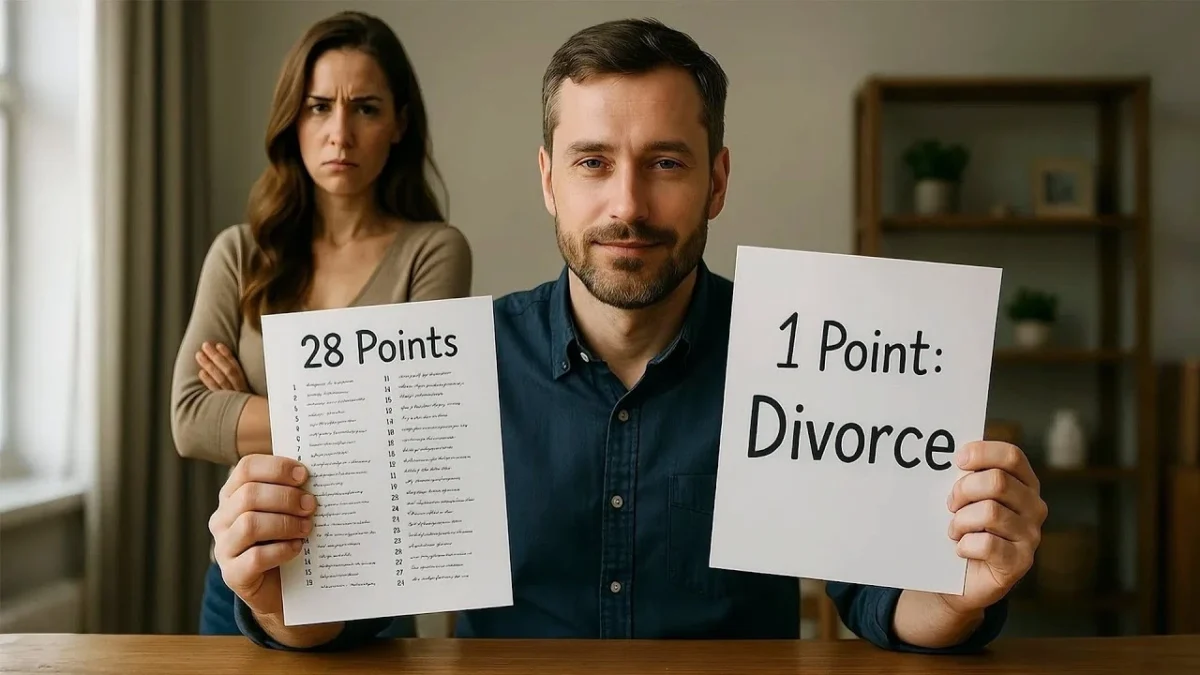
By the time I reached number 28, I realized this wasn’t a list. This was an indictment.
A character assassination wrapped up in bullet points. A complete breakdown of everything Martha thought was wrong with me, neatly typed up and presented like it was supposed to be helpful.
I set the paper down, blinked, and looked at her. Well, she asked, leaning forward eagerly.
What do you think? I know it’s a lot, but if you take these seriously, I think it could make a huge difference for us.
28 items. 28. And guess what was missing? Anything about her. Not one line about what she might need to improve.
Not one mention that maybe, just maybe, marriage was a two-way street. This is eyeopening, I said finally.
And it was, just not in the way she thought. Her face lit up like I just told her she’d won the lottery.
I’m so glad you see it that way. I was worried you’d get defensive, but this is exactly the kind of open-mindedness we need.
I folded the paper carefully and slid it back toward her. You’re right. This is exactly what we needed.
So, you’ll work on these things?” She asked, her voice carrying a hopeful edge. “Oh, I’ll definitely work on something,” I said, pushing back my chair.
“You’ve given me a lot to consider,” she looked proud, almost smug, like she just cracked the code to saving our marriage.
“Take your time,” she said warmly. “I know it’s a lot to process.” I nodded, went upstairs, and closed myself in my home office.
Here’s the thing. I couldn’t even be angry at first. I was too impressed. The sheer audacity of handing your spouse a 28 point you suck memo and calling it helpful.
You almost have to respect the boldness. I sat down at my desk, unfolded the paper again, and studied it.
Each line screamed the same thing. Everything wrong in this marriage is Tom’s fault. No nuance, no balance, just a performance review where I’d failed every category.
And then it hit me. If Martha wanted to communicate through lists, fine. I could make lists, too.
And mine would be a hell of a lot shorter. I opened my laptop, typed a single line, printed it, and folded it neatly, just like she had.
20 minutes later, I walked back downstairs. She was on the couch now, curled up with a blanket, watching some reality show on Netflix.
She muted the TV when she saw me holding a piece of paper. “Did you want to talk about the list?”
She asked. “Actually,” I said, holding up mine. “I wrote my own.” “I Her eyes lit up like it was Christmas morning.”
She snatched it from my hand and unfolded it, probably expecting some thoughtful reflections or maybe my own areas for self-improvement.
Instead, she read one file for divorce. She froze. Her eyebrows shot up. Her mouth fell open.
She stared at the paper like it was written in another language. Is this uh some kind of joke?
She asked finally. Not at all, I said calmly, sitting across from her. You wanted me to work on improvement.
That’s my plan. Her voice rose. This isn’t improving our marriage. This is ending it.
Exactly, I said, leaning back in the chair. And sometimes that’s the only real improvement you can make.
The color drained from her face. She set the paper down carefully as if it might explode.
You can’t be serious. Oh, I’m serious, I said. Sometimes the best way to fix something broken is to stop pretending it works.
For the first time that evening, she didn’t have a ready response. She just stared at me, her lips moving slightly like she was trying to come up with words, but none of them would come out.
And honestly, that silence was the most peaceful part of the night. Martha sat there on the couch, still holding my list.
Well, technically it was a single bullet point, but apparently that was enough to shut her up for once.
She kept staring at it, her mouth opening and closing like she was buffering. Finally, she shook her head.
You’re being dramatic. All I did was give you some constructive feedback. I laughed. Not a full laugh.
More like one of those short sarcastic bursts that escapes before you can stop it.
Constructive feedback. Martha, you handed me 28 items detailing everything you think is wrong with me.
That’s not constructive feedback. That’s a character assassination with bullet points. She crossed her arms.
Her classic defensive pose. That’s not what it was. I was trying to help us.
Really? Then let’s take a little tour of this masterpiece, shall we? I picked up her list again from the coffee table and flipped it open like I was reviewing a term paper.
Number 14. Stop being so logical about everything and show more emotion. I looked at her.
So, be less rational and more dramatic. Congratulations. You’re literally asking me to turn into you.
Her cheeks flushed. That’s not what I meant. Okay, how about number 19? Learn to compromise instead of always thinking you’re right.
Funny, because right now you’re insisting this list is constructive feedback, and I’m saying it’s not.
So, am I wrong, or are you? She glared at me, but didn’t answer. And let’s not forget my personal favorite.
I held the paper closer to my face. Number 25. Work on being less stubborn.
I lowered the page and gave her a slow, sarcastic smile. Oh, the irony. Martha threw up her hands.
Those are legitimate concerns. Maybe they are. But here’s the thing. Every single item on this list is about me.
According to you, every single problem in our marriage comes down to me being a defective husband who needs a complete personality overhaul.
You didn’t write down one thing you might need to work on. Not one. That’s because this list was about helping you see what you could improve.
She snapped. I leaned forward, elbows on my knees. No, Martha. What this list shows me is that you’ve been keeping score for years.
Instead of talking to me when something bothered you, you just wrote it down like you were building a case for my eventual trial.
And tonight, surprise, you decided to present the evidence. She shot up from the couch and started pacing toward the window.
You’re twisting everything I said. Am I? Let’s try an experiment. Name one thing, just one, you could work on to improve our marriage.
She froze her back to me. After a long silence, she finally said, “I I communicate my needs clearly.
Maybe too clearly, I raised my eyebrows. That’s not naming something you could work on.
That’s just bragging about how amazing you think you already are. Oh, my only flaw is that I’m just too good at communicating.”
I clapped my hands once. “Incredible. Truly inspiring.” She spun back around. “You’re impossible. Every time I try to talk about problems, you make jokes because the problems you’re presenting aren’t problems, Martha.
They’re complaints and they’re one-sided. You don’t want a marriage, you want a project. Specifically, the Fix Tom project starring Martha as the selfless hero.
Her lips tightened into a line. You’re being cruel. No, I’m being honest. Cruel would be if I highlighted all the ways you drive me insane and stapled them into a binder.
But I didn’t do that. I kept my list short. I tapped the single sheet still lying on the coffee table.
One item, divorce. Simple, efficient, no binder required. The silence that followed was heavy, broken only by the muted TV screen flickering in the background.
Martha finally sat back down, folding her arms again. So that’s it. You’re just going to give up on seven years of marriage because I pointed out some issues.
Not issues. An entire PowerPoint presentation worth of personal flaws. You’re exaggerating. Am I? 28 bullet points.
Martha. If I handed you 28 things wrong with you, would you call it constructive feedback or would you call it what it is, an attack?
Her jaw tightened, but she didn’t answer. I leaned back in my chair, my tone calm, almost conversational.
Here’s the real problem. You don’t see this marriage as our marriage. You see it as my marriage.
Something you’re stuck in, waiting for me to upgrade myself into the husband you think you deserve.
Meanwhile, you remain flawless, untouchable. Her face softened for the first time, her eyes darting away.
She didn’t have a comeback ready. That alone told me I’d hit the target. And that’s why, I continued, I’m done pretending this works.
If the only version of a happy marriage in your head is me turning into a completely different person, then this marriage has already failed.
For once, Martha didn’t argue. She just sat there staring at her hands. It was almost eerie seeing her without the usual arsenal of retorts, like watching a fighter step into the ring and suddenly realize they forgot their gloves.
And me, for the first time in a long time, I felt calm. The next morning, I came downstairs to the smell of bacon.
Actual bacon, not turkey bacon, not some healthy alternative, the real greasy kind I hadn’t smelled in my own kitchen in years.
Martha was standing there in the apron I’d bought her for Christmas 2 years ago.
She’d never worn it before, ever. It still looked stiff, like the price tag had just come off.
“Good morning,” she chirped, forcing a smile that didn’t reach her eyes. I thought I’d make us a nice breakfast.
I blinked. Wow. Should I check the calendar? Did I miss something special? Don’t be sarcastic.
Sit. Eat. She slid a plate in front of me. Eggs, bacon, toast, the full spread.
I sat down slowly. So, what’s the occasion? Did someone die? She sighed dramatically. I wanted to show you that I care about us.
I stabbed a piece of bacon with my fork. Because nothing says marriage redemption arc like cholesterol.
Her smile faltered. Tom, please. About last night. Surely you weren’t serious about the divorce thing.
That was just you being upset about the list, right? I took a bite, chewed slowly, swallowed.
Actually, I called a lawyer yesterday. I’ve got an appointment next week. The fork froze halfway to her mouth.
You actually called a lawyer? Yep. I told you my improvement plan was simple. Her fake, cheerful mask slipped completely.
You can’t just make lifealtering decisions because you’re mad. I’m not mad, I said, taking another bite.
I’m clear. Breakfast went downhill after that. Later that evening, I came home to find the entire house spotless.
Not just clean, military inspection clean, floors vacuumed, counters polished, even the junk drawer in the kitchen was organized.
Martha was standing proudly in the middle of it all, like she just won a trophy.
Surprise. I thought you’d like to come home to a clean house. I dropped my keys in the bowl by the door.
Wow. If I’d known threatening divorce would get the house cleaned, I would have filed years ago.
Her eyes narrowed, but she kept the smile plastered on. I’ve been thinking about what you said.
You were right. I didn’t include myself. So, she pulled out a piece of paper.
I made a new list. Things I can improve. I took the paper and read it.
Three items. Be more appreciative of the things you do. Don’t give feedback in list format.
Ask about your day more often. I set it down on the table. This isn’t a list of your flaws.
This is a list of ways you can be nicer to me. Totally different thing.
Her forehead creased. What do you mean? I mean you still don’t get it. You think the issue is how you presented your criticism, not the fact that you wrote a 28-point attack on your own husband.
That’s like stabbing someone and then saying, “Oh, sorry. I should have used a smaller knife.”
Her face fell. I don’t understand what you want me to say. I want you to understand that marriage isn’t about one person fixing the other.
It’s about two people working on things together, not you writing performance reviews for me.
She didn’t respond. For the first time, she looked lost. A couple days later, her sister Tina called.
I overheard the conversation from upstairs. I don’t understand why he’s being so dramatic. Martha was saying, “I just gave him some feedback and he’s acting like I attacked him.”
Pause. I know, right? Men are so sensitive. I came downstairs just as she hung up.
Tina, huh? Martha stiffened. She was just checking in. Did you tell her about the list?
I told her the general idea. Not the specifics because you don’t want her to know you wrote 28 criticisms of your husband and called it helpful feedback.
She glared. It’s private. Yeah, I said. So private you had to spin it for your sister like I’m some fragile man who can’t handle constructive criticism.
She didn’t answer. Just crossed her arms again and went back to scrubbing the already clean counter.
The next day, I got a text from her brother Rick. Hey man, heard you and my sister are going through a rough patch.
Want to grab a beer and talk? I stared at the message, then showed it to Martha when I got home.
I didn’t call him, she said defensively. He called me. Word gets around, huh? I said.
What exactly is getting around? That I’m divorcing you because I can’t handle your communication style.
Her lips tightened. I told him we had a disagreement. That’s all. A disagreement? Martha, this isn’t about who left the milk out.
You made a laundry list of all my so-called flaws. And now I’m the unreasonable one because I didn’t clap like a trained seal.
She opened her mouth, but nothing came out. By the end of that week, I went to see the lawyer.
His office had marble floors, fake plants, and that corporate smell of coffee and printer ink.
He looked over my notes. You’re looking at an uncontested divorce. No kids, both employed, assets split pretty evenly.
Should be straightforward. I nodded. Good. Let’s keep it simple. When I got home that night, Martha was sitting at the kitchen table with her laptop open, surrounded by papers.
What’s this? I asked. Research, she said. She turned the screen toward me. It was a marriage counseling website.
I found three therapists who specialize in crisis intervention. I’ve already called two of them.
I sat down. Martha, I told you I’m filing for divorce. I know what you said.
She shot back. But I also know you’re not unreasonable. If I show you I’m serious about working on things, maybe.
Working on what things? I cut her off. Do you even understand the problem? Yes, she said quickly.
Communication. No, I said flatly. The problem isn’t communication. The problem is you don’t see me as your partner.
You see me as a broken appliance you’re trying to fix. She opened her mouth to argue, but this time she didn’t.
And that silence told me more than any of her lists ever had. A few days later, Martha called her mom.
I only caught her side of the conversation while I was in the garage, but it was enough.
I don’t understand, she said, her voice shaky. He’s serious. He talked to a lawyer.
Pause. No, Mom. I didn’t attack him. I gave him a list, feedback, things he could improve.
Another pause. No, it wasn’t that bad. Just 28 things. I stopped organizing my tools and leaned against the workbench, listening.
Silence. Then Martha’s voice dropped. What do you mean I was trying to redesign him?
That’s not what I was doing. I was just I was just trying to improve our marriage.
Her tone changed quieter. Marriage isn’t about improving people. It’s about accepting them. That’s what you think?
Another long pause. Then Martha’s voice cracked. Would I want him to make a list of 28 things wrong with me?
No, I guess I wouldn’t. I went back to my tools. For the first time in 7 years, Martha’s mother had told her something I’d been trying to get across for ages.
Stop treating me like a project. That evening, Martha was different. Quieter. She sat at the kitchen table, staring out the window with a cup of coffee she wasn’t drinking.
I walked in. “You okay?” I asked,” she turned slowly. “I’ve been thinking.” “About what mom said, about what you said.
About the list I sat down across from her.” And her eyes met mine. For once, no fire, no defense, no sarcasm, just tired honesty.
I think I’ve been collecting complaints for years without asking if they were even fair.
Like number 15, your communication style. I wrote that down because it sounded like a real issue.
But when I think about it, you’re actually very clear when you talk. You say what you mean.
Maybe that’s not a flaw. I blinked. This was new territory. She kept going. I think I’ve been comparing you to some ideal version of a husband, someone who doesn’t exist.
I hear about my co-worker’s husband who buys flowers, writes notes, plans surprises, and then I looked at you and thought, “Why doesn’t Tom do that?”
But I never asked you for it. I just expected you to guess. I raised an eyebrow.
And when I didn’t guess, it went on the list. She winced. Yeah. Over the next few days, Martha started having these weird moments of clarity.
We’d be watching TV and suddenly she’d mute it and say, “I just remembered something.”
One night she said, “Last year when you wanted to go on that fishing trip with Rick, I made such a big deal about it.
I called you selfish, but I go out with my friends all the time. Book club, girls nights, shopping trips.
I never asked if those bothered you. I just assumed it was fine because I wanted them.”
I shrugged. They were fine. I want you to have friends, she bit her lip.
But I didn’t give you the same freedom. I acted like your time away was a rejection of me.
Another night, she brought up number seven on her list. Me withdrawing during conflicts. I said you needed to stop shutting down.
But maybe you withdraw because I don’t actually want to solve conflicts. Maybe I just want to win them.
I stared at her. Who are you and what have you done with my wife?
She gave me a weak smile. I’m trying to see things differently. One morning, I found her at the table with a notebook.
What’s that? I asked. She turned it toward me. At the top, things I’ve done wrong in our marriage.
The pages were filled already. I criticized your family but got defensive about mine. I made decisions about our weekends without asking you first.
I expected you to know what I wanted without me saying it, then got mad when you didn’t.
I interrupted you constantly, but accused you of not listening.” Martha’s hand shook slightly as she closed the notebook.
“This is hard to write. I don’t like seeing myself this way. That’s what accountability feels like,” I said quietly.
She looked at me, her eyes shiny. “Is this how you felt when you read my list about you?
Worse, I admitted because your list was mostly personality traits and preferences. This list, yours, it’s about actual choices you made repeatedly for years.
She swallowed hard. I owe you an apology. A real one I waited. She took a breath.
I’m sorry that I spent 7 years treating you like a project instead of a partner.
I’m sorry that I made our marriage about fixing you instead of building something with you, and I’m sorry that it took divorce papers for me to see any of this.
It was the first genuine apology I’d heard from her ever. I nodded slowly. I appreciate that.
She leaned forward, searching my face. Does it change anything? I thought for a long moment.
I don’t know yet, but it’s the first time in weeks, it feels like we’re having a real conversation instead of a debate.
And for the first time in months, maybe years, I felt the tiniest spark of hope.
3 weeks later, Martha brought it up again over coffee. “Would you consider counseling?” She asked carefully, like she was afraid I might laugh.
“Depends,” I said, sipping. “Why would we go? To fix me or to figure out if we even want to stay married.
To figure out if we want to stay married, she said quickly. I know now that I can’t just hand you a list and expect miracles.
I want to actually work on us. I studied her face. She wasn’t begging. She wasn’t bargaining.
For once, she actually sounded like she understood. All right, I said. We’ll try it.
But the second it turns into another version of the fixed Tom project, I’m out.
She nodded. Fair. The therapist’s office was nothing special. Neutral walls, two chairs angled toward each other, and a woman with glasses who looked like she had seen every kind of marriage disaster and lived to tell the tale.
She asked why we were there. Martha jumped in first. Because I made mistakes. I tried to control everything.
I thought our problems were all Tom’s fault. The therapist looked at me. Do you agree with that?
I smirked. I’ve been trying to get her to admit it for 7 years. It’s refreshing to finally hear it out loud.
Martha winced. See, he always uses sarcasm to deflect. The therapist raised a hand. And maybe sarcasm is how he copes.
The question is, can you both talk about problems without keeping score? I looked at Martha.
She looked at me. For once, she didn’t roll her eyes. I’m willing to try, she said softly.
The next week, the therapist asked us to list what we appreciated about each other.
Martha went first. I appreciate that Tom is reliable. If he says he’ll do something, he does it.
I appreciate that he doesn’t play games. He’s straightforward. And she hesitated. I appreciate that he’s still here even after I made him feel like he wasn’t enough.
I cleared my throat. I appreciate that Martha is relentless. Sometimes it’s annoying, but sometimes it’s what keeps things moving.
I appreciate that she’s smart, even if she uses that brain power to make lists of my flaws.
And I appreciate that lately she’s been actually listening. The third session got messy. The therapist asked, “What happens when we argue?”
Martha laughed bitterly. “I talk, he shuts down.” I shook my head. I shut down because talking to her is like talking to a prosecutor building a case.
It’s not a conversation. It’s a cross-examination. Martha flinched. The therapist scribbled something. So, Tom, you withdraw because you don’t feel heard.
And Martha, you push harder because you think if you don’t, nothing will change. But in doing so, you both reinforce the cycle.
One runs, the other chases. Does that sound right? We both nodded. Then the work, she said firmly, is to stop running and stop chasing.
Talk, listen. Even if it’s uncomfortable, it wasn’t a miracle cure, but it stuck with us.
Over the next two months, things started to shift. Martha stopped throwing complaints at me like darts.
Instead, she’d ask, “Can we talk about something that’s bothering me?” And I’d actually stay in the room instead of retreating.
I stopped treating every conversation like a trap. Sometimes she just wanted to be heard.
One night, Martha handed me a folded piece of paper. My stomach dropped. I thought we were back to lists again.
But this time, there was only one item. Learn to be married to my actual husband instead of my imaginary one.
I stared at it. That’s it. That’s everything, she said. All the other problems come from this.
If I can do this, maybe we still have a chance. If I can’t, then you were right about the divorce.
For once, I didn’t feel like I was on trial. A week later, we sat at the kitchen table.
The divorce papers were still sitting in my office, unsigned, but ready. So I said, “What do we do about those papers?”
Martha exhaled. If we both agree this is working, we tear them up. If not, we sign them and walk away.
And you’re okay with that? I asked. She nodded. For the first time, yes, because now at least I know I’m not just trying to turn you into someone else.
I either love the husband I actually have or I don’t. And right now, I do.
We didn’t tear the papers that night, but a few weeks later, after another good session, after another real conversation where nobody kept score, we fed them to the shredder together.
6 months later, we were making dinner together. Actually, together, not her cooking while I scrolled on my phone.
“How was your day?” She asked, chopping vegetables. “Busy?” Johnson finally approved the project. Her eyes lit up.
“The one you’ve been working on for months?” Yep. I’m proud of you, she said simply.
It was a small thing, but it meant more than flowers or lists ever could.
I smiled. How was book club? She laughed. We’re reading a book about marriage. There’s a whole chapter about expectations versus reality.
Made me think about us. Good thoughts. Grateful thoughts. I leaned against the counter. So, after 7 years, you finally figured out you actually like being married to me?
She smirked. Turns out, yeah. Took almost losing you to realize it. I shook my head.
Best worst thing that ever happened to us. And for once, I didn’t even mean it sarcastically.
It’s been a year since the list. No new lists have appeared. Not from her, not from me.
We still argue sometimes, but now it’s just arguments, not full-blown trials where one of us plays judge and jury.
Martha actually laughs when I get sarcastic now instead of calling it deflection. And I’ve stopped counting how many times she’ll roll her eyes in a week because honestly, I kind of missed it when she stopped.
We never became some perfect Instagram couple. We’re not holding hands in every photo or writing cheesy anniversary posts, but we’ve got something better.
A marriage where neither of us is a project and neither of us is keeping score.
And that’s a hell of an improvement compared to where we started. If you felt this story hit hard, drop a like, subscribe for more, and share your thoughts in the comments.








