My Apache Neighbor Said ‘Rancher, You Promised To Marry Me When I Grew Up’. I Thought She’d Forget
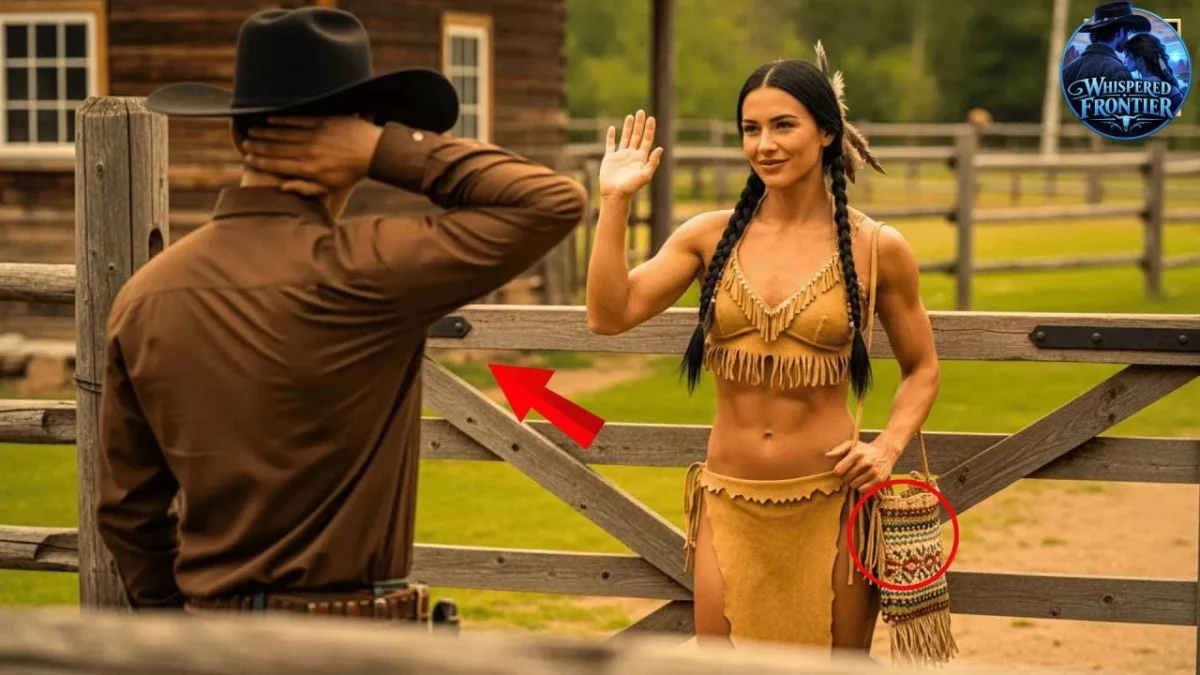
The wind carried a sharp bite that afternoon, the kind that slips under your collar no matter how tightly you pull it closed.
Out on the north side of my ranch, the tall grass bowed in waves, rolling like a restless green ocean across the open plane.
I had been walking the fence line for the better part of an hour, checking loose posts, tightening wire, listening to the familiar creeks of weatherworn wood.
It was the kind of quiet chore a rancher does without thinking. Steady, simple, grounding.
Then I saw her. A lone rider appeared on the dust red road that cut through the prairie.
The sun behind her casting a long, elegant shadow. At first, she was just a silhouette, horse and rider moving in rhythm, slow and deliberate, like a memory taking its time to reveal itself.
The wind picked up, pushing the dust into a soft haze around her figure. Something in my chest tightened, though I couldn’t have said why.
As she came closer, the shape became clearer. A young woman riding a spotted Appaloosa, sitting tall in the saddle with an ease that only comes from being raised under wide skies.
Her dark hair spilled past her shoulders, braided with a strip of red cloth and small feathers that fluttered with each gust.
She wore a simple buckskin jacket worn smooth in places and a turquoise pendant that glimmered faintly in the fading light.
I didn’t know her name yet, not the name she carried now, but something in the angle of her shoulders, the quiet confidence in her posture, pulled an old ache straight out of me.
She slowed her horse as she approached the small abandoned cabin that stood beneath a stand of aging birch trees.
The place had sat empty for years, windows dust blown, porch sagging, wild grass licking up the walls like time trying to reclaim it.
It had once belonged to a small Apache family who lived beside my folks when I was younger.
Then one year they were simply gone. She dismounted with a grace that made the moment feel almost ceremonial, her boots hitting the earth softly.
For a second she just stood there, looking at the cabin as if she were trying to breathe in the ghosts of what used to be.
I didn’t call out, didn’t move. Something held me still. The same way a sudden storm on the horizon makes a man stop and listen.
Then she turned and just like that, eight years collapsed into nothing. Her eyes, deep, dark, steady, found mine across the distance.
The wind shifted again, sweeping a loose feather across her cheek. Her lips curved not into a smile, but into something gentler, something familiar.
A knowing look that hit me harder than any fist. Do you remember the promise you made when I was little, Ethan Ransom?
My breath caught so sharply it almost hurt. Her voice wasn’t timid like the girl I used to know.
It carried a quiet strength shaped by miles traveled and storms weathered. Yet underneath that strength, I heard something else.
A tremor of emotion, maybe even hope. I took a step forward before I realized I was moving.
Lana. The name came out raw, half whispered. She nodded once and the world seemed to tilt.
Lana, the kid I once carried down a rocky slope with a sprained ankle and tear streak cheeks.
The girl who used to sit on my porch steps drawing shapes in the dust.
The same girl who pressed a small deer skin pouch into my hand the night her family left Durango, telling me she’d come back when the wind brought her home again.
Now she was standing in front of me, no longer the fragile child I remembered, but a grown woman shaped by time, heritage, and a fire she seemed to carry in her very breath.
I hadn’t seen her in nearly a decade. Yet here she was. And that simple question, do you remember?
Pulled the ground right out from under me because I did remember. I remembered everything.
And suddenly, nothing about that evening felt ordinary anymore. It felt like the beginning of a storm I’d been waiting for without even knowing it.
Her voice echoing across the prairie pulled memories out of me like loose threads. And before I knew it, I was standing there staring at her, Lana Ayana, and slipping back eight long years to the day everything started.
I was 20 then. The kind of age where a man thinks he knows the land he stands on, even if life hasn’t taught him much yet.
The sun that summer was brutal. The kind that turns the sky white and beats down on the back of your neck until the sweat runs like warm river water.
I’d been working since dawn, fixing a busted waterline that fed the north cattle pen.
My shirt clung to me, soaked with dust and sweat, and my hands were raw from wrenching the old iron pipe into place.
That’s when I heard it. A thin, broken cry carried by the wind. So faint, I thought at first I was imagining it.
The prairie was quiet that afternoon, the kind of dry, shimmering silence where even grasshoppers hide in the shade.
But that sound came again, sharper this time, riding the gust that blew hot sand against my face.
I dropped the pipe, wiped my hands on my jeans, and followed the cry toward the red ridge behind my family’s grazing fields.
As I climbed, loose pebbles skittered under my boots. The red rock glowed in the sunlight, veins of clay catching the light like fire.
Up above, a golden eagle circled slow and wide, its cry slicing through the stillness.
And there, halfway up the slope, where the ridge narrowed into a jagged ledge, I spotted her.
Lana, but not the woman standing in front of me now. A small girl, skin brown by the sun, dark hair tangled with dust and wild grass, eyes wide with pain and fear.
She was 12, maybe just barely, a spirited, Apache kid who lived with her folks in the cabin beside our ranch.
She’d been climbing the ridge to watch the wild mustangs that roam the valley. I’d seen her do it before, quick-footed, bold, always curious.
But this time, she’d stepped on loose shale and twisted her ankle bad. Her breath hitched when she saw me scrambling up toward her.
“Ethan,” she whimpered, trying to look brave, but failing miserably. Tears streaked her cheeks, cutting pale lines through the red dust.
“I’m here, kiddo,” I said, crouching beside her. Her ankle was already swelling, the skin hot to the touch.
She winced as I brushed away some gravel. “Looks like that rock decided it didn’t like you today.”
She tried to laugh, a tiny shaky thing, but her lip quivered instead. I slid one arm under her knees and the other around her back.
“Hang on,” I told her. She wrapped her arms around my neck like she was holding on to the whole world.
Then I stood and carried her down the ridge. The sun hammered down on us, heat rising from the clay like breath from a furnace.
Dust clung to my shirt, to Lana’s dress, to her hair that whipped around in the wind.
Each step jostled her, and every time she hissed in pain, I held her tighter, trying to steady her against my chest.
“You’re going to be all right,” I murmured. “Just keep your eyes on the valley.
Look, mustangs are out today.” She peeked over my shoulder, watching the herd grazing in the distance, sleek, muscular shapes shimmering under the heat waves.
She stopped crying for a moment, but fear crept back into her voice. “Am I going to walk again?”
I shifted her weight in my arms and smiled down at her. Dust and sweat dripping into my eyes.
“Listen here,” I said softly. “You’re tougher than half the ranch hands in Durango. You’ll grow up strong, stronger than anyone I know.
And when that day comes, if you still need someone to lean on, I’ll be right here.
I don’t know why I said it. Maybe it was the heat. Maybe it was the way she looked at me like I was the only safe thing in the world.
But her tiny fingers tightened on my shirt as if those words were a rope thrown across a chasm.
She didn’t forget them. Not that day. Not any day after. And now, standing before me 8 years later, grown and fierce beneath the birch trees, she was here to collect the promise I’d made without thinking.
A promise I never imagined would matter. A promise she had carried through every mile away from this land.
The memory of that day on the ridge didn’t drift away with time. It settled into me, quiet, but permanent, the way a scar becomes part of a man’s skin.
But what came after carved deeper than anything else. Every time I think of it, I still smell the wet earth and hear the thunder rolling low over the plains.
It was early autumn 8 years back when money troubles pushed the Ayana family out of Durango.
Folks around here said the work dried up, the cattle prices dropped, and the family couldn’t keep the cabin that had been theirs for two generations.
Whatever the reason, their leaving hit harder than I ever expected. I was 20 then, still just a young ranch hand trying to figure out my footing.
I didn’t know how to fix the kind of problems that make families pack up their whole lives and disappear into the horizon.
I only knew that the thought of their cabin standing empty felt wrong, like a song missing its last note.
The night before they left, the sky broke open without warning. One minute, the plane stretched out under a pale moon, calm as a sleeping child.
The next lightning split the sky and a hard rain slammed down, drumming on the rooftops, turning the red dirt road into a slick river of mud.
It was the kind of storm that makes grown men pause and listen. A wild, unpredictable thing.
I was in our barn closing the doors before the wind tore them off their hinges when I heard frantic knocking.
At first, I thought it was the storm messing with my ears, but then I heard it again.
Small, fast, desperate. When I swung the door open, there she was, Lana. Hair plastered to her face, clothes soaked through, one leg still wrapped tight in a splint I’d helped her set weeks before.
She must have limped the whole way across the field. Rain ran off her like she’d stepped straight out of the river.
Lana, what in God’s name? She didn’t wait for me to finish. She rushed forward, shivering, clutching something close to her chest.
Her eyes glistened. Not from the rain, but from the kind of sadness only a child who’s about to lose her whole world can carry.
“They’re leaving at sunrise,” she said, voice trembling. “Mama said we can’t stay. Papa said it’s time to move again.”
Her breath caught like the words themselves hurt. I led her inside the barn, away from the wind.
Lantern light flickered across her small face, making her look even younger. She unccurled her fingers and held out a tiny deer skin pouch.
Soft, handstitched, decorated with beads that shimmerred red and turquoise. “I made it for you,” she whispered.
“I stitched every part myself, even the edges.” My throat tightened. The pouch was so light in my hand, but it carried the weight of everything we weren’t saying.
She stared at the dirt floor for a moment, then lifted her eyes to mine, dark, steady, determined in a way that didn’t belong to a child.
“I’ll come back someday,” she said. “If you’re still here, I’ll find you.” Her voice was soft, but the promise in it was fierce.
Like the storm raging outside, thunder cracked overhead. The lights wavered. I wanted to say something to make it easier.
You’ll make new friends. You’ll see new places. You’ll come back soon. But every word felt thin compared to the truth pressing against my ribs.
I knelt down, brushing the wet hair from her face. “You listen to me,” I said gently.
“You just get strong again. That’s all. And when the world stops pushing you around, if you still want to come back here, I’ll be right where you left me.
Her lips trembled. Then she stepped forward and hugged me tight, fierce, like she was trying to memorize the shape of my arms.
We stood there until her father’s whistle cut through the storm like a knife. She pulled away, wiping her face with the back of her hand and limped toward the cabin.
I followed her out to the porch, the rain soaking through my shirt in seconds.
Her family’s wagon was already loaded. Blankets tied down, pots and pans hanging from the sides, horses restless in the rain.
Her mother helped her climb in. Lana turned for one last look. The wagon jerked forward.
She mouthed something I couldn’t hear over the storm, but I knew the shape of the words, “Don’t forget.”
I stood there in the downpour until the lantern on the back of their wagon dimmed, then vanished behind the rise of the hill.
And just like that, she was gone. The morning after Lana spoke those first impossible words to me.
Do you remember the promise you made? I found myself awake before the sun, sitting on my porch with a cup of black coffee turning cold in my hands.
The prairie was wrapped in that pale blue silence that comes before dawn. The kind that makes a man feel both small and anchored to the land beneath him.
Yet my thoughts were anything but still. Eight years. Eight long years since that wagon disappeared behind the hill in the rain.
And now she was back. No longer a trembling girl clutching a deer skin pouch, but a woman shaped by the world beyond these quiet plains.
Later that afternoon, Lana stopped by the ranch. She came walking across the field, boots dusty, braided loose from the wind, turquoise beads glinting in her hair.
She moved with a confidence that made it hard to look away. Still, when she smiled at me, there was a softness there, too.
Something gentle and familiar, like the whisper of a longforgotten song. We sat on the porch steps, Rusty curled at her feet as if he remembered her, too.
“I thought the city would feel like freedom,” she said, eyes tracing the distant ridge lines.
“Denver, Santa Fe, Albuquerque, all those places humming with people and lights.” “But the noise doesn’t stop there.
The streets never sleep. Everyone’s chasing something and half the time they don’t even know what.
She paused, drawing in a deep breath of prairie air as if she’d been holding it for years.
I tried to fit into that world. I wrote for a magazine, met people from everywhere, and for a while it felt exciting, fast, bright, loud.
She let out a small, humorless laugh. But the thing about noise is it doesn’t leave room for truth.
You meet folks who talk big but mean little. You hear promises that disappear the second they’re spoken.
I glanced at her then, wondering how much those years had tested her. She looked strong, sharp, self assured, but there was a shadow in her gaze, the kind that doesn’t come from lack of sleep, but from life wearing down the edges of someone’s hope.
She continued, voice lower now, steadier. There was a man, she admitted, rolling the turquoise pendant between her fingers.
Smart, gentle at first, said he wanted to build a life with me. Her expression tightened.
He even got down on one knee once. But when I really listened, his promises were empty.
He wanted a woman who fit into his future. Not a partner with a past and a heart of her own.
I felt a faint sting in my chest. Not jealousy, not exactly, but something heavier, something close to guilt.
Because while she was out there trying to find her place, I’d stayed here, fixed fences, fed cattle, lived the same life day after day.
And yet, she was sitting beside me now. She looked out toward the north ridge.
The same ridge where I’d once carried her down through the heat and dust.
“You know what I kept thinking about?” She asked softly. “That place up there. That view.
And the words you said when I thought I’d never walk again.” Her voice trailed off, but I didn’t need her to finish.
I remembered. GG grow up strong and if you ever need someone to lean on, I’ll be right here.
She placed a hand over her heart. I carried those words with me everywhere. Through every noisy street, every wrong turn, every lonely night.
I kept hearing them, not because I was a child clinging to something silly, but because that promise felt truer than anything I heard in all those cities.
For a long moment, neither of us spoke. The wind rustled the birch leaves. Rusty snorred softly.
A hawk cut across the sky in a golden arc. “You came back, I finally said, my voice rougher than I meant.”
“I did,” she answered. “But not just to visit. I came back to see if the place I belonged still felt like home, and if the person who made me that promise still meant it.”
My heartbeat thutdded harder than a galloping horse. Part of me wanted to reach for her, pull her close, tell her the truth, but another part, the cautious, weather-beaten part, held back.
Because people who leave sometimes leave again, and people who return sometimes don’t stay. She must have sensed the storm inside me because her eyes softened.
“I’m not asking for anything, Ethan,” she murmured. “I just needed to come back to where everything started, to see if the ground still held.”
I nodded slowly, my chest tight with something I couldn’t name. Hope, fear, both tangled together like barbed wire.
And as the sun dipped low behind the ridge, painting the plains in molten gold, I realized one simple truth.
Her return felt too impossible to trust, too beautiful, too fragile. And the thing I feared most wasn’t that she’d come back.
It was that she might leave again. That night, after Lana told me why she’d come back, sleep didn’t stand a chance.
I lay in my bed, staring at the old pine ceiling, listening to the wind push against the siding of the house.
Out on the plains, coyotes yipped in the distance. And somewhere far off, a bull elk called into the darkness.
It was the kind of sound that usually settled me, reminded me why I stayed on this land.
But not that night, not with my thoughts churning like a dust storm. A man’s ranch tells the truth about him, more than his words ever could.
Mine was small, rough around the edges, built by my father’s hands and held together by mine.
I lived by sun up and sun down by the weight of hay bales and the feel of rains in my hands.
My palms were thick with calluses. My back carried the ache of years spent working under the open sky.
My whole life fit into a few simple pieces. A cabin, a stretch of land, a loyal dog, and a rhythm that never changed.
And what did Lana have? The world. She’d gone places I’d only seen in newspapers, cities full of steel and light, streets crowded with people chasing dreams bigger than the sky.
She’d worked in offices where the air smelled like ink and ambition, not manure and leather.
She’d met people who talked fast, lived fast, and probably thought a ranch like mine was little more than a relic from another lifetime.
I’d never tell her, but a part of me felt smaller standing beside her now.
Like the land I love so fiercely suddenly wasn’t enough. I turned on my side, punched my pillow, cursed under my breath.
None of it helped because no matter how I tried to reason with myself, the truth kept rising like smoke.
I was terrified. Terrified she’d wake up one morning, step outside, and see nothing but dust and fences and a life too slow for a woman who’d tasted the world.
Terrified she’d look at me, plain, unpolished, sunbeaten me, and wonder what on earth she was doing here.
I didn’t want to be the reason she settled for less than what she deserved.
The hardest part was knowing she had choices, men who could give her more. Lives that sparkled in a way mine never would.
I sat up, rubbed a hand over my face, exhaled long and heavy. The house felt too quiet, too honest.
Every creek of the woods seemed to say the same thing. You’re not enough for her, Ethan.
The next morning, I tried drowning the noise by working harder than I needed to.
I saddled my horse before sunrise, checked water troughs twice, fixed a loose gate that didn’t need fixing yet.
Anything to keep my hands busy, anything to keep from thinking. But Lana came by again just past noon.
She rode up slow, leading her appaloosa with a light grip. She looked comfortable there.
Too comfortable, maybe. And it twisted something in me. She hopped off her horse, brushing dust from her jacket.
You’re avoiding me, she said, not accusing. Just stating what she saw. I swallowed hard.
Just busy. Busy thinking, she asked softly. Her question hit too close to the truth.
I turned away, pretending to tighten a saddle strap. But she stepped closer. Close enough that her shadow mingled with mine in the dirt.
I’ve seen that look before, she murmured. In the city on people who were scared of losing something before they ever had the chance to hold it.
I didn’t answer, couldn’t. She leaned against the fence, watching me with eyes that seemed to read straight through the dust and bravado I’d built up over the years.
“You think I came back here because I ran out of options?” She asked quietly.
I forced myself to look at her. “Didn’t you?” She shook her head. Not sharply, not offended, just sad.
I came back because this place is the only place that ever felt real to me.
And you, her voice softened. You were the first person who made me feel like I wasn’t invisible.
Those words should have soothed something in me. Instead, they scared me worse because if she meant them, then I had even more to lose.
I drew a slow breath, staring out over the golden grass swaying in the afternoon light.
I’m just a rancher, Lana, I said finally. A man with dirt under his nails, a dog that sheds too much, and a piece of land that barely pays for itself.
I don’t have a future mapped out. I don’t have more than what you see.
She stepped closer until her boots touched mine. I don’t want more, she whispered. I just want honest.
My chest tightened because honesty was the very thing I feared. Honesty meant admitting that I wanted her to stay.
Honesty meant acknowledging the risk of hoping. Honesty meant opening a door that couldn’t be closed again.
And I wasn’t sure I was brave enough to let her see how much I cared or how deeply I feared she’d regret choosing a man like me.
The sun was sinking low behind the San Juan peaks, bleeding gold and copper across the sky like someone had brushed fire over the horizon.
The whole ranch glowed under that dying light. Barn walls warm as ember, horse silhouettes standing long and still, dust drifting like faint smoke.
Evening chores usually settled my mind, but not tonight. Not with the weight inside me, pressing hard enough to crack bone.
I just finished shutting the last stall when I saw Lana standing near the corral fence.
Her back toward me, her braid catching the wind. The feathers woven into her hair trembled, glinting soft silver in the twilight.
She wasn’t moving, just staring at the open plains as if she was waiting for something.
An answer, maybe, or goodbye. Ethan,” she said without turning. “We need to talk.” Those four words hit me harder than any kick from a spooked horse.
I walked toward her slowly, boots crunching over the dry dirt. The scent of hay and saddle leather hung in the air, but underneath it throbbed something sharper.
Tension you could almost taste. She faced me then, eyes dark and glimmering with a fire I wasn’t ready for.
“If you don’t want me here,” she began, voice steady but tight. “Say it straight.
I’ve lived long enough to hear hard truths. I opened my mouth, but nothing came out.
My throat locked like a rusted hinge. She took a step closer, anger and hurt mixing in her expression.
But don’t push me away because you think you’re protecting me. Don’t make choices for me.
Her voice cracked just barely. Let me choose my own future. Her words sliced clean through me.
I’d been trying to hide my fear behind silence, behind the excuse of letting her decide when really I was terrified of being the reason she settled.
A rancher’s life is slow, predictable. I wasn’t built of bright lights and big plans, but hearing her say it, hearing that tremble beneath her strength, made me feel like a coward.
Lana shook her head, taking a step back. You think I haven’t seen it?
Every time I talk about the world out there, you pull away. Every time I look at you too long, you act like you’re already bracing for the day I leave.
Her voice lowered into something that tore at me. I’m tired of fighting for a place in someone’s life who’s too scared to let me in.
She turned then, slow but certain, her boots brushing the dust, her shoulders trembling just enough for me to see she wasn’t nearly as composed as she wanted to be.
That movement, her walking away from me, ignited something raw. A memory of her leaving in the rain years ago flooded back so fast it knocked the breath out of me.
I couldn’t watch her slip away again. Not this time. Not because of my fear.
Lana, wait. My hand caught her wrist before she could take another step. She froze, not pulling away, but not turning toward me either.
Her skin was warm beneath my fingers, her pulse quick and unsteady. I drew a long, shaky breath, one that felt like it scraped the truth out of my ribs on the way up.
I’m scared, I finally said. There, I said it. Slowly, she faced me again. Her eyes weren’t angry anymore.
Just wounded. Scared of what? You? I whispered, and the word nearly broke in half.
Or maybe scared of how much I care, I swallowed, feeling years of silence unravel all at once.
“I’ve loved you since that day on the ridge,” I said, voice low, almost. Since the moment I carried you down that slope and you held on to me like I was the only solid thing in the world.
My chest tightened and that scared the hell out of me then. It still does now.
Her breath hitched. I’m afraid I’m not enough. I’m afraid you’ll stay for me and spend the rest of your life regretting it.
I’m afraid of being the anchor that keeps you from flying. The wind rustled through the corral grass, whispering between us.
But I’m more afraid, I continued softly, of letting you walk away again. Lana stepped closer, so close her breath mingled with mine.
“You finally said it,” she murmured, tears glimmering. “That’s all I ever wanted, Ethan. Not perfection, not certainty, just the truth.”
I lifted her hand, pressing it to my chest, letting her feel the wild, unsteady rhythm beneath.
“This is yours,” I said quietly. Has been for a long time. She leaned into me then, not desperate, not fragile, but steady, like someone who’d finally reached the place she’d been walking toward for years.
And under that burning sky, surrounded by dust and dusk and the smell of horses settling in for the night, I knew the truth had freed us both.
The moment the truth left my lips, the whole world seemed to falter around us.
The prairie went quiet as if even the wind was holding its breath. Lana stood frozen, my hand still wrapped around her wrist, her eyes searching mine with a tremble that cut straight through me.
Then her breath broke just barely, and she stepped forward. Not fast, not dramatic, just close enough that her forehead nearly touched my chest.
“Ethan,” she whispered, voice trembling. I didn’t come back for the land or the cabin or the memories.
Her voice cracked as she lifted her gaze to mine. I came back because of you.
Hearing those words felt like the ground shifted under my boots. My throat tightened and before I could find the courage to say anything more.
She leaned into me fully, her arms sliding around my waist, her cheek pressing against my shirt like she’d carried this weight for years.
She cried softly at first. Little broken breaths that soak through the front of my shirt.
Then the tears came harder, her shoulders shaking. Not from weakness, but from release. From eight years of holding back every longing, every doubt, every hope, she didn’t dare speak aloud.
I wrapped my arms around her, pulling her in until there was no space left between us.
She fit against me like she’d always belong there, like the empty place I’d been carrying in my chest was shaped exactly for her.
The golden light of the dying sun spilled over us. It washed across the corral, lit her hair with a warm copper glow, and carried the scent of dry grass, warm pine resin, and the lingering musk of horses.
Somewhere behind the barn, a night jar called, a lonely, wavering sound that somehow made this moment feel even more fragile.
I lowered my chin, resting it gently on the top of her head. The feathers woven into her braid brushed my jaw.
The warmth of her breath seeped through my shirt. Everything in me, every fear, every doubt began to unravel.
Lana tightened her hold around me. “I felt lost out there,” she murmured, her voice muffled against my chest.
“I kept searching for a place to belong, a reason to stay anywhere, but nothing ever felt like home.”
“She drew a shaky breath. Every time life pushed me down, I pictured that ridge.
I pictured you.” I closed my eyes. You always had a home here. She leaned back just enough to look at me.
Her face was stre with tears, her eyes shining with a raw honesty I wasn’t sure I deserved.
I don’t need a big life, she said. I don’t need promises made in bright cities.
I want a life that’s real, a life where I can breathe, and the only place I’ve ever felt that is next to you.
Her words hit me square in the chest, knocking down every wall I’d spent years building.
I cuppuffed her cheek with my hand, my thumb brushing away a tear. “I’ve been afraid of holding you back.”
“You’re not,” she whispered. “You’re the only thing that’s ever held me steady.” The wind picked up then, sweeping across the open land.
Dry grass swayed in soft waves, catching the last light of the sun until the whole prairie looked like a golden sea.
The horses shifted in their stalls, the leather tack clinking gently. Everything felt suspended, timeless, like the land itself was witnessing something sacred.
I pulled her in again, and she melted into the embrace as if she’d been waiting her whole life for it.
She wrapped her arms around my shoulders, her fingers gripping the back of my shirt, anchoring herself to me like she feared I might disappear.
But I wasn’t going anywhere. Not now, not ever. The truth settled in my bones with a warm, steady weight.
We weren’t two wanderers crossing paths anymore. We weren’t a rancher and a girl from the past.
We were two souls who had finally stopped running from fear, from silence, from destiny.
Under that vast high plain sky, wrapped in the last glow of the day. We held each other like the world was finally right again.
Because in that moment, we both knew one thing with absolute certainty. We belong to each other.
And nothing, not time, not distance, not fear, could change that. The weeks that followed felt like a slow, tender sunrise after a long night.
Nothing happened in a rush. Nothing exploded into drama. Instead, life settled into a rhythm that felt honest, steady, and deeply western.
The kind of pace where the land itself dictates how two people grow closer. “The first thing Lana wanted to do was fix her family’s old cabin.
“It deserves to breathe again,” she said one morning, her hands brushing the faded wood as if she were greeting an old friend.
So we began. The roof was the worst of it. Half the shingles had curled from years of wind and snow, and the supporting beams were soft with rot.
I climbed up with a hammer tucked into my belt, rusty trotting in circles below like he was supervising every nail I drove in.
The sun beat down on my shoulders, dust settling into the folds of my shirt.
But I didn’t mind. Each repair felt like stitching a lost piece of her life back together.
Below me, Lana knelt in the dirt, planting rows of wild flowers along the porch.
Blue loo pine, prairie cone flower, a few Indian paintbrush seeds she’d brought back from Santa Fe.
She worked with a calm, patient grace, fingers deep in the soil, braid swinging across her back, humming a soft melody her mother used to sing.
The scent of fresh earth mixed with pine sap drifted around her. At one point, she looked up, brushing a streak of dirt from her cheek.
Feels good, doesn’t it? She asked. What does building something instead of running from something?
I paused mid swing, hammer long forgotten in my hand. She didn’t have to explain further.
Her return had given me something I didn’t realize I’d been missing. Purpose that wasn’t just survival.
By noon, Rusty had appointed himself sheriff of the property. He’d bark at passing birds, chase grasshoppers with fierce determination, and collapse in a heap of dust right where Lana needed to dig.
She laughed every time, a bright, warm sound that echoed across the yard like windchimes on a porch.
In the evenings, when the work was done and the sky stretched wide in lavender and pink, we’d sit on the cabin steps.
Lana would sketch designs for repairs or read something she was writing. I’d oil my saddle or sharpen tools, pretending not to watch the way her brow furrowed in concentration.
Sometimes our hands brushed accidentally, sometimes on purpose. Durango noticed her return, too. Word spread that Lana Ayana, the girl who once left with her leg in a splint, was back with a head full of stories and a heart full of fire.
The schoolhouse teacher asked her to help with writing lessons, and within a week, she had a small group of eager kids meeting under the cottonwood tree behind the sheriff’s office.
I’d passed by after dropping off feet at Carter’s store, catching bits of her voice drifting on the breeze as she told the children, too, “Write what you see, what you feel, what you know is true.”
Those kids hung on every word. Watching them circle her like ducklings made something in my chest warm and full.
Meanwhile, I started expanding the ranch. Nothing big, just a new stall and a small paddic so I could take in another horse or two.
Money was tighter than a cinched saddle strap, but work kept my hands busy and my thoughts clear.
Besides, building something for the future suddenly felt right. Natural. Some days Lana handed me tools while I saw new beams.
Other days, she painted the porch rails while I dug post holes. We didn’t talk much while working.
We didn’t have to. The silence felt easy. Two people breathing in the same rhythm.
One evening, after a long day of hammering and planting, she leaned against the railing of the newly repaired porch, her hair lit gold by the sunset.
Feels like spring, she said, even though summer hadn’t ended yet. Does it? She nodded, eyes soft.
Things grow when you give them space. When you give them care. I stepped beside her, the boards beneath us creaking gently.
Yeah, I murmured. Some things just need the right soil. She looked up at me then, her smile slow and warm.
A smile that told me the cabin wasn’t the only home being rebuilt. Out on the prairie, the wind carried the smell of fresh blossoms, hay, and warm earth.
Everything around us, the land, the cabin, the quiet felt reborn. And without either of us saying it aloud, we both knew love had taken root.
Steady, strong, growing like wild flowers under the western sun. Autumn swept over the high plains, slow and steady, tinning the ridge lines and shades of rust and ember.
The aspens turned gold. The night sharpened with cold, and the prairie grass whispered under the wind like a restless choir.
Life at the ranch found its rhythm. Honest, hardworking, peaceful. Then the letter arrived. It came on a crisp afternoon when Lana was teaching her writing class behind the sheriff’s office.
A polished envelope from Santa Fe. Heavy paper embossed seal. When she opened it, her eyes widened.
Not with joy exactly, but with something complicated, like hope tangled with dread. A well-known magazine wanted her.
Full-time writer, high salary, downtown office with windows overlooking the city, a job most people would pack their bags for overnight.
That evening, we ate dinner on the porch of her newly restored cabin. The lantern glowed warm between us, and Rusty dozed nearby, twitching his paws in some dream chase.
“Lana folded the letter, slipped it back into the envelope, and stared at the horizon.
“They want me in Santa Fe by December,” she said quietly. My stomach nodded. “It’s a good opportunity.”
“It is,” she replied, though her tone didn’t match the words. I took a sip of coffee.
I didn’t need anything to keep my hands busy. The truth was the idea of her leaving made something inside me tighten like a rope pulled too fast.
But fear kept my mouth shut. Fear and that old voice that had haunted me for years.
A ranch like mine is too small for a woman like her. A day later, her old friends called.
Voices through the phone. Bright, hurried, buzzing like neon lights. Lonnie, you can’t stay in Durango forever.
You’ve got talent. Don’t waste it in the middle of nowhere. That ranch life, it’s sweet, but it’s not a future.
I heard some of it as I worked outside. Her voice tense there, sharper, the words cut deeper than they meant to.
And every time she hung up, she looked a little more exhausted. That night, as she walked toward the cabin, I stayed behind, pretending to mend a saddle strap I’d already fixed twice.
My heart twisted in circles. What if they were right? What if staying with meant shrinking her world?
What if one day she woke up beside me and realized she missed something bigger, brighter, louder?
The fear returned, old as the ridge, cold as the wind shifting across the plains.
When she approached, I straightened too quickly. “You’re quiet,” she said gently. “Just thinking.” “About what?”
I hesitated. “About what your life could look like in the city.” Her expression fell.
Not annoyed, not angry, just tired. The kind of tire that comes from fighting the same battle twice.
“Ethan,” she said softly. “Are you pushing me away again?” “I didn’t answer,” the silence did.
She stepped closer, frustration shimmering at the edge of her voice. “Why do you do this?
Why do you decide for me what I should want? I came back because this place felt like home.
Because you felt like home. It’s not that simple.” “It is,” she insisted, her voice trembling but fierce.
I’m the one who has to choose my life, not my friends, not my past, and definitely not your fear.
I swallowed. The words stuck like barbed wire in my throat. You’re meant for big things, Lana.
She placed her hand on my chest right where my heartbeat hammered wild and uneven.
I am, she whispered. And this, her fingers pressed lightly against me, is the biggest thing that’s ever happened to me.
The wind kicked up, rattling the dry leaves along the ground. The lantern flame flickered between us, casting our shadows long across the porch.
We need to talk, she said, voice steady now. Really talk without hiding, without running.
So we did. For hours under the crisp autumn sky, we talked until our throats were raw.
About fears, about dreams, about what it means to build a life that isn’t flashy, but is true.
She didn’t yell. I didn’t shut down. We just spoke honestly for the first time, every wall falling brick by brick.
By the time dawn touched the edge of the plains with a pale silver light, she sat beside me in the quiet, her head resting on my shoulder.
Then she said it calm, certain, unshakable. The city isn’t home. You are. It was not dramatic.
It was not shouted. It was simply the truth she had fought to reach.
And in the stillness of that early morning, with the prairie waking slow around us, I finally believed her.
Summer settled over Durango like a warm blessing, soft winds through the cottonwoods, long evenings glowing amber, and the smell of wild sage rising from the ground whenever the heat eased.
It was the kind of season that made everything feel just a little bit more alive.
The ridge, the cabin, the horses, even the sky, everything breathed deeper. Ethan and Lana had spent the spring rebuilding their world piece by piece.
By June, the cabin wasn’t just repaired, it was reborn. New shingles caught the sun like polished copper.
Wild flowers spilled over the porch and smoke curled from the chimney on cool nights.
Kids from the town ran in and out of Lana’s writing class. And Ethan’s ranch hummed with steady purpose.
People talked quietly, warmly, like the way folks in small western towns talk when something right is happening.
So, one early summer afternoon, they invited a handful of close friends, Sheriff Caldwell, Mrs.
Avery from the schoolhouse, Carter from the feed store, and old Mr. Briggs who’d known Ethan’s father to the cabin porch.
Nothing fancy, just lemonade and mason jars, a few folding chairs. Rusty weaving between everyone’s legs like he owned the place.
The sun dipped lower, turning the grass lands into rolling waves of gold. Lana stood beside Ethan on the steps, her hand brushing his lightly, the way it always did when she felt more than she could say.
Ethan swallowed once, steadying himself. This wasn’t a proposal. He wasn’t a man of big gestures.
He never had been. But he was a man of the land, of promises made with the whole heart, not the whole town watching.
He reached into his pocket and pulled out a small timeworn box made of dark walnut.
The grain was smooth from generations of hands. “This belonged to my grandfather,” Ethan said softly, his voice rough as the wind crossing the mesa.
“He gave it to my father when he chose the woman he wanted to walk life with.”
“My father said this wasn’t a ring meant for ceremony. It was a vow, a western vow.
Lana’s breath trembled. Ethan lifted the lid. Inside lay a silver Apache bracelet, simple but beautifully carved with patterns echoing the land itself.
Mountains, running horses, a rising sun. It’s not a proposal, he said, turning toward her.
But it is my promise. The porch grew quiet. Even the wind seemed to pause.
Ethan took her hand, his thumb brushing the pulse at her wrist. When I was younger and didn’t know a damn thing, I made a promise on that ridge.
A child’s promise. Clumsy, thoughtless. He swallowed, emotion catching at the back of his throat.
But this one, this one is the promise of a grown man. He slid the bracelet gently onto her wrist.
I promise you my life, my steadiness, my land, my mornings and my nights. Not because I’m afraid of losing you, his gaze softened.
But because I finally know I want to build every day ahead with you.” Lana blinked fast, trying to steady her breathing.
The evening sun warmed the silver on her wrist until it glowed like a small flame.
She stepped closer, her fingers closing around his hand. “I left once,” she whispered. “I searched the whole world trying to find something that felt like home.
And it turns out home wasn’t a place at all.” She squeezed his hand, her voice quiet but unwavering.
“It was you. It’s always been you. A soft murmur of warmth rippled through their friends, but neither of them heard it.
The world had narrowed to the space between their breaths. They stood together, watching the sun melt behind the San Juan Mountains, turning the sky into streaks of molten orange and rose.
The cabin’s windows flickered to life as lanterns inside glowed softly. A golden pulse of warmth against the coming dusk.
Behind them, laughter drifted. Rusty barked at fireflies. The wind carried the sweet scent of summer hay.
And there on that porch built from memory and mended pieces, two people who had once lost each other finally stood firm, found not by ceremony, but by choice.
When the first evening star appeared overhead, Lana leaned into him and whispered, “And this time, I’m staying.”
In the gathering dark, the cabin stood bright and steady, its warm light spilling across the porch, across the prairie, across the lives they were building.
A home born not from fortune, but from love, truth, and two hearts choosing each other at last.
And now, dear listener, if you were standing on that ridge, watching the sun set, watching two souls finally find their way home, would you choose the wild unknown of the city or the quiet truth of a love built with your own hands?








