Caught My Widowed Neighbor in My Garden —Turns Out She Was a Fugitive Apache Woman
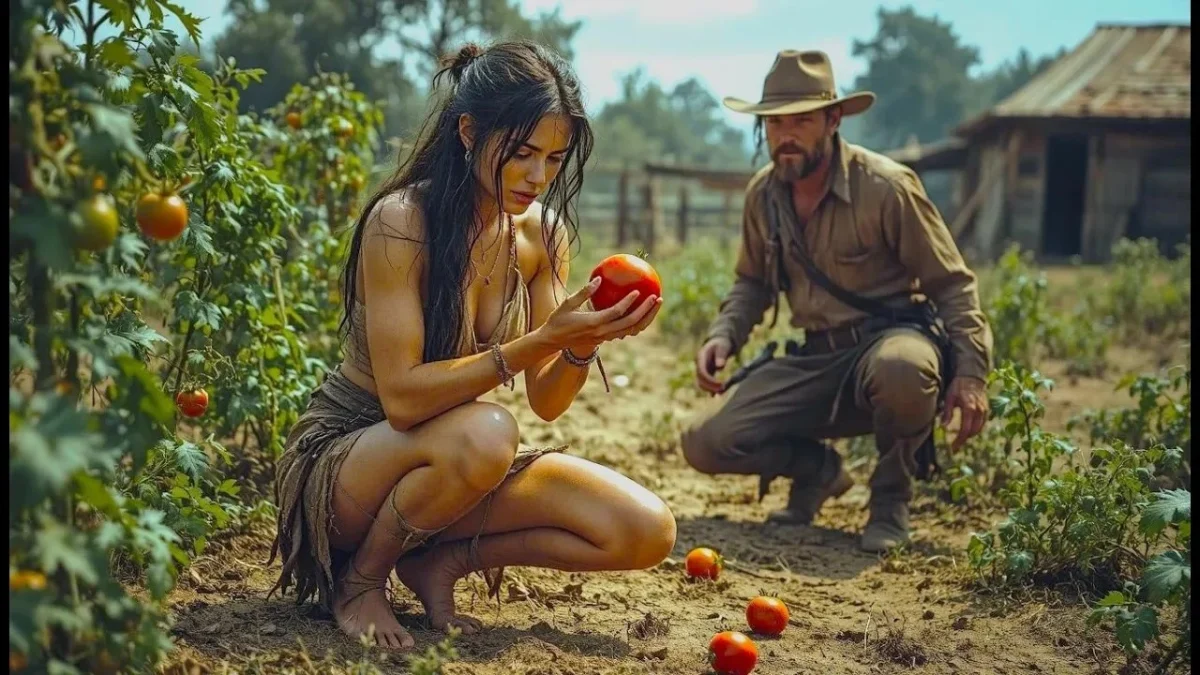
Caught My Widowed Neighbor in My Garden —Turns Out She Was a Fugitive Apache Woman
Before we begin the story, don’t forget to like the video and tell us where you watched it in the comments.
The settlement lay silent under a heavy night sky. Wind rolled across the empty plane, pushing fine dust against the wooden walls of Johan Keller’s cabin.
It was late, close to midnight. The only sound came from the faint creek of the windmill at the far end of his small property and the uneven rhythm of crickets in the weeds.
Yan had been asleep for less than an hour when a sound woke him. Something soft and deliberate, not the restless rustle of an animal.
He lay still for a few seconds, listening. Years of living alone had trained his mind to measure sound the way other men read maps.
It wasn’t a coyote or a deer. It was slower, human. The faint snap of a dry stem followed, then another.
Someone was moving through his vegetable patch. He got up without lighting a lamp. His hands found a rifle leaning beside the door.
The weapon felt familiar, cold, balanced, something he trusted more than people. He reached for his lantern with the other hand, struck a match, and stepped outside.
The garden was a small patch of green carve in a dry Arizona soil. Beans, corn, and a few onions fighting for life in a land that had none to spare.
Yan had spent months keeping that ground alive. Now the lantern’s glow caught movement near the far row.
A figure crouched between the stalks. He lifted the rifle, steady, but not aiming to kill.
The light caught a woman’s face, dust covered, her cheeks streaked with dried blood, eyes wide and unblinking.
Her dress was torn at the shoulder. Rope burns circled both wrists red and raw.
She froze when the light hit her. One barefoot pressed into the dirt, the other tucked under her like she might bolt at any second.
Yoan’s pulse quickened. He’d seen fear before, on men in battle, on his wife in her last hours.
But this was different. It was the kind of fear that had learned not to scream.
“Don’t move,” he said, voicecon low. The woman didn’t speak. She clutched a piece of hard bread in her hand, stolen from his table.
Her breathing came fast, but her eyes didn’t break from his. They were dark, sharp, and alive.
He took a step closer, his boots crunching against the gravel. The smell of earth mixed with a faint trace of smoke from the lamp oil.
“You hungry?” He asked. She didn’t answer. He could see now that she was trembling, not from cold, but exhaustion.
The way she leaned on her left side, told him her right foot was hurt.
Her wrists, her clothes, the way her shoulders flinched at every sound. It all said she’d been running.
Yoan lowered the rifle. He stood still for a moment, fighting the part of him that said to report her.
The local militia had orders. Any Apache found near a ranch was to be turned in immediately.
Yet, something about the woman’s silence made him hesitate. She wasn’t a raider. She wasn’t carrying anything but fear.
His jaw tightened. He had followed orders once before, back when the war came through Texas.
It had left him with a metal he kept buried in a drawer and a conscience that never shut up.
He finally said quietly, “You’re safe here for now.” The woman didn’t trust the words right away.
Her hand stayed on the bread, but his voice was steady, stripped of threat. She looked toward the cabin door, then back at him.
When he stepped aside to give her space, she rose slowly, limping, her breath sharp against the cool air.
Inside the cabin smelled of smoke, coffee and pine. It was plain bed, table, stove, tools, all arranged with the precision of a man who needed order to keep loneliness from spreading too far.
She stood near the doorway, unsure whether to enter. Yan set the rifle on its peg and poured water into a basin.
He motioned to the chair near the hearth. “Sit,” he said. She hesitated, then obeyed.
Her eyes followed every movement, his hands, the tin cup, the bandages. When he knelt to clean her ankle, she flinched once, but not out of fear of him, more like habit.
The wound was swollen, the skin split from walking barefoot through stone and thorns. He spoke again, slow and plain.
Name? She swallowed. A yoka. Her voice was quiet, edged with caution. He nodded. I’m Yan.
He didn’t add that he’d come from Missouri 10 years ago, that his wife and daughter had died of fever in this same cabin six winters back, or that the only reason he stayed was because leaving me facing ghosts he couldn’t bury.
As he worked, he studied her face, the fatigue around her eyes, the cracked lips, the half-healed cut above her brow.
She was young, maybe mid20s, but she had the look of someone who’d lived too long in too short time.
When he finished, he set a small plate on the table. Beans, pork, a piece of cornbread.
She stared at it like she wasn’t sure if it was real. “Eat,” he said.
He turned to the stove to give her privacy. Behind him, he heard the slow scrape of the spoon.
Each bite sounded like it took effort. When she was done, he asked nothing more.
He simply filled the lamp, checked the latch on the door, and sat opposite her in silence.
She looked at the flames, her expression blank but alert as if ready to run at any sound.
Yan leaned back, watching her carefully. He didn’t trust her story because there was no story yet.
But he trusted his own judgment more than the law. She was half starved, hunted, and hurt.
Whatever she had done, it wasn’t worth dying for. He thought about what would happen if anyone found her here.
Soldiers, ranchers, bounty men. They wouldn’t ask questions first. They’d just drag her out. He rubbed his face.
The old ache of fatigue pressing behind his eyes. Maybe he thought helping her was wrong.
But then again, doing nothing had never brought him peace either. He finally stood. You can stay till morning, he said.
After that, we’ll see. Aayoka nodded once. No words of thanks. Just that faint, almost imperceptible look of relief that came when someone stopped running, even for a night.
Yoan dowsed the lantern halfway and sat by the window with his rifle across his knees, watching the dark horizon.
The desert outside was silent again. But inside, something had shifted. The kind of silence that holds two lives in the same room.
Both unsure what tomorrow would demand, but aware that for the first time in a long while, they weren’t alone.
Morning light crept across the dry boards of the cabin floor. The fire in the stove had burned down to soft orange coals, and a thin line of smoke drifted from the chimney into a pale Arizona sky.
Johan Keller sat by the window, half awake, his rifle still across his knees from the night before.
He hadn’t slept much. His mind had been working through the same uneasy loop for hours.
Who she was, what trouble she might bring, and what kind of man he would be if he turned her in.
The woman, Aayoka, was still asleep, wrapped in an old wool blanket on a narrow bed against the wall.
Her face was turned toward the light, her skin drawn tight with exhaustion, lips dry.
He could see how young she really was now, stripped of the tension that had held her upright the night before.
She looked like someone who had run out of places to hide. Yoan rose quietly and poured water from the jug into a kettle.
As the metal began to warm, the smell of coffee slowly filled the cabin. He glanced at her again and thought of what Dobs had told him the last time he rode into town.
That the army had been chasing a band of Apaches north of the river. Said one woman had slipped away from custody near the freight road.
He didn’t know if it was her, but he couldn’t ignore the rope marks or the fear behind her silence.
When the coffee was ready, he poured two tin cups. The sound of liquid hitting metal stirred her awake.
She blinked, eyes adjusting to the light, body tense again as she looked around. “It’s morning,” Yuan said evenly.
“You’re safe.” Ayoka sat up slowly, pulling the blanket around her shoulders. Her ankle was still swollen.
She looked toward the door first, then to the window as if she needed to know all the ways out.
Her voice was when she spoke. You didn’t send soldiers? He shook his head. No.
Why? Yan looked down at his hands. They were steady, strong, and scarred from years of labor.
But he didn’t have a clear answer. Finally, he said, “Because I’ve seen enough people dragged away for the wrong reasons.”
He handed her the cup. She accepted it carefully, her fingers brushing his for a moment.
Light, hesitant, but human. They drank in silence. Outside. The morning wind moved through the dry grass and the sound of the windmill echoed like a slow heartbeat.
After a while, he spoke again. Where were you headed? Aayoka hesitated. He could see her thinking, calculating whether to trust him or not.
Finally, she said, South toward the hills. That’s army country now, Yuan said. Patrols everywhere.
I know, she replied quietly. My people were taken there. I thought maybe she stopped.
Her jaw tightened, but I can’t go back. He understood that. He didn’t press for more.
Yoan stood, opened a small cabinet, and set out a plate with a heel of bread and some dried apples.
Eat something. You’ll need strength if you’re going anywhere. She obeyed, slow and cautious, like someone not used to kindness.
He noticed her eyes, how they scanned the cabin, the tools, the stove, the rifle on the wall.
She wasn’t just looking. She was measuring everything like a person who had learned to survive by studying every small detail.
When she finished, Yan asked, “You got anyone looking for you?” “Family, friends?” Her eyes drifted to the floor.
“No one left,” she said. “They killed my husband near the river. Took the rest to the fort.”
Her voice didn’t break. It simply went flat, like a wound long past bleeding. Yoan felt something tighten in his chest.
He knew the tone. It was the same voice he’d used when people asked about his wife and daughter.
He said nothing for a long time. The only sound came from the kettle hissing on the stove.
Finally, Aayoka spoke again, softer this time. Why do you live alone? He looked at her directly.
Because I ran out of people, too. That seemed to settle something between them. The silence that followed wasn’t sharp anymore.
It was steady, like an understanding neither of them needed to explain. She began helping him with the morning chores despite her limp.
Refilling the water bucket, sweeping the floor with slow movements, folding her blanket neatly. Yan didn’t stop her.
There was dignity in work, and he understood she needed that. By midday, the heat settled heavy outside.
Yan stepped into the yard to check the garden. The soil was cracked from the dry wind.
He could feel her eyes watching him through the window. Curious but unsure whether to step outside.
He called out without turning. You can walk a bit. Fresh air will help your leg.
Aoka came out slowly, shading her eyes against the sun. The light hit her face fully now.
The tan skin, the faint scars on her forearms, the deep tiredness that no rest could fix.
She crouched beside the cornrowse, touching the leaves lightly. You grow this for yourself?” She asked.
“And for trade,” Yuan said. A wholesome in a town every month. It’s hard work.
He nodded. Hard work keeps me sane. She looked at him then, a small flicker of understanding crossing her face.
He noticed that she had a faint mark on her collarbone, shaped like a burn, old, healed long ago.
She caught him looking and covered it with her hand, not in shame, but as if to say, “Not that story.
Not yet. They spent the rest of the afternoon in the yard. She helped him carry water from the pump, though he had to take most of the weight.
When she stumbled, he steadied her by the arm, his touch brief, but careful. Toward sunset, the world grew quiet again.
A horse nade faintly from a farro. The sky turned copper, then red. Yan sat on the porch, watching the last light fade.
Aayoka stayed near the doorway, arms folded around herself. He finally said, “You can stay until your leg heals.
After that, I’ll help you get to the hills, but soldiers come through sometimes. If they do, you hide.
Understand?” She nodded. “I understand.” He looked at her once more. Her calm, the way she stood straight despite everything, and something in him settled.
He didn’t know if it was trust or instinct, but it was enough for now.
When night came, she lay down again on the bed, eyes open, listening to the desert sounds.
Yan sat by the window, the rifle across his lap, just as he had the night before.
But this time, the silence between them felt different. Not tense, but shared. Outside, the wind picked up.
Somewhere far away, a coyote cried. Inside the cabin, two strangers rested under the same roof, both holding their own ghosts, both starting to sense that the other might understand.
Neither spoke again before sleep. But in that silence, the foundation of something fragile and quietly human began to form.
The next morning began with wind coming in from the south, hot, dry, and filled with fine yellow dust.
It coated everything from the fence post to the iron kettle by the well. Yoan woke early, as he always did, because years of ranch life had set his body to the rhythm of dawn.
He moved quietly so as not to wake Aoka, who was still asleep on the bed, one arm over her face to block the light creeping in through the small window.
He stepped outside to start the pump, the squeak of the handle breaking the stillness.
The land stretched out in all directions, hard and empty, broken only by patches of dry brush, and his small garden fenced with uneven boards.
To a man like Johan, this isolation wasn’t a punishment. It was the only kind of peace he knew.
After the fever took his wife and little girl 6 years ago, he’d come out here to start over.
No one bothered him, and he didn’t have to talk about things that didn’t have answers.
But now there was someone in his house again. Someone who carried her own set of losses, and the quiet felt different.
When he came back inside, Aoka was sitting up, her hair loose over her shoulders.
The early light gave her skin a dull bronze glow. She looked cleaner. He’d left her water and a piece of soap the night before, and less like the frightened creature he’d found in the garden.
She was watching him, cautious, as if waiting for him to change his mind about letting her stay.
He set a tin plate on the table, cornbread, some dried meat, and a boiled egg.
“Eat,” he said simply. She nodded and began to eat in small, slow bites. Her manners neat despite hunger.
Yoan poured coffee and sat across from her, elbows on the table. For a while, neither spoke.
The ticking of the clock on the shelf filled the silence. Then Ayoka looked up.
Why did you come here away from people? He met her gaze. Because people take what they want, then leave what they break.
She studied him, her expression unreadable. You lost someone. Yes. His voice stayed calm, but something flickered in his eyes.
My wife and daughter. Fever swept through the settlement years ago. Doctor came too late.
Aayoka’s hands stillilled on the cup. I’m sorry. He gave a small nod. It’s the land’s way.
It gives and it takes. She didn’t press. Yan appreciated that. He could tell she wasn’t one for empty sympathy.
She had seen enough death herself to understand it needed no explanations. After breakfast, Yan inspected her ankle again.
The swelling had gone down slightly. He noticed she had cleaned and rewrapped it herself with the strips of cloth he’d left out.
“You’re healing fast,” he said. “I’ve walked worse,” she replied. When they took us to the fort, we walked for 3 days in the sun.
No water, some fell. Her voice stayed calm, but her eyes drifted for a moment, as if seeing something she couldn’t forget.
Yan didn’t ask what happened to the ones who fell. He already knew. By midm morning, he had her help with the small chores.
Washing clothes, sweeping the porch, sorting tools. She moved carefully, limping, but steady. She didn’t complain.
Her movements were efficient, practical, the way someone works when they’ve had to earn their survival every day.
At noon, a wagon passed on the distant road. Two men heading east. Yoan tensed automatically, stepping to the doorway.
He watched until the dust clouds settled, then went back inside. Aayoka had noticed, too.
“Are you expecting anyone?” She asked. He shook his head. “Out here, if someone comes, it’s usually for the wrong reason.”
Aayoka looked at him, her face calm, but her tone cautious. You think the soldiers will come?
He didn’t answer right away. He poured another cup of water and drank before speaking.
If they’re looking for someone, they might. Word travels fast between ranches. And doss, my neighbor, likes to talk when he’s drinking.
She nodded slowly. Then I’ll leave soon. No, he said firmly. You can’t walk on that foot yet.
You’d never make it past the ridge and they’d find you. I want a blood on my land.
That last sentence came out harsher than he intended. She looked down, her fingers tightening on the edge of the table.
He sighed and set the cup down. You stay till you can move proper. That’s all I mean.
Aoka gave a short nod. All right. The rest of the day passed in cautious rhythm.
She mended a tear in one of his work shirts with thread from her own clothes.
He checked the corral fence, listening to the wind hum through the wire. They barely spoke, but the silence wasn’t uncomfortable anymore.
It had a purpose like a truce. In the late afternoon, clouds gathered far to the west.
A storm was building. The air turned heavy and metallic. Yan set buckets under the eaves to catch rainwater while a yoka stood by the doorway, watching lightning flash behind the distant hills.
When the rain finally came, it came fast. Thick drops pounding on the roof, washing dust from the windows.
Inside, the cabin dimmed and the air grew cooler. Aoka sat near the fire, wrapping the blanket around her shoulders.
Yan sat opposite her, a faint steam rising from his wet coat. She spoke suddenly, voice low.
When they took my people, they said it was because of the raid near the freight road.
But we didn’t attack anyone. Some of the men left the camp days before. The soldiers came anyway.
He listened without interrupting. They killed my husband, she said. He wasn’t a warrior. He was a guide.
He helped settlers cross the river. Her fingers clenched around the blanket. They didn’t care.
They wanted revenge. Yoan’s eyes darkened. That sounds like the army. You were a soldier, she said quietly, not as a question, but a certainty.
He hesitated once. She looked at him steadily. Then you know what they do. He didn’t deny it.
I know what men become when they’re told to follow orders. For a long moment, the only sound was the rain against the roof.
Two people who had once stood on opposite sides of the same line now sat facing each other.
Both carrying what that world had done to them. As the storm eased, Yan rose and checked the door latch.
“You’ll be safe here tonight,” he said. But if soldiers ride this way, I need to know before they reach the gate.
We’ll have a plan. Aayoka nodded. I’ll listen for them. When he turned back, she was watching him.
Not with fear, but with the weary recognition of someone beginning to believe in another person again.
It wasn’t trust yet, but it was close. That night, as the desert air cooled, Yan stayed by the window once more, rifle across his lap.
Aayoka slept lightly, her breathing steady, the fire casting faint shadows across the walls. Yan looked toward the small cross visible through the window, his wife and child buried beneath it, and felt something shift quietly in his chest.
He didn’t understand what it was yet, only that for the first time in years, the sound of another person breathing under his roof didn’t feel like an intrusion.
Outside, the storm rolled away into silence. Inside, two survivors of different worlds shared a fragile calm.
Each one uncertain of what tomorrow would bring, but both beginning slowly to feel that tomorrow might be worth seeing.
By the next morning, the storm had cleared. The air was sharp and clean, and the land around Johan Keller’s cabin smelled of wet soil.
An unfamiliar scent in a place where rain rarely lingered. Small puddles glistened between the rows of corn, and the garden for once looked alive.
Yoan stepped outside early, checking the fences, the horses, the water trough. For a moment, the world felt quiet enough to believe that the troubles of yesterday had been washed away.
Inside, Aayoka had already woken. She was sitting near the fire, drying the blanket she had used overnight.
The light from the window caught her face, and for the first time, Yan noticed faint freckles across her cheeks, half hidden under the tan of sun and dust.
She looked different now, less like a fugitive, more like someone finding her balance again.
She spoke first. “You stayed awake again last night.” He nodded once. “Habbit, out here, you listen to everything.
Coyotes, horses, or men? Men are worse,” she said simply. He gave a short, humorless smile.
Most times, yes. They shared a quiet breakfast, cornbread, and coffee, the same as every morning.
But something had shifted. The silence between them was no longer wary. It was the silence of two people who had learned to measure trust by deeds, not words.
After eating, Yan fetched a small crate from the corner. Inside were clean strips of cloth, a jar of ointment, and a needle threaded with coarse twine.
“Your ankle needs rewrapping,” he said. Aayoka didn’t argue. She lifted her leg onto the stool, and he knelt beside her, working with steady, practical hands.
As he touched her skin, he noticed faint scars on her legs. Some old, some fresh marks of someone who had lived through more than one escape.
She didn’t flinch, only watched his face, studying him with the same calm focus she had used since the night they met.
When he finished, she said softly, “You treat wounds like a man who’s done it before.”
“I have,” Yuan replied. “The war taught me. We patched each other up more often than the doctors did.”
She hesitated. “You fought for the North?” He nodded. “Infantry, Missouri Regiment, mostly border duty.
I came back home after, but home wasn’t there anymore. That was the first time he had spoken of it directly.
The words came slow, grounded, as if he decided she’d earned the truth. My wife and little girl got sick while I was gone.
Fever took them both before I could reach them. I buried them myself. Aayoka looked down, her expression tightening.
You keep their graves behind the corral, she said quietly. He turned his head, surprised.
I saw the crosses, she explained. When I went outside yesterday, I didn’t mean disrespect.
Yoan shook his head. You didn’t. I just didn’t think anyone noticed anymore. For a while, they said nothing more.
The wind outside picked up again, rattling the wooden door, and Yan focused on refilling the water bucket, letting her thoughts stay private.
Later that day, they worked in the garden together. Aoka insisted on helping despite her limp.
She tied her hair back with a strip of cloth and carried water from the well while Yuan hoed the soil.
Watching her work, he realized how easily she adapted, how naturally she fell into rhythm beside him.
It wasn’t the helplessness of a rescued woman. It was the steady resilience of someone who refused to be broken.
At midday, a shadow crossed the field. Yan looked up to see a rider approaching slowly from the east.
The man wore a brown coat and rode a chestnut mare. His neighbor Tom Dobs.
Yan’s gut tightened. Dobs had a loud mouth and loose loyalty. He’d sell information to soldiers for a bottle of whiskey if the chance came.
Inside, Yan said quickly. Aayyoko obeyed without question, moving with quiet speed toward the cabin.
She ducked behind the doorframe as Yan wiped his hands on his trousers and met Dobs halfway to the fence.
“Morning, Keller,” Dobs called out, his voice carrying a forced cheer. “Hell of a storm last night.
Thought your garden might have floated off to Texas.” Yan gave a small nod, held fine.
Dobs leaned forward on the saddle, eyes squinting. You seen anyone pass through here lately?
Army’s been riding around asking questions. Some Apache woman escaped from a patrol near the river.
They say she’s wounded, dangerous. Yoan kept his expression steady. No one’s been here. Dobs studied him a little too long.
They say she’s young, pretty. You know, if she came through, Yoan’s voice stayed even.
If she did, I’d have told them. For a moment, it seemed like Dobs might push further.
Then he gave a smirk that didn’t reach his eyes. Well, keep your rifle close.
Ain’t safe country for a man living alone. Yoan nodded once. I always do. Dobs turned his horse and rode off toward the main road, dust trailing behind him.
Yoan watched until the man disappeared over the hill. Only then did he exhale, the tension in his shoulders finally easing.
He walked back inside and found Aayoka standing behind the window, barely breathing. Her hands were clenched around the edge of the table.
“He knows something,” she said quietly. “He suspects,” Yan corrected. “That’s different.” “Suspicion fades if you don’t feed it.
But what if he brings soldiers? Then I’ll handle it.” Her gaze lingered on him, uncertain.
“Why are you doing this?” He hesitated, searching for the truth in himself. Because someone should have done the same for my family when the fever came.
Because sometimes doing nothing is worse than the risk. It seemed to reach her. She looked down, her voice small.
If they come, I don’t want you to lose your land for me. Yoan shook his head firmly.
That’s not your decision. She held his stare for a long moment, and he could see the conflict behind her eyes, fear, gratitude, and the strange unease of being protected again after losing everything.
That night, the mood in the cabin was heavier. Yan cleaned his rifle and checked the boards under the floor just in case.
Aayoka sat near the fire, her face calm, but distant. She was thinking about Dobs, about the men who might come.
Before turning in, Yoan said quietly, “If I tell you to hide, you go under the floorboards.
There’s space enough. You stay there till I say otherwise.” She looked at him steadily, and if they don’t leave, then I’ll buy you time.
Her jaw tightened, but she didn’t argue. I won’t forget this, she said softly. He met her eyes.
Don’t make promises. Just heal. The fire crackled between them, casting thin orange light across the walls.
The sound of the wind outside carried faintly through the cracks in the cabin walls.
Both of them knew what might come, but neither said it aloud. We lay down that night.
Yan didn’t sleep right away. His mind was full of dos of the way the man had looked at him and of the reality that every choice he made from now on would have a price.
Still, as he turned toward the faint sound of Aoka’s breathing, he knew one thing for certain.
He’d already chosen his side, and if soldiers came looking for her, he wasn’t planning to let them take her alive.
Two days passed after Dobs’s visit, and the air around the ranch grew heavier, as if the land itself was holding its breath.
Yan Keller worked from dawn to dusk, but his movements had changed, more deliberate, quieter, his eyes scanning the horizon after every sound.
He didn’t say it out loud. Yet, both he and Ayoka knew what he expected.
Soldiers would come. It was only a matter of when. Aayoka’s ankle had improved, though she still limped slightly.
She spent most of her time indoors, mending clothes, cleaning tools, or tending to the fire.
It gave her something to do, something human, and it made Yoan’s house feel less like a tomb.
Every so often, she’d look out the window toward the open plains, where the horizon seemed endless but not free.
She knew the feeling of being hunted never truly left. It only went quiet for a while.
Yoan returned from the corral one morning with dust on his coat and tension in his shoulders.
Dobs rode by again, he said flatly. Didn’t stop this time, just looked. Too long.
Aoka froze, her hand tightening around the broom handle. He’ll tell the soldiers. Maybe, Yan said.
Maybe he already did. Her breath quickened. You should let me go. They’ll take everything from you if they find me here.
I’m not letting you walk into a hanging line. His voice came out harder than he meant.
He set his hat down on the table and looked at her directly. You’ll stay until we find a safer way.
If the soldiers come, I’ll deal with them. She looked at him with disbelief, her tone quiet but sharp.
Why would you risk everything for someone you just met? Yan didn’t answer right away.
He stared at the cracked wall beside the window, the same spot his daughter used to draw on with a piece of charcoal.
He finally said, “Because I already lost everything that mattered once. I won’t stand by while they take someone else just because it’s easy.”
That silenced her. She turned away, hiding the emotion that came into her eyes. She didn’t know how to respond to that kind of loyalty.
Loyalty without a reason, without a price. Later that afternoon, the wind picked up sweeping grid across the porch.
Yoan repaired a broken hinge on the barn door while a yoka gathered water from the well.
Their small ordinary chores carried the rhythm of people pretending life could stay normal. Yet both were listening for horses, for gunfire, for the faint metallic jingle of spurs that might carry through the wind.
After a long silence, Aoka spoke while setting the water bucket down. If they come here, you must tell them I forced you.
That I took food that I threatened you. They’ll believe it. You’ll live. Yoan looked up from his work, his brow tight.
That’s not how I live. She stepped closer. You don’t understand. They don’t need truth.
They need someone to punish. He straightened, the hammer still in his hand. Then let them come.
I’ll give them no story worth writing down. Their eyes met, and the look between them held both defiance and quiet fear.
Two people who had lived through enough loss to recognize what was coming, yet still refused to bow to it.
That evening, after supper, Yan sat by the fire, cleaning his rifle while Aayoka prepared herbs in a small clay bowl.
She mixed crushed sage with a few dried leaves he didn’t recognize. The scent filled the cabin, sharp and grounding.
“What’s that for?” He asked. “Protection,” she said simply. “It’s an old way. My grandmother taught me.
Not against bullets, against fear. Yoan watched the smoke rise from the small bowl. Does it work?
She met his gaze. It helps the heart remember what it fights for. He didn’t argue.
The faint smell of the herbs lingered in the cabin long after the fire died down.
That night, Aayoka couldn’t sleep. She lay awake, staring at the low ceiling, her mind turning over the past, the raid, the screams, the fire.
The memory of her husband’s last breath haunted her. The soldiers boots in the dirt.
The way he fell when the bullet hit his chest. She remembered the boy they’d been hiding.
A half-star child they’d found wandering after a skirmish. The one her husband had shielded when the shot started.
The boy had escaped. She hadn’t seen him since. She wondered if Yan would still protect her if he knew the whole truth.
That she had helped raiders once, not to kill, but to free captives taken by settlers.
That she had stolen food, bandages, water from wagons. To the army, that made her a traitor.
To her people, it made her a survivor. Just before dawn, Yoan stirred from his chair by the window.
He hadn’t slept either. His eyes were shadowed, his beard rough from days without rest.
“You should get some sleep,” she said quietly. Not tonight,” he answered. “The dogs were restless earlier.
That usually means something’s close.” She stood, wrapping her shawl tighter around her shoulders, and stepped beside him at the window.
The desert outside was still and pale in the early light. Nothing moved except the wind.
Then, faintly they heard it. The distant clatter of hooves. Aayoka’s pulse jumped. Yan’s grip on a rifle tightened.
He looked at her once, calm, but firm. Under the floor. Now she obeyed without hesitation.
Together they lifted the loose plank behind the table. Beneath it was a narrow crawl space lined with old sacks and a few wooden beams.
He helped her down gently, handed her a canteen, and whispered, “Don’t move. Don’t speak.”
She looked up at him, her voice barely a breath. “What will you say?” He forced a small, steady smile that I haven’t seen anyone, which is true enough.
He closed the plank, dragged a rug over it, and straightened just as the sound of horses grew near.
Through the window, he saw them. Four soldiers in gray coats, dust rising behind them, rifles strapped across their backs.
A fifth man rode in front. A sergeant with a trimmed beard and eyes that moved like they were counting everything.
Yan stepped outside as they pulled up to the gate. Morning, the sergeant called. We’re looking for an Apache woman.
Escaped custody two weeks ago near the freight road. “You seen anyone pass through here?”
Yan kept his voice calm. “Not since Dobs came by, just me and my land.”
The sergeant swung off his horse. “Mind if we look inside?” Yan hesitated just enough for it to seem natural.
Then opened the door. “Go ahead. Nothing here worth stealing.” The soldiers spread through the cabin, boots thuing against the floorboards.
Every step near the trap door made Yoan’s stomach tighten. The sergeant’s gaze roamed over the shelves, the bed, the table.
He stopped near the rug. For a second, Yan thought he’d seen it move, but then the man’s attention shifted to the wall, specifically to the two small wooden crosses visible through the window.
“You got family buried here?” The sergeant asked. “My wife and daughter,” Yuan said quietly.
The sergeant looked at him for a long moment, something softening in his face. Sorry for your loss.
Yoan nodded once. Ain’t much left but the work. The soldiers finished searching and found nothing.
The sergeant lingered at the doorway. If you do see her, you’d be smart to send word to the fort.
They’re offering $50 for information. Yoan’s reply came steady, eyes flat. I’m not in the business of selling people.
The sergeant studied him a second longer, then nodded slowly. Fair enough. He turned to his men.
Mount up. When they were gone, Yoan watched the dust trail vanish into the distance before finally stepping back inside.
He waited, listening until even the wind swallowed the sound of hooves. Only then did he move the rug and lift the plank.
Aoka climbed out, her hands trembling slightly, her face pale but composed. They believed you,” she whispered.
He nodded. “For now.” She looked at him for a long moment. “You risked your life again.”
He shrugged, though his eyes betrayed the exhaustion underneath. “You’re under my roof. That’s all the reason I need.
For a moment,” neither spoke. Then Aayoka took a small step closer. Her voice was steady but low.
“If I live through this, I will not forget what you did.” Yan met her gaze, his tone quiet but firm.
Then make it mean something. Outside, the sun rose over the desert, burning away the last traces of dawn.
Inside the cabin, beneath the weight of what had just happened, something unspoken settled between them.
Something made of trust, debt, and a quiet, fragile understanding that two broken lies had now become one line in the same story.
That night, the desert was still, heavy with the kind of silence that follows danger, but doesn’t promise safety.
Johan Keller didn’t sleep. He sat by the table, rifle within reach, watching the faint red glow in the stove fade to gray.
Every small sound in the cabin, the creek of wood, the flick of wind through the cracks, kept his mind alert.
He knew what men like Sergeant War did when suspicion festered. They’d be back. Not because they found anything, but because something in his calm had made them wonder what he was hiding.
Aayoka was asleep on the bed, though not peacefully. Her hands twitched occasionally, her breathing uneven.
She was trapped in dreams of things Yan couldn’t see, but could easily imagine. He’d seen that same restless movement in wounded soldiers, bodies that remembered pain, even when their minds wanted rest.
By dawn, Yan stepped outside. The morning air bit cold after the long night. The world looked unchanged.
The corral, the empty hills, the long scar of wagon tracks that disappeared into the horizon.
But he knew the piece was temporary. He looked toward the small hill behind the cabin where two wooden crosses stood.
One was taller, one smaller. The ground there was dry again, even after the rain.
He walked up and brushed the dust off the carvings he had made years ago.
Anna and Martha Keller, his wife and daughter. He’d made the crosses himself because no one else had come to help bury them.
He spoke softly as if the wind were listening. Guess I’m still trying to make things right.
I don’t know if this one deserves it, but I do know she doesn’t deserve them.
When he turned back toward the cabin, he saw Aayoka standing in the doorway wrapped in his old coat.
Her hair was loose, catching the faint morning light. “You talk to them,” she said quietly.
He nodded once. Every morning reminds me to stay human. Aayoka walked closer, her limp nearly gone now.
You love them. Still do, he said simply. That doesn’t stop. She looked at the crosses for a moment, her expression unreadable.
My husband’s name was Tossa. He had kind eyes. He used to say silence was the only language people don’t lie in.
I think he was right. Yoan gave a faint nod. He was. That moment of honesty hung between them, simple, unforced, and real.
It wasn’t pity they shared. It was understanding. Both had buried too much to speak of it lightly.
The next few days passed in tense routine. Yoan rebuilt the trapdo, making the wood fit tighter, so no soldiers boot would ever catch the hollow sound beneath it.
Aoka helped him in the garden, though they worked slower now, always glancing toward the ridge where the trail cut through the desert.
Every cloud of dust in the distance made them pause. On the third afternoon, while Johan was stacking firewood, Aayoka brought him a small bundle wrapped in cloth.
Inside were two small carvings, tiny wooden figures shaped like people. “I found them under the bed,” she said softly.
“Your daughter made them?” Yoan froze. He hadn’t touched those carvings since the day he buried his child.
Yes, he said after a moment. She used to give them names so they keep the house safe.
Aayoka’s hands trembled slightly as she set them on the table. Then maybe they’ll protect it again.
Her words were gentle, but they hid something deep inside him. He hadn’t thought about protection in years.
Only endurance. That evening, as the sun dipped low, they shared supper without much talk.
Aayoka asked about his life before the war, where he came from, why he’d stayed in Arizona instead of going back east.
Yan told her the truth, that there wasn’t anything left to go back to, and that this land, empty as it was, didn’t lie.
After they ate, he repaired his rifle by the fire. Aoka sat across from him, mending the hem of her skirt.
For the first time since she’d arrived, she hummed softly, an old Apache melody, low and rhythmic.
The kind that sounded like wind through canyon walls. Yan listened in silence. The tune had no words, but it carried weight.
It sounded like memory. When the song faded, he asked, “What will you do when it’s safe?”
“I don’t know,” she said. “Maybe find what’s left of my people. Maybe start again somewhere no one remembers my name.”
He nodded slowly. “Names have a way of following you.” Aayoka looked at him, eyes steady.
“And what about you, Yan Keller? What do you live for now? He stared into the fire for a long time before answering.
Right now? For this place? For keeping alive? Maybe for something more I haven’t found yet.
There was honesty in that answer. It made the silence that followed feel almost warm.
But the peace didn’t last. The next morning, as Yan was repairing a water trough by the corral, the faint glint of sunlight on metal caught his eye from the ridge.
Through the heat shimmer, he saw riders, three of them, approaching at a slow, steady pace.
“Soldiers again,” he went inside calmly, but quick. “They’re coming,” he said. Aayoka froze. “The same men,” he nodded.
“Probably.” Without hesitation, she moved to lift the plank in the floor. But Yan shook his head.
“No, you won’t fit down there for long with the heat. This time, we try something else.”
He led her to the old storage shed at the far edge of the property.
It was low and half collapsed, filled with hay and tools. He cleared a small space behind the barrels.
“Hide here. Stay silent. If they search, they’ll check the house first.” Before she went in, she touched his arm.
“You don’t owe me this.” “I know,” he said. “But I’m still doing it.” By the time he walked back to the cabin, the soldiers were already in the yard.
The same sergeant dismounted, face set hard. Mr. Keller, he said, we need to ask again.
That Apache woman, Aoka, we found signs of her near the wash south of here.
Someone helped her. You’re the closest homestead. Yoan wiped his hands on a rag, forcing calm.
You already looked once. Found nothing. Sometimes people change their minds after thinking it over.
I don’t change mine, Yuan said evenly. The sergeant’s eyes narrowed. If she’s here, you’re protecting a fugitive.
That’s a federal offense. Yoan’s jaw tightened. You can look again. Same as before. The soldiers searched everything.
The cabin, the barn, the well, but not the shed. They found nothing. When they left, the sergeant gave him one last long look.
“You strike me as a man who’s got something worth hiding,” he said. Yan didn’t blink.
“Only the past, sergeant.” They rode off without another word. He waited until the sound of horses faded into the wind before walking to the shed.
Aayoka was crouched in the dark, her face stre with dust, eyes wide. When he opened the door, she exhaled the first sound she’d made in an hour.
“They’re gone,” he said. Her voice trembled slightly. “I thought they’d find me. They don’t know where to look,” Yuan said.
Then quieter, and they don’t understand what they’re really chasing. That night they sat outside on the porch.
The air was warm, filled with the smell of rain soaked earth. Yan poured two cups of coffee and handed one to her.
She hesitated then took it. They’ll come again, she said. I know, he replied. But I’ll be ready.
Aayoka looked out at the dark horizon, the faint shimmer of stars rising over the ridge.
You risked your life twice now. Why? He thought about it for a moment, then said.
Because the last time I failed to protect someone, I had to live with the sound of their voices every night.
I won’t do that again. Her eyes softened. You think helping me will change that?
He looked at her steadily. Maybe not, but it’ll stop it from getting worse. For a while, they sat in silence.
Two shadows framed against the glow of the lantern. The fear hadn’t vanished, but something had replaced part of it.
Respect perhaps or something quieter that neither dared name yet. Inside the cabin, the small wooden figures his daughter had carved sat on the shelf beside the fire.
One leaned against the other, their edges worn smooth by time. Outside, Yan and Aayoko watched the horizon, knowing the world would not forgive them for what they’d done, but also knowing that forgiveness was never what they were after.
They were trying in their own way to build something else. Something small, something honest, something worth protecting, no matter what came next.
The next morning rose slow and orange, the kind of dawn that usually promised heat and quiet.
But this one carried tension with it, like the land itself was waiting for something to happen.
Johan Keller stepped outside with his rifle slung across his back and the smell of last night’s coffee still clinging to his shirt.
He scanned the horizon the same way he had done every morning for the past week, but this time he didn’t see soldiers.
He saw a wagon. It was coming from the west, a single mule pulling it slow, wheels creaking over the hard ground.
Yan frowned. Visitors out here were rare and strangers meant questions. He walked back to the cabin door and spoke softly through the frame.
Someone’s coming. Stay inside. Ayoka appeared by the window, her face calm, but her eyes sharp.
Who is it? Don’t know yet. A traitor, maybe. Could be trouble. She stepped back, watching from behind the curtain as Yan walked down the slope toward the road.
The wagon stopped 20 yards from the gate. A man climbed down broad-shouldered, middle-aged with a gray beard in a calm manner.
He tipped his hat. Morning, he called out. Name’s Elias Ward. I trade goods from the mission.
Tools, blankets, salt, whatever folks need. Yan nodded, not lowering his guard. You’re far from a mission.
Ward smiled faintly. Been following the patrol routes. Soldiers pay well for coffee and tobacco.
But I heard about this place. A man keeping to himself. Far from the law’s noise.
Thought I’d see if you needed anything. Yan didn’t answer right away. He was reading a man’s posture, his tone, his eyes.
There was no arrogance, no soldier’s confidence. He seemed like a man used to surviving off goodwill and silence.
Finally, Yan said, “You can water your mule by the trough.” Ward nodded in thanks and led the animal forward.
As he did, he glanced at the cabin. “You got someone else living here?” Keller saw a woman’s shadow in the window.
Yan froze, though only for a second. “Housekeeper from town,” he said evenly. “Helps with the washing.
She leaves by sundown.” Ward raised his eyebrows but didn’t press. Fair enough. Always good to have help.
He tied the mule, then pulled a small crate from the wagon, got dried beans, sugar, a bit of flour.
Cheap since it’s going stale. Yan bought a few things, enough to seem normal, and they talked briefly about the weather, the road, and a broken bridge south of the river.
When Ward finally mounted his wagon again, he gave a small nod. If you ever ride to the mission, ask for Father Miguel.
He helps folks that don’t fit in nowhere else. Good man that one. Yan nodded again.
I’ll remember that. When the wagon disappeared into the heat haze, he stood still for a long time thinking about the name.
Father Miguel. He hadn’t been to the mission in years. Not since the fever took his family.
But the mention of it stirred something. An idea that might help both of them survive this.
Inside the cabin, Aayoka watched him through the open door. “You didn’t trust him,” she said.
“I don’t trust anyone,” he replied. Then he paused. “But he mentioned someone I used to know.
A priest, the kind who helps people when law men won’t. If soldiers come again, that might be our way out.”
Aoka’s brow furrowed. You mean to take me there? When the time’s right, the mission’s protected ground.
Soldiers can’t drag you off holy land without proof. And proof something they don’t have.
Her voice softened. You take that risk. He met her eyes. I’ve already taken worse.
That night, as the desert cooled, Yoan made his plan. He’d ride to the mission at first light, speak with Father Miguel, and return before sundown.
The journey would take nearly a full day, but it might be their only chance.
He didn’t tell Aayoka all of it. Not the part about Doss. He’d seen smoke on the far ridge earlier that evening.
A small campfire in the distance where there shouldn’t have been one. Dobs’s land sat three miles south, and Johan knew the man too well.
A campfire meant company, and company meant soldiers. He spent half the night packing supplies and checking the rifle.
Aayoka sat nearby, quiet, sewing a tear in his coat. The rhythmic movement of the needle was the only sound between them.
Before dawn, he saddled the horse. “If I don’t come back by nightfall, take the mule and ride east,” he told her.
“Follow the dry creek until it bends north. It’ll lead you to the hills.” She rose, stepping close to him.
“You think they’ll come while you’re gone? I think Dobs is drinking and talking again,” Yuan said.
“That’s enough reason.” Ayoka reached out and caught his sleeve. “Don’t let them hurt you because of me.”
He looked at her hand for a moment before placing his over it. You’re the only thing in this land that’s reminded me I’m still human.
That’s worth the risk. Her eyes softened, but she said nothing more. Yan rode out as the first light broke over the desert.
The horse’s hose kicked up small clouds of dust that shimmerred in the cold morning air.
He followed the old wagon trail toward the mission, passing dry riverbeds, broken fences, and the bones of cattle along de@d.
By noon, he reached the small adobe walls of the mission. The bell tower stood crooked but sturdy, and the air smelled faintly of sage and old with smoke.
Father Miguel was in the courtyard tending to a garden patch not much larger than Yoan’s own.
When he saw Yoan, his face lit up with quiet recognition. “Keller,” he said, wiping his hands.
“It’s been years.” Yoan nodded. “You remember me? I buried your family,” the priest said softly.
“I remember every man who came here with loss in his eyes.” Yoan hesitated before speaking.
“I need help. There’s a woman, Apache. She’s innocent, but the army want her de@d.
I can’t keep her hidden much longer.” Father Miguel studied him, his expression calm, but thoughtful.
“You know what you’re risking?” “I do.” The priest nodded slowly. “Bring her here. I’ll shelter her.
There’s a wagon route through the canyons. The soldiers rarely patrol that far. If you come at night, you can make it unseen.
Yoan exhaled. The first sign of relief in days. Thank you. Miguel’s tone stayed firm.
But Keller, if you’re caught, they’ll hang you for harboring her. You understand that? I do, Yuan said.
I made peace with worse things a long time ago. He rode back before sundown, pushing the horse hard.
By the time he reached the ranch, the horizon was blood red with dusk. Smoke drifted faintly from the cabin’s chimney, but something was wrong.
The silence was too complete. No sound of chickens, no movement in the yard. Yan dismounted quietly, rifle ready.
When he opened the cabin door, Aoka stood frozen by the table, her eyes wide, her face pale.
“They came again,” she whispered. Dobs brought them. Yoan’s chest tightened. How long ago? An hour.
They searched the barn. I hid under the floor like before. They said they’ll return at dawn with more men.
He glanced toward the window. The last light was fading fast. Then we don’t wait till dawn.
Aoka looked at him. Understanding dawning in her expression. You found a way out. He nodded once.
The mission. Father Miguel will take you in. We ride tonight. She hesitated. What about your land?
It’s just land. Yuan said this. This is something else. He began packing what little they could carry.
Food, water, ammunition, and his daughter’s wooden carvings. Aayoka helped without speaking. Outside, the desert wind picked up again, carrying the faint smell of smoke from a distant campfire.
As Yan saddled the horse, he looked once more at the graves behind the corral.
His voice was low, almost himself. I’ll come back when it’s safe. I promise. Aayoka stood beside him, watching him with quiet respect.
She knew what it cost him to walk away from this place, the last link to the life he’d lost.
By the time the moon rose, they were already riding east. The sound of hooves swallowed by the desert wind.
Yan didn’t look back. For the first time since she’d arrived, Ayoka did not feel like a fugitive.
She felt like someone being led towards something that might finally resemble freedom. And Johan, though he said nothing, knew deep down that he was no longer running from his ghosts.
He was riding towards something worth protecting, even if it cost him everything. The desert knight swallowed the sound of their flight.
Johan Keller rode at the front. Reigns held tight, his eyes fixed on the faint silver trail ahead that shimmerred under the moonlight.
Behind him, Ayoka clung to the saddle. Her body pressed close against the bay hor’s flank.
Her breathing steady but quick. The stars above them burned bright and cold, and the dry wind cut through the silence like a warning.
Every hoofbeat felt louder than it should have been, like the land itself might betray them.
They had left the ranch less than an hour ago, but Yan could already see the glow of distant lanterns to the west.
Dobs and the soldiers were moving fast. He urged the horse on, speaking under his breath.
Keep going. Don’t stop till I say. Aayoka didn’t answer, but her grip tightened around him.
The road curved into a shallow wash, half filled with dry sage and rock. Yan turned east, following the old trail Father Miguel had described, the one that wound through the canyon and led toward the mission.
He prayed the priest’s memory hadn’t failed him. They rode for miles in silence. The air smelled of dust, iron, and the faint sweetness of msquite.
Yan’s body achd from tension, but he didn’t slow. His mind moved faster than his horse, calculating distance, listening for the sound of hoes behind them, remembering every inch of land he’d crossed over the years.
When the trail narrowed between two cliffs, he slowed the horse and dismounted. “We walk from here,” he said.
Too narrow for both of us to ride. We’ll lead him through. Aayoka slid down without complaint.
Her face was pale in the moonlight, but her eyes were steady. How far to the mission for miles?
Maybe five. Yan said. If we’re lucky, they won’t know which way we went. And if they do, he checked the rifle slung across his shoulder.
Then we make sure they never find a road again. They walked side by side, guiding the horse through the narrow pass.
The sound of the animals breathing echoed softly against the canyon walls. After a while, Aayoka spoke.
“When you left your home tonight, did it hurt?” Yan didn’t look at her. “Every step.”
“Then why did you leave?” “Because staying would have meant losing something else,” he said.
“And I’ve buried enough.” Her voice softened. “You’re not the man they think you are.”
He gave a small, bitter laugh. I’m not sure I am either. The trail widened again, opening to a flat stretch of land lit by the faint glow of dawn just beginning to touch the horizon.
Johan could see the faint outline of the mission’s bell tower in the distance. A small cross cutting against the sky.
Relief flickered across his face, but it lasted only a moment. Behind them came a sound they both knew too well.
Horses, distant, but closing. Aayoka froze. They found us. Yoan’s mind raced. Go, keep moving toward the mission.
You’ll see the garden wall by the time the sun breaks. Father Miguel’s there. She shook her head.
Not without you. There’s no time for arguing, he said sharply. They’ll see two tracks, not one.
I’ll lead them off. She stepped forward, grabbing his arm. They’ll kill you. Better me than both of us.
Her eyes burned with emotion she could no longer hide. You don’t owe me your life, Yuan Keller.
He looked at her, quiet but firm. I don’t owe it. I’m giving it. For a moment, they just stood there, the air between them heavy with things neither had said, but both understood.
Then Yoan pulled the rains free, slapped the horse lightly to make it move. Ride now.
Aoka hesitated only a heartbeat before climbing into the saddle. Her eyes met his one last time.
He gave her a faint nod, the kind that meant, “Trust me, go.” Then she turned and rode hard toward the mission, disappearing into the rising light.
Yoan waited until her figure vanished behind the ridge, then moved to higher ground. He crouched behind a boulder, rifle steady, watching as four riders appeared at the mouth of the canyon.
Dobs was in front shouting orders, the soldiers fanning out behind him. Yan steadied his breath, picked a shot, and fired once.
The echo thundered through the valley. One of the soldiers dropped from his horse. The others scattered for cover.
Dobs ducked, swearing. He’s here. Spread out, Yan fired again, aiming to slow them down, not kill.
His goal wasn’t to win. It was to give her time. He reloaded quickly, feeling the weight of every second slip away.
Then came the sound of another shot from their side. The bullet struck the rock near his shoulder, spraying shards of stone into his face.
Yan ducked low, wiped the blood from his cheek, and kept firing. Minutes passed like hours, then silence.
The horses below shifted nervously, the men calling to each other in confusion. Yan took the chance to retreat up the slope, keeping to the shadows.
When he finally looked east again, he saw it. The faint glint of the mission’s bell tower catching the first full light of morning.
He allowed himself a short breath of relief. If Ayoka had made it there, she was safe.
But Dobs wasn’t finished. A voice rang out through the canyon. You think she’s worth dying for, Keller?
You think they’ll remember you when they hang her anyway? Yan didn’t answer. He climbed higher with a ridge dropped toward the open plane.
He could see the soldiers now moving closer, rifles drawn. He had one last bullet.
He chambered it, fired near their horses feet, and watched them scatter. Then he turned and ran for the low gully that led back toward the mission road.
By the time he reached the open field, the sun had fully risen. He was bleeding from a shallow cut on his arm, dust clinging to every inch of him, his breath ragged.
Ahead, he saw movement of figure running toward him. “Ayoka, she had come back.” “Yan!”
She shouted. “They’re coming.” He caught her by the shoulders, panting. “You made it to the mission?”
Yes. Father Miguel sent men to meet us. He’s right behind me. They’ll get us across the canyon.
A group of three riders appear behind her. Mexican freighters from the mission, armed with old rifles.
The soldiers behind Dobs hesitated when they saw them. The mission’s men were on church ground now, and no one wanted a war with the priest.
Father Miguel himself arrived moments later on a mule, his robe dusty, but his face calm.
He raised his hand toward the soldiers. “This land is protected,” he said firmly. “You have no right here.
Leave before you damn yourselves further.” Dos glared from his saddle. That woman’s wanted for aiding raiders.
And Keller’s helping her escape. That makes him guilty, too. Father Miguel met his gaze.
That woman saved a child during that raid. A boy who now lives at the mission.
Your men murdered her husband and called it justice. The truth is known. Dobs hesitated, his confidence faltering.
The sergeant behind him shifted uneasily, uncertain how to respond. Then, Father Miguel spoke again, his voice calm, but final.
“The army has no claim here. Go back to your post.” After a long moment, Dob spat into the dirt.
“She won’t be safe forever,” he said. Then he turned his horse and rode off, his men following behind.
When they were gone, Yan finally exhaled. The tension that had been living in his chest for weeks, finally released.
He looked at Aayoka, who stood beside him, dust and sweat streaking her face, eyes full of exhausted disbelief.
“It’s over,” he said quietly. She shook her head, tears breaking free despite her effort to hold them back.
“No, it’s just beginning.” Father Miguel led them inside the mission walls where cool shade and silence replaced the heat of pursuit.
The boy Ayoka had once saved came running from the courtyard. Older now, but still with the same scar across his cheek.
He stopped when he saw her, eyes wide with recognition. “It’s you,” he whispered. Aayoka knelt and touched his face gently.
“You grew strong,” she said. Father Miguel watched them, then turned to Yan. “You’ve done enough.
You both have stay here as long as you wish. For the first time in years, Yan felt something he hadn’t known he could still feel.
Peace. Small and fragile, but real. Weeks later, he built a small hut on the edge of the mission’s land near the fields.
Aayoka worked with the women, tending crops, teaching them ways to keep the soil alive.
Yan repaired tools, mended fences, and helped the priest with the animals. The soldiers never came again.
Sometimes in the evenings they sat by the wall and watched the sunset burn red over the hills.
They didn’t speak much. They didn’t need to. On one of those evenings, a yoka broke the silence.
“Do you ever miss your home?” Yoan looked out at the glowing horizon. “No,” he said after a long pause.
“I found it again.” She smiled faintly, her eyes soft in the fading light. “Then maybe we both did.”
The bell tower rang in the distance, calling the settlement to rest. The sound echoed across the desert, reaching the graves far behind them, where two small wooden crosses stood quietly under the same sky.
And for the first time in years, neither of them felt alone. The running was over.
What began as survival had become something else entirely, something unspoken, steady, and enduring. They had both lost everything once.
Now in the quiet heart of the desert, they had finally found the one thing worth keeping each








