Unknown Cryptid Footage You’ve Never Seen Before
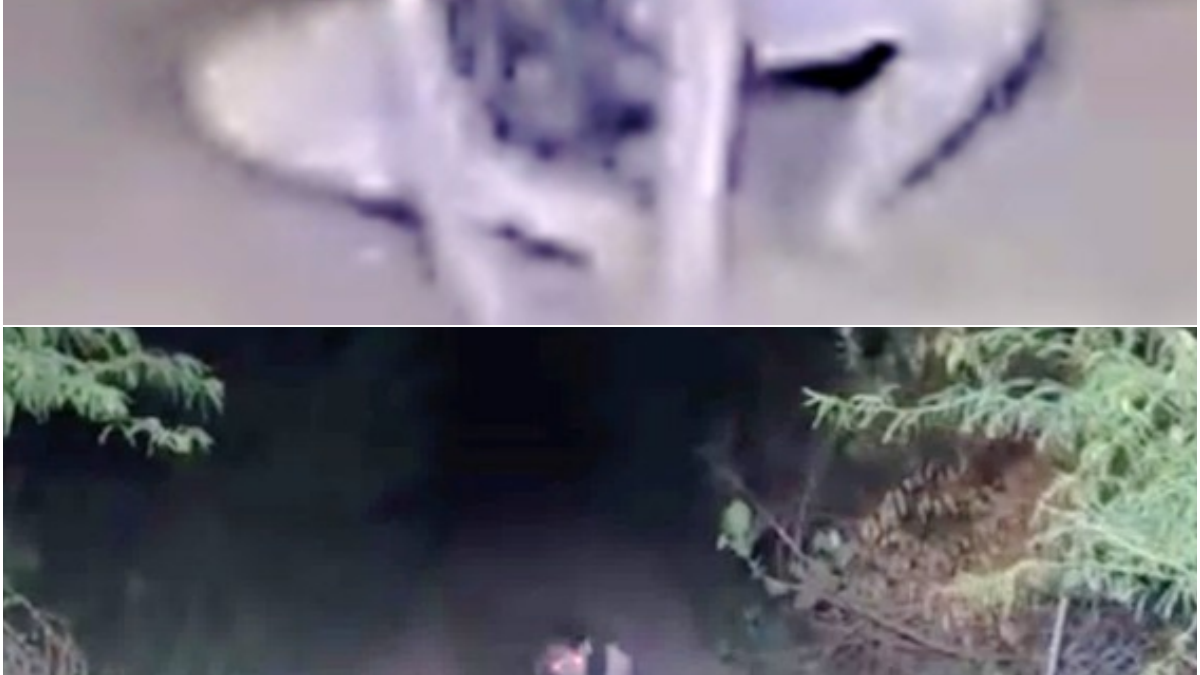
The forest was silent when the camera captured something that should not have been there.
Between the palmettos and the closely packed trees, a towering dark figure seemed to move through the undergrowth, its body hidden in shadow and its face strangely pale.
The photograph was not supposed to be extraordinary. It was simply an image from a trail camera, the kind of equipment people leave in the wilderness to observe animals passing through when nobody is watching.
Yet when the picture began circulating online during 2023, viewers found themselves staring at the same unsettling shape.
It seemed too large to be an ordinary animal, too heavily built to be easily mistaken for a person, and too strangely positioned to dismiss at a glance.
The account accompanying the image placed it within Okala National Forest in Florida, a landscape vast enough to conceal countless things from passing hikers.
But the photograph was only the beginning. Other stories described pale figures moving through isolated forests, strange voices echoing between trees, and unfamiliar shapes appearing in places where few people ventured.
In India, footage attributed to Rejendra Singh seemed to show a strangely proportioned humanoid on a lonely forest track.
Far away in southern Patagonia, photographs credited to Martin Alvarez supposedly revealed unusual beings inside a remote cave system.
The locations were separated by oceans and continents, yet the images shared an unsettling question.
Were people looking at misunderstood animals, unusual shadows, or something that had never been properly explained?
The first photograph from Florida was simple in its composition, but that simplicity was precisely what made it memorable.
There were no dramatic lights, no obvious signs of an extraordinary event, and no carefully arranged background.
The camera had been placed in a heavily wooded area, facing a stretch of woodland where animals might naturally pass.
The surrounding environment was crowded with palmettos, fallen timber, and closely spaced trees. Vegetation filled nearly every part of the frame, creating layers of shadow and overlapping shapes.
It was the sort of place where even a familiar animal could disappear within a few steps.
Near the center of the image, however, stood a dark form that seemed unusually large.
Much of its body was concealed by the vegetation, but enough remained visible to create an unmistakable impression of considerable size.
Thick black hair appeared to cover its body, while the visible facial area was noticeably lighter.
Its shoulders seemed broad, and its upper body looked substantial beside the trees and fallen trunk nearby.
The figure did not appear to be standing in an open clearing for the camera.
Instead, it was partly hidden by the forest, as though it had been moving naturally through the woodland when the equipment recorded it.
That detail became an important part of the image’s appeal. A staged photograph might place an unusual figure in a convenient position, but this one appeared awkwardly obstructed, with leaves and branches interrupting the view.
According to the account shared alongside the photograph, the camera belonged to a friend of the person who posted it on a Bigfoot message board.
The equipment had reportedly been positioned within Okala National Forest in Florida. The image began attracting attention during 2023, and people who saw it quickly started comparing the dark figure with descriptions of mysterious hairy humanoids.
Florida already had a long history of such stories. The creature most commonly associated with the state’s wilderness was the skunk ape, a name used for a mysterious, hairy, upright figure reportedly encountered in swamps, forests, and remote areas.
Accounts often described a powerful body covered in dark hair, a strong odor, and a movement that seemed strangely human despite the creature’s enormous size.
The photograph’s figure could easily remind viewers of those descriptions. Its dark covering, broad shoulders, and apparent body mass seemed consistent with the general image of a large, upright woodland creature.
Yet some people discussing the picture made a different comparison. They suggested that its appearance resembled the grassman, a creature traditionally associated with Ohio and other wooded regions of the American MidweSt.
The grassman occupied a somewhat different place in American folklore. Stories connected with the creature described enormous upright beings moving through forests and secluded landscapes, often avoiding people while occasionally appearing near roads, fields, or isolated homes.
Traditional descriptions commonly placed these creatures between 7 and 9 ft in height. They were said to have extremely broad shoulders, powerful bodies, and long, shaggy hair that could appear dark brown or almost black.
Some accounts also described a head that seemed to sit unusually low between the shoulders.
The neck was supposedly difficult to distinguish, giving the creature a compact, heavily built appearance.
In stories told by people who believed they had encountered one, the combination of its size and posture could make it look less like a person wearing a disguise and more like an unfamiliar kind of animal.
The Florida photograph offered too little detail to establish whether the figure matched any particular description.
Nevertheless, its apparent build invited comparisons. The shoulders looked wide, the hair seemed thick, and the upper body appeared heavy.
Its partially hidden face was another feature that encouraged speculation, because the lighter patch around the head seemed different from the dark covering surrounding it.
One of the more unusual elements associated with grassman reports was the discovery of shelters or nests.
These structures were sometimes described as arrangements of grass, branches, and other vegetation woven or gathered into protected spaces.
In some stories, the structures appeared to be more deliberately assembled than an ordinary animal’s resting place.
Similar claims have been attached to other Bigfoot type creatures, with some storytellers suggesting that the structures could indicate complicated behavior.
However, vegetation can be bent, piled, or tangled for many ordinary reasons, and a shelter-like arrangement does not by itself demonstrate that an unknown creature made it.
The stories remained part of the folklore surrounding the grassman, adding another layer to the mystery people associated with the name.
The figure in the Florida photograph was not shown beside any clear scale reference. The surrounding trees and fallen timber provided some visual context, but perspective and partial obstruction made its exact dimensions impossible to determine from the image alone.
A dark object close to the camera can appear much larger than one farther away, and irregular vegetation can make an ordinary shape seem surprisingly humanoid.
Those limitations did not stop the photograph from attracting attention. Its composition left enough visible to invite interpretation, but not enough to settle the question.
Viewers could examine the shoulders, the outline of the head, and the apparent length of the body, yet every detail seemed to dissolve into the surrounding vegetation when studied closely.
The forest itself contributed to the atmosphere. Okala National Forest is an extensive landscape of woodland, palmettos, wetlands, and isolated areas.
Its many layers of vegetation can limit visibility, especially away from established trails and roads.
Animals can move through such places without being seen by people, and the forest contains countless pockets where a camera might record only a small part of a passing creature.
For anyone interested in the possibility of an unknown animal, that environment seemed full of possibilities.
A large figure could theoretically remain difficult to observe if it moved through dense vegetation and avoided heavily visited areas.
At the same time, the existence of extensive woodland did not establish that an unidentified humanoid lived there.
The forest offered a setting for the story, not proof of its central claim. The photograph also raised the question of regional identity.
If the figure was an animal, what animal could it be? If it was a person, why did its proportions appear so unusual?
And if it belonged to the tradition of mysterious upright beings, should it be described as a skunk ape, a grassman, or something else entirely?
The grassman comparison was especially interesting because of the distance between the traditions. Ohio and the American Midwest were the regions most closely associated with the name, while Florida had its own established folklore.
People often use familiar legends to interpret unfamiliar images, especially when a photograph contains little information.
The same dark silhouette might be called a grassman in one discussion and a skunk ape in another, depending on the location and the expectations of the person viewing it.
Nothing in the available account established that the Florida figure was connected to Ohio’s grassman stories.
The comparison was based on appearance, not on a demonstrated relationship between the traditions. Still, the image became a meeting point for several strands of American folklore, drawing attention from people who were already interested in Bigfoot reports and regional legends.
Its most memorable feature remained the pale area around the face. Against the dark hair, it created the impression of a face looking out from the vegetation.
But the image did not clearly reveal the creature’s expression, eyes, or facial structure. The apparent face could be a genuine feature, a patch of lighter hair, or an effect of light and shadow.
Without a clearer image or independent information about the camera, each interpretation remained uncertain. The story might have ended there, as another mysterious photograph discussed and debated online.
Yet the Florida image was only one of three accounts that drew attention to unusual humanoid figures in isolated places.
Far from the palmettos and fallen timber, another reported encounter emerged from a forest in India, where a strange figure was said to have appeared along a dirt track.
The footage associated with Rejendra Singh presented a very different scene. Instead of a bulky, dark-haired figure partly concealed by vegetation, the images appeared to show a pale, slender being positioned in the middle of a forest path.
Dense trees surrounded the track, and the setting seemed isolated from ordinary activity. The creature’s posture was immediately striking.
It appeared extremely low to the ground, with limbs extending outward at angles that seemed unnatural to some viewers.
In another frame, the figure appeared to raise its body and move forward. Its arms seemed remarkably long, reaching almost to the ground.
The torso looked narrow in comparison with the limbs, creating a silhouette that did not immediately resemble an ordinary person walking normally.
The face was difficult to distinguish. Darkness concealed much of its structure, although a small bright area appeared around the eyes or upper face.
That limited detail became especially important to viewers attempting to identify the figure. The long arms, narrow body, and unusual posture created an image that seemed to occupy an uncertain space between human and animal.
According to the account accompanying the footage, Singh encountered the being within the forest and was unsettled by its apparent ability to imitate a human voice.
The reported vocal mimicry gave the encounter a different quality from a sighting based only on appearance.
A strange figure moving through trees could be interpreted in many ways, but a voice that sounded human and seemed to come from an unexpected place introduced another kind of uncertainty.
For people familiar with Indian folklore, the description brought to mind the rakshasa, an ancient class of supernatural beings appearing throughout Indian literature and tradition.
Rakshasas are especially prominent in stories connected with the Ramayana and Mahabharata. Their portrayals vary across different texts and traditions, but they are often described as intelligent beings with unusual abilities and a close association with remote or dangerous places.
Some stories portray rakshasas as powerful and formidable. Others emphasize their ability to deceive, disguise themselves, or change their appearance.
The concept of Maya, often associated with illusion and the shaping of appearances, became a particularly relevant point of comparison for people discussing Singh’s alleged encounter.
Traditional accounts sometimes describe rakshasas assuming human or animal forms. In stories where they deceive travelers, the ability to appear familiar can become central to the plot.
A person traveling through a lonely place might encounter something that initially seems ordinary, only to discover that its true nature is different from what it appeared to be.
The reported voice imitation in Singh’s story seemed to echo that tradition. The account suggested that the creature could produce sounds resembling a human voice, creating the possibility of hearing what seemed to be another person somewhere in the foreSt. In an isolated setting, such a sound could be confusing even without any supernatural explanation.
Birds, mammals, echoes, and distant human activity can all create sounds that are difficult to identify in unfamiliar surroundings.
But within the folklore comparison, the voice became more than an ordinary sound. It suggested an entity capable of deliberately imitating something familiar.
That idea made the encounter feel connected to the older stories of beings that mislead people traveling beyond settled areas.
Rakshasas have also been associated with forests, mountains, abandoned locations, and other landscapes beyond ordinary settlements.
These settings appear repeatedly in traditional narratives, where the wilderness becomes a place in which familiar expectations no longer provide reliable guidance.
A traveler might lose the road, hear unexplained noises, or encounter a being whose appearance and behavior challenge ordinary understanding.
Singh’s reported setting seemed to fit that pattern. The footage placed the figure on a lonely track surrounded by dense trees.
The creature appeared in the center of the path, apparently illuminated enough to reveal its unusual proportions while remaining difficult to identify.
The darkness beyond the immediate area gave the scene a feeling of distance and isolation.
Its movement was perhaps the most distinctive element. The creature did not seem to hold itself in the same way as a person standing comfortably.
Its limbs extended outward, and its body appeared close to the ground. When it raised itself, the arms seemed disproportionately long.
The result was a posture that looked unfamiliar, especially when viewed in still images extracted from the footage.
However, still frames can distort movement. A person captured in the middle of crouching, climbing, or stepping over uneven ground may appear to have limbs at unusual angles.
A low camera position can also change the apparent proportions of the body. Without continuous, clear footage and reliable information about the camera’s location, the creature’s anatomy could not be established.
That uncertainty did little to diminish the cultural comparisons. The image’s combination of a humanoid shape, unusual posture, remote forest setting, and reported vocal mimicry made the rakshasa association understandable as a folkloric interpretation.
It did not demonstrate that the being belonged to the supernatural category described in ancient literature, but it showed how traditional stories continue to influence the way people interpret unfamiliar encounters.
The footage also illustrated how an image can acquire meaning beyond its visible details. A pale figure on a forest path might initially seem like an unidentified person or animal.
Once viewers heard the accompanying account of voice imitation, the same image could become part of a story about deception.
Once they learned about the rakshasa tradition, the scene acquired a connection to a much older collection of narratives.
In that way, the forest became more than a background. It became part of the explanation people brought to the footage.
The narrow track represented a boundary between familiar surroundings and a place where the ordinary world seemed less certain.
The dark trees concealed whatever might be beyond the camera’s light, while the figure occupied the only clearly visible space.
The third account came from an entirely different landscape. In southern Patagonia, a remote region of mountains, volcanic terrain, and isolated wilderness, photographs attributed to Martin Alvarez supposedly captured unusual beings inside a cave system.
The story described an expedition that had begun for an ordinary purpose: documenting mineral formations and studying the strange acoustic properties of underground passages.
The cave network was identified as Quueva de Laan, a little mapped system of volcanic passages near the Cheroke Castillo range.
According to the account, Alvarez entered the tunnels with photographic equipment, intending to record the geology and the unusual sounds created by the underground environment.
Nothing about the expedition was initially connected with mysterious creatures. The first indications of something unusual reportedly appeared only after Alvarez reviewed his photographs.
At the edges of several frames, he noticed tall, hunched shapes that seemed to stand partly outside the camera’s main field of view.
The forms appeared to possess unusually long arms and animal-like profiles. Their positions suggested that something might have been present behind him while he concentrated on photographing the cave.
The possibility that the figures had been nearby without being noticed became a central part of the story.
A cave is already a place where ordinary perception can be unreliable. Light reaches only a limited distance, surfaces create strange shadows, and echoes can make a small sound seem to come from somewhere entirely different.
In a tunnel with uneven walls and unfamiliar formations, a dark shape might be difficult to distinguish from the surrounding rock.
But Alvarez’s reported photographs seemed to show more than shadows to those who believed the account.
The figures appeared tall and hunched, with limbs that did not seem proportionate to their bodies.
The possibility that the shapes represented living beings led to the decision to return to the caves.
According to the story, Alvarez went back the following night. This time, rather than noticing ambiguous shapes in photographs afterward, he supposedly encountered four of the beings directly.
They were described as covered in pale hair, with unusually shaped legs and reflective amber-colored eyes.
Their movement was said to be remarkably quiet. They reportedly traveled around the cavern without producing the sounds Alvarez might have expected from creatures of their apparent size.
The account also claimed that they could climb surfaces that would have been extremely difficult for a person to negotiate.
The description suggested animals adapted to a rugged environment, although the story offered no independent evidence to establish what kind of beings they might have been.
Their pale covering could have reflected the limited light inside the cave, and their apparent silence might have been influenced by the acoustics or the distance between them and the photographer.
Nevertheless, the account presented their behavior as one of the most unusual parts of the encounter.
One creature supposedly approached closer than the others. Alvarez described its face as a strange combination of canine and human characteristics.
The muzzle seemed somewhat animal-like, yet other aspects of the face appeared disturbingly familiar. When the camera flash illuminated the being, it reportedly moved farther into the cave.
The flash created a sudden burst of light against the surrounding darkness. In an ordinary photographic situation, that brief illumination could reveal a subject for an instant while leaving the rest of the environment black.
If a creature was moving at the moment the shutter opened, the resulting image might contain blur, partial outlines, and areas of overexposure that made its appearance difficult to interpret.
The story described one being rising into an upright posture before disappearing farther into the cave.
In that position, it supposedly appeared considerably taller than an average person. Its body seemed broad and powerful, while its arms extended unusually close to the ground.
The posture was one of the details that linked the Patagonian account to other reports of strange humanoids.
The surviving image was said to show a dark, heavily built creature facing toward the camera.
Its outline was blurred, but the upper body appeared broad and the arms seemed exceptionally long.
The lighter facial area stood out against the surrounding darkness, creating the impression of a being with both human and animal characteristics.
The image’s poor quality became both a limitation and a source of fascination. It prevented viewers from identifying small details, but it also left room for competing interpretations.
The dark body could be read as a large animal, a person in unusual clothing, a shadow, or a figure distorted by the flash and the cave’s uneven surfaces.
The face appeared unusual, yet its structure could not be examined clearly enough to establish what it actually showed.
The account also included a connection to local traditions. Nearby residents were reportedly familiar with older stories about beings associated with caves and isolated mountainous areas.
These creatures were sometimes described as traveling together, remaining away from open landscapes, and displaying an unsettling ability to imitate aspects of human movement.
Warnings concerning caves were said to have survived through generations. Some stories advised people not to follow unexplained sounds echoing through remote hills.
The warning was not simply about encountering a mysterious being. It also reflected the practical danger of entering unfamiliar underground passages, where a person could become disoriented or trapped by the terrain.
Within the account, however, the warnings acquired a more mysterious meaning. If the beings described by local tradition were real, the caves might serve as their refuge.
Their supposed ability to move quietly and climb difficult surfaces could explain why they were rarely seen outside.
The darkness and complexity of the underground network would provide countless places to hide. Yet caves can create powerful illusions even for experienced visitors.
A sound may travel through several passages before reaching the listener. A light can cast a shadow that seems to move independently.
A formation of rock may resemble an animal from one angle and something entirely different from another.
Those natural effects can become especially confusing when someone is tired, unfamiliar with the surroundings, or expecting to discover something unusual.
The story of Alvarez did not establish whether the photographs were authentic records of an encounter or images whose appearance had been misunderstood.
No clear, independently verifiable evidence was presented to confirm the existence of the beings. The photographs remained the central objects of the account, but their blur and darkness limited what they could prove.
Alvarez reportedly withdrew from public discussion of the encounter, leaving the images and the accompanying story to circulate without a detailed explanation.
That silence became part of the mystery for people who followed the account. Some interpreted it as a sign that the experience had been genuinely unsettling.
Others could see no reliable conclusion in the absence of additional information. The three stories shared a common pattern, even though their locations and traditions were different.
In Florida, a trail camera supposedly recorded a huge, dark-haired figure moving through palmettos and fallen timber.
In India, footage attributed to Rejendra Singh appeared to show a pale, long-limbed humanoid on a forest track, accompanied by an account of human voice imitation.
In Patagonia, photographs credited to Martin Alvarez supposedly revealed unusual beings inside a remote cave system.
Each account placed its figure in a landscape where visibility was limited. The Florida creature was partly hidden by vegetation.
The Indian figure appeared at night, surrounded by darkness and dense trees. The Patagonian beings were reportedly encountered in underground passages where light and sound behaved unpredictably.
Each also included a physical detail that encouraged viewers to imagine something outside ordinary experience.
The Florida figure seemed unusually broad and heavily built. The Indian figure appeared to have long arms and an unfamiliar crouching movement.
The Patagonian creature was described as having a face somewhere between canine and human, reflective eyes, and an ability to move around difficult terrain.
And each story became more complicated when connected with an existing tradition. The Florida photograph invited comparisons with the grassman and the skunk ape.
The Indian footage recalled the rakshasa, with its stories of disguise and deception. The Patagonian photographs were associated with local accounts of cave-dwelling beings and warnings about unexplained sounds in remote hills.
Folklore provides a language for discussing things that people cannot easily identify. A mysterious shape in a forest may be compared with a creature already described in regional stories.
A strange voice may be interpreted through traditions about beings that imitate humans. An unusual figure in a cave may be linked to legends about creatures inhabiting places beyond the reach of ordinary settlements.
These connections can be meaningful without serving as proof. They reveal how communities preserve stories, explain unfamiliar experiences, and recognize similarities between accounts separated by time or geography.
They can also shape what witnesses remember and how later viewers interpret an image. Photographs and video complicate that process because they appear to offer direct evidence.
A picture can seem more convincing than a written description, particularly when it shows a shape that looks unmistakably unusual.
Yet cameras do not record the world in the same way human observers experience it.
Distance, perspective, lighting, exposure, motion, and the camera’s position all affect the resulting image. A trail camera may capture an animal at an awkward moment, making its proportions look unfamiliar.
Dense leaves can conceal parts of a body and create false outlines. A nighttime camera may produce bright patches where reflective surfaces catch infrared illumination.
Even a real subject can appear strangely distorted when only a small part of its body is visible.
The same problems apply to footage from an isolated foreSt. A figure crouching or moving across uneven ground may look unnatural when paused in the middle of an action.
A narrow field of view can make its limbs appear longer or shorter than they are.
Darkness can conceal facial details, leaving the viewer to interpret a few bright areas as eyes or other features.
Inside a cave, these difficulties become even greater. A flash may illuminate one surface while leaving the rest of the scene in darkness.
The walls may reflect light unpredictably, and moving subjects can become blurred. A photograph can preserve the impression of an extraordinary encounter while failing to reveal the information needed to identify what was actually present.
That is why the accounts remain stories of uncertainty rather than established discoveries. The Florida photograph, as described, does not provide enough clear information to determine whether the figure was an animal, a person, or an optical illusion.
The Singh footage cannot establish that the figure was a rakshasa, even if its reported behavior resembles elements of traditional stories.
The Alvarez photographs cannot confirm the existence of unknown cave-dwelling beings without clearer evidence and independent verification.
Still, the uncertainty is part of what keeps such accounts alive. A completely clear photograph of an ordinary animal would likely attract little attention.
An image that showed every feature of a known person or creature would offer few opportunities for speculation.
But a partly concealed figure, a pale shape in darkness, or a blurred face illuminated by a flash can invite endless examination.
People return to these images because they seem to promise an answer just beyond the edge of visibility.
One viewer notices the outline of a shoulder. Another studies the shape of the head.
Someone else points to the position of the arms or the angle of the legs.
Every new interpretation can make the image feel more complicated, even when the original evidence has not changed.
The locations add another layer of fascination. Okala National Forest, with its extensive woodland and wetland environments, offers a setting in which visibility can change from one step to the next.
India’s remote forest tracks evoke a landscape where the familiar sounds of human activity may be absent.
Patagonia’s isolated caves create a world of darkness, echoes, and unfamiliar geological formations. These are places where people may feel the limits of their own knowledge.
A forest can contain animals that are difficult to observe. A cave can conceal entire passages beyond the reach of a visitor’s light.
An unfamiliar landscape can make ordinary sounds and shapes seem strange. The sense that something might be present without being understood is powerful, especially when reinforced by a photograph or a story passed from one person to another.
The three accounts also show how a creature’s identity can depend on the cultural setting in which it is discussed.
The same broad, dark-haired figure might be associated with the skunk ape in Florida and the grassman in Ohio.
A strange humanoid in India might evoke the rakshasa because its description overlaps with traditional stories about disguise and unusual abilities.
A cave creature in Patagonia might be interpreted through local traditions about beings that avoid open places.
Those names do not necessarily describe the same kind of being. They belong to different histories, landscapes, and systems of folklore.
Their similarities may reflect recurring human experiences of uncertainty in remote environments, or they may simply show how people use familiar stories to make sense of unfamiliar images.
For the Florida photograph, the question remained whether the dark shape was truly as large and unusual as it appeared.
Its body seemed substantial, but the vegetation obscured the outline. Its face seemed pale, but the image did not reveal enough detail to identify its features.
The forest provided a convincing setting for a mysterious encounter, but it also supplied countless ordinary shapes that could complicate the interpretation.
For Rejendra Singh’s footage, the central question was what kind of movement the camera had recorded.
The figure appeared low and long-limbed, but the available description did not establish its anatomy.
The reported voice imitation added a striking detail, yet there was no independent confirmation of the sound or its source.
The connection with the rakshasa remained a cultural interpretation rather than a verified identification. For Martin Alvarez, the uncertainty was concentrated in the caves.
The photographs reportedly showed figures that seemed to have unusual proportions, and the story described a later encounter with four beings.
But the images were blurred, and the account did not provide enough independently confirmed information to determine what they depicted.
The local warnings and traditions gave the story a historical atmosphere, yet they could not establish the identity of the figures.
Perhaps the most intriguing feature shared by all three stories was the sense of accidental discovery.
The Florida camera was supposedly recording ordinary wildlife when it captured something unexpected. Singh’s encounter was described as an event that emerged from a journey through a forest rather than a deliberate search for a supernatural being.
Alvarez had entered the caves to document their formations and acoustics, only to notice shapes in his photographs afterward.
In each case, the mysterious figure appeared at the edge of an ordinary purpose. A wildlife camera became the source of a Bigfoot discussion.
A forest track became the setting for a story about an ancient supernatural creature. A photographic expedition became an account of strange beings inhabiting remote caves.
That pattern gives the stories their narrative force. The people involved were not necessarily searching for the extraordinary.
Instead, the extraordinary seemed to interrupt something familiar. The camera recorded a passing shape. The forest revealed a figure.
The cave photograph appeared to contain something that had not been noticed at the time.
Whether those moments represented genuine encounters, mistaken interpretations, or stories shaped through retelling remains unresolved.
The available descriptions do not justify a definitive conclusion. What they do reveal is how quickly a single image can become part of a much larger mystery when it appears to show something that people already have a name for, or something they have no name for at all.
The Florida photograph continued to invite comparisons because its creature seemed to occupy a space between regional legends.
It looked like the sort of figure people might associate with the skunk ape, yet some viewers saw the broad shoulders and dark hair traditionally connected with the grassman.
Its location belonged to one folklore tradition, while its apparent physical characteristics reminded people of another.
The Indian footage carried a similar tension. The creature appeared humanoid, but its proportions and reported behavior made it seem unfamiliar.
The rakshasa tradition provided a ready comparison, especially because of the account of vocal mimicry.
But the ancient stories were not a scientific identification system, and resemblance to a legendary description could not establish that the footage showed a supernatural being.
The Patagonian account added a third variation. Instead of comparing the figures with a widely recognized creature name, the story placed them within local traditions about remote caves and mountain landscapes.
Their alleged ability to move quietly and imitate human movement made them seem like beings adapted to an environment where people rarely ventured.
Together, the accounts created a kind of imaginary map of the unknown. Florida’s palmetto forest, India’s isolated woodland, and Patagonia’s volcanic caves were very different environments, yet all became settings for reports of unfamiliar humanoid forms.
The images seemed to suggest that mysterious beings could be encountered wherever people traveled beyond the boundaries of ordinary observation.
But a map built from stories is not the same as a record of confirmed habitats.
The presence of a legend in a particular region does not prove that a creature lives there, and a photograph that resembles a traditional description does not establish a connection between the two.
The stories are most useful when understood as accounts of what people believe they saw and how those experiences were interpreted.
That does not make the images meaningless. They can still raise questions about perception, folklore, and the ways people evaluate visual evidence.
They can encourage careful examination of how photographs are made, how claims spread, and why some details become central to a story while others are forgotten.
They can also remind viewers that uncertainty is not the same as proof in either direction.
A dark shape in a forest may remain unidentified because the image is poor, not because the subject is extraordinary.
A strange figure in a video may look impossible to classify because the camera captured an awkward moment.
A blurred cave photograph may inspire a story about unknown beings without containing enough information to support that interpretation.
The most responsible way to approach the three accounts is to keep those possibilities open.
The creatures may resemble figures from folklore, but resemblance alone is not confirmation. The locations may be remote, but remoteness does not establish the presence of an unknown species.
The images may be memorable, but memorability is not a measure of reliability. And still, the questions remain compelling.
What was moving through the vegetation in the Florida photograph? What exactly did Rejendra Singh record along the forest track, and what produced the sound described in the accompanying account?
What stood inside the caves visited by Martin Alvarez, if the photographs captured anything beyond shadows and unusual formations?
For now, each story ends at the same boundary. There is an image, a description, a landscape, and an interpretation shaped by the traditions surrounding it.
Beyond those details lies the part that cannot yet be established. The forest, the track, and the cave remain places where the photographs seem to point toward something unfamiliar, while the evidence stops just short of revealing what it was.
Disclaimer: This content may be created by Al for entertainment purposes. Any resemblance to real persons, events, or places is coincidental.








