Unknown Creatures Have Been Filmed Across Alaska
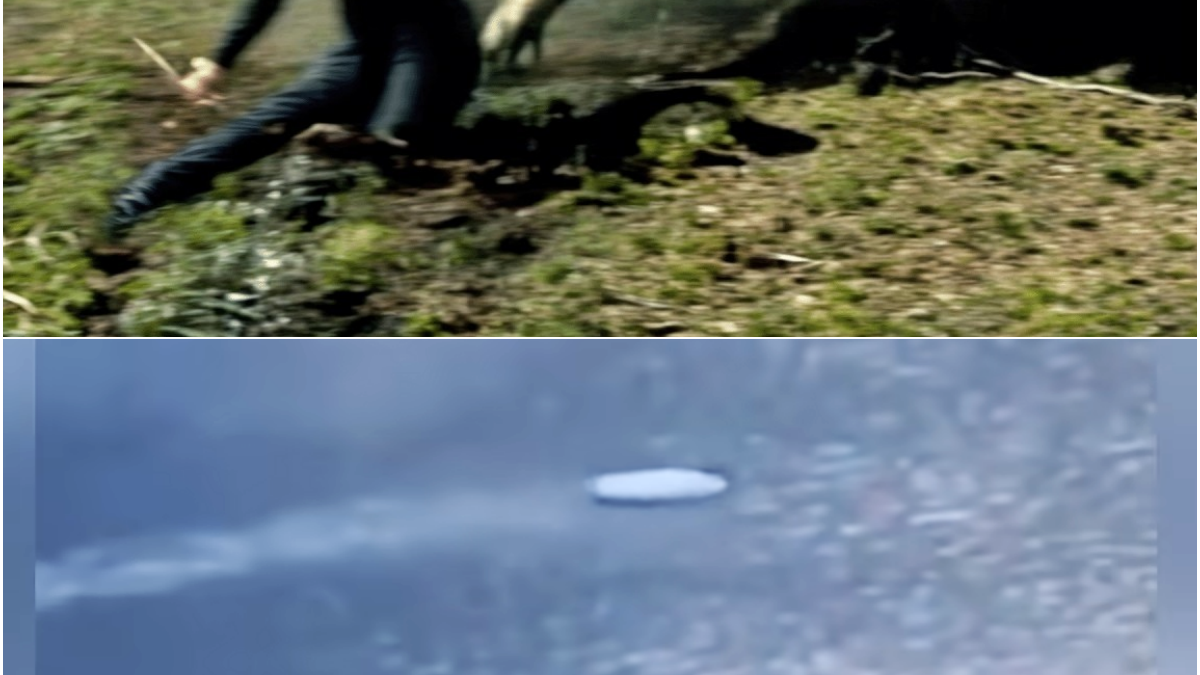
The first thing the camera caught was something crouched between the trees, so low to the ground that it could have been mistaken for an animal searching through the brush.
Then it began to rise. Slowly, awkwardly, it unfolded until it was standing on two legs, its dark hairy body towering against the Alaskan woods.
Whoever was filming kept the camera pointed at it, even as the shape turned just enough for its strange head to become visible.
Far away, another camera captured a dark figure crossing between trees. Somewhere else, a lens pointed over freezing water recorded a smooth object gliding across the surface, shaped almost like a disc.
None of these recordings proves what people have claimed they show, and several have perfectly ordinary explanations that remain possible.
But Alaska has always been a place where distance makes certainty difficult. Forests stretch beyond roads, mountains hide entire valleys, and rivers cut through country that few people ever see.
So when something appears for only a few seconds, disappears behind a tree, or slips beneath dark water, what exactly are you looking at?
The first video had been circulating online for years before anyone could agree on what was standing in those woods.
It had originally been posted to Reddit and was said to have been filmed somewhere in Alaska.
The image quality was not good enough to settle anything. That almost made the recording more unsettling.
At first, the creature appeared crouched among the trees. Its body was bulky and covered in what looked like dark hair.
From a distance, the shape could almost have been a moose affected by severe mange, especially because of the unusual outline of its body.
Then it moved. The shape slowly lifted itself from the ground. Its back straightened. Its upper body rose.
And suddenly the silhouette looked less like an animal on four legs and more like something standing upright.
The head was the strangest part. The outline was narrow in places and oddly shaped, surrounded by the mass of hair around the shoulders and body.
To some viewers, the head resembled General Grievous from Star Wars. Others thought the entire thing looked like a person wearing an animal hide.
Still others believed the footage showed nothing more mysterious than a badly recorded animal standing in an unusual position.
There was another detail that bothered people. The person filming never seemed to move away from the scene.
The camera stayed pointed toward the creature. That meant the person behind the lens had either been remarkably calm or had been far enough away to feel reasonably safe.
The original recording did not provide enough information to answer that. There was no clear measurement.
No close view. No reliable way to identify the location. No explanation from the person who originally filmed it that could settle the argument.
What remained was a short piece of footage showing a large hairy shape rising onto two legs.
And that was enough to make it one of the most frequently discussed strange creature recordings connected with Alaska.
The next recording had nothing to do with forests. It showed water. Freezing Alaskan water.
The object moved across the surface in a way that immediately caught attention because of its shape.
It appeared almost perfectly disc like from the camera angle. The video had been uploaded and reuploaded under titles referring to UFOs and UAPs.
Those labels naturally caused people to wonder whether the object had anything to do with something beyond ordinary aircraft.
But there was another possibility that made the recording interesting for a completely different reason.
Objects reported around bodies of water have appeared in strange encounter stories for decades. Some witnesses have described unusual lights beneath the surface.
Others have claimed to see objects rising from water before moving away through the air.
There have also been reports in which something apparently entered the water and was not seen again.
These reports are sometimes described as USO cases, meaning unidentified submerged objects. That term does not automatically mean anything extraordinary happened.
It simply describes something that observers could not identify and believed was connected with water.
The distinction matters. A strange shape in a video can be caused by distance, perspective, weather, ice, waves, equipment limitations, or an object that simply looks different from the angle at which it was recorded.
The Alaskan footage offered little opportunity to separate those possibilities. The disc shaped object continued across the freezing water.
It did not provide a clear view of its structure. It did not approach the camera.
It did not reveal anything that could identify it. Then the recording ended. The clip became another piece of the larger collection of unexplained Alaskan footage.
And Alaska had plenty of room for such stories. The next case began with something much more ordinary.
Firewood. A Reddit user from Alaska had placed a trail camera near the edge of their property because something had been getting into the woodpile.
The first assumption had been a black bear. That made sense. Black bears were common in the area, and the camera had already recorded several of them moving through at night.
There was no reason to assume anything unusual. Then the owner checked the memory card.
Among the images was one timestamped 2:17 a.m. Something stood between the trees. The person who posted the photograph did not identify it as Bigfoot.
In fact, the wording was cautious. They simply admitted that they did not know what they were looking at.
The figure appeared tall. Its arms seemed unusually long. The head did not look quite right.
Most striking of all, it appeared almost completely upright. The owner returned to the area the following day with a flashlight.
About 20 yards from the camera, they found a patch of flattened vegetation. There were no obvious tracks.
The ground was rocky, making any trace difficult to interpret. The photograph quickly produced the usual arguments.
Some people said it was a bear. Others suggested a Sasquatch type figure. Another explanation was much simpler.
A person wearing a ghillie suit could potentially create a silhouette that looked strange from a distance.
That explanation could not be proven either. The camera had captured only a moment. Without a second angle or additional footage, the photograph could not establish what had been standing among those trees at 2:17 a.m.
But the image had done something that photographs like this often do. It created a question larger than the evidence itself.
The woods around Alaska are vast enough that an unidentified shape can remain unidentified simply because nobody was close enough to examine it.
That problem appeared again in footage connected with Portlock. The clip came from an episode of a television program being filmed in the area.
At first, there was almost nothing to see. The camera showed trees. The landscape looked ordinary.
Then someone noticed movement in the upper left portion of the frame. The footage was enlarged.
The distant shape appeared to move through the trees. It seemed to be walking on two legs.
But the distance made every conclusion uncertain. The figure was too small to examine properly.
Its proportions could not be measured. The footage did not reveal its face. It did not show the creature long enough to identify it.
Yet the location made the clip especially interesting. Portlock had become associated with one of Alaska’s most famous Sasquatch traditions.
The stories reached back to the early 1900s, when the small fishing settlement sat surrounded by thick forest and mountains.
Local accounts described something called Nantinaq. Descriptions varied, but the creature was generally portrayed as enormous, hairy, powerful, and almost human in appearance.
It was said to have long arms and large feet. Over time, the stories became more disturbing.
Hunters were said to have entered the wilderness and failed to return. People reported unusual tracks near the settlement.
There were also stories about animals being found in conditions that locals believed could not easily be explained by ordinary wildlife.
The stories became part of the identity of the region. Families gradually left Portlock. By the early ’50s, the settlement had been almost completely abandoned.
The reasons behind that change were not limited to stories about Nantinaq. Remote settlements faced difficult conditions for many ordinary reasons.
Isolation, limited supplies, harsh weather, and the challenge of maintaining a permanent community could make life in such places extremely difficult.
Still, the Nantinaq stories survived. Long after people had left, the legend remained attached to the forests and mountains around Portlock.
That was why the distant figure in the television footage attracted so much attention. If the location had been somewhere else, perhaps nobody would have noticed it.
But it was Portlock. And in Portlock, even a blurry figure moving between trees could become part of a much older story.
The next photograph came from another part of Alaska. This time, the camera was near Talkeetna.
The person who owned the property had maintained a cabin outside the area for 12 years.
They were familiar with bears. They had seen bears swimming. They had seen them climbing.
They had watched them fighting, standing upright, and digging through garbage. That experience mattered because the image captured by their game camera looked, at first glance, like it could be a bear.
The camera was mounted on a tree overlooking a small gravel bar. A river bent around the property.
The owner mostly used the camera to monitor moose moving through the area. Then, at 4:38 in the morning, the camera recorded something crossing the far side of the river.
The owner did not recognize it. The front of the animal appeared to have something resembling a narrow neck.
The rear portion looked bulky. The head seemed almost ape like. The photograph was posted in a local group.
The responses came quickly. Some people insisted it was a deformed bear. Others believed it resembled a Sasquatch.
The owner remained uncertain. That uncertainty was understandable. A single image taken across a river can distort proportions dramatically.
Distance can make a bear appear taller. A partially obscured animal can look as though it has a strange neck.
Branches, shadows, and uneven ground can change the apparent shape of a body. At the same time, the person who took the photograph had years of experience observing bears and did not immediately recognize the figure.
That did not prove the photograph showed anything unknown. It simply meant the image remained unresolved.
Then the investigation moved from land to water. Uyak Bay had its own long history of unusual creature reports.
One account dated to 1971. A group in the area reported seeing an animal they estimated to be 30 to 40 ft long.
The body was described as grayish. The head was said to have a long shape resembling that of a horse.
The observers managed to capture a photograph. The image became part of the region’s collection of unusual reports.
Decades later, another encounter was reported in the same body of water. The summer of 2002, three salmon fishermen were heading toward their fishing net shortly after 4:00 in the morning.
The water was quiet. The light was limited. One of the men noticed something rising from the water only a couple of boat lengths away.
The fisherman, Tollief Monson, later described seeing a huge neck and head extending above the surface.
He said the neck appeared so thick that it would have taken both his arms to wrap around it.
The creature did not seem interested in the boat. It simply remained there for several seconds.
Then it disappeared beneath the surface. The fishermen could not identify what they had seen.
There was no clear photograph that could settle the matter. No specimen was recovered. The encounter remained a story told by people who had been on the water that morning.
The following summer, Monson experienced another strange incident. This time he was alone on a small skiff.
Something struck the bottom of the boat. The impact was loud enough that he described the sound as a heavy dong.
The entire skiff lurched. Monson did not discover what had caused the impact. The water offered no clear answer.
There was no visible animal beside the boat. The event became another unexplained moment associated with Uyak Bay.
But Alaska has also produced discoveries that sounded extraordinary before scientists understood them. One of the best examples involved a whale.
In 2016, scientists announced the confirmation of a whale species that had remained hidden in plain sight for decades.
The animal was a small beaked whale. Japanese fishermen had long referred to it as karasu, meaning raven.
Scientists had usually assumed these animals were smaller or younger Baird’s beaked whales. That assumption continued until a specimen found on St. George Island in Alaska in 2014 raised new questions.
Something about the animal did not look right. Its dorsal fin appeared larger and floppier than expected.
Its teeth also showed that it was not simply a young Baird’s beaked whale. Scientists collected tissue samples.
They compared its DNA with samples from 178 beaked whales from across the Pacific. The result changed the identification.
The animal belonged to a separate species. The whale was eventually given the official name Sato’s beaked whale in 2019.
Only eight specimens matched the unusual genetic group at the time. One of those specimens had been discovered in Alaska in 2004.
Its skeleton had been mistaken for a Baird’s beaked whale for years. The skeleton was eventually displayed inside Unalaska High School.
That discovery was very different from the strange creature videos. There was no blurry footage.
No distant silhouette. No unexplained shadow. There was physical evidence. DNA. Tissue. Teeth. A skeleton.
Scientists could examine the animal directly and compare it with known species. The result showed something important about the Alaskan environment.
Even creatures that had been known to science for years could still be misunderstood. The ocean was vaSt.
The coastline was enormous. Many animals lived far from people. Sometimes the explanation was not a monster or an unknown phenomenon.
Sometimes it was a species that had been mistaken for something already known. That possibility returned with the final clip.
The footage was said to come from somewhere near Hatcher Pass. A person was driving along one of the mountain roads when they noticed movement high above them on a snowy hillside.
At first, the figure looked like a hiker. Then the camera zoomed in. The image became shaky.
The distance made details almost impossible to see. The dark shape appeared larger than an ordinary person.
Its body seemed broad. Its arms appeared long. Its movement looked unusual. But the footage never came close enough to reveal exactly what was moving across the hillside.
That left viewers with the same problem as the earlier recordings. There was something there.
The question was what. It could have been a person viewed from an unusual angle.
It could have been an animal moving in a way that made its silhouette resemble a human figure.
It could have been a visual effect created by snow, distance, and camera movement. Or it could have been something the person filming genuinely could not identify.
The video could not decide between those possibilities. That was the recurring pattern in the Alaskan recordings.
A figure appears between trees. An object crosses water. A trail camera captures something upright at 2:17 a.m.
A distant shape moves through Portlock. A strange animal crosses a river near Talkeetna at 4:38 in the morning.
Something enormous is reported in Uyak Bay. A boat is struck beneath the surface. And somewhere on a snowy hillside near Hatcher Pass, another dark figure moves across the landscape.
Each story begins with the same simple event. Someone sees something. Then the difficulty begins.
Alaska is enormous. Its forests can conceal animals only a few yards away. Its rivers can hide enormous portions of their surroundings beneath reflections.
Snow changes the shape of mountains. Fog erases distance. Darkness removes scale. A bear standing upright can suddenly look almost human.
A person far away can appear strangely large. A piece of ice can take on an unusual shape.
A boat moving behind a wave can seem to disappear. A bird, a seal, or another animal can create an unexpected movement on water.
None of that means every strange recording has an ordinary explanation. It means that identifying something from incomplete evidence is difficult.
The stories around Nantinaq show how quickly an unusual encounter can become part of local folklore.
The Talkeetna photograph shows how even someone familiar with bears can encounter an image that does not immediately make sense.
The Uyak Bay accounts show how difficult it is to understand something seen briefly from a small boat before sunrise.
And Sato’s beaked whale shows the other side of the mystery. Sometimes the world contains something real that people have simply misunderstood.
For decades, the unusual whale had been there. Fishermen had a name for it. Scientists had specimens.
Yet its identity remained uncertain until genetic evidence finally separated it from another species. That discovery provides a useful reminder whenever another strange creature appears in Alaska.
The most interesting question is not always whether the creature is legendary. Sometimes the better question is whether the available evidence is enough to identify it.
The first hairy figure might be an animal. The trail camera figure might be a person in unusual clothing.
The Portlock silhouette might be a person walking through the trees. The Talkeetna photograph might show a bear viewed from a confusing angle.
The Hatcher Pass figure might simply be a distant hiker. Or there may be details hidden inside those recordings that have not yet been understood.
That is what keeps the stories alive. The cameras keep recording. People keep traveling through remote valleys.
Fishermen keep crossing cold water before sunrise. Game cameras continue watching empty stretches of foreSt.
And somewhere beyond the roads and towns, the Alaskan wilderness remains large enough that most of it can pass without human observation.
A strange figure can disappear behind a tree before anyone reaches it. A shape can slip beneath water before a camera focuses.
An animal can cross a river at 4:38 in the morning and leave nothing behind except a single photograph.
A shadow can move across a snowy hillside and be gone before the person holding the camera understands what they saw.
That does not prove the existence of anything extraordinary. But it does explain why Alaska continues to produce stories that refuse to disappear.
Because in a place where forests stretch for miles, mountains hide entire valleys, and freezing water can become almost completely silent before sunrise, there will always be moments when someone looks into the distance and sees something they cannot immediately name.
And until someone gets close enough to find the ordinary explanation, the figure between the trees remains exactly where it was first seen, standing silently in the Alaskan wilderness, waiting beyond the reach of the camera.
Disclaimer: This content may be created by Al for entertainment purposes. Any resemblance to real persons, events, or places is coincidental.








