Top 10 Unexplained Things Caught Clearly on Camera
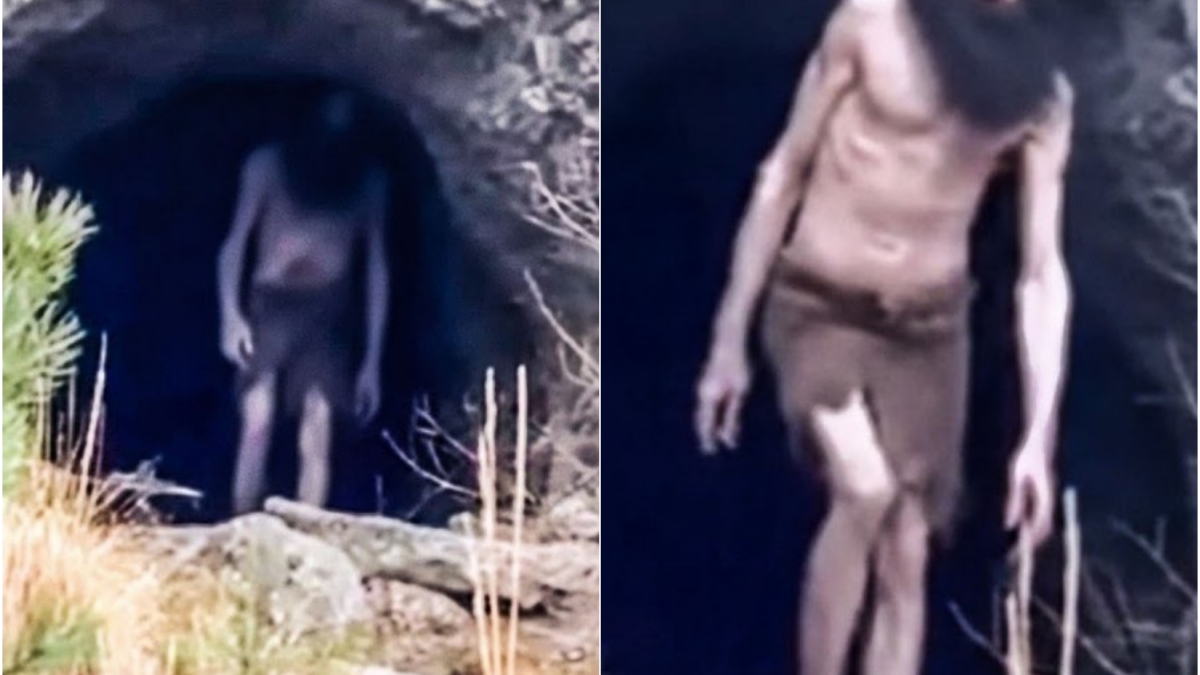
There are moments when a camera seems to notice something that the human eye never did.
A shape appears in the distance, a figure stands where nobody remembers standing, or a light crosses the sky with no obvious source and then vanishes as suddenly as it arrived.
The strange part is not always what the image shows. Sometimes it is what the image refuses to explain.
Across quiet valleys, crowded cities, family gatherings, military bases, and remote stretches of ocean, photographs have preserved scenes that still resist a simple answer.
Some were taken deliberately. Others were ordinary snapshots made by people who had no idea that anything unusual was entering the frame.
In several cases, the photographers did not notice anything strange until the film was developed.
By then, the moment had already become permanent. One photograph can be dismissed as an accident.
A second can be blamed on perspective. A third can be explained by a reflection, an exposure problem, a distant aircraft, or a shadow.
But what happens when the same uncertainty appears again and again across different places and different decades?
The stories that follow are not about proving what these images contain. They are about the strange circumstances surrounding them, the explanations that have been offered, and the questions that remain after the photographs have been examined.
When a camera records something that nobody remembers seeing, should we trust the photograph, the witnesses, or neither?
The first mystery begins in a remote valley in central Norway, where unusual lights have been appearing for generations.
Hesdale Valley is not the kind of place where thousands of people would expect to spend their nights watching the sky.
It is quiet, isolated, and surrounded by hills containing large amounts of iron rich material.
Yet for decades, residents noticed something unusual moving through the darkness above the valley. The lights were not always the same.
Sometimes they appeared red. Sometimes they looked white or yellow. At other times they seemed almost perfectly spherical, glowing against the darkness as though someone had placed distant lamps in the sky.
What made the phenomenon especially unusual was its movement. Witnesses described lights that could remain suspended for extraordinarily long periods.
Some appeared to drift slowly across the valley, while others seemed to move with sudden changes in direction.
There were reports of objects hovering in place for hours before disappearing. These were not isolated stories passed from one person to another.
Photographs began to accumulate, particularly from the 1980s onward. Researchers became interested enough to establish field stations in the valley, hoping that instruments could capture information that ordinary cameras could not.
The phenomenon became known as the Halen lights. Several theories emerged. Some researchers considered whether unusual chemical or combustion processes might occur because of the geology beneath the valley.
Others considered plasma formations or atmospheric effects. More unconventional explanations suggested that the lights might have an origin far beyond anything occurring naturally in the valley.
Yet none of these explanations completely closed the case. The photographs remained. The lights continued appearing.
And the valley continued producing images that seemed to show something moving through the darkness without offering a clear answer about what it was.
The mystery became even more dramatic on March 13th, 1997, when the sky above Arizona became the setting for one of the most widely discussed aerial events in modern American history.
The evening began like an ordinary night. Then people began looking upward. Across large areas of Arizona, witnesses reported seeing a massive V shaped formation moving slowly across the sky.
Five spherical lights appeared to be associated with the formation. Unlike a brief flash or distant point of light, this sight remained visible for an extended period.
Reports placed the observations between roughly 7:30 p.m. and 10:30 p.m. The scale of the event was remarkable.
Estimates suggested that between 10,000 and 20,000 people witnessed at least part of what was happening.
Among them was the governor at the time. People watched from homes, roads, neighborhoods, and open areas as the strange formation appeared to glide silently overhead.
Pilot Frederick Foreman managed to capture the event on 35mm film. That film became part of the lasting record.
Later, the United States Air Force offered an explanation for some of the sightings that occurred afterward, identifying flares released during a training exercise.
Flares could account for certain lights seen later in the evening. But the earlier reports presented a different problem.
Witnesses had already described a broad V shaped formation moving silently through the sky. The photographs and testimony became intertwined, creating an event that could not easily be reduced to a single explanation.
The Phoenix Lights remained one of those mysteries where the image itself became almost secondary to the number of people who claimed to have witnessed the same unusual formation.
Then, decades earlier, another camera had recorded something even more unsettling. In 1924, aboard the SS Watertown, two crewmen were lost during a voyage across the Atlantic and were committed to the sea.
Afterward, members of the crew began reporting something unusual. They claimed that faces seemed to appear in the water behind the ship.
At first, such reports could have been dismissed as reflections, imagination, or the strange effects created by waves moving beneath changing light.
But Captain Keith Tracy decided that the reports deserved closer examination. He took a camera and photographed the area where the crew members believed they had seen the faces.
Six photographs were made. Five appeared ordinary. The sixth was different. In the image, two faces seemed to emerge from the surface of the water, looking upward through the waves.
They appeared connected to the two crewmen who had been lost earlier in the voyage.
The photograph became known as the SS Watertown ghost photograph. What made the story more unusual was the treatment of the photographic material afterward.
The camera and negatives were reportedly secured in a vault to prevent interference or alteration.
The image remained a curiosity for generations. It became impossible to separate the photograph from the story surrounding it.
The image showed something that resembled two human faces, yet the circumstances surrounding the photograph allowed competing interpretations.
Perhaps the water, reflections, and photographic process had combined in an extraordinary way. Perhaps the image represented something that witnesses could not explain.
The photograph could preserve the moment, but it could not provide an answer. That same problem would appear again in England in 1964.
Jim Templeton had taken his daughter on a family outing in Sway FTH. There was nothing unusual about the photographs he made that day.
He photographed his daughter as any parent might, capturing a simple family memory. But when the film was developed, one particular image immediately stood apart.
Behind his daughter stood a tall figure dressed in white. The figure appeared almost like an astronaut.
Templeton insisted that nobody else had been standing behind his daughter when he took the photograph.
He had not noticed anyone nearby at the time. Yet the developed image seemed to contain a person who had somehow entered the frame.
The photograph attracted considerable attention. The negative was examined by Kodak, and the company confirmed that it had not been tampered with.
That did not explain the figure. The photograph eventually became known as the Saltway Spaceman.
Its strange appearance became even more intriguing when the image attracted attention from the Australian Air Force, which was investigating a report involving a missing pilot.
The connection added another layer to an already confusing photograph. Was the figure a person who had simply gone unnoticed?
Could the appearance have resulted from the way the photograph was exposed? Was it an unusual photographic illusion?
Or had the camera recorded something that Templeton himself had never seen? No single explanation settled the mystery.
Thousands of miles away, another photograph would create an equally strange problem. Near Alice Springs in the Australian outback stands Corabori Rock, a place regarded as sacred by local Indigenous people.
In 1959, a local pastor named RS Miller photographed the rock. The scene appeared ordinary when the picture was taken.
Miller did not report seeing a mysterious person standing on the formation. But when the photograph was developed, something unexpected appeared near the top of the rock.
A translucent figure seemed to stand there. The shape resembled a woman with long hair and what appeared to be a white gown.
The figure became known as the lady of the couch of Corby Rock ghoSt. The image was striking because the figure seemed distinct enough to suggest a person, yet transparent enough to make that interpretation difficult.
Nobody present during the photograph remembered seeing such a figure. Once again, explanations involving light, shadow, photographic exposure, or double exposure were considered.
But the photograph offered no obvious answer. The mystery was made even more compelling by the setting itself.
Corabori Rock was already associated with deep cultural and spiritual significance. The appearance of a strange figure on the photograph transformed an ordinary picture of the landscape into an enduring puzzle.
And if the land above the surface could produce mysteries, the ocean beneath it had plenty of its own.
In 1964, French photographer Robert Lisar and his family were vacationing near Hook Island in Queensland, Australia.
They noticed something moving in the water. It was enormous. Lerek, an experienced diver, estimated that the creature stretched for more than 70 ft.
Its body appeared smooth and dark. Its shape was unusual, almost like a gigantic tadpole, while its head seemed long and snake like.
Instead of disappearing immediately, the creature remained visible long enough for photographs to be taken.
Several clear images were captured. The photographs showed a large form unlike any familiar marine animal.
The Hook Island sea monster quickly became one of the most intriguing photographic mysteries associated with the ocean.
Skeptics offered alternative explanations. One suggestion was that the object might have been a carefully arranged tarp floating in the water.
Another proposed that the photographers had captured a whale shark from an unusual angle, making the animal appear far larger and stranger than it really was.
Yet the photographs continued to circulate because the visible shape was difficult for viewers to identify with certainty.
The ocean is capable of distorting distance and scale. A creature close to the camera can appear enormous.
A distant creature can appear strangely shaped. Light behaves differently beneath the surface. All of those possibilities make underwater photographs notoriously difficult to interpret.
But even with those limitations, the images remain memorable because they appear to show something that does not fit comfortably into a familiar category.
The next photograph was taken much closer to home. For the Cooper family in Texas, moving into a new house should have represented a beginning.
They decided to celebrate by taking a family portrait. Everyone gathered together. The camera was positioned.
The photograph was taken. Nothing appeared unusual at the time. Then the image was developed.
An upside down figure seemed to be falling from the ceiling. Its head extended beyond the edge of the frame.
Its arms stretched outward. Its body appeared translucent, creating the impression of something suspended between the ordinary world and the photograph itself.
Nobody in the family remembered seeing such a figure when the picture was taken. The photograph therefore became a mystery based on absence.
There had been no obvious warning. No one had noticed a person above them. No one had seen a figure descending from the ceiling.
Yet the developed image seemed to show exactly that. As with many unusual photographs, explanations involving double exposure, staging, or an accidental photographic effect were suggested.
But the image remained unsettling because of its timing. The Cooper family had only recently entered the house.
The photograph was supposed to capture their happiness at beginning a new chapter. Instead, it became associated with an unexplained figure that appeared to occupy the same room at the same moment.
Years earlier, another mysterious image had emerged from a far more serious setting. On February 25th, 1942, Los Angeles was placed under an alert after reports of an approaching aircraft threat.
The night quickly became chaotic. Searchlights swept across the sky. Anti aircraft guns opened fire.
For hours, the city remained focused on the darkness overhead. More than 1,400 rounds were reportedly fired.
Yet no enemy aircraft was brought down and no wreckage was found. What remained was an extraordinary photograph published in the Los Angeles Times.
In the image, searchlights appeared to converge around a large round object suspended in the night sky.
The object seemed clearly visible against the darkness. The photograph became one of the enduring images associated with the Battle of Los Angeles.
Officials later offered explanations involving war nerves and balloons. Those explanations did not end the public fascination.
Witnesses had seen unusual activity. Photographers had captured an image. The photograph itself showed a bright object surrounded by powerful beams of light.
Whether the object was something ordinary made strange by the conditions or something that observers could not identify remains part of the continuing debate surrounding the event.
The photograph became a reminder that cameras do not automatically make mysteries disappear. Sometimes they preserve the mystery instead.
Another photograph from the early twentieth century would create an even more personal puzzle. In 1919, Royal Air Force personnel gathered for a group portrait at HMS Dallas.
The occasion was ordinary. The airmen stood together while the camera recorded the moment. When the photograph was developed, a face appeared behind one of the men.
The squadron members believed they recognized it immediately. They identified the face as Freddy Jackson, an air mechanic who had been lost 2 days earlier in an aircraft propeller incident.
The timing made the photograph especially striking. Jackson’s funeral had taken place on the very day the photograph was taken.
The men who knew him believed that the face in the image belonged to their missing colleague.
The photograph became one of the most widely circulated examples of an alleged supernatural image.
Supporters regarded it as an extraordinary photographic record. Skeptics considered more ordinary explanations, including accidental double exposure, resemblance, or an overlooked person positioned behind the group.
The photograph itself could not tell viewers which interpretation was correct. It simply remained. And decades later, another mysterious figure would be captured in one of the most heavily examined events in American history.
On November 22nd, 1963, President John F. Kennedy was traveling through Dallas. Cameras were everywhere.
Photographers and ordinary spectators recorded the procession from different positions, creating a collection of images that would be studied for decades.
Among the people visible in the photographs was a mysterious woman later known as the babushka lady.
She wore a brown coat and a headscarf resembling the traditional appearance associated with a Russian babushka.
But what made her unusual was not her clothing. It was her camera. While many people around her reacted to the unfolding events, the woman appeared to continue recording with her camera from an extremely close position.
Other spectators eventually moved for safety or stopped filming. She continued. Photographs showed her holding the camera toward the scene.
Afterward, investigators appealed for information about her identity. She never came forward. Her name remained unknown.
More importantly, the footage she appeared to have recorded has never been conclusively identified. That created a mystery inside a historical record already filled with photographs and film.
Who was the babushka lady? What did her camera record? Was she simply another person documenting the event, unaware that her persistence would later make her mysterious?
Or did she possess footage that might have provided another perspective on what happened that day?
Those questions have followed the image for generations. The strange thing about all these photographs is that none of them needs to prove anything in order to remain fascinating.
The Halen lights continue to appear in a remote Norwegian valley. The Phoenix Lights became an event witnessed by thousands on March 13th, 1997, with reports stretching from roughly 7:30 p.m. to 10:30 p.m.
The SS Watertown photograph preserved two faces that appeared in the water. Jim Templeton photographed his daughter in 1964 and discovered the Saltway Spaceman afterward.
RS Miller photographed Corabori Rock in 1959 and found a strange figure in the developed image.
Robert Lisar photographed an enormous shape near Hook Island in 1964. The Cooper family discovered an upside down figure in their Texas family portrait.
The Battle of Los Angeles produced a photograph of a mysterious object beneath searchlights on February 25th, 1942.
The 1919 HMS Dallas photograph appeared to contain the face of Freddy Jackson. And on November 22nd, 1963, the babushka lady became a silent figure preserved among the countless images surrounding a pivotal moment in American history.
There is a strange power in photographs because they appear to promise certainty. A photograph says, in effect, this was there.
But a photograph cannot always tell us what we are looking at. It cannot explain why a light moved.
It cannot identify a distant shape. It cannot tell us whether a transparent figure is a person, a reflection, an exposure artifact, or something that science has not adequately explained.
It can only preserve the appearance. Perhaps that is why these images continue to fascinate people long after the original witnesses have gone on with their lives.
A strange photograph does not disappear when the moment ends. It waits. It can sit inside an archive, inside a family album, inside a newspaper collection, or inside an old box of negatives for years before someone notices what is hiding in the frame.
Sometimes the mystery begins immediately. Sometimes it begins decades later. And sometimes the most unsettling part is not the strange thing captured by the camera, but the realization that the person taking the photograph never knew it was there.
That possibility changes the way we look at ordinary pictures. A family portrait might contain an unfamiliar shape.
A landscape might hide a distant light. A vacation photograph might preserve an object beneath the water.
A military photograph might contain a face that nobody remembers seeing. A crowded street might include a person who later becomes impossible to identify.
The camera records everything within its frame, but understanding what it records is another matter entirely.
Perhaps every unexplained photograph has an ordinary explanation waiting to be discovered. Perhaps some are products of perspective, exposure, reflections, shadows, or mistakes that become extraordinary only after people begin searching for meaning.
And perhaps a small number remain difficult because we simply do not have enough information to explain them.
That uncertainty is what gives these photographs their lasting power. They do not provide answers.
They provide evidence of something strange. And once a strange image has been captured, it cannot be unseen.
The question is no longer whether the camera recorded something unusual. The question is whether we can ever know exactly what the camera saw?
Disclaimer: This content may be created by Al for entertainment purposes. Any resemblance to real persons, events, or places is coincidental.








