The Ozark Preacher Too Wicked for the History Books
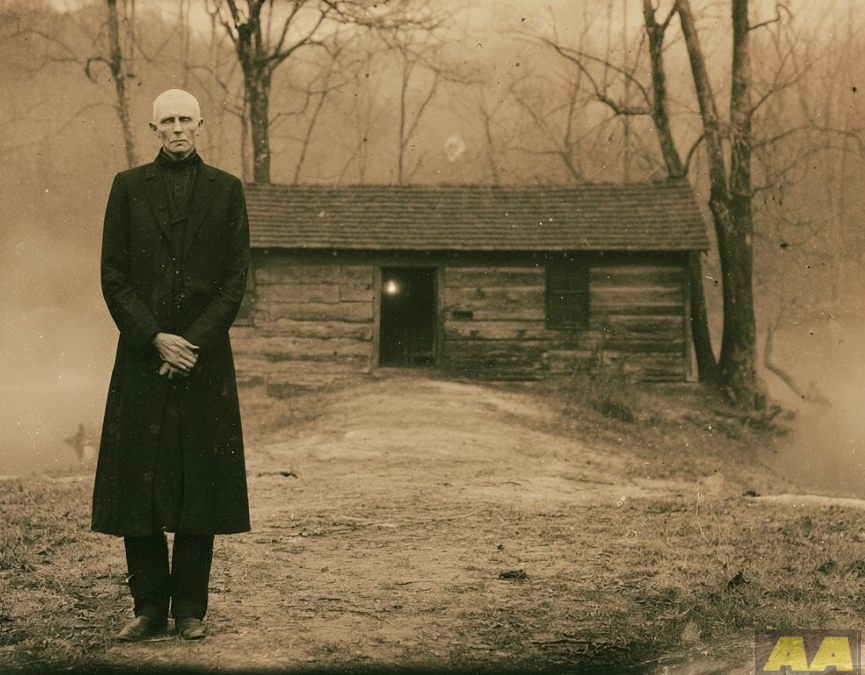
There is a kind of silence that feels different from ordinary silence. It is not the absence of sound.
It is the feeling that something has been deliberately removed, something that should have left a mark but did not.
You can find that kind of silence in old records, where a name has been scraped away until the paper itself is damaged.
You can find it in abandoned houses, where the furniture is gone but the shape of it remains in the duSt. And sometimes you can find it on a map, where a road once existed and then, without explanation, disappears.
In the Missouri hills, there was once a place called Harrow Hollow. For a little under two years, a preacher lived there and gathered nearly everyone around him.
Then the people of the Hollow vanished from the county’s records as thoroughly as if someone had reached backward through time and removed them.
The man who noticed it first was a doctor named Leander Renfrew. He knew the families.
He knew their illnesses, their arguments, their marriages, their children, and the old injuries they carried from one season to the next.
So when Harrow Hollow became strangely peaceful, when people stopped coming to him, when names began disappearing from ledgers, and when an unfamiliar preacher began rewriting the history of the place, Renfrew understood that something was wrong.
But how do you prove that something is wrong when everyone around you insists that everything is exactly as it should be?
Harrow Hollow lay in a fold of the Missouri hills where Penitence Creek ran cold even in AuguSt.
To reach it, a traveler left the county road at Calder and followed a rough track into the trees.
The old maps marked the route with a dotted line. It was the cartographer’s quiet way of admitting that the road was known but not properly surveyed.
The Hollow was never an important place. A wagon carrying cut timber might emerge from it during spring.
Someone might travel to Calder in autumn for salt, powder, or thread. Then the traveler would return before darkness settled over the hills.
The people who lived there were considered private. Close, the people of Calder called them.
By that they meant secretive. They did not mean it as an insult. It was simply the way Harrow Hollow had always been.
There were roughly 40 people living there when Leander Renfrew first began making regular visits.
Renfrew was 46 years old when the events that changed everything began. He was a circuit doctor, which meant he belonged to no particular town and, in a strange way, belonged to all of them.
He rode from settlement to settlement on a brown mare named Process. He set broken bones.
He pulled teeth. He treated fevers. He sat beside sickbeds through long nights. His profession had given him an unusual understanding of people.
He knew what a healthy household looked like. He knew what a frightened household looked like.
He knew when a family was hiding something. He also knew that sickness did not simply disappear from a community of 40 people.
Renfrew kept a journal in a leather case. His notes were usually practical. A fever.
A broken wriSt. A difficult birth. An old man’s breathing becoming worse. A child’s infection clearing after several days.
But when he later looked back over the events in Harrow Hollow, he realized that his journal contained the beginning of something he had not understood at the time.
The first change came in spring. That was when Cyrenius Vane arrived. Nobody could say exactly when.
That was the first strange thing. There was no clear day on which the preacher appeared.
By the time Renfrew rode into the Hollow that April, Vane was already there. He had taken possession of the old meeting house at the head of the creek.
The building was made from squared logs and had been empty for years. Harrow Hollow had not had a regular minister since the war.
Then suddenly it did. The man’s name was Cyrenius Vane. He called himself Reverend Cyrenius Vane.
Nobody could say which church had ordained him. When people asked, Vane answered politely but never directly.
He had a way of making an ordinary question sound unnecessary. He was tall. Taller than Renfrew.
His frame was so thin that his black coat seemed to hang from him rather than fit him.
His hair had the gray color of wood smoke. His face was long and pale.
But people remembered his eyes. They were almost colorless. His voice was stranger still. Vane never shouted.
He never thundered through a sermon. He spoke quietly. Almost softly. Yet people leaned toward him when he spoke.
Renfrew wrote that his voice seemed to fill the meeting house without becoming louder. For a while, everything seemed better.
That was the part Renfrew found hardest to explain years later. The first months were peaceful.
Arguments stopped. Old disagreements faded. Men who had refused to speak to one another for years shook hands outside the meeting house.
Yards were cleaned. Porches were repaired. Children were watched more carefully. The cemetery above the creek was tended.
The Hollow seemed healthier. Renfrew should have been pleased. Instead, he became uneasy. He noticed that people were becoming calm.
He underlined the word in his journal. Calm. Twice. There was peacefulness that came from contentment.
But there was another kind that came from something inside a person becoming quiet. Renfrew could not yet determine which kind he was seeing.
Then his patients began disappearing. Not from the Hollow. From his liSt. People stopped coming to him.
At first, he assumed it was because they were healthy. But sickness does not take a season off.
A community of 40 people should still have injuries. Children should still fall. Old people should still have breathing troubles.
Someone should need a tooth pulled. Someone should need a fever treated. Yet Renfrew rode into Harrow Hollow and found every door peaceful.
People greeted him kindly. They smiled. They thanked him. Then they went back inside. It felt as though the Hollow no longer needed him.
One evening, while riding out with the sun disappearing behind the ridge, Renfrew wondered whether the people had actually become healthier or whether they had simply stopped telling him when something was wrong.
The first obvious warning came in July. Renfrew noticed a smell near the meeting house.
It was sweet. Not the smell of flowers. Not the smell of food. It reminded him of something beginning to turn.
He searched the surrounding brush. He found nothing. He checked the creek. Nothing. The smell appeared strongest before darkness and disappeared afterward.
When he asked people about it, nobody admitted noticing anything. The second time he mentioned it, several people looked at him longer than seemed natural.
After that, he stopped asking. There was one man who never accepted Vane. His name was Alvis Teague.
Teague was 38 years old. He worked as a farrier and blacksmith. He was broad shouldered, powerful, and loud enough that his laugh could be heard across the creek.
Renfrew knew Teague well. Teague had no patience for mysteries. He did not trust men who arrived without explanation.
He especially did not trust preachers who could not say where they had been ordained.
He stopped attending Vane’s meetings. He also told his wife that she should stop going.
She did not listen. One evening in late July, Renfrew stopped at Teague’s smithy. The two men spoke while Teague worked a horseshoe.
At some point, Teague told him about a conversation he had recently had with Vane.
The preacher had come to the forge. He had watched Teague work for a while.
Then he had said something strange. According to Teague, Vane told him that Harrow Hollow was like a body.
A body, he said, could remain healthy only by giving up the part that had gone bad.
Teague had laughed when he repeated it. But Renfrew noticed that he was not really amused.
The doctor wrote the words down that night. He did not yet understand what they meant.
By the middle of August, Teague was gone. The explanation was simple. At least, that was how everyone presented it.
He had gone weSt. He had talked about Kansas. He wanted better land. He wanted a new beginning.
One morning his cabin was empty. His wife said he had gone ahead and would send for her.
Everyone repeated the same explanation. It should have been believable. People moved west all the time.
But there were details that did not fit. Teague’s tools remained inside his smithy. A man who spent his life working with horses and metal did not simply leave his tools behind.
His yellow hound remained near the cabin. The animal refused to leave. It barely ate.
When Renfrew passed the house, the dog raised its head and made a low sound that unsettled him.
He remembered it later because it was one of the few moments when an animal seemed to understand something that the people around it did not.
Renfrew began asking questions. Nobody gave him answers. So he went to the person who kept Harrow Hollow’s records.
Her name was Verbena Cruz. She was 53 years old. She had been a widow for many years.
For 30 years, she had maintained the Hollow’s ledger. Births. Marriages. Deaths. Land transfers. Important events.
Verbena was practical and direct. Renfrew trusted her. That was why he knew something had changed when he asked to see the book and she hesitated.
She stood in the doorway of her cabin with her hands folded in her apron.
She did not immediately invite him inside. Finally, she stepped aside. Renfrew entered. The ledger was where it always was.
He opened it. At first, nothing seemed unusual. Then he noticed the altered entries. Names had been scraped from older pages.
Some were so thoroughly removed that only shadows remained. Other names had been replaced. Renfrew recognized several of them.
People he remembered. People he had treated. People he knew had once lived in Harrow Hollow.
Yet their names were disappearing from the record. He pointed to one of the altered entries.
He asked Verbena who had been written there originally. She stared at the page. Then she looked at him.
She said she could not remember. That frightened him more than any confession could have.
She explained that Reverend Vane had taken an interest in the ledger. He had told her that the record contained errors.
He wanted to correct it. Sometimes he came at night. He would sit with the book and a lamp.
Then he would rewrite parts of the Hollow’s history. Renfrew asked why she allowed him to do it.
Verbena did not answer immediately. Then she said that Vane believed the Hollow’s past needed to be made orderly.
That was all. Renfrew left with the feeling that he had walked into a room where something had already happened, but nobody wanted to tell him what.
He rode back toward Calder. The road looked different. Nothing had changed. The trees were the same.
The creek ran beside him. The hills rose in the distance. But Renfrew had begun to understand that the Hollow was changing from the inside.
He spent 2 days in the county office studying records. He searched land deeds. Tax documents.
Survey notes. Old maps. He found another pattern. Land belonging to people who supposedly had gone west was changing hands.
The properties were being transferred to a single organization. The organization was a church that did not appear in any state records.
The sole trustee was Reverend Cyrenius Vane. Everything appeared legal. The signatures were present. The witnesses were listed.
The documents had been properly recorded. But Renfrew knew some of the people whose names appeared there.
He had treated them. He had watched their hands shake with age. He had helped them sign documents when their fingers were too weak to hold a pen.
Now their signatures were transferring their land to Vane. It made no sense. Renfrew began to understand that the problem was larger than one missing blacksmith.
He returned to Harrow Hollow in October. This time, he carried his journal. He also carried a small weapon he had owned since the war.
He told nobody where he was going. He later admitted that this was a mistake.
The Hollow was quieter than before. Too quiet. Teague’s dog was gone. The smithy was silent.
The hammer that had once provided the rhythm of the settlement was no longer heard.
The yards were still clean. The graves were still tended. But there was almost nobody outside.
Renfrew rode through the Hollow during the middle of the day. He saw no one.
At the head of the Hollow, the meeting house was occupied. He could hear singing.
It was not Sunday. He knew every hymn normally sung in that region. This was different.
It had the structure of a hymn. The rise and fall. The repeated rhythm. But the words were wrong.
Or perhaps there were no words at all. Beneath the strange singing was Vane’s voice.
Quiet. Even. Familiar. Renfrew tied Process to a sycamore below the meeting house. He approached on foot.
He knew he should leave. He also knew that he would not. The closer he came, the harder it became to think clearly.
He stopped near the side of the building. The singing continued. He moved toward a small window.
The glass was old and distorted. He looked inside. What he saw was difficult to describe.
The entire Hollow seemed to be there. Everyone stood close together. Nobody appeared frightened. Their faces were turned toward the front of the room.
Reverend Cyrenius Vane stood before them. The ledger was open on a table. He held a pen.
He was writing. Renfrew could not see what he was writing. But he noticed something else.
The people in the room seemed to be becoming less distinct. Not physically. Something about them was fading.
Their individual expressions. Their separate identities. The things that made one person different from another.
They seemed calm. Too calm. Vane continued writing. Then he stopped. He lifted his eyes.
He looked directly toward the window. Directly at Renfrew. The preacher smiled. There was no surprise in his face.
No anger. No question. Only patience. Renfrew understood something then. Vane had known he was there.
Perhaps he had known for some time. Renfrew stepped backward. Then he ran. He reached the sycamore.
Process was gone. The rope remained tied to the tree. The knot was intact. But the mare was nowhere to be found.
Renfrew stood in the darkness holding the empty rope. Behind him, the singing continued. It did not grow louder.
It did not follow him. That made it worse. He began walking. The county road was only a few miles away.
But he could not find it. The path seemed to change. He would walk away from the creek.
Then, somehow, he would hear the creek again. He would turn. The Hollow would appear behind him.
The meeting house lamps would glow between the trees. He kept walking. Twice he heard someone call his name.
The voice was familiar. Quiet. Almost kind. He did not answer. He kept moving. The night stretched on.
Eventually, he found the county road. A teamster discovered him there at first light. Renfrew was exhausted and unable to explain what had happened.
After sleeping and eating, he went to the sheriff. He did not tell everything. Some things sounded impossible when spoken aloud.
Instead, he gave the sheriff the facts he believed could be verified. People were missing.
Land had changed hands. Records had been altered. A preacher had arrived without a known history.
The sheriff listened. Then he organized a search. Two days later, 11 armed men entered Harrow Hollow.
They found nothing. Or rather, they found the Hollow. The houses were there. The meeting house was there.
The graves were tended. The cabins were orderly. The hearths were cold. But the people were gone.
All 40 of them. There was no sign of where they had gone. No abandoned belongings scattered along the road.
No wagons waiting outside. No explanation. The meeting house was empty. The ledger had disappeared.
Reverend Cyrenius Vane had disappeared. There was no sign of him anywhere. The sheriff’s men searched the buildings.
They searched the creek. They searched the surrounding woods. Nothing explained what had happened. Then one of the deputies discovered a single page lying on the floor of the meeting house.
It had been torn from the ledger. Written across it were the names of the people of Harrow Hollow.
All 40. The names were written neatly. Beside each name was another word. The same word repeated again and again.
Kept. The deputy showed the page to the older men. Nobody spoke. The page was eventually placed into the county records.
And then the county began doing something stranger than an investigation. It began erasing Harrow Hollow.
The land records were altered. The nonexistent church disappeared from the official files. The old track leading into the Hollow stopped appearing on later maps.
References to Cyrenius Vane could not be found in church records. The people who had searched the Hollow stopped talking about it.
The official explanation became simpler with every passing year. There had been confusion. There had been mistakes.
The settlement had never been properly recorded. The people had moved. The preacher had never been officially recognized.
The records had been inaccurate. One explanation replaced another. Eventually, the Hollow itself seemed to disappear.
But Leander Renfrew kept his journal. He kept writing. Years passed. He continued practicing medicine.
He moved away from that region. He grew older. But he never forgot the smell.
That strange sweetness that had first appeared near the meeting house. According to his later deposition, it sometimes returned.
Not often. Only on certain evenings. Usually near sunset. He might be standing beside a road.
He might be outside his home. He might be traveling through another town. Then suddenly, without warning, the air would carry that same smell.
It never seemed to come from anywhere. There was no obvious source. No dead animal.
No spoiled food. No nearby field. It would simply appear. Then disappear. Whenever it happened, Renfrew stopped what he was doing.
He would listen. And he would say his own name aloud. Leander Renfrew. He did it because he wanted to hear his name in his own voice.
He wanted to know that it still belonged to him. That detail appeared near the end of his deposition.
It was not explained. The clerk simply recorded it. Renfrew believed that Harrow Hollow had been changed by something he did not understand.
He believed Vane had been removing people from more than the land. He believed the records mattered.
A person could be erased from a ledger. A road could disappear from a map.
A church could vanish from the official files. But memory was different. Memory could survive in a person.
And that was why Renfrew continued writing. He knew that someday someone might find the journal.
Someone might discover that Harrow Hollow had existed. Someone might find the names. Someone might ask why 40 people disappeared from the record at almost exactly the same time.
And perhaps someone might notice the same thing he had noticed. The erasing had not been random.
It had been deliberate. The names had been removed. The land had been transferred. The preacher had rewritten the ledger.
Then the Hollow had been emptied. The final surviving record was the page found on the meeting house floor.
Forty names. Forty repetitions of one word. Kept. No one knows what Cyrenius Vane intended.
No record identifies where he came from. No church claims that it ordained him. No later document explains where he went.
There is no confirmed record of him after Harrow Hollow. The county maps became increasingly clean.
The ledgers became increasingly quiet. Eventually, Harrow Hollow became one of those places that seemed never to have existed at all.
But there was one problem. Leander Renfrew remembered it. And because he remembered it, the Hollow could never be completely erased.
That may be the strangest part of the entire story. The county could remove a name from a book.
It could redraw a map. It could close a file. It could declare a road unimportant.
It could turn a settlement into a blank space. But it could not reach inside an old doctor’s memory.
Renfrew carried Harrow Hollow with him for the rest of his life. He carried the quiet meeting house.
The strange singing. The pale eyes of Cyrenius Vane. The empty road. The missing mare.
The altered ledger. And the forty names on that final page. Perhaps that is why he kept saying his own name whenever the strange sweetness returned.
He was reminding himself that he was still there. That his name had not been crossed out.
That his memories still belonged to him. And somewhere in the hills of Missouri, perhaps beneath trees that have grown over the old road, there may still be a place where the ground remembers a settlement the records insist never existed.
Maybe the old meeting house is gone. Maybe the creek has changed course. Maybe the cabins have disappeared beneath leaves and soil.
Maybe nothing remains except the shape of the Hollow itself. But if the county could erase Harrow Hollow from its maps, and if a preacher could convince an entire community to surrender its history, then what does it mean when one old doctor refuses to forget?
And if you ever find yourself traveling through those Missouri hills near Calder as evening settles in, and you notice a road that seems to appear only when you are looking away, would you follow it into the trees?
Or would you keep driving, knowing that some places are forgotten for a reason? Because the last thing Leander Renfrew wrote about Harrow Hollow was not a description of the preacher.
It was not an account of the empty cabins. It was not even a record of the 40 names.
It was one sentence. He wrote that a place could disappear from every map in the county and still remain exactly where it had always been.
Waiting for someone to remember it.
Disclaimer: This content may be created by Al for entertainment purposes. Any resemblance to real persons, events, or places is coincidental.








