The Appalachian Bride Too Evil for History Books: Ruth Calder (Aged 24)
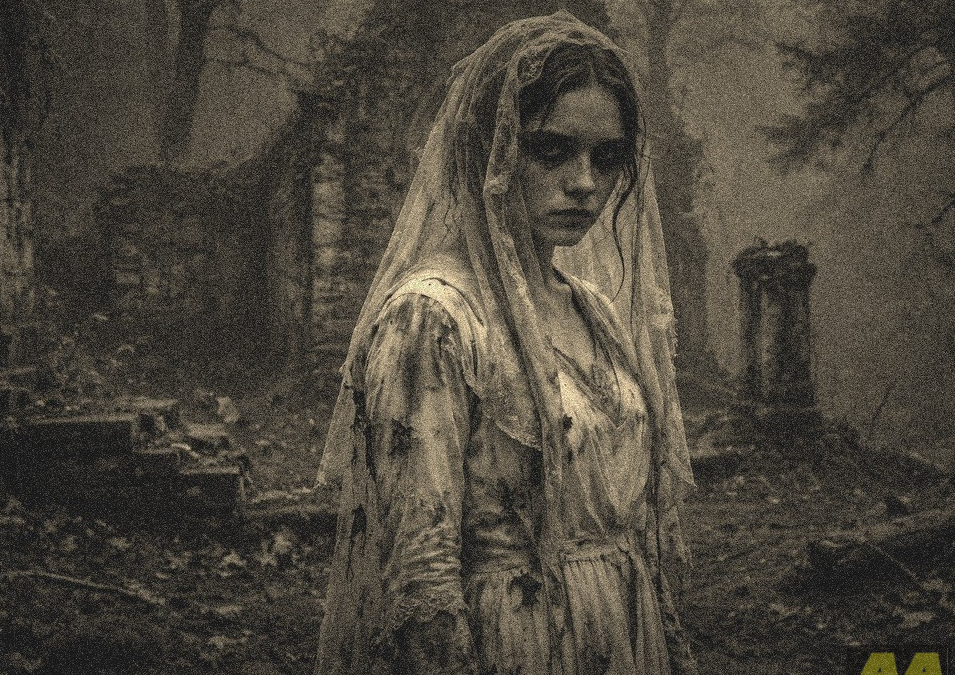
There were places in the mountains of eastern Tennessee where a name could become heavier than a person.
Ruth Calder had learned that long before she understood what the valley was doing to her.
By the time she was twenty four, people no longer spoke her name as though they were speaking about a neighbor.
They lowered their voices. They paused before saying it. They looked toward the hills as if the mountains themselves might be listening.
Ruth had done nothing that could easily explain the reputation surrounding her, yet stories followed her from one dirt road to another, changing slightly with every telling and growing darker with every winter.
She was the woman people remembered standing alone in fields. The woman whose arrival could change the tone of a room without a single word.
The woman who seemed strangely comfortable with silence when everyone else needed an explanation. Then she married Thomas Aldridge, a twenty seven year old man from Carter County who believed that what he saw with his own eyes mattered more than what other people whispered.
For a while, the valley watched them build a life together. Then Thomas disappeared from the community without explanation.
Months later, another man named Callum Brace came into Ruth’s life and vanished just as suddenly.
Two men, one woman, one isolated property at the northern edge of Uncoy County, and a community that had spent years preparing itself to believe the worSt. But what if the story everyone believed was never the story Ruth was living?
To understand Ruth Calder, it was necessary to understand the valley that had shaped her.
Uncoy County in eastern Tennessee was a place where the mountains seemed to surround every decision a person made.
The ridges rose around the settlements and narrowed the horizon until the outside world felt distant.
The Nolachucky River moved through the county with a steady silence, winding past farms, wooded slopes, and roads that disappeared into forests before anyone unfamiliar with the area realized they had taken the wrong turn.
The people who lived there understood that landscape instinctively. They knew which roads became difficult after heavy rain.
They knew where morning mist gathered along the river. They knew which families had lived in the county for generations and which ones had arrived recently.
They knew who worked hard, who talked too much, who kept to themselves, and who could be trusted with a confidence.
Ruth belonged to the last category only in theory. In practice, nobody knew what to make of her.
She had grown up in a family that occupied an uncertain place within the community.
The Calders were neither wealthy enough to command attention nor poor enough to become part of the strong informal networks that protected families with little else to rely upon.
Ruth’s father worked with wood on the mountain slopes. He was a quiet man who spent long days away from home and returned exhausted.
Her mother had been gone from Ruth’s life since she was very young, leaving Ruth to grow up without the example of the kind of woman the valley expected her to become.
That mattered. In Uncoy County, people understood their roles early. Men learned what work was expected of them.
Women learned how a household should be maintained. Young people learned which traditions were worth questioning and which were better left alone.
Ruth questioned more than she accepted. She did not make speeches about it. She did not openly challenge anyone.
She simply possessed a way of looking at the world that made other people feel as though she had already considered possibilities they had not noticed.
That quality began attracting attention when she was around seventeen or eighteen. One autumn afternoon, a neighbor claimed to have seen Ruth standing alone in an open field.
The woman said Ruth had remained there for an unusually long time, looking toward the distant trees.
There was nothing remarkable about standing in a field. The problem was that people remembered it.
A few months later, another person claimed to have seen Ruth standing alone near the edge of the woods.
Later, someone else said they had noticed her beside the river in the early morning.
Each incident was harmless by itself. Together, they became a story. That was how stories developed in Uncoy County.
Nobody sat down and decided what Ruth Calder represented. Nobody wrote down a formal accusation.
Nobody could point to one event and say that it proved anything. Instead, there were pauses.
There were glances. There were unfinished sentences. When someone asked about Ruth, people answered carefully.
“She is from the Calder family.” Or, “There are things about that girl that are difficult to explain.”
Or sometimes they simply said nothing. Ruth noticed. Whether she understood exactly what was happening or merely recognized that people treated her differently, she eventually stopped trying to correct them.
That decision made everything worse. The more distant she became, the more mysterious she appeared.
The more comfortable she seemed with being alone, the more people believed there was something unusual beneath the surface.
By the time she was twenty four, Ruth Calder had become a story before she had become a wife.
Then Thomas Aldridge arrived. Thomas was twenty seven and came from Carter County. He had a steady reputation, honest work, and the practical manner that people in Uncoy County respected.
He had not come looking for Ruth. He had come for temporary construction work. He expected to stay for a while and eventually return to Carter County.
Instead, the mountains began to feel familiar, and the work continued longer than expected. One cold afternoon in early winter, Thomas saw Ruth walking along a road near a property where he was working.
She did not stop. Thomas did. There was nothing dramatic about their first encounter. They barely exchanged words.
Yet afterward, Thomas found himself thinking about her. He began asking questions. That was when the warnings started.
People did not tell him that Ruth had done anything specific. They spoke about her as though the important evidence existed somewhere beyond words.
Thomas listened. He simply did not believe that rumors should determine his opinion of someone.
He wanted to see Ruth for himself. Two weeks later, he visited the Calder property under the excuse of asking about a tool.
Ruth knew the excuse was false almost immediately. She met him on the veranda. Their conversation was short.
Thomas left with the tool he had supposedly come to collect, although neither of them could later explain exactly how the object had become part of the conversation.
After that, he returned. Soon the excuses disappeared. Thomas came because he wanted to see Ruth.
Ruth allowed him to come. For the first time in years, the valley had something new to discuss.
Some people believed marriage would settle everything. Ruth would have a household, a husband, and a recognized place in the community.
The uncertainty surrounding her might finally disappear beneath ordinary domestic life. Others were not convinced.
Etha Morrison was one of them. Etha was more than sixty years old and had lived in Uncoy County all her life.
She possessed the kind of authority that did not require force. People listened when she spoke because she rarely wasted words.
One afternoon, while several women were gathered together, Etha spoke about Thomas. “He is walking into a house without knowing its floor plan,” she said.
Nobody answered. Then she added, “A house like that has a way of rearranging the rooms while you are still inside.”
That was all. Yet everyone remembered it. The wedding was announced for the following spring.
When the news spread through the valley, people congratulated Thomas and Ruth while quietly asking themselves what the marriage would change.
The answer came slowly. Spring arrived with bright green hillsides and the rising waters of the Nolachucky River.
Wildflowers appeared beside the roads, and the gray winter landscape disappeared almost overnight. The wedding was simple.
Ruth wore a plain dress. Thomas stood beside her quietly. Those who attended remembered his expression differently.
Some thought he looked happy. Others thought he looked relieved. A few believed he looked like a man who had made a decision and understood that his life would now move in a different direction.
The couple settled on a small property along the northern edge of the county. Ruth had chosen the place.
Thomas agreed. From a distance, the property looked beautiful. Up close, the trees grew tightly together, blocking much of the sunlight.
The house stood away from the main roads, separated from the rest of the valley by distance and foreSt.
The community continued watching. Information came in fragments. A merchant said Ruth often received deliveries alone.
A neighbor noticed that Thomas rarely appeared during those visits. Another woman claimed she sometimes heard unusual sounds from the property late at night.
Nobody knew what the sounds meant. Nobody could prove anything. But the stories accumulated. Then Thomas began appearing less frequently.
First he stopped attending gatherings. Then his work became less regular. People asked whether everything was fine.
The answers were always polite. Thomas was busy. Thomas was staying home. Thomas needed time.
Then Etha Morrison saw him on one of the valley roads. The meeting lasted only a moment.
Later, Etha said there was something in his expression she could not forget. She did not call it sadness.
She did not call it fear. She said it looked like the expression of a man who had reached the bottom of something and discovered that there was still more beneath him.
Winter arrived early that year. By October, frost had settled over the lowlands. By November, Thomas Aldridge was gone.
There was no dramatic scene. There was no obvious explanation. He simply stopped being present.
When people visited the property, Ruth sat on the porch looking toward the trees. She said Thomas had left.
“He needed to go,” she explained. She did not provide much more. People asked where he had gone.
She said she did not know. They asked when he would return. She said she did not know that either.
The simplicity of her answers disturbed the valley. Thomas was not the sort of man people expected to leave without telling anyone.
He had built a life there. He had married Ruth. He had worked among people who knew him.
Yet he was gone. Some people traveled toward Carter County to ask questions. No one there had heard from him.
Others searched nearby roads. Nothing changed. Ruth remained at the property. She worked. She maintained the house.
She continued her daily routine. And she did not behave the way the valley expected her to behave.
There was no visible display of distress. There was no dramatic appeal for help. There was simply Ruth.
That was enough to revive every old story. The stories about the fields returned. The stories about the river returned.
The stories about the way conversations changed when she entered a room returned. The valley began connecting pieces that had never been connected before.
Etha listened but made few direct statements. Garrett Webb, who had known Thomas well, was less restrained.
He carried Thomas’s absence heavily. He believed he should have noticed something earlier. He believed he should have asked more questions.
He believed there had been signs. The problem was that signs only became signs after something happened.
Then, in December, another man arrived. His name was Callum Brace. Callum was thirty one and came from Johnson County.
He had traveled to Uncoy County for land business and expected to remain only as long as necessary.
He had already heard stories about Ruth. Unlike Thomas, Callum had heard those stories before meeting her.
But the stories that reached Johnson County had changed along the way. There were no clear facts.
There was only mystery. Callum found the mystery fascinating. He met Ruth one afternoon while asking for directions.
The encounter lasted only a short time. Yet someone passing along the road later described the moment as strangely memorable.
Callum asked a question. Ruth answered. They went their separate ways. The woman who witnessed the encounter later told Etha that the air seemed different around them for a moment.
Etha simply replied, “That is how it always begins.” Callum began asking about Ruth. The answers were the same ones Thomas had received months earlier.
People hesitated. People looked away. People warned him without actually explaining anything. Garrett Webb eventually spoke to Callum directly.
“Finish your business and go back to Johnson County,” Garrett told him. Callum thanked him.
Then he continued seeing Ruth. The valley watched with growing concern. Callum was not Thomas.
He had arrived after the first disappearance, which meant every conversation about Ruth now carried another layer.
He knew something had happened. He simply did not know what. Ruth never seemed particularly concerned.
She allowed Callum to visit. She listened to him. She answered his questions. Sometimes she said almost nothing.
That silence fascinated him. The more uncertain the situation became, the more determined Callum seemed to understand it.
Etha Morrison finally decided that waiting was no longer enough. She gathered several older women from the county.
Nothing formal was announced. There was no official meeting. They simply talked while working together, and beneath ordinary conversation another discussion took shape.
Ruth had become a problem the community could no longer ignore. Callum needed to understand what kind of place he had entered.
Garrett was the first person to act. On a cold December morning, he went alone to Ruth’s property.
Ruth greeted him on the porch. Garrett asked about Thomas. Where had he gone? Why had he left?
Did Ruth know something that the rest of the valley did not? Ruth gave the same answers.
Thomas had decided to leave. She did not know where he was. She did not know whether he would return.
Garrett refused to leave immediately. He asked again. Then again. Ruth remained calm. When Garrett finally left, he had learned nothing new.
Yet he carried away a strong impression. He believed Ruth knew exactly what he wanted to know.
He simply could not determine why she would not tell him. That afternoon, he spoke to Etha.
She listened. Then she suggested contacting people in Washington County. It was not an easy decision.
The people of eastern Tennessee did not always welcome outside involvement. They preferred to solve their own problems.
But Etha believed the situation had reached a point where outside questions were necessary. Before anything could be arranged, Callum disappeared.
He had been seen conducting land business. He had spoken normally with several people. Then he had headed toward Ruth’s property.
After that, nobody saw him. The news spread through Uncoy County quickly. This time, the silence was different.
One unexplained absence could be interpreted in many ways. Two similar absences were harder to separate.
Ruth was once again found on the porch. She gave the same explanation. Callum had left.
He had matters elsewhere. She did not know when he would return. The valley no longer knew what to believe.
Garrett went home and sat alone for a long time. Etha closed her eyes when she heard the news.
Then she said the valley had remained silent long enough. Garrett traveled to Washington County.
The journey took almost two days because the winter roads were difficult. When he finally reached the authorities there, he explained everything he knew.
He did not accuse Ruth directly. Instead, he described the two men. He described the timing.
He described the property. He described the warnings that had existed around Ruth long before Thomas ever met her.
The authorities listened carefully. They knew people could leave for many reasons. They knew mountain communities produced rumors that grew with distance.
But the similarities between the two disappearances were difficult to ignore. Two men. Two separate periods.
The same woman. The same isolated property. The same explanation. A decision was made to send two men to Uncoy County.
They arrived on a cold December afternoon. The valley watched them approach with suspicion and relief at the same time.
The outsiders went directly to Ruth’s property. Ruth received them calmly. They asked direct questions.
She answered. For several hours, the conversation continued. The two men noticed something the neighbors had not noticed before.
Ruth hesitated. It was brief. Almost invisible. But they noticed. They remained in Uncoy County for three days.
They spoke with Etha. They spoke with Garrett. They spoke with the merchant who had delivered supplies to Ruth’s property.
They spoke with the neighboring woman who had heard strange sounds. They spoke with people who had known Thomas.
They spoke with people who had known Callum. Piece by piece, they assembled the story.
On the third night, they returned to Ruth’s property. This time Garrett and Etha accompanied them.
Ruth was awake. The house was quiet. The surrounding mountains were dark beyond the windows.
And something changed. Ruth began talking about herself. Not about the rumors. Not about what people believed.
Not about strange stories. She talked about what it had meant to grow up in Uncoy County as someone who never quite fit the image the community had created for her.
She spoke about her mother. She spoke about her father. She spoke about learning early that silence could sometimes be safer than explanation.
Then she spoke about Thomas. Her account was different from what the valley had expected.
Thomas had entered the marriage believing Ruth would eventually change. He believed marriage would make her more conventional.
More predictable. More understandable. But Ruth had never promised to become someone else. She remained exactly who she had always been.
Thomas struggled with that. According to Ruth, his uncertainty grew slowly. He became uncomfortable with her silence.
He began interpreting ordinary things differently. A quiet evening became a source of suspicion. A private moment became something he could not understand.
A simple disagreement became something larger. Ruth said she tried to explain herself. But every explanation seemed to make things worse.
Thomas had begun seeing meaning in things that had no meaning. He had become increasingly distant.
Then one November morning, he told Ruth he needed to leave. She asked where he was going.
He did not provide a clear answer. He simply left. Ruth watched him go. She said she did not know what would happen next.
She only knew that she could not force him to stay. Garrett listened without speaking.
Etha listened too. The Washington County men remained careful. Ruth’s story could be true. It could also contain omissions.
There was no way to know. But there was something about the account that disturbed the certainty the valley had built.
The community had spent years interpreting Ruth’s difference as evidence. Now they were being forced to consider another possibility.
Perhaps they had mistaken unfamiliarity for danger. Perhaps every silence had been given a meaning it never possessed.
Perhaps the valley had created a story around Ruth because it could not tolerate not knowing.
Then Ruth explained Callum. According to her, Callum had arrived fascinated by the story surrounding her.
He had expected an enigma. Instead, he had discovered an ordinary woman with an unusual reputation.
Once the mystery became less mysterious, his interest faded. His land dealings had also gone badly.
He had decided to leave. Ruth said she did not know where he had gone.
The explanation sounded almost disappointingly ordinary. That was precisely what made it difficult to dismiss.
The authorities left the following day. They had questions but no evidence that allowed them to answer those questions conclusively.
They had observations. They had statements. They had two absences. They had a woman whose reputation had existed long before either man entered her life.
But they had no definitive conclusion. Garrett returned to the valley carrying uncertainty instead of answers.
Etha returned home and spent much of the night thinking about everything she had heard.
For years, she had believed that her instincts about Ruth meant something. Now she was no longer certain.
That uncertainty stayed with her. Spring came again. The hills turned green. The Nolachucky River rose gently.
Life in Uncoy County resumed its familiar rhythm. Ruth remained at the northern property. The valley continued watching.
But the certainty was gone. Some people still believed Ruth was hiding something. Others began questioning the stories they had accepted for years.
Garrett never learned what happened to Thomas. That absence remained the one question no conversation could resolve.
Then, almost eight months after Callum Brace disappeared, something happened that changed the story again.
Callum returned. A merchant from Uncoy County encountered him in a small town in northern North Carolina.
Callum was working. He was healthy. He had simply left. According to Callum, his business plans had failed, and he had decided that Uncoy County was not where he wanted to build his future.
He had not told anyone because he had not known how to explain his decision.
The news reached the valley slowly. When it did, people struggled to respond. Callum had left on his own.
Ruth had said he had left. For months, the valley had treated his absence as confirmation of everything it feared.
Now one part of that story had collapsed. It did not answer the question about Thomas.
But it forced people to reconsider everything else. If Callum had left voluntarily, then perhaps not every unexplained departure was evidence of something hidden.
Perhaps some people simply left. Perhaps the mountains were not holding every secret people imagined.
Or perhaps one unanswered question was enough to keep the old story alive. Ruth heard that Callum had returned.
She made no announcement. She did not celebrate. She did not defend herself. She simply continued living as she had before.
Garrett remained troubled by Thomas’s absence. Years passed. He never received an answer. He never returned to Ruth’s property.
Etha grew older. When people mentioned Ruth, Etha no longer spoke with the same certainty she once had.
She did not defend Ruth. She did not condemn her. She simply paused. That pause became noticeable to those who knew her well.
Eventually Ruth left Uncoy County. She did not announce her departure. There was no farewell gathering.
One day she was there. Later, she was gone. The property remained empty for a time.
Then someone purchased it. New people lived there. They knew nothing about the stories. They saw the trees.
They saw the house. They saw the land. They heard the river in the distance.
To them, it was simply a property in the mountains. They did not inherit the rumors.
They inherited only the walls. Thomas never returned. That remained the unanswered part of the story.
Callum returned, and his return changed the meaning of one mystery, but it could not resolve the other.
Ruth Calder disappeared from the valley without leaving behind the kind of explanation people had wanted from her.
And perhaps that was why her name remained. The mountains of eastern Tennessee did not need to preserve a person physically to preserve a story.
They preserved roads. They preserved houses. They preserved family names. They preserved old conversations in the memories of people who had heard them decades earlier.
Ruth became part of that landscape. Not because anyone could prove the darkest things said about her.
Not because anyone could prove the opposite. She remained because the valley never found a final answer.
Uncoy County continued changing. The roads changed. Families moved. New houses appeared. Old ones disappeared.
The Nolachucky River continued along its course. The ridges remained where they had always been.
And somewhere in the memories of those who still remembered the old stories was a woman named Ruth Calder.
A twenty four year old woman who had been treated as an enigma long before anyone had a reason to call her one.
A bride whose marriage became the center of a mystery. A woman whose name was repeated in whispers because people did not know what else to do with uncertainty.
A woman who may have understood the valley better than the valley understood her. The story never provided the clean ending people wanted.
Thomas was still an unanswered question. Callum’s return showed that one frightening assumption could be wrong.
Ruth’s own explanation challenged years of community belief without completely settling anything. And the mountains remained exactly where they had always been, surrounding the valley, holding the mist, carrying the sound of the river, and preserving every story that people were unable to finish.
Perhaps that is why the name Ruth Calder endured. Not as proof. Not as a verdict.
But as a question that refused to disappear. What really happened in that quiet house at the northern edge of Uncoy County, and how much of the story belonged to Ruth Calder herself, and how much belonged to the people who had spent years trying to understand a woman they never truly knew?
Disclaimer: This content may be created by Al for entertainment purposes. Any resemblance to real persons, events, or places is coincidental.








