Terrifying Elevator Camera Footage That Will Keep You Awake
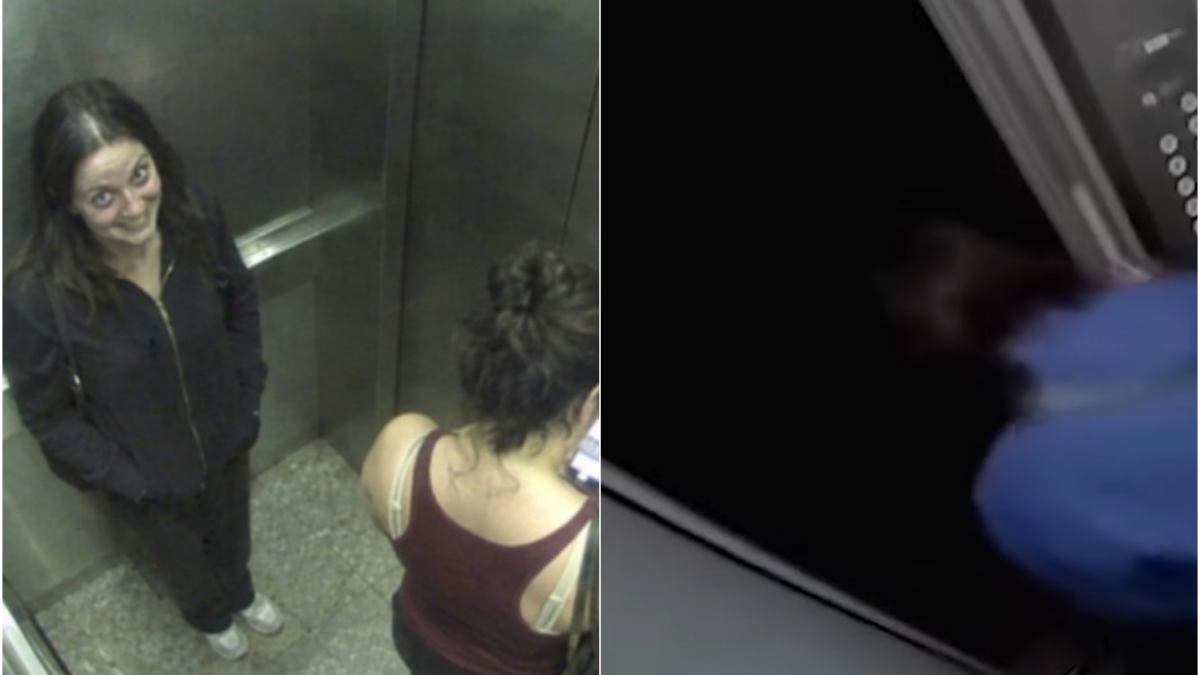
An elevator is supposed to be one of the safest shortcuts in a building. You step inside, press a button, wait for the doors to close, and a machine carries you quietly between floors.
Most of the time, the entire trip takes less than a minute, which is exactly why people rarely think about what could happen if that routine suddenly stopped making sense.
But sometimes the doors close before the elevator is ready. Sometimes the car begins moving while someone is still stepping inside.
Sometimes it rises when it should be descending, drops when it should be stopping, or continues past the floor where it was supposed to open.
And when something goes wrong inside a metal box with nowhere to move, even a few seconds can feel impossibly long.
Across security cameras, phones, building footage, and recordings from around the world, people have captured moments when ordinary elevator rides became situations nobody expected.
A man in Russia nearly gets caught beneath a rising elevator. Another passenger travels upward more than 31 floors in only 15 seconds.
A woman presses every button as her elevator continues below the first floor into darkness.
Elsewhere, a flood turns an elevator into a rapidly filling chamber, while another malfunction sends a car upward with its doors still open.
Some recordings appear to show ordinary mechanical failures. Others remain unexplained. A few have become famous because viewers still disagree about what they actually captured.
So what happens when the one machine you expect to move only when it is safe suddenly decides to do something completely different?
The first incident happened in Russia and was captured by a security camera. The elevator stopped at a floor, and one person stepped out.
Another man immediately moved toward the opening, expecting to enter before the doors closed. He had barely begun stepping inside when the elevator suddenly moved upward.
The doors were still open. Part of his body was inside the elevator while the rest remained in the hallway.
For a moment, everything happened at once. The man reacted immediately. He pulled himself backward and ducked away from the opening just as the elevator continued upward.
The entire event lasted only seconds, but the camera captured how close the timing was.
If he had hesitated, the situation could have become much worse. Modern elevators are designed with multiple systems intended to prevent movement while doors are open or while passengers are entering and leaving.
The footage suggested that something had gone seriously wrong with those normal safeguards. For the man in the hallway, there was no time to understand the mechanical problem.
There was only enough time to react. That is one of the most frightening parts of elevator malfunctions.
People expect an elevator to obey a simple sequence. The doors open. You enter. The doors close.
The car moves. The doors open again. When those steps happen out of order, passengers suddenly have to make decisions without knowing what the machine will do next.
Another passenger experienced a far more dramatic version of the same problem. He entered an elevator, selected his floor, and waited for the doors to close.
Instead, the elevator began ascending before the doors had completely finished closing. Then the doors opened again.
But the elevator kept moving. It was as though the car had separated from the normal rules of the building.
The passenger was inside while the floors outside disappeared upward beneath him. The elevator continued rising.
It traveled more than 31 floors in only 15 seconds. The speed increased the sense of helplessness because there was almost nothing the passenger could do from inside the car.
He pressed buttons, trying to make the system respond. It did not. By the time the elevator reached the 31st floor, the car struck the roof area of the building.
The camera feed ended at that moment. The passenger survived the incident but suffered serious injuries.
The recording became an extraordinary example of what can happen when several elevator safety systems fail at once.
Most people think of elevator problems as being stuck between floors. That sounds frightening enough.
But remaining stationary is very different from being inside a car that is moving far faster than expected.
For the passenger, the elevator became a machine moving through the building without responding normally to its controls.
Another camera captured a malfunction that was almost absurd in appearance until the consequences became clear.
A man entered an elevator while carrying a vacuum cleaner. He was still wrapping the power cable around the machine when the doors began closing.
Part of the cable remained outside. The doors caught it. The elevator then began descending.
The man had positioned himself close to the cable, and as the elevator moved downward, the cable began pulling the vacuum cleaner in the opposite direction.
The machine was dragged upward. The cable tightened. The man was caught between the movement of the elevator and the movement of the vacuum.
For a moment, the situation looked almost like something from a cartoon. Then the cable snapped.
The tension disappeared, and the man dropped back toward the floor. He was fortunate that the cord broke when it did.
The footage became a strange lesson in how quickly an ordinary object can create an unexpected problem inside an elevator.
A vacuum cleaner is harmless in normal circumstances. A loose cable is harmless in normal circumstances.
An elevator is harmless in normal circumstances. Put all three together at the wrong moment, and the result can become extremely dangerous.
Then came an elevator incident that looked less like a mechanical malfunction and more like a scene from a nightmare.
A woman entered an elevator and selected the first floor. The car began moving downward.
It reached the first floor. But instead of stopping, it continued. The woman watched the floor indicator and tried pressing the controls.
Nothing seemed to work. The elevator kept descending. It went below the expected level and continued into darkness.
The woman kept trying the buttons. Still nothing. Eventually, the elevator stopped. Through the opening, there was no ordinary hallway waiting for her.
There was darkness. She cautiously stepped out. The elevator doors closed behind her. Then the elevator began moving upward again.
The footage does not provide enough information to establish exactly what happened or where it was recorded, and the clip has been widely treated with skepticism.
But the image remains unsettling. A passenger enters an elevator expecting to travel one floor.
Instead, the car continues beyond the intended destination and stops somewhere that looks completely unfamiliar.
The passenger steps into darkness because there appears to be no other choice. Then the elevator leaves again.
Whether the recording was staged or whether it captured a genuine malfunction, it demonstrates why elevators are so dependent on predictable behavior.
When the doors open somewhere they should not, passengers have no easy way to know what they are looking at.
Not every strange elevator recording involves a mechanical failure. Some are famous because viewers believe they show something that cannot easily be explained.
One such clip came from a manga cafe in Japan. A security camera was pointed toward a reception area and a nearby elevator.
At first, nothing seemed unusual. A man stepped out of the elevator. Then viewers noticed something behind him.
Inside the elevator was a tall figure wearing what appeared to be a long red dress.
The figure looked unusually tall for the space. It seemed as though anyone that size would have needed to duck beneath the doorway.
But the figure did not appear to move. It looked almost suspended inside the elevator.
People who studied the footage debated whether the shape was actually a person, an unusual perspective, or something created by the camera.
Some local viewers connected the appearance with reports involving a woman who had recently been associated with an incident in a nearby park.
Those claims were never established by the footage itself. The recording remains a piece of unsettling elevator imagery, and its explanation depends heavily on what the viewer thinks they are seeing.
Another recording produced a similar debate. A woman identified as Eliza 1818 was recording herself while walking through a hotel hallway.
She believed someone was following her. She used her phone as though she were on FaceTime, apparently hoping that appearing to speak with someone would discourage whoever might have been behind her.
Then she heard footsteps. She began moving quickly. The footsteps seemed to approach. She ran toward the elevator and called for help.
Security cameras captured what happened next. She entered the elevator and repeatedly tried to close the doors.
They did not close. She moved into the corner and covered her face. Eventually, she stepped back into the hallway.
Almost immediately, the elevator doors closed. The hallway cameras did not clearly show anyone following her.
That created another mystery. Was she responding to something that the cameras failed to capture?
Was there another explanation for the sounds she heard? Or had fear changed how she interpreted what was happening around her?
There was also a brief shadow moving across part of the hallway footage. That detail became one of the reasons people continued discussing the recording.
But a shadow on security footage is not enough by itself to establish what caused it.
The clip remains open to interpretation. Not every elevator mystery is paranormal. Some are simply examples of people making decisions while carrying objects that do not belong inside an elevator.
Two men once tried to carry a large sheet of glass into an elevator. The sheet was too large.
Instead of stopping immediately, they continued positioning it inside. The doors began closing around the glass.
The panel became trapped between the elevator and the surrounding frame. Then the elevator started moving downward.
The pressure on the glass increased. One of the men remained directly beneath it. The panel eventually shattered.
The entire sheet broke apart in an instant. The men were extremely fortunate that the result was not even worse.
The recording demonstrates another important principle of elevator safety. A passenger cannot always judge how much space exists around an object simply by looking at the doorway.
An elevator that is large enough for a person may not be large enough for a long, rigid object.
The machine does not know what the passenger is carrying. It only knows whether its doors are closed and whether its systems are telling it to move.
In June of 2017, another serious malfunction was captured by CCTV cameras in Shanghai. A woman was standing near an elevator entrance while looking at her phone.
She stepped forward and lost her balance. One leg slipped between the elevator doors just as they were closing.
Before she could pull free, the elevator began moving. The car traveled upward with her leg trapped.
The movement continued for three floors. Eventually, the elevator stopped. Emergency responders opened the doors and assisted her.
She suffered severe leg fractures. The incident was a reminder of how quickly a small gap can become dangerous when a machine begins moving unexpectedly.
The most frightening part was not the initial stumble. It was the fact that the elevator did not stop when it should have.
In another case from Russia in 2022, a man waiting for an elevator was looking at his phone.
The doors opened. Another passenger stepped out. The man then moved toward the elevator. As he entered, the system malfunctioned.
The doors began closing while the elevator suddenly shot upward. The man reacted almost instantly.
He realized that the bottom of the elevator was moving upward toward him. He pulled himself backward and threw himself onto the hallway floor.
The elevator passed upward through the opening only moments later. The camera captured how narrow the timing was.
A tiny difference in reaction time could have produced a completely different outcome. The incident became another example of the danger created when an elevator begins moving before its doors are properly closed.
A similar problem happened in Gujarat, India. A man named Vatal Panchel lived on the ninth floor.
He entered an elevator intending to travel down to the ground floor. When the doors opened at his floor, he prepared to step out.
Then the elevator suddenly moved upward while the doors were still open. Panchel was caught by surprise.
The floor of the elevator moved away beneath him as he tried to clear the doorway.
He struck his head against the upper frame and managed to throw himself clear of the opening.
The elevator continued upward. He suffered a minor head injury. The event was another reminder that passengers naturally assume an open elevator door means the car is stationary.
When that assumption becomes false, even a normal step can become dangerous. In Nida, India, two women experienced the opposite problem.
They entered an elevator on the ninth floor. The car traveled upward. When it reached the 14th floor, something went wrong.
The elevator began moving rapidly downward. It passed several floors before stopping suddenly on the seventh floor.
People nearby heard the impact and the passengers calling for assistance. When responders opened the elevator, both women were found inside.
One was able to walk away without a scratch. The other suffered a broken leg in three places.
Building maintenance later attributed the malfunction to a sudden power outage. Again, a routine elevator journey had turned into something completely unpredictable.
In Hangjo, China, a 24 year old man named Yang became involved in an argument near an elevator at a karaoke bar.
After a shoving match, he kicked the elevator doors. The doors broke. He then stepped backward and moved into the opening.
There was no elevator car behind the doors. Yang fell into the open shaft and landed at the bottom after dropping four floors.
Emergency crews were able to reach him. He survived with a broken leg. The incident demonstrates why elevator doors should never be treated like ordinary doors.
Behind them is not necessarily another room. Sometimes the elevator car is somewhere else entirely.
In South Korea, another man nearly stepped into an elevator that was not properly aligned with the floor.
He was identified in reports as mr. Ha. He approached the elevator on the 11th floor while looking at his phone.
The doors were open. But the elevator car was not completely level with the hallway.
It had already begun moving upward. mr. Ha stepped forward, caught his foot on the uneven threshold, and fell toward the moving car.
Part of his body remained outside the elevator. He managed to push against the frame and throw himself back into the hallway.
He was not seriously injured. Later, he said it was fortunate that he fell onto the floor and noted that the same situation could have been much worse for a child or an elderly passenger.
Investigators found that the building’s elevator had been installed in 1999. Soon afterward, South Korea introduced a law requiring elevator systems to have safety sensors capable of cutting the motor if the doors were open while the car was moving.
That case showed how safety standards can change after older equipment exposes weaknesses that newer systems are designed to prevent.
Flooding created another category of elevator emergency. In August of 2021, radio producer Tony Louu and two friends entered an elevator at their Omaha, Nebraska apartment complex at around 10 at night.
A heavy flash flood was affecting the area. They were checking the building for storm damage.
Then water began entering through the ceiling vents before the elevator doors opened at the basement.
The water level rose quickly. The three men became trapped inside. Soon, the water had reached their necks.
Lou called his roommate, who worked in maintenance at the building. “We might die if you don’t come help us,” he told him.
Help eventually arrived. Lou, his brother, his roommate, and another person worked together to force the elevator doors open from outside.
The trapped water rushed into the hallway. The people inside were able to get out.
Everyone made it out without serious injuries. The danger in this case had nothing to do with an elevator suddenly shooting upward or dropping downward.
The machine remained where it was. The environment around it changed. That was enough. A similar flood emergency happened in Toronto in 2018.
Co-workers Clever Fra and Gabriel Otrin were working late when heavy rain began flooding the building.
They decided to take an elevator down to the basement so they could move Fra’s car to higher ground.
Instead, they became trapped. Storm water entered the elevator shaft. The elevator stopped functioning. The doors would not open.
Water began rising inside the car. The emergency intercom stopped working. There was no cell signal in the basement.
The two men needed another way to communicate with the outside. They began punching through ceiling tiles and raising their phones as high as possible, trying to find a signal.
Fra injured his hands while working through the ceiling structure, but eventually they managed to place a call to 911.
Two officers were nearby. They entered the flooded building and moved through the basement water toward the elevator.
By then, the water inside the car had reached their chins, leaving only a small amount of air above them.
The officers used a crowbar to force the doors open. Fra and Otrin were pulled out.
The rescue happened just before the elevator was completely submerged. Once again, the elevator itself was not the original source of the emergency.
Water was. But the elevator became the place where the problem was concentrated. That is what makes enclosed spaces so difficult during emergencies.
There is nowhere to move. There is no alternate route. Every problem becomes larger because the walls remain exactly where they are.
Another incident involved a woman named Tayana Fischer and her dog, Shadow. Fischer was 58 years old and returning to her apartment in Washington, DC.
When the elevator reached her floor, the doors opened. Shadow stepped into the hallway. Fischer was still backing her wheelchair out when the doors closed, trapping the dog’s leash.
The elevator began moving upward. The leash was looped around Fischer’s arm. The sudden movement pulled her from the wheelchair and toward the elevator opening.
The situation became extremely serious within seconds. The elevator eventually jammed between floors. Firefighters had to enter through the elevator shaft and access the car from above.
It took approximately 40 minutes to free Fischer. Residents had previously complained about the building’s old elevators and problems with the doors and sensors.
The city later discovered that the building management had been operating the elevators without valid safety permits.
The case showed how maintenance problems can become especially serious when passengers are using mobility equipment or traveling with animals.
Then there was Sean Lai. He was 21 years old and had been visiting a friend on the 34th floor of a high rise in downtown Toronto.
He entered the elevator and began traveling downward. Then he heard a loud noise overhead.
A main cable failed. The elevator dropped suddenly. Lai was thrown upward inside the car before landing back down.
The car stopped between floors, approximately 100 feet above the ground. Firefighters arrived. Because of where the elevator had stopped, they could not simply open the doors from the hallway.
A specialized rescue team had to enter the shaft. They accessed the top of the elevator, opened the emergency hatch, and secured Lai with a harness.
He then crawled through the ceiling opening and was pulled upward through the shaft. He later described the experience as one of his worst fears becoming real.
Despite the frightening fall, he left with only minor bumps and bruises. The elevator had stopped before the situation became even more serious.
That is something several of these incidents have in common. A malfunction begins. A passenger reacts.
A safety system sometimes activates. Sometimes another person arrives. Sometimes the machine stops. Sometimes the passenger simply makes the right movement at exactly the right moment.
And sometimes a recording captures only a few seconds of a much longer story. The strangest recordings are not always the most dangerous ones.
At a hotel in Quincy, Illinois, staff noticed that items were disappearing from a cleaning cart left in a hallway.
They checked the security footage. Instead of finding an obvious person, they saw a dark, human shaped shadow moving between the cart and an elevator.
The shadow seemed to move rapidly. It appeared to go toward the elevator and back again.
The elevator doors appeared closed. There was no obvious person in the area. Hotel staff pointed out that if the elevator doors had opened, the interior light would normally have changed what the camera captured.
People who worked at the hotel also said unusual activity had reportedly been noticed there before.
Whether the footage showed something paranormal or simply a strange lighting effect remains unresolved. Another Japanese television program showed footage of an elevator apparently operating without passengers.
The elevator moved between floors. Its doors opened. Then closed again. At one point, a shadowy figure resembling a small child appeared beside a woman inside the car.
Reports connected the footage with a story about a young boy who had previously been involved in an accident inside the elevator.
But the recording itself does not establish that explanation. It remains a paranormal claim associated with the footage.
Another famous clip became known as the Raffles Place ghoSt. Two men entered an elevator.
They reached their floor and walked out. Then an older woman appeared behind them. The footage was dated March 28th, 2008.
A group of university students named Jimmy, Mike, and YQ reportedly investigated the recording as part of a project examining supernatural claims in Singapore.
They said they were consulting with a professional videographer to determine whether the footage showed editing or manipulation.
No later conclusion from that investigation became part of the public record described in the source.
So the clip remained famous largely because people disagreed about what they were seeing. Another Japanese elevator recording shows a man entering a seemingly empty car.
The buttons light up without an obvious person pressing them. The man appears to acknowledge something before the elevator continues moving.
After he exits, the elevator keeps traveling between floors. One floor it repeatedly visits is the fourth floor.
According to reports connected with the footage, an earlier incident had occurred there, and later residents claimed to notice unusual activity around the elevator and hallway.
Some people reported seeing a woman standing motionless on the fourth floor at night before disappearing.
Again, those stories are reports associated with the building rather than conclusions established by the footage.
And then there is one of the strangest encounters of all. A security guard named Louis Delver was working a night shift.
He noticed what appeared to be an elderly woman near the elevators. He approached her.
She seemed to speak to someone. Later, Louis described the woman as telling him she was loSt.
But another guard watching from elsewhere noticed that Louis appeared to be speaking to nobody.
He contacted him over the radio. “Who you talking to, bud?” Louis was apparently alone on the floor.
After hearing the question, he moved toward the elevator, then abruptly changed direction. He ran from the area and left the building.
The footage became another example of an event where the recording shows one thing while the people involved describe another.
Was Louis responding to an actual person? Was there something about the lighting or angle that the camera did not capture?
Or was the situation simply misunderstood? The footage does not provide enough information to settle the question.
That uncertainty is part of why these recordings remain so compelling. An elevator is an ordinary machine.
Millions of people use them every day without thinking twice. The doors open. The doors close.
The car moves. The doors open again. Then the passenger walks away. But when something interrupts that sequence, even a short elevator ride can become unforgettable.
A man in Russia steps backward as an elevator suddenly rises. Another passenger travels 31 floors in 15 seconds.
A vacuum cleaner becomes tangled in a moving elevator. A woman finds herself descending beyond the floor she selected.
A shadow appears beside an elevator. A giant sheet of glass shatters inside a moving car.
A Shanghai passenger becomes trapped by a malfunctioning elevator. A man in Crossador reacts just in time.
A woman in Gujarat escapes a rising elevator. Two passengers in Nida endure a sudden descent.
A man in Hangjo steps into an open shaft. mr. Ha escapes an elevator that begins moving before he can safely enter.
Tony Louu and his friends find themselves surrounded by rising floodwater. Clever Fra and Gabriel Otrin fight for a phone signal while trapped below a flooded building.
Tayana Fischer becomes trapped because of a leash. Sean Lai experiences a sudden drop before the elevator stops.
And throughout all of these stories, the same lesson appears again and again. The most dangerous moment is often not when an elevator is moving.
It is when a passenger assumes it is not moving. An open door looks like an invitation.
A level floor looks safe. A closed door looks secure. A button looks like a command.
But every one of those assumptions depends on the machine working properly. When it does not, the safest response is often the simplest one.
Pay attention. Do not rush through a doorway. Do not place yourself between moving objects.
Do not force something into an elevator that does not fit. Do not assume an open door means the car is stationary.
And when a machine begins behaving in a way that makes no sense, give yourself as much distance from the opening and moving parts as possible.
The strangest elevator footage is not always the footage with the biggest malfunction. Sometimes it is simply the moment when a familiar machine behaves differently for a few seconds.
A door closes too quickly. A car moves too soon. A button lights up. A shadow crosses a hallway.
A floor passes without stopping. A light disappears. A sound comes from somewhere outside the frame.
And suddenly, an ordinary ride becomes a story that people replay for years. Most elevator journeys end exactly as expected.
You enter. You press a button. You rise or descend. The doors open. You step out.
The machine continues to the next passenger. That ordinary sequence is so familiar that we barely notice it.
But the recordings from these incidents show what happens when even one part of that sequence breaks.
Sometimes the problem lasts only a second. Sometimes it lasts fifteen seconds. Sometimes it lasts forty minutes.
Sometimes the footage leaves behind an explanation. Sometimes it leaves only questions. And perhaps that is why elevator cameras capture some of the most unsettling moments people ever see on ordinary security footage.
Because the setting is familiar. The machine is familiar. The routine is familiar. Only one thing has changed.
For a few seconds, the elevator is no longer doing what everyone expects it to do.
Disclaimer: This content may be created by Al for entertainment purposes. Any resemblance to real persons, events, or places is coincidental.








