She Raised a Giant Python Nobody Dared To Even Look…Then She Made a Fortune Out of Their Skins!
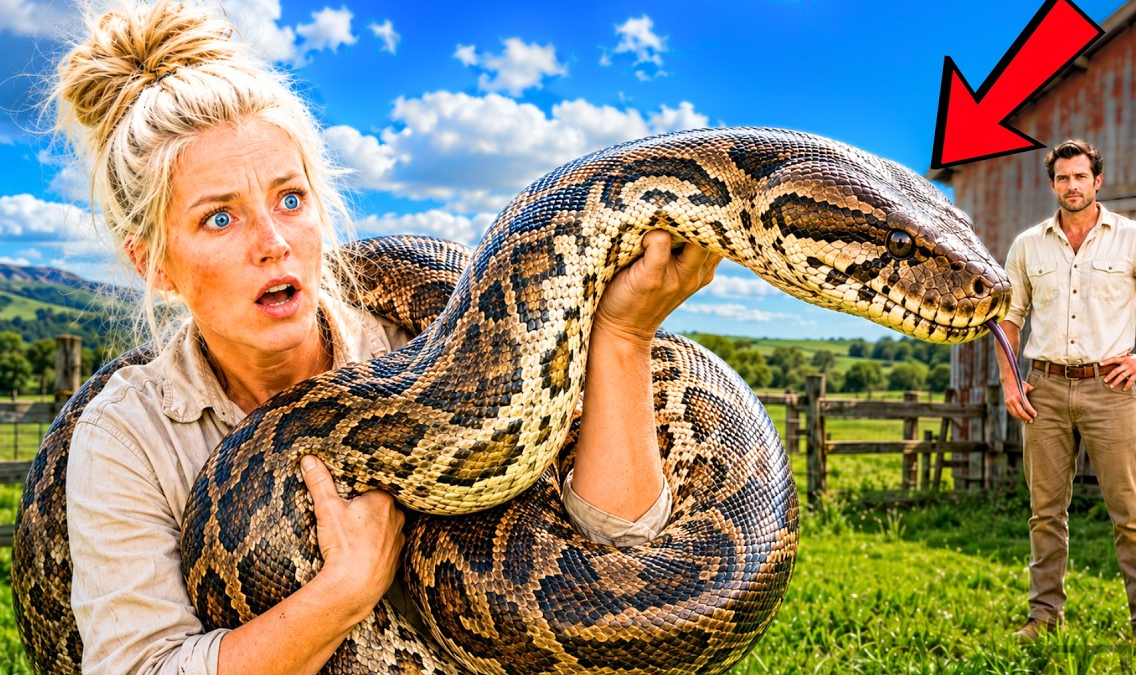
The python cost Dorothy Crane four dollars on a Wednesday morning in April 1933, and every man standing around the abandoned carnival lot outside Ocala watched her carry it away while pretending not to be interested.
The animal was seventeen feet long, heavy enough that two strong men had struggled to move its transport cage, and intimidating enough that four different people had already decided they wanted nothing to do with it.
The Hendrix Brothers Traveling Show had stopped operating after years on the road, and the animals that once drew crowds across Central Florida were being divided among buyers who had somewhere to put them.
The lion had found a new home. The trained dogs had been taken by a family near Gainesville.
The alligators had gone to a private collection near Silver Springs. But the python remained.
She rested inside her cage on the back of a flatbed truck, silent and motionless, while men who had spent their lives around difficult animals kept their distance.
Then Dorothy Crane arrived with a wooden crate she had built herself. She was not dressed like someone who belonged at a carnival animal auction.
She was not wearing boots meant for handling livestock or carrying equipment used by professional handlers.
She was a farmer who had inherited a struggling citrus grove, a woman who had spent months searching for a way to save land that everyone else had already decided could not recover.
She had no experience with large snakes. What she had was preparation. For three weeks, Dorothy had studied every piece of information she could find about Burmese pythons.
She had visited the Marion County Library, searched through old natural history books, and read every article she could locate.
One passage from a 1928 herpetology text had caught her attention. It described how experienced handlers moved large constrictors safely.
Support the body. Avoid sudden movements. Do not force the animal into fear. She had read those instructions again and again until they were memorized.
Now she stood beside the cage while everyone waited to see what would happen. Roy Hendrix, the former owner of the carnival, looked uncertain.
“You’re sure about this?” He asked. Dorothy looked at the python, then at the wooden crate waiting beside her truck.
“Yes,” she said. The men around her exchanged looks. They expected hesitation. They expected fear.
Dorothy simply opened the cage. The python moved slowly, its large body shifting with controlled strength.
It did not strike. It did not panic. Dorothy placed one hand carefully behind the animal’s jaw and supported the heavy body with her other arm.
The movement was calm. Deliberate. The snake followed the direction of her hands. Within moments, the python was inside the crate.
Dorothy closed the lid, secured the latch, and handed Roy four dollars. Then she loaded the crate into her truck and drove home.
Behind her, the men at the carnival lot continued watching until she disappeared down the road.
They had expected a disaster. Instead, they had watched someone do something they believed could not be done.
Dorothy Crane spent most of the drive back thinking about numbers. Not the size of the python.
Not the opinions she would hear from neighbors. Not the fact that everyone who had watched her leave the carnival believed she had made a strange decision.
She was thinking about leather. Her family’s forty-acre Valencia orange grove in Marion County had once been something worth protecting.
Her father, George Crane, had planted the trees in 1919 when Florida citrus seemed like a reliable future.
During the strongest years, the grove had provided a comfortable living. But the market had changed.
By 1928, the warning signs were impossible to ignore. By 1931, the situation had become much harder.
Orange prices had fallen, expenses continued rising, and the grove that had once supported the family had become a constant struggle.
When George Crane passed away in 1932, Dorothy inherited the property along with the responsibility attached to it.
The land. The equipment. The financial obligations. Everything. She spent months trying to find a solution.
She reduced expenses where she could. She sold unused timber from parts of the property.
She maintained a kitchen garden. She repaired what she could herself. But she understood something important.
Working harder was not always the same as solving the problem. She needed a different opportunity.
That opportunity came from a small article she discovered while searching through trade publications at the library.
The article discussed the exotic leather market. For years, luxury leather manufacturers in Europe had supplied American buyers with products made from rare animal skins.
But changing economic conditions had disrupted those supply chains. American companies were looking for alternatives closer to home.
Python leather had value. Large, healthy hides were difficult to find. And Dorothy had started doing the math.
A seventeen-foot Burmese python could produce a hide valuable enough to change the future of her farm.
The idea was unusual. It was also practical. That was all Dorothy needed. By the time she returned home, the old equipment shed had already been prepared.
She had reinforced the door, added ventilation openings, and created a secure enclosure. She understood that keeping the animal was not about simply owning something unusual.
It was about responsibility. The python needed proper conditions. Dorothy intended to provide them. The rumors started almost immediately.
In a small Florida farming community, information traveled quickly. A conversation at the feed store became a discussion at the post office.
A comment after church became a story repeated across neighboring properties. By the end of the week, everyone knew.
Dorothy Crane had bought a seventeen-foot snake. Her neighbor Ruth Holt was one of the first people to visit.
She arrived on Saturday morning with a careful expression, the kind someone wears when they are trying to confirm whether a rumor is true without appearing too interested.
She looked toward the equipment shed. Then she looked back at Dorothy. “Is the animal secure?”
Ruth asked. “Yes,” Dorothy answered. Dorothy opened the shed and showed her the enclosure. The door was reinforced.
The locking system was strong. The ventilation allowed fresh air while keeping the animal contained.
Ruth studied everything carefully. She had expected something careless. Instead, she found a system. “You’ve thought this through,” Ruth finally said.
Dorothy nodded. “I read everything I could.” That answer seemed to explain more than anything else.
Dorothy was not acting because she wanted attention. She was acting because she had prepared.
A few days later, Dorothy visited the county extension office in Ocala. She wanted information about maintaining proper conditions for an exotic reptile in Florida.
The extension agent listened carefully. He admitted he knew about crops, livestock, and local farming practices, but large tropical snakes were outside his experience.
Dorothy thanked him and prepared to leave. That was when someone nearby spoke. A man sitting with paperwork in his hands had been listening.
He was tall, broad-shouldered, and carried himself with the quiet confidence of someone who paid attention before speaking.
His name was Henry Marsh. He looked at Dorothy and said one thing. “Kellerman Leather Importers.”
Dorothy stopped. The man reached into his pocket and removed a business card. “Kellerman has been searching for reliable sources of python leather,” he explained.
“They are based in New York. If your animal is what you say it is, they may want to talk.”
Dorothy studied the card. Henry Marsh. Kellerman Leather Importers. New York. It was exactly the kind of connection she had been searching for.
That evening, she wrote a letter. She explained the size of the python, the conditions she had created, and her interest in understanding the market.
Two weeks later, a reply arrived. Arthur Kellerman was interested. He wanted more information. He wanted to know about the animal’s condition.
He wanted a sample. Dorothy read the letter carefully and placed it beside the documents connected to the farm.
The citrus grove papers. The financial records. The article that had started everything. She understood that the python was no longer just an unusual purchase.
It was becoming a business decision. And Dorothy Crane had never been someone who made important decisions without understanding every detail.
Through April and May, she studied the animal. She watched its habits. She learned its feeding patterns.
She recorded changes in behavior. The python ate twice each month, following a schedule Dorothy developed from her research and adjusted through observation.
She worked with a supplier outside Ocala who provided appropriate feed. She paid attention to everything.
The first shed was something she had been waiting for. In May, the python’s outer layer came away in one complete piece.
Nearly seventeen feet of delicate material rested across the floor of the enclosure. Dorothy carefully collected it.
She photographed it with her Box Brownie camera. Then she sent the images to Kellerman.
The response came quickly. The company was interested. They wanted to discuss future possibilities. Dorothy wrote back requesting a meeting with Henry Marsh.
A week later, he arrived at the farm. He did not arrive with the nervous curiosity Dorothy had seen from others.
He arrived as a professional. He looked over the enclosure. He studied the python. He asked questions.
“How old is she?” “Approximately four years,” Dorothy replied. Henry considered that. A female Burmese python could continue growing for years.
A healthy animal could become much larger, increasing the value of future hides. “You understand this requires patience,” he said.
Dorothy looked toward the enclosure. “I understand.” Henry nodded. That answer seemed to satisfy him.
They sat on the porch afterward, and Henry explained the requirements of the leather market.
He discussed preservation methods, quality standards, and what buyers expected. Dorothy asked questions. Specific questions.
The kind of questions that showed she had already done most of the work before asking for help.
Henry noticed. Most people approached opportunities hoping someone else would explain everything. Dorothy approached them prepared.
Before leaving that afternoon, Henry promised to bring additional information. The following Tuesday, he returned.
Then he returned again the Tuesday after that. Soon, his visits became part of the farm’s routine.
They talked about business. They talked about the changing market. They talked about the future.
And slowly, without either of them making a decision to do so, Henry Marsh became someone Dorothy looked forward to seeing.
The python had been purchased because Dorothy believed preparation could create an opportunity. She had not expected that opportunity to bring someone else into her life.
But sometimes the things people discover while searching for one answer lead them toward another.
And Dorothy was about to discover that the python was only the beginning.
The summer of 1933 changed the way people in Marion County looked at Dorothy Crane.
At first, they had seen only the unusual part of the story. They saw the woman who had brought home a seventeen-foot python.
They saw the old equipment shed on her farm and imagined every possible problem that could come from it.
They saw something unfamiliar and decided it was impossible. But Dorothy was not interested in proving people wrong.
She was interested in building something that worked. The python continued growing, and Dorothy continued learning.
She had discovered that keeping an animal like this required more than simply providing food and shelter.
It required attention. The smallest changes mattered. The way the python moved. The way it rested.
The way it responded to changes in temperature. Every observation became information. Every piece of information became part of her plan.
By August, Dorothy noticed changes in the animal’s behavior. The python moved differently. She was more restless than usual.
She spent more time adjusting her position and seemed focused on a particular area of the enclosure.
Dorothy returned to her books. She reviewed everything she had found about Burmese python breeding patterns.
The signs matched. She believed the python was preparing to lay eggs. When it happened, it happened quietly.
There was no dramatic moment. No crowd watching. No one from the county standing nearby.
Only Dorothy inside the equipment shed, checking the enclosure as she did every day. There were thirty-seven eggs.
The python carefully positioned herself around them, creating the protective coil that Dorothy had read about.
Dorothy stood there for a long time watching. The moment changed her calculations completely. Until then, her plan had focused mainly on leather production.
The python’s size created value. The hide represented a future income source. But the eggs represented something different.
A sustainable operation. A way to build something that could continue. Dorothy returned to her notebook and began calculating again.
Burmese python eggs required careful conditions. The incubation period was generally between sixty and seventy days.
Hatchlings could be sold to exotic animal dealers, private collectors, and businesses that specialized in unusual animals.
A single hatchling could bring several dollars. Thirty-seven eggs could become a meaningful amount of income.
For the first time in years, Dorothy looked at the farm’s future and saw something other than a problem.
She wrote letters. Not many. Only to people she believed would actually be interested. She contacted several exotic animal dealers and explained that she expected a successful hatch.
When Henry Marsh visited that Tuesday, she told him. He listened carefully. “The clutch is significant,” he said.
Dorothy nodded. “I believe it could become another part of the operation.” Henry looked toward the enclosure.
“You’ve already thought about buyers?” “Yes.” He smiled slightly. “That does not surprise me.” Dorothy looked at him.
“What does?” Henry considered the question. “Most people would have stopped at owning the snake.”
Dorothy understood what he meant. Most people saw the unusual thing. She saw the opportunity around it.
Henry offered to introduce her to several reliable contacts in the animal trade. His work with Kellerman Leather Importers had connected him with many businesses across Florida and Georgia.
The following Tuesday, he arrived with names written carefully on paper. He also brought something else.
A thermometer designed for more accurate reptile temperature readings. Dorothy noticed immediately. “You brought this for the enclosure?”
Henry nodded. “The one you have works, but this one is better.” She accepted it.
It was a small gesture. But Dorothy noticed small gestures. She noticed everything. The incubation process continued through September.
Every day, she checked the temperature. Every day, she recorded the conditions. She did not leave success to chance.
When the first egg began to open in October, Dorothy was there. A tiny head appeared.
A small movement beneath the shell. A new animal entering the world. She watched carefully as the hatchlings emerged over the next two days.
Thirty-three survived. Four eggs did not develop. Dorothy recorded the numbers without emotion. She was not surprised.
Nature rarely followed perfect plans. What mattered was understanding what happened and learning from it.
She prepared the hatchlings for buyers. Twenty-six were sold through the contacts Henry provided. Seven remained on the farm.
Dorothy selected the strongest ones because she wanted to build a future breeding group. The payments arrived in November.
The first check covered more than Dorothy expected. The second followed soon after. Together, the hatchling sales brought in one hundred seventeen dollars.
It was not enough to transform the farm overnight. But it was proof. Proof that her idea was working.
Dorothy used the money carefully. She paid upcoming financial obligations. She purchased supplies. She continued improving the operation.
When Henry arrived that month, she told him about the payments. He listened, then smiled.
“You were right.” Dorothy looked at him. “I was prepared.” Henry nodded. “That too.” Their conversations became longer.
At first, they had talked only about business. The python. The leather market. The animal buyers.
The farm. But over time, they started talking about other things. Henry told her about his travels through Florida and Georgia.
Dorothy told him about growing up on the farm and learning from her father. They discovered that they shared something important.
Neither of them liked unnecessary words. They valued actions. They valued preparation. They valued people who followed through.
By December, Dorothy decided the original enclosure was no longer enough. She built a proper python house.
The structure had insulated walls. Controlled heating. Improved ventilation. Separate areas for different stages of the operation.
It was not a temporary shelter. It was a real facility. Henry helped on several Saturdays.
He knew construction. Dorothy knew exactly what she wanted. Together, they created something stronger than either could have created alone.
When the python moved into the new enclosure, Dorothy watched carefully. The animal explored the space slowly.
Then it settled. The design worked. By early 1934, the operation had become stable. The first major hide sale came after Dorothy followed Kellerman’s preservation requirements carefully.
The final product was accepted. The payment was two hundred twenty-four dollars. It was the largest single amount Dorothy had earned from the python operation.
More importantly, it changed everything. The financial pressure that had followed her since inheriting the farm finally began to disappear.
In March 1934, Dorothy drove into Ocala. She entered the Agricultural Bank. For years, that building had represented uncertainty.
Today, it represented something different. She sat across from Harold, the bank officer who had managed the account.
He reviewed the paperwork. Then he opened the ledger. With careful handwriting, he marked the account.
Paid in full. Dorothy looked at the words for a moment. She had spent years trying to keep the farm alive.
Now she had finally removed the burden that had followed her family. When she returned home, Henry was waiting.
He had arrived earlier than usual. That was unusual enough that Dorothy immediately noticed. He stood near the python house, holding his hat.
She walked toward him. “The bank is finished,” she said. Henry smiled. “That is good news.”
Dorothy nodded. “It is.” For a moment, neither spoke. Then Henry took a breath. “I have been coming here every Tuesday since June.”
Dorothy looked at him. “Yes.” “I have brought you information, materials, and help because I believed in what you were building.”
She listened. “But that is not the only reason.” Dorothy already knew. She had known for weeks.
Henry was careful with his words. He did not rush. He did not make dramatic speeches.
That was part of what she appreciated about him. “I would like to ask you something,” he said.
Dorothy waited. “I would like to marry you, if you would have me.” There was no hesitation.
No long pause. Dorothy had watched Henry for months. She had seen his character in small moments.
She had seen the way he treated people. The way he kept promises. The way he offered help without expecting attention.
“Yes,” she said. The answer was simple. But it carried everything she meant. They married in April 1934 at the Marion County Courthouse.
It was practical. Quiet. Exactly like them. Ruth Holt attended as one of the witnesses.
Henry continued representing Kellerman across Florida and Georgia, but he moved his Florida base closer to the farm.
The python operation continued growing. Dorothy purchased a second female python later that year. The business expanded carefully.
By 1935, the farm had changed completely. There were three female pythons in the enclosure.
There were established relationships with leather buyers. There were regular hatchling sales. The old citrus grove was transformed into a nursery operation that used the land differently.
The same property that people had once considered a burden had become a working business again.
And the people who had doubted Dorothy changed their opinions slowly. Not because she asked them to.
Not because she argued with them. But because results are difficult to ignore. The county stopped discussing whether Dorothy’s idea could work.
They started asking how she had made it work. That difference mattered. Dorothy never needed approval.
She had needed opportunity. She had found it by studying something unfamiliar, preparing carefully, and acting when everyone else stepped back.
Years later, people would still talk about the woman who bought a giant python from a closing carnival.
But the real story was never about the snake. The python was only the beginning.
The real story was about a farmer who refused to accept that a difficult situation had no solution.
She had looked at a problem everyone else avoided. She had learned everything she could.
And when the moment came, she reached forward instead of stepping away. Because sometimes the biggest opportunities are hidden inside the things people are too afraid to understand.
Disclaimer: This content may be created by Al for entertainment purposes. Any resemblance to real persons, events, or places is coincidental.








