She Clutched My Shirt and Whispered, “Don’t Leave Me”—I Had Only 3 Hours to Decide
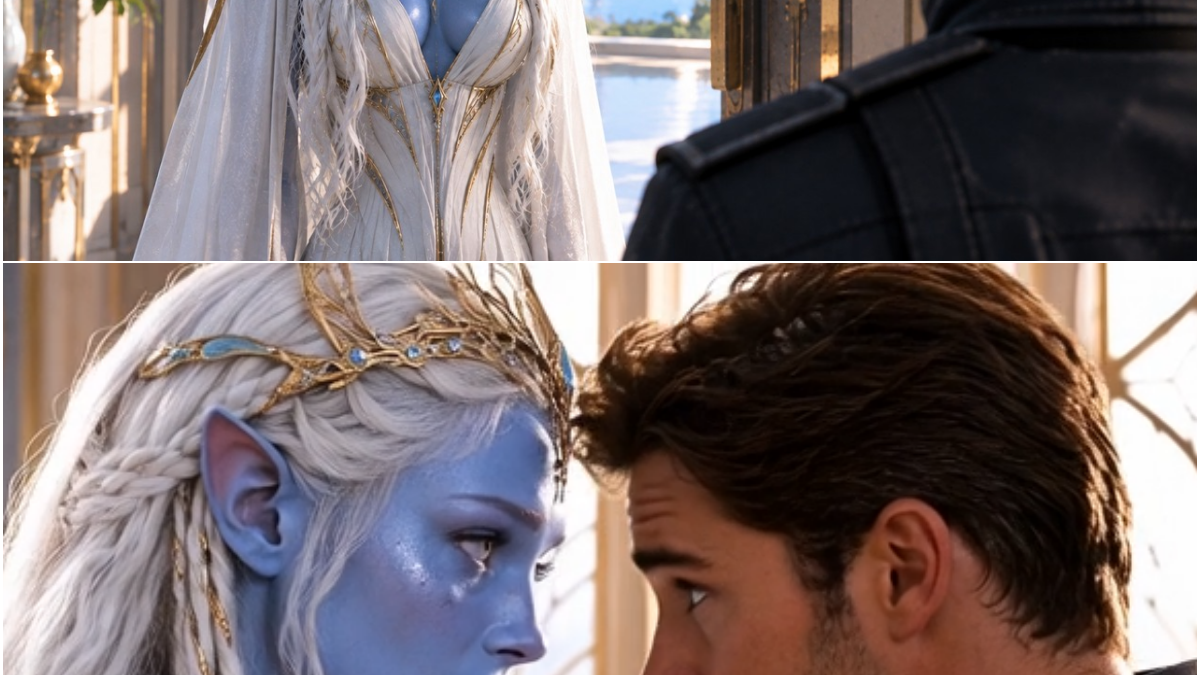
The alarm cut through the outpost like a blade, and my cup slipped from my fingers before I even understood what I was hearing.
It struck the floor, scattered across the metal tiles, and left a dark stain spreading beneath my boots.
Then the message appeared on my screen, bright and merciless, reducing everything I had known for six months to a handful of words.
Evacuation window closes in three hours. All human personnel report to landing pad four. No exceptions.
I was still staring at the warning when Elra seized my shirt. Her people did not touch others casually.
Their customs reserved physical contact for those inside a bond circle, and even then, a hand on someone’s shoulder carried a meaning that could last a lifetime.
Yet she held me with both hands, her fingers trembling against the fabric, her four dark eyes fixed on mine.
“Don’t leave me.” There were a thousand things I wanted to tell her. That I was afraid, that I did not know what would happen, that I had never imagined six months on an unfamiliar world could become the most important part of my life.
But the clock was already running, and somewhere beyond the outpost, the sky was beginning to change.
My name is Daniel Cole, and until that moment, I had believed my assignment was simply to observe another civilization.
I had no idea that the next three hours would force me to decide what belonging really meant, or how far I would go to prove it.
Six months earlier, I had arrived on Ventha Prime with a small human liaison team.
We were scientists, translators, and engineers, sent to study a species that had never encountered humans before.
We carried instruments, research equipment, and carefully written instructions about respecting local customs. We had no military authority, no mandate to interfere in Venthy affairs, and no reason to expect our assignment would become anything more than an unusual diplomatic posting.
Ventha Prime was a beautiful world, though it was not an easy one to understand.
Its forests grew in sweeping bands of pale green and silver, its rivers carried a faint blue shimmer beneath the sunlight, and its atmosphere sometimes produced delicate curtains of color during the long storm season.
The Venthy themselves were tall, narrow-framed beings with four eyes, flexible fingers, and skin that shifted through shades of blue, violet, and green according to their emotions.
Their language was difficult for human ears, but their emotional colors were impossible to ignore once we learned how to recognize them.
A Venthy who felt curiosity might develop faint golden marks along the neck. Embarrassment could spread as a soft lavender shade across the cheeks.
Fear often turned their skin pale blue, while grief sometimes left it nearly colorless. Their society was built around memory, obligation, and a belief that certain truths were too heavy to speak aloud.
The elders taught that some events could be understood only after enough generations had passed.
To speak of them prematurely was considered a way of burdening the living with something they could not change.
At first, I admired that philosophy. The Venthy seemed patient in ways humans rarely were.
They did not rush to fill silences, and they rarely argued merely to prove they were right.
They listened, considered, and answered only when they believed their words had purpose. But over time, I began to see the cost of that restraint.
Their elders had known for decades that something was wrong with the star system. A strange fold in its gravitational structure had been growing beyond the outer moons.
They had recorded its movement, measured its effects, and watched its influence gradually increase. They had never told anyone beyond their own circles.
By the time our scanners detected the fold, it was already disturbing the orbits of the outer moons.
The gravitational distortion was growing faster than our instruments could comfortably model. Our calculations showed that the planet would be swallowed by the expanding collapse in six days.
The Venthy elders had known the danger was coming, but their traditions had prevented them from treating it as an emergency.
They had lived with the knowledge for so long that they had mistaken endurance for preparation.
The human fleet ship above the planet received our findings and began calculating evacuation possibilities.
For a short time, we believed the situation might still be manageable. Then the debris field around the system shifted, and the fleet discovered a narrow passage through which one shuttle could safely travel.
The passage would remain open for only a few hours. There was no second window expected before the gravitational collapse accelerated.
Any vessel that missed it would be trapped in the system, unable to reach open space.
Command decided that the human personnel would leave immediately. There were twelve seats on the shuttle.
There were approximately two hundred thousand Venthy living across the planet. The numbers were so far apart that even saying them aloud felt absurd.
We could not evacuate the population with a single shuttle, and the fleet had no available transports close enough to arrive before the passage closed.
The official plan was to remove the human team, preserve our research records, and report the situation from a safe distance.
The Venthy would have to face what came next without us. When the alarm sounded, I had been preparing a report on the settlement’s agricultural systems.
I had been sitting at a small table in the outpost kitchen, drinking a cup of bitter human coffee and listening to the distant sounds of Venthy children playing in the courtyard.
Then the message arrived, and the ordinary morning disappeared. Elra had been standing near the doorway.
She was a local interpreter who had worked with our team since the first week of our assignment.
She was also the person who had taught me how to recognize the difference between a Venthy smile and the slight facial movement they used when they were simply acknowledging another person.
I had learned her favorite foods, her preferred walking routes, and the way she became quiet whenever the elders discussed the future.
She had learned that I talked when I was nervous, that I drank coffee far too late in the day, and that I always checked the outpost’s eastern windows before going to sleep.
We had become close gradually, without either of us announcing that anything had changed. There was no single moment when our friendship became something more.
It happened in shared meals, long conversations, and the comfortable silence that came from knowing someone would remain beside you.
Now she was holding my shirt as if letting go would make the evacuation real.
“Don’t leave me,” she repeated. I reached for her hands, but she tightened her grip.
“Elra, I have three hours.” “Your ship is coming.” “Yes.” “Then you are leaving.” “I haven’t decided what I’m doing yet.”
Her skin shifted to a pale, almost translucent blue. “There is nothing to decide, Daniel.
Your people have a ship. Your people must save their own.” “That’s what command says.”
“That is the way of things.” I looked at her and understood that she was not trying to convince me to go.
She was trying to make the separation easier by accepting it before it happened. Her people had survived difficult centuries by learning not to expect circumstances to change simply because they wished them to.
It was an admirable habit in ordinary life. In that moment, I hated it. Six months earlier, during the storm season, three human scouts had become stranded in the northern highlands.
Their communication equipment had failed, and the acid rain had made the return journey dangerous.
The Venthy had sent a rescue party across twelve kilometers of exposed terrain to bring them back.
They had not been ordered to do it. They had not been promised payment. They had simply heard that the humans were in trouble and decided to help.
I had written the report afterward. I remembered the details clearly: the injured scouts, the exhausted rescue team, the careful way the Venthy had carried our equipment and supplies through the storm.
I also remembered Commander Allaric Voss reading the report and approving the formal expression of gratitude.
Now command was preparing to leave the same people behind. “I’m not going to let that be the way of things,” I said.
Elra stared at me. I did not know how I intended to keep that promise.
I only knew that I could not walk onto the shuttle, watch the doors close, and tell myself that two hundred thousand lives had nothing to do with me.
I released her hands gently and hurried toward the command tent. Commander Voss was already at landing pad four, directing the evacuation preparations.
His uniform was immaculate, his posture rigid, and his voice carried over the machinery with the authority of someone accustomed to being obeyed.
“Cole,” he called when he saw me. “Get your team moving.” “What is the current situation?”
“We have a passage opening in the debris field. We break atmosphere in one hundred eighty minutes.
The shuttle leaves whether you are aboard or not.” “What about the Venthy?” He stopped and turned toward me.
For a moment, he looked almost sorry. “Not our mission, Cole. Our orders are personnel extraction.
Human personnel.” “They saved three of our scouts during the storm season.” “I know.” “They walked twelve kilometers through acid rain.”
“I read your report.” “Then you know what they did for us.” Voss’s expression hardened.
“That report is filed. This is not a debate. Get your team moving.” I stood still.
He looked at me for another moment, then turned back to his officers. I knew I was risking my position by refusing to obey immediately.
I also knew that arguing with Voss would accomplish nothing unless I could offer him an alternative.
The fleet was not going to change its plans because I felt strongly about a situation it had already classified as impossible.
I needed a machine, a destination, and a way to get the Venthy off the planet.
The first two possibilities came to me almost together. A Venthy transport vessel had been abandoned in the northern valley.
It was an old atmospheric craft, built generations earlier for carrying supplies between remote settlements.
It had not flown in forty years, but the original engineering records suggested that its frame and propulsion system were designed to tolerate conditions that modern atmospheric vehicles could not.
It would not be able to escape the gravitational distortion and reach another star system.
But there was an abandoned moon base outside the projected collapse radius. If the transport could reach it, the Venthy might have a temporary refuge.
The moon base had been deserted for decades, but it had once supported a mining operation.
Its original atmosphere processors and storage systems might still function. The settlement would need repairs and careful rationing, but it could offer the Venthy time.
Time was the one thing they had almost none of. The transport would not carry two hundred thousand people at once.
It might carry several thousand, depending on its condition and the amount of equipment we could remove.
But if it could make repeated trips, or if other surviving craft could be restored, it might provide a path to move a substantial part of the population.
It was not a complete solution. It was a beginning. I ran back to the equipment bay and found Norah Ellery packing the last of our survey instruments into transport crates.
Norah was our engineer, a brilliant problem solver with a habit of describing every impossible situation as an inconvenience that had not yet been properly examined.
She had been with the liaison team from the beginning. She was also the only person I trusted enough to tell what I was planning without wasting time explaining why.
“I need your help,” I said. “And it might get us both court-martialed.” She kept packing.
“Define might.” “There’s an old Venthy transport in the northern valley.” “I know the one.”
“If we can get it running, we can take people to the abandoned moon base.”
Norah stopped moving. “Daniel, that thing has been sitting dead for forty years.” “I know.”
“We have ninety minutes before Voss locks the shuttle doors.” “I know that too.” She looked at me, her expression unreadable.
“You want to rebuild an alien transport with equipment that belongs to the fleet, during an active evacuation, without authorization, and then launch it with people aboard before we can properly test it.”
“Yes.” “That is an exceptionally terrible plan.” “I’m aware.” She studied my face for two seconds, then reached for her tool bag.
“You always did have terrible timing for good ideas.” We ran. The northern valley was several kilometers from the outpoSt. We took a utility vehicle as far as the damaged road allowed, then continued on foot when the path narrowed between rocky ridges.
The sky had changed while we were moving. The sunlight had taken on a faint metallic tint, and a thin band of distortion stretched across the horizon.
It was not visible to the naked eye in any ordinary sense, but the air seemed to bend around it.
Distant mountains appeared slightly displaced, as though someone had moved them a fraction of a degree.
The fold was becoming visible. At the valley floor, the transport sat beneath a canopy of rust-colored moss.
Its hull was long and low, with broad landing struts and a blunt forward section.
The craft had once been painted a pale silver, but the surface had darkened over the decades.
Vines and mineral growth covered the lower panels, and the cockpit windows were clouded with age.
It looked less like a vehicle than a forgotten building. A small group of Venthy engineers had already gathered around it.
Word had spread through the settlement that a human was attempting to restore the old transport.
Some had come to help. Others had come simply to see whether the rumor was true.
Among them was Sarah, the settlement’s chief engineer. She was compact by Venthy standards, with deep blue skin and a series of faint silver markings along her forearms.
She carried a heavy wrench in one hand and looked at me as if she had already decided that humans were strange creatures.
“You want this vessel to fly,” she said. “I want it to reach the moon base.”
“It has not moved in forty years.” “Then we have a lot of work to do.”
Sarah glanced at Norah. “Does he understand what he is asking?” “He understands enough,” Norah replied.
“Unfortunately.” Sarah turned back to the vessel. “We do not have the parts.” “We have something better,” I said.
She raised all four eyes toward me. “What?” “Ninety minutes and nothing left to lose.”
For a moment, nobody moved. Then Sarah stepped toward the engine compartment and began removing the outer panel.
That was how the work started. The transport’s original systems were unfamiliar, but the principles beneath them were not.
It had a power distribution network, an atmospheric control system, and a propulsion assembly that relied on a series of magnetic coils.
The components were different from the ones we used in human craft, but the problems were recognizable: corrosion, degraded insulation, cracked seals, and connections that had been exposed to decades of temperature changes.
Norah took command of the repair effort almost immediately. She assigned the Venthy engineers to inspect the propulsion system while she examined the power network.
Sarah translated the old technical markings and directed her people toward the components most likely to fail.
I worked between them, carrying tools, checking our remaining equipment, and trying to understand enough of the system to make useful decisions.
The language barrier slowed us down at firSt. Norah’s Venthy vocabulary was limited, and Sarah’s English was mostly technical.
But both women understood the language of machinery. A hand gesture, a diagram, or a pointed look often communicated more efficiently than a sentence.
The others followed their example. Soon the engine bay became a storm of movement. Panels came away.
Cables were pulled from their housings. Old components were laid across the ground and examined beneath portable lights.
The Venthy engineers worked with the concentration of people who had spent their lives repairing equipment under difficult conditions.
I had seen them work before, but never like this. There was no expectation of success, yet nobody stopped.
Each repaired connection created another possibility. Each new reading brought the transport a fraction closer to functioning.
Every twenty minutes, Voss called. The first time, I told him we were checking the valley’s atmospheric sensors.
The second time, I said the sensors had detected an electrical irregularity. The third time, I told him we were investigating a problem with the survey equipment.
Each lie was a little more convincing than the last, and each one made the next harder to maintain.
At sixty minutes remaining, the first engine coil sparked to life. For half a second, the entire assembly glowed with a faint blue light.
A low vibration passed through the hull, and several of the Venthy engineers stepped back in surprise.
Then the coil failed. The light vanished, and the transport fell silent again. Norah swore under her breath.
Sarah crouched beside the power housing and began checking the readings. Her skin shifted toward a dark violet, the color she used when concentrating.
“Relay failure,” she said after a moment. Norah leaned over the panel. “Can we replace it?”
“Not with anything we brought.” I looked at the equipment crates. Our survey scanners contained several compact relays with similar power tolerances.
They were not designed for a propulsion system, but the old transport’s electrical architecture was simpler than modern fleet technology.
Using them would destroy part of our own research equipment. I did not hesitate. “Take what you need.”
Norah looked at me. “That equipment belongs to the fleet.” “I know.” “It is worth more than this entire valley.”
“Then I hope the fleet enjoys knowing what it was worth.” She gave me a brief, humorless smile and began dismantling the scanner.
The relay was corroded almost beyond recognition. Norah rebuilt it with parts from our equipment, while Sarah adjusted the mounting assembly to fit the older system.
The repair was not elegant. It was barely recognizable as a proper engineering solution. But it was possible.
At forty-five minutes remaining, the replacement relay was installed. The first test produced a weak current.
The second test held for three seconds. The third test lasted long enough for the engine coil to begin warming.
Sarah watched the readings and made a small gesture toward Norah. “Again.” Norah reset the system.
The coil flickered. The current stabilized. A deep vibration rolled through the engine bay, and the transport’s power network came alive one section at a time.
The sound was unlike anything I had heard from a modern vessel. It was rough and uneven, with a mechanical grinding noise beneath the rising hum.
The ship seemed to be waking reluctantly, protesting every second of the process. At thirty minutes remaining, the propulsion system was still unstable.
At twenty-eight minutes, the atmospheric controls responded. At twenty-six minutes, the landing struts locked into their launch position.
At twenty-five minutes, Commander Voss arrived. His vehicle stopped at the edge of the valley, and he stepped out before the engine had fully powered down.
He took in the scene in a single glance: the dismantled survey equipment, the open engine panels, the Venthy engineers working around the transport, and me standing beside Norah with a tool in my hand.
His expression changed. “Cole.” “Commander.” “What are you doing?” “Restoring the transport.” “You have twenty-five minutes to get to that pad.”
“I know.” “Then why are you standing beside a dead alien ship?” “It isn’t dead anymore.”
Voss looked toward the engine bay. The transport’s lights were glowing faintly, and a steady vibration had begun to travel through its hull.
“You have no authorization to use that vessel.” “I know.” “You have no authorization to dismantle fleet equipment.”
“I know.” “You have no authorization to put people aboard an untested craft.” I glanced at the families gathering beyond the engineers.
“I know.” His voice lowered. “Then what exactly do you think you’re accomplishing?” I took a breath.
“I’m giving them a chance to reach the moon base.” “You cannot save them all.”
“No,” I said. “But I can save some of them. And some is not nothing.”
He looked past me at the Venthy engineers. They were moving faster now, their earlier exhaustion replaced by something that resembled purpose.
Families had begun arriving from the nearby settlement, carrying small bundles and guiding children toward the transport.
The ship was not ready to carry them. But for the first time, there was somewhere to take them.
Voss watched the activity for a long moment. Then he turned back to me. “Fifteen minutes,” he said.
“That shuttle leaves without you after fifteen minutes. There will be no fleet, no backup, and no rescue for you either.
Do you understand?” “I understand.” He held my gaze. “You are making a decision you cannot take back.”
“I know.” For a moment, I thought he might order the guards to remove us.
He had every authority to do it, and I had no defense against a direct command backed by armed personnel.
Instead, he reached for the comm unit on his belt. He pulled it free and tossed it toward me.
I caught it awkwardly. “If that thing gets off the ground,” he said, “broadcast your coordinates on the fleet emergency channel.”
I stared at him. “I thought you said there was no backup.” “I said I cannot promise anyone will come.”
“Why give me the channel?” “Because someone should hear what is happening.” He turned away before I could answer.
Then he climbed into his vehicle and drove back toward the landing pad. I stood there holding the comm unit, listening to the transport’s engine and the distant calls of the Venthy engineers.
For the first time since the alarm had sounded, my hands began to shake. I had expected Voss to stop me.
I had prepared arguments, contingencies, and even a plan to delay him if he tried to shut down the operation.
I had not prepared for him to help. Norah glanced at the comm unit. “Does that mean we have permission?”
“No.” “Does it mean he is going to report us?” “Probably.” “Does it mean we have a chance?”
I looked toward the transport. “Yes.” We had ten minutes remaining when the engine coil finally held its charge without interruption.
Eight minutes remained when Sarah shouted something in Venthy that made every engineer in the bay stop and look at the propulsion readings.
The coil had stabilized. The power network was holding. The transport was ready to attempt a launch.
Ready was not the same as safe. We had not completed a full systems test, and there was no time to examine every warning light.
The old craft had been designed for atmospheric travel, but we had no guarantee that its engines could lift the added weight of passengers and supplies.
Norah stood beside the main control panel, studying the readings. “We do not have time to test this properly,” she shouted over the machinery.
“If we launch and it fails, we fall from a height that will not forgive us.”
“If we do not launch,” I shouted back, “they have nowhere to go.” She looked at me, then at Sarah.
Sarah’s skin was a deep, determined blue. Around us, the first families had begun boarding.
The children were frightened by the noise, but their caretakers kept them close and spoke quietly in their own language.
Some adults carried food and blankets. Others carried small containers filled with soil from their homes, or carefully wrapped objects that had belonged to their families for generations.
They were not bringing much. They were bringing what they could not bear to leave behind.
Norah looked at the crowd, then at the control panel. “Then let us not fail.”
She threw the final switch. The transport shuddered. Its landing struts groaned as the propulsion system pushed against the ground.
A cloud of dust and dry moss rose around the hull, swirling beneath the engine vents.
The first lift was uneven, and the craft tilted slightly to one side. A warning tone sounded inside the cabin.
Sarah rushed to the control station and adjusted the thrust balance. The tilt worsened. For one terrible second, the transport seemed ready to roll back into the valley.
Then the engines caught. The hull steadied. The landing struts lifted clear of the ground.
And the transport began to climb. It was not graceful. It did not rise with the smooth, silent certainty of a modern fleet shuttle.
It groaned, coughed, and shook as though every part of its old structure was arguing against the decision.
But it climbed. Below us, the Venthy who could not fit aboard began cheering. Their voices carried across the valley, rising above the engine noise and the wind.
They were cheering for the children aboard, for the engineers who had brought the old vessel back to life, and for the possibility that the future might still contain something other than waiting.
I moved toward the communication station and activated Voss’s emergency unit. The fleet channel was crowded with static and automated traffic.
I adjusted the frequency, entered our coordinates, and began transmitting. “This is Daniel Cole, human liaison team, Ventha Prime.
We have restored a Venthy atmospheric transport and are attempting to reach the abandoned moon base.
The craft is carrying Venthy civilians and engineers. We need evacuation support for the remaining population.”
I paused. The standard emergency format required a situation summary, estimated passenger count, and operational status.
I supplied all three. Then I added the part that had been missing from every official message so far.
“The Venthy have assisted human personnel throughout this assignment. During the storm season, they rescued three human scouts by crossing twelve kilometers of acid rain.
They did so without orders or obligation. They are not an unrelated population. They are people who helped us when we needed help.
We are asking the fleet to remember that before this system closes.” I repeated the transmission.
Then I repeated it again. I did not know if anyone was listening. I did not know if the message would reach a ship that could respond in time.
But silence had never saved anyone, and I was finished being silent. The flight to the moon base took longer than our estimates had suggested.
The transport’s engines were powerful enough to lift the craft, but they were inefficient, and the old guidance system had trouble interpreting the changing gravitational conditions.
Sarah stayed at the controls. Norah monitored the engine temperature and rerouted power whenever the system began to fluctuate.
I moved through the cabin, checking on the passengers and helping the caretakers keep the children calm.
There were too many people for comfort. The transport had been designed for cargo, not a crowded evacuation.
Families sat shoulder to shoulder along the interior benches, holding their belongings in their laps.
Some passengers stood near the bulkheads, gripping the support rails as the vessel trembled. Yet nobody complained.
They had spent generations learning how to endure difficult conditions. Now they were using that experience to help one another through something none of them had ever faced.
Elra sat near the forward compartment with several children gathered around her. She had helped organize the boarding process and had insisted that the youngest passengers be placed where the vibration was least severe.
When she saw me, her skin shifted through a soft mixture of blue and green.
“You stayed,” she said. “I did.” “You could have gone.” “I could have.” “Why?” I thought about the three scouts in the storm.
I thought about the rescue party carrying them through the rain, refusing to leave anyone behind simply because the journey had become difficult.
I thought about Voss, standing in the valley with every reason to enforce the order and choosing instead to hand me the emergency comm unit.
And I thought about the way Elra had held my shirt when the alarm sounded.
“Because your people chose to help mine when you had every reason to stay home,” I said.
“Because leaving is easy, and easy isn’t always right.” Elra lowered her head slightly. For a moment, her colors faded into a quiet, uncertain shade.
Then she reached for my hand. This time, she was not grabbing me out of fear.
She was simply holding on. The moon base appeared beyond the transport’s forward windows as a dark shape against the pale surface.
Its old landing platform was still intact, though dust had gathered in the seams and the surrounding structures looked abandoned.
Sarah guided the transport toward the platform. The engines struggled during the descent. A warning flashed across the control display, followed by another.
Norah leaned over the power readings, speaking rapidly as she adjusted the output. The transport dropped several meters before the lift stabilized.
Then it descended more slowly. The landing struts touched the platform with a heavy metallic impact.
The hull bounced once. Then it settled. For several seconds, nobody moved. Sarah stared at the control display, waiting for the next warning.
Norah kept one hand on the power regulator. I listened to the engines as they gradually wound down.
Then the cabin filled with voices. The children began calling to one another. The adults rose from their seats, looking through the windows at the abandoned structures beyond the platform.
Some laughed. Some cried quietly. Others simply stood still, unable to believe that the ground beneath their feet was somewhere new.
We had reached the moon base with eleven minutes of fuel remaining. The outer air was thin and cold, but the atmosphere processors were still working.
The base had been built to support long-term mining crews, and although many of its systems were outdated, its original design had included enough reserve capacity to support a small settlement.
We would need to repair the water network, inspect the power generators, and restore several sections of the habitation complex.
The supplies aboard the transport were limited, and the base had not been maintained for decades.
But it was a place to begin. For the first time since the alarm, I saw the fear in the Venthy faces begin to soften.
They had somewhere to sleep. They had air to breathe. They had time. An hour later, I stepped onto the outer platform.
The surface of the moon was pale and uneven, scattered with old equipment and low ridges of duSt. Beyond the base, the sky stretched dark and immense.
Ventha Prime hung in the distance, partially obscured by the shifting distortion surrounding its atmosphere.
It was still beautiful. The forests and oceans were visible as faint patterns beneath the thin veil of clouds.
But the gravitational fold was growing, bending the light around the planet in ways that made it seem almost unreal.
I knew what was coming. I also knew that the planet was no longer the only place the Venthy could call home.
Elra joined me on the platform. She stood beside me without speaking for a while.
Her skin had settled into a calm shade of blue, though faint green markings still appeared along her neck whenever she looked toward the planet.
“You could have left,” she said eventually. “I could have.” “Why did you not?” “I think I already told you.”
“You told me why you chose to stay. I am asking why you chose us.”
I looked at her. The question was simple, but I understood that she was asking something much larger.
She wanted to know whether my decision had been an emergency response, an act of guilt, or something that would remain true after the crisis had passed.
I could not answer with a speech about duty. Duty had brought me to Ventha Prime, but it had not made me care about the people who lived there.
That had happened slowly. It had happened when Elra patiently taught me the meanings of colors I could barely distinguish.
It had happened when Sarah invited Norah to share a meal after a difficult repair.
It had happened when Venthy children began greeting me in the courtyard, calling my name with the cheerful confidence of people who believed I would always answer.
It had happened because a place could become home before anyone officially declared it so.
“I chose you because you stopped being strangers to me,” I said. “And because I stopped being a stranger to you.”
Elra looked toward the planet. “Then perhaps we were already part of one another’s lives before we understood what that meant.”
I smiled. “Perhaps.” She took my hand again. We stood together beneath the cold moonlight, watching the world that had brought us together change beyond the horizon.
Three days passed before the fleet cruiser answered our broadcaSt. I had spent those days helping the Venthy engineers restore the moon base.
We repaired the water distribution system, brought several habitation chambers back online, and established a temporary food storage area in the old mining warehouse.
The first transport had brought only a fraction of the population. We knew that many more remained on Ventha Prime, and every hour made the situation more difficult.
Our emergency messages continued to repeat across the fleet channel. We transmitted the transport’s coordinates, the moon base’s status, and the number of people who still needed evacuation.
At first, the responses were limited to automated acknowledgments. Then, on the third day, a human voice answered.
“This is fleet cruiser Resolute. We have received your emergency transmission. Confirm the number of remaining civilians.”
I almost dropped the comm unit. I gave them the estimate. Two hundred thousand Venthy.
There was a pause. Then the voice returned. “Stand by. We are coordinating additional transports.”
The cruiser had heard the recording. Its captain had reviewed the report about the Venthy rescue party and refused to file it away as a routine diplomatic incident.
The captain had requested every available transport capable of entering the system before the collapse accelerated.
The fleet had not arrived because an order demanded it. It had arrived because someone had listened.
When the cruiser entered the system, its arrival changed everything. Additional transports began moving toward Ventha Prime, guided by the coordinates we had broadcaSt. The first groups of Venthy civilians were lifted from the surface and carried toward the moon base.
The operation was difficult and exhausting. The debris field continued shifting, and the passage that had allowed the first shuttle to escape was becoming less stable.
The transports had to follow carefully calculated routes, and every departure required coordination between the cruiser, the moon base, and the evacuation teams.
But there were enough ships now. Enough seats. Enough time to attempt something that had seemed impossible when the alarm first sounded.
The remaining Venthy were moved in organized groups, with families kept together whenever possible. Engineers, caretakers, and medical personnel were given priority alongside children and those who needed assistance traveling.
I helped coordinate arrivals at the moon base. Elra worked with the settlement leaders to identify families and maintain records.
Sarah supervised the restoration of additional facilities, while Norah helped the fleet engineers adapt their equipment to the base’s older systems.
The moon base, once a forgotten outpost, became a crowded center of activity. Every corridor filled with voices.
Every available room became a temporary home. The old mining warehouse was converted into a communal gathering area, and the empty maintenance halls became storage spaces for supplies.
The Venthy brought what they could from their settlements. Some carried tools. Some carried family records.
Others brought seeds, small containers of soil, or handmade objects that reminded them of places they might not see again.
They were building a future from whatever the transports could carry. On the final day of the evacuation, I stood near the airlock as the last transport docked.
The doors opened, and Commander Allaric Voss stepped through firSt. He looked older than I remembered, though only three days had passed.
His uniform was marked with dust, and his expression carried the exhaustion of someone who had spent too long making decisions under pressure.
He approached me without speaking. I straightened instinctively. “Commander.” “Cole.” “I assume you have a report to file.”
“I do.” I waited. He studied me for a long moment. “You disobeyed a direct order.”
“I did.” “You destroyed fleet equipment.” “I did.” “You launched an untested vessel with civilians aboard.”
“I did.” He glanced toward the crowded moon base. Venthy families were moving through the corridors, carrying supplies and guiding children toward the newly restored habitation areas.
Engineers were working near the power station. The air was filled with the sound of a civilization beginning to organize itself in a place that had once been empty.
Voss looked back at me. “I am glad you did.” I had prepared myself for reprimand, for disciplinary proceedings, perhaps even for the end of my career in the liaison service.
I had not prepared for those words. He extended his hand. I took it. “It is the only reason any of this still exists to argue about,” he said.
For a moment, neither of us spoke. Then he glanced at the comm unit clipped to my belt.
“You made the right call sending that broadcaSt.” “I wasn’t sure anyone would hear it.”
“Someone did.” He looked past me toward the gathering crowd. “And someone remembered.” I followed his gaze.
Elra was standing beside a group of Venthy children, helping them carry blankets toward one of the newly opened rooms.
When she noticed me looking, she lifted one hand in greeting. Her skin shifted into a warm green.
I smiled back. The evacuation had not erased the uncertainty of the future. The moon base was crowded, resources were limited, and the Venthy would need time to rebuild their lives.
The fleet would have to decide what long-term support it could provide, and the humans who had arrived as observers would now be involved in something far more complicated than scientific study.
But the Venthy were together. They had reached a place where they could breathe, work, and plan.
And they had not been left behind. In the weeks that followed, the fleet began changing the way it classified worlds like Ventha Prime.
The old phrase “not our mission” had appeared in too many reports, used whenever a situation fell outside the narrow responsibilities assigned to a particular team.
Now the fleet began asking different questions. Who had helped us? Who had been left without a voice?
What could be done before an emergency became irreversible? There were still disagreements, and not every commander accepted the new approach.
Some argued that the fleet could not become responsible for every civilization it encountered. Others pointed out that ignoring a crisis did not make it disappear.
But the conversation had changed. Ventha Prime was no longer an entry in a report describing a failed evacuation.
It had become a reminder that the boundaries of responsibility could be reconsidered when people were willing to act.
I remained at the moon base with Elra and the others. My original assignment had been to study the Venthy, document their language, and observe their customs.
Now I was helping them rebuild. Some days, the work was exhausting. The old moon base had more problems than we could repair at once, and the number of people arriving made even simple tasks complicated.
There were days when the power failed, when supplies arrived late, or when a repair that seemed certain to work collapsed under the strain of constant use.
But there were also ordinary moments. Children playing in the corridors. Sarah laughing with Norah over a badly translated technical instruction.
Elra teaching a group of young Venthy how to recognize the stars visible through the moon base’s observation windows.
And the quiet satisfaction of knowing that the people around me had a place to sleep that night.
One evening, several weeks after the evacuation, I found Elra standing near the observation window.
The planet was no longer visible from that side of the base, but the stars stretched across the darkness beyond the glass.
She turned when I approached. “You are thinking about the alarm,” she said. “I think about it more than I expected.”
“Do you regret staying?” “No.” “Not even when you remember what you risked?” I considered the question.
I had risked my position, my future in the fleet, and the possibility of ever returning to Earth.
I had placed my trust in a machine that had not flown in forty years and in a group of engineers who had never been asked to repair it under such conditions.
I had made a decision without knowing whether it would work. But when I remembered the moment Elra had grabbed my shirt, I did not feel regret.
I remembered her fear. I remembered the way she had tried to make the separation easier by accepting it before it happened.
I remembered the three scouts who had returned from the storm because the Venthy had refused to treat their lives as someone else’s responsibility.
And I remembered the transport lifting from the valley. “No,” I said. “I don’t regret it.”
Elra studied my face. “Then what do you feel?” I looked through the window at the stars.
“Grateful that I had the chance to choose.” She reached for my hand. Her fingers rested against mine, warm and steady.
“You did not save everyone alone,” she said. “I know.” “Norah helped. Sarah helped. The engineers helped.
Commander Voss helped. The captain of the cruiser helped.” “I know.” “And the Venthy helped themselves.”
I smiled. “That might be the most important part.” She leaned closer. “When the alarm sounded, I thought the world was asking me to accept that everything had already been decided.”
“I thought that too.” “But it was not decided.” “No,” I said. “Not completely.” For a while, we stood together without speaking.
I had arrived on Ventha Prime believing that my job was to observe a civilization from the outside.
I had expected to learn their language, record their customs, and return to the fleet with a collection of reports.
Instead, I had learned that understanding another people was not simply a matter of studying how they lived.
It meant discovering what they feared, what they valued, and what they were willing to do for someone who was not born among them.
The Venthy had taught me that through their actions long before the alarm ever sounded.
And when the moment came to decide whether their lives mattered to me, I had already known the answer.
Some choices take only three hours to make. Some take the rest of your life to understand.
I am still learning what that whispered plea changed in me, and how much of the person I have become began in the instant Elra held my shirt and asked me not to leave.
I do know one thing. If the alarm ever sounds again, I will remember the valley, the old transport, the shaking engines, and the people who cheered beneath us as we climbed into the sky.
And I will remember that the difference between leaving and staying was never just a matter of where I stood.
It was a matter of who I believed belonged beside me.
Disclaimer: This content may be created by Al for entertainment purposes. Any resemblance to real persons, events, or places is coincidental.








