She Bought the Muscled Goats Nobody Could Handle…The Meat and Milk Alone Made Her The Richest Woman
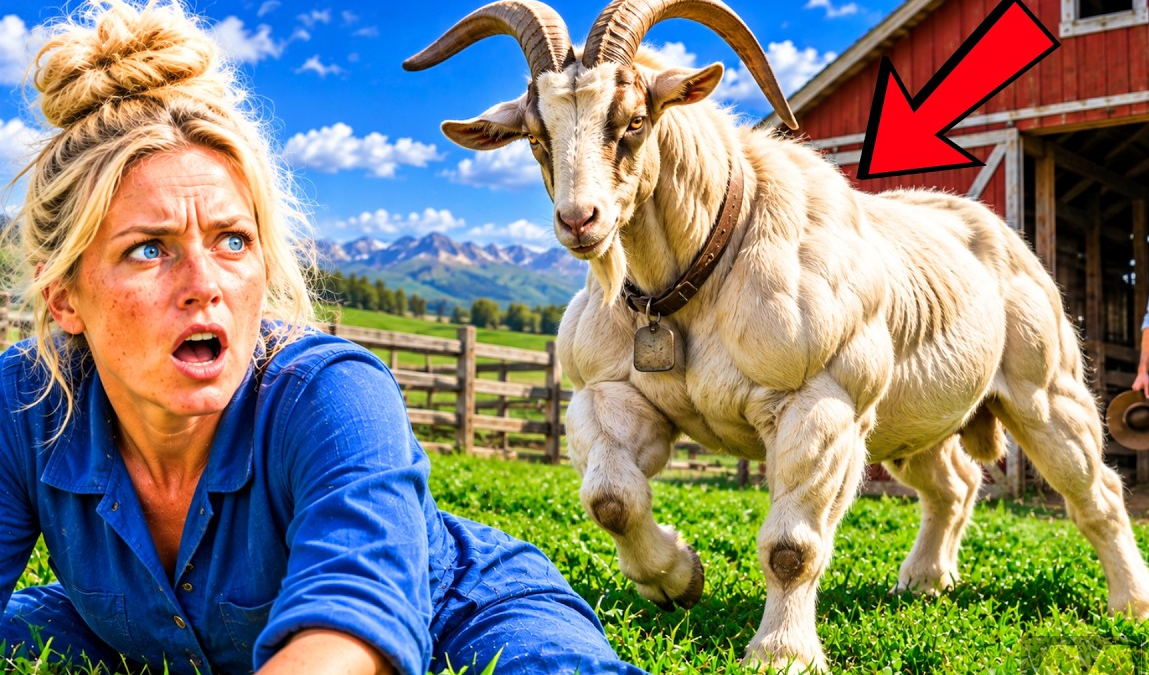
Texas, 1935. The six goats stood in the dusty Amarillo yard like animals that had arrived from a place nobody around them understood.
The men gathered near the fence had spent their lives around livestock, and they knew what a good animal looked like.
They knew strong legs, healthy coats, wide bodies, and productive stock. But these goats did not fit into any category they recognized.
That was the reason they were still there. Nobody had wanted them. Six small white and cream-colored animals with tan markings on their faces had been sitting behind the sale pens while buyers walked paSt. They were not large enough to impress someone looking only for size.
They were not familiar enough to inspire confidence. Their appearance created more questions than answers.
But Dela Marsh saw something different. She saw the shape of their bodies. She saw the unusual muscle development in their hindquarters.
She saw the strong frame beneath their compact size. She saw the possibility hidden inside animals that everyone else had already decided were strange.
The two bucks carried themselves with a strength that seemed impossible for their size. The four does had deep bodies and unusually developed udders.
They were not built like ordinary goats from Texas. They were built for something else.
Dela knew because she had spent months searching for something else. She had read agricultural records from New Zealand.
She had studied reports, production numbers, and breeding information while everyone around her focused only on surviving another difficult season.
She understood that the animals standing in front of her represented an opportunity most people would never notice.
The price was 44 dollars. She paid it immediately. People around her wondered why she would spend that much money on unfamiliar goats when every dollar mattered.
But Dela Marsh had learned that the most valuable opportunities rarely announced themselves clearly. Sometimes they stood quietly in a dusty yard, waiting for someone willing to look closer.
The question was, what had Dela seen that everyone else had missed? The goats came from a New Zealand rancher who was closing his operation outside Amarillo on a Thursday in April of 1935.
The sale was not supposed to be memorable. It was simply another livestock dispersal in a region where farmers had become careful with every decision.
Money was limited. Feed costs mattered. Every purchase needed a reason behind it. Most buyers walked through the pens looking for familiar animals.
They wanted things they understood. Dela walked through looking for something different. She had not come to the sale hoping to find these goats.
She had come because she had spent the previous five months searching for a livestock opportunity that could work on her seventy-five acres in Potter County.
Her farm was not failing because the land lacked potential. It was failing because the old methods were no longer enough.
The farmhouse needed repairs. The west wall needed attention. The mortgage had become a constant concern.
Every month required another calculation. Dela had learned to calculate everything. How much feed cost.
How much milk brought. How much meat sold for. How much effort produced the greatest return.
That habit had led her to the New Zealand agricultural records. The information had appeared in a University of Texas agricultural journal during the winter of 1934.
It described a goat breed developed in New Zealand called Kiko. The animals had been created through generations of careful selection, combining hardy mountain goats with dairy breeds chosen for production.
The results were unusual. They were strong. They were efficient. They produced both meat and milk at levels far above ordinary expectations.
The reports described animals capable of producing six to eight pounds of milk daily with approximately four and a half percent butter fat.
They also described meat production with significantly higher dressed yields compared with standard goat breeds.
Dela had read those numbers several times. Then she had started looking for the animals.
It took months. But when she finally saw the six goats standing in the Amarillo yard, she knew immediately.
The records were not just numbers anymore. They were standing in front of her. The two bucks were compact but powerful.
Their bodies were dense and muscular. The does carried themselves with the confidence of animals built for difficult environments.
Dela studied them quietly. One of the nearby farm hands watched her. “Something wrong with those animals?”
Dela looked back at him. “No.” She did not explain. She had learned that explaining a plan before proving it rarely changed anyone’s opinion.
She paid the 44 dollars. The goats were loaded into borrowed crates in the back of a truck, and Dela drove them back toward the Marsh farm.
During the trip, she kept looking in the mirror. The animals were calm. They were not nervous.
They were not acting like unfamiliar animals being transported to a new place. They seemed to be studying everything around them.
When she reached home, she placed them in the north pen she had rebuilt the previous week.
The goats stepped out and immediately began exploring. They moved differently from the animals Dela had known before.
There was no frantic movement. No wasted energy. They walked with purpose. They checked the boundaries.
They examined the space. Dela leaned against the fence. “This is what the numbers look like in motion,” she said quietly.
The next person to see them was Harlon Voss. Harlon was the county livestock agent and had worked with animals for fourteen years.
He was not easily surprised. He had seen unusual animals before. He had seen poor breeding decisions.
He had seen people misunderstand livestock. But when he arrived at the Marsh farm the following Tuesday, he stood at the fence for nine minutes without saying anything.
One of the does approached the rail. Harlon looked at the animal carefully. The body structure.
The muscle. The udder development. The compact frame. He looked confused, not because something was wrong, but because something was different.
“What breed?” “Kiko,” Dela said. “Never heard of them.” “New Zealand breed.” Harlon looked back at the goats.
“I have been doing this work for fourteen years.” “I know.” “And I have never seen a goat built like that.”
Dela nodded. She expected that response. She explained the breed. The meat production. The milk production.
The potential market. Harlon listened carefully. Then he began doing the same calculation she had done months earlier.
The difference was visible on his face. These were not ordinary goats. They were an opportunity.
“Both meat and milk?” He asked. “Yes.” “That is unusual.” “That is why I bought them.”
Harlon looked at her. Most people would have bought the animals first and figured out the plan afterward.
Dela had done the opposite. She had built the plan before she bought anything. “You had this figured out before you found them.”
“I had six months before I had 44 dollars.” That answer stayed with him. Over the next few weeks, word spread.
Neighbors stopped by. Some were curious. Some were skeptical. Some simply wanted to understand why Dela had brought unfamiliar goats into Potter County.
Dela listened politely. She did not argue. She knew time would answer better than she could.
Then Amos Greer arrived. Amos stopped at the farm gate on a Tuesday morning in June.
He had worked livestock in Potter County for nine years. He moved animals between operations, evaluated stock, and knew almost every common breed in the area.
When he saw the goats from the road, he stopped because he could not identify them.
He stood at the gate with his arms resting on the top rail. The goats moved through the pen.
Their bodies were compact. Their movements were quick and deliberate. The nearest doe turned, and Amos noticed the same thing everyone eventually noticed.
The hindquarters. The muscle. The strength. The unusual balance between size and production. Dela walked out from the barn.
“Amos Greer.” He looked toward her. “You know who I am?” “Everyone knows everyone around here.”
He looked back at the goats. “What are those?” “Kiko goats.” “Where are they from?”
“New Zealand.” He was quiet. “I have never seen one.” “There are fewer than forty in Texas.”
Amos studied the animals again. “What kind of production?” Dela answered immediately. “Fifty-eight to sixty-two percent dressed weight in lean cuts.”
He calculated quickly. “And milk?” “Six to eight pounds daily. Four and a half percent butter fat.”
Now he looked at her. Not the goats. Her. “That is both meat and milk.”
“Yes.” “That is unusual.” “That is the breed.” He looked back at the animals. “Can I come in?”
Dela opened the gate. Amos walked through and examined the goats carefully. He checked their legs.
Their feet. Their eyes. The bucks. The does. He asked about feed. Breeding. Parasite resistance.
Heat tolerance. Dela answered every question. When he finished, he stood quietly. “The parasite resistance is probably the biggest advantage.”
“I know.” He looked at her. “You knew that before you bought them?” “Yes.” A small change crossed his expression.
Not surprise exactly. Recognition. “You had a priority liSt.” “I had research.” Amos nodded. He understood the difference.
Research was why she was standing there with six unusual goats instead of six expensive mistakes.
He came back the following Thursday. There was no livestock reason. No delivery. No business appointment.
He simply arrived. Dela had already made coffee. She left a cup on the fence rail.
Amos picked it up without comment. And that became the beginning. He returned twice a week.
Sometimes he helped with the work. Sometimes he simply stood beside the pen and watched.
He helped build the new milking station. He carried milk cans to the road. He repaired the north gate when the hinge began pulling loose.
He never acted like he was saving her. He simply noticed what needed doing and did it.
Dela noticed that. She noticed everything. By July, the Westover cheese contract began. Six quarts of morning milk every day.
Twenty-eight cents per quart. The first payment arrived on the fifteenth. Dela placed the check into the account she had opened earlier that year.
She looked at the number. Then she wrote one word in her ledger. “FirSt.” The first meat sale came in AuguSt.
Three market-ready goats went to a restaurant buyer from Amarillo. The buyer had heard about them through the Westover cheese operation.
He paid the premium price without negotiation. Amos helped load the animals before sunrise. After the buyer left, Amos stood beside the empty pen.
“He will come back.” Dela looked at him. “You know that?” “He will send someone else firSt.”
“Why?” “Because buyers always want to know if something unusual is real.” He looked toward the road.
“Then he will come back himself.” Dela nodded. She knew he was right. Amos looked back at the herd.
“What is next?” Dela answered immediately. “The first kids arrive in October.” She looked at the goats.
“After that, the operation changes.” And she was right. Because October would bring the moment when the numbers she had trusted became something everyone could see.
Disclaimer: This content may be created by Al for entertainment purposes. Any resemblance to real persons, events, or places is coincidental.








