She Bought Dying Bullfrog Tadpoles Nobody Believed In… Buyers Drove From Three States
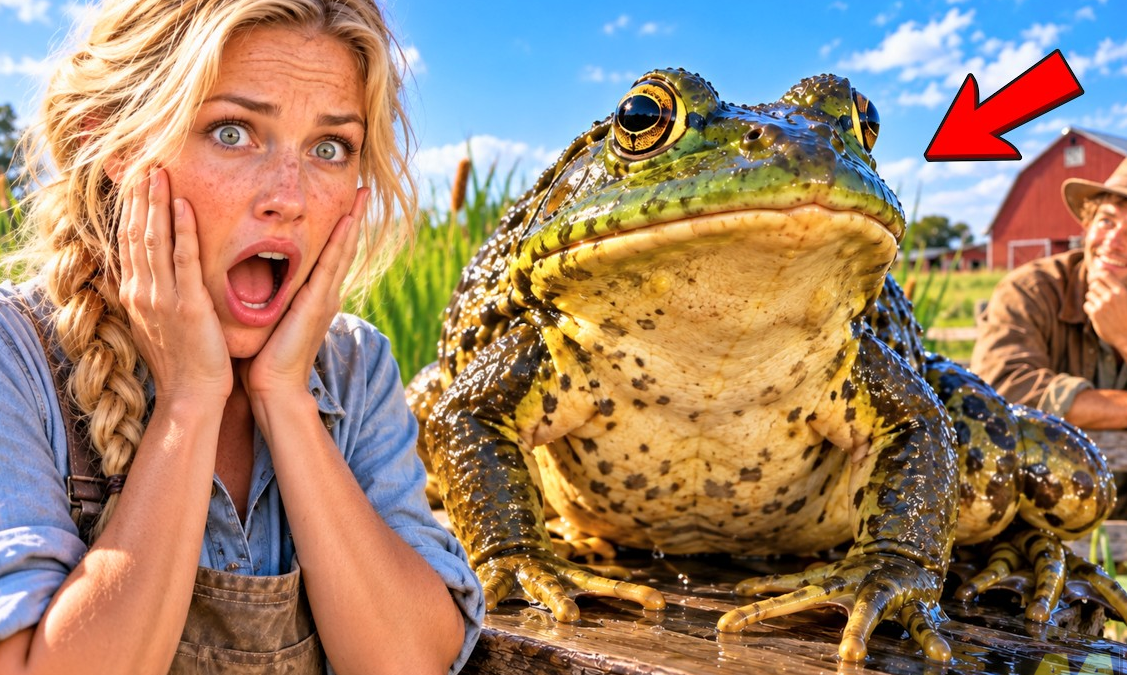
The crate of tadpoles cost forty cents on a Saturday morning in May of 1934, and Bess Harlo bought it because the man selling them had already decided they were worthless.
The wooden crate sat in the back of a peddler’s truck with two inches of ditch water sloshing inside it, black comma shaped tadpoles twisting through the cloudy water in hundreds of tiny movements.
The peddler had come to Barton County hoping to sell breeding stock to farmers, but the canning outfit in Louisiana that had promised to buy the grown bullfrogs had gone under in March.
Now he wanted nothing more than to leave Missouri without hauling a crate of water behind him.
Bess had come into town for chicken wire. She had eleven dollars in the tin box beneath the flower bin at home, a farm that needed repairs, twelve acres of useless standing water behind the house, and enough wheat to keep the place operating but not enough to make her feel as though she were building anything.
Then she saw the tadpoles. The peddler told her they needed live food, took two or three years to reach value, and required more patience than most people possessed.
Bess looked at the crate, then thought about the twelve acres that had been sitting unused since 1928.
Forty cents was not much money, but two years was a long time to wait for an answer.
So why did Bess Harlo believe that a crate nobody wanted might become the one thing her farm had been waiting for?
Bess carried the crate home balanced on the seat beside her, one hand on the steering wheel and the other steadying the wooden slats whenever the wagon struck a rut.
Every bump sent the ditch water sloshing against the sides. By the time she reached the Harlo place, the water had spilled onto the floorboards twice.
She did not mind. The crate had cost forty cents. That left ten dollars and sixty cents in the tin box.
She could live with that. The Harlo farm sat beyond the county road where the wheat fields gave way to lower ground.
Forty acres of it produced wheat, though never enough to make the work feel generous.
The soil had suffered through the dry years, and the farm had suffered with it.
Bess had learned not to expect much from the sky. The twelve acres behind the house were different.
Her father had once called the low ground a pond waiting for a reason to exiSt. Then the old mill pond had filled with silt, the water spread into the back forty, and the whole section became a stretch of cattails, mud, shallow pools, and standing water that changed shape with every season.
By 1934, nobody called it a pond anymore. They called it the slew. Bess had been looking at it for two years.
She was twenty four and had been running the farm alone since the fall of 1932.
Her father had gone out into the east field one afternoon and never returned to the house, leaving behind unfinished work, an old mule, several stacks of agricultural bulletins, and a daughter who had suddenly become responsible for every acre.
The mule had remained patient beside him, waiting for instructions that never came. Bess had walked home from the cornrows that day with the feeling that the farm itself had become larger.
Not larger in acres. Larger in responsibility. She had learned quickly. She learned which repairs could wait until winter.
She learned which ones could not. She sold eggs on Fridays, traded cream when the price was worthwhile, mended harness rather than replacing it, and kept the wheat accounts in her father’s old notebook.
She had also learned that a farm could remain solvent without ever moving forward. That was what bothered her moSt.
Every year began with work and ended with the same work waiting. She needed something that did not depend entirely on wheat.
That night she placed the crate in a wash tub on the kitchen floor. The tadpoles moved through the water in slow black strokes.
Bess lit the lamp, opened one of her father’s agricultural bulletins, and searched through the pages until she found what she remembered.
Bullfrog Culture for Farm Ponds. The bulletin was dated 1928. She had read it years earlier, but now she read every line again.
The writer did not make the business sound easy. That was what caught her attention.
The bulletin explained that bullfrogs required time. They required deep water. They required a steady supply of live food.
They needed room along the shoreline, because mature males guarded territory. A pond had to be deep enough that winter ice did not reach the bottom.
A farmer needed patience. Most importantly, the bulletin warned that many people entered the business expecting quick returns.
Bess turned the page. The writer recommended a minimum depth of six feet. Bess looked through the kitchen window toward the slew.
Six feet. That meant work. She read further. The bulletin explained that a grown bullfrog could consume a considerable amount of live food while putting on weight.
Crickets, minnows, and other moving creatures could become part of the feeding system. The pond itself could provide some of the supply if managed correctly.
Then she found the paragraph that interested her moSt. A farmer should identify a real buyer before investing heavily in the enterprise.
Bess closed the bulletin. She had no buyer. She had twelve acres of low ground.
She had a crate of tadpoles. And she had two years. She smiled slightly. That did not seem like a bad beginning.
The following Tuesday, Judah Kfax appeared at the fence. He had been appearing at the fence regularly since the spring after her father was gone.
Judah owned eighty acres north of the Harlo place, and their properties shared a drainage ditch that Judah believed required constant attention.
Bess had noticed that the ditch seemed to function perfectly well whether Judah was standing beside it or not.
He leaned against the fence post with his forearms resting on the top rail. “I heard you bought something from the peddler,” he said.
“Tadpoles.” He looked toward the house. “Bullfrogs?” “If I do it right.” Judah remained quiet.
He was lean, sunmarked, and usually looked as though he had been working since before sunrise.
His sandy hair had darkened at the roots, and his eyes were the color of creek water over stone.
“The Cole Pepper boy tried frogs three summers back,” he said. “I know.” “Bought stock from a mail order company.”
“I know.” “Lost the whole lot when the pond froze.” “He didn’t dig deep enough.”
Judah looked at her. “You’ve read about it?” “I read the bulletin.” “All the way through?”
“Twice.” That answer made him reconsider whatever he had intended to say. He looked toward the twelve acres.
“The ditch needs clearing on my side.” “It cleared itself in April.” “I thought it needed work.”
“I walked it Sunday.” Judah nodded. The conversation had reached one of those places where neither person wanted to admit the other had won.
He glanced toward the house again. “I’ll come Thursday.” “For what?” “If Delbert Cage brings the dredge, somebody ought to help.”
Bess studied him for a moment. “Suit yourself.” He left. She watched him walk north along the fence line.
Then she went inside and fed the tadpoles. On Thursday, Delbert Cage arrived with the dredging machine.
Judah arrived with him. Bess had already marked the first section of the slew with stakes.
She had spent two evenings measuring the ground and another evening studying the bulletin. Six feet.
She intended to reach six feet. The work took days. Delbert operated the dredge. Judah cleared brush and hauled debris.
Bess worked with a measuring pole she had made from an old broom handle and a nail.
The first section of the slew slowly changed shape. Mud came out. Cattails came out.
Roots came out. Then clear water began to collect in the deeper sections. By the following Tuesday, they had four acres of water reaching six feet at the deepest points.
Bess stood at the edge with her notebook. Four acres. Six feet. Forty cents worth of tadpoles.
It looked less foolish now. She carried the crate to the deepest section on a warm afternoon in late May.
When she tipped it, the tadpoles disappeared into the water almost instantly. Black commas scattered through the shallows and vanished among the vegetation.
Bess stood there for a long time. She had no way of knowing how many would survive.
She had no way of knowing whether the market would still exist in two years.
She had no way of knowing whether anyone would buy what she was raising. But she knew something about farming.
You could not control the result. You could control whether you prepared properly. So she began with food.
The bulletin had been clear about that. A frog farm depended on a steady supply of moving food.
Bess built cricket boxes in the north corner of the barn from scrap lumber. She lined them with damp burlap and fed them cornmeal and bran.
She learned how quickly they multiplied, how easily they failed, and how important it was to keep the boxes dry enough to prevent problems while still maintaining enough moisture.
She also began collecting minnows. Every Saturday she walked the drainage ditch with a bucket and net, bringing small fish back to the pond.
Her father’s old wheat notebook became something else. She turned to the last pages and wrote a new heading.
Pond expenses. Under it she wrote lumber. Wire mesh. Feed. She did not write down the value of her own labor.
There was no number large enough to make sense of it. By July, the tadpoles had legs.
Bess began seeing tiny froglets along the mudbank. They were awkward creatures, halfway between what they had been and what they would become.
She counted them each Sunday evening. Not every tadpole survived. The bulletin had warned her.
The larger young frogs sometimes consumed the smaller ones. Some vanished beneath the cattails. Others disappeared during the hottest weeks.
Bess adapted. She divided sections of the pond with brush and chicken wire. She watched the shoreline.
She learned where the smaller frogs gathered and where the larger ones preferred to sit.
By September, she estimated there were more than three hundred young frogs spread across the four acres.
At dusk, the pond began making a sound she had never heard on the Harlo place before.
A deep chorus rolled across the water. Bess would stand on the back porch and listen.
The farm had always been full of ordinary sounds. Wind through wheat. The old mule moving in the stall.
Buckets. Hinges. Chickens. Now there was another sound. The frogs. She began learning them the way she had once learned wheat.
Not by reading about them. By watching. She knew which areas stayed warmer. She knew where the smaller frogs gathered.
She knew which banks dried too quickly. She knew when the minnows needed replenishing. And she knew that the cricket boxes were the part of the operation that never stopped.
Every day they needed attention. Every day they needed food. Every day Bess had to make sure the supply was growing faster than the frogs were consuming it.
She built three more boxes before winter. Then another. Her notebook filled with measurements. By the time the first hard cold arrived, she had six boxes working.
The frogs disappeared into the deeper water. Bess had built the pond to six feet because the bulletin had told her to.
Now she found out whether six feet was enough. Winter passed. When spring came, she walked the shoreline.
At first she saw nothing. Then she saw movement. One large frog sitting in the reeds.
Then another. Then several. They had made it. Bess returned to the house and opened the notebook.
She wrote one sentence. First winter successful. Then she sat at the kitchen table and allowed herself to smile.
The second season began differently. These were not purchased tadpoles. These were her frogs. The adults began breeding.
Soon the pond held another generation. Bess no longer needed the peddler. She no longer needed to buy breeding stock.
The pond had begun producing its own future. The first person in Barton County to hear about the operation was Roy Fenwick at the feed store.
That was unavoidable. Nothing unusual stayed private in Barton County for long. Roy told customers that frog farming was a foolish business.
He said the Southern canning companies had been struggling. He said two years was too long to wait.
He said a woman running a farm alone should not spend her time raising creatures that most people preferred not to think about.
Bess heard about all of it. She never answered. One afternoon Roy said it directly while she stood at the counter buying more wire mesh.
“Still wasting money on those frogs?” “I’m buying wire.” “For frog boxes.” “Yes.” “You really think this is going somewhere?”
Bess placed the money on the counter. “I think I’m going to find out.” Then she took the wire home.
The second summer proved why patience mattered. The frogs that had survived their first winter grew quickly.
By the warm months of 1935, many had reached marketable size. Bess measured the largest ones.
Twenty inches from nose to the end of an outstretched leg. Heavy bodied. Strong. Healthy.
She had spent a year building the system that supported them. Six cricket boxes. Minnows in the pond.
Deep water. Protected shoreline. Breeding stock. Now she needed a buyer. The opportunity came from an advertisement Judah found in a restaurant trade paper.
He brought the paper to the fence one afternoon. “Witchah,” he said. Bess took it.
A hotel supplier was looking for live bullfrogs. “How did you find this?” “I was at the library.”
“You looked for frog buyers?” Judah shrugged. “You needed one.” Bess read the advertisement again.
She wrote the supplier. Two weeks later, a letter arrived. The supplier wanted to know how many dozen she could provide.
He wanted regular shipments. He wanted them alive when they arrived. Bess read the letter three times.
Then she went outside. The frogs were calling across the pond. She looked at them and said quietly, “All right.”
The first shipment went out in July. Six dozen bullfrogs. Bess packed them carefully in wet burlap and shaved ice, using a crate lined with damp moss.
She drove them to the rail depot in Great Bend and watched the freight leave for Witchah.
Then she went home. Waiting was harder than she expected. The check arrived inside ten days.
Eighteen dollars. Bess held it at the kitchen table. She did not move for several minutes.
Then she took out her father’s pencil. Forty cents for the original tadpoles. Eighteen dollars from the first shipment.
The breeding stock remained. The pond remained. The next generation was already growing. She checked the arithmetic twice.
Then she checked it again. She placed the pencil down. For the first time in years, the farm was producing something that could grow without requiring her to start over each season.
Roy Fenwick did not apologize. Bess had not expected him to. But he stopped calling the project a foolish business.
The following March, he ordered wire mesh for cricket boxes of his own. Bess heard about it and said nothing.
That was enough. Judah came to the fence the evening the check arrived. By then, the drainage ditch excuse had become unnecessary.
Neither of them mentioned it. Bess walked outside holding the check. She handed it to him.
He read it. Then he read it again. “Eighteen dollars?” “Six dozen.” “And you’ve got more?”
“Hundreds.” He looked toward the pond. “How many?” “Enough that I stopped counting every single one.”
Judah smiled. “That sounds like progress.” Bess folded the check and put it back in her pocket.
“The breeding frogs will lay again.” “I know.” “They don’t need replacing.” “I know that too.”
They stood quietly. Then Judah said, “I’ve been thinking about the north section of my land.”
Bess waited. “The low ground along the creek floods every spring. Wheat doesn’t do much there.”
She looked toward him. “You want to drain it?” “No.” That surprised her. “I was thinking about another pond.”
Bess said nothing. Judah continued. “If a person wanted to expand.” “Is that an offer of land?”
“And labor.” “For how long?” “As long as the ponds need it.” She studied him.
“You’d be working for frogs.” “I’d be working with you.” The answer was simple. That made it harder to dismiss.
By the fall of 1936, there were two ponds. The second one sat on the low ground along Judah’s creek.
They had planned it together. Bess measured the depth. Judah marked the banks. The dredging took weeks.
When it was finished, the second pond held deep water and a wide shoreline. The two operations became one.
Bess shipped to Witchah twice a month during the warm season. A second buyer in Salina began ordering after the first supplier mentioned her operation to a colleague.
The cricket boxes increased to eleven. Her notebook became thicker. What had once been a single line reading forty cents now filled several pages with shipments, receipts, feed costs, wire, lumber, transportation, and equipment.
The numbers kept growing. So did the frogs. A buyer from Hutchinson eventually offered Bess a large sum for the established breeding stock.
It was more money than she had ever received from a single farm transaction. She turned it down.
The buyer tried again. She turned him down again. The breeding stock was the heart of the operation.
Selling it would have meant taking the easiest money and surrendering the system that created the next year’s money.
Bess wrote the offer in her notebook. She labeled the column Information. Judah found that amusing.
“You really write everything down.” “Everything worth remembering.” “What about people?” She looked at him.
“Sometimes.” He laughed. By then, he no longer came to the fence every evening. He came to the kitchen.
Sometimes he brought account papers. Sometimes he brought a survey. Sometimes he brought nothing. On those evenings, they drank coffee.
They talked about the ponds. They talked about the wheat. They talked about the weather.
Sometimes they sat quietly without needing to fill the room with conversation. Bess noticed the difference.
The farm had changed. Not just because the ponds were full. Not just because the frogs were producing income.
The place no longer felt as though she were simply protecting something her father had left behind.
She was building something of her own. One cold evening in November, Bess stood at the edge of the original slew.
The water was dark beneath the fading light. The frogs had become quiet for the season.
Behind her, the house windows glowed. Judah came down the path carrying two mugs. He handed one to her.
She wrapped both hands around it. For a while neither spoke. Then Bess looked across the water.
“Two years.” Judah looked at her. “Two years for what?” “To find out whether forty cents was worth anything.”
He smiled. “Was it?” Bess looked at the pond. She thought about the peddler’s truck.
The wooden crate. The ditch water. The black tadpoles moving through it. She thought about the old bulletin.
Six feet of water. Live food. Patience. She thought about the first winter. The first spring.
The first shipment. Eighteen dollars. Then the second pond. The eleven cricket boxes. The buyers in Witchah and Salina.
The breeding stock that no longer needed to be purchased. She looked at Judah. “It was enough.”
He nodded. They stood together beside the water. After a moment, Bess said, “Come to supper Saturday.”
“I can do that.” “Bring the creek bottom survey.” “Why?” “If we’re going to build a third pond, I want to know where the water actually wants to go before we decide where we want it to.”
Judah looked at her for a long moment. Then he smiled. “Saturday.” Bess turned toward the house.
Behind them, the two ponds stretched across the dark ground, quiet now but full of the future she had spent two years building.
The peddler had seen a crate he did not want to carry. Bess had seen twelve acres of water nobody else knew what to do with.
Between those two things was forty cents, a worn agricultural bulletin, a deep pond, eleven cricket boxes, and enough patience to wait for something small to become something valuable.
She had not needed the farm to change overnight. She had only needed to give one overlooked idea enough time to grow.
And on Saturday, there would be another survey on the kitchen table, another conversation about water, and perhaps another piece of unused ground waiting for someone willing to look at it differently.
Disclaimer: This content may be created by Al for entertainment purposes. Any resemblance to real persons, events, or places is coincidental.








