She Bought a Small Spanish Buck the County Mocked… His Kids Hit Market Weight in Half the Time
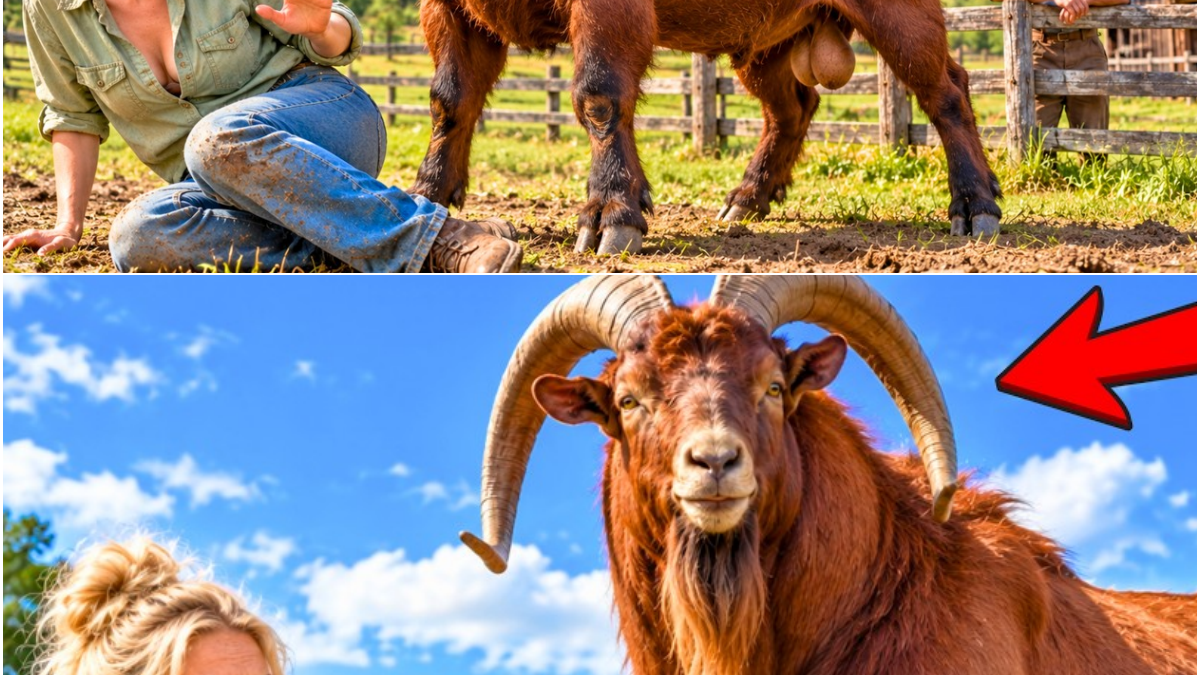
On a Saturday morning in March of 1934, Ruth Callaway spent two dollars on an animal that everyone else at the Comanche County dispersal sale had already decided was worthless.
The buck stood in the culling pen, smaller than the other Spanish goats, his reddish brown coat dulled by dust and his compact body giving him the appearance of a poor investment.
The auctioneer’s assistant had practically given up trying to attract a bidder. Nobody wanted to spend good money feeding a runt that might never produce strong offspring.
But Ruth had seen something the others had overlooked, and she could not quite explain why it mattered so much.
She had come to the sale for fence wire and a used harrow tooth. She had no intention of buying livestock, much less a buck that looked unlikely to earn his keep.
Yet when she studied his broad chest, his thick hindquarters, and the steady black eyes watching her from the pen, she remembered the old notebooks waiting in her attic.
They contained a story about a forgotten strain of Spanish goats, a breeder near the Red River, and a trait that might have vanished before anyone understood its value.
Could this little animal be the last living piece of something her grandfather had spent years trying to preserve?
Ruth paid the two dollars, carried him home, and set in motion a chain of events that would change her ranch, her future, and the way an entire county looked at a seemingly ordinary goat.
Ruth was twenty-five years old, and she had been managing the Callaway Place alone since the spring of 1932.
The property covered eighty acres in the foothills of the Wichita Mountains, where scrub oak, cedar, mesquite, and rocky soil made farming difficult.
The land had never been especially suited to row crops. Her family had always relied on cattle and a small herd of Spanish brush goats, animals that could find nourishment in places where cattle struggled to graze.
The goats were not the main business, but they were essential to it. They cleared brush, opened grazing ground, and helped keep the pasture from becoming an impenetrable tangle.
Ruth had inherited eleven does along with the cattle, the equipment, and the outstanding note her father had carried through several difficult seasons.
She had also inherited something less obvious: her grandfather’s breeding notebooks. They had been stored in an old trunk in the attic, where they remained unopened until the winter before the sale.
Ruth had found them while sorting through family belongings and had initially assumed they were little more than a collection of old farm notes.
But the more she read, the more she realized that her grandfather had been recording observations that might still matter.
He had raised goats on the property since before statehood. His notebooks described animals he had seen and purchased, the results of particular pairings, the condition of offspring, and the differences between herds across the region.
His handwriting was cramped and economical, but his observations were unusually careful. One entry from 1911 mentioned a Spanish goat strain near the Red River.
According to her grandfather, those animals had heavier hindquarters and matured faster than the rangy brush goats common in Comanche County.
He had also written about a breeder named Ketchum, a man who had supposedly spent two decades selecting animals for those traits.
Her grandfather had purchased stock from Ketchum twice. The notebooks did not establish whether the characteristics had survived in later generations.
They did not say where the animals had gone, whether the line had been maintained, or whether ordinary breeding had diluted the traits beyond recognition.
Still, Ruth had been unable to forget the entries. She knew that her grandfather had not been a man to write down an observation without a reason.
He had recorded weights, dates, and breeding results with the patience of someone who believed that small differences could eventually reveal a larger pattern.
The little buck in the culling pen had reminded her of those pages. The assistant had called him small and unsuitable for breeding.
Ruth saw the same short stature, but she also saw a chest that seemed unusually deep and a rear frame carrying more muscle than she expected from an ordinary runt.
She did not know whether those features meant anything. She only knew that the animal deserved a closer look.
Two dollars was not a fortune, but it was not an amount she could waste carelessly.
Every purchase had to serve a purpose on the Callaway Place. Yet the buck represented a possibility she could not easily replace.
She loaded him into the truck on a bed of hay and drove home. The road crossed the same rough country she had traveled since childhood.
Rocky outcrops interrupted the pasture, and the scrub oak stood in scattered groups against the open sky.
Ruth kept glancing toward the buck in the truck bed, thinking about the old notes and the breeder whose name appeared in them.
She decided to call him Ketchum. When she reached the ranch, she settled him into a separate pen where she could observe him without disturbing the rest of the herd.
He moved through the enclosure with a calmness that surprised her. He was not timid, nor did he seem especially troubled by the unfamiliar surroundings.
He began grazing almost immediately. Over the next several weeks, Ruth watched him carefully. She compared his build with the other goats and studied the way he moved through the brush.
His body remained compact, but the more she looked, the more she noticed the unusual strength in his shoulders and hindquarters.
The buck seemed built for a different purpose than the ordinary Spanish goats she knew.
Most of the local animals were lean and rangy. Their long legs helped them travel through rough country, and their bodies reflected generations of adaptation to a landscape where forage could be scattered and difficult to reach.
Ketchum, by contrast, carried his weight low and close. His frame looked dense rather than stretched.
Ruth remembered another source that might help her understand what she was seeing. Among her father’s veterinary references was a government bulletin published by the Agricultural Extension Service in 1928.
It discussed improved meat-goat strains developing in Texas brush country. The bulletin described isolated groups of Spanish goats that had been selected for faster growth and greater meat production without losing their ability to survive on rough forage.
The language was more formal than her grandfather’s notes, but the underlying observations seemed remarkably similar.
Ruth took the bulletin to the kitchen table and read it again that evening. She marked the relevant passages and penciled Ketchum’s name and the Red River in the margin.
For the first time, she had a reason to believe that the buck might belong to a useful strain rather than simply being an unusually shaped animal.
Belief, however, was not proof. She needed offspring. In May, she selected four of her best does and introduced them to Ketchum according to the breeding schedule her grandfather had recorded.
She kept the buck separate from the main herd between pairings so she could track the dates and avoid confusing the results.
Spanish goats carried for approximately 150 days. Ruth wanted the kids to arrive in January, before the harshest part of winter had passed but early enough for them to grow strong before spring.
The timing required careful management. A cold spell could challenge young animals, and she had no intention of allowing her experiment to become an excuse for neglecting ordinary ranch duties.
She fed Ketchum separately through the summer, giving him a richer ration than the rest of the herd.
Cedar and mesquite browse could sustain a hardy goat, but a breeding buck needed additional nourishment if he was expected to sire a season’s worth of healthy kids.
Ruth bought cottonseed cake when she could afford it and watched his condition closely. She also checked his feet every month.
Foot problems were among the few recurring vulnerabilities she had encountered in Spanish goats, and she wanted to catch any trouble before it affected his health or usefulness.
Ketchum remained sound. By late summer, his chest and shoulders had filled out enough that his proportions were becoming difficult to dismiss.
Even Daniel Witcom, who worked at the local co-op and had heard about Ruth’s purchase, slowed his truck one afternoon to look at the buck through the fence.
He did not stop to ask questions. Daniel had already made his opinion clear. Within a week of the sale, the story had traveled through Comanche County.
Ruth had purchased a runt for two dollars when she should have spent the money on wire.
Daniel had told several people that a small buck would produce small kids, and the remark had been repeated often enough to become a familiar joke.
Ruth did not argue. She had learned that trying to correct every opinion in a small community could consume an entire day without changing anyone’s mind.
She had work to do, and the work mattered more than the talk. She fed the herd, maintained the fences, checked the water, and watched the does as they moved toward kidding season.
In the evenings, she returned to her grandfather’s notebooks. Sometimes she read the same passages several times, trying to understand what he had observed and what he had left uncertain.
His notes were not a formal breeding manual. They were the working records of a man who had spent years studying animals under practical conditions.
That made them valuable. He had written about body shape, grazing habits, growth, and the results of particular pairings.
He had also recorded setbacks, including offspring that failed to inherit the characteristics he wanted.
Ruth began to understand that preserving a useful trait was not simply a matter of finding one impressive animal.
It required a system, patience, and records accurate enough to distinguish real patterns from hopeful impressions.
She would need more than a good-looking buck. She would need evidence. Owen Pharaoh had been mending the shared fence along the county roadside when Ruth first drove past with Ketchum in the truck bed.
He owned land adjoining the Callaway Place and ran cattle on his own acreage. Since Ruth’s father had been gone, Owen had appeared at the boundary fence with unusual regularity.
The section he worked on rarely needed much attention, but he seemed to find reasons to inspect it anyway.
Ruth had noticed. She had not asked why. Owen was a quiet man who rarely explained himself unless someone asked a direct question.
He had a practical manner and a habit of studying things before offering an opinion.
When Ruth passed him with the buck, he straightened from the wire and looked into the truck.
“What is that?” “Spanish buck from the Comanche County sale.” “He’s small.” “I know.” Owen looked at the animal for another moment.
Ruth continued driving. “I know what he might be, too,” she said. Owen did not answer, but she noticed that he watched the truck until it disappeared down the road.
By the following spring, Ketchum’s first kids had arrived. The first two were bucklings born to Ruth’s strongest doe.
She was in the barn at four in the morning with a lantern when they arrived, and she recognized something unusual almost immediately.
Ordinary Spanish kids generally stood within twenty minutes of birth. They were often thin-legged and unsteady, and their growth tended to be gradual.
These two were on their feet in twelve minutes. Their early strength was encouraging, but Ruth’s attention went to their hindquarters.
Even at that young age, the bucklings appeared unusually thick through the rear. Their bodies were compact, and their shoulders seemed more developed than she expected.
She wrote everything down. Birth weights. Measurements. Dates. Observations about their first attempts to stand and feed.
She compared them with the records she had kept for the ordinary Spanish kids born in previous seasons.
The first few weeks brought more encouraging signs. At six weeks, the two bucklings were tracking twenty percent heavier than the kids she had raised from her ordinary does over the previous three years.
The other offspring from Ketchum’s pairings were showing similar characteristics, although the traits were less pronounced in some animals.
The pattern was not identical in every kid, but it was consistent enough to justify continued study.
Ruth began to suspect that Ketchum carried something more substantial than an isolated physical peculiarity.
The buck’s offspring were growing faster and developing heavier bodies while retaining the grazing habits that made Spanish goats useful in rough country.
If the pattern continued, the animals might offer a practical answer to one of the county’s biggest problems.
The land was dry. Grass was limited, and ranchers were searching for livestock that could produce more market weight without demanding better pasture than the region could provide.
Ruth had spent her childhood watching her family manage the same challenge. Now she had a possible solution standing in her barn.
Owen began visiting the fence more often that spring. One Thursday morning in March, he watched the young goats working their way through the cedar break.
He remained silent for a long time, following the animals with his eyes. Finally, he spoke.
“Those aren’t ordinary Spanish kids.” “They’re Spanish goats,” Ruth said. “Just not the kind everyone around here is running.”
She explained the notebooks, the old purchases, and the Red River strain. She told him about Ketchum’s build and the way the offspring were developing.
Owen listened without interrupting. “My grandfather bought into this line twice,” she said. “He never told anyone what he had because there wasn’t a market for it yet.
He kept the records, but he never had enough animals to prove the trait would hold.”
She nodded toward the young goats. “There’s a market for it now. Every rancher in this county is looking for something that can put on weight faster with less grass.”
Owen studied the herd again. “How many does are you planning to breed to him in the fall?”
“More than four.” “Then you’ll need the far pasture fenced properly. If you want to protect the line, you can’t let the improved stock mix with the ordinary herd by accident.”
Ruth considered the suggestion. She had been thinking the same thing. “I could use help with that fence.”
“I can bring posts on Saturday.” He arrived the following weekend with cedar posts he had cut himself and a roll of wire.
He did not ask for payment, although Ruth offered to settle the cost of the materials.
They worked through a cold March afternoon, setting posts and tightening wire. The job required more labor than either had expected, but they finished the important section before sunset.
They talked mostly about the fence, the soil, and the best way to keep the goats separated.
Still, Ruth was aware of Owen’s presence in a way she had not been before.
He had spent two years finding reasons to be near her property. Now he was offering practical help with a project that could become the center of her business.
She wondered whether he understood how much that meant to her. By August, the results had held through another kidding season.
Ketchum’s offspring were reaching market weight in about five months, compared with the seven or eight months required by ordinary Spanish stock under similar conditions.
They were doing it on the same rough forage, moving through the same cedar and mesquite country that had always supported the breed.
Ruth had twenty-six kids on the ground by late summer. Fourteen showed the improved characteristics to a useful degree.
She had enough evidence to begin considering the next stage. She stopped discussing the herd casually in town.
She no longer needed to persuade people with explanations. The numbers, measurements, and animals themselves would have to do the convincing.
In September, a man named Foster Reams came to the ranch. He operated a cattle and goat business outside Lawton and had spent eleven years buying and finishing goats for the Fort Worth stockyards.
He had heard about Ruth’s animals through several people, each telling the story with slightly different details.
He arrived expecting to inspect an interesting herd. Ruth met him at the gate and led him through the pasture.
Foster spent twenty minutes observing the kids. He looked at their frames, their movement, and their condition.
He watched them browse through the brush and noted that they did not appear to need unusually rich forage to maintain their growth.
He asked about their ages. Ruth showed him the records. He read the measurements, then asked to see Ketchum.
She took him to the buck’s pen. Foster stood at the rail for a long time.
Ketchum was still compact, still shorter than many of the bucks Foster bought. But his chest was deep, his shoulders strong, and his hindquarters unusually developed.
Foster knew enough about livestock to understand that size alone did not tell the whole story.
“Where did this bloodline come from?” “Near the Red River. My grandfather bought into it in the twenties.
It scattered after that, and nobody kept it going pure until now.” “You think you’ve got the only concentrated stock of it in the state?”
“Likely.” Foster studied the buck again. Then he named a price for breeding rights. He wanted access to Ketchum during the fall season so he could breed him to selected does from his own operation.
He was not asking Ruth to sell the animal outright, but the offer was substantial.
It was more than four times what she could expect to earn by selling every kid on the Callaway Place at the current market weight.
Ruth listened carefully. Foster explained that he could offer even more if she wanted to sell Ketchum outright.
He could take the buck back to Lawton and introduce the line to a larger herd.
The proposal was sensible from a business perspective. Ruth knew what the money could do.
Her father’s note at the bank still weighed on the ranch, and a large payment would give her room to repair equipment, improve the property, and reduce the pressure of carrying debt.
But she also understood what she would be giving up. Ketchum was not simply a market animal.
He was the source of the trait she was trying to preserve. Selling him would mean surrendering control over the breeding program before she had established its future.
She looked at the buck, then at Foster. “He’s not for sale.” Foster did not seem surprised.
“Even at a price that would clear your father’s note?” Ruth had not told him the exact amount of the note.
The fact that he knew it suggested that word had traveled farther than she realized.
She took a breath and considered the offer. “A buck that produces once is worth what he’s worth once,” she said.
“A buck that keeps producing is worth what he’s worth every season for as long as he’s able.
And that number grows as more people understand what I’m offering.” Foster waited. “My grandfather made the mistake of keeping the bloodline secret because he thought that was the only way to protect it.
I’m not going to make the mistake of giving it away for one payment.” She explained that she would accept stud fees, but she wanted first choice of the offspring.
She intended to keep the strongest young animals for her own breeding program and retain control over the line’s development.
Foster considered the terms. He had arrived expecting to negotiate, but Ruth had made her position clear.
She was not refusing business. She was defining the kind of business she wanted. “That’s fair,” he said.
They shook hands. When Foster left, Ruth felt the weight of the decision settle over her.
She had turned down an offer that would have solved an immediate financial problem, choosing instead to invest in an opportunity that depended on years of careful management.
It was the same kind of decision her grandfather had faced, although he had never been able to see the potential value as clearly as she could now.
That evening, Owen was at the fence when Ruth came out to check the water trough.
She told him about Foster’s visit and the agreement. “Stud fees instead of a sale,” Owen said.
“That’s right.” “You’ll make more from him over five years than Foster’s offer would have paid outright.”
“That’s the idea.” Owen looked toward Ketchum’s pasture. “A trait like this doesn’t stay valuable if you sell off the source of it,” Ruth said.
“My grandfather understood that. He just didn’t have the numbers to prove it was worth protecting instead of hiding.”
“You’ve got the numbers now.” “Two years of them. Written down the way he would have wanted.”
She turned toward Owen. “I’m going to need help managing the breeding program properly if Foster is the first of several buyers.
I need to keep the pure line separate, maintain accurate records, and make sure the results hold up if the agricultural service ever wants to examine what we’ve got.”
Owen was quiet for a moment. Then he said, “I’ve got eighty acres running cattle.
I could shift part of it to goats if the numbers are what you say they are.”
“They are.” “Then I’d want more than a fence-mending arrangement if I’m putting acreage into this.”
Ruth studied him. She thought of all the times he had appeared along the boundary line over the previous two years.
She thought of the posts he had carried, the wire he had brought, and the quiet way he had begun to take an interest in the herd.
“What kind of arrangement did you have in mind?” “The kind that puts my name next to yours on something,” he said.
“The breeding records. The land eventually, if that’s a conversation you’re willing to have.” Ruth did not answer immediately.
She had been responsible for the Callaway Place for two years. She had learned to make decisions without waiting for someone else to approve them.
She was not about to combine her property and her work with another person simply because the opportunity looked promising.
But Owen had not asked her to surrender control. He was asking to build something together.
“Come to supper Saturday,” she said. “Bring your grandfather’s old cattle records if your family kept any.
If we’re combining a breeding program, I want to know what we’re both bringing to it before we write anything down.”
“Saturday,” Owen said. The corner of his mouth lifted into a small smile. Ruth returned to the house, thinking about the conversation as she prepared supper.
She had expected the breeding program to change her business. She had not expected it to change the shape of her future so quickly.
On Saturday, Owen arrived with a collection of records and a clean shirt. They spent the evening comparing notes, discussing acreage, and considering how they might organize the growing herd.
His records were not as detailed as Ruth’s grandfather’s notebooks, but they included useful information about forage, water, and the condition of cattle on his land.
Together, they began to see how the two properties might support a larger operation. They did not rush to make an agreement.
Instead, they decided to test the arrangement with a shared breeding season and a separate set of records.
If the results proved reliable, they would formalize the partnership. It was a practical beginning.
By the following fall, the concentrated Ketchum line had grown to thirty-one animals across both properties.
Ruth and Owen kept the does and bucklings sorted, maintained careful records, and tracked the offspring according to their parentage and observed characteristics.
The system required more work than either had anticipated. They had to keep separate pastures, monitor the breeding schedule, and ensure that each animal’s history was recorded correctly.
Ruth handled most of the written documentation, while Owen helped manage the land, the fencing, and the daily movement of the herd.
The work suited them. Ruth valued Owen’s patience and practical judgment. Owen respected the care she brought to the breeding program and never treated her records as a hobby or an unnecessary complication.
Their partnership grew from the same habits that had made the original experiment possible: observation, consistency, and the willingness to do the work even when nobody was watching.
Foster Reams returned with two additional buyers from the Texas side of the Red River.
Both had heard about the improved goats and wanted access to the breeding stock. They agreed to pay stud fees rather than purchase Ketchum.
Ruth maintained first choice of the offspring, and the buyers received access under clearly defined terms.
She recorded every pairing and kept copies of the agreements with her breeding notes. The business was becoming something larger than the Callaway Place.
The animals were still Spanish brush goats, hardy and adapted to rough country. What made them unusual was not a dramatic change in appearance, but the combination of faster growth, heavier bodies, and the ability to thrive on the forage available across the region.
The results mattered because they addressed a practical problem. Ranchers did not need an animal that looked impressive in a show pen if it could not perform under local conditions.
They needed livestock that could turn limited forage into marketable weight without requiring a complete change in how the land was managed.
Ruth’s goats offered evidence that such an animal could be developed from the stock already living in the region.
Her grandfather had suspected it. She had documented it. Now other ranchers were beginning to recognize it.
In November, Ruth paid off her father’s note at the bank in Lawton. She arrived in her good dress with the money in an envelope.
The loan officer checked the amount, completed the paperwork, and marked the note satisfied. Ruth had expected to feel triumphant.
Instead, she felt a deep quiet relief. For years, the note had been part of every decision.
It had influenced what she could buy, what repairs she could postpone, and how much uncertainty she could afford to tolerate.
Now it was settled. She walked out of the bank and drove home without stopping at the co-op.
There was nothing she needed to buy that mattered more than what she already had waiting on her own land.
Daniel Witcom heard about the payment within the week. He did not mention the two-dollar buck or the wire he had once advised her to purchase instead.
The next time Ruth came to the co-op for feed, he asked whether she would consider selling him a pair of doelings from the Ketchum line.
Ruth gave him the price. Daniel paid it without arguing. Neither of them brought up the old joke again.
The county’s opinion had changed, but Ruth did not spend much time thinking about the people who had once doubted her.
Their approval was not what had made the breeding program work. The notebooks had mattered more.
The careful records had mattered more. And the goats themselves had mattered moSt. On a cold evening in October, Ruth sat with Owen on the porch.
The animals were settling into the near pasture below them, their movements gradually disappearing into the dusk.
The air carried the dry scent of cedar and the faint rustle of brush. Beyond the pasture, the land stretched toward the low hills, much as it had when Ruth was a child.
The notebook lay between them on the porch rail. Its pages showed her grandfather’s cramped handwriting giving way to her own steadier script.
The records had become a bridge between two generations, connecting an observation made decades earlier with results that could now be measured and shared.
Owen looked at the notebook. “Two dollars,” he said. “Two dollars,” Ruth answered. “And a grandfather who wrote everything down and never told anyone why it mattered.”
Ruth smiled faintly. “You finished what he started.” “We’re finishing it,” she said. She did not correct herself, and Owen did not ask her to.
They sat quietly for a while. Ruth thought about the day she had found the buck in the culling pen.
She remembered the auction yard, the dusty coat, and the assistant’s casual dismissal. She remembered how easily she could have walked past him.
She had gone to the sale for wire and a harrow tooth. She had not expected to bring home an animal that would eventually support a new business.
But the decision had not been entirely a matter of luck. Her grandfather’s notebooks had given her a reason to look closely.
Her experience with livestock had helped her recognize the buck’s unusual frame. Her records had allowed her to test what she believed she saw.
The two dollars had opened the door. The years of work had carried her through it.
She also thought about how close the old bloodline had come to disappearing into ordinary breeding.
The original animals had been scattered across the region, their distinctive traits gradually diluted. Without the notebooks, Ruth might never have known what to look for.
Without Ketchum, the notes might have remained only a family curiosity. Without the offspring and the measurements, neither of them would have been enough to establish the value of the strain.
The achievement belonged to all of those pieces working together. Her grandfather had preserved the observation.
Ketchum had carried the trait. Ruth had recognized the possibility and built a program around it.
Owen had helped her expand the work beyond the limits of a single property. Now the breeding line was no longer dependent on one buck or one small herd.
It had enough animals, enough records, and enough interested buyers to give it a future.
“He’d have liked this,” Ruth said. Owen knew she meant her grandfather. “The fence line, the notebook, the goats settling in for the night.”
“He would have liked knowing the numbers finally proved what he suspected.” Ruth looked down at the open pages.
“He spent twenty years knowing what he had and never having a way to prove it to anyone.”
“You proved it.” “We’re proving it,” she said again. This time Owen smiled outright. Neither of them said anything more.
There was no need to repeat what the years of work had already shown. They had built something together, and they were still building it.
The herd would need care the next morning, the records would need updating, and the next breeding season would bring questions they had not yet answered.
But for that evening, the work could wait. Ruth leaned back in her chair and looked over the pasture.
The buck she had bought for two dollars was no longer simply a small animal that had escaped the culling pen.
He had become the foundation of a breeding program, a source of income, and a living connection to a piece of family knowledge that might otherwise have been loSt.
Yet Ruth knew that the real value of the story was not the price of the goats or the money she had earned.
It was the lesson her grandfather’s notebooks had taught her. A useful idea could remain hidden for years.
A small difference could matter enormously when someone took the time to observe it. And an opportunity did not always arrive looking like an opportunity.
Sometimes it stood quietly in a dusty pen while everyone else walked paSt. Ruth had not known what the buck would become when she paid the two dollars.
She had only known that the evidence in front of her deserved a chance. That had been enough to begin.
The herd below the porch settled into the dark. Owen’s shoulder rested close to hers, and the notebook remained open between them, its pages filled with the patient record of a family’s work.
Tomorrow, there would be more to do. For now, Ruth was content to sit beside the man who had chosen to build alongside her, on the land her family had worked for generations, with the animals that had finally given her grandfather’s old observations a future.
And somewhere in the quiet of that evening, the little buck from the culling pen seemed to have become exactly what Ruth had hoped he might be: not merely an unlikely bargain, but the beginning of something worth keeping.
Disclaimer: This content may be created by Al for entertainment purposes. Any resemblance to real persons, events, or places is coincidental.








