Security Cameras Captured Things in Empty Buildings Overnight
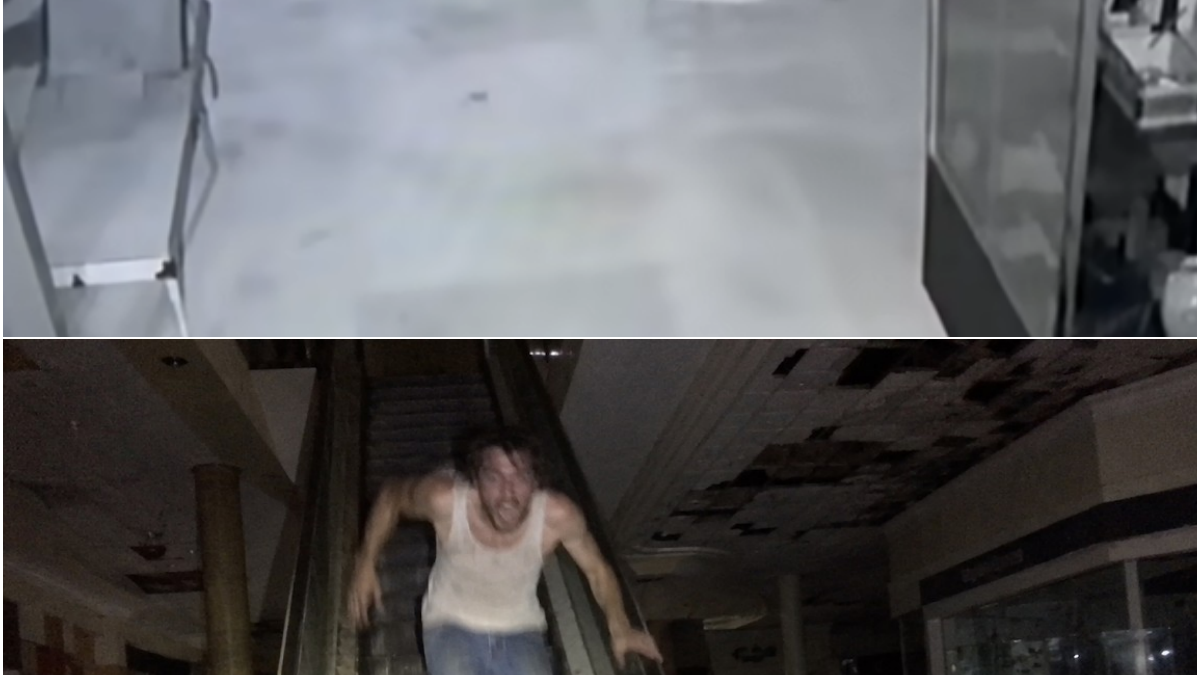
The room was empty, but the camera was watching. Somewhere in the darkness, a small ball began to roll across a museum floor, moving as though an unseen hand had given it a gentle push.
In another room, an antique stroller shifted away from the wall, its old wheels turning without anyone beside it.
These were not scenes from a film or carefully arranged tricks, at least not according to the people who first reviewed the recordings.
They were moments captured after closing time, when the doors were locked, the lights were low, and the buildings were supposed to be quiet.
Across museums, pubs, markets, offices, and supermarkets, security cameras have recorded incidents that seem to challenge the ordinary explanations people reach for firSt. A skeleton falls from its display.
A strange mist fills a room. A glowing shape drifts behind a bar. A hooded figure appears in a centuries-old pub, fading away before anyone can approach it.
Elsewhere, a van opens its own doors, boxes tumble down a staircase, and objects move through a supermarket after the staff have gone home.
Each recording begins with something familiar: an empty building, a fixed camera, and a moment that nobody expected to see.
But when the footage is replayed, slowed down, and examined closely, the details can become even more puzzling.
Are these simply unusual accidents, strange effects of light and machinery, or something that the cameras have captured without anyone understanding it?
And if the rooms really were empty, what was moving inside them? At the Museum of Shadows in Plattsmouth, Nebraska, strange occurrences were already part of the atmosphere.
The building itself had a long history, and the collection inside was filled with objects that visitors might find unsettling even in daylight.
More than 2,000 artifacts were housed there, some of them believed by their owners and visitors to carry stories of unusual activity.
The museum occupied a building dating back to 1881, a place that had originally operated as a saloon, with a brothel on the upper floor.
Over the years, the building had seen violent encounters and troubling events, leaving behind a reputation that made its present-day purpose seem almost fitting.
The owners were accustomed to hearing reports of odd noises, unexplained movements, and other experiences that visitors associated with the supernatural.
But one night, the security cameras captured something that seemed especially clear. In an otherwise empty room, a small ball sat on the floor.
It had been deliberately placed there as a trigger object, something intended to give any supposed spirit an easy way to interact with the physical world.
For a while, nothing happened. The room remained still. There were no visitors, no staff members crossing the floor, and no obvious movement in the corners of the image.
Then the ball began to roll. It moved across the floor, not simply rocking in place or shifting slightly, but traveling through the room as though something had nudged it.
The movement became more noticeable as the ball appeared to be tossed around. The camera continued recording, showing no visible person responsible for the activity.
The room was empty, yet the object was moving. Museum owner Nate Radderman later explained what he believed the recording showed.
He said, “I believe it was a child that was just kind of interacting with the toy.
To be picked up and thrown, especially like that with the ball, it was really amazing.”
His interpretation gave the incident a particular character. Rather than imagining something threatening, he pictured a childlike presence playing with an object left within reach.
The ball was not an accidental decoration or something that had been forgotten on the floor.
It had been placed there intentionally, because the museum wanted to see whether anything would interact with it.
That made the recording especially interesting to people who already believed in the possibility of spirits.
To skeptics, however, the footage still left room for ordinary explanations. A slight slope in the floor, an unnoticed vibration, or a detail outside the camera’s view might have contributed to the movement.
Without examining the room and the original recording under controlled conditions, the video could not establish what had caused the ball to roll.
Yet the story did not end with that one recording. The very next night, the same security camera captured another unusual event in the same room.
This time, the object was an antique doll stroller that had been parked against the wall.
The stroller had been sitting there since the museum opened. According to Radderman, it had not been moving around during the day or shifting position from one evening to the next.
It was simply part of the room, an old object resting where it had been placed.
But on the following night, the camera showed it rolling forward on its own. There was no visible person pushing it.
The stroller moved away from the wall, its wheels turning as it traveled into the room.
It was a quieter event than the ball being tossed around, but in some ways it was even more unsettling.
The stroller was a large, recognizable object, and its movement suggested a force acting on something that should have remained still.
Could the floor have been uneven? Perhaps the stroller had been positioned at a slight angle, allowing gravity to pull it forward.
Could a breeze have entered the room and disturbed it? That was another possibility, although the owners pointed out that the stroller had remained in place for a long time before the recording.
The two incidents, occurring on consecutive nights in the same room, became part of the museum’s collection of strange experiences.
One involved a toy being moved as if someone were playing with it. The other involved an antique stroller rolling away from the wall.
Neither recording revealed a visible person, and both left viewers deciding how much meaning to attach to what they saw.
In Nottingham, England, another museum had its own collection of unsettling objects. The Museum of Curiosities was filled with unusual exhibits, including a human skeleton estimated to be around 400 years old.
Its displays were designed to attract visitors interested in the strange, the unusual, and the difficult to explain.
But after the doors closed and the building emptied, one of its most unusual exhibits became the center of a security-camera incident.
The recording showed the skeleton resting on its display. The room appeared quiet, with no visitors walking past and no staff members standing nearby.
Then, without any visible person touching it, the skeleton suddenly toppled from its display and crashed onto the floor.
The sight was startling in itself. A centuries-old skeleton was not the sort of exhibit anyone expected to see moving across a room, especially when the cameras showed no one close enough to disturb it.
The recording offered no obvious explanation for why the display had been disrupted. It was possible that the skeleton had been unstable.
A support could have shifted, a mounting point might have loosened, or some other mechanical issue could have caused the fall.
Security footage can show the moment an object moves without necessarily revealing the small physical change that made the movement possible.
Still, the sudden collapse made for an extraordinary image, particularly in a museum already devoted to unusual objects.
And the skeleton was not the only strange thing recorded there. Another piece of CCTV from the same museum showed what appeared to be a thick mist forming inside the room.
At first, the space looked ordinary. Then a hazy substance seemed to spread through the image, filling part of the room with a cloudy appearance.
The security alarm went off as the mist became visible. A short time later, the strange haze seemed to dissipate, leaving the room looking normal again.
The sequence was difficult to interpret from the footage alone. The apparent mist could have been related to changes in lighting, dust, moisture, or the camera itself.
Security cameras often use image processing that can make particles and reflections appear unusual, especially in dimly lit rooms.
A sudden change in exposure can also transform an otherwise ordinary scene into something that looks unfamiliar.
But the combination of events made the recording memorable. In one incident, the skeleton fell from its display.
In another, the room appeared to fill with mist just as the alarm sounded. The museum’s unusual collection provided a fitting setting for both clips, and viewers were left wondering whether they were seeing accidents, technical effects, or something that had no easy explanation.
In January of 2025, the chairman of Clevedon Cricket Club in Clevedon, England, had a different reason for checking the building’s security footage.
The clubhouse Wi-Fi had randomly dropped offline, and he went to review the CCTV recorded after closing time.
It was a routine check, the sort of task that usually ends with a technical explanation and little else.
Instead, the footage showed something unexpected moving through the dark bar area. A bright orb-like shape appeared in the air.
It drifted near the counter, moving up and down as though it were floating through the room.
The object did not look like a person, and it did not appear to be attached to anything visible in the recording.
It moved through the empty clubhouse while the building was supposed to be quiet. As the clip continued, another faint figure seemed to appear behind the bar.
It moved around the empty space, creating the impression that something else was present in the room.
The chairman had been looking for an explanation for the Wi-Fi problem, but the camera had given him a much stranger puzzle to consider.
The club eventually posted the recording on its Facebook page, inviting people to examine it and offer their own interpretations.
The post asked, “How’s this for unusual? Chairman checks the CCTV after the Wi-Fi drops at the clubhouse, only for the footage to reveal some orb-like figure floating around.
Anyone have an explanation? Well, no explanation here, so we leave this one up to you, fine viewers.”
The post captured the mixture of curiosity and uncertainty surrounding the event. The club did not present a confirmed explanation.
It simply shared the footage and allowed viewers to decide what they thought they were seeing.
A glowing orb on a security camera can have many possible causes. Dust or insects close to the lens can reflect infrared illumination and appear much larger than they really are.
Light reflecting from glass, a nearby surface, or the camera housing can also produce strange shapes.
The faint figure behind the bar might have been a shadow, a reflection, or an artifact of the recording.
But those possibilities did not make the video any less intriguing to the people who watched it.
The clubhouse was empty, the camera was recording after hours, and the shapes seemed to move through a place where nobody should have been.
In Bolton, England, a much older building provided the setting for another recording that quickly attracted attention.
Ye Olde Man & Scythe dates back to the 13th century, making it one of the historic pubs whose age alone can make an ordinary evening feel unusual.
Its rooms had been used by generations of customers, and its walls and fixtures carried the character of a building that had stood through centuries of change.
One night, after the pub had closed, a camera recorded what looked like a hooded figure near the back glass.
The shape appeared in the dim interior, distinct enough to suggest a person standing near the rear of the building.
Then it faded away. For a moment, the space seemed empty again. But the figure returned, appearing in another position and eventually standing directly in front of a mirror.
The image created the impression of someone moving through the pub, even though no visible person entered or crossed the room.
When pub manager Tom Dolly saw the recording, he said the experience had changed his outlook.
He had previously been a skeptic, but the footage turned him into a believer. The figure’s appearance and disappearance made a strong impression on him, especially because the camera showed no obvious person responsible for the movement.
As the clip spread online, viewers began examining the details. Some noticed that the lights inside the pub appeared to flicker throughout the recording.
That effect might have been caused by the footage being sped up or by the way the camera processed the changing light.
Others pointed to a dark shadow moving along the right-hand wall, beneath a row of picture frames, at around 25 seconds into the clip.
The shadow was easy to miss during an ordinary viewing. Once people knew where to look, however, it became another detail to debate.
Was it connected to the hooded figure? Was it an ordinary shadow created by something outside the camera’s view?
Or was the apparent movement simply the result of changes in the recording? Some viewers believed the video had been staged as a publicity stunt.
A historic pub with a mysterious reputation could certainly attract attention from a ghost story, and a person standing outside a window might create the impression of a figure inside.
Yet others argued that the figure seemed to fade in and out in a way that did not match the movements of someone simply standing outside the glass.
That observation was not proof of anything supernatural. Video compression, reflections, exposure changes, and editing can all create effects that look unnatural.
The recording’s unusual appearance could not, by itself, establish that the pub contained a ghoSt. But the footage left enough unanswered questions to keep people discussing it.
The building’s long history added another layer to the story. A place that had existed since the 13th century was bound to have accumulated stories, memories, and local traditions.
In such a setting, a shadow near a mirror could become more than a visual curiosity.
It could feel like another chapter in a much older mystery. On the late night of September 25th, 2018, security cameras at the Putnam County Aging Agency in St. Albans, West Virginia, captured an incident that seemed less like a figure appearing in a room and more like an object responding to an invisible touch.
Around 1:15 in the morning, a transport van was parked on the property. Its side doors were closed, and there was nobody standing near the vehicle.
The camera continued recording the quiet parking lot, showing no obvious activity around the van.
Then the side doors slid wide open. The movement happened without anyone visibly approaching the vehicle.
There was no person standing beside the doors, no one reaching for the handles, and no obvious sign of someone trying to enter.
The doors simply opened, revealing the interior of the van. When staff arrived the next morning and found the vehicle in that condition, executive director Jenny Sutherland initially assumed someone had attempted to break in.
The natural response was to review the security footage and find out who had been near the vehicle during the night.
But when they watched the recording, they found no visible intruder. The footage showed the van moving slightly as the internal latch appeared to release, followed by the doors sliding open.
The rest of the property remained undisturbed. The motion of the vehicle was one of the details that made the clip especially interesting.
It seemed to shudder a little as the latch flipped, suggesting that something had changed inside the door mechanism.
A mechanical failure could potentially explain the event. A latch might have malfunctioned, or pressure within the door system could have contributed to the movement.
Without a detailed inspection of the van, however, the recording alone could not settle the question.
The staff were not entirely surprised by the strange incident. The agency’s building stood on the site of the Civil War Battle of Scary Creek, where 19 soldiers lost their lives.
Employees had already described unusual experiences around the grounds, particularly at night. The property had a reputation for strange activity, and the opening van doors became another story associated with the location.
The incident was unusual because the camera showed a practical, physical event rather than a vague shadow or a glowing shape.
The doors were clearly visible. Their movement could be measured, replayed, and compared with the stillness of the surrounding lot.
Yet the footage did not reveal the force that caused them to open. Another recording, filmed inside what appeared to be an empty cafeteria or party room, presented a different kind of mystery.
The exact location where the footage was originally recorded was uncertain, but the sequence itself was clear enough to attract attention.
The room began almost completely dark. The camera showed little beyond the outlines of furniture and the area behind a counter.
Then the doors at the back of the room suddenly appeared illuminated, revealing a figure standing in the doorway.
At first, it looked as though someone had opened a door and entered the room.
But when the clip was slowed down, the movement did not seem to follow the ordinary sequence of a door swinging open.
The door did not visibly rotate on its hinges. Instead, the light and the figure appeared almost instantaneously, as though the recording had skipped from one image to another.
The figure moved behind the counter. Its outline was vague and partly transparent, lacking the solid appearance of a person standing clearly in the light.
It seemed to shift through the darkness before the main room lights suddenly switched on.
The moment the lights came up, the shape disappeared. Almost immediately afterward, a person walked into the room and went straight behind the bar.
The person did not stop, look around, or appear to react to anyone hiding nearby.
They moved through the area as though the room were empty. That detail became central to the discussion.
If the figure had been a real intruder crouching behind the counter, the person entering the room might have been expected to notice them.
The shape had appeared in a space that should have been visible once the lights came on, yet the person continued without hesitation.
The footage left several possibilities open. The apparent figure might have been an imaging artifact, a reflection, or a result of the camera adjusting to sudden changes in lighting.
The apparent skipped frames could have been caused by recording issues. It was also possible that a person had been present briefly, but the footage did not provide enough information to establish what had happened.
Whatever the explanation, the sequence had the strange structure of a brief appearance followed by an equally sudden disappearance.
It was the kind of clip that encouraged viewers to replay it repeatedly, looking for a detail that might transform the mystery into something ordinary.
In Whaley Bridge, England, the unusual activity was not limited to one isolated recording. At a local supermarket, overnight cameras captured a series of incidents in a building that residents said had been associated with strange stories for more than a century.
The events became especially memorable on Halloween night. Staff had experienced enough unusual activity throughout the day that they decided to close at 9:30, an hour and a half earlier than usual.
The decision was intended to let everyone leave the building rather than remain in a place where the strange incidents seemed to be continuing.
But the cameras showed that the activity apparently did not stop when the staff went home.
The first part of the recording involved the computer point-of-sale system. Something seemed to interfere with the equipment, creating the impression that an unseen force was affecting the checkout area.
Almost immediately afterward, a dark shape appeared to float down one of the aisles. The recording then showed objects moving from the shelves.
Items began falling, one after another, as though something were knocking them loose. Fruit rolled across the floor without any visible person pushing it.
A mop bucket shifted position, moving away from where it had been left. Then the heavy door of the walk-in freezer began shaking violently on its hinges.
The sequence was striking because it involved several different kinds of movement. The computer system appeared to behave strangely.
A dark shape crossed an aisle. Products fell from shelves. Fruit rolled across the floor.
A mop bucket moved. A heavy freezer door shook. Any one of these events might have had an ordinary explanation.
A shelf could have been unstable, an object might have been placed too close to the edge, or a door mechanism could have been affected by pressure or a faulty hinge.
A checkout system could malfunction for reasons unrelated to anything in the room. And a dark shape on infrared footage might have been a shadow or an artifact.
But the apparent sequence made the recording seem more dramatic than a collection of unrelated technical problems.
It appeared to show a series of incidents unfolding in a short period, in a building where staff had already decided that something unusual was happening.
For people who believed the supermarket was haunted, the footage seemed to offer a visual record of the stories that had circulated about the property.
For skeptics, it raised questions about the camera angles, the timing of each event, and whether the footage had been presented with enough context to establish what had happened.
In either case, the supermarket recording had the unsettling quality of an ordinary place becoming unfamiliar after dark.
A checkout counter, a fruit display, a mop bucket, and a freezer door were not normally objects people associated with unexplained activity.
Yet in the recording, each seemed to become part of the same strange episode. At Wellington Indoor Market in Telford, England, the mystery began with a mess waiting for workers when they arrived to open the building.
Boxes had been dumped across the floor and scattered down a staircase. The disorder suggested that someone might have entered overnight, knocked over the stack, and left without being noticed.
Market staff immediately suspected a break-in. The obvious next step was to review the CCTV and see whether anyone had been inside after closing time.
What appeared on the screen was not what they expected. The footage showed a faint, shadowy shape moving up the stairs.
It was difficult to distinguish at first, blending into the dim background. But as the recording continued, the boxes began to tumble down the steps.
The movement was unmistakable, even if the figure seemed barely visible. Market manager Kay Bockham recalled that the staff had initially thought a burglar was responsible for the mess.
Reviewing the footage, however, left them unsettled. She explained that no actual person could be seen near the boxes when they fell.
After watching the recording again, staff believed they could follow a dark shadow heading up the stairs just before the stack was knocked over.
The market had been operating since 1244, and its age had given it a long history of local stories.
Bockham said staff members who worked alone had occasionally reported seeing dark shapes pass through the empty building.
She also recalled an incident in which two employees were talking in the market when they heard someone coughing from across the building.
They went to investigate, but the area was completely deserted. Other reports involved automatic hand dryers switching on without anyone using them and doors slamming shut in empty rooms.
Taken together, these experiences had created a reputation for the market that made the staircase recording seem like part of a larger pattern.
Yet the boxes themselves offered an important point of comparison. Unlike a fleeting shadow, they were physical objects whose movement could be seen clearly.
The camera showed them falling, but the faint shape was harder to interpret. Was the shadow actually connected to the boxes, or did the two events merely occur close together in the recording?
Without additional angles or a detailed examination of the scene, the relationship remained uncertain. The market’s age made the story feel particularly atmospheric.
A building that had served people for centuries had accumulated countless ordinary moments, from busy market days to quiet hours after closing.
Its staff knew the layout and sounds of the place, which meant that an unexpected noise or movement could stand out sharply against the familiar background.
At Brighton Museum, the incident began with a sound rather than a strange image. At around 3:00 in the morning on July 10th, 2019, security staff heard a loud crash coming from the foyer.
They went to investigate and discovered that a cup or retail display had smashed across the floor.
Nobody had been near the display, at least according to the staff’s initial understanding. The museum was closed, the building was quiet, and there was no obvious reason for the object to have fallen.
So the team turned to the CCTV footage to find out what had happened. The recording showed an apparently still scene.
Nothing moved through the foyer. Nobody walked past the display or reached toward the cup.
Then a strange flash appeared near the object. Almost immediately afterward, the cup fell from the display and smashed onto the floor.
The timing was what made the recording memorable. The flash appeared just before the fall, close enough to the event that viewers could easily connect the two.
It seemed as though something had briefly illuminated the space or appeared beside the cup before the object dropped.
Museum digital manager Kevin Bacon said the security team had been monitoring the building continuously.
After checking the original recording, he confirmed that nobody was near the display when the cup fell.
That removed one simple explanation from the footage, although it did not establish what had caused the event.
There were still ordinary possibilities. The flash might have been a camera glitch, a reflection, or a sudden change in exposure.
Vibrations from elsewhere in the building might have affected the display, especially if the cup had been resting close to the edge.
A small shift that was invisible to the camera could have been enough to send it falling.
But the order of events made the clip difficult for viewers to forget. First came the flash.
Then came the fall. The recording offered no clear explanation for either one, and the museum’s reputation for unusual experiences gave the moment an atmosphere that extended beyond a simple broken object.
Across all these locations, the cameras had recorded different kinds of incidents. At the Museum of Shadows, a ball and an antique stroller moved in an empty room.
At the Museum of Curiosities, a skeleton fell and a strange mist appeared. At Clevedon Cricket Club, an orb-like shape drifted through a bar area.
At Ye Olde Man & Scythe, a hooded figure appeared near a mirror. At the Putnam County Aging Agency, a van’s side doors opened without anyone nearby.
In an apparently empty party room, a vague figure appeared and vanished. In Whaley Bridge, objects seemed to move throughout a supermarket.
At Wellington Indoor Market, boxes fell after a shadow appeared on the stairs. And at Brighton Museum, a flash preceded the fall of a cup.
Each incident had its own details, its own witnesses, and its own possible explanations. Some involved physical objects that could have been affected by gravity, faulty supports, vibrations, or mechanical problems.
Others involved images that might have been shaped by reflections, dust, low-light recording, compression, or changes in exposure.
Security cameras are designed to document activity, but they are not perfect instruments for identifying every cause.
They show what their sensors record, not necessarily what a person standing in the room would have seen.
That distinction matters. A recording can be genuine while still being misleading. A camera may faithfully capture a reflection that looks like a person, a particle that looks like an orb, or a moment of instability that makes an object fall.
A strange event can be real without being supernatural, and an unexplained event is not automatically evidence of a ghoSt.
Still, the recordings have a peculiar power. They take places people recognize and turn them into unfamiliar spaces.
A museum room becomes a place where a ball appears to respond to someone unseen.
A pub becomes a dark interior where a figure seems to fade in front of a mirror.
A supermarket becomes a maze of moving objects, and an ordinary parking lot becomes the setting for a van whose doors open by themselves.
The cameras also change how people experience these stories. In the past, an unexplained sound or movement might have been remembered through the account of someone who witnessed it.
Now, a recording can be paused, enlarged, slowed down, and shared with thousands of people.
Viewers can inspect the same few seconds repeatedly, searching for a clue that might have been missed the first time.
But repeated viewing can also make uncertain details seem more definite. Once someone suggests that a shadow is a figure, it can become difficult to see the recording without that interpretation.
Once an orb is described as a presence, every movement may seem purposeful. A viewer might notice a shape that another person cannot see at all.
The camera provides an image, but the meaning of that image still depends on interpretation.
Perhaps that is why these recordings continue to fascinate people. They occupy the space between what can be seen and what can be explained.
The objects move, the lights change, and the figures appear. The footage gives viewers something concrete to examine, but it does not always provide enough information to reach a firm conclusion.
And in every empty room, there is the same unanswered question. If nobody was there, what exactly did the camera capture?
Disclaimer: This content may be created by Al for entertainment purposes. Any resemblance to real persons, events, or places is coincidental.








