Scary Lakes With Disturbing Secrets Beneath the Surface
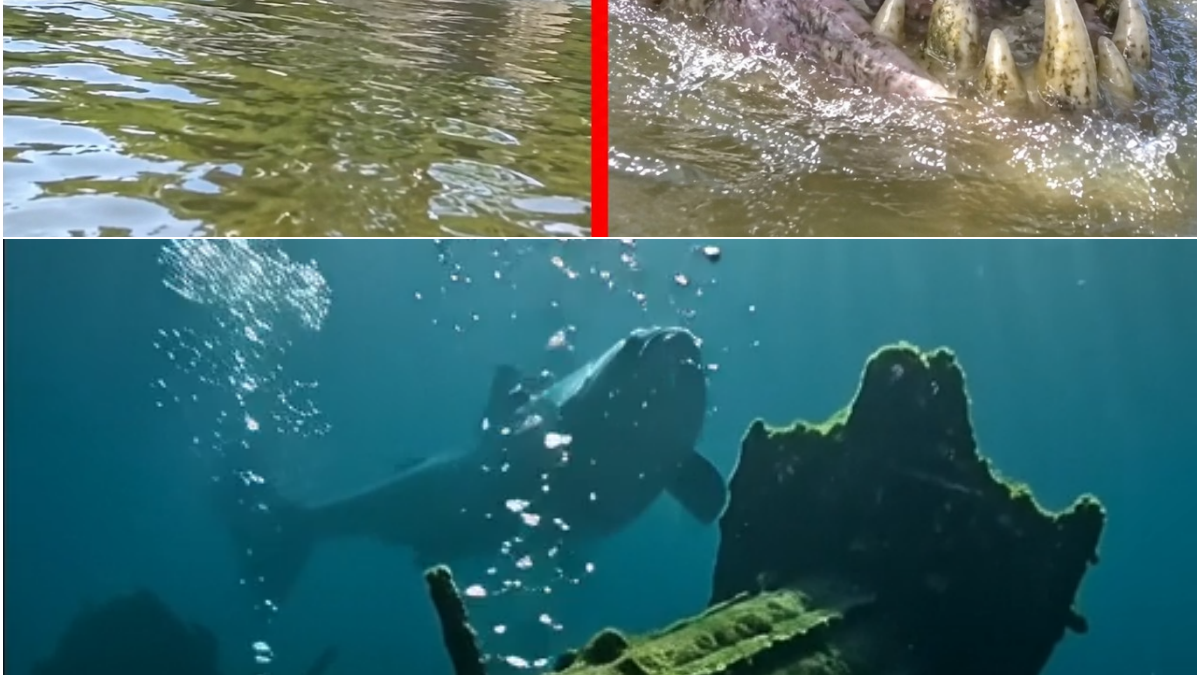
There are places on Earth that look so peaceful you could stand beside them for hours without imagining that anything unusual could be happening beneath the surface.
The water moves gently. Birds cross the sky. Mountains reflect in the distance. On a warm afternoon, the shoreline can look like the safest place imaginable.
But what happens when the water begins to reveal what it has been hiding? What happens when a shrinking lake exposes an abandoned village, when ancient ruins rise from the mud, or when something enormous appears to move beneath a surface that should contain nothing unusual?
Across the world, lakes have preserved strange stories for centuries. Some were shaped by earthquakes, volcanic activity, pollution, changing water levels, or human engineering.
Others became famous because witnesses reported creatures that science has never clearly identified. In 1986, Lake Nyos in Cameroon suddenly released a huge cloud of carbon dioxide that spread across nearby communities, turning an ordinary night into one of the most extraordinary lake disasters ever recorded.
At Lake Baikal, divers reported seeing strange figures far below the surface. At Lake Lanier, an entire valley disappeared beneath a reservoir and old structures still lie underwater.
At Lake Vostok, scientists found an isolated environment sealed beneath Antarctic ice for millions of years.
And at Lake Mead, falling water levels exposed secrets that had remained hidden for decades.
But these are only the beginning. Around the world, calm water has concealed ancient settlements, mysterious wrecks, unusual wildlife, unexplained footage, and geological events that seem almost impossible until the evidence begins appearing at the shoreline.
So if the surface of a lake can hide so much for so long, what else might still be waiting beneath the water?
The story of Lake Nyos begins with a landscape that looked completely ordinary. The lake sits in Cameroon above volcanic ground, and beneath its quiet surface, carbon dioxide had been accumulating for years.
Normally, gases trapped deep underwater remain separated from the atmosphere, but on August 21st, 1986, something changed.
A massive release of carbon dioxide escaped from the lake and spread outward across the surrounding area.
The gas itself was invisible, which made the event especially difficult to understand at first. When people realized something unusual had happened, the scale of the disaster became clear.
Scientists eventually determined that the lake had released an enormous volume of gas in a sudden event known as a limnic eruption.
Today, special pipes have been installed to slowly remove carbon dioxide from deep water, reducing the chance of another major release.
Lake Nyos remains an extraordinary example of how a peaceful landscape can conceal forces that are almost impossible to see.
Thousands of miles away, Lake Baikal in Siberia presents a completely different mystery. It is the deepest lake on Earth and contains an enormous volume of freshwater beneath its surface.
In 1982, seven Soviet military divers were conducting a training exercise when they reportedly encountered strange humanoid figures wearing silver suits far below them.
According to the account, attempts to approach the figures ended suddenly when the divers were pushed toward the surface.
The rapid ascent created serious pressure problems, and the incident became part of the collection of unexplained stories surrounding Baikal.
Local reports have also described strange lights over the water, including glowing objects that appear to descend toward the lake.
Natural explanations have been proposed, including optical effects, atmospheric phenomena, and gas bubbles, but the stories continue to circulate because of the lake’s enormous unexplored depths.
Lake Lanier in Georgia has an entirely different history. The reservoir was created in the 1950s when the valley was flooded.
Homes, roads, businesses, and cemeteries were left beneath the rising water, creating an underwater landscape that remains difficult for modern visitors to imagine.
Over the decades, the lake became associated with accidents, disappearances, and stories of unusual encounters.
Divers have reported seeing old structures beneath the surface, while local folklore tells stories about strange figures and unexplained disturbances.
Some people connect the lake’s reputation to the communities that existed there before the reservoir was created.
Others point to ordinary dangers associated with boating and swimming. Whatever explanation a person accepts, the history of Lake Lanier demonstrates how dramatically a familiar landscape can change when water covers everything that once stood there.
Then there is Lake Vostok in Antarctica, one of the strangest environments on the planet.
Beneath roughly 2 miles of ice lies a huge subglacial lake that has been isolated from the surface for an immense period of time.
Scientists identified it using radar measurements in the 1990s, revealing an environment sealed away beneath Antarctica.
The possibility of life surviving in such conditions became scientifically important because it offered a natural comparison to icy worlds beyond Earth.
If microorganisms can survive under kilometers of ice in darkness and extreme pressure, similar environments elsewhere in the solar system could potentially support life.
Samples and research from the region have generated debate about what exactly exists beneath the ice, but the lake remains one of the most isolated aquatic environments known.
Human activity has created another category of mysterious lakes. Kesterson Reservoir in California became notorious because irrigation runoff carried high levels of selenium into the water.
Selenium occurs naturally, but excessive concentrations can be harmful. Fish embryos developed serious deformities, and birds that fed on contaminated fish were also affected.
Scientists documented problems involving eyes, fins, brains, beaks, wings, and legs. The case became a powerful example of how pollutants can move through an ecosystem instead of remaining in one place.
A similar story unfolded at Belews Lake in North Carolina. During the 1970s, wastewater associated with a coal fired power plant introduced selenium into the lake.
Over time, the fish population changed dramatically. The number of fish species fell from 24 to just six, and many surviving species struggled to reproduce.
Even after the plant stopped releasing the wastewater in 1986, contamination remained in the sediment.
Storms could disturb that sediment and return selenium to the food chain. The lake eventually received new sport fish, but recovery was slow.
The story showed that stopping pollution does not always immediately restore an ecosystem because contaminants can remain in the environment long after the original source disappears.
In the Great Lakes, researchers found another troubling effect known as blue sac disease in developing lake trout.
Embryos exposed to certain persistent contaminants developed swollen yolk sacs, abnormal faces, and enlarged areas around the heart.
Dioxins and related chemicals could accumulate in sediments and then move upward through the food chain.
Larger fish could receive higher concentrations because they consumed smaller contaminated fish. Although environmental regulations reduced many sources of these chemicals, older contamination remained a concern.
Yet nature sometimes responds to pollution in an unexpected way. Atlantic tomcod in the Hudson River developed genetic changes that helped them tolerate certain contaminants.
Killifish populations living in heavily polluted areas along the East Coast also evolved remarkable resistance to toxic chemicals.
Researchers found similar genetic changes appearing in separate populations. These fish demonstrated how quickly evolution can respond when environmental pressure becomes intense.
But adaptation comes with uncertainty. A population specialized for one extreme environment may face new challenges if that environment changes again.
In Bavaria, Germany, Alatsee appears peaceful from above, but its unusual chemistry creates very different conditions below the surface.
Layers of water remain separated, and sulfur rich bacteria create a striking red layer in the deeper region.
Divers have long associated the lake with strange stories, including rumors about hidden wartime treasure.
Scientific studies show that the unusual red coloration has a natural explanation, but the lake’s reputation continues to attract people fascinated by what may lie beneath it.
Lake Perućac, on the Drina River between Bosnia and Serbia, carries an even heavier historical mystery.
In 2010, when water levels were lowered for dam maintenance, previously submerged areas became visible.
Workers discovered human remains and evidence connected to the violence of the Kosovo War era.
The discoveries showed how changing water levels can expose parts of history that had remained hidden beneath reservoirs for years.
Lake Superior has its own enormous collection of underwater stories. The lake is so large and cold that wrecks can remain remarkably preserved.
The SS Kamloops sank in 1927 after encountering severe weather near Isle Royale. The wreck was not located until 1977.
Divers later found sections of the vessel remarkably intact, including cargo areas and personal objects.
The lake’s cold freshwater environment slows the processes that normally destroy submerged materials, turning parts of the lake floor into an underwater archive.
Another famous Superior wreck is the Edmund Fitzgerald, which disappeared during a violent storm in 1975.
All 29 crew members were lost, and the vessel was never recovered as an intact ship.
The exact chain of events remains debated, with explanations involving structural problems, enormous waves, and equipment or weather factors.
Today, the wreck rests deep beneath the lake, another reminder of how quickly conditions on Superior can change.
In 2014, something completely different appeared in the Tunisian desert. Near Gafsa, a lake suddenly appeared where there had previously been dry ground.
Known as Lac de Gafsa, the turquoise body of water attracted visitors almost immediately. Possible explanations included underground water movement, seismic activity, rainfall, and mining related changes.
But concerns quickly emerged because the region contains phosphate deposits and the water had not been properly tested for recreational use.
The brilliant blue surface eventually changed color as algae developed. What looked like a miracle oasis became another example of how quickly a beautiful lake can become scientifically complicated.
Pitch Lake in Trinidad is stranger still because it is not really a lake of water.
It is a huge natural asphalt deposit covering more than 100 acres. The surface can appear solid, but sections remain soft and unstable.
Steam rises from the ground, and the thick asphalt slowly moves. Ancient material, wood, tools, and other objects have become trapped within it, turning the area into a natural geological archive.
Workers continue extracting asphalt, but visitors must remain careful because the surface can behave very differently from ordinary ground.
Lake Natron in northern Tanzania looks almost unreal. Volcanic minerals and high alkalinity create harsh conditions, while salt loving microorganisms can give the water a deep red or orange appearance.
Animals that become trapped along the shoreline can become coated in mineral deposits, creating the appearance of stone statues.
Photographer Nick Brandt famously photographed birds and bats preserved along the lake’s edges. They were not literally turned to stone, but mineral rich conditions helped preserve their bodies.
At the same time, Lake Natron remains an important breeding area for flamingos, demonstrating how an environment that appears hostile can still support specialized life.
Lake Michigan has developed its own reputation for mystery. The region between Wisconsin and Michigan has sometimes been called the Bermuda Triangle of the Great Lakes because of stories about missing ships and aircraft.
One famous case occurred in 1950, when Northwest Airlines Flight 2501 disappeared over the lake with 58 people aboard.
Search teams found no confirmed wreckage. Weather conditions, currents, and other explanations have been considered, while legends about unusual lights and strange navigation problems continue to circulate.
Lake Peigneur in Louisiana demonstrates that sometimes the mystery is not caused by nature alone.
In 1980, drilling operations accidentally breached an underground salt mine beneath the lake. Water rushed into the mine, creating a massive whirlpool.
Barges, equipment, trees, and large sections of land were pulled toward the opening. The event even reversed the direction of a nearby canal and transformed the lake from freshwater into a saltwater environment.
What had been an ordinary lake became an extraordinary demonstration of how interconnected underground structures can be with the surface.
High in the Himalayas, Lake Roopkund became famous because of human remains discovered around its shores.
For decades, researchers wondered whether one catastrophic event had affected a large group of people.
Later DNA studies revealed that the remains represented several distinct populations and different periods. Some individuals were connected to South Asia, while others showed Eastern Mediterranean ancestry.
The findings complicated the older explanations and demonstrated that the lake had been visited repeatedly across centuries.
Lake Tahoe has its own legends about hidden remains and secret activity. Stories have circulated for decades claiming that organized crime figures once used the lake to conceal evidence.
These stories have never been conclusively established, but Tahoe’s enormous depth makes recovery from its deepest areas extremely difficult.
The combination of real underwater hazards and long running folklore has given the lake a mysterious reputation far beyond its natural beauty.
Lake Mead produced one of the most remarkable modern discoveries when drought caused water levels to fall dramatically in 2022.
Objects that had remained underwater for decades suddenly became visible. Among the discoveries were boats, aircraft wreckage, old structures, and human remains.
One particularly famous discovery involved remains inside a metal barrel. Investigators determined that the person had been shot, and the clothing and footwear suggested a period around the 1970s or 1980s.
The discovery revived long standing stories about organized crime and Las Vegas, although identifying every mystery connected to the lake has proved difficult.
Lake Poyang in China is another place where changing water levels have revealed hidden history.
Sometimes called Asia’s Bermuda Triangle, it has long been associated with missing vessels. When water levels dropped, archaeologists discovered numerous old shipwrecks, including vessels believed to date back to the Ming Dynasty.
Some wrecks showed damage consistent with powerful environmental forces. Shifting sandbanks and sudden currents may explain many incidents, but the concentration of wrecks remains fascinating.
Lake Cahuilla in California tells another story through its exposed shoreline. The ancient lake repeatedly filled and dried over thousands of years.
Archaeological research has revealed villages, fishing equipment, stone tools, and traces of human activity around former shorelines.
Some preserved footprints show adults and children moving across ancient mud. These discoveries allow researchers to reconstruct how communities responded to dramatic environmental changes.
Lake Urmia in Iran became a warning about environmental collapse. Once one of the largest saltwater lakes in the world, it shrank dramatically during the 2010s.
The exposed lakebed produced enormous salt fields, cracks, and sinkholes. Archaeologists and researchers also documented abandoned infrastructure and settlements around the shrinking shoreline.
Roads, foundations, vehicles, and stranded boats became visible as the water retreated. The lake’s decline transformed an enormous body of water into a landscape where windblown salt became a major environmental concern.
Far away in Siberia, Lake Labynkyr is associated with a creature known locally as the Devil.
Stories describe a large animal moving beneath the surface. Russian researchers have reported unusual sonar readings and possible large objects underwater, while geologists have suggested that the lake’s unusual temperature may be connected to geothermal activity.
Unlike nearby lakes that freeze completely, Labynkyr can retain open water during severe winter conditions.
Whether that is enough to explain every strange report remains uncertain. Lake Rweru in East Africa became the center of a disturbing mystery in August 2014 when fishermen discovered more than 40 unidentified human bodies floating in plastic bags.
The identities and circumstances surrounding the victims became subjects of international concern. The discovery remains one of the most unsettling examples of how a remote body of water can become connected to events far beyond its shoreline.
Lake Issyk Kul in Kyrgyzstan offers a different kind of mystery. When water levels fell, archaeological remains appeared along the shore.
Researchers discovered walls, foundations, pottery, and the remains of a Christian church associated with a medieval settlement.
Some structures appeared to have been affected by a sudden catastrophe, and local traditions connect the settlement’s destruction with earthquakes.
The lake preserved the remains for centuries, allowing archaeologists to reconstruct pieces of a lost community.
Lake Resia in northern Italy is famous for a church tower that rises from the water.
Beneath the reservoir lies the former village of Curon. In 1950, the area was flooded to create a hydroelectric reservoir, and residents were forced to leave.
When water levels fall, foundations, walls, roads, and other parts of the old settlement can become visible.
The church tower rising from the water has become one of Europe’s most recognizable submerged landscapes.
Lake Huron has also revealed evidence of a much older world. Underwater archaeological surveys discovered stone structures known as drive lanes, used by ancient hunters to guide caribou.
Some of these structures are approximately 9,000 years old and now lie more than 100 feet below the modern lake surface.
Their location shows that the Great Lakes region once contained a dry landscape where people built sophisticated hunting systems thousands of years before modern cities existed.
Then there are the lakes whose mysteries depend not on archaeology or geology but on creatures that witnesses claim to have seen.
Lake Champlain has its famous legend of Champ. In the summer of 2005, fishermen Peter Bodette and Dick Affolter reported seeing a strange wake moving through the water.
They described a long object with a serpentine motion and estimated it at around 15 feet.
They recorded the event with a digital camera. Retired FBI forensic image analysts examined the footage and found no obvious evidence of fabrication, although the quality was insufficient to identify the object.
In May 2009, Eric Olsen filmed another unusual shape near Oakledge Park in Burlington, Vermont.
He recorded it for approximately two minutes before his phone ran out of storage. Loren Coleman later described the footage as interesting evidence for the Champ mystery, while biology professor Ellen Marsden suggested the object could have been a young moose struggling in the water.
The disagreement shows the central problem with lake monster footage. A strange shape can be genuine without necessarily representing an unknown animal.
In June 2022, bird watcher and insurance broker Jamie Hatton reported another unusual sighting at Loch Long in Scotland.
He described a dark, slender shape moving through the water and said it looked longer than a typical seal.
Because Loch Long connects to the sea, several ordinary marine explanations remain possible. Loch Ness has generated even more stories.
In 2018, Chai Kelly photographed a strange object moving through the water and captured a rapid sequence of 71 images.
The individual photographs became more interesting when Leon Kirkbeck assembled them into a continuous sequence.
Veteran Nessie researcher Steve Feltham praised the clarity of the resulting footage, while skeptics continued to suggest floating debris or known wildlife.
In 2021, British outdoorsman Richard Mavor filmed Loch Ness using a drone during a four day charity canoe trip.
Later, viewers noticed an elongated shape beneath the surface near the canoes. Mavor initially considered himself skeptical, but the apparent size and movement surprised him.
The object seemed unusually large when compared with the 14 foot canoes nearby. In January 2025, a webcam overlooking Loch Ness captured another unusual shape moving near the shoreline.
A regular visitor named Andy noticed the object traveling toward Sherry Island before turning toward deeper water.
The entire event reportedly lasted about seven minutes. In August 2023, another observer, Owen O’Faoileáin, captured a separate dark shape that appeared to move across the water before disappearing when a boat approached.
The Loch Ness mystery became famous long before modern cameras. In September 1936, filmmaker Malcolm Irvine recorded footage that appeared to show a dark object moving across the surface.
The film reportedly showed a shape around 30 feet long and helped establish one of the early waves of public interest in the creature.
Decades later, the original reel was rediscovered by Scottish Screen Archive curator Janet McBain in 2001.
Timothy Dinsdale produced another famous sequence in April 1960 after spending six days watching the loch.
He filmed a dark shape moving across the surface and later recorded the same area from a boat to compare its movement with ordinary vessels.
The footage became widely discussed, and in 1966 a military photo analysis team examined the reel and described the object as probably animate.
Other lakes have their own creatures. Lake Van in Turkey became famous after Unal Kozak recorded unusual footage in 1997.
The image appeared to show a large dark shape moving through the water with an undulating motion.
The footage received international attention, including coverage from CNN, but no confirmed species identification followed.
Lake Ranco in Chile has its own long standing legend. Witnesses describe a dark, furry creature that appears with two humps above the surface.
Reports of the creature extend back into the 1800s, although no scientific evidence has established an unknown species living there.
In British Columbia, Okanagan Lake is associated with Ogopogo. On October 15th, 2022, Dale Hanchar, Colleen Hanchar, and their friend Merina Germaine Brown were sailing when they noticed two unusual projections in the water.
Colleen photographed the object from roughly 12 feet away. The group considered several possibilities, including floating material and an unusual object beneath the surface, but no definitive identification was made.
Another Ogopogo report emerged in June 2019 at Skaha Lake. Jim La Rock was with his family when he noticed an unusual wake crossing the water.
His son was on a paddle board nearby. Jim described seeing a large flipper and a long series of movements beneath the surface.
He estimated the object could have been around 120 feet long and later called the sighting definitive in his personal opinion.
In Iceland, Lake Lagarfljót has its own legendary creature known as the Lagarfljót Worm. In February 2012, a farmer placed a camera near a river flowing into the lake and recorded footage of what appeared to be a long object moving through the water.
A committee later evaluated the video and voted 7 to 6 that it appeared authentic, awarding the farmer a prize.
The legend itself dates back centuries. Norway has Selma, a creature reportedly seen in Lake Seljordsvatnet since the 1750s.
Witnesses have described a long, humped shape and unusual movements. In 2012, a 17 year old named Lisbeth recorded footage that appeared to show a long object beneath the water with numerous humps.
Researchers have never confirmed an unknown animal, but the stories remain part of local folklore.
Even Alaska has produced strange footage. Tourists once recorded several dark humps appearing behind a collapsing glacier, creating the appearance of a long creature moving across the water.
Another video showed a serpentine shape bending through the water, prompting debate over whether it was a living animal or floating debris.
Then came one of the most scientifically important deep sea discoveries of 2025. In March, researchers aboard the Falkor 2 captured video of a live colossal squid near the South Sandwich Islands.
Their underwater robot Sebastian was operating at nearly 2,000 feet when a small transparent creature entered the camera’s view.
It was a juvenile colossal squid, approximately one foot long. The discovery was especially significant because 2025 marked the 100th anniversary of the species being officially identified.
For a century, scientists had mostly studied dead specimens and fragments. Now they finally had footage of one alive in its natural environment.
Adults can reach extraordinary sizes, making the tiny animal on the screen a glimpse of something much larger that may be moving through the deep ocean beyond human observation.
Not every strange creature turns out to be mysterious. In the Bali Sea, a diver named Barney Dillerstone recorded a small deep water ray at around 200 meters.
The animal appeared related to stingarees, but its location raised questions because similar species are normally associated with Australian waters.
Experts could not immediately identify it, leaving several possibilities, including an unusual range extension or an undescribed species.
Other unusual fish have revealed something even more important than a mystery creature. A two headed brown trout discovered in southern Idaho was among several fish displaying deformities linked to selenium pollution.
Scientists investigated the water and surrounding industrial activity. Another species, the Clear Lake hitch in California, has developed a condition informally described as pug headedness, involving unusual head shapes, bulging eyes, and underdeveloped jaws.
Researchers have connected these abnormalities to long term environmental pressures including pesticides and mercury. In the Mojave Desert, Devil’s Hole contains one of the world’s rarest fish, the Devil’s Hole pupfish.
The tiny fish survives in warm water with very limited oxygen. Conservationists have established backup populations because the wild population remains extremely small.
Genetic research has raised difficult questions about whether introducing genes from closely related fish could increase genetic diversity.
Some scientists see genetic rescue as a possible tool, while others argue that changing the population’s genetics creates a different conservation problem.
Lake Cerknica in Slovenia presents another extraordinary natural system. The lake can disappear almost completely and later return because of a network of underground caves and channels.
Sinkholes act as natural drains, sending water beneath the surface. Explorers have mapped underground passages stretching for miles, while sensors dropped into certain channels have been carried away by powerful currents.
The disappearing lake is not simply a lake that dries out. It is part of a huge underground drainage system.
And perhaps that is what makes these places so fascinating. The mystery is not always a monster.
Sometimes it is a gas trapped beneath the surface. Sometimes it is an ancient village hidden under water.
Sometimes it is a chemical moving through a food chain. Sometimes it is a wreck preserved for decades in freezing freshwater.
Sometimes it is a tiny fish surviving in an impossible environment. And sometimes it is simply a shape in the distance that nobody can confidently identify.
The surface of a lake tells us almost nothing about everything happening below it. Lake Mead can fall and reveal objects hidden for generations.
Lake Huron can expose a landscape built by people 9,000 years ago. Lake Resia can uncover the remains of an entire village.
Lake Vostok can remain sealed beneath miles of ice while scientists wonder what microscopic life may exist there.
Lake Baikal can preserve mysteries in depths humans have barely explored. Loch Ness can continue producing unexplained images even after generations of investigation.
Perhaps the strangest part is that many of these lakes do not look frightening at all.
They look beautiful. That is what makes their stories so compelling. A quiet shoreline can conceal geological forces, ancient history, environmental warnings, forgotten settlements, or an animal that simply has not yet been identified.
So the next time you stand beside a perfectly calm lake, look carefully at the surface.
Watch the ripples. Watch the reflections. Listen to the silence. Because beneath that peaceful water could be an ancient road, a lost settlement, a preserved ship, a rare species, a hidden cave, or something that has not yet been explained.
And if something large suddenly moves beneath the surface, leaving a long wake behind it before disappearing into the deep, would you look closer, or would you decide that some mysteries are better left beneath the water?
Disclaimer: This content may be created by Al for entertainment purposes. Any resemblance to real persons, events, or places is coincidental.








