Real Urban Legends That Turned Into Terrifying True Stories
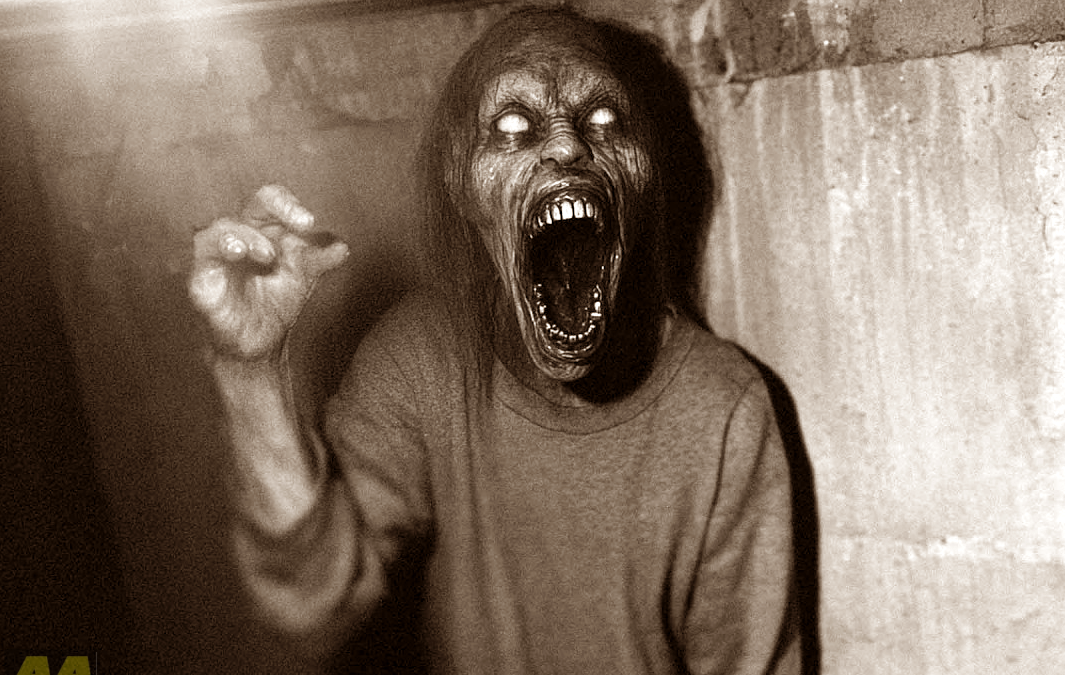
There are stories people tell after dark that seem too strange to belong to the real world.
A figure standing beside an empty road. Something moving beneath a city street. A person in an impossible costume appearing where no one expects them.
A farmhouse surrounded by shapes that should not exiSt. A warning whispered from one generation to another until nobody remembers who first said it.
Most legends become harmless with time. They turn into campfire stories, local jokes, warnings for children, or strange pieces of folklore that people repeat without asking where they began.
But sometimes the story has a beginning that can actually be traced. There is a real person behind the frightening figure.
There is a real place behind the haunted location. There is a newspaper report, a police investigation, a photograph, or a documented event buried beneath years of exaggeration.
That is when the line between folklore and reality becomes difficult to see. In Western Pennsylvania, teenagers really did search for a mysterious man walking alone at night.
Beneath New York City, a real alligator really was pulled from a sewer. In Virginia, police really did investigate reports about someone wearing a rabbit costume.
In Kentucky, officers really did respond to a farmhouse where an entire household claimed unusual figures were surrounding them.
And on Staten Island, an old local legend became connected to real investigations that would eventually attract national attention.
So what happens when a frightening story is not completely fictional, but begins with something that actually happened?
In Western Pennsylvania, the legend of the Green Man began with a person who never asked to become part of folklore.
His name was Raymond Robinson, and long before teenagers started searching for him on dark roads, he had already endured a life changing accident.
In 1919, when Robinson was only 8 years old, he was involved in a serious electrical accident near Beaver Falls, Pennsylvania.
He survived the incident, but he was left severely injured and almost completely blind. His appearance was changed permanently, and as he grew older, he became increasingly uncomfortable around crowds.
Robinson eventually developed a routine that allowed him to move through the world with less attention.
He would take long walks at night, when the roads were quieter and there were fewer people around.
To Robinson, these walks were simply part of his life. They gave him a chance to leave the house, enjoy some solitude, and move through familiar places without the constant attention of strangers.
To local teenagers, however, the sight of a solitary man appearing along dark roads became something else entirely.
Stories began circulating about a mysterious figure who could be found wandering around Western Pennsylvania at night.
Young people started driving along the roads hoping to catch a glimpse of him. They gave him names that made the ordinary seem supernatural.
One of the most famous was the Green Man. Another was Charlie No Face. The more the story was repeated, the stranger it became.
Some versions claimed the figure lived inside tunnels. Others said he glowed green beneath the darkness.
Some stories transformed him into something almost completely separate from the actual person who walked those roads.
To teenagers searching for a frightening experience, Robinson became a mysterious creature waiting somewhere beyond the headlights.
But there was something unsettlingly simple beneath the legend. People really were meeting him. Some locals spoke with Robinson during his nighttime walks.
Some people brought him small gifts. Others simply stopped and talked with him. These encounters were not supernatural experiences.
They were encounters with a real human being who had become famous because strangers had turned his appearance and nighttime routine into a frightening story.
Every time the story passed from one person to another, details changed. A quiet man became a mysterious figure.
A nighttime walk became an appearance. A person became a legend. Robinson passed away in 1985, but the Green Man story continued long after he was gone.
Later documentaries and news reports brought renewed attention to the strange history surrounding him. The most unsettling part was not that the Green Man had been real.
It was that the beginning of the legend had been real too. A real man walked those roads.
Real teenagers searched for him. Real people spoke with him. Then years of rumors slowly covered the original story until the person at the center of it became almost invisible beneath the legend.
That same pattern appeared in another city, thousands of miles away, except this time the legend involved something far less human.
For decades, people laughed at the idea that enormous alligators could be living underneath New York City.
The idea sounded like the perfect urban fantasy. According to the stories, people bought baby alligators as unusual pets, became unable to care for them, and flushed them down toilets.
Somehow, the animals supposedly survived underground, adapted to the darkness, and multiplied beneath the streets.
The story became so familiar that it eventually felt like a joke everyone knew. But in February of 1935, something happened in East Harlem that gave the legend a very real foundation.
A group of teenagers were clearing snow near an open manhole when they noticed movement underneath them.
At first, the creature beneath the street could have been mistaken for almost anything. New York had plenty of rats and other animals that could appear around underground openings.
Then they realized what they were looking at. It was an alligator. The animal was reported to be around 7 ft long and weighed roughly 125 lb.
The teenagers managed to pull it from the sewer, turning an ordinary winter day into a bizarre scene that newspapers quickly found impossible to ignore.
Reports of an alligator coming out of a Manhattan sewer were strange enough on their own.
But the story did not remain a single unusual incident. It became the seed of something much larger.
People began repeating the old idea that pet alligators had been flushed down toilets. Soon the imagined underground world grew.
The animals supposedly survived beneath Manhattan and multiplied in the darkness. Eventually, the story became one of the most famous urban legends associated with New York City.
There is an important difference between the legend and the documented incident. The existence of a hidden population beneath Manhattan was never established.
The story about generations of alligators secretly living beneath the city belonged to folklore. But the original discovery in February of 1935 was reported as a real event.
And it was not the only strange alligator report associated with New York during that era.
Other reports described alligators appearing around the city, giving people additional material to build upon.
One strange newspaper story became another story, and then another, until an actual animal pulled from beneath the city had become the foundation for an entire underground world in the public imagination.
That is how folklore often grows. It does not always begin with someone inventing everything.
Sometimes it begins with one unbelievable thing that actually happened. Then there was Virginia, where another legend began with something that sounded almost too ridiculous to be taken seriously.
The Bunny Man. If someone described a mysterious person wearing a bunny costume and appearing along a dark road, it would be easy to assume the story had been invented as a joke.
Yet the original incidents were investigated by police in 1970. The first documented report involved a man wearing a bunny costume who confronted people near Guinea Road in Fairfax County, Virginia.
The strange encounter might have remained an isolated report if it had not happened again.
Police received another report involving a man dressed in a bunny suit who was seen outside an unfinished house.
This time, the person reportedly carried an ax and warned people to stay away from the property.
The image was bizarre enough to sound fictional. A person dressed like a rabbit. An unfinished house.
A dark road. An ax. And warnings to anyone who came too close. But police investigated the incidents.
They did not find the mysterious man. They could not establish who was inside the costume.
Yet the reports themselves were real enough to appear in newspapers, including the Washington PoSt.
That detail changed everything. Once newspapers reported the incidents, the story no longer belonged only to the people who claimed to have encountered the figure.
It became part of the public record. Then more people began saying they had seen the Bunny Man.
As the years passed, the original reports became mixed with rumors about an abandoned railway bridge and stories about a strange figure appearing around it.
Eventually, the internet added even more details, including stories about an escaped prisoner, an old institution, and frightening events that were never established or verified.
The legend became much larger than the original reports. Today, the famous Bunny Man Bridge story is mostly associated with folklore.
But the 1970 incidents are different. Those incidents were documented. Police really did investigate reports involving a person wearing a bunny costume.
Newspapers really did report on the events. Investigators really did try to determine who the person was.
The strange part is how ordinary the foundation sounds compared with the legend that followed.
Someone really did walk around Fairfax County dressed as a rabbit. Someone really did appear near an unfinished house.
Someone really did carry a dangerous looking tool. Everything that came afterward grew from those original events.
The internet did not create the first Bunny Man reports. It inherited them and transformed them.
That distinction matters because it appears again in one of the most famous unexplained encounters of the 1950s.
On the night of August 21st, 1955, near Kelly, Kentucky, an entire household became convinced that strange figures were surrounding their farmhouse.
The people inside reported seeing small, unusual figures approaching the property. They claimed the figures appeared near windows, doors, roofs, and other parts of the farmhouse.
Whatever the witnesses believed they were seeing, the experience frightened them badly enough that they eventually left the property.
They drove to Hopkinsville to ask police for help. The response was substantial. Police officers, state troopers, sheriffs, deputies, and military police eventually became involved.
Authorities considered the reports serious enough to return to the farmhouse with a large group of officers.
When they searched the property and surrounding area, they did not find any unusual creatures.
But they did find signs of the intense situation that had taken place inside the house.
Windows and screens had been damaged. Other evidence reflected the frantic response of the people inside.
The officers could establish that something had happened at the farmhouse, but they could not establish the strange explanation the witnesses had given.
The witnesses remained convinced that they had seen unusual beings. Their story quickly spread beyond Kentucky.
Newspapers carried reports of the strange encounter, and before long the event became known as the Hopkinsville Goblins or the Kelly Hopkinsville encounter.
It became one of the most discussed mysteries of the 1950s. But what exactly is documented?
The reports are documented. The police response is documented. The witnesses are real. The farmhouse is real.
The damage discovered during the investigation is real. What remains unresolved is the identity and nature of the figures the witnesses believed they saw.
Skeptics have suggested ordinary explanations, including animals appearing strange in darkness and the effects of extreme fear.
Others have argued that the witnesses sincerely believed they were seeing something unusual. The difference between those interpretations is enormous.
One explanation places the entire encounter within the boundaries of ordinary life. Another leaves room for something that has never been conclusively explained.
But regardless of interpretation, one fact remains unchanged. On August 21st, 1955, something happened at a farmhouse near Kelly, Kentucky that brought a large group of authorities to the property.
That is why the story survived. It was not simply a tale passed between children.
It had witnesses. It had reports. It had an investigation. And it became part of the historical record.
Years later, another American legend would become even more complicated because its folklore became intertwined with real investigations involving people who had actually disappeared.
On Staten Island, children were warned about a figure called Cropsy. The story was especially frightening because it was tied to a real location, the abandoned Willowbrook State School.
For years, Cropsy was described in local stories as a mysterious figure associated with the abandoned property.
Parents used the story as a warning, telling children to stay away from the area.
As with many local legends, the details changed depending on who told the story. But the name remained.
Cropsy. A figure connected to an abandoned institution. A warning passed from one generation to another.
Then, in 1987, a real case brought the legend into a much darker reality. Twelve year old Jennifer Schweiger disappeared near the former Willowbrook grounds.
The search that followed eventually brought investigators to a location near the abandoned institution. A man named Andre Rand was arrested and later convicted in connection with Jennifer.
He was later convicted in another case involving Holly Ann Hughes. The connection between those documented cases and the Cropsy legend became one of the most disturbing examples of folklore colliding with reality.
But the timeline matters. The Cropsy legend already existed before Andre Rand became connected to the cases.
The story was already being told around Staten Island. The abandoned institution was already part of the local landscape.
The frightening character already existed in local folklore. Then real cases began occurring in the same general area.
That overlap changed the meaning of the legend. People began looking at an old warning through the lens of events that had actually happened.
Suddenly, Cropsy was no longer merely a story told to frighten children away from an abandoned place.
The legend became connected in the public imagination to documented investigations. That connection eventually became the subject of the documentary Cropsy, created by filmmakers Joshua Zeman and Barbara Benecke, who investigated the relationship between the folklore, the abandoned institution, and the real cases associated with the area.
Yet even here, separating fact from legend remains essential. The existence of the Cropsy legend is documented.
The convictions involving Andre Rand are documented. The disappearances are documented. But not every disappearance connected through rumor to the Cropsy story was proven to involve Rand.
That uncertainty is part of what makes the legend so persistent. A fictional figure can remain frightening because there is no evidence needed to sustain the story.
But a legend connected to documented events becomes something different. People can point to the place.
They can point to the reports. They can point to the investigations. They can point to the real people whose lives became part of the history.
And once those things exist, it becomes much harder to draw a clean line between the story people tell and the events that actually occurred.
That same problem exists in the story of Raymond Robinson. The Green Man was not a supernatural creature.
He was a real man who took nighttime walks. Yet thousands of people came to know him through a legend that made him seem like something else.
The New York alligator was not evidence of an underground civilization of reptiles. But one alligator really was reported beneath the city.
The Bunny Man was not the escaped prisoner of the later internet stories. But someone really did wear a bunny costume and appear in Fairfax County in 1970.
The Kelly Hopkinsville encounter does not establish that strange beings visited Kentucky. But an entire household really did report an extraordinary experience, and authorities really did respond.
Cropsy was not simply a monster hiding around an abandoned institution. The legend existed, the institution existed, and the later investigations and convictions were real.
In each case, the legend grew beyond its original boundaries. A person became a monster.
An animal became an underground population. A strange encounter became an elaborate mythology. A local warning became connected to documented investigations.
And perhaps that is why these stories continue to survive. The human mind is drawn to unanswered questions, especially when those questions are attached to places we can still locate on a map.
Beaver Falls, Pennsylvania. East Harlem. Guinea Road in Fairfax County. Kelly, Kentucky. Staten Island. These are not imaginary locations.
They are real places with roads, buildings, neighborhoods, records, newspapers, and memories. That makes the legends feel different.
When a story takes place in an invented castle or a fictional forest, it remains safely separated from everyday life.
But when the story begins beside a real road, beneath a real city, outside a real farmhouse, or near an abandoned institution that people can actually visit, the distance between folklore and reality becomes much smaller.
The Green Man was once a person walking quietly through the darkness. The teenagers who searched for him were real.
The people who spoke with him were real. The newspapers that helped preserve the alligator story were real.
The officers who investigated the Bunny Man reports were real. The people who gathered at the Kentucky farmhouse were real.
The investigators connected to the Staten Island cases were real. That is the common thread running through all of them.
The legend did not necessarily create the strange event. Often, the strange event came firSt.
Then people tried to explain it. Then they repeated the explanation. Then someone added another detail.
Then another. Eventually, the original event became buried under layers of storytelling. Years later, someone encounters the legend again and assumes it was invented from beginning to end.
But sometimes it was never that simple. Sometimes there really was a man on the road.
Sometimes there really was an alligator beneath the city. Sometimes there really was a person in a rabbit costume.
Sometimes an entire household really did call authorities because of something they believed they had seen.
Sometimes an old local legend existed alongside real investigations in the same place. And once the documented facts and the folklore become tangled together, separating them requires more than simply asking whether the story is real.
The better question is what part of it is real. For Raymond Robinson, the answer begins with a child involved in a serious electrical accident in 1919 and ends with an adult taking solitary walks at night.
For the New York alligator, the answer begins with teenagers clearing snow in February of 1935 and discovering something moving below an open manhole.
For the Bunny Man, the answer begins with police reports from 1970 involving someone wearing a bunny costume.
For the Kelly Hopkinsville encounter, the answer begins on August 21st, 1955, when frightened witnesses left a farmhouse near Kelly and went to Hopkinsville seeking help.
For Cropsy, the answer begins with a local legend already circulating around Staten Island before real investigations later became associated with the same area.
The rest is where folklore takes over. And folklore has a way of refusing to stay buried.
A story told once becomes a story told twice. A strange detail becomes a frightening detail.
A frightening detail becomes a legend. Then the legend becomes so familiar that people forget there was ever a real event underneath it.
That may be the strangest part of all. The things that make these stories frightening are often not the supernatural details added later.
They are the ordinary facts that cannot be argued away. A man really walked the roads at night.
An alligator really appeared beneath Manhattan. A person really wore a bunny costume in Fairfax County.
Police really searched a Kentucky farmhouse after receiving extraordinary reports. A local legend really existed around Staten Island, and real cases later became associated with the same landscape.
The legends grew larger than their beginnings, but their beginnings remained stubbornly real. And perhaps that is why these stories continue to return every few years, appearing in newspapers, documentaries, online discussions, and conversations between people who are curious about the strange history hiding inside familiar places.
Because sometimes the most unsettling stories are not the ones that were completely invented. They are the ones that started with something that really happened, then became stranger each time someone told the story.
And somewhere beneath the rumors, beneath the frightening names, beneath the costumes, creatures, abandoned places, and whispered warnings, there is often a much simpler truth waiting to be found.
A real person. A real place. A real report. A real night. And one event that happened before the legend had a chance to change it.
Disclaimer: This content may be created by Al for entertainment purposes. Any resemblance to real persons, events, or places is coincidental.








