My Ex’s Mom Found Me And Asked The One Question I Wasn’t Ready For
The rain had a way of making familiar places feel completely different. It turned quiet streets into silver ribbons, blurred the windows of old houses, and made every sound inside a home seem louder than it should have been.
On that particular Tuesday afternoon, I was standing beneath the kitchen sink of a house I had not visited in nearly two years, tightening a stubborn pipe while the summer storm hammered the roof above me.
I had repaired hundreds of things in my life, but nothing about this job felt quite as ordinary as it should have.
The house belonged to Elena, the mother of the woman I used to love. Chloe and I had shared three years together before choosing separate lives, and I had never expected to find myself returning to her childhood home, much less spending an afternoon alone with her mother.
Yet there I was, covered in dust, surrounded by familiar furniture and memories, listening to Elena move quietly around the kitchen.
When she placed a cold glass of iced tea beside me, I looked up and found her smiling in that gentle, familiar way I remembered so well.
Nothing about the moment seemed unusual, but something about the silence between us felt different.
Perhaps it was the years that had passed, or perhaps it was the realization that we had both changed in ways neither of us had anticipated.
I thought I was there to repair a leaking sink and collect my tools. I had no idea that the afternoon would become the beginning of a completely unexpected chapter in my life.
And when the next few weeks brought us closer together, would either of us be brave enough to admit what was beginning to change?
My name is Cole, and I make a living repairing and rebuilding houses. I own a small contracting business in our hometown, working mostly by myself out of an old pickup truck filled with tools, lumber, and whatever supplies I need for the next job.
I have always preferred working with my hands. A broken pipe, a damaged floor, or a crooked door never bothered me because there was usually a practical solution.
People were different. Relationships were complicated, and sometimes no amount of effort could make two people want the same things.
Chloe and I had discovered that during our final year together. We had started dating when we were younger, when spending every evening together seemed like the only thing that mattered.
Eventually, however, our plans began moving in opposite directions. She wanted to leave our small town, find a new career, and experience everything a big city could offer.
I wanted to build my business, buy a modest house, and establish a steady life where I already belonged.
Neither of us was particularly wrong. We simply wanted different futures. When Chloe finally moved across the country, our relationship ended without a dramatic argument.
There were no bitter accusations or desperate attempts to change each other’s minds. We packed our belongings, exchanged a few sincere words, and accepted that our time together had reached its natural conclusion.
Her mother, Elena, had always been kind to me. During those three years, I had spent countless evenings at her house, helping with small repairs, eating family dinners, and occasionally assisting her husband with outdoor projects.
She had treated me like another member of the family, and I had become comfortable enough in her home to know where almost everything was kept.
After Chloe left, I stopped visiting. Nearly two years passed before Elena called me about the leaking kitchen sink.
Her voice sounded familiar, although there was a new quietness to it. She explained that water had been collecting beneath the cabinet and damaging the wooden baseboards.
She had already tried tightening the fittings herself but had not managed to stop the leak.
I told her I would come by the following afternoon. When I arrived, I discovered that the problem was worse than she had described.
One of the old metal fittings had corroded, and moisture had already begun affecting the surrounding wood.
I spent most of the afternoon replacing the damaged connections, checking the water pressure, and making sure the cabinet would dry properly.
Elena stayed nearby, occasionally asking questions and bringing me whatever I needed. We talked about ordinary things, including the changing weather, the new businesses opening downtown, and the repairs people were making to their houses before autumn.
She never asked about Chloe. I appreciated that more than I could explain. When the plumbing was finally working again, Elena offered to pay me.
I refused, explaining that the replacement parts had cost very little and that the work had taken barely more than an hour.
She thanked me several times before I packed my tools. I left believing that our conversation had been nothing more than a pleasant reunion between two people who had once known each other well.
Three days later, I encountered her again at the hardware store. I had gone downtown to purchase sanding blocks and a few replacement blades for my circular saw.
The store was unusually quiet that Friday evening, and I was halfway down the painting aisle when I spotted Elena studying a display of color samples.
She held two small cards beneath the fluorescent lights, comparing their shades with the seriousness of someone making an important decision.
I approached her and joked that choosing paint was often harder than doing the actual painting.
She turned, surprised, then laughed when she recognized me. She explained that she wanted to repaint the upstairs guest bedroom.
The walls had been the same color for more than ten years, and she had recently decided the room felt too dark.
One sample was pale blue. The other was a warm, understated gray. I recommended the gray because the room had good windows and would benefit from a color that reflected the natural light.
She studied the sample again, then looked directly at me. For a moment, her expression became difficult to interpret.
There was nothing openly unusual about the way she looked at me, but her attention seemed more personal than the conversation required.
I quickly returned to discussing paint coverage. She admitted that measuring the room would be difficult for her because she had never been comfortable with mathematics.
Before thinking through the implications, I offered to stop by and measure the walls. She accepted.
Twenty minutes later, we were standing inside the empty guest bedroom, with sunlight stretching across the floor and dust floating in the golden air.
I measured each wall and wrote the dimensions on a scrap of paper. Elena stood in the doorway, asking about my business and whether I was finding enough work.
We talked easily. She remembered how I used to help her husband with yard work and how I would often continue working long after everyone else had gone inside.
I told her I had always preferred finishing a job properly rather than leaving something half completed.
She smiled and said that stubbornness had always been one of my defining qualities. When I finished measuring, I approached the doorway to hand her the paper.
She remained where she was, leaving only a small amount of space between us. Our fingers brushed as she took the measurements.
Neither of us immediately moved away. It was a brief, ordinary touch, yet the silence that followed seemed unusually long.
I became aware of how close we were standing and how quiet the upstairs hallway had become.
Then her phone rang downstairs. Elena stepped back and said she should answer it. I followed her down the stairs, reminding myself that I was reading too much into a harmless moment.
When we reached the kitchen, she glanced at the screen and silenced the call. She explained that it was probably an unwanted sales call.
Then she asked whether I had plans for the evening. I told her I was considering ordering a pizza.
She suggested that I stay and share one with her. I hesitated only briefly before agreeing.
The delivery arrived while rain began falling again. I paid the teenager at the door, carried the pizza inside, and found Elena arranging plates and napkins on the kitchen island.
She had turned off the bright ceiling lights and left the softer lights beneath the cabinets on.
The change made the familiar kitchen feel warmer and more comfortable. We ate standing beside the island, talking about the hardware store and the changes taking place around town.
It was easy to forget how unusual the situation was. We had known each other for years, and conversation between us had never required much effort.
Eventually, Elena mentioned how empty the house felt now that Chloe was gone. I understood what she meant.
A large home could feel surprisingly quiet when there was nobody around to share the ordinary details of daily life.
She said that sometimes the quiet gave a person the opportunity to discover what they actually wanted.
I wondered whether she was speaking about her daughter, her own future, or simply the strange experience of adjusting to a different stage of life.
Before I could ask, she mentioned how much Chloe disliked the local pizza restaurant. The comment immediately reminded me of our old relationship.
For a moment, I felt as though I had stepped back into the role of her daughter’s boyfriend, sitting in a familiar kitchen and trying to behave appropriately.
The easy atmosphere disappeared. We finished eating without much conversation, and I eventually thanked Elena for dinner before heading home.
During the drive, I convinced myself that the evening had meant nothing beyond friendship. She had been generous, I had helped with her house, and sharing a pizza was hardly an extraordinary event.
Still, I thought about her expression in the guest bedroom. I thought about the way she had looked at me across the kitchen.
And I wondered whether she had noticed the same things I had. For the next four days, I kept myself busy with work.
I spent long hours building a new deck for a family on the east side of town.
The project involved measuring lumber, setting posts, and carefully aligning the framework before installing the boards.
It was physically demanding, which suited me perfectly. By the end of each day, I was tired enough to avoid thinking about anything except dinner and sleep.
Then, on Thursday afternoon, Elena sent me a message. She had decided to clear out the basement and needed help carrying several heavy boxes upstairs.
She asked whether I could spare an hour. I looked at the message for a long time.
I had plenty of work waiting for me, and I could easily have postponed the visit.
Instead, I packed away my tools, climbed into my truck, and drove to her house.
The sky was darkening as I arrived. Heavy clouds were gathering over the neighborhood, and the air had that damp, unsettled feeling that often came before a summer storm.
Elena opened the front door before I reached the porch. She wore faded jeans and a simple gray shirt, with her hair tied into a loose knot.
She looked a little tired, but her smile was warm when she saw me. The basement was filled with storage containers and cardboard boxes.
Some contained old books, while others held decorations, kitchen equipment, and household items that had accumulated over many years.
Elena explained that she wanted to sort everything and donate whatever she no longer needed.
I started carrying the boxes upstairs. The work was straightforward, and I soon fell into a steady rhythm.
I lifted the containers, carried them through the narrow stairwell, and stacked them in the living room.
On my fifth trip downstairs, I found Elena trying to lift a large cardboard box by herself.
The bottom was beginning to bend under its weight. I hurried across the basement and caught it before it slipped from her hands.
For a moment, we were standing extremely close, both holding the box. My arms were positioned beneath hers, and the awkward arrangement left us with almost no room to move.
I could smell the faint scent of her laundry detergent and the vanilla lotion she often used.
She looked up at me. I could see the small golden flecks in her brown eyes, and for a few seconds neither of us said anything.
I eventually took the box from her and told her it was heavier than it looked.
She stepped backward, allowing me room to carry it. Then she made a quiet observation about how certain things could seem manageable until a person finally decided to put them down.
I understood that she was no longer talking about cardboard. She was talking about the years behind us, the expectations we had carried, and the complicated feelings neither of us had openly discussed.
I turned toward the stairs with the box in my arms. Before I could reach the top, a tremendous crack of thunder shook the house.
The basement light flickered and went out. The sudden darkness was complete. I stopped on the stairs, carefully lowering the box onto a wooden tread while I listened to the storm gathering outside.
Elena called my name from somewhere below. I reassured her that I was still there and reached for my phone.
Its flashlight illuminated the narrow staircase and eventually revealed her standing beside the remaining boxes.
She seemed calm, although the darkness had clearly made her uncomfortable. I explained that the power had probably gone out across the neighborhood.
I checked the electrical panel upstairs, but the main supply was interrupted, and there was nothing I could do to restore it.
Elena mentioned that she kept emergency candles and a larger flashlight in a kitchen drawer.
She did not want to climb the basement stairs alone in the darkness. I immediately went back downstairs.
I kept my phone light directed toward the steps and asked her to remain where she was until I reached her.
When I arrived beside the furnace, I offered her my hand. She accepted it without hesitation.
Her fingers were cold, and she held on firmly as we crossed the cluttered basement floor.
I guided her toward the staircase, making sure she could see where to place her feet.
The journey upstairs was slow and careful. When we finally reached the kitchen, she released my hand and pointed toward the drawer containing the candles.
I found three large pillar candles and a box of matches. After lighting them, I carried them into the living room and arranged them on the coffee table.
The warm flames transformed the room. The dark corners softened, and the familiar furniture took on a peaceful appearance.
Outside, the rain continued beating against the windows, and the occasional thunder rolled across the neighborhood.
Elena brought two wool blankets from the hallway closet. We settled on the rug beside the sofa, sitting close enough to share the candlelight but leaving a little space between us.
For a long time, we simply listened to the rain. Then Elena began telling me about something I had never known.
When she was in her early twenties, she had wanted to become an architect. She had spent hours drawing elaborate house plans, imagining buildings with unusual layouts, large windows, and carefully designed spaces.
She had wanted to study in the city, but her future husband preferred to remain in their hometown and begin a family.
She had decided to postpone her education. At first, she believed she could return to architecture later.
She imagined that once Chloe was older, she might have more freedom to pursue her original ambition.
But the years passed quickly. There were always meals to prepare, household repairs to organize, family responsibilities to manage, and practical decisions that seemed more urgent than her own interests.
Eventually, her husband left, and Chloe moved away. Elena had spent so much time building a comfortable life for everyone else that she had forgotten to ask what kind of life she wanted for herself.
She looked around the candlelit room and admitted that she no longer recognized the person she had become.
I listened carefully. There was something familiar in her description of her life. I had also spent years concentrating on other people’s needs, although my responsibilities had been different.
I repaired houses for a living. I helped families turn damaged rooms into comfortable places.
I built decks, replaced roofs, repaired foundations, and made sure other people’s homes could withstand difficult weather.
Yet my own rental house was almost completely empty. I rarely decorated it, and most evenings I ate standing in the kitchen because sitting alone at a table seemed unnecessary.
I told Elena that perhaps it was easier to keep fixing things for other people than to examine what needed attention in our own lives.
She looked at me with an expression of quiet understanding. We were both accustomed to being useful.
We both knew how to work hard, make sacrifices, and provide practical help. Neither of us had spent much time considering what we might need in return.
For a while, the conversation became deeply personal. I admitted that I sometimes felt as though I had spent my adult life building foundations for other people while never establishing a place where I truly belonged.
Then I made a careless comparison. I said that perhaps we had both become the people who were left behind when everyone else moved on.
The moment I finished speaking, I regretted it. Elena turned toward the patio doors and became quiet.
Her posture changed, and she drew her knees closer to her cheSt. I realized that I had reduced her complicated life to a simple description that might have sounded dismissive.
I wanted to apologize, but before I could find the right words, she reached across the small space between us.
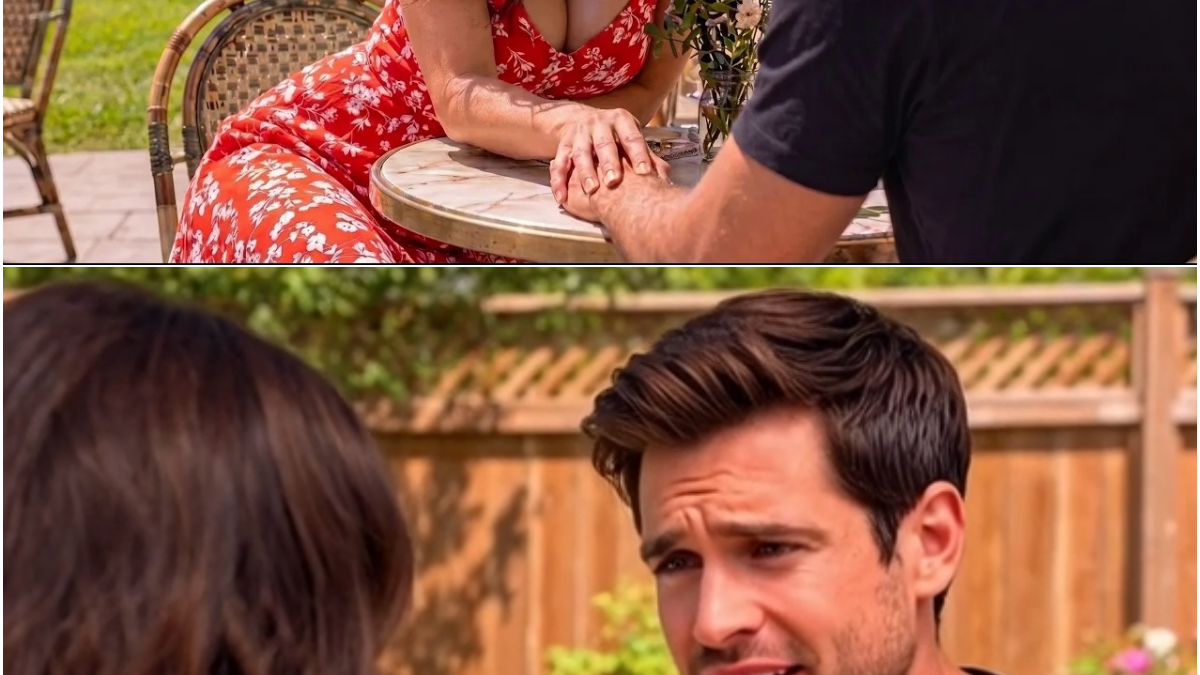
Her hand settled gently over mine. The gesture was quiet but deliberate. I turned my palm upward, allowing our hands to rest together on the rug.
Neither of us hurried to speak. The storm continued outside, but the atmosphere in the room had changed.
We were no longer pretending that the conversation was merely about household repairs or the inconvenience of a power outage.
Elena looked directly at me. Then she asked whether I was still single. I told her that I was.
She remained quiet for a moment, her fingers resting against mine. I could feel my heartbeat growing faster, but I did not look away.
We both understood that the question carried more meaning than its simple wording suggested. I knew she was Chloe’s mother.
I knew the years of family history that connected us. I also knew that neither of us could make a decision simply because we were lonely or because a storm had placed us together in a dark room.
But there was something genuine between us, something that had been developing through small conversations, shared memories, and the unexpected comfort of spending time together.
Elena moved slightly closer. I did not pull away. For the first time, we allowed ourselves to acknowledge the possibility that our relationship might become something neither of us had planned.
We spent the rest of the evening talking quietly. We discussed the years that had passed, the lives we had built separately, and the things we had both postponed because they seemed impractical.
The power eventually returned, but neither of us rushed to turn on the television or resume the ordinary routines of the house.
When I finally left, the storm had weakened to a light drizzle. I drove home with the windows slightly open, letting the cool air enter the cab while I tried to understand what had changed.
I had arrived to move boxes. I was leaving with the knowledge that my life might be moving in an entirely different direction.
Over the following days, Elena and I began speaking more regularly. Sometimes she called to ask about a household project.
Other times, she simply wanted to know how my day had gone. I found myself looking forward to her messages.
We were careful not to rush into anything. We understood that our history made the situation unusual, and we wanted to be certain that what we were building was based on genuine affection rather than a temporary need for companionship.
We spent time talking about our expectations. Elena explained that she did not want to return to a life in which every decision revolved around somebody else’s needs.
She wanted to pursue her interest in architecture, make her own choices, and discover what she enjoyed when she was not managing a household for a family.
I told her that I respected that. I did not want to become another person who expected her to organize her life around his plans.
Instead, I wanted us to create something that allowed both of us to grow. Seventeen days after the evening of the storm, she climbed into the passenger seat of my truck.
We were heading toward the county line to look at an old farmhouse she had recently discovered.
The property had been neglected for years. Its porch sagged, several windows needed replacing, and the interior required extensive work.
But Elena had already imagined what it could become. She had drawn preliminary plans and spent several evenings studying the property’s layout.
She wanted to redesign the interior, open up the main living area, and create rooms that made better use of the natural light.
She was excited in a way I had never seen before. As we drove along the rural highway, she rested her feet near the dashboard and let the warm breeze move through her hair.
Her presence in my truck no longer felt unusual. We had already begun developing the comfortable habits of two people who genuinely enjoyed each other’s company.
We could sit quietly without feeling obligated to fill every moment with conversation. When I reached over and rested my hand on her knee, she covered it with hers.
There was no hesitation. There was no uncertainty about whether the gesture was welcome. She smiled without opening her eyes, and I returned my attention to the road.
When we reached the farmhouse, the afternoon sun was beginning to sink toward the horizon.
The driveway was overgrown, and weeds had pushed through the cracks in the brick pathway.
The front porch had several damaged boards, and the railing needed to be replaced. Elena walked toward the house as though she were approaching a place she had already begun to love.
She examined the windows, studied the roofline, and pointed out the areas she wanted to change.
I followed her through the rooms, checking the condition of the floors and the framework.
Some of the problems were serious, but the underlying structure was promising. Elena was particularly interested in the possibility of opening the kitchen into the living room.
She wanted the main space to feel connected and welcoming rather than divided into small, isolated rooms.
She also wanted a dedicated studio where she could work on architectural drawings. When she described her plans, I realized that she was no longer talking about a renovation project alone.
She was describing the kind of life she wanted to create. I could help with the construction, but the vision belonged to her.
We spent the afternoon measuring rooms, inspecting the foundation, and discussing what could be preserved.
By the time we returned to my truck, we had already developed a rough schedule for the work.
Elena wanted to purchase the property. I encouraged her to take her time, examine the costs carefully, and make sure the investment would not prevent her from pursuing her other goals.
She appreciated my practical questions. After considering the numbers and arranging the necessary inspections, she decided to move forward.
The farmhouse would become our shared project, although we agreed that her architectural plans would guide the design.
For the first time in years, Elena had something that belonged entirely to her future rather than her paSt.
The transition from summer into autumn brought cooler mornings and shorter afternoons. Once we completed the purchase, we spent the first several weeks preparing the farmhouse for renovation.
The interior had to be stripped back to the framework in several rooms. We removed damaged drywall, pulled up old flooring, and replaced sections of wood that had been affected by moisture.
The work was demanding. There were long days of demolition, piles of debris, and more dust than I could remember dealing with on a single project.
But Elena surprised me. I had expected her to enjoy planning, choosing finishes, and organizing the design details.
I had not expected her to become so enthusiastic about the physical work. She wore old jeans, work boots, and a bandana to keep her hair out of the way.
She learned how to handle the tools safely and became increasingly confident as the renovation progressed.
When we needed to remove damaged plaster, she took the crowbar and got to work.
When I dismantled a section of framing, she helped clear the debris. We developed an efficient rhythm.
I handled the more complicated structural work while she organized materials, measured spaces, and helped with the tasks that could safely be completed together.
Her architectural knowledge became especially valuable when we reached the stage of planning the new interior.
She understood how the rooms could be arranged to improve the flow of the house.
She thought carefully about window placement, lighting, and the relationship between the kitchen and the living area.
I understood how those ideas could be translated into practical construction. Our skills complemented each other.
By the middle of October, the mornings had become cold enough that we could see our breath inside the unfinished house.
One afternoon, we took a break in what had once been the formal dining room.
We sat on overturned buckets, sharing a thermos of black coffee while the wind moved through the gaps around the temporary window coverings.
Elena wore one of my old flannel shirts over her own clothes. Her forearm had a small bruise from a piece of drywall that had shifted unexpectedly earlier that morning.
She looked exhausted. I suggested that we stop working for the day. She refused. The framing needed to be completed before the following week, and the roofer was scheduled to arrive on Thursday.
She wanted the house ready for the next stage of construction before the first major freeze.
I reminded her that there was no reason to rush. She explained that she was tired of postponing the things she wanted.
She wanted to wake up in the farmhouse, work in her own studio, and enjoy the results of the plans she had spent so many years imagining.
I understood. We agreed to finish the framing on schedule, but I insisted on carrying the heaviest lumber.
She accepted the arrangement with a tired smile. By November, the farmhouse had begun to resemble the home Elena had imagined.
We repaired the damaged floor joists, rebuilt the front porch, and installed large energy-efficient windows.
The new openings allowed natural light to reach the central living area, making the house feel more spacious.
The original rooms had been dark and disconnected. Now the interior was beginning to feel open and welcoming.
We also began preparing the surfaces for painting. One afternoon, we returned to the same hardware store where Elena had first asked me to choose between pale blue and gray.
The owner recognized us when we entered. He had been talking about retiring for months, but he was still working behind the counter and seemed pleased to see how much progress we had made.
Elena walked beside me, her arm linked casually through mine. We stopped in front of the paint display.
She examined the samples and immediately rejected gray. She explained that she had spent too many years surrounded by neutral colors.
She wanted something warm, distinctive, and full of character. I suggested terracotta for the main living room.
The color would work well with the natural light from the new windows and complement the original materials we planned to preserve.
She held the sample beneath the store lights. Then she looked at me and smiled.
She loved it. We purchased five gallons. Painting took four days. We worked late into the evenings, using construction lights to illuminate the unfinished rooms while a small battery-powered radio played classic rock.
The work was repetitive but satisfying. We moved around each other naturally, exchanging brushes, cleaning tools, and preparing the next sections without needing to discuss every detail.
The terracotta gradually transformed the living room. The walls became warm and inviting, and the entire space seemed to change as the color caught the afternoon light.
On the final evening, we finished the trim around the stone fireplace. Elena placed her brush on the paint can and stepped back to admire the room.
There was a streak of terracotta on her cheek, and her hands were covered in small spots of paint.
She looked tired, but she was smiling. She said that the walls were finally finished.
I walked over and wrapped my arms around her waiSt. She leaned against me immediately, resting her head on my shoulder.
For several minutes, we stood together in the freshly painted room. I reminded her that we still had cabinets to install, tile to lay, and several plumbing details to finish.
She laughed and asked me to allow her five minutes to enjoy the achievement. I told her that the room looked incredible.
She corrected me gently. We had built something beautiful together, she said. She had drawn the plans, but I had helped turn them into a real structure.
I agreed that the work belonged to both of us. Then I brushed the paint from her cheek and kissed her.
It was a quiet, affectionate moment, one that felt completely natural after the months of trust and companionship we had developed.
There was no need to wonder whether we were making the right choice every time we stood together.
We had already made that choice through our actions. The remaining work continued through November and into December.
We installed the kitchen cabinets, finished the bathroom tile, completed the electrical work, and checked the plumbing throughout the house.
There were still countless small details to address, but the farmhouse was becoming comfortable enough to live in.
Moving Elena out of her old house was the final major step. We rented a large box truck and spent two days packing her belongings.
Twenty-five years of household items filled dozens of cardboard boxes, each labeled according to the room where it would eventually belong.
The old house looked different without its furniture and decorations. The faded yellow curtains were gone.
The ceramic bowls had been wrapped and packed. The guest bedroom was empty, and the kitchen island where we had shared pizza now stood alone in the center of the room.
During the final walkthrough, Elena paused in the kitchen. She rested her gloved hand on the granite countertop and looked around the familiar space.
I remembered the first afternoon I had repaired her sink, the evening we had eaten pizza, and the storm that had brought us together in the darkness.
For a moment, I wondered whether she was reconsidering the move. Then she turned toward me and took my hand.
She said she had expected leaving to be difficult, but she no longer felt attached to the house in the way she once had.
She had spent too many years thinking that preserving the building meant preserving the life she had created inside it.
Now she understood that her memories could remain meaningful without requiring her to stay in the same place.
She was ready for something new. We walked outside together, and I locked the front door behind us.
The heavy click of the deadbolt sounded unusually final. We climbed into my truck and drove away without looking back.
The first night in the farmhouse was far from organized. We had not assembled the bed frame, so we placed the mattress directly on the bedroom floor.
Unpacked boxes filled the surrounding rooms, and several pieces of furniture were still waiting in the truck.
The weather had turned cold, and a heavy snowstorm had covered the town. We ordered takeout from the local diner and ate French fries from cardboard containers while sitting cross-legged on the mattress.
The house was warm, the terracotta walls glowed softly beneath the hallway lights, and the windows kept the winter wind outside.
We were exhausted. But neither of us wanted to sleep immediately. We talked about the renovation, laughed about the mistakes we had made, and discussed the rooms we still wanted to improve.
Elena told me she was already thinking about setting up her architectural studio. She wanted a large drafting table near the windows, shelves for reference books, and enough open space to spread out her drawings.
I promised to help build whatever furniture she needed. She reminded me that she wanted to design the room herself.
I agreed, although I secretly looked forward to seeing what she would create. Eventually, the conversation faded.
We settled beneath the blankets, listening to the wind moving through the oak trees outside.
Elena fell asleep beside me, her breathing slow and peaceful. I lay awake for a while, thinking about everything that had happened since the first afternoon at her old house.
I remembered the leaking pipe, the paint samples, the boxes in the basement, and the evening when the power had disappeared.
At the time, I had believed that I was simply helping someone I had known for years.
I had not imagined that those ordinary tasks would eventually lead me toward a completely different future.
For most of my adult life, I had concentrated on building things that belonged to other people.
I measured their rooms, repaired their foundations, and made sure their homes were ready for the years ahead.
When the work was finished, I packed my tools and drove away. Now I was lying in a house that Elena and I had rebuilt together.
The walls reflected her ideas. The floors carried the marks of our work. The rooms had been shaped by conversations, shared decisions, and countless hours spent solving problems side by side.
For the first time, I felt that I had helped create a place where I genuinely belonged.
I turned toward Elena and gently pulled the blanket higher over her shoulders. She moved slightly closer in her sleep, resting her arm across my cheSt.
Outside, the winter storm continued. Inside, everything was quiet and warm. I realized that I no longer felt the need to spend every evening searching for another repair to complete or another project to begin.
There would always be work waiting for me. There would always be another roof to inspect, another wall to rebuild, or another family needing help with a difficult renovation.
But I had finally learned that building a life required more than knowing how to repair a house.
It required knowing when to stop working, when to listen, and when to allow someone else to become part of the future I was creating.
Elena had spent years designing a home for people who eventually chose different paths. Now she had the opportunity to build a life around her own ambitions.
And I had the opportunity to stand beside her, not as someone responsible for fixing every problem, but as someone who wanted to share the ordinary days as much as the extraordinary ones.
The farmhouse was not perfect. There were still unfinished projects, boxes waiting to be unpacked, and small repairs that would probably occupy our weekends for years.
But none of that bothered me. The foundation was strong. The walls were standing. The rooms were filled with warmth and possibility.
And for once, I was not preparing to leave when the work was finished. I was finally home.
Disclaimer: This content may be created by Al for entertainment purposes. Any resemblance to real persons, events, or places is coincidental.








