Lost Cartoon Episodes That Were Erased For A Reason
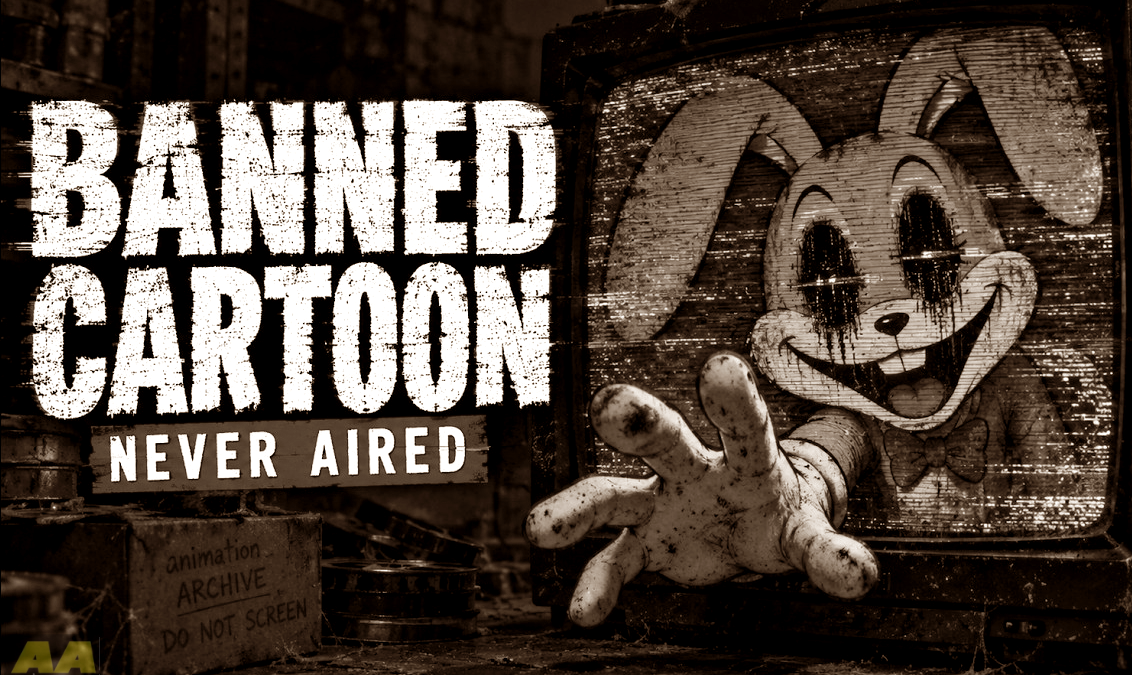
There was a strange moment in television history when a cartoon could disappear without warning.
One week, children could sit down after school and watch their favorite characters battle monsters, travel through impossible worlds, or stumble into ridiculous adventures.
The next week, the same episode was simply gone. Sometimes the reason was obvious. A weapon appeared where the network did not want one.
Sometimes the problem was far stranger, such as a claymation creature that frightened an entire generation of children badly enough that broadcasters reconsidered showing it.
In other cases, an episode became controversial years after everyone had already forgotten about it, not because the story had changed, but because the world around it had.
Some disappeared because of religious imagery, some because of language, some because of frightening visuals, and one Pokémon episode became associated with hundreds of children experiencing seizures after a flashing scene aired in Japan.
Yet these stories have something else in common. They remind us that cartoons are not always as harmless as they appear.
Behind the bright colors and simple characters are decisions made by broadcasters, parents, creators, governments, and audiences, all deciding what children should or should not see.
So what happens when a cartoon crosses that invisible line, and who gets to decide where that line really is?
The story begins with Pokémon, a series that became one of the biggest children’s franchises in the world while also becoming connected to one of television’s most unusual controversies.
The episode was called The Legend of Dratini, and for viewers who grew up watching Pokémon in English, it was an episode that effectively did not exist.
In the story, Ash and his friends visit the Safari Zone, where they encounter a park warden carrying a firearm.
The weapon is not merely visible in the background. It becomes part of several scenes involving threats and confrontation.
The warden points the firearm at the characters, creating images that were considered unsuitable for the English language children’s broadcaSt.
The strange part was that the episode was not created as some unusually dark experiment.
It was simply another Pokémon adventure, set in a location where the characters encountered danger in a way that happened to involve firearms.
The episode originally aired in Japan, where it became part of the series there. But the English dub never included it in the normal television run.
For children watching Pokémon in English, the Safari Zone adventure therefore had an invisible gap.
The story continued without The Legend of Dratini, and many viewers had no idea that an entire episode was missing.
The decision was especially interesting because Pokémon already revolved around creatures battling one another. The franchise regularly showed characters sending Pokémon into fights, using special attacks, and capturing creatures inside small balls.
Yet the appearance of an ordinary firearm created a boundary that the English broadcast was unwilling to cross.
The image of a park warden pointing a weapon at Ash and the others was enough to make the episode unsuitable for that version of the children’s lineup.
The Legend of Dratini was not banned everywhere, however. Its history was more complicated than that.
It remained part of the Japanese broadcast history, while English speaking audiences were largely left without it.
And that was only the beginning. There was another children’s cartoon whose disappearance had almost nothing to do with weapons or violence.
It involved a penguin. Pingu was a Swiss claymation series following a young penguin and his family through everyday adventures.
The animation looked simple and friendly. The characters moved through a world made from clay, and the stories usually focused on ordinary childhood problems.
Then came Pingu’s Dream. The episode introduced something that looked completely out of place in such a gentle world.
A massive walrus appeared in Pingu’s dream. The creature was enormous, strange, and deeply unsettling.
Instead of looking like a friendly character designed to make children laugh, the walrus seemed to have wandered in from a nightmare.
For many children who encountered the episode during the 1990s and early 2000s, the image remained long after the television had been switched off.
That was the problem. The frightening appearance of the walrus became so memorable that the episode developed a reputation for being unusually disturbing for a children’s program.
In 2003, it was pulled from circulation in a number of places because broadcasters considered the imagery too frightening for young viewers.
There was no complicated legal battle behind it. No hidden adult message was necessary. The walrus itself was enough.
A cartoon could disappear simply because children found one creature too frightening. Then there was Dexter’s Laboratory, a series that seemed almost perfectly designed for chaotic television.
Dexter had his secret laboratory, Dee Dee constantly invaded it, and the world around them seemed to operate according to whatever ridiculous scientific idea Dexter had invented that day.
But Dexter’s Laboratory also contained a series of shorter adventures called Dial M for Monkey.
These segments followed Dexter’s pet monkey, who secretly possessed superhero abilities. One particular segment introduced a villain called Barbequor, an intergalactic character who traveled through space searching for planets to barbecue and eat.
He was accompanied by an assistant called the Silver Spooner. The parody was not subtle.
Barbequor was an obvious parody of Galactus, while the Silver Spooner was designed as a parody of the Silver Surfer.
That created problems. Copyright concerns became part of the episode’s history, while the Silver Spooner character also attracted criticism because of how exaggerated his presentation was.
Cartoon Network eventually pulled Barbequor from reruns in 2004. It was also left off DVD releases, including the complete series set, and another episode was used in its place.
For years, fans who wanted to see it had difficulty finding it through official releases.
Then the internet changed everything. Clips and copies began circulating online, and YouTube eventually made the episode far easier for curious fans to locate.
But Dexter’s Laboratory had another episode that became an even more famous piece of lost animation history.
This one was called Rude Removal. The basic idea was simple. Dexter creates a machine intended to remove the rude parts of himself and Dee Dee.
Instead of simply making them more polite, however, the machine produces separate versions of the siblings who are much ruder than the originals.
The joke immediately creates a problem. The new versions of Dexter and Dee Dee swear throughout the episode.
The language was partially censored in the version that circulated, but enough could still be understood to make the intention obvious.
One character asks, “Hey, where’s the freaking candy?” Another declares, “That’s cute and all, but let me tell you something.
I make my own rules.” For a series aimed at children, that was a problem Cartoon Network was unwilling to put into its regular television schedule.
Rude Removal therefore never received a normal original television broadcaSt. But the episode was not completely forgotten.
It was shown at animation events and private screenings, which meant stories about its existence slowly spread among fans.
For years, it occupied an unusual position. It was not exactly lost, because people knew it existed.
It was not normally available either. It became one of those cartoon stories that children could hear about from older fans without ever actually seeing the episode themselves.
Then, in January 2013, Adult Swim uploaded the segment online. Suddenly, something that had existed mainly as a piece of animation folklore became available for a much larger audience.
The story was not about a dangerous monster or a forbidden image. It was about words.
And sometimes words were enough. The Loud House encountered a completely different kind of problem.
The episode was called One Flu Over the Loud House. The title itself contained a small joke.
Flu was spelled F L U rather than the word flew. Inside the story, the Loud family dealt with a sickness outbreak that gradually turned into a chaotic, zombie-like situation.
Under ordinary circumstances, a cartoon parody involving an outbreak might have seemed harmless. The episode originally aired in 2016 and continued appearing in reruns for four years.
Then the real world changed. In 2020, an enormous global pandemic transformed the way audiences thought about sickness, isolation, and outbreaks.
Suddenly, a cartoon episode about a spreading illness did not feel quite as distant from reality.
Networks began pulling One Flu Over the Loud House from circulation in a number of countries.
The episode had already faced restrictions in Poland because of its horror elements, but the events of 2020 gave the episode a completely different context.
The story had not changed. The characters had not changed. The animation had not changed.
The audience had changed. Eventually, the episode returned to television in the United States, airing on Nicktoons in 2022 during a marathon.
Its history demonstrated something important about controversial cartoons. Sometimes the episode itself is not what changes.
The world around it changes, and suddenly the same joke carries a completely different meaning.
The Simpsons had an even stranger example. Stark Raving Dad originally aired in 1991. Homer ends up in a mental hospital after arriving at work wearing a pink shirt.
While there, he meets a man who believes he is Michael Jackson. The remarkable part was that Michael Jackson actually provided the voice for the character, although he was credited under a pseudonym.
For years, Stark Raving Dad remained one of the most remembered episodes from the early period of The Simpsons.
Then, decades after its original broadcast, the situation changed. In 2019, the episode was removed from television circulation.
The reason was not a new discovery in the script. The reason involved the renewed public controversy surrounding Michael Jackson and the attention generated by the documentary Leaving Neverland.
An episode that had existed for decades suddenly became difficult to find on major platforms.
It was not simply a story about something offensive happening inside the episode. It was a story about a person associated with the production becoming the center of a much larger controversy.
That distinction made Stark Raving Dad especially unusual. The episode had been broadcast in 1991.
It had already become part of television history. But in 2019, its place in the public conversation changed, and the episode changed with it.
The next example came from a show that had built its entire reputation around crossing boundaries.
South Park had never been particularly interested in avoiding controversy. In 2001, Super Best Friends aired.
The episode featured a group of religious figures who joined together to fight evil. Among them was a depiction of Muhammad.
At the time, the episode aired normally. There was no immediate disappearance. Years later, however, South Park’s use of the character became connected to serious controversy surrounding other episodes.
The show attracted threats, and Comedy Central began restricting the availability of episodes featuring Muhammad.
Super Best Friends eventually disappeared from the show’s website and from streaming services such as Paramount Plus.
That made the episode seem like another lost cartoon. But there was an important difference.
It was not truly loSt. Physical copies still existed. Anyone who owned the DVD could still watch it.
The internet also preserved information about it. That distinction matters because television history has changed dramatically with streaming.
When a program existed only on a broadcast schedule, removing it could make it extremely difficult to find.
When an episode received a physical release, however, it could continue surviving in private collections even after broadcasters stopped showing it.
A missing streaming title was not necessarily a missing piece of history. Sometimes it was simply a piece of history that had moved from television into people’s shelves.
The Powerpuff Girls offered another unusual case. The episode was called See Me, Feel Me, Know Me.
It originally aired in Canada on March 18th, 2004. The entire story was structured as a rock opera, with the narrative told through songs.
The Powerpuff Girls were tired of constantly fighting villains, so they made a deal with a strange gnome who promised to eliminate evil from Townsville.
The price was their powers. At first, the arrangement sounded almost ideal. No more villains.
No more battles. No more constant emergencies. But the peaceful society created by the gnome came with another condition.
Everyone began worshipping him. The episode also contained imagery that Cartoon Network executives believed could be interpreted as religious symbolism.
Some beans resembled crosses, and one character looked similar to Jesus. There were also flashing strobe effects.
The creator, Craig McCracken, later explained that the religious imagery had not been intentional. But the network was unwilling to take the chance.
American viewers therefore did not receive the episode as part of the original American television broadcaSt.
Instead, audiences had to wait until a DVD release in 2009 to see it. Again, the episode had not disappeared completely.
It had simply taken a different route to its audience. Then came the episode that transformed a children’s anime into a worldwide discussion about television safety.
Electric Soldier Porygon originally aired in Japan on December 16th, 1997. The story followed Ash and his friends as they investigated a problem involving the Pokémon transfer system.
At one point, Team Rocket fired missiles toward Pikachu. Pikachu responded with a thunderbolt. What happened next became one of the most infamous moments in animated television history.
The screen flashed rapidly between intense red and blue lights. For some viewers, the effect was overwhelming.
Hundreds of children in Japan experienced seizures and other physical reactions while watching the broadcast, and many were taken to hospitals.
The incident became known as the Pokémon Shock. The broadcast led to a major investigation and a temporary suspension of the show.
Electric Soldier Porygon was pulled from circulation. Unlike The Legend of Dratini, this was not primarily an issue with cultural standards or broadcast policy in another country.
The problem was directly connected to the visual presentation of the episode itself. The scene had demonstrated something that television producers could not simply dismiss.
A visual effect intended to create excitement had produced an unexpected physical reaction among viewers.
The episode was never given a normal official broadcast release in other countries. The character Porygon became forever associated with an episode that was not even primarily about Porygon itself.
For many viewers, the title became famous precisely because they had never seen the complete episode.
And then there was Ren and Stimpy. The Ren and Stimpy Show had always occupied an unusual place in children’s television.
It was colorful and absurd, but it was also filled with strange imagery and humor that could become deeply unpleasant.
Then came Man’s Best Friend. The episode followed Ren and Stimpy as they moved in with a character named George Liquor.
George subjected the characters to harsh discipline, and the story contained strong violence, cigar references, and adult humor that pushed the series far beyond what Nickelodeon was comfortable putting into its normal lineup.
Nickelodeon refused to broadcast the episode during the original run of the show. For years, Man’s Best Friend remained unavailable on regular television.
Then, in 2003, Spike TV aired it as an unofficial premiere connected to Ren and Stimpy Adult Party Cartoon.
That version of the series was even more adult and inappropriate than the original show.
Man’s Best Friend eventually received a TV-MA rating and was released on DVD. So once again, the episode was not truly gone.
It had simply moved outside the children’s television environment where it had originally been intended to exiSt.
Looking at all these stories together creates a strange map of what television once considered acceptable.
The Legend of Dratini disappeared from English Pokémon broadcasts because firearms created a problem for the intended children’s audience.
Pingu’s Dream became notorious because a claymation walrus frightened children far more than anyone expected.
Barbequor became entangled in parody and copyright concerns. Rude Removal became infamous because its characters used language that could not comfortably fit into a children’s broadcaSt.
One Flu Over the Loud House became uncomfortable after the world experienced a real pandemic.
Stark Raving Dad disappeared decades after its original broadcast because of controversy surrounding Michael Jackson.
Super Best Friends became difficult to find because of controversy surrounding the depiction of Muhammad and the broader circumstances surrounding South Park.
See Me, Feel Me, Know Me encountered concerns about religious imagery and flashing effects. Electric Soldier Porygon became associated with one of the most significant television safety incidents involving an animated program.
Man’s Best Friend crossed a line into adult humor that Nickelodeon would not allow during the original run.
None of these episodes followed exactly the same path. Some were pulled immediately. Some disappeared years later.
Some never aired in certain countries. Some were replaced on DVD. Some survived through physical media.
Some eventually appeared online. And some became famous because people knew they existed but could not easily watch them.
That is what makes lost cartoon episodes so fascinating. The word lost can be misleading.
An episode may be unavailable on television while still sitting inside someone’s DVD collection. It may disappear from a streaming service while surviving online.
It may never have aired in one country but remain completely ordinary in another. Or it may have been shown once, create an unexpected reaction, and then vanish from the broadcast schedule almost completely.
The history of these cartoons is therefore not simply a history of censorship. It is also a history of changing standards.
In 1991, Stark Raving Dad was simply another Simpsons episode. In 2019, its association with Michael Jackson had become impossible for broadcasters to treat the same way.
In 1997, Electric Soldier Porygon was another Pokémon adventure until viewers reacted physically to the flashing sequence.
In 2004, See Me, Feel Me, Know Me was a strange Powerpuff Girls rock opera, but religious imagery and flashing effects created concerns for Cartoon Network.
In 2020, One Flu Over the Loud House suddenly felt different because viewers had lived through a worldwide pandemic.
The cartoons remained frozen in time. The audience did not. That may be the strangest part of all.
A cartoon can be created on one day, broadcast for years, and then become controversial because something happens far away from the studio that produced it.
A character can be designed as a joke and later become associated with a controversy that nobody involved could have predicted.
A scene created to make children laugh can become frightening because the audience remembers it differently.
An episode can be considered ordinary in one country and unacceptable in another. And sometimes an episode can become famous precisely because it was removed.
Children who never saw The Legend of Dratini still learned that it existed. Fans who could not normally watch Rude Removal spent years talking about it.
Pingu’s Dream became memorable because of one enormous walrus. Electric Soldier Porygon became one of the most recognizable Pokémon episodes despite being one of the hardest to see through normal television broadcasts.
The missing episodes became stories of their own. They lived in rumors, fan discussions, DVD collections, old recordings, convention screenings, and eventually the internet.
Television once had a simple rhythm. A show aired. The credits rolled. The television turned off.
If an episode disappeared, the audience had very little power to bring it back. The internet changed that.
Suddenly, an episode that had been unavailable for years could appear on a computer screen.
A fan could upload an old recording. Someone could explain what happened. Another person could prove that the episode existed.
A forgotten broadcast could become a subject of discussion decades later. That does not mean every missing episode should return to television.
It simply means disappearance is no longer the same thing as complete erasure. The stories remain.
The footage remains somewhere. The memories remain. And perhaps that is why these cartoons continue to fascinate people long after the original broadcasts have faded.
They are not just television episodes that were removed. They are snapshots of moments when animation collided with the rules, fears, technology, expectations, and controversies of the real world.
A firearm could change the fate of a Pokémon episode. A walrus could haunt an entire generation.
A parody could run into copyright concerns. A few swear words could keep an episode off television for years.
A worldwide crisis could transform an ordinary cartoon plot into something uncomfortable. A famous voice actor could make an episode controversial decades after it aired.
Religious imagery could turn a children’s rock opera into a broadcasting dilemma. A flashing sequence could change the history of an entire franchise.
And a show already known for pushing boundaries could create an episode that simply went too far for its original network.
The strange thing about all of them is that the cartoons themselves never understood what was happening.
Ash and his friends continued their adventure. Pingu continued dreaming. Dexter continued building machines. The Loud family continued causing chaos.
Homer continued stumbling through Springfield. The Powerpuff Girls continued protecting Townsville. Ren and Stimpy continued being Ren and Stimpy.
The characters never knew that somewhere beyond the screen, adults were deciding whether their stories belonged on television.
That is the hidden life of a cartoon episode. For twenty minutes, it exists as a piece of entertainment.
Afterward, it becomes something else. Sometimes it becomes a memory. Sometimes it becomes a controversy.
Sometimes it becomes a collector’s item. Sometimes it becomes a rumor. And sometimes, years later, it becomes one of those strange pieces of television history that people search for simply because they cannot believe it ever existed.
The screen goes dark, the credits disappear, and the episode that millions of viewers once could have watched becomes something much more mysterious.
Not quite gone. Not quite available. Just waiting somewhere in the enormous archive of television history, ready to remind anyone who finds it that even the brightest cartoons can have surprisingly complicated stories behind them.
Disclaimer: This content may be created by Al for entertainment purposes. Any resemblance to real persons, events, or places is coincidental.








