“It’s Fine. Everyone Forgot My Birthday,” She Laughed—Then the Mafia Boss Said, “I Didn’t.”
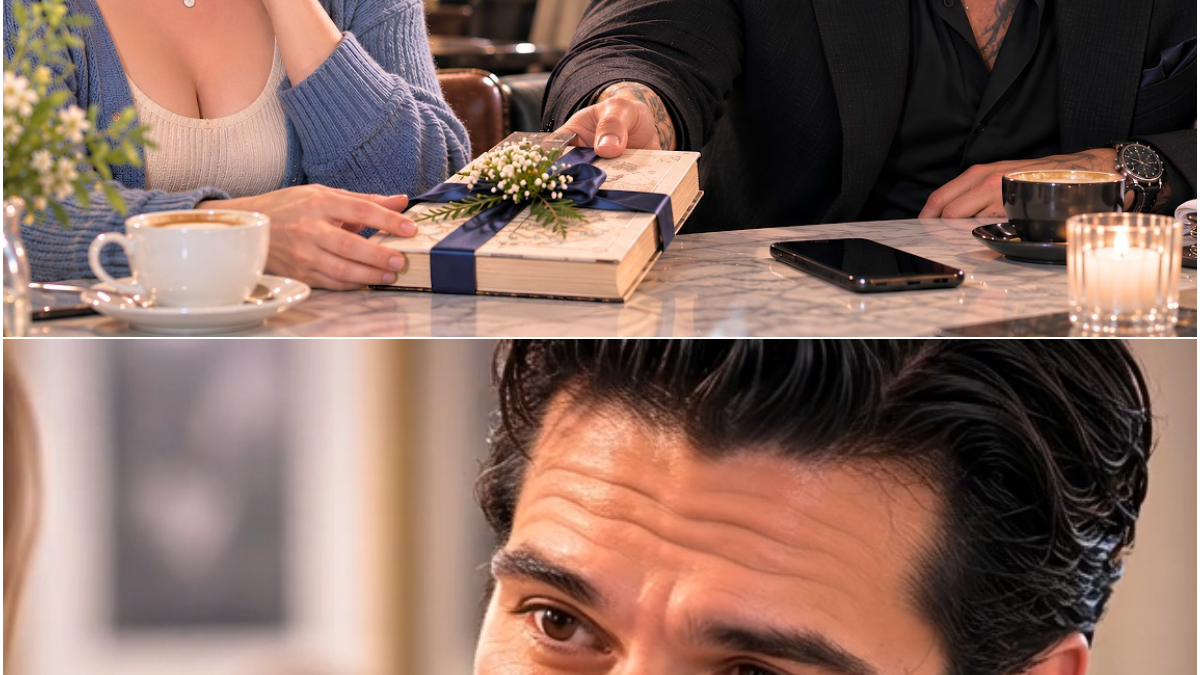
Sophie Carter smiled as if nothing had happened. She sat across from Nicholas Falcone with her hands folded around a glass she had barely touched, listening to him speak about an ordinary Tuesday as though the date meant nothing.
Outside the restaurant windows, the city moved beneath a gray evening sky, unaware that one of the most powerful men on the East Coast had stopped listening to his phone and started watching her instead.
Nicholas was a man whose name made businessmen answer immediately and politicians check their schedules twice.
Yet at that moment, none of that seemed to matter. His attention was fixed entirely on Sophie.
He reached into the pocket of his coat and placed a small wrapped package on the table between them.
She stared at it. She knew that look in his eyes. She had seen it before, usually when he remembered something she had mentioned only once.
Her fingers moved toward the package, then stopped. For years, Sophie had taught herself that being forgotten was easier when she expected nothing.
Birthdays could pass quietly. Promises could disappear into busy schedules. Little details could vanish without explanation.
She had become so good at pretending that nothing mattered that even Nicholas had once believed her when she said she was fine.
But now the package waited between them, carrying a memory from when she was nineteen, something she had mentioned only once, something she had assumed no one would ever remember.
Nicholas watched her carefully. He knew what was inside. Sophie did not. So why was she suddenly afraid to open it?
“It’s fine,” Sophie said softly. “Everyone forgot.” Nicholas slowly put down his phone. “I didn’t.”
Her smile disappeared. He pushed the package a little closer. “You said you lost your copy when you were nineteen.”
Sophie stared at him. “I told you that once.” “I know.” Her eyes filled before she could stop them.
“Sophie.” She looked away. “Don’t.” “Don’t what?” Her voice cracked. “Make remembering me feel unusual.
I might start expecting it.” Six weeks earlier, Sophie had been sitting in a jury assembly room fighting a losing battle with a packet of crackers.
The plastic wrapper had refused every attempt she had made to open it. She pulled at one corner, tried another, then pressed her fingernail into the seam with growing irritation.
Around her sat dozens of strangers who looked equally unhappy about being there. Fluorescent lights hummed overhead.
Papers rustled. A television mounted in the corner played silently. Everyone seemed to be waiting for someone else to decide when the morning would finally begin.
Sophie pulled the wrapper again. Nothing. A deep voice came from two seats away. “Do you want help?”
She turned. The man beside her was tall, broad shouldered, and distractingly handsome. His dark hair was neatly arranged without looking carefully arranged.
His clothes were expensive, though he wore them with the quiet confidence of someone who had no need to prove their value.
He had spent most of the previous twenty minutes checking his phone without speaking to anyone.
Sophie narrowed her eyes. “Don’t.” One eyebrow lifted. “I didn’t say anything.” “Your face did.”
For a moment, he simply studied her. Then he held out his hand. Sophie surrendered the crackers.
He opened them immediately. Of course he did. She took the packet back. “Congratulations on your first civic contribution today.”
Something shifted at the corner of his mouth. Almost a smile. “You’re welcome.” “I didn’t thank you.”
“You were going to.” “I really wasn’t.” This time he actually smiled. Sophie ate one cracker and returned her attention to the paperback resting in her lap.
An announcement informed them that proceedings had been delayed. A collective groan moved through the room.
The man beside her glanced toward the ceiling. “This could take all morning.” “Then you have plenty of time to learn humility.”
“I doubt it.” She looked at him. “You sound very confident.” “I usually am.” “That sounds exhausting.”
His eyes rested on her for a moment. “You have no idea.” Sophie smiled despite herself and returned to her book.
Twenty minutes passed. Then he glanced at the cover. “Good.” She looked at him. “What?”
“That book.” She looked down at the paperback. “No.” “No what?” “It isn’t good.” “Then why are you reading it?”
“I’m stubborn.” “That seems inefficient.” Sophie studied him. “You look like someone who says that often.”
“I do.” “You admit it?” “I’m not sure I should have.” She laughed quietly. A few minutes later, Sophie happened to glance at the paperwork beside him.
Nicholas Falcone. The surname registered immediately. Falcone was not an ordinary name in their part of the East CoaSt. People knew it.
Business owners knew it. City officials knew it. Men who negotiated contracts knew it. There were names that carried history without needing explanation, and Falcone was one of them.
Sophie looked at Nicholas once. Then she returned to her terrible novel. Eventually, he noticed.
“You recognized my name?” “I recognized the surname.” “And?” “And I decided it wasn’t my business.”
That seemed to surprise him. “Yes,” he said after a moment. “That Falcone.” Sophie blinked.
“Oh.” Nicholas waited. “That’s all?” “What would you prefer?” “I don’t know.” Sophie considered him.
“Congratulations on organized intimidation.” Nicholas stared at her. Then he laughed. Not politely. Actually laughed.
Sophie smiled and returned to her book. She was slightly nervous now. Only a fool would not have been.
Nicholas Falcone was apparently one of the most powerful men on the East CoaSt. Yet sitting beside her in a room full of bored strangers, he seemed temporarily less mysterious.
Another hour passed. They talked occasionally. Nothing important. Nicholas mentioned that he had skipped breakfaSt. He complained about voicemail with an intensity Sophie found disproportionate.
At one point, he mentioned that his mother lived in Florida. When Sophie returned from the vending area, she placed a coffee beside him.
Nicholas looked at the cup. “What is this?” “You skipped breakfaSt.” He picked it up.
“No cinnamon.” Nicholas looked at her. Sophie shrugged. “You told me you hate it.” For some reason, he became very still.
Sophie noticed. “What?” “Nothing.” “That looked like something.” Nicholas glanced down at the coffee. “People usually remember more important things about me.”
“Cinnamon hatred seemed emotionally significant.” His mouth curved. Sophie sat down. She checked her phone.
There was no message. Nicholas noticed. “Waiting for something?” “My coworker is running the children’s program at the library without me.”
“You work at a library?” “Neighborhood public library.” “And you’re worried she’ll be fine?” “That wasn’t my question.”
Sophie smiled. “A little.” “A little?” “We work with children. Survival is a respectable metric.”
Nicholas smiled. They were called away for processing before the conversation could continue. Nearly an hour later, Sophie returned to the assembly room.
Nicholas was already there. He looked up. “The children’s program. Did your coworker text?” Sophie stopped.
“Yes.” “How did it go?” “Fine.” “Apparently nobody set anything on fire.” “High standards.” “We work with children.”
He smiled. Sophie sat down. Then she looked at him. “You remembered.” “You told me.”
“People do that all the time.” Nicholas studied her. “Do they?” Sophie opened her book.
She did not answer. Nicholas noticed that too. His own release came shortly afterward. No prosecutor or defense attorney seemed particularly enthusiastic about putting Nicholas Falcone on a jury, and Sophie found that unsurprising.
Her own release came later. When she finally stepped outside the courthouse, Nicholas was near the bottom of the steps finishing a phone call.
He put the phone away when he saw her. “You survived.” “So did you.” “Barely.”
Sophie lifted an eyebrow. “You were here for three hours.” “It was a difficult three hours.”
“Your sacrifice will inspire generations.” Nicholas smiled. For a moment, neither moved. There was no reason for them to see each other again.
Sophie found herself unexpectedly disappointed by that. Nicholas glanced at the empty coffee cup still in her hand.
“Coffee?” “We already had coffee.” “Dinner?” Sophie looked at him. “We were never jurors.” “Technicality.”
Nicholas stepped slightly closer. Not enough to crowd her. Just enough that his voice no longer had to carry over the people leaving the courthouse.
“Dinner, Sophie.” She knew who he was. There was no mystery waiting to be uncovered later.
Nicholas Falcone was powerful, complicated, and capable of making her life considerably less ordinary if she allowed him into it.
But the man standing in front of her was also the one who had opened her crackers, argued about a terrible book, and remembered to ask whether a children’s program at a neighborhood library had gone well.
Sophie smiled. “Okay.” Nicholas’s expression softened. “Okay, dinner.” He nodded once. Then Sophie pointed at him.
“Somewhere I can actually hear you.” “I know restaurants.” “That sentence sounded threateningly expensive.” “It wasn’t.”
“I don’t believe you.” Nicholas almost smiled again. Sophie walked down the courthouse steps beside him.
Neither of them knew yet that the smallest details would become the most important part of what was beginning between them.
Nicholas chose a small Italian restaurant for their first dinner. It was not private. It was not exclusive.
There were no men in dark suits waiting beside the entrance. Sophie noticed immediately. “You listened.”
Nicholas pulled out her chair. “You sound surprised.” “I said I wanted somewhere I could hear you.”
“And now you can.” “That remains to be seen.” He sat across from her. Sophie quickly discovered something unexpected.
Nicholas Falcone was terrible at casual conversation. Not shy. Not awkward. Just clearly accustomed to conversations having a purpose.
After several minutes, Sophie put down her menu. “What do you do for fun?” Nicholas looked at her.
“Define fun.” “Oh, this is worse than I thought.” “What?” “You genuinely don’t know.” “I know what fun is.”
“Then name something.” He considered the question with the seriousness of a business negotiation. “Long drives.
Good history.” “That’s not an activity.” “Reading history.” “Better.” “Old movies.” Sophie smiled. “There we go.
You’re becoming human.” “I was concerned about your opinion of me.” “No, you weren’t.” “No.”
She laughed. Over dinner, Nicholas learned that Sophie disliked raisins, loved old mystery novels, and had worked at the same neighborhood library for nearly six years.
Sophie learned that Nicholas sometimes cooked when he wanted to think. “Are you good?” “No.”
She blinked. “That was refreshingly honeSt.” “I didn’t say I enjoy the results.” Their second date happened four days later.
Sophie suggested it. That surprised Nicholas. “You expected me to wait for you to ask?”
“I wasn’t sure.” “Well, now you’re sure.” They had coffee. Then another dinner. Then a Saturday afternoon spent wandering through a used bookstore where Nicholas bought nothing and Sophie bought four books after insisting she only wanted to browse.
Their texts became more frequent. So did their calls. Nicholas began noticing a pattern. Sophie remembered everything.
He mentioned a difficult meeting on Thursday. Thursday evening, she texted him. “Survived?” His mother’s birthday came up once.
Two weeks later, Sophie asked whether the flowers he had sent had arrived. At a restaurant, she remembered which table he had liked before.
She remembered his coffee. No cinnamon. Never voicemail. Nicholas initially assumed she was unusually attentive to him.
Then he saw her with other people. She remembered a coworker’s appointment, a friend’s job interview, her brother’s anniversary, and the name of a librarian’s sick dog.
Sophie carried small pieces of other people’s lives around as if making room for them cost nothing.
One evening, Nicholas asked her something he had never thought to ask before. “What do people remember about you?”
Sophie laughed. “That’s a strange question.” “Answer it.” She thought for a moment. “Apparently that I know everybody’s birthdays.”
“That isn’t what I asked.” Sophie reached for her water. “Did you decide what you’re ordering?”
Nicholas watched her change the subject. He let her. But he remembered the question. Several dates later, he arrived at Sophie’s apartment carrying a paperback.
She looked at it. “What is that for?” “You know flowers exiSt.” “I’ve heard rumors.”
She took the book. Then froze. It was the sequel to a novel she had mentioned weeks earlier.
A book she had loved when she was younger. She looked up. “You remembered?” “Yes.”
“I mentioned this once.” “I know.” Her eyes dropped to the book. Nicholas saw her expression change.
“Sophie.” She smiled too quickly. “It’s nothing.” “It doesn’t look like nothing.” She ran her thumb along the cover.
“My copy disappeared when I was nineteen. I lent it to someone and never got it back.”
“I remember.” That made it worse. Her eyes suddenly burned. Nicholas frowned. “Did I do something wrong?”
“No.” She laughed softly, embarrassed. “That’s the problem.” “I don’t understand.” “Never mind.” Nicholas’s expression became serious.
“I don’t want to never mind.” Sophie looked at him. The sentence was simple. But people had accepted her never minds for years.
She swallowed. “Fine. Don’t worry about it.” Nicholas seemed almost irritated by the idea that something could matter to her and he was expected not to know what it was.
Sophie looked down at the book. “I’m just not used to people remembering things I say.”
“I remember.” “I’ve noticed.” “Is that bad?” Sophie smiled. “No.” He stepped closer. “Can I kiss you?”
Her heartbeat jumped. “Yes.” Nicholas kissed her slowly. There was nothing uncertain about the attraction between them.
But there was patience in the way he touched her. When they separated, Sophie was still holding the book between them.
Nicholas looked down. “I’m competing with a paperback.” “The paperback is currently winning.” “I bought the paperback.”
“Excellent strategic error.” He laughed and kissed her again. After that, their relationship deepened naturally.
Some dates were elegant. Others involved takeout on Sophie’s couch. Sometimes Nicholas called her. Sometimes she called him.
She discovered he hated leaving voicemails so much that if she did not answer, he would text her.
“Call me.” Sophie once replied, “You know phones allow recorded messages now.” Nicholas answered, “Barbaric.”
She laughed for several minutes. Nicholas kept remembering things. Her favorite soup. An actor she could not stand.
Her mother’s upcoming appointment. Which side of the couch Sophie preferred when they watched television.
One evening, she stared at him. “I mentioned that once.” “Yes.” “That is becoming unsettling.”
“I was told remembering things was romantic.” “There should be limits.” “I’ll investigate.” She joked about it.
But privately, it mattered more than she wanted Nicholas to know. Being remembered felt dangerously close to being seen.
And Sophie had spent years becoming comfortable with the opposite. Her birthday approached quietly. She mentioned the date once while discussing her work schedule.
Nicholas said nothing unusual. Sophie expected nothing unusual. Her family normally arranged something small, but that year her brother thought the dinner was the following weekend.
Her mother believed Sophie would be working late. Her best friend was traveling. Nobody was cruel.
Nobody deliberately ignored her. They simply got the date wrong. On the morning of her birthday, Sophie woke to an ordinary Tuesday.
She went to work. She answered emails. She helped a teenager find a research book.
She fixed a printer jam. At lunch, a coworker asked about her plans. “Probably takeout.”
She made it sound funny. By late afternoon, she had received promotional birthday emails from two stores and one automated message from her dentiSt.
Her mother had not called. Her brother had not texted. Her best friend had not remembered yet.
Sophie told herself it did not matter. She was thirty three. Birthdays were not emergencies.
Then her phone vibrated. Nicholas. “Dinner tonight.” Sophie stared at the message. There was no mention of her birthday.
For one brief, humiliating second, disappointment hit harder than it should have. Of course he had forgotten too.
Why would he remember? She had mentioned it once weeks ago. Sophie typed a short reply.
“Sure.” Then she put the phone away. She did not remind him. That was the part Sophie could not yet see clearly.
She believed expecting nothing protected her from disappointment. So instead of telling people what mattered, she quietly waited to discover whether she mattered enough for them to remember without being told.
That evening, Sophie arrived expecting dinner. Nicholas opened the door. No crowd waited behind him.
No balloons. No extravagant display. Just Nicholas. And on the table behind him sat her favorite casual meal.
The dessert she had once said reminded her of childhood. And one small wrapped book.
Sophie stopped. Nicholas looked at her. “Happy birthday.” She did not move. For a second, she could not.
Nicholas’s expression changed. “Sophie.” She looked at the table, then at him. “You remembered?” Nicholas answered as if there had never been another possibility.
“Of course.” Sophie stared at the table. Her favorite meal. The dessert she had loved as a child.
The small wrapped book. Nicholas picked it up and handed it to her. She opened the paper carefully.
Then stopped. It was an old secondhand copy of a novel she had once owned.
The original copy she had lost when she was nineteen. Her fingers tightened around it.
“You found this?” “You said you missed your old copy.” “I told you that once.”
“I know.” Sophie looked away. Nicholas’s voice softened. “Everyone else forgot.” She gave the automatic little laugh she had perfected over the years.
“It’s fine. Everyone forgot.” Nicholas slowly put down his phone. “I didn’t.” Her smile disappeared.
He looked at her. “Sophie.” She shook her head. “Don’t.” “Don’t what?” Her voice cracked.
“Make remembering me feel unusual. I might start expecting it.” Nicholas was quiet. Then he stepped closer.
“Maybe you should.” Sophie wanted to believe that. That was exactly what frightened her. Before Nicholas, being forgotten was manageable because she had trained herself to expect it.
Now someone remembered. And suddenly she had something to lose. Over the following weeks, Sophie let herself depend on Nicholas’s attention in ways she barely noticed at firSt.
She told him when work had been difficult. She called because she wanted to hear his voice, not because she had a reason.
She stopped pretending every disappointment was funny. Mostly. Then Nicholas’s work became brutal. One of his companies was expanding, and negotiations consumed entire days.
Family obligations filled whatever remained. He still called. He still saw Sophie. But sometimes later than planned.
Sometimes distracted. Sophie understood. Then the library director asked her to lead a children’s reading event.
Sophie usually worked behind the scenes. This time she would stand in front of a room full of children and parents herself.
She told Nicholas over dinner. “I think I’m going to be terrible.” “You work with children every day.”
“Individually, children become unpredictable in groups.” “So do adults.” “Adults usually don’t throw crayons.” Nicholas considered that.
“You attend different meetings than I do.” She laughed. Then became serious. “It matters to me.”
Nicholas looked at her. “When?” “Thursday.” “I’ll remember.” She mentioned it again two days later.
Then once more the night before. Nicholas kissed her forehead. “Tell me how it goes.”
Thursday came. The reading went better than Sophie expected. She stumbled once. A little boy interrupted to explain that his dog could read.
A girl in the front row asked three questions that had nothing to do with the book.
Sophie loved every minute. When it ended, her coworkers congratulated her. Sophie checked her phone.
Nothing from Nicholas. That was fine. He was working. She waited. That evening, she checked again.
Still nothing. She could have texted him. “It went well.” She did not. Nicholas had said he would remember.
By midnight, Sophie understood that he had not. The next morning, her phone rang. “Nicholas.”
“Hi. How are you?” Sophie looked at the children’s drawings still scattered across her desk.
“Fine.” Nicholas began telling her about the negotiation that had finally ended. For nearly a minute, he did not notice.
Then Sophie realized something worse. He had not only forgotten the event. He had believed her when she said fine.
She ended the call politely. Over the next several days, her messages became shorter. She stopped calling firSt.
Nicholas noticed. At dinner the following week, he finally put down his glass. “What is wrong?”
“Nothing.” “And I don’t believe you.” She looked away. Nicholas waited. When she remained silent, frustration entered his voice.
“I cannot fix something you won’t tell me exists.” Sophie looked at him. “I don’t want you to fix it.”
“What do you want?” She opened her mouth. Nothing came. Finally, she whispered, “I wanted you to remember without me having to remind you.”
His expression changed instantly. “The reading.” Sophie saw the realization hit him. “Sophie.” “You forgot.”
“Yes.” No excuse. No explanation. Just the truth. Nicholas leaned forward. “I forgot.” Sophie swallowed.
“And it mattered to you.” “Yes.” “I knew it mattered. That somehow makes it worse.”
“I know.” She looked at him almost angrily that he would not defend himself. Nicholas could have mentioned the negotiations.
The family obligations. The impossible week. He did not. “I was busy.” “That doesn’t make the forgotten thing less forgotten.”
“I know.” Sophie stared down at her hands. “This is why I don’t expect anything.”
Nicholas’s voice became quieter. “You should.” “No.” “Why?” She looked up. “Because expecting people means giving them a chance to disappoint you.”
There it was. The thing underneath every joke. Every it’s fine. Every never mind. Nicholas studied her.
Then he said, “You’re allowed to be angry.” “I know.” “No, you don’t.” Sophie frowned.
“You keep telling people you’re fine. Then quietly punish yourself when they believe you.” The words landed hard.
“That doesn’t make forgetting okay.” “I didn’t say it did.” Nicholas held her gaze. “I was wrong.”
Sophie said nothing. “But you were hurt for days. And you decided I should figure out why.”
“I told you about the reading three times.” “Yes.” “And I forgot.” “Yes.” Nicholas did not look away.
“Both things can be true.” Sophie hated how reasonable that sounded. She also knew he was right.
She had spent years creating invisible tests nobody knew they were taking. Remember my birthday without being told.
Notice I am upset without my saying it. Understand that this matters even while I insist it does not.
Then, when people failed, Sophie swallowed the hurt and called herself easygoing. Nicholas reached across the table.
He did not take her hand. He left his there. Available. “I don’t want you to become someone who expects me to remember everything.”
Sophie looked at him. “I thought that was your specialty.” A small smile appeared. “Apparently my reputation has suffered.”
Despite herself, Sophie almost smiled. Nicholas became serious again. “I want you to tell me when something matters.”
“That feels like asking someone to care.” “No.” He shook his head. “It’s letting someone who already cares know where you need him.”
Sophie looked at his hand. Slowly, she placed hers in it. “I was really proud of the reading.”
Nicholas’s thumb moved across her fingers. “Tell me.” So she did. She told him about the boy with the supposedly literate dog.
The girl who interrupted constantly. The moment Sophie had looked up and realized every child in the room was listening.
Nicholas listened too. When she finished, he said, “I wish I’d remembered.” Sophie believed him.
For the first time, she did not answer with the familiar words. It’s fine. Instead, she said, “I wish you had, too.”
Somehow, telling the truth hurt less than pretending it had not mattered. Things did not become perfect after that conversation.
They became clearer. Sophie began catching herself before saying she was fine. Sometimes she still said it.
Then she stopped. “Actually, no.” Nicholas learned not to look alarmed every time she corrected herself.
One evening, Sophie called him. “My mother’s birthday dinner is Friday.” “I remember.” “Seven.” “Seven.”
She hesitated. “What?” “This matters to me.” His voice softened. “I know.” “No, I’m practicing.”
“Practicing what?” “Saying things instead of secretly testing you.” Nicholas was quiet for a second.
“Continue.” Sophie rolled her eyes. “I need you there.” “I’ll be there.” “Good.” “I wrote it down.”
“You remember everything.” “I’ve recently experienced reputational damage.” Sophie laughed. “Friday at seven.” “I heard you the first three times.”
“Now you’re being difficult.” “I’ve been told relationships require honesty.” She smiled. There were other moments.
“I had a bad day.” “Do you want me to come over?” “No.” “Do you want to talk?”
“Yes.” Another night, Sophie called him. “I want you to call me later.” “I’ll call.”
“I might change my mind.” “That was not in the agreement.” “Relationships evolve.” Nicholas sighed.
Sophie laughed. It was not about Nicholas becoming perfect at remembering. Sometimes he could not come.
Sometimes work interfered. Sometimes Sophie asked for something and the answer was honestly no. The difference was that she asked.
And Nicholas no longer had to interpret every smile as evidence that nothing hurt. Several weeks later, Nicholas invited Sophie to dinner with members of his family.
She was nervous. She admitted it. That alone felt like progress. “You know, your family is intimidating.”
“They’re eating pasta.” “They can do both.” Nicholas smiled. The dinner was elegant, but not formal enough to feel ceremonial.
Sophie met cousins, an uncle, and Nicholas’s aunt Teresa. Teresa was sharp, observant, and clearly accustomed to speaking without worrying much about how her words landed.
She did not dislike Sophie. That almost made what happened next more believable. Someone mentioned Nicholas’s memory.
Teresa laughed. “Nicholas remembers everything. Don’t feel special. It’s practically a business skill.” Several people laughed lightly.
Sophie did too. Automatically. Nicholas looked at her. He saw it. The fraction of a second when the joke reached somewhere deeper than Teresa intended.
“No.” The laughter stopped. Teresa looked at him. Nicholas remained calm. “I remember business because people pay me to.”
He looked at Sophie. “I remember her because I want to.” Silence. Sophie forgot to breathe for a moment.
Nicholas did not turn the statement into a speech. He did not embarrass Teresa. He simply returned to his dinner.
Teresa glanced at Sophie. “I didn’t mean anything by it.” “I know.” And Sophie did know.
Teresa gave her a small apologetic smile. The conversation moved on. But Sophie felt something inside her shift.
Nicholas had not said she was special because he was powerful. He had not made his attention sound like a prize.
He had simply separated obligation from affection. People remembered Nicholas Falcone because his name mattered.
Nicholas remembered Sophie because Sophie mattered to Nicholas. Later, someone across the table asked Sophie what she did.
Nicholas did not answer for her. Sophie appreciated that. “I work at a neighborhood public library.”
“What do you do there?” “A little of everything.” She smiled. “Which is the polite way of saying whatever needs doing.”
“Do you enjoy it?” “I do.” Before Sophie could minimize herself further, Nicholas added, “She ran her first children’s reading last month.”
Sophie looked at him. He met her eyes. Nothing in his expression asked for forgiveness.
He had already apologized. This was something else. Recognition. The missed moment was still real.
So was the fact that he remembered it now. A woman at the table smiled at Sophie.
“How did it go?” Sophie almost gave the short answer. Fine. Instead, she paused. “It went really well.”
The table waited. So Sophie told them. She told them about the boy who insisted his dog could read.
The little girl who interrupted every few minutes. How nervous Sophie had been before beginning.
How proud she felt when the children actually listened. Nobody laughed at her work. Nobody treated it as insignificant beside the businesses, investments, and important names around the table.
They simply listened. Nicholas listened too. Sophie caught him watching her. Later, as they walked toward his car, she said, “You did that deliberately.”
Nicholas opened the passenger door. “Did what?” “Mentioned the reading.” “Yes.” “Why?” He looked at her.
“Because you were proud of it.” Sophie became quiet. Nicholas waited. She smiled. “Thank you.”
He nodded. Then Sophie added, “But you still forgot it.” “I am painfully aware.” “Good.”
Nicholas stared at her. Sophie climbed into the car laughing. He closed the door. When he got behind the wheel, she was still smiling.
“You’re enjoying this a little.” “My failure?” “My ability to mention your failure without pretending it didn’t hurt.”
Nicholas considered that. “Fair.” Sophie leaned back. Something about the evening had mattered. Not because Nicholas Falcone had publicly defended her.
Sophie had not needed defending. Teresa had made a careless joke, not declared war. What mattered was simpler.
Nicholas had noticed Sophie’s expression. He had understood what the joke touched, and he had answered without turning her into a woman whose worth depended on his approval.
That distinction mattered. So did something else. Sophie was beginning to understand that being remembered was not the same as never being forgotten.
Nicholas had forgotten the reading. He would probably forget something again. So would Sophie. Love could not be an endless examination in which one missed detail proved that none of the remembered ones had been real.
The harder lesson was allowing herself to need things openly. To say, “This matters.” “I need you here.”
“You hurt me.” “Please call.” “Remember this one.” That frightened Sophie more than pretending she needed nothing.
But it also gave the people who loved her a chance to love her well.
Her family was next. Her brother called one evening. “I owe you an apology.” Sophie already knew why.
“Your birthday.” “I had the wrong weekend in my calendar.” “I know.” “I felt terrible when Mom told me.”
Sophie almost said the familiar words. It’s fine. They reached her lips. She stopped them.
“It did hurt.” Silence. Then her brother said, “I know.” He did not collapse. He did not accuse her of being dramatic.
The world did not change because she admitted she had feelings. “I should have remembered.”
“Yes.” “I’m sorry.” “Thank you.” Her mother called later with an apology of her own.
Again, Sophie did not make it easier by pretending there had been nothing to forgive.
She accepted the apology. That was different from erasing the hurt. Over the following months, people around Sophie became more thoughtful.
Not magically. Her mother still forgot details. Her brother still became distracted by his children.
Friends still canceled plans. But Sophie stopped training everyone to believe she had no needs.
And something surprising happened. Once she stopped saying everything was fine, people had a chance to notice when it was not.
Nicholas noticed the change moSt. One night, Sophie called him after work. He answered. “Hello?”
“I need something.” Nicholas immediately became serious. “What?” “Soup?” There was silence. “Soup?” “Yes. That’s the emergency.
I had a terrible day.” “What kind?” “The kind requiring soup.” Nicholas exhaled. “I thought something happened.”
“Something did.” “What?” “The printer jammed six times. A man yelled at me about late fees, and someone returned a book that smelled like fish.”
A pause. “Why did it smell like fish?” “I chose not to investigate.” “Good.” “I want soup.”
“I’ll bring soup.” Sophie smiled. “And Nicholas?” “Yes?” “I want you, too.” This time the silence was different.
Warmer. “I’ll be there.” When the call ended, Sophie looked at her phone. Months earlier, she would have gone home alone.
She would have heated something from the freezer. If Nicholas called, she would have said her day was fine.
Not because nobody cared. Because Sophie had decided needing care was somehow more dangerous than going without it.
She was learning otherwise. And Nicholas was learning something too. Remembering Sophie was not a trick he had mastered during courtship.
It was not a collection of facts. Coffee. Soup. Books. Birthdays. Appointments. Love required continued curiosity.
Sometimes remembering. Sometimes asking again. Sometimes hearing that the answer had changed. Sometimes failing. And returning to the conversation anyway.
Nicholas Falcone had spent most of his life surrounded by people who remembered everything about him.
But for the first time, he was beginning to understand the difference between being remembered and being known.
A few months later, Nicholas and Sophie were sitting on her couch when he asked her something.
“Do you remember the first thing you ever gave me?” Sophie looked at him. “Crackers?”
“No.” “The coffee?” Nicholas smiled. “Yes.” “That wasn’t very exciting.” “It was important.” She studied him.
“Why?” Nicholas was quiet for a moment. Then he looked down at their joined hands.
“I spent my life being remembered because of my name.” Sophie listened. “People remember what I drink, where I sit, what I dislike.
They remember meetings, birthdays, conversations.” “That sounds convenient.” “It is.” His mouth curved slightly. “But most of them remember because forgetting Nicholas Falcone would be inconvenient.”
Sophie understood. Nicholas continued. “You remembered things that had nothing to do with Falcone.” His thumb moved across her hand.
“Cinnamon. My mother living in Florida. My hatred of voicemail, which remains unreasonable.” “It is perfectly reasonable.”
“It isn’t.” Nicholas ignored that. “You were the first person who made me understand what it felt like to be remembered without wondering what the person wanted from me.”
Sophie became very still. Nicholas met her eyes. “I love you.” Her eyes immediately filled.
She laughed softly. “I expect you to remember saying that.” “I will.” “Even during a business expansion?”
“Sophie, I’m establishing standards.” Nicholas smiled. “I’ll remember.” She touched his face. “I love you too.”
He kissed her. And this time, Sophie did not feel embarrassed by how much the moment mattered.
She let it matter. That became one of the quietest but most important changes in her life.
She stopped treating her needs like inconveniences that other people deserved protection from. When something mattered, she said so.
When she was hurt, she stopped automatically laughing. When she needed Nicholas, she asked. Sometimes he could give her exactly what she wanted.
Sometimes he could not. But Sophie no longer confused being easy to love with requiring nothing.
Her family changed too. Not because they had suddenly become different people. They had always loved her.
Now Sophie simply allowed them to see the places where their carelessness landed. Her brother remembered more often.
Her mother started putting important dates into her calendar. Her best friend called when she said she would.
They still occasionally got things wrong. So did Sophie. But disappointment no longer had to disappear beneath two familiar words.
It’s fine. A year after the birthday, everyone remembered. Sophie planned dinner herself. She invited her mother, her brother and his family, her closest friends, and Nicholas.
When Nicholas discovered what she had done, he stared at her. “You planned your own birthday?”
“Yes.” “I know.” “Then why did you plan dinner?” Sophie smiled. “Because wanting people to celebrate me isn’t embarrassing anymore.”
Nicholas went quiet. Then he smiled. “That complicates my surprise.” “Good.” “You’re enjoying this immensely.”
Everyone arrived that evening. Her mother came early. Her brother brought the dessert Sophie liked.
Her best friend called before breakfast and still came to dinner. Nobody treated remembering as extraordinary.
That was perhaps the best part. Near the end of the evening, Nicholas placed a small wrapped package in front of Sophie.
She examined it suspiciously. “Another book?” “No.” “Jewelry?” “No.” “Is it expensive?” “Not particularly.” Now she was curious.
Sophie tore open the paper. Then stared. Inside was a box of the same cheap crackers she had been fighting with in the jury assembly room a year earlier.
She looked at Nicholas. He remained completely serious. “Our first shared meal.” Sophie burst out laughing.
“You are ridiculously sentimental.” “No.” “You kept track of crackers for a year.” “I have an excellent memory.”
“That is not a defense.” Nicholas almost smiled. Sophie leaned over and kissed him. When she pulled back, he said, “I also bought you a real gift.”
“The crackers are the real gift now.” “I regret this already.” “No, you don’t.” “No.”
Sophie rested her hand over his. Then she smiled. “You know what I want next year?”
Nicholas looked at her. “What?” A year earlier, Sophie might have hoped he would somehow guess.
She might have hidden the answer and waited to see whether he could discover it.
Now she simply smiled. “I’ll tell you.” Nicholas understood. “Good.” Around them, the people Sophie loved continued talking and laughing.
Her mother remembered. Her brother remembered. Her friends remembered. Nicholas remembered. But that was no longer the only victory.
Sophie had learned that being low maintenance was not the same as having no needs.
She could ask. She could expect. She could be disappointed. She could say something mattered before anyone had the chance to forget it.
And Nicholas had learned something from her too. The world remembered Nicholas Falcone. The boss.
The businessman. The powerful man whose name could change a conversation. Sophie remembered the man.
The one who hated cinnamon. The one who thought voicemail was barbaric. The one who read history and cooked badly.
The one who had once spent three hours in jury duty and opened a stranger’s crackers.
Nicholas gave her the same gift in return. Not money. Not status. Not rescue. Attention.
The kind that said, “I heard you. What you told me stayed. And when I forget, tell me again because I still want to know.”
Sophie had once believed expecting nothing was safer. If she expected nothing, nobody could disappoint her.
But expecting nothing had another coSt. It made disappointment invisible. It made love guess. It taught people to believe her when she said she was fine.
Nicholas had not changed that by remembering everything. He could not. Nobody could. He had simply cared enough to notice which things mattered.
And Sophie had finally become brave enough to tell him. She looked across the table at Nicholas.
He caught her watching him. “What?” “Nothing.” His eyebrow lifted. Sophie laughed. Then corrected herself.
“Actually, something.” Nicholas waited. “I’m happy.” His expression softened. “Good.” Sophie picked up one of the crackers.
“Also, these are terrible.” “They were your choice.” “A year ago.” “I remembered.” “Unfortunately.” Nicholas smiled.
Sophie smiled back. Once, the thought of expecting to be remembered had frightened her. Now she understood something she had never been taught before.
Love was not finding someone who would never forget. It was finding someone who continued to care about what was worth remembering.
And it was learning that she was allowed to say, “This matters to me.”
Disclaimer: This content may be created by Al for entertainment purposes. Any resemblance to real persons, events, or places is coincidental.








