Israel Is Taken Over by New Hungry Predators — No One Expected This
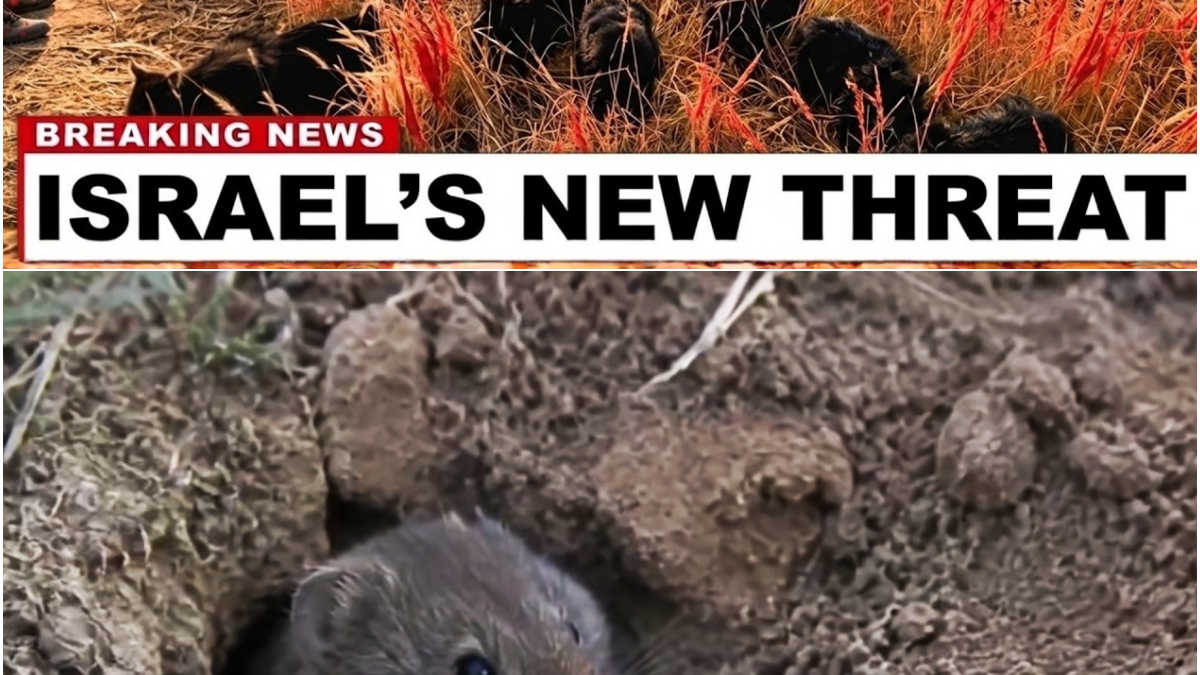
The first owl arrived after sunset, when the fields had already disappeared into darkness. It crossed the desert without a sound, pale wings moving above rows of wheat and alfalfa that stretched toward the horizon.
Beneath it, the farmland looked peaceful. Irrigation lines glistened in the moonlight. Citrus trees stood in neat rows.
Water moved quietly through narrow channels. But beneath the soil, thousands of small rodents were moving.
They traveled through tunnels connecting one field to another. They chewed roots, damaged irrigation lines, and consumed crops from below.
For years, farmers had fought them with chemicals, aircraft, traps, and every other method available.
Nothing had lasted. Then the owl landed on a wooden box mounted above the field.
It had been given a shelter because there were no longer enough natural places for it to neSt. Inside that box, it would raise young.
At night, it would leave and hunt. The farmers did not know yet how important that small box would become.
They did not know that another predator would soon work the fields during daylight. They did not know that the rodents would change their behavior to avoid one hunter, only to encounter another.
And they certainly did not know that the solution to one of the country’s most expensive agricultural problems would come from an animal they had spent years trying to protect.
How could a handful of birds accomplish what aircraft, chemicals, and millions of dollars had failed to do?
The answer began in a place where growing food should have been almost impossible. In the middle of the last century, Israel faced a problem that had little to do with having enough farmland.
The land itself was difficult. Large parts of the country were dry, rocky, and exposed to extreme heat.
Rainfall was limited, and much of the agricultural landscape could not depend on natural water supplies.
Yet the country needed food. It could not assume that outside sources would always provide what its people required.
So engineers began transforming the landscape. Water from the north was carried long distances toward the dry regions farther south.
Fields appeared where bare ground had once dominated. The most important innovation was not simply moving water.
It was learning how to use very little of it. Thin irrigation lines were placed across fields, delivering small amounts of water directly to plant roots.
Instead of flooding entire areas, farmers could provide moisture precisely where crops needed it. Alfalfa grew.
Wheat grew. Citrus trees grew. Vegetables spread across land that had previously offered little opportunity for large scale agriculture.
It was an extraordinary achievement. But every technological victory creates new conditions. The desert had once imposed a natural limit on many small animals.
During the hottest and driest parts of the year, plants became scarce. Water disappeared. Food supplies collapsed.
Rodent populations rose when conditions were favorable, then fell when the landscape could no longer support them.
The new farms changed that cycle. Water was available. Food was available. The ground remained productive.
Instead of one short period of abundance followed by scarcity, the rodents encountered an almost continuous supply.
One small animal took particular advantage of the transformation. The vole was tiny, short tailed, and widespread across dry regions of the Middle EaSt.
For most of history, it had attracted little attention. It did not need speed or strength.
It did not need unusual defenses. Its greatest advantage was reproduction. When conditions were favorable, a female could produce a new litter every few weeks, while young females could become capable of reproducing before they were fully grown.
In a natural desert environment, that potential was restrained by the landscape itself. The drought arrived.
The vegetation disappeared. The population contracted. The cycle repeated. Agriculture interrupted the cycle. Suddenly the vole had moist soil beneath its feet and food above it.
The conditions that once limited its numbers had been reduced. The population expanded. Then it expanded again.
Farmers began noticing something strange in their fields. The damage did not always appear gradually.
A field could look healthy. Then a section would begin thinning. Roots disappeared beneath the soil.
Plants collapsed. Wheat stalks were cut near the ground. Perennial crops were damaged from below.
The surface sometimes gave little warning of what was happening underneath. Then came the tunnels.
Burrow entrances appeared across the fields. In heavily affected areas, neighboring farms seemed connected by an underground network.
The soil became a maze. The rodents did not need to cross open ground if they could move beneath it.
They could travel from one feeding area to another without exposing themselves. Then they found the irrigation system.
The plastic tubing that brought water to crops became another target. The rodents chewed through the lines.
Sometimes they were seeking water. Sometimes they were wearing down teeth that continued growing throughout their lives.
Either way, the result was the same. A pipe that had been delivering precise amounts of water suddenly leaked across the field.
Another section lost pressure. Another crop received too little water. Farmers replaced tubing. Then more tubing.
The costs continued climbing. The animals also created sanitation concerns around agricultural facilities and contributed to the spread of disease.
The problem was no longer limited to a damaged crop. It threatened the entire system that had been built to make agriculture possible in a dry environment.
Eventually, losses approached enormous levels. Farmers needed something that worked quickly. They turned toward chemicals.
Aircraft flew low over agricultural areas. Fields were treated repeatedly. The objective was straightforward. Reduce the rodents before the next crop disappeared.
At first, the approach appeared successful. Rodent numbers fell sharply in treated areas. Farmers saw fewer animals.
The fields looked cleaner. The immediate crisis seemed to be easing. But the chemicals created another problem.
The rodents did not simply disappear from the landscape. Some remained. Others became slow and weakened.
Those animals became easy prey. Foxes found them. Jackals found them. Wild cats found them.
Owls found them. Snakes found them. Predators consumed animals that had been exposed to the chemicals.
The contamination moved through the food chain. Animals that had once helped regulate rodent populations were now being affected by the same campaign intended to control the rodents.
The result was a dangerous reversal. The farmers had reduced some of the predators that naturally hunted the vole.
The remaining rodents therefore faced less pressure from above. At the same time, repeated chemical exposure created another concern.
The rodents that survived could pass on traits that made future control more difficult. The chemical solution became increasingly expensive.
More applications were required. Higher doses were considered. The cycle continued. And beneath the fields, the problem remained.
There was another concern that could not simply be sprayed away. Groundwater. In a dry country, underground water reserves were extraordinarily important.
Chemicals applied across agricultural land could move through soil and porous rock. The more the chemical strategy expanded, the harder it became to separate pest control from environmental risk.
The country had reached a difficult point. Less control could mean losing crops. More chemical control could mean increasing pressure on predators, soil, and water.
So scientists began considering an answer that looked almost too simple. Instead of finding a stronger poison, why not find a stronger predator?
That question led them toward the barn owl. Barn owls were already part of the region.
They were pale, quiet, and remarkably efficient hunters. But they faced a problem of their own.
Modern agriculture had changed the countryside. Old trees disappeared. Traditional buildings changed. Abandoned structures were removed.
Natural cavities became harder to find. The bird capable of helping control rodents was losing the very spaces it needed to live.
The scientists decided to build those spaces. They designed nest boxes. The boxes were simple.
They did not need to look impressive. They needed to be safe. A narrow entrance allowed the owls to enter while limiting access for larger animals.
The boxes were mounted on poles or structures near agricultural fields. The idea was to place the predator directly beside the prey.
The first boxes went up. Then the scientists waited. The response came faster than expected.
Barn owls found the shelters. They moved in. They raised young. And once the young birds matured, they began hunting across the same fields where the rodents had previously moved with little interference.
The program had created something unusual. The farmers had not trained the owls. They had not taught them where to hunt.
They had simply provided a safe place for a predator that already knew exactly what to do.
The next question was how the owl could find a tiny rodent hidden in darkness.
The answer was one of the most extraordinary adaptations in the natural world. A barn owl does not depend entirely on vision.
Its face is shaped like a broad disk. That disk gathers sound and directs it toward the ears.
The two ear openings are positioned at different heights. That slight difference gives the owl information about where a sound originates.
A vole moving through dry vegetation produces tiny sounds. To a person standing in a dark field, the noise might be almost impossible to locate.
To a barn owl, it can reveal a position. The owl can listen. Then it can strike.
Even more remarkable is the way the bird flies. The leading edges of its flight feathers contain structures that reduce turbulence.
The result is extraordinarily quiet flight. The owl can approach without producing the obvious rushing sound associated with many other birds.
For a rodent moving through darkness, the predator can seem to appear from nowhere. A single pair of barn owls raising young can consume thousands of rodents during a breeding season.
The nest boxes therefore became more than shelters. They became hunting stations. Fields that had been treated repeatedly with chemicals began receiving another kind of protection.
And the results were encouraging. Rodent numbers began falling in areas where owl populations increased.
Farmers needed fewer chemicals. The groundwater faced less contamination pressure. The predator population itself became part of the agricultural system.
For a moment, it seemed like the problem had been solved. Then the rodents changed their behavior.
The owls hunted at night. The rodents noticed. Those that remained began shifting their activity.
Instead of moving primarily after dark, more animals began appearing during the cooler hours of morning and eventually during daylight.
The fields were changing again. The owls were still present. But the rodents were finding a period when the owl was resting.
It was an escape route. The scientists needed another predator. This time they looked upward during the day.
The common kestrel was a small falcon with a very different hunting style. Unlike the barn owl, it was active in daylight.
It could hover above fields and search the ground below. The kestrel also possessed an unusual visual ability.
It could detect ultraviolet light. That mattered because rodents leave chemical traces as they move through their territory.
Their urine can mark paths and runways. Under ultraviolet vision, those trails can become visible.
To the kestrel, the field was not simply a patch of green vegetation. It could reveal routes used by the rodents.
A hidden animal suddenly left a map. The kestrels began hunting during the day. The owls worked at night.
The predators covered different periods. The rodents were being pressured around the clock. It was not a single predator defeating a peSt.
It was a system. The night belonged to the owl. The day belonged to the kestrel.
The farmer supplied the shelter. The predators supplied the labor. And the rodents supplied the reason for the entire arrangement.
But there was another obstacle. The agricultural region did not stop at political borders. The rodents did not recognize borders.
Neither did the birds. A farmer could protect one field while another field nearby continued using chemicals.
That created a problem. If one side reduced pesticide use while another side continued heavy applications, predators moving between those areas could still be exposed.
Rodents could cross from one field into another. The ecosystem did not care where one territory ended.
The scientists therefore needed farmers to think about the landscape differently. They began bringing agricultural communities together.
Farmers from three territories faced the same peSt. Their politics and histories could be very different.
Their agricultural problem was not. A damaged field looked the same on either side of a boundary.
A broken irrigation line did not ask who owned the land. A declining harvest did not recognize a checkpoint.
So farmers began coordinating nest box placement. The boxes extended across the shared river valley.
The region started functioning more like one ecosystem. An owl raised on one side could hunt on another.
A kestrel could cross the boundary in minutes. The predators did not need permission. They only needed habitat.
But even that required another change. In some communities, owls carried old cultural associations that made farmers suspicious.
For generations, the birds had been viewed in some places as symbols of misfortune or darkness.
A farmer could look at a nest box and see a threat rather than an ally.
Some boxes were removed. Some birds were driven away. The scientists faced a problem that could not be solved through biology alone.
They could not simply explain predator behavior and expect generations of belief to disappear. So they went to schools.
They brought owl pellets. These small, compact bundles contain the indigestible remains of an owl’s meals.
Students opened them carefully. They separated fur and bones. Inside were tiny skulls. The children could see what the owl had been eating.
The predator that had seemed mysterious became understandable. It was not a symbol. It was a hunter.
And it was hunting the same rodents that were damaging their families’ fields. Children took what they learned home.
Parents listened. The nest boxes remained. The perception of the owl began changing. The bird that had once been associated with bad signs became an agricultural partner.
But the program encountered another problem that had nothing to do with culture. Heat. The nest boxes had been designed for protection.
During severe summer conditions, however, some boxes became dangerously hot. The very shelters meant to help the birds could become too warm for young chicks.
The scientists redesigned them. The new boxes were painted reflective white. The surface reflected more sunlight.
The roofs were doubled. An air gap between the layers helped move heat away from the interior.
Boxes were placed where shade was available. The difference could be only a few degrees.
For a growing brood, those degrees mattered. The improved boxes worked better. Then another competitor arrived.
An invasive starling relative began spreading across the country. The birds were aggressive. They wanted the same cavities the owls were using.
They moved into nest boxes. They displaced owls. They interfered with nesting. The scientists had unintentionally created desirable housing for another invasive species.
Once again, they redesigned the system. The entrances were modified. Internal baffles were added. The passage remained accessible to a barn owl while becoming more difficult for the larger competitors.
Additional control measures were used across agricultural areas. The nest boxes were managed between breeding periods.
The program changed again. That became the pattern. The solution was never considered finished. Every time nature found a weakness, the scientists adjusted.
Every time an animal changed its behavior, the system changed with it. Eventually, several thousand nest boxes were distributed across agricultural areas.
In some regions, chemical rodent control fell dramatically. Farmers saved money. The fields received less poison.
Groundwater faced less chemical pressure. The barn owl returned to a larger role in the agricultural landscape.
And the idea began traveling beyond Israel. Farmers in other regions studied the system. The principle was simple.
Instead of fighting every organism with chemicals, use the relationships already present in nature. That idea soon appeared in another agricultural problem.
Citrus growers faced an insect that could damage fruit from the inside. The adult fly could place eggs inside developing fruit.
From the outside, the fruit could appear healthy. Inside, the larvae consumed the tissue. By the time the damage became obvious, spraying the outside of the fruit was of limited use.
The pest was protected where chemicals could not easily reach it. So scientists tried a different approach.
They stopped trying to kill the insect directly. Instead, they produced sterile males. In controlled facilities, enormous numbers of flies were raised.
At the appropriate stage, males were exposed to carefully measured radiation. The treatment left them capable of normal mating behavior but unable to produce viable offspring.
Then the sterile males were released over agricultural areas. They competed with wild males. The wild population still encountered mates.
But increasingly, those mates were sterile. Generation after generation, reproduction became less successful. The population declined without requiring the same kind of chemical treatment.
The idea was elegant. The pest was not being poisoned. Its own reproductive behavior was being redirected.
And agriculture continued moving toward biological control. Inside greenhouses, another collection of pests appeared. Mites attacked leaves.
Aphids drained plants. Farmers needed protection that would not simply replace one problem with another.
So they began purchasing predators. Tiny predatory mites could be released against pest mites. Minute parasitic wasps could be introduced against aphids.
The wasp’s life cycle was particularly striking. A female could place an egg inside an aphid.
The developing larva used the aphid as its food source and eventually emerged from the transformed remains.
The farmer did not need to spray an entire greenhouse. The predator found the peSt.
The predator reproduced. The predator continued working. The system depended on balance rather than destruction.
That distinction connected all of these experiments. The barn owl did not need to eliminate every vole.
The kestrel did not need to remove every rodent. The sterile fly program did not need to capture every wild insect.
The predatory mite did not need to eliminate every pest from existence. The objective was to push the system back toward balance.
That was what the chemical campaigns had struggled to accomplish. Chemicals could produce rapid results.
But pests could adapt. Predators could be affected. Water could become contaminated. Costs could rise.
The cycle could become increasingly difficult to sustain. Biological control worked differently. It used relationships.
A predator needed prey. A parasitoid needed a hoSt. A sterile male needed a fertile female.
An owl needed shelter. A kestrel needed open hunting ground. The solution depended on understanding those relationships and creating conditions in which they could function.
The story of the fields therefore became larger than a story about rodents. It became a story about how people respond when technology creates an unintended ecological imbalance.
The farmland itself had been an extraordinary achievement. Water had been moved across great distances.
Irrigation had transformed dry ground. Crops had been made possible where nature had offered few opportunities.
But the same transformation created a landscape unlike the one that existed before. Food was available continuously.
Water was available continuously. The old limits had been removed. The rodents responded exactly as living organisms respond when conditions become favorable.
They reproduced. They spread. They adapted. The first human response was to apply more force.
The second response was to understand. That change made all the difference. One evening, years after the first nest boxes had been installed, a farmer stood beside a field and watched a barn owl leave its shelter.
The bird rose above the crops. The field was quiet. No aircraft crossed the sky.
No chemical spray drifted over the rows. The owl circled once. Then it disappeared into darkness.
Somewhere below, a vole moved through the vegetation. The owl turned. Its pale face caught the moonlight.
Then it dropped. The farmer never saw the strike. He only watched the bird rise again.
The next morning, a kestrel hovered above the same field. Its wings beat rapidly as it held position against the wind.
Below it, the rodent trails crossed the ground. The kestrel adjusted. Then it descended. Day and night.
Night and day. Two predators. Two different senses. Two different hunting strategies. One agricultural system.
The fields had become a living network. And that was perhaps the most important lesson.
Nature had not needed to be replaced. It had needed room to work. The country had once tried to outmuscle the peSt.
The chemicals had been faster than the ecosystem. But the ecosystem adapted. So the scientists stopped trying to silence nature.
They started listening to it. They discovered that the barn owl had been waiting in the landscape all along.
They gave it a place to live. They discovered that the kestrel could patrol the daylight hours.
They protected its habitat. They discovered that insects could control other insects. They raised them.
They discovered that reproduction itself could become a tool against a peSt. They developed sterile males.
Each discovery followed the same principle. Do not fight every living system as if it were an enemy.
Understand what the system is already capable of doing. The idea did not make agriculture effortless.
There were still pests. There were still outbreaks. There were still years when crops struggled.
There were still new invasive species. There were still unexpected problems. But the strategy had changed.
Instead of asking how much stronger the chemical needed to become, scientists could ask which predator was missing.
Instead of asking how to eliminate an insect, they could ask which part of its life cycle could be interrupted.
Instead of asking how to destroy an ecosystem imbalance, they could ask how to restore the relationship that had once kept it in check.
That was the quiet revolution. It did not begin with a giant machine. It began with a wooden box.
A pale bird entered. The bird raised its young. The young birds flew into the fields.
And thousands of rodents suddenly encountered something they had not expected. A predator that could hear them moving underground.
Then daylight arrived. The kestrels took over. The fields became a place where the rodents could no longer rely on darkness or daylight alone.
The farmers watched. The scientists measured. The system adjusted. Years later, the wooden boxes remained scattered across the agricultural landscape.
Some stood beside wheat. Some overlooked vegetable fields. Some stood near orchards. Each one looked ordinary.
A simple shelter. A narrow opening. A roof. A place for an owl. But together they represented something much larger.
They represented a change in thinking. The country had once attempted to control nature by overwhelming it.
Then it discovered that nature could become part of the solution. The owl did not know it was protecting a harveSt.
The kestrel did not know it was reducing agricultural costs. The sterile fly did not know it was part of a national pest control program.
The tiny wasp did not know it was helping a greenhouse. They were simply behaving according to the biology that had shaped them.
The remarkable part was that humans finally learned how to make those behaviors useful. The dry fields remained dry.
The desert remained a desert beyond the irrigated land. But among the rows of crops, something had changed.
There was movement in the trees. A kestrel hovered above the wheat. An owl disappeared into a nest box before sunrise.
Predatory insects moved across greenhouse leaves. The farmland was no longer protected only by chemicals and machines.
It was protected by relationships. And perhaps that was the strangest outcome of all. The solution had not required nature to become weaker.
It required people to understand where nature was already strong. The rodents had once found a paradise in the transformed desert.
Now the fields had predators waiting for them. The pests had adapted to the first solution.
The farmers adapted to the adaptation. And the system continued evolving. Above one field, an owl crossed the sky.
Below it, the irrigation lines carried water through the soil. The crops moved gently in the wind.
The desert stretched beyond them. For thousands of years, the land had imposed its own limits.
For decades, humans had tried to overcome them. Then a small rodent exposed the cost of changing the rules too completely.
The answer was not to abandon the farms. It was not to stop growing food.
It was to recognize that the fields were still part of a living world. The owl landed on its wooden shelter.
The kestrel waited for morning. And beneath the soil, the voles continued moving. But now, for the first time, they were moving through a landscape that had learned how to answer them.
Disclaimer: This content may be created by Al for entertainment purposes. Any resemblance to real persons, events, or places is coincidental.








