Hikers Vanished And The Last Footage Makes No Sense
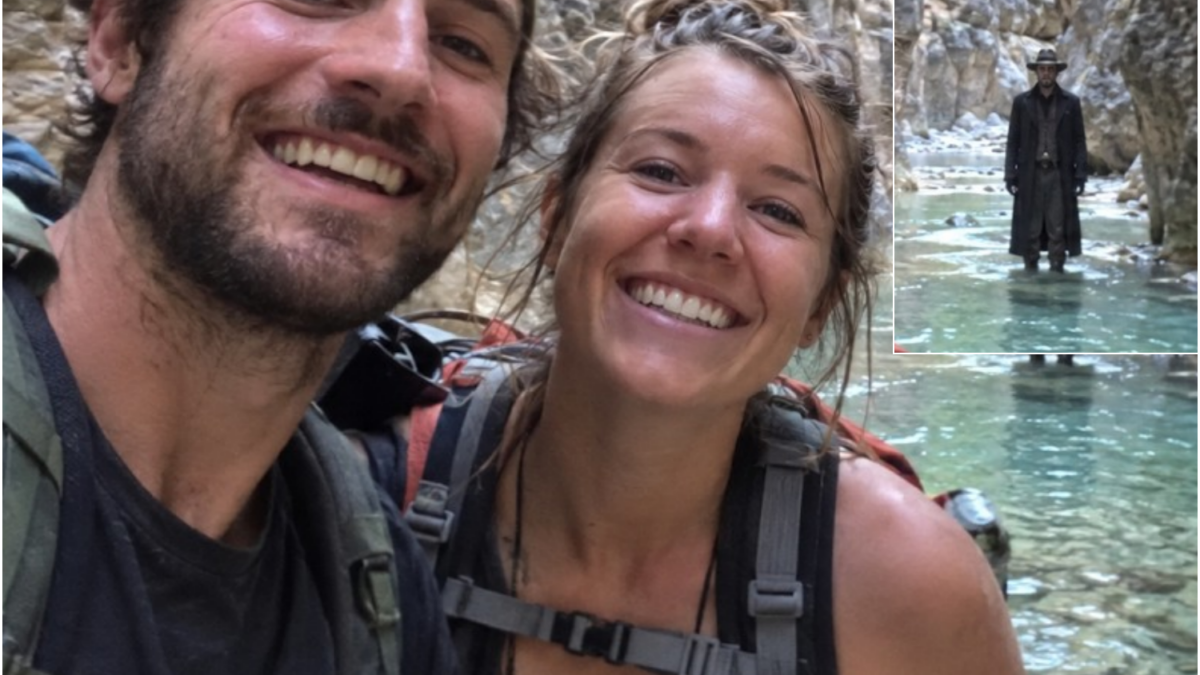
There is something unsettling about the last photograph of a missing hiker. At the moment it is taken, nobody knows what it will become.
It is just a picture. Someone standing beside a trail. Someone smiling beside a dog.
Someone looking toward a mountain ridge. A person stopping to send a message home before continuing along a route they believe they know.
Nothing in the image announces that it will later become evidence, a clue, or the final known record of someone’s presence.
That is what makes these photographs so difficult to look at afterward. The person in the frame does not know.
Their family does not know. The person holding the camera does not know. Even the landscape looks ordinary.
Years later, investigators may return to the same photograph and study every tree, every rock, every distant figure, and every visible landmark, searching for something that might explain what happened after the camera stopped recording.
Sometimes the picture provides a crucial location. Sometimes it reveals another person in the background.
Sometimes it gives rescuers the last confirmed clothing or equipment description. And sometimes it provides nothing except a final ordinary moment.
Kenny Beach had already become fascinated by a strange cave in the Nevada desert before the camera began recording his final journey.
He had described the entrance as resembling a perfect capital letter M, but the shape was not the only thing that bothered him.
He claimed that when he approached the cave during an earlier hike, his entire body seemed to vibrate.
He believed some kind of frequency was coming from the area. Whatever the cause, the sensation was strong enough that Kenny turned around without entering.
The story naturally attracted attention when he discussed it online. The location was especially interesting because the cave was said to be somewhere near Nellis Air Force Base, part of the larger region associated with Area 51.
People began encouraging Kenny to find the cave again. This time, they wanted him to document it.
So he returned. In October of 2014, Kenny uploaded a video titled M Cave Hike.
The footage showed him moving through the barren Nevada landscape, searching for the strange formation he had previously encountered.
The desert looked almost endless. Rock, sand, distant mountains, and empty stretches of land surrounded him.
He continued searching. The camera recorded his journey. For viewers watching years later, that footage carried an uncomfortable significance because they knew something Kenny did not.
A few weeks after uploading the video, he went hiking again. He never returned home.
His phone was eventually found near an abandoned mine shaft. Search teams went through the surrounding area.
They searched the desert. They examined the places where Kenny might have traveled. But no sign of him was found.
His remains have never been located. The old YouTube video became something very different after his disappearance.
A hiking video became a record of the landscape where Kenny had been. Every ordinary frame suddenly mattered.
Every turn in the trail became something viewers could examine. The cave that had once been a curiosity became part of a much larger mystery.
But Kenny’s story was not the only time a camera recorded the final known moments of someone entering a dangerous landscape.
In May of 2019, British mountain guide Martin Morren led a group of eight climbers into the Himalayas.
The group consisted of four Britons, two Americans, an Australian, and an Indian liaison officer.
They were moving through a harsh mountain environment where weather, altitude, snow, and terrain could change conditions with little warning.
A GoPro camera recorded portions of their journey. On May 26th, contact with the climbers was loSt.
The group had been crossing the mountain when an avalanche struck. They did not return to base camp.
Search teams eventually reached the area. Seven bodies were recovered. Martin Morren was the only member of the group whose remains could not be located.
Then, on July 8th, rescuers found something else buried in the snow. A damaged GoPro camera.
The device had survived even though the people carrying it had disappeared beneath the mountain.
The rescuers managed to recover footage from it. The images showed the climbers preparing equipment in darkness.
Then the footage shifted. The group was walking in single file across a narrow snow covered ridge.
They were connected by a rope. The landscape around them was almost entirely white. The ridge beneath them appeared narrow and unstable.
Investigators believed that the ridge collapsed, triggering the avalanche. Then the footage stopped. A camera that had been recording an ordinary expedition suddenly became a final visual record of the group.
Yet even with that evidence, Martin Morren’s remains were never located. The mountain had preserved the camera while concealing the person who had carried it.
For another missing hiker, the most important image came from something much smaller. In February 2015, 18 year old Dalon Pua went hiking near the Haiku Stairs on Oahu, Hawaii, an area better known as the Stairway to Heaven.
He told his family where he was going. Around 11:00 in the morning, he began sending them pictures from the area.
At first, there was nothing unusual. They were simply photographs from a hike. Then his family noticed something in one of the images.
Farther down the trail stood a man. The figure was distant. The face could not be clearly seen.
Nobody knew who he was. But after Dalon disappeared, the unknown man became important. His family gave the photograph to police.
Investigators eventually released the image publicly, hoping someone could identify the person. The reason was simple.
The man might have seen Dalon. He might have known something about what happened on the trail.
Or he might have had nothing to do with the disappearance at all. Search crews examined the area.
Volunteers searched around the trail and repelled hundreds of feet below the cliffs. But Dalon was never found.
The mysterious man in the photograph was never conclusively connected to the case. That left the photograph suspended between evidence and coincidence.
There is no way to look at the picture and know what the man was doing there.
All anyone can say with certainty is that he was there. And Dalon was there too.
The camera captured both. In western Maine, another photograph seemed completely ordinary when it was taken.
Geraldine Large, known to friends as Jerry, had spent years preparing to hike the Appalachian Trail.
By the summer of 2013, the 66 year old had already traveled more than 900 miles.
On July 22nd, she was hiking through western Maine. Another hiker named Doy Rust saw her at the Popular Ridge Lean To, a historic shelter along the trail.
Doy took a photograph of Geraldine that morning. She was smiling. She had her hiking equipment with her.
She looked ready to continue along the trail. Nothing about the image suggested that it would become important later.
Geraldine planned to hike approximately 8 miles to the next campsite. At 7:15 that morning, her husband received a text message saying she was leaving the shelter.
It was the last message anyone received from her. Somewhere along the route, Geraldine stepped away from the trail to use the bathroom.
When she tried to return, she could not find the trail again. Search crews spent weeks going through the woods.
They looked along the trail. They examined surrounding terrain. They searched areas where a hiker could become disoriented.
But there was no immediate sign. The search continued for a long time. It was not until October of 2015 that investigators finally located her remains.
She was approximately 3,000 feet from the trail. The search revealed that Geraldine had survived for weeks after becoming lost before eventually succumbing alone in the foreSt.
The photograph taken by Doy Rust became the last known image of her. It showed nothing extraordinary.
That was precisely what made it so difficult to look at. A smiling hiker at a trail shelter.
A normal morning. A normal photograph. A normal plan to continue walking. And then the trail disappeared.
For Mitchell Dale Stelling, the last known image came from a photograph taken by people who did not even know they had captured him.
On June 9th, 2013, Mitchell was visiting Mesa Verde National Park in Colorado with his family.
He wanted to take a short hike to see the Spruce Tree House cliff dwelling, an ancient structure built into the cliffs by the Pueblo people.
The trail was less than a quarter mile long. Nobody expected the excursion to take very long.
Mitchell started hiking at around 4:30 that afternoon. Later, another family was taking photographs near the Petroglyph Point area.
Mitchell happened to walk into one of those photographs. He was standing off to the side of the frame.
The people taking the picture had no reason to notice him. They did not know they had photographed someone who would soon become the subject of a long search.
Mitchell never returned to his family. Search teams looked for him. Investigators followed possible sightings.
One hiker reported hearing someone calling for help, but the information did not lead rescuers to Mitchell.
Years passed. Then, in September of 2020, an anonymous tip sent investigators into a remote section of Mesa Verde.
Human remains were found more than 4 miles from where Mitchell had last been seen.
They were identified as Mitchell. Seven years had passed. Because of the condition of the remains, investigators could not determine a cause.
The photograph taken by strangers therefore became one of the final known images of Mitchell.
He had simply walked into the edge of another family’s photograph. Nobody knew how important that accidental moment would become.
On August 23rd, 2020, 52 year old Ali Safar Naderi went hiking on Eagle Mountain in British Columbia, Canada.
Another camera happened to record him while he was on the trail. Naderi did not know he was being filmed.
The footage lasted only a few seconds. He was simply walking. There was nothing dramatic about the scene.
No warning. No visible emergency. No indication that anything unusual was about to happen. Then he disappeared.
When the search began, the Royal Canadian Mounted Police released a still image taken from the recording.
It showed Naderi walking along the trail. That small piece of footage became valuable because it established that he had been in the area and provided a clear image of what he looked like that day.
Search crews examined Eagle Mountain. They tried to determine where he might have left the trail.
They searched surrounding terrain. But Naderi was never found. The recording remains one of the last known images of him.
The strange thing about these photographs and recordings is how ordinary they are. A person walking.
A person smiling. A person sending a picture to someone they love. A person standing on a mountain.
A person hiking beside a dog. At the moment the camera captures them, nobody knows that the image will eventually become the last one.
In February 2024, 22 year old Lee Hong went hiking alone on Mount Baldy in Southern California.
Winter conditions had covered the mountain in approximately 3 feet of snow. Avalanche danger made parts of the area extremely hazardous.
During the hike, Lee sent a video to her boyfriend. It was the last communication he received from her.
When Lee stopped responding, her family reported her missing. Search teams began working across Mount Baldy.
The weather created serious difficulties. Some areas could not be safely searched on foot because of avalanche conditions.
Helicopters were used to examine the mountain. Days passed without an answer. About a week after Lee disappeared, searchers finally located her remains.
Investigators determined that she had fallen. The video she sent to her boyfriend became the final known record of her hike.
Unlike the strange cave footage involving Kenny Beach, there was no unexplained figure in Lee’s video.
Unlike the image of Dalon Pua, there was no unknown person standing farther down the trail.
The danger was the mountain itself. Snow had transformed familiar terrain into something much more difficult to navigate.
In northern Italy, another hiker sent a final photograph before disappearing in the mountains. Matthew Hall was visiting Italy in July 2025.
The 33 year old had been staying in Kavvena. On July 9th, he headed into the Italian Alps alone.
At approximately 1:20 that afternoon, Matthew sent a picture of himself to a friend. He was standing in the mountains.
He appeared to have stopped for a reSt. The image showed him surrounded by the alpine landscape.
It was the last photograph he ever sent. Matthew was expected to return home several days later.
He never arrived. Search crews began examining the mountains around Kabana. Investigators learned that Matthew had sent another message saying he had lost the trail and stopped to reSt.
That message provided rescuers with an important clue. It suggested that Matthew had become disoriented.
But the terrain was steep. The mountains were difficult to search. Then, on July 16th, searchers spotted a body more than 650 feet below the cross where Matthew had taken his selfie.
It was Matthew. He had fallen and suffered fatal injuries. The photograph therefore showed him at the exact location where his search would eventually be focused.
But nobody looking at the original picture could have known what was coming. The mountain looked peaceful.
Matthew appeared to be taking a break. The camera captured a moment of calm. The next part of the story was hidden outside the frame.
Then there is Cody Michael. His story is different. In May 2016, 23 year old Cody went hiking in California’s Tahoe National Forest near the Loch Leven Lakes Trail.
He brought his German Shepherd, Bower. During the trip, Cody sent his family a photograph of himself and Bower.
He also told them he expected to return by Monday. Monday came. Cody did not.
His family reported him missing. The photograph suddenly became extremely important. It showed Cody and Bower together in the mountains.
Search teams began looking for them. Volunteers joined. A National Guard helicopter searched from above.
Nordic skiers participated in the operation. The mountains were searched from multiple directions. Four days later, rescuers found them.
Cody and Bower were alive. They had spent days stranded in the mountains. Cody had used duct tape to spell out the word help near their campsite.
The photograph that had initially become part of a frightening missing person search ended up telling a very different story.
It was not a final image. It was a clue that helped show what the missing hiker looked like and where he had been.
And unlike many of the other cases, the search eventually brought Cody and Bower home.
That difference matters. A final photograph does not always mean the final outcome has already been decided.
Sometimes it is simply the most recent evidence available. Sometimes it becomes the starting point for a successful rescue.
Sometimes it leads investigators toward the last known location. Sometimes it reveals another person who might have information.
Sometimes it shows the landscape. And sometimes it tells investigators almost nothing. Brad Broach was visiting Alaska in August 2016 when he went hiking near Alyeska Resort in Girdwood.
Before disappearing, Brad took a selfie on the North Face Trail above the resort. That photograph would become one of the last known images of him.
On August 2nd, Brad headed toward the Winter Creek Trail system. At approximately 9:45 that night, he signed into the trail register.
He never signed out. Brad did not return to Texas as planned. His wife reported him missing.
His rental car and belongings remained at the resort. The search expanded. Hundreds of people eventually participated, including rescue workers, resort employees, volunteers, and search dogs.
Investigators examined the mountains around the resort. Footprints and pieces of debris were discovered, but investigators could not confirm that they belonged to Brad.
The search was eventually scaled back. Years passed. Then more years. A decade later, Brad still had not been found.
His photograph remained. A picture of a man in Alaska. A trail behind him. A mountain landscape stretching beyond the frame.
The image does not reveal where Brad went after that. It does not show the route he took.
It does not explain why he never signed out. It simply confirms that he was there.
That is the strange power of the last image. It freezes one moment without explaining the next.
A hiker can appear perfectly ordinary in a photograph while standing only minutes away from a situation nobody else knows is developing.
The image cannot show what is beyond the frame. It cannot show what happens after the person turns around.
It cannot show whether the trail continues, disappears, becomes covered by snow, or branches into another route.
It cannot tell us what the hiker sees. That is why investigators study photographs so carefully.
A rock in the background can identify a location. A mountain ridge can establish direction.
A trail marker can narrow a search. Clothing can help rescuers identify someone from a distance.
A second person in the background can become a crucial lead. A timestamp can establish a sequence.
Even an ordinary photograph can contain information nobody realizes is important until much later. Dalon Pua’s photograph contained another person.
Mitchell Stelling appeared accidentally in another family’s picture. Ali Safar Naderi was captured by a camera he did not know was operating.
Geraldine Large was photographed by another hiker. Cody Michael sent his own photograph home. Matthew Hall sent a final mountain selfie.
Kenny Beach recorded his own journey. Martin Morren’s GoPro preserved the movements of an entire climbing group.
Lee Hong sent a video from Mount Baldy. Brad Broach left behind a photograph from the Alaskan trail.
Different mountains. Different cameras. Different circumstances. Different endings. But every image shares the same strange quality.
The person inside it does not know what the photograph will mean later. For the people searching, however, those few seconds can become everything.
They can show where someone was. They can establish what direction they were moving. They can reveal weather conditions.
They can show whether the person was carrying equipment. They can identify clothing. They can even reveal another individual who happened to be nearby.
Yet photographs also have limits. A camera records only what is in front of it.
A trail continues outside the frame. A mountain extends beyond the photograph. A distant figure remains distant.
An avalanche can occur seconds after the camera stops. A person can turn down a path that nobody else knows about.
That is why some of these mysteries remain unsolved. The image survives. The person does not return.
And the landscape holds the missing portion of the story. Kenny Beach’s desert footage is especially haunting because viewers can watch him moving through the same landscape where he would later vanish.
The camera shows the desert. It shows Kenny. But it does not show the future.
Martin Morren’s GoPro is even more striking because it preserved the last recorded movement of an entire group crossing a snow covered ridge.
The footage stops. The mountain continues. Geraldine’s photograph looks almost cheerful. She is smiling at the shelter.
Her equipment is ready. She is about to leave. The photograph gives no indication that she will become loSt.
Mitchell appears in another family’s photograph almost by accident. He is simply there. Years later, that ordinary image becomes part of the record of his disappearance.
Dalon’s photograph contains the mysterious man. The image gives investigators a person to ask about.
But it cannot answer whether he had anything to do with Dalon’s disappearance. Naderi’s trail footage captures only a few seconds.
The camera does not follow him. Lee’s final video shows the mountain during dangerous winter conditions.
Matthew’s selfie captures him resting beneath the cross. Cody’s photograph shows him with Bower before both became stranded.
Brad’s selfie shows him before he entered the trail system where he would disappear. Each camera stopped recording at a different point.
Some stopped naturally. Some were recovered later. Some were held by people who vanished. Some were operated by strangers who had no idea they were documenting anything important.
And that may be the most unsettling part of all. The camera does not understand what it is recording.
It does not know that a person in the frame is about to become missing.
It does not know that the photograph will be studied by search teams. It does not know that someone will zoom in years later and ask whether there was a clue hidden in the background.
It simply captures light. The meaning comes afterward. For families, the last photograph can be painful because it preserves an ordinary version of someone they love.
For investigators, it can be valuable because it establishes a last known location. For the public, it can become mysterious because viewers know what happened after the photograph was taken.
That creates a strange effect. The photograph itself does not change. Only our knowledge changes.
The same picture of Geraldine smiling at the Popular Ridge Lean To looked completely normal on July 22nd, 2013.
After she disappeared, it became the last known image of her. The same accidental photograph containing Mitchell at Mesa Verde meant almost nothing to the people who took it.
Years later, it became evidence of where he had been. The same footage of Ali walking along Eagle Mountain was ordinary when recorded.
After he disappeared, those few seconds became one of the clearest records of his movements.
The same photograph of Cody and Bower looked like a normal hiking picture. During the search, it became a clue.
And the same selfie Matthew sent at 1:20 that afternoon appeared to show nothing more than a man taking a break.
Later, the location became the center of the search. A final photograph does not necessarily contain a mystery.
Sometimes the mystery begins after the photograph ends. That is why these images stay with people.
Not because the camera captured something supernatural. Not because every distant figure is suspicious. Not because every missing hiker encountered something unknown.
But because each picture represents the last moment we can prove someone was there. After that, there is only the trail.
The mountain. The foreSt. The desert. The snow. The cliffs. The unanswered distance between one frame and whatever came next.
And somewhere inside that distance is the part of the story that the camera never captured.
What would we see if it had kept recording for just one more minute?
Disclaimer: This content may be created by Al for entertainment purposes. Any resemblance to real persons, events, or places is coincidental.








