Florida Released 328 Beavers on Dead Land with ZERO Trees — 6 Years Later It’s Unrecognizable
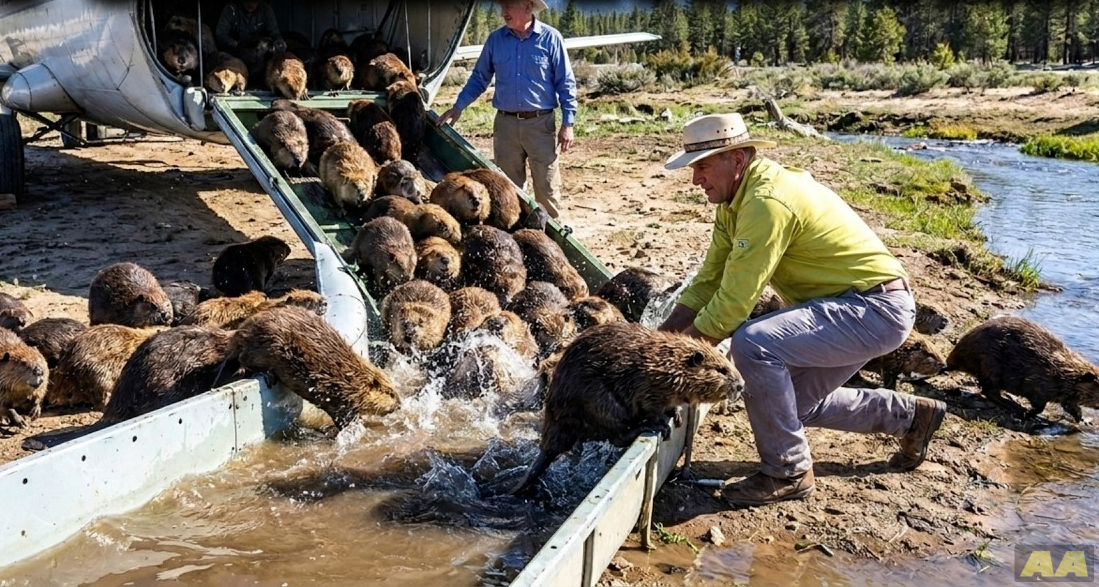
In the summer of 2018, something happened in the Florida Panhandle that seemed impossible. A group of animals was taken to a place where almost nothing appeared capable of surviving.
There were no forests, no thick vegetation, and no natural streams flowing through the landscape.
The ground was dry, cracked, and exhausted after decades of human alteration. Then came the beavers.
A total of 328 beavers were released across 15,000 acres of damaged land. They were expected to perform a task that engineers had struggled with for years: bring water back to a landscape that had lost its natural balance.
But almost everything about the plan seemed wrong. Beavers are famous for building wetlands, but they need materials to do it.
They usually rely on trees, branches, and flowing streams. This place offered almost none of that.
The land had been drained decades earlier, leaving behind hard clay and empty channels designed to move water away as quickly as possible.
Many people believed the experiment was destined to fail. Environmental groups questioned whether moving so many animals into such a difficult environment was the right choice.
Some biologists predicted that the beavers would leave, disappear, or struggle to survive. Nearby landowners looked across the empty fields and wondered how animals that depended on forests could possibly rebuild a wetland where no trees remained.
The situation seemed hopeless. Yet several years later, the same landscape had transformed into something completely different.
The cracked ground had become a network of ponds and wetlands. Plants returned. Wildlife followed.
Water that once disappeared within hours began staying on the land again. The beavers had accomplished something that many people believed would require decades of expensive engineering.
They rebuilt the system they were born to create. The story began long before the beavers arrived, back when this part of Florida looked nothing like the dry landscape people would eventually see.
More than 60 years earlier, the Florida Panhandle contained one of the richest wetland environments in the southeastern United States.
Cypress forests covered the landscape. Slow-moving blackwater streams crossed the region. Hardwood trees grew densely enough that sunlight struggled to reach the ground below.
Water moved slowly through the ecosystem, creating a landscape where plants, animals, and waterways existed together.
The wetlands were not simply areas filled with water. They were living systems. The soil stored enormous amounts of organic material.
Plants absorbed nutrients. Water moved gradually through the land instead of rushing away. Countless species depended on the steady rhythm created by the wet environment.
Then, during the 1950s, the landscape was changed. People wanted to transform the area for agriculture.
Workers began draining the wetlands by creating a network of straight ditches across the land.
The goal was simple: remove water and make the ground easier to farm. The drainage worked.
That was exactly the problem. The water that had remained in the landscape for thousands of years disappeared much faster than nature had ever allowed.
The water table dropped dramatically, in some places by more than 15 feet. The wet, rich soil that had developed over centuries was suddenly exposed to air.
Without constant moisture, the organic material inside the soil began breaking down. The land slowly changed.
The soil became thinner. The ground became more acidic. The surface became harder. The crops planted there eventually struggled, and after several decades many agricultural operations abandoned the area.
But the damage remained. When wetlands are drained, the land does not simply lose water.
It physically changes. Organic soil shrinks and compresses when it dries. Materials that once held the ground together disappear over time.
The landscape sinks. A place that had once been shaped by water became a place that pushed water away.
By the time the state acquired the 15,000 acres, the area looked nothing like its original ecosystem.
There were no forests standing across the horizon. No thick wetland vegetation covered the ground.
No natural ponds connected the landscape. When rain arrived, water rushed through the drainage channels and disappeared.
When dry conditions returned, the ground cracked into hard plates. The land still existed on a map.
But the natural processes that made it valuable had been interrupted. For a place like this, the traditional restoration approach would be complicated and expensive.
Engineers could rebuild the water system. They could reshape channels, install structures to control water flow, replant vegetation, and monitor the recovery for decades.
It was possible. But it required enormous effort. And even after all that work, success was never guaranteed.
Restoring a wetland is not like rebuilding a building. You cannot simply place the correct materials in the correct locations and expect nature to follow instructions.
A wetland is a living network. Water, plants, soil, and animals all influence each other.
The person leading the restoration program considered a different approach. Instead of trying to recreate every part of the system by hand, why not bring back the animal that had created wetlands across North America for thousands of years?
The beaver. To many people, beavers are simply animals that build dams. But their influence on landscapes goes much deeper.
Beavers are considered a keystone species because their actions create habitats used by many other organisms.
A keystone species is one that has an effect on its environment far greater than its numbers might suggeSt.
Remove that species, and the landscape can change dramatically. Before large-scale trapping reduced their numbers, beavers were found across much of North America.
Scientists estimate that hundreds of millions of beavers once shaped waterways throughout the continent. Their dams slowed streams, created ponds, raised groundwater levels, and produced wetlands.
The beaver was not just living in wetlands. In many places, the beaver was helping create them.
When beavers disappeared, many waterways changed. Streams that had once spread across landscapes became faster and deeper channels.
Water moved away quickly. Wet areas dried. The loss of beavers happened at the same time humans were also draining and reshaping wetlands, creating a combination that transformed huge areas of the continent.
The Florida project was based on one simple idea. Perhaps the land was not permanently destroyed.
Perhaps it was simply missing the animal that helped maintain it. If the beavers could return, maybe the landscape could begin repairing itself.
It was a bold experiment. And at first, the critics appeared to be correct. The beavers did not immediately transform the land.
Many of the animals struggled after being released. Some wandered away searching for better conditions.
Others had difficulty finding the materials they normally use for construction. A beaver placed on open clay without trees faces an enormous challenge.
Its instincts tell it to build, but the landscape does not provide the resources it expects.
During the first months, the results looked disappointing. The beavers attempted to create dams in the drainage channels.
But the channels had been designed to move water quickly. The early structures were small and fragile.
Some were only a few feet high. Water pushed through them, damaging them within days.
The first attempts seemed like failures. The animals appeared to be fighting against a landscape designed to defeat them.
By autumn, many observers believed the project was collapsing. The situation looked exactly like the predictions.
A large group of beavers had been released into an environment that did not appear suitable for them.
But then something unexpected happened. The beavers stopped trying to work against the land. They began working with it.
Instead of focusing only on the deep drainage channels where water moved too quickly, they started building in lower areas between them.
These were places where water naturally collected during rain. The beavers had discovered something the original engineering plans had overlooked.
The land still had its own patterns. Even after decades of alteration, the landscape still knew where water wanted to go.
The dams the beavers created in these areas were not large at firSt. Many were only three or four feet tall.
But their locations made them effective. They were positioned where the ground itself helped them succeed.
The beavers were not rebuilding the old landscape exactly as it had been. They were creating a new system based on the conditions that remained.
There was another fascinating part of beaver behavior behind this success. Beavers are not engineers in the human sense.
They do not study maps or calculate water flow. They respond to one important signal.
The sound of moving water. Running water triggers their instinct to build. Scientists have observed that even artificial sounds of flowing water can encourage beavers to begin construction.
On this damaged Florida land, the old drainage ditches were still carrying water. The same channels that represented the failure of human engineering became signals that guided the beavers.
Their instincts led them toward the places where their work could have the greatest impact.
Then came the moment that changed everything. A major storm moved through the region. Before the beavers arrived, rainfall would have rushed through the ditches and disappeared quickly.
But now, the small dams slowed the movement of water. Rain that once escaped the landscape began collecting.
It spread outward. It soaked into the ground. For the first time in decades, water remained where it fell.
And beneath that water, something else was waiting. The seeds of the old wetland had not completely disappeared.
For decades, they had remained hidden in the soil, waiting for the right conditions. When the water returned and stayed, those dormant seeds began to respond.
Plants started emerging. First came wetland grasses. Then rushes. Then young woody plants. Green appeared across land that had seemed unable to support life.
The transformation had begun. The beavers had not planted the vegetation. They had not designed the landscape.
They had simply restored the missing condition that allowed nature to restart. Water.
Disclaimer: This content may be created by Al for entertainment purposes. Any resemblance to real persons, events, or places is coincidental.








