Every Dragon Began Tearing Off Its Saddle — Then She Learned Why
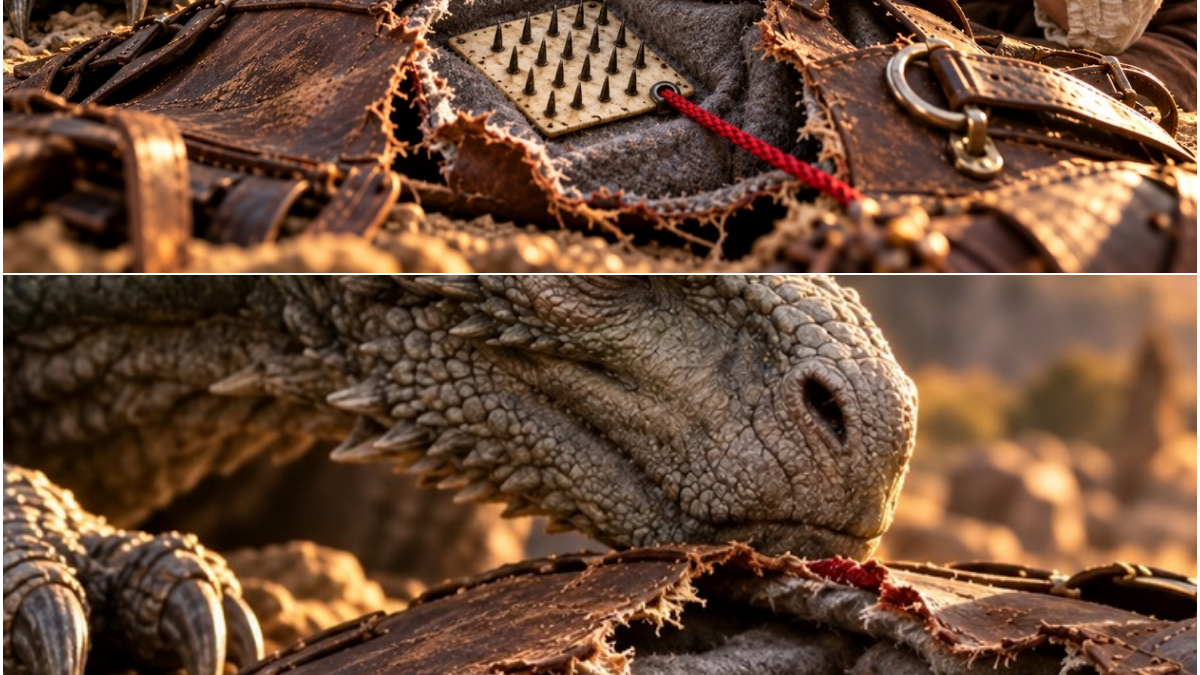
Above the chalk cliffs, where the wind swept across the landing fields and the dragons circled beneath the clouds, something had gone terribly wrong.
One by one, the great creatures had begun to resist their riders, refusing commands, twisting in midair, and tearing apart the saddles that had once carried them safely through the skies.
The roost master called it disobedience. The riders called it madness. But Agnes Tull, the woman responsible for caring for the dragons, had begun to suspect that the truth was far more troubling than anyone wanted to admit.
For eleven years, Agnes had learned to recognize every wound, every change in breathing, and every sign of discomfort in a dragon.
She knew the difference between an animal frightened by thunder and one struggling against pain.
Yet for two weeks, she had watched the creatures suffer while convincing herself that their injuries were nothing more than a seasonal illness.
Now, with the royal commissioner arriving in four days and the future of the entire roost hanging in the balance, Agnes had discovered something hidden beneath the leather of their saddles.
Someone had deliberately hurt the dragons. And the evidence pointed toward the very people entrusted with protecting them.
With seven creatures suffering, a disgraced saddler under suspicion, and a powerful roost master determined to preserve his reputation, Agnes faced a choice that could cost her everything she had worked for.
Would she remain silent and protect the life she had built, or would she finally trust what the dragons had been trying to tell her?
The discovery began in the stable yard, behind the tack room, where Agnes had been ordered to burn the damaged equipment before supper.
Rain had fallen throughout the morning, leaving the ground soft and the air heavy with the smell of wet grass, leather, and smoke.
She knelt beside the heap of discarded saddles and turned over a girth strap that had come from one of the dragons.
Its outer surface was clean, smooth, and carefully maintained. The underside, however, carried a dark brown stain that had soaked deep into the leather.
Agnes rubbed it with her thumb. The substance had dried long ago, but its sharp metallic scent was unmistakable.
Dragon blood. She turned the strap over again, examining the stitching. The damage was not where the rider would normally see it.
It was hidden against the dragon’s body, beneath the padded leather where no ordinary inspection would reveal it.
She pulled another saddle from the heap. Then another. Six saddles had been brought down from the halls, each belonging to a dragon that had recently struggled during flight.
Every one of them carried the same strange stain. The seventh saddle was still on the cliff, where Tanzy had taken it after throwing Bram Ocery from her back.
Agnes sat back on her heels. She was thirty four years old, tall and broad shouldered, with dark hair braided tightly against her head.
Years of carrying equipment through the roost had strengthened her arms, and the pale scar across her left palm reminded her of an old accident involving a stubborn buckle.
She had spent most of her working life around dragons, and she understood their habits better than most riders understood their own mounts.
Yet she had signed the fitness records for all seven dragons that morning. For two weeks, she had treated the small wounds along their necks with sulfur and honey, telling everyone that the creatures were suffering from seam rot.
She had believed the explanation herself because it was easier than considering something worse. Now she knew the injuries were connected to the saddles.
A voice interrupted her thoughts. “You’ll get ash on your skirt.” Silas Py sat on the tack room step, repairing a piece of leather with a stitching awl.
He was the roost’s harnessman, a narrow man with pale eyelashes and a leather cap that seemed permanently attached to his head.
“There’s blood on these,” Agnes said. Silas barely looked up. “Dragons claw at their equipment.
That’s what happens when they become difficult. Master Dre wants everything burned before supper.” “Seven dragons in one fortnight?”
“One learns a bad habit, and the others follow.” “Moth never behaved like this before.”
“Moth started it. The others copied her. Now even the old gray one is doing it.”
Agnes thought of Bram rolling across the landing field, clutching his shoulder while Tanzy stood over the broken saddle.
The old dragon had not attacked him after he fell. Instead, she had carefully lifted the ruined equipment in her jaws and carried it up the cliff.
She had always been careful with objects she considered important. Agnes had once watched Tanzy carry a cracked cooking pot to the smith and a broken wooden toy to the carpenter.
The dragon had even transported an injured lamb to a nearby farm. Yet she had never brought anything to Agnes.
That had always seemed unimportant, although Agnes had once spent four nights tending Tanzy’s damaged wing beside the river.
“I’ll remove the buckles first,” Agnes said. Silas shrugged and returned to his work. She carried the least damaged saddle into her shed, intending to examine it properly.
Before she reached the door, however, Pel Gared caught up with her. Pel was twenty years old and had ridden Moth for two years.
Her flying clothes were stained with grass, and her face was flushed with frustration. “Have you heard what Master Dre ordered?”
“I heard about Bram.” “He wants every dragon hobbled and muzzled except when they’re drinking.
Half rations until they accept the new saddles. Tanzy gets nothing until she comes down from that ledge.”
Agnes stopped walking. “Who told you that?” “Silas. He’s already preparing the straps.” Pel glanced toward the cliff.
“And if any of them refuses to fly in front of the commissioner, they’re being sent to Kessuk.”
Agnes knew what Kessuk meant. It was a northern quarry where troublesome dragons were made to pull enormous stone sledges.
The conditions were harsh, and the work was entirely unsuited to creatures that had once carried riders through open skies.
“Moth has never thrown anything,” Pel continued. “She won’t even refuse a command unless she’s frightened.”
Agnes looked down at the saddle beneath her arm. “Did you see blood on her?”
Pel’s expression changed. “You told me it was seam rot.” “I know what I told you.”
For a moment, neither woman spoke. Then Agnes continued toward her shed. Inside, she placed the saddle on her workbench and turned it upside down.
The construction was excellent. The ash tree was thin and carefully shaped, while the padded panels followed the natural curve of a dragon’s neck.
Every part appeared to have been made by someone who understood the demands of flying.
But when Agnes ran her fingers along the left panel, she noticed a strange stiffness beneath the leather.
She searched for the seam and found it along the lower edge. The stitching was noticeably rougher than the rest of the saddle.
It was not badly done, but it lacked the precision of the surrounding work. She took her hoof knife and carefully opened it.
Beneath the felt were six narrow channels. Most contained pale ash stays, but two held something else.
Horn. Each strip was polished dark and fitted with sharp iron points. Eleven points ran along one strip and twelve along the other.
They had been covered with black wax, concealing their presence from anyone who examined the outside.
Agnes felt her stomach tighten. She opened the opposite panel and found an identical arrangement.
The hidden points had been positioned exactly where a dragon’s neck would press against the saddle during flight.
Every movement would have increased the pressure. She took one of the points and slipped it into her apron pocket.
Then she went to find Anselm Dre. The roost master was working in his office above the main gate.
His silver hair was neatly combed, his dark coat immaculate, and his desk covered with carefully organized accounts.
He listened while Agnes explained what she had discovered. When she placed the horn strips before him, his expression became unusually still.
“Who made these saddles?” “Marsh, from Ashwell. His proper name is Tobias Vin.” Dre examined the iron points.
“Tobias Vin was removed from the Saddlers’ Guild in Almir two years ago. One of his saddles failed during a competition, and a rider was badly injured.”
“He made these.” “He claims to have improved his design?” “I don’t know what he claims.
I know what’s inside.” Dre opened a drawer and removed a letter. “I made inquiries before hiring him.
He was inexpensive, and I believed he deserved another opportunity. Apparently, I was mistaken.” Agnes stared at him.
“The dragons weren’t behaving viciously. They were in pain.” “That appears to be the case.”
“Then remove the hobbles.” Dre placed the horn strips inside his drawer and locked it.
“The commissioner arrives in four days. Until then, the dragons remain under control. Pim is making replacement saddles from the spare trees.
We cannot afford another failed proving.” “Tanzy is still hurt.” “Tanzy will come down when she’s hungry.”
Agnes wanted to argue, but Dre’s expression warned her that the conversation was finished. He reminded her that she had signed the fitness book for all seven dragons.
If she wanted to accuse anyone of negligence, she should remember that her own signature appeared beside every name.
She left his office with the iron point still in her pocket. At dawn the following day, Constable Fitch arrested the saddler in Ashwell.
By noon, rumors had spread throughout the town that Tobias Vin had deliberately harmed the dragons and concealed dangerous equipment inside their saddles.
Agnes went to his workshop that afternoon. The shop stood on Tanner’s Row beside the slow moving river.
Its interior was orderly, with tools arranged carefully along the walls and unfinished saddles resting on wooden stands.
Vin sat at his bench, sewing a panel with steady movements. “Come to inspect the monster?”
He asked. “How many saddles did you make with iron inside them?” He stopped sewing.
“None.” “I found it in one of your saddles.” “Then you found something that wasn’t mine.”
Agnes took the iron point from her pocket and placed it in his hand. He examined it closely.
“Where are the other pieces?” “Master Dre has them.” Vin frowned. “Did you examine the stitching?”
“Yes.” “Then you know those panels weren’t sewn by me.” Agnes hesitated. He stood and showed her an unfinished saddle panel.
The stitches were small, regular, and angled consistently in one direction. “Look carefully.” She did.
His work was considerably finer than the seam she had cut open the previous night.
The difference was obvious once she knew what to look for. “Someone opened your saddles,” she said.
“Or replaced the panels entirely.” “Who had access?” “The roost harnessman received them after delivery.
Pim collected every saddle from my workshop.” Agnes remembered Silas sitting outside the tack room, stitching with his left hand.
She had seen the same unusual angle in his work. Vin returned to his bench and resumed sewing.
Before closing the panel, he made a tiny mark beneath the pommel, two short strokes crossing two others.
“What’s that?” “Nothing.” But Agnes noticed that he had carefully hidden it beneath the leather.
She left the workshop uncertain whether she had discovered a useful clue or simply become involved in a dispute between two craftsmen.
That evening, she attempted to approach Tanzy at the river. The old dragon descended from her ledge shortly before dusk, her damaged wing moving stiffly behind the other.
Agnes approached with a pot of salve in her hands. At thirty yards, Tanzy raised her head.
At twenty, she turned sharply and hissed. Her great head lowered toward Agnes, and her good wing rose slightly.
Agnes stopped. She had never seen Tanzy react to her this way. After several tense moments, the dragon turned away and resumed drinking.
Then she climbed back toward the cliff without allowing Agnes to touch her. Agnes returned to her cottage with a troubling thought.
Tanzy did not merely associate the saddle with pain. She seemed to associate Agnes with something unpleasant too.
The answer came the following morning when Vin examined the iron point. He asked Agnes what she had been wearing when she approached the dragon.
“An apron from the tack room.” “And what did you smell?” “Leather, tar, wax, and soot.”
“Blackening wax,” he said. “Every harnessman uses a different mixture. Pim uses an extraordinary amount of pine tar.
You can smell his work from across the yard.” Agnes looked at the point. She had carried it in her pocket for an entire day.
Her hands and clothes had absorbed the same materials used to conceal the iron. Tanzy had been surrounded by that scent for two weeks.
When Agnes approached her, the dragon may have recognized the smell of the equipment that had hurt her.
Vin advised her to wash thoroughly, change into clothes that had never entered the tack room, and approach Tanzy from the side of her injured wing.
“Don’t talk constantly,” he said. “Give her time to decide what she wants.” That evening, Agnes followed his instructions.
She washed her hands, arms, and hair, then changed into a clean linen shift and a brown wool skirt.
She descended the goat stair barefoot and waited among the alders beside the river. Vin joined her quietly, carrying a shuttered lantern.
When Tanzy arrived, Agnes remained still until the dragon finished drinking. Then she stepped into the open shingle, keeping to the side of the damaged wing.
Tanzy lifted her head. Agnes stopped. The dragon studied her for a long time before slowly approaching.
Her great nostrils moved over Agnes’s hands, then her wrists, then her hair. Agnes did not move.
Eventually, Tanzy lowered her head and placed her chin on the shingle. Agnes reached toward her neck.
The dragon’s plates were warm and rough beneath her palm. The familiar little pits were still present, and several had become inflamed.
But farther down, near the base of the throat, Agnes discovered another group of punctures.
They formed a rough square. One of them contained a hard object. “Bring the lantern,” Agnes whispered.
Vin approached slowly and placed it on a flat stone. With a pair of fine pincers, he helped Agnes remove the broken tip of a barb from Tanzy’s throat.
The dragon jerked her head upward and hissed, but she did not strike. When she settled again, Agnes applied salve and held a clean pad against the wound.
The discovery explained something important. The injury was not caused by the saddle panels alone.
Something had also been placed beneath the breastplate, where the rider’s knees could not reach.
Agnes and Vin exchanged a long look. They needed to inspect Silas’s loft. They entered the roost after dark and climbed through the trapdoor above the tack room.
Inside, they found seven saddle trees. Four already carried newly fitted panels, while three were waiting to be finished.
Beside the workbench stood horn strips, iron points, a file, and a pot of black wax.
Vin examined an unfinished panel and immediately withdrew his fingers. The iron was already inside.
“He’s putting them in as he sews,” he whispered. Agnes looked toward the rafters. At the far end of the loft, a stack of rolled panels lay hidden beneath old sacking.
Vin climbed up and brought them down. There were fourteen. Every panel carried the tiny mark he had made beneath the pommel, and every one had been sewn with the same precise stitches Agnes had seen in his workshop.
The panels were his original work. Someone had removed them and replaced them with the dangerous ones.
Before they could investigate further, the trapdoor creaked. Pel appeared at the top of the ladder.
She looked from Agnes to Vin, then at the panels scattered across the floor. “I came to see Moth’s saddle,” she whispered.
“I wanted to know what they were going to put on her tomorrow.” Agnes explained what they had discovered.
Pel listened without interrupting. When Agnes finished, the young rider examined the horn strips and the open saddle on the bench.
“Your saddles were beautiful,” she said to Vin. “They were made to fit dragons properly.”
Pel looked toward the hobbled creatures below. “I won’t let them put that on Moth.”
She promised not to reveal what she had seen until Agnes decided what to do.
But their secret would not remain hidden for long. Vin had already broken his bond by leaving the workshop under guard.
Constable Fitch discovered his absence during the night and found him returning over the tannery wall before dawn.
By breakfast, Vin was back in the lockup. Agnes visited him later that morning. He explained that Dre had offered him a way out.
If he signed a statement accepting responsibility for the hidden iron, the roost master would withdraw the charges and purchase his designs.
The offer included sixty crowns and a chance to restore his standing with the guild.
Vin had refused. Agnes sat beside him on the stone bench. “You could have accepted.”
“And left the dragons with saddles designed to hurt them?” “You’d have been free.” “I would have been paid to lie.”
He leaned back against the wall. “Dre will say I entered the loft and planted the evidence.
He’ll say the panels you found are mine, and that I used Pim’s work to conceal what I did.”
“He cannot explain the new saddles.” “He can say I taught Pim how to make them.”
Agnes considered this. Then she remembered the fit book. The Crown Post required the roost’s hidekeeper to sign every dragon as fit before a proving could begin.
Without her signature, no rider could fly. Dre might control the halls, the harnesses, and the money, but he could not replace her authority over the fit book without explaining why.
Agnes knew what she had to do. The following morning, the new saddles were brought onto the landing field.
Six dragons stood in a line, their riders waiting beside them. Tanzy remained on her ledge.
The dragons were stiff and uneasy. Rook backed away when Silas approached with his saddle.
Cressy trembled when the leather touched her back, while Dun bit through a stirrup strap.
Pel refused to saddle Moth. When Dre ordered her to continue, she removed her flying jacket and laid it on the grass.
Then she unbuckled Moth’s girth and carried the saddle away. Bram watched her with open irritation.
He believed the dragons were simply becoming difficult. Agnes said nothing. She had already decided that the proving would not take place without an examination of every saddle.
Commissioner Judith Wall arrived at sunset on a rust brown post dragon from Felmark. She was an experienced rider in her late fifties, with cropped gray hair and a black thorn stick.
She had spent years overseeing the Crown Post’s flying routes and knew how much depended on the reliability of its dragons.
Dre greeted her personally and explained that the roost had experienced difficulties with an inexpensive saddler.
He presented the horn strips and Vin’s guild history as evidence of the craftsman’s poor reputation.
The commissioner listened carefully. The proving was scheduled for the following morning. Before the gathering, Agnes counted her savings.
She had thirty eight crowns and four shillings, enough to begin renting a small hideyard if she could obtain another fifteen crowns.
She had spent years saving for that future. Now she might have to risk everything she owned to protect the dragons.
The commissioner established a table on the landing field at nine the next morning. The six display dragons stood nearby.
Five wore the new saddles, while Moth stood without equipment and without Pel. The entire roost gathered to watch.
Constable Fitch brought Vin up from Ashwell with his hands tied. Dre presented his case firSt.
He described Vin’s previous failure in Almir, the guild’s decision, and the financial risk of hiring a craftsman with such a history.
Then he accused Vin of breaking his bond and entering the harness loft. When the commissioner asked Vin for his response, he denied making the dangerous equipment.
He insisted that his original saddles had been altered after delivery. Dre reminded the commissioner that the original panels had been burned.
Then Judith Wall turned toward Agnes. “Bring me the fit book.” Agnes took it from the clerk.
Six names were written on the page, each with an empty space beside it for the final approval.
She placed the pen on the table. “I won’t sign them.” A murmur spread through the crowd.
Agnes explained that the new saddles contained the same iron points as the discarded equipment.
She stated that Silas had sewn them in the loft while Vin was under guard in Ashwell.
“If you cut one open, you’ll find the evidence. If you refuse to examine them, I will not approve the flight.”
Dre attempted to discredit her. He reminded everyone that she had signed the dragons fit for two weeks while the injuries were developing.
Agnes did not deny it. She knew that her mistake had allowed the situation to continue.
But she also knew what she had discovered. The commissioner folded her hands. “One saddle,” she said.
“If I cut it open and find nothing, you owe eleven crowns. If I find what you describe, we proceed from there.”
Agnes opened her apron and placed her savings tin on the table. “Thirty eight crowns.
That’s enough to cover three saddles. Cut one.” Judith studied her for several moments. Then she agreed.
Agnes did not choose one of the saddles already fitted to a dragon. Instead, she turned toward the tack room.
Pel emerged carrying Moth’s saddle. She placed it on the table, where everyone could see it.
Agnes took her hoof knife and cut open the left panel. Beneath the felt were two strips of horn.
One contained eleven iron points. The other contained twelve. The commissioner examined them carefully. The crowd fell silent.
Dre turned toward Silas. “Explain this.” The harnessman flushed and began protesting that he had only followed instructions.
Dre immediately accused Vin of teaching him the technique. But Agnes had another piece of evidence.
She unfolded the original panel she had recovered from the loft. Its seams were perfectly regular, and the tiny mark beneath the pommel matched the mark on Vin’s unfinished work.
The commissioner examined both panels. Then she looked toward the harnessman and the roost master.
She had two men accusing each other, a saddler whose work had been copied, and a hidekeeper who had risked all her savings to prove that the dragons were being hurt.
But she still lacked the evidence needed to establish exactly who had ordered the alterations.
At that moment, someone shouted from the far end of the field. Tanzy had come down from the cliff.
The old dragon descended in a long, uneven glide, her damaged wing working harder than the other.
She landed heavily and folded her wings. In her jaws she carried the broken saddle she had taken five days earlier.
The riders stepped aside as she crossed the field. Bram approached her with one hand raised.
“Here, Tanzy. Give it to me.” She turned away from him. Then she walked past Dre and stopped in front of Agnes.
For a long moment, she studied the woman who had treated her wounds. Then she lowered the saddle onto the grass.
Carefully. Deliberately. Afterward, she placed her chin on the turf. Agnes knelt beside her. The old dragon’s familiar dry click sounded in her throat.
“Master Vin,” Agnes said. “Would you examine the tree?” The commissioner ordered Fitch to release the saddler’s hands.
Vin approached the broken equipment and examined its construction. He recognized the tree immediately. It was his own design, shaped specifically for Tanzy’s damaged wing.
The left side had been shortened by a finger’s width to accommodate the way she carried herself.
But the panels had been replaced. Agnes pointed toward the breastplate. The leather was thicker than it should have been, and beneath the center lay a stiff square.
She cut it open. Inside was a piece of horn fitted with twenty iron points.
It rested in a pocket of felt, connected to a short red cord that ran through a channel toward a ring at the pommel.
When the cord was pulled, the horn shifted and pushed the points upward through the felt.
The device had been designed to make Tanzy hold still during a hover. Bram stared at it.
Then he looked at the broken red cord and slowly opened his hand. “He gave me that cord,” he said.
Nobody answered. “The morning the saddles arrived. He told me it would help keep her steady during the proving.”
He explained that he had pulled the cord repeatedly during the flight demonstrations. At first, Tanzy had remained motionless, but she had gradually begun to tremble.
When she resisted, he had pulled harder. He had believed the equipment was simply tightening the breastplate.
Only when she threw him had he realized something was wrong. He looked toward Dre.
“You told me she’d feel a strap on her cheSt.” Dre remained silent. Vin examined the ring on the pommel.
“It was riveted by a harnessman. Look at the back. The metal was peened from the left side.”
Silas removed his leather cap and held it in both hands. The commissioner listened as the evidence accumulated.
Dre finally explained that the roost had been under enormous financial pressure. Its charter had been lost the previous year, and another failure would leave forty one dragons at risk of being sold.
He had wanted the proving to succeed. He had believed that the dragons could be forced to perform reliably with the new equipment.
But the commissioner was not interested in excuses. She announced that Holland Edge would not receive the Crown charter that year.
The roost would be placed under a crown steward until the investigation was complete. Dre and Silas were ordered to accompany Fitch to Ashwell.
Every saddle would be opened and inspected. Any equipment containing concealed iron would be removed.
No dragon could be sold, moved, or hobbled without the steward’s approval. Vin was released from his bond.
Then Judith returned Agnes’s savings tin. The money had been risked to establish the truth, and now Agnes could keep it.
The commissioner handed her the fit book. Agnes wrote unfit beside every dragon’s name. She added a note explaining that the injuries had been caused by concealed iron in the harnesses.
Then she signed her name. For the first time, she had written exactly what she believed.
The rest of the morning was spent removing the dangerous equipment. Agnes opened every saddle herself, working in the grass while the riders held their dragons nearby.
Rook shook himself when the girth came loose. Cressy lay down and refused to move until the last of the equipment had been taken away.
Moth rested her head against Pel’s shoulder. Tanzy remained beside Agnes throughout the work. When the last piece of horn had been thrown onto the burn heap, the old dragon nudged the salve bucket with her nose.
Agnes laughed quietly. She had spent years trying to understand what the dragons needed. Now she understood that sometimes the first thing they needed was for someone to believe them.
Two days later, the new crown steward arrived from Felmark. His name was Oaks, a quiet man who had managed post office accounts for thirty years.
He examined the halls, the ledgers, and the dragons before asking Agnes what changes were necessary.
She told him. The hobbles were removed and stored away. The muzzles were taken to the burn heap.
Every piece of equipment would be inspected before being placed on a dragon. Judith Wall also issued a written order requiring Agnes to approve every saddle and harness at Holland Edge.
No equipment could touch a dragon without her examination. Pel returned to her flying clothes.
Bram gave up his attempts to ride Tanzy. For several mornings, he approached the old dragon with his hand extended, but she turned her head away each time.
Eventually, he stopped trying. He took Rook along the river instead and returned with a wind reddened face and a thoughtful expression.
The commissioner spoke with Vin before leaving. She was impressed by the lightness of his saddles and the precision of his construction.
The Crown Post had sixty dragons serving its mountain routes. Reducing the weight of their equipment would make a considerable difference to the loads they could carry.
She offered Vin a contract for sixty saddles by spring, with the possibility of licensing his pattern to other roosts.
The offer included twelve crowns for each saddle. For a craftsman who had spent years working without guild recognition, it was an extraordinary opportunity.
But Vin did not immediately accept. He had begun to understand that the same clever design that made his saddles lighter had also made it possible for someone to conceal dangerous equipment inside them.
The channels that had once represented his greatest achievement now troubled him. He wondered whether he should continue making them.
When Agnes visited his workshop on the tenth day, she found him sitting beside the stove with a long roll of drawings across his knees.
“Is that what I think it is?” She asked. “Three years of work,” he replied.
“Every stay, every channel, every angle of the knee roll.” He had prepared the plans for the Crown PoSt.
Then he explained his concern. His saddles were light, comfortable, and efficient, but their internal channels could be opened and altered without leaving obvious marks.
Someone with the right tools could hide almost anything inside them. The same feature that made his work innovative had made the deception possible.
Agnes listened carefully. Then she pointed toward a half finished panel on the bench. Its lower edge was secured with rawhide lacing rather than permanent stitching.
“What is that?” “An open panel. Pull the lace and the whole thing opens like a book.”
He showed her how it worked. The design was slightly heavier than his original pattern, but anyone could inspect the interior in seconds.
A rider could check it before a flight. A hidekeeper could examine it during a routine fitting.
Even a child could understand that nothing was hidden inside. “The Crown might pay eight crowns for these,” Vin said.
“The guild may never want them.” “Then they’ll have to explain why they prefer a saddle nobody can inspect.”
He smiled faintly. But he still looked at the drawings. He knew that the lighter design might earn him more money and restore his standing with the guild.
He also knew that refusing the contract would mean starting again with a less profitable pattern.
Agnes sat beside him. “You can make saddles that are good for dragons and easy for people to examine.”
“Yes.” “Then make those.” Vin looked at her for a long time. Finally, he fed the first page of his drawings into the stove.
The paper curled in the heat. He continued feeding the pages into the flames, one after another, until the entire pattern had disappeared.
It was not an easy decision. But when the last sheet had burned, he sat quietly with his hands between his knees.
“There,” he said. “Now I’m poor and honeSt.” Agnes took his left hand and examined the small cut on his forefinger.
It had healed into a thin pink line. “You’ll do,” she told him. “Is that a hidekeeper’s opinion?”
“It’s the only kind I’ve got.” He leaned toward her and kissed her. At first, the kiss was careful, uncertain.
Then Agnes smiled and put her hand against his cheek. When they drew apart, she noticed that both of them had soot on their fingers.
She told him about her savings. Thirty eight crowns and four shillings. There was a meadow behind Tanner’s Row, beside the river, where the ground flooded slightly in March but remained suitable for a small yard.
She had imagined building a shed there for years. A place where dragons could come for treatment without having to answer to a roost master.
A place where their equipment could be examined openly and where no rider could dismiss an injury simply because the proving was approaching.
Vin listened. Then he looked toward the river. “That sounds like a business proposal.” “It’s a proposal,” Agnes replied.
“You can decide which kind.” He laughed. And instead of returning to his bucket, he sat beside her.
By the last week of autumn, the first open saddle was ready. Vin brought it up the zigzag road on a handcart.
It was a plain piece of equipment, without decorative fittings or complicated channels. The ash tree had been shortened on the left side to accommodate Tanzy’s damaged wing, and the panels were secured with pale rawhide lacing.
There was no ring on the pommel. The breastplate was a single thickness of leather, light enough to hold against the sky and see the daylight through it.
Tanzy waited on the landing field. She had not flown since the morning she broke from the formation, and the small wounds along her neck had gradually healed.
The pits had become pale scars, while the wound at the base of her throat had closed into a smooth patch.
Her wing remained stiff, and Oaks had removed her from the display line. But she had begun spending her afternoons beside Agnes’s shed, watching the door.
When Agnes carried the new saddle onto the grass, Tanzy raised her head. She approached slowly and examined the equipment.
First the pommel. Then the seat. Then the laces. When she reached the breastplate, her lip drew back slightly from her teeth.
Agnes knelt and opened the left panel. The rawhide loosened, and the leather fell away like the cover of a book.
Inside were six soft rolls of padding. Nothing else. She opened the other panel and showed Tanzy the same construction.
Then she turned the breastplate over and held it toward the light. Tanzy watched every movement.
After a while, she pushed her nose into the open panel and sniffed the interior.
She examined the other side too. Then she carefully lifted the breastplate in her front teeth and placed it back on the grass.
Agnes waited. The dragon looked at her. Then she lowered her head and placed her chin at Agnes’s feet.
She brought one foreleg forward. Pel watched from nearby. “She wants you to ride her,” she said.
Agnes hesitated. She had ridden dragons a handful of times, usually when there was no other way to reach someone in need.
She was not a trained rider. But Tanzy remained perfectly still as Agnes fitted the saddle.
Vin checked the buckles twice. The girth went around the dragon’s body, and Agnes tightened it carefully.
Tanzy did not tremble. She did not pull away. When Agnes climbed onto her back, the old dragon adjusted her weight and waited.
For a moment, the landing field seemed unusually quiet. Then Tanzy opened her wings. She did not leap into the sky with the speed of a young display dragon.
Instead, she moved toward the edge of the field and launched herself into a long, gentle glide.
Her stiff wing followed half a stroke behind the other. Agnes leaned forward and held the saddle.
Below them, the river wound through the countryside, reflecting the pale autumn light. The town of Ashwell appeared beyond the trees, its rooftops clustered around the market hall and the workshops along Tanner’s Row.
Tanzy flew low over the water meadow. The new shed was taking shape beside the river.
Its wooden frame stood above the damp ground, and the beginnings of a pool had been dug into the earth.
Vin had already painted a sign for the workshop. The lettering was slightly crooked, but Agnes could read it from the air.
Tull and Vin, Dragon Care and Saddlery. Tanzy circled once over the meadow and descended.
She landed heavily but safely, folding her wings beside the unfinished pool. Agnes climbed down.
The dragon lowered her head and began nosing through the grass. Something hard protruded from the mud near the pool’s edge.
Tanzy seized it carefully in her teeth, lifted it, and turned toward Agnes. It was a broken spade left behind by the workers.
She carried it across the meadow and placed it directly in front of Agnes’s boots.
For a moment, Agnes simply stared at it. Then she laughed. She picked up the spade and looked at the dragon.
Tanzy’s amber eyes followed her. The old dragon made the familiar dry click in her throat.
Agnes understood. There was still work to be done. The shed needed its roof. The pool needed finishing.
The new saddles needed testing, and the dragons at Holland Edge would need years of patient care before they trusted every piece of equipment again.
But the first step had been taken. The dragons had been heard. And beside the river, where anyone could open a saddle and examine every seam, Agnes and Vin had begun building something that belonged to neither a guild nor a roost master.
It belonged to the creatures who had carried them there.
Disclaimer: This content may be created by Al for entertainment purposes. Any resemblance to real persons, events, or places is coincidental.








