Disturbing Things Fishermen Pulled Up From the Deep
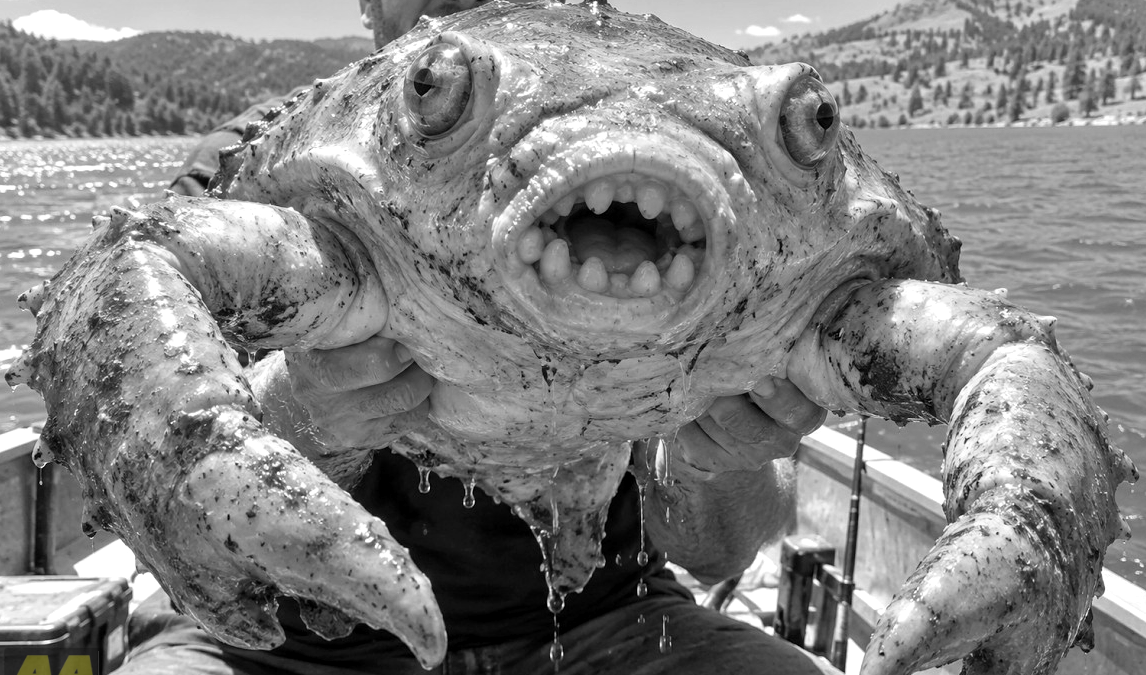
There are things a fisherman expects to see when the net comes over the side of a boat.
Fish, crabs, tangled rope, perhaps an old piece of timber that has spent too many years underwater.
There are things nobody expects to see, things that make an entire crew stop talking while the machinery keeps pulling and the wet weight of the sea rises toward them.
A shape can appear beneath the surface that does not belong to the world they recognize.
A piece of metal can come aboard carrying a history that is still dangerous after generations.
A creature can emerge that seems to have been waiting below the surface since another age, another coastline, another version of the world.
The strangest part is that none of these discoveries require a legendary expedition or a secret laboratory.
Sometimes they happen during ordinary fishing operations, in places where crews have worked for decades.
A net goes down. A line is hauled back. Something catches against the gear. The crew leans closer.
And then everyone realizes that the ocean has just handed them something nobody ordered. Around the North Sea, fishermen still work above enormous stretches of submerged history and wartime debris.
In the deep Atlantic, creatures can live for centuries beneath waters almost completely untouched by sunlight.
Far below the surface, animals with enormous eyes, strange jaws, ancient body shapes, and unfamiliar proportions can exist without ever becoming familiar to the people above.
So when a fishing boat brings something extraordinary to the surface, the real question is not always what the fishermen caught.
Sometimes the question is what else has been waiting down there all this time? For fishermen working in the North Sea and Baltic, one of the most serious surprises does not have fins, scales, or tentacles at all.
It can be a piece of wartime material resting quietly beneath the water for generations.
German authorities estimate that roughly 1.6 million tons of conventional wartime munitions remain in German parts of those seas.
The material includes mines, bombs, shells, and other remnants from the conflicts of the twentieth century.
Decades underwater have not made all of it harmless. Metal corrodes, markings disappear, and objects become buried beneath sediment, but the original danger can remain.
That creates an unsettling possibility for any fishing crew working those waters. A net can descend expecting fish and return carrying an object that has been underwater since World War II.
In 2005, three Dutch fishermen experienced exactly the kind of discovery that turns an ordinary haul into something nobody aboard will forget.
A World War II bomb came aboard with their fishing operation, and the result was catastrophic.
The disturbing part is not simply that such objects remain underwater. It is that the sea can hide them so effectively.
A fishing net does not know what it is touching. It simply catches whatever happens to be in its path.
That same sea also conceals something much older than wartime machinery. Long before modern ships crossed the North Sea, the region looked completely different.
Britain was once connected to continental Europe by a broad landscape now known as Doggerland.
Rising sea levels eventually covered that territory, leaving an enormous prehistoric landscape beneath the modern water.
For generations, fishing and dredging operations have brought fragments of that vanished world upward. Mammoth teeth have appeared.
Tusks have appeared. Woolly rhinoceros bones have appeared. Stone tools have also been recovered. To a fisherman sorting through a net, a strange piece of bone might initially look like nothing more than another object pulled from the bottom.
But some of those objects belonged to animals that once walked across open ground where ships now travel.
The North Sea is therefore not simply a body of water. Underneath its waves is a buried landscape.
Modern fishing grounds can sit above places where prehistoric animals once moved across dry ground, where people made tools, and where an entirely different environment existed.
The sea covered it, sediment accumulated over it, and centuries passed. Then a fishing net reached down and brought a small piece of that vanished world back into daylight.
But if Doggerland demonstrates that the sea can preserve landscapes, Greenland sharks demonstrate something even stranger.
They preserve time. Greenland sharks live in the deep, cold waters of the North Atlantic and Arctic.
Fishermen do not usually set out specifically hoping to catch one. Instead, the animals can appear as bycatch, turning up unexpectedly in fishing operations.
They are large, slow moving animals adapted to a world of darkness and cold. In 2016, researchers used radiocarbon dating of proteins in the eye lenses of 28 female Greenland sharks.
The largest measured just over 5 meters and was estimated to be around 392 years old, although the estimate carried a very wide uncertainty range.
Even with that uncertainty, the result was extraordinary. Scientists concluded that Greenland sharks can live for centuries and may not reach sexual maturity until around age 150.
That means a Greenland shark swimming through cold northern water today could potentially have been alive during the 1600s.
Imagine hauling up a strange shark and discovering that the animal might have been moving through the ocean before modern nations looked anything like they do now.
The fisherman sees a shark. Science sees a biological clock that has been running for centuries.
Then there are the creatures that look so strange that people immediately reach for explanations from legend.
Oarfish are almost perfectly designed to produce that reaction. They are long, silver, ribbon shaped fish with brilliant red fins, and they normally live far below the surface.
Their bodies can reach remarkable lengths, and their appearance is so unlike familiar coastal fish that it is easy to understand why stories of sea serpents developed around animals like them.
Around 1885, fishermen off Pemaquid Point in Maine caught an oarfish measuring around 25 feet long and weighing roughly 600 pounds.
The catch became a famous record and was later associated with Guinness listings for a captured oarfish.
But consider the moment before anyone understood what had been caught. The animal comes over the side.
It is enormous. It is silver. It is long enough to look completely out of proportion with an ordinary fish.
Its fins are red. Its body seems almost impossible. There are no underwater cameras available to show the crew what lives hundreds of meters below the surface.
There is no easy way to compare the creature with other examples. There is simply a giant ribbon shaped animal lying on the deck.
A modern observer might recognize an oarfish immediately. A fisherman in 1885 had no such advantage.
The ocean had produced something that looked like a creature from a story, and the only evidence that it was real was sitting directly in front of them.
Nearly a century later, another fishing crew encountered something that made an ordinary catch look almost insignificant.
In 2007, the New Zealand fishing vessel San Aspiring was working in the Ross Sea when its long line came up with a colossal squid attached to a toothfish.
The squid had seized the fish around 1,500 meters below the surface. That alone would have been remarkable.
But the animal apparently refused to let go as the fishing operation brought everything upward.
The squid eventually reached the surface in extremely poor condition and became an exceptionally valuable scientific specimen.
After researchers accounted for ice associated with the frozen body, the animal weighed around 470 kilograms.
Its tentacles contain swiveling hooks. Its eyes are enormous. Its body is built for a world where sunlight barely reaches and where encounters with humans are almost nonexistent.
The crew had not gone searching for a colossal squid. They had been working a fishing line.
The squid simply happened to be attached to what the line was already bringing upward.
That is one of the strangest patterns in deep sea discovery. The fishermen are not necessarily looking for the unknown.
The unknown is getting caught in their equipment. Something similar happened off the Florida Keys in April 2014.
Shrimp fisherman Carl Moore was hauling a net from more than 2,000 feet below the surface when a goblin shark came up with it.
Goblin sharks are among the strangest looking sharks known to science. Their skin can appear pink gray.
Their snout is long and flattened. Their teeth are narrow and numerous. Most remarkable of all is their jaw.
When the animal strikes at prey, the jaws can project forward dramatically, transforming its face into something that looks almost mechanical.
Moore reportedly photographed the shark and released it rather than trying to keep it. That decision is understandable when considering where goblin sharks live.
They are deep water animals, and encounters with living individuals are extremely uncommon. Many specimens known to scientists have come from accidental fishing catches.
For the crew, however, none of that scientific rarity would have been obvious when the net came aboard.
They were expecting shrimp. Instead, a strange pink gray shark appeared with a snout that looked almost too long for its head and a jaw capable of moving far beyond what anyone expects from a shark.
The sea had once again delivered something from a place people rarely see. And the deeper fishermen go, the stranger the surprises can become.
In January 2007, a fisherman near Suruga Bay in Japan alerted staff at a marine park after catching an unusual eel shaped shark near the surface.
It was a female frilled shark about 1.6 meters long. Frilled sharks normally live much deeper.
Their bodies have a primitive appearance, with six pairs of frilly gill slits and hundreds of small hooked teeth.
The fisherman had encountered something that usually belongs far below ordinary surface activity. This time the animal was transferred alive and filmed swimming.
The footage became notable because living frilled sharks are so rarely observed near the surface.
People often describe frilled sharks as living fossils. The phrase sounds dramatic, but it is easy to understand when looking at the animal.
Its body does not resemble the sleek, familiar shape most people associate with sharks. Its long body, unusual gills, and rows of teeth make it appear almost like an animal that belongs to an earlier chapter of the ocean.
Yet it was not preserved in rock. It was swimming. A fisherman had brought it close enough for people on land to see.
The discovery of unusual sharks was not limited to frilled sharks. The megamouth shark created another surprise for fishermen and scientists alike.
The first megamouth known to science was discovered tangled in a United States Navy sea anchor in 1976.
That alone was remarkable because the animal was enormous and barely known. Eight years later, fishermen had their own encounter.
In November 1984, a male megamouth measuring roughly 4.5 meters was caught in a gill net off Santa Catalina Island in California.
At that time, the animal was still extremely unfamiliar to science. The megamouth has a huge rounded head, thick lips, and an enormous mouth that seems almost too large for the rest of its body.
Unlike the frightening appearance of some deep water predators, the megamouth is a filter feeder.
Its strange appearance does not tell the whole story. But imagine seeing one before the species had become familiar.
A shark more than four meters long comes up in a fishing net, carrying a face unlike the sharks people commonly knew.
The animal had been living in the ocean the entire time. It had simply remained where humans rarely looked.
That may be the most unsettling lesson from the deep sea. An animal does not need to be newly evolved to be newly discovered.
It only needs to live somewhere we have not been looking. One of the most extraordinary examples came in December 1938.
For decades, coelacanths had been known only through fossils. Scientists believed the lineage had disappeared around the end of the Cretaceous.
Then fishermen working off South Africa brought a strange blue fish into East London. Museum curator Marjorie Courtenay Latimer recognized that something extraordinary had arrived.
The fish was a coelacanth. A lineage known from ancient rock had appeared as a living animal with fresh scales and flesh.
The discovery changed the scientific understanding of the animal completely. Later research identified surviving populations in the western Indian Ocean.
Then, in 1998, another species was documented in Indonesia after local fishermen caught one. Once again, fishermen were involved in revealing something that had seemed to belong entirely to the fossil record.
A fishing crew did not set out to find a survivor from an ancient lineage.
They simply brought up a fish. Science then had to reconsider what the fish meant.
That pattern brings us to perhaps the strangest fishing catch in this entire series of discoveries.
The event occurred on April 25th, 1977. The Japanese trawler Zeo Maru was working east of New Zealand when its net brought up an enormous decomposing carcass.
The object measured around 10 meters long. It weighed roughly 2 tons. And its shape was deeply unsettling.
There was a small looking head at one end of what appeared to be an unusually long neck.
The crew photographed it. They measured it. They saved tissue samples. Then they made a decision that might seem unbelievable from a distance but was understandable aboard a working fishing vessel.
They threw it back. A rotting animal weighing thousands of pounds was not exactly an improvement to the working day.
But photographs had already been taken. Once those photographs reached the public, the questions began.
What had the fishermen found? Could it be some unknown sea creature? Could it be something surviving from a much earlier period?
Could a prehistoric marine reptile somehow still exist? The shape was strange enough to encourage speculation.
The carcass appeared to have a long neck, a small head, and a body unlike anything the crew expected to see in their net.
But the ocean can transform familiar animals into unfamiliar shapes. As decomposition progresses, soft tissue disappears.
Jaws can separate. Fins can detach. The normal proportions of an animal can become distorted.
Later tissue analysis and anatomical examination pointed toward a very different explanation. The carcass was considered to have come from a badly decomposed basking shark.
Basking sharks are enormous animals. Their bodies are built very differently from the strange shape seen in the photographs, but decomposition can remove important features and create a bizarre silhouette.
A shark can lose its jaws. Its fins can disappear. Its body can change shape.
What remains may resemble something that no longer looks like the animal it came from.
That explanation does not make the image particularly comforting. The fishermen still pulled a roughly 32 foot rotting shark from the ocean.
The difference is that instead of revealing a surviving prehistoric marine reptile, the catch revealed something equally important about the ocean.
A familiar animal can become unfamiliar when the sea and decomposition alter its appearance. The Zeo Maru crew had encountered a puzzle created by nature.
And the first answer was not obvious. That is the recurring story behind strange fishing discoveries.
A net goes down into a world that is poorly understood. It passes through darkness.
It drags across a seabed that may contain prehistoric landscapes, wartime objects, ancient tools, forgotten wreckage, and creatures that spend almost their entire lives beyond human sight.
Then the machinery begins pulling. The net rises. The crew waits. Sometimes what comes aboard is ordinary.
Sometimes it is a piece of Doggerland, a mammoth tooth that once belonged on dry ground.
Sometimes it is an object left behind by a war more than eighty years earlier.
Sometimes it is a shark that may have been alive during the 1600s. Sometimes it is a fish whose lineage was known only from fossils.
Sometimes it is a colossal squid from 1,500 meters below the surface. Sometimes it is a goblin shark pulled from more than 2,000 feet down.
Sometimes it is a frilled shark appearing where nobody expected one. Sometimes it is a megamouth that science had only recently learned existed.
And sometimes it is a huge carcass whose shape is so distorted that an ordinary animal suddenly looks like something from another age.
The fishermen themselves become part of the discovery. That is what makes these stories different from discoveries made in laboratories.
The first person to see the strange object is often not a scientiSt. It is someone standing on a wet deck, surrounded by ropes, machinery, nets, fish, cold air, and the smell of the sea.
There may be no preparation. No carefully controlled experiment. No warning. Just a net coming over the side.
The history of marine science contains many moments when ordinary fishing operations unexpectedly opened a door into something much larger.
The North Sea showed what happened when a drowned landscape survived beneath modern waters. The Greenland shark demonstrated that an individual animal could potentially carry centuries of biological history.
The oarfish showed why unfamiliar deep sea animals could inspire stories of sea serpents. The colossal squid revealed a creature with enormous eyes and specialized hooks living far below the surface.
The goblin shark demonstrated how little humans see of the deep ocean. The frilled shark brought an ancient looking body shape into view.
The megamouth proved that a giant shark could remain almost unknown while living in the modern ocean.
The coelacanth forced scientists to reconsider a lineage that had seemed confined to fossils. And the Zeo Maru catch demonstrated how easily a familiar animal could become something almost unrecognizable after spending time in the sea.
The ocean does not need to invent a monster to frighten the imagination. It only needs to hide something long enough.
For centuries, people have looked toward the horizon and imagined what might exist beyond it.
Modern technology has changed the question but not the mystery. Satellites can map the surface.
Submersibles can reach depths once considered impossible. Sonar can reveal shapes moving through darkness. Cameras can descend thousands of meters.
Yet fishing crews continue to bring unexpected things upward. That fact should make the ocean feel larger, not smaller.
Because every strange catch carries the same quiet reminder. We know the surface. We know the coaSt.
We know the harbors and shipping lanes. But below the working depth of ordinary boats is an enormous world where old landscapes remain buried, wartime objects rest beneath sediment, and animals adapted to darkness move through water that humans rarely enter.
A fisherman does not have to search for that world. A net can reach it for him.
And when the net comes back, there is no guarantee that what is inside will look anything like what he expected.
That is why the most remarkable fishing stories are not really about fishermen finding monsters.
They are about fishermen accidentally crossing the boundary between the familiar ocean and the hidden one.
One moment, the crew is working. The next, everyone is staring at something impossible looking on the deck.
A bomb from World War II. A piece of a drowned Ice Age landscape. A shark older than entire generations.
A silver animal long enough to resemble a sea serpent. A squid with enormous eyes and swiveling hooks.
A shark whose jaw projects forward. A fish with ancient looking gills. A giant mouth emerging from a net.
A blue fish that should have existed only in fossils. Or a 32 foot carcass whose final explanation is almost stranger than the original mystery.
The ocean keeps these things out of sight not because they are legends, but because there is simply so much of it.
The fishermen are only touching a fraction of what lies beneath them. And every time a net comes over the side carrying something unexpected, it offers the same unsettling possibility.
If this is what can be found accidentally, without anyone even looking for it, what else is still moving in the darkness below?
Disclaimer: This content may be created by Al for entertainment purposes. Any resemblance to real persons, events, or places is coincidental.








