America Introduced an African Animal Into the Desert — And an Ecological Disaster Followed
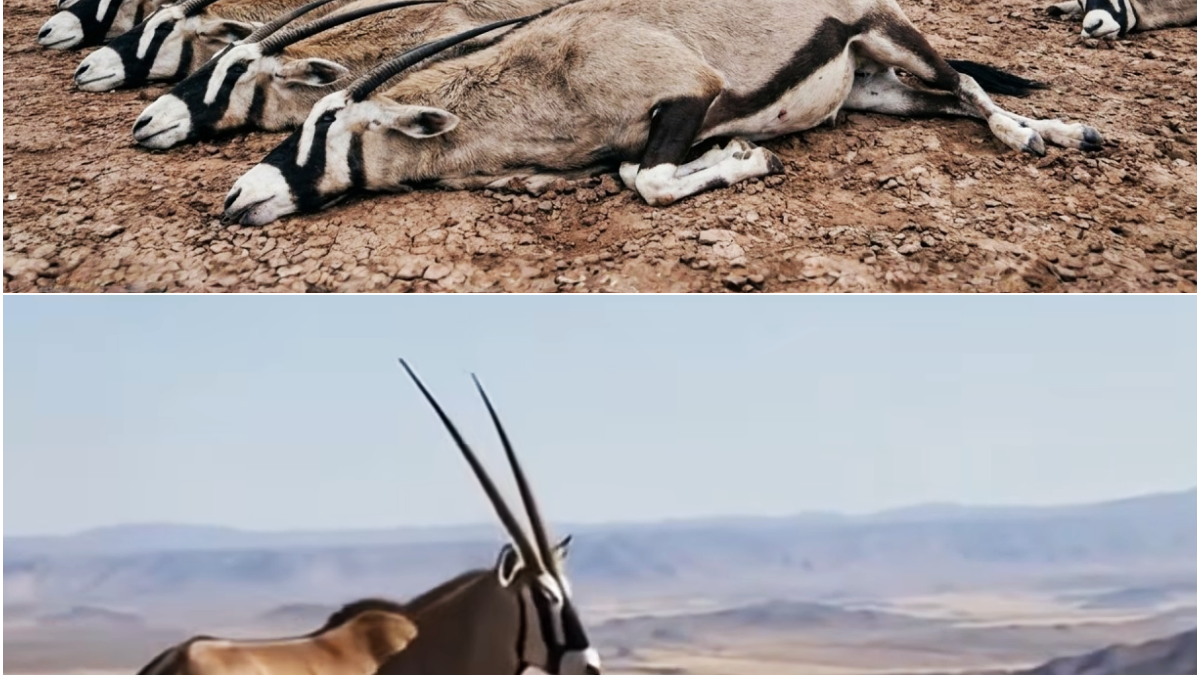
How does an African antelope weighing 500 pounds, carrying horns nearly three feet long, end up roaming wild in the deserts of New Mexico, thousands of miles from the Kalahari where its ancestors evolved?
And how does an animal brought to America by people who believed they could improve the landscape become a creature that the same people struggle to control?
The answer begins with a government experiment, a famous hunter, and a desert that seemed to have room for everything.
In 1969, New Mexico began releasing African oryx onto a military reservation, expecting the animals to survive in the harsh southwestern climate and provide hunters with an extraordinary new opportunity.
The scientists believed the herd would remain relatively small, stay within a single basin, and eventually be controlled by mountain lions.
Instead, the animals discovered a landscape that suited them almost perfectly. They survived the heat, found food where native grazers struggled, and reproduced without the seasonal restrictions managers expected.
Decades later, thousands of these enormous antelope roam the region, including land surrounding one of America’s largest military installations.
Their presence has reshaped the lives of native wildlife, complicated conservation efforts, and created a strange relationship between an invasive species and the hunters hired to control it.
Even the brilliant white dunes of White Sands became part of the story. But the most surprising part is that New Mexico was not the first place to attempt something like this.
And understanding why the oryx succeeded requires looking at the animals people introduced before them, the mistakes they repeated, and the one extraordinary difference that made this experiment so difficult to reverse.
The desert looked empty to the people who first imagined filling it with African wildlife.
Across southern New Mexico, the Chihuahuan Desert stretched beneath an enormous sky, with mountains rising above dry basins and scattered vegetation surviving in the heat.
To an ordinary visitor, it was a beautiful but demanding landscape. To certain wildlife managers in the middle of the twentieth century, it looked like an opportunity.
They saw a place where large animals could live, where hunters could travel across open country, and where the introduction of foreign species might create an entirely new outdoor experience.
The animal they eventually selected was the gemsbok, also known as the oryx. Native to the dry regions of southern Africa, this powerful antelope was already adapted to some of the most difficult conditions on its home continent.
It possessed impressive horns, a heavy body, and an unusual ability to survive where water was scarce.
In New Mexico, those qualities would become the foundation of an unexpected success. But the idea of moving animals between continents was not new.
Long before the first oryx arrived, people had repeatedly attempted to reshape unfamiliar environments by introducing species they admired elsewhere.
During the nineteenth century, acclimatization societies became popular among wealthy naturalists in Europe, Australia, and America.
Their members believed that plants and animals could be transported around the world and successfully established in places where they had never naturally existed.
They regarded nature as something that could be improved through deliberate selection. If a landscape lacked a familiar bird, they could import it.
If a country had no animal suitable for a particular kind of hunting, they could introduce one.
If a plant from another continent seemed useful or attractive, they could attempt to establish it in a new climate.
The philosophy sounded reasonable to people who underestimated the complexity of ecosystems. The consequences were sometimes extraordinary.
In Australia, a settler named Thomas Austin arranged for 24 wild rabbits to be shipped from England in 1859.
He wanted familiar animals to hunt around his estate near Geelong in Victoria. The rabbits reproduced and spread through the countryside.
Their descendants became one of Australia’s most recognizable invasive species, damaging farmland and creating enormous difficulties for agriculture and wildlife management.
Western Australia eventually responded by constructing a rabbit-proof fence extending for more than 1,000 miles.
Yet even an enormous barrier could not completely prevent the animals from spreading. Another example began in New York.
In 1890, a wealthy drug manufacturer named Eugene Schieffelin released 60 European starlings into Central Park.
The following spring, another 40 were introduced. The birds established themselves, and their descendants spread throughout North America.
Together with birds from other releases, the population eventually grew to an extraordinary size, with some estimates reaching approximately 200 million.
The story became associated with a claim that Schieffelin wanted every bird mentioned in Shakespeare’s writings to live in America.
However, researchers investigating that explanation in 2021 could not find convincing evidence that Shakespeare had motivated the original release.
The familiar explanation appears to have emerged decades after Schieffelin’s lifetime. The more thoroughly documented explanation connects the birds to the American Acclimatization Society and its interest in establishing European species in the United States.
That distinction matters because it reveals the broader thinking behind the introductions. The releases were not necessarily the result of one eccentric person’s literary obsession.
They were part of an organized movement that regarded introducing foreign wildlife as a respectable scientific and cultural project.
The American Southwest had already experienced another version of that philosophy. In 1856, the United States Army brought camels to the Texas coaSt. Military planners were looking for an animal capable of transporting supplies across dry country where horses and mules often struggled.
Camels seemed ideal. They could travel long distances with little water, carry heavy loads, and tolerate temperatures that challenged conventional transportation animals.
The following year, Lieutenant Edward Beale led a camel caravan through New Mexico and Arizona while surveying a route for a wagon road to California.
The camels performed well. They could carry supplies across dry terrain and endure conditions that made ordinary pack animals less reliable.
But military priorities changed. The Civil War disrupted the project, and the development of railroads gradually reduced the need for long-distance military transportation by camel.
Some animals were sold, while others ended up in traveling exhibitions or private hands. A number were released into the southwestern deserts.
Their presence eventually inspired the legend of the Red GhoSt. Beginning in 1883, settlers in Arizona described an enormous reddish creature moving through the desert.
Some stories claimed that a dead man was strapped to its back. The animal was blamed for trampling a woman near Eagle Creek.
For years, reports circulated about the strange creature. In 1893, a farmer reportedly discovered a camel feeding in his field and shot it.
The animal still wore rawhide straps that had damaged its hide. The mysterious Red Ghost was apparently one of the abandoned military camels.
Yet there was an important difference between the camel experiment and the later introduction of oryx.
The camels gradually disappeared from the region. They were not supported by a sustained breeding and management program, and their numbers never developed into the enormous population that the oryx would eventually establish.
The camels demonstrated that foreign animals could survive in the American desert. The oryx would demonstrate how difficult it could be to manage a species that was both exceptionally well adapted and capable of reproducing successfully.
The man who helped bring that animal to New Mexico was Frank Hibben. Hibben was an archaeology professor at the University of New Mexico, an experienced big game hunter, and, after World War II, chairman of the New Mexico Game Commission.
His experience in Africa had introduced him to large antelope and the environments in which they lived.
When he looked at southern New Mexico, he saw conditions that reminded him of the African deserts he knew.
The landscape appeared suitable for a large grazing animal. Hibben believed that introducing African wildlife could provide hunters with a distinctive opportunity while making use of habitat that he considered underoccupied.
He was part of a broader movement within New Mexico’s wildlife management establishment. During the 1950s and 1960s, the state experimented with introducing several foreign species.
Barbary sheep from North Africa were released into mountainous areas where native bighorn populations had declined or disappeared.
Persian ibex from Iran were also introduced into the Florida Mountains near Deming. Greater kudu, another African antelope, received consideration but were judged too vulnerable to diseases associated with domestic cattle.
Some of these introductions produced populations that remained relatively limited or confined to particular habitats.
The oryx, however, presented a different combination of advantages. Its ability to tolerate heat, survive with little water, and consume a variety of vegetation made it an appealing candidate for the Chihuahuan Desert.
Hibben helped finance and organize the capture of 18 wild oryx in Africa. The animals were transported to the United States, where they underwent quarantine before being sent to the Albuquerque zoo.
Here, the story takes an unexpected turn. The original wild-caught animals were not the ones released into the desert.
Federal regulations prevented their direct release into the American environment. Instead, the original 18 remained in captivity, and their captive-born offspring became the founders of the New Mexico wild population.
The animals were transported from the zoo to White Sands Missile Range, where they were released into the Tularosa Basin.
In 1969, the first group began establishing itself in the southwestern landscape. The wildlife researchers who evaluated the project believed the experiment could be managed.
Their predictions were specific. The population was expected to stabilize at approximately 500 or 600 animals.
The herd was expected to remain within the Tularosa Basin. And mountain lions were expected to help regulate the number of oryx by preying on them.
The plan appeared to have a reasonable scientific foundation. But the assumptions did not adequately account for how the animals would respond to their new environment.
The first surprise was the desert itself. The gemsbok had evolved in the Kalahari and Namib regions of southern Africa, where extreme temperatures and irregular rainfall shaped its behavior and physiology.
In some areas, temperatures can exceed 104 degrees Fahrenheit, and drought can persist for extended periods.
Survival under those conditions requires efficient use of water and an ability to obtain nourishment from vegetation that may contain very little moisture.
The oryx possesses precisely those adaptations. It can obtain much of its water through the food it eats.
In Africa, its diet includes grasses, roots, tubers, and wild melons, allowing it to survive in places where drinking water is limited.
In New Mexico, the animals discovered vegetation that served similar purposes. Yucca, buffalo gourds, mesquite bean pods, and other desert plants provided nourishment.
Many belonged to plant families that also occur in the oryx’s African habitat. The animal did not need an entirely unfamiliar food supply.
It needed to recognize and exploit vegetation that shared important characteristics with what it already consumed.
A United States Geological Survey researcher studying the herd highlighted the similarity between the plant resources available in New Mexico and those found in Africa.
The desert was not an obstacle that the oryx had to overcome from the beginning.
In many ways, it was a familiar environment with a different collection of plants. The second advantage was the animal’s ability to manage heat.
Many mammals lose substantial quantities of water through sweating and panting as they attempt to keep their body temperature within a narrow range.
For an animal living in an extremely dry environment, that can create a serious problem.
The gemsbok has an unusual physiological strategy. Instead of maintaining a constant body temperature throughout the hottest part of the day, it allows its temperature to rise, storing heat in its body.
Some reports describe temperatures reaching approximately 113 degrees Fahrenheit. During cooler nighttime conditions, the animal can release much of that stored heat.
This strategy reduces the need for continuous evaporative cooling during the hottest hours, conserving water that would otherwise be lost through sweating or panting.
For many years, researchers explained another part of the gemsbok’s heat management through a specialized network of blood vessels near the base of the brain.
Known as the carotid rete, this network allows heat exchange between blood vessels. The traditional explanation compared it to a radiator, suggesting that cooled blood helped protect the brain from excessive temperatures.
More recent research has explored a more complicated mechanism involving the hypothalamus, the brain region responsible for regulating body temperature.
Studies using implanted sensors in wild antelope have suggested that temperature signals reaching the hypothalamus may influence when the animal activates costly cooling responses.
By allowing its body temperature to rise without immediately triggering panting and sweating, the animal can conserve water during the hottest parts of the day.
When activity or danger requires rapid movement, its cooling responses can become more important. The gemsbok’s physiology therefore provides a flexible strategy for balancing heat management and water conservation.
In New Mexico, this ability gave the animals a major advantage. They could remain active in an environment that placed considerable demands on other large mammals.
Their third advantage was reproduction. Many animals in temperate regions reproduce during particular seasons when food and environmental conditions are favorable for raising young.
Gemsbok are less restricted by a narrow breeding season. They can mate and give birth throughout the year, including in their native African habitat.
The missile range’s wildlife biologists recognized that this flexibility could contribute to population growth. An animal that can survive on limited water, exploit varied vegetation, tolerate extreme heat, and reproduce throughout the year has considerable potential to establish itself in a suitable environment.
But there was still one important factor that managers believed would prevent the population from becoming too large.
Predators. In southern Africa, gemsbok live alongside lions, leopards, spotted hyenas, and African wild dogs.
These predators influence the survival of young animals and sometimes attack adults. Some hunt cooperatively, increasing their ability to pursue and overwhelm large prey.
The National Park Service has described the difficult conditions facing young oryx in Africa, where only a relatively small proportion of calves may survive their first year in some environments.
New Mexico offered a very different predator community. The most significant large predator capable of hunting adult oryx was the mountain lion.
Mountain lions are powerful ambush hunters, but they generally operate alone rather than in large cooperative groups.
An adult gemsbok can weigh approximately three times as much as a large male mountain lion.
It also possesses long, straight horns that can be used defensively. These horns are not simply ornamental features.
They are formidable weapons, and gemsbok have been known to injure or kill large predators in Africa.
Mountain lions can prey on oryx, especially young animals, but attacking a healthy adult carries considerable risk.
A mother gemsbok can also hide her newborn calf in vegetation during its early weeks, making it harder for predators to locate.
The result was an unusual imbalance. The oryx arrived with the physical adaptations of an animal accustomed to living alongside dangerous predators, but the new environment lacked the same combination of large carnivores.
Mountain lions remained capable hunters, yet they could not necessarily regulate the population as effectively as the researchers had expected.
The animals were also living on a military installation where ordinary human activity was restricted.
That circumstance would prove crucial. White Sands Missile Range covers approximately 3,200 square miles of the Tularosa Basin, making it larger than the entire state of Delaware.
It is one of the largest military installations in the United States and has played an important role in American military research and testing.
The site is also historically significant because the world’s first atomic bomb was tested at the Trinity site on July 16, 1945.
Much of the range is closed to ordinary public access. There are no conventional residential subdivisions throughout its vast interior, and recreational activities are restricted by military operations and security requirements.
The state had therefore introduced an animal intended to provide hunting opportunities into a landscape where people could not freely pursue it.
The missile range became an enormous protected breeding area, even though that had never been the original intention.
The oryx could occupy large sections of the basin with relatively little interference. As their numbers increased, some animals began moving beyond the original release area.
They traveled west into the San Andres Mountains and entered the San Andres National Wildlife Refuge, an area established in 1941 to protect desert bighorn sheep.
By 1997, at least 50 oryx were reported living in the refuge. Other animals appeared on private ranches, where some landowners complained about competition for vegetation.
Oryx also wandered onto the runways of Holloman Air Force Base, demonstrating that their movements could intersect with military operations beyond the main range.
The second prediction had failed. The herd was no longer confined to the Tularosa Basin.
And as the population spread, the consequences became increasingly visible. The first major concern involved water and food.
In a desert, water sources are critical gathering places for wildlife. Native animals often depend on a relatively small number of springs, ponds, and other reliable sources during dry periods.
When a large, powerful newcomer begins using the same resources, competition can become significant. Biologists observed oryx displacing mule deer and desert bighorn sheep from some watering areas.
The oryx also possessed an advantage in food selection. Because they could survive on vegetation that other grazers found less desirable, they could continue feeding under conditions that placed greater pressure on native animals.
During droughts, that flexibility could become especially important. Over time, the oryx became one of the most common large hoofed animals in the Chihuahuan Desert region of New Mexico.
Their presence changed the balance among the large mammals that had traditionally occupied the landscape.
The second concern involved disease. Wildlife populations can carry infectious organisms without necessarily showing obvious signs of illness.
When an introduced species encounters native animals, it may create new opportunities for pathogens or disease exposure to spread between populations.
In 2001, researchers collected blood samples from oryx living on the missile range. The results attracted considerable attention.
Forty-nine of the 50 sampled animals showed evidence of exposure to malignant catarrhal fever, while 48 showed exposure to bluetongue virus.
These findings did not establish that the oryx had caused outbreaks among native wildlife, but they raised questions about the potential for disease transmission.
Malignant catarrhal fever can be severe or fatal in susceptible deer and other animals. Bluetongue virus, which is transmitted by biting midges, can affect several wild and domestic ruminants, including pronghorn and bighorn sheep.
Researchers also observed that declines in native hoofed animals roughly coincided with the expansion of the oryx population.
That pattern was concerning, but it did not prove that oryx were responsible for the declines.
Other factors, including disease, predation, drought, habitat conditions, and human activity, could also influence native populations.
The relationship required careful investigation rather than a simple explanation. Still, the possibility that a highly adaptable introduced species could carry disease exposure into sensitive wildlife communities added another layer of concern.
The desert bighorn sheep were particularly vulnerable. The San Andres National Wildlife Refuge had been established to protect them, but by 1997 the refuge’s native herd had fallen to a single ewe.
Disease and mountain lion predation were major contributors to the decline. Oryx were not considered the primary cause, but their expansion into the same landscape created additional management challenges.
The refuge was intended to protect a native species, yet it now contained a growing population of foreign antelope that could compete for resources and potentially contribute to disease concerns.
The third major problem emerged next door, at White Sands. The enormous white gypsum dunes are among the most distinctive landscapes in the American SouthweSt.
The dune field covers approximately 225 square miles and supports a specialized collection of plants and animals adapted to its unusual conditions.
The shifting gypsum sand creates a fragile environment, and native species depend on vegetation and habitat features that can be easily disturbed.
By the 1990s, oryx had begun wandering into the area. Their size and grazing behavior created concerns about trampling, vegetation loss, and disturbance of the habitat.
The National Park Service faced a difficult decision. If the animals continued entering the dunes, they could create additional pressure on an already sensitive ecosystem.
But removing them was not straightforward. In 1996, the agency spent approximately $1.04 million constructing 67.6 miles of fencing around the monument’s 225 square miles.
The fence was intended to prevent oryx from entering the protected area. Yet when construction was completed, managers discovered that more than 200 animals had already become trapped inside.
The barrier had prevented additional animals from entering, but it had also enclosed a substantial group that now needed to be removed.
In 1998, news emerged that the Park Service was considering shooting the animals. Animal welfare advocates objected strongly, and public pressure encouraged the agency to pursue live capture instead.
What followed was a complicated operation involving helicopters, veterinarians, and specialized ground crews. A helicopter located an oryx and delivered a tranquilizer dart.
After the animal became sufficiently sedated, another helicopter transported a crew to its location. The crew worked to secure the animal, restrain its legs, and cover its eyes.
The oryx was then placed into a specially prepared sling or bag and lifted by helicopter.
It was carried beyond the fence, where a veterinarian assessed its condition and administered medication to reverse the effects of the tranquilizer.
Once the animal had recovered sufficiently, it was released. The operation was expensive and technically demanding, but it allowed the agency to remove 228 oryx without relying on the proposed shooting program.
The total cost was just under $400,000. The captured animals were released onto the missile range, where hunters could legally pursue them.
Yet even after the operation, approximately 12 to 20 oryx remained inside the fence. The episode demonstrated how difficult it could be to manage a large, mobile species once it became established in a landscape where ordinary barriers and removal methods were inadequate.
The fence had been necessary to protect the dunes, but it did not solve the wider problem.
It simply separated one protected area from a much larger population. And the animals were still reproducing elsewhere.
By this point, New Mexico had discovered that the original predictions were unreliable. The herd had exceeded the expected limits, expanded beyond the basin, and established itself in locations where its presence created new conservation and management concerns.
The state needed a way to reduce the population. Importing African lions was not a realistic option.
Introducing another foreign predator would create a new set of ecological risks, potentially replacing one management problem with another.
Instead, authorities turned to the predator that could be organized and regulated through existing wildlife policy.
People. The first public oryx hunt took place in 1974, with just four permits. Over time, hunting became a central part of the state’s strategy for managing the population.
By 2001, the state and the Army were issuing 895 once-in-a-lifetime permits for hunts on the missile range, along with another 500 permits for animals that had moved beyond its boundaries.
A once-in-a-lifetime permit meant that a hunter who successfully drew the opportunity could not draw that particular hunt again.
By that period, hunters had removed approximately 5,000 oryx. Yet the population remained substantial. Hunting on White Sands Missile Range is unlike hunting on ordinary public land.
The military installation operates according to security requirements, testing schedules, and restrictions that can change access at short notice.
The hunts generally last three days, with the first half day devoted to security procedures and a mandatory safety briefing.
Military activities can interrupt or shorten a hunt. Participants must follow rules governing movement, access, and photography, reflecting the fact that they are hunting on an active military installation rather than an ordinary wildlife management area.
The state also established special opportunities for injured military veterans. For hunters fortunate enough to receive a permit, the experience can be extraordinary.
They may find themselves tracking a powerful African antelope through an American desert, with military infrastructure and enormous stretches of restricted land forming part of the landscape.
The situation is unusual even by the standards of western hunting. The animal is not native to the region, yet it is a managed game species.
Its population is a conservation concern, yet hunting opportunities are valuable to many participants. And the military range that once protected the herd from ordinary human activity has become one of the main places where people are permitted to hunt it.
Over time, the state’s management objectives began to change. Rather than trying to eliminate every oryx from the region immediately, managers increasingly focused on controlling their distribution and maintaining a population on the missile range.
The goal became to prevent oryx from establishing themselves outside the installation while managing the herd within a target range.
At one point, officials discussed maintaining approximately 1,000 animals on the range. But the herd had grown far beyond that level.
A 2013 survey estimated approximately 2,300 to 2,800 oryx living there. Instead of increasing hunting opportunities to drive the population rapidly downward, the state reduced the number of on-range licenses, seeking to stabilize the herd or allow it to grow slightly.
The decision revealed a remarkable reversal. The same animals that had been introduced for hunting and later removed from a national park were now being managed as a renewable hunting resource.
Their presence generated permit revenue, provided meat, and supported an outdoor activity that many people valued.
The oryx had become both an invasive species and a game animal. Those two identities were not mutually exclusive.
Wildlife agencies routinely manage populations according to ecological conditions, public interests, and available resources. A species can be harmful in one context and still have value in another.
For some hunters, oryx meat is an important part of the appeal. The meat is often described as lean and relatively mild, without the stronger flavor that some people associate with venison.
Its culinary reputation has helped create a community of people who support maintaining hunting opportunities.
The state also receives revenue from licenses and related management activities. Those funds contribute to wildlife programs, including work involving native species.
The desert bighorn provides an especially striking contraSt. After its population collapsed, New Mexico undertook captive breeding, reintroduction, and other conservation measures.
Mountain lion management also became part of efforts to support vulnerable bighorn populations. Beginning in 2001, the state removed mountain lions from some bighorn ranges, including the San Andres Mountains, in an effort to improve conditions for the native sheep.
That created another irony in the oryx story. The original introduction plan had counted on mountain lions to regulate the foreign antelope population.
But mountain lions were later being removed from some areas to help protect a native species that was struggling to survive.
The predator that was supposed to keep the oryx in check was now being managed for a different conservation objective.
Over time, bighorn sheep numbers improved. New Mexico’s population rose from fewer than 70 animals in 1980 to approximately 1,300 in more recent estimates.
The species was removed from the state’s endangered list in 2011. The recovery involved multiple efforts, including captive breeding, new releases, habitat management, and predator control.
Hunting license revenue contributed to wildlife programs, creating a complicated financial relationship between the managed oryx population and the conservation work supporting native wildlife.
The oryx story therefore cannot be reduced to a single question about whether hunting is good or bad.
It involves the practical realities of funding wildlife management, the economic value of hunting opportunities, and the ecological consequences of maintaining a non-native species.
But one argument sometimes used to defend the oryx introduction deserves particular attention. Some supporters have described the animals as a backup population for threatened wildlife.
The comparison usually refers to the conservation success of the Arabian oryx, a different species that once came close to disappearing from the wild.
The Arabian oryx is not the same animal as the African gemsbok living in New Mexico.
Its history, conservation status, and management needs are different. In the early 1960s, the Arabian oryx was facing an extraordinary crisis in its native range.
A British expedition entered the deserts of southern Arabia in 1962 to capture some of the last remaining wild animals.
The expedition managed to capture three oryx after pursuing them across the sand in a specially constructed catching vehicle.
Those animals, together with a small number of additional individuals, became part of a carefully managed captive population.
The Phoenix Zoo in Arizona played a major role because its desert climate offered conditions that were considered suitable for maintaining the species.
The group became known as the World Herd. More than 240 Arabian oryx were eventually born at the Phoenix Zoo as part of the wider conservation effort.
In 1972, the last wild Arabian oryx were reported to have disappeared from their natural range in Oman.
For a time, the species survived only in captivity. But unlike the New Mexico gemsbok project, the Arabian oryx program was designed around an explicit conservation objective.
The animals were being bred to preserve a species that had nearly disappeared from the wild, with the long-term goal of restoring populations in suitable native habitats.
In 1982, captive-bred Arabian oryx were released back into the deserts of Oman. The reintroduction program eventually helped establish a wild population.
In 2011, the Arabian oryx became the first species to move from extinct in the wild to vulnerable on the International Union for Conservation of Nature’s Red LiSt.
The contrast with New Mexico is striking. Both projects involved moving oryx into new circumstances, and both benefited from the animals’ ability to survive in desert environments.
But only one was built around a clear plan for returning the animals to a natural range where their species had disappeared.
The New Mexico project was designed primarily to create hunting opportunities. The animals were expected to survive and reproduce, but there was no equivalent conservation destination or planned end point.
The difference was not simply the species involved. It was the purpose of the project and the way its long-term consequences were considered.
The African gemsbok was never an endangered species requiring a reserve population in New Mexico.
Hundreds of thousands continue to live in southern Africa, and the species is classified as least concern globally.
The claim that New Mexico was preserving the gemsbok from extinction therefore does not provide a strong conservation justification for the introduction.
That does not mean every person involved in the original project acted carelessly or with harmful intentions.
Frank Hibben believed the animals could survive in the desert and provide an unusual opportunity for hunters.
His confidence reflected the wildlife management philosophy of his era, when introducing desirable species was sometimes treated as an acceptable way to increase the value of a landscape.
Hibben also had a reputation for ambitious claims in his archaeological work. He became known for Sandia Man, based on evidence from a cave near Albuquerque that he argued demonstrated an extremely early human presence in the region.
The claim is no longer accepted by most archaeologists, and some researchers suspected that the evidence had been planted, although that allegation was never conclusively established.
Hibben denied wrongdoing. His career illustrates the kind of confidence associated with some of the ambitious scientific and management ideas of the period.
He was willing to advance bold interpretations and projects, even when later evidence raised serious questions about their assumptions.
The oryx introduction followed a similar pattern. Researchers believed the desert could support a manageable herd.
They expected the animals to remain within a particular region. They expected mountain lions to limit population growth.
Instead, the oryx demonstrated that their adaptations and reproductive flexibility gave them a considerable advantage.
The outcome was not the result of one unexpected event. It emerged from the interaction of several factors that managers had underestimated.
The animals were well suited to the climate. Their food sources were abundant enough to sustain them.
Their ability to conserve water reduced their dependence on scarce resources. Their breeding was not limited to a narrow season.
Their natural predators were less effective than the African predators they had evolved alongside. And the military range provided an unusually large area where ordinary human activity was restricted.
Together, these conditions allowed the population to expand far beyond the original expectations. Today, the New Mexico oryx population remains an unusual example of how wildlife management can create consequences that last for generations.
The animals occupy a landscape that includes military installations, protected areas, private ranches, and public land.
Their movements can create conflicts with native wildlife and landowners, while their value to hunters supports a management system that would not exist without the original introduction.
The story also demonstrates that controlling an established population is not simply a matter of choosing between keeping or removing the animals.
Managers must consider where the animals are located, how quickly they reproduce, what resources they use, and which native species may be affected.
They must also account for public opinion, funding, safety, and the practical limits of available management tools.
The White Sands fence showed how expensive and difficult it could be to protect a sensitive area after a non-native species had already become established.
The helicopter operation showed that even live removal could require complex coordination and substantial funding.
The hunting program demonstrated that sustained human intervention could remove thousands of animals without necessarily eliminating the population.
And the bighorn recovery illustrated how conservation programs sometimes need to address several interacting pressures at once.
The oryx are not simply surviving in New Mexico. They are part of an evolving relationship between wildlife, people, land management, and the history of human decisions.
Somewhere across White Sands Missile Range, a herd may be moving through the desert beneath a wide evening sky.
The animals travel between patches of vegetation, using the landscape much as their ancestors used the African plains.
Their long horns rise above the brush. Their bodies are adapted to heat and limited water.
They can feed, rest, and move through an environment that offers many of the resources they need.
Nearby are radar towers, launch facilities, restricted roads, and vast stretches of military land. Not far away lies the Trinity site, where the modern atomic age began in 1945.
And beyond the range, the white dunes of White Sands National Park remain separated from the oryx by miles of fencing built specifically because the animals proved capable of reaching them.
The desert that once appeared empty to the people who designed the introduction is now a landscape where native species, introduced animals, and human institutions must continually adjust to one another.
The original plan expected a herd of several hundred. Instead, the oryx established a population that reached thousands.
The original plan expected the animals to remain in one basin. Instead, they spread into mountains, private ranches, military facilities, and protected lands.
The original plan expected predators to regulate their numbers. Instead, people became the principal force controlling their population, while mountain lions were sometimes managed for the benefit of another species.
And the original plan offered no clear way to reverse the introduction if its predictions proved wrong.
That missing plan is perhaps the most important part of the entire story. Introducing a species is comparatively easy when the animals are transported, released, and left to establish themselves.
Managing the consequences is much harder. The work may require decades of monitoring, repeated population surveys, habitat protection, public cooperation, and decisions that cannot satisfy every group involved.
It may also require accepting that an animal can have economic value while still creating ecological problems.
New Mexico’s experience with the gemsbok is a reminder that survival is not the same as ecological compatibility.
An animal can thrive in a new environment without becoming a beneficial addition to it.
And a successful introduction, measured by the number of animals living and reproducing, can become an unsuccessful experiment when measured by its effects on native wildlife and the difficulty of controlling its spread.
The oryx did exactly what its biology allowed it to do. The larger question is why the people who introduced it believed they could predict the outcome so confidently.
More than half a century after the first releases, the animals remain a living reminder of the difference between creating a population and managing an ecosystem.
Their story began with 18 wild antelope, a zoo in Albuquerque, and a government decision to release captive-born offspring into the Chihuahuan Desert.
It continues wherever those descendants cross the landscape, grazing beneath the New Mexico sun. And it leaves behind a question that applies far beyond the desert: when people bring an animal into a place where it never naturally belonged, how much responsibility should they accept for everything that happens afterward?
Disclaimer: This content may be created by Al for entertainment purposes. Any resemblance to real persons, events, or places is coincidental.








