Abandoned Tunnels Sealed After What Workers Found Inside
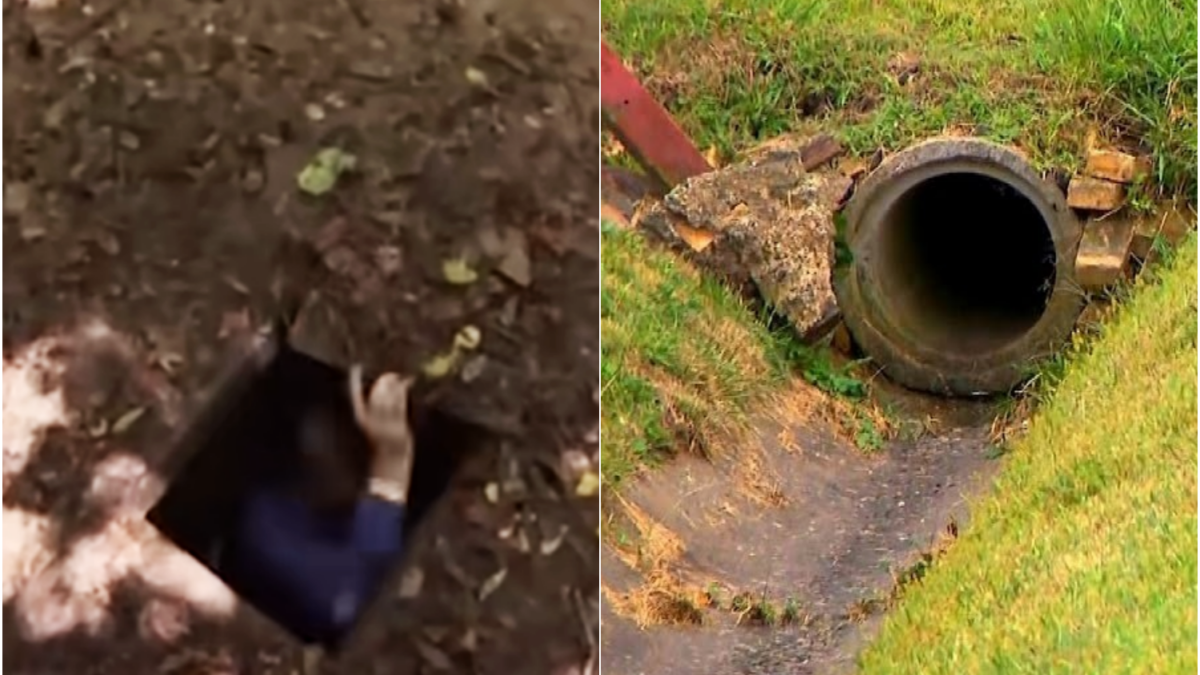
The ground was never supposed to open. For decades, the earth above Hanford’s buried railway tunnels had looked ordinary.
Grass grew over it. Workers passed nearby. Beneath their feet, however, eight railway cars sat inside a sealed underground passage, surrounded by equipment left behind from one of the most secretive periods of the Cold War.
The tunnel had been closed since 1965, and almost everyone who knew of it assumed it would remain that way.
Then, in 2017, the ground suddenly collapsed. A hole nearly 20 ft wide appeared above the forgotten tunnel, dropping into a place that had been sealed for more than half a century.
That discovery was frightening enough. But it was only one of several stories scattered across the world in which tunnels were deliberately closed and then forgotten, sometimes for decades, before someone finally found a way inside.
In Afghanistan, British Royal Marines broke through sealed entrances and discovered underground stores filled with military equipment.
In the Philippines, a treasure hunter named Rogelio Roxas claimed he uncovered a hidden wartime tunnel containing a massive golden Buddha and gold bars.
Under Teotihuacan, archaeologists discovered a tunnel that had remained closed for nearly 1,800 years. And beneath Liverpool, volunteers spent years digging through forgotten passages built by a mysterious businessman.
So what happens when a doorway to the past is deliberately buried, sealed, and left untouched for generations?
The first warning came from the ground itself. In 2017, workers at the Hanford nuclear site in Washington were carrying out routine activities when they noticed something unusual.
The earth did not look right. A section of the ground had collapsed. At first, it might have appeared to be an ordinary sinkhole or structural failure.
But beneath that ground was something far more significant. An old underground railway tunnel. The tunnel had been constructed during the Cold War to move radioactive equipment away from the plutonium production areas at Hanford.
Instead of remaining in ordinary storage facilities, contaminated equipment could be moved underground and kept out of sight.
The railway tunnel eventually became unnecessary. In 1965, it was filled with eight train cars loaded with heavily contaminated equipment.
Then the entrance was sealed. Dirt and concrete closed the passage. The underground railway disappeared from ordinary view.
For decades, nothing seemed to happen. But underground structures do not remain unchanged simply because nobody visits them.
The wooden supports holding part of the ceiling gradually deteriorated. The tunnel remained hidden beneath the surface while the material supporting it became weaker.
Then, one day in 2017, part of the roof gave way. A hole roughly 20 ft wide opened above the tunnel.
The danger was not merely that an old underground structure had collapsed. There was concern that the disturbance could release contaminated dust into the surrounding air.
Workers were immediately placed under a shelter in place order. The response had to be extremely careful.
Crews could not simply rush in and shovel dirt into the opening. They had to stabilize the area while minimizing the possibility of disturbing contaminated material.
Large quantities of soil and grout were prepared. The crews slowly filled the opening. Layer by layer, the gap was stabilized.
The emergency eventually passed, but the discovery changed how officials viewed the remaining underground structures.
Plans to completely fill the Hanford tunnels with concrete were accelerated. The goal was simple.
If a tunnel had already been sealed once, it was not enough to assume the seal would last forever.
The ground could shift. Wood could decay. A ceiling could weaken. And something that had been hidden for decades could suddenly become exposed.
Thousands of miles away, another sealed underground network had been waiting for someone to break through.
In May of 2002, British Royal Marines were conducting Operation Snipe in the mountains of southwestern Afghanistan.
They were searching through remote valleys and rugged terrain when they encountered tunnel entrances that looked deliberately concealed.
The openings had been covered with rocks, mud, and debris. From a distance, they blended into the surrounding landscape.
There was no obvious indication of what waited beyond them. The Marines broke through the blocked entrances.
Inside was an underground storage network. The tunnels contained enormous quantities of military equipment. Wooden crates were stacked throughout the underground spaces.
Inside were mortar shells, land mines, ammunition, and explosives. The quantity was so large that transporting everything down the mountain was impractical.
Instead, engineers began examining the contents. Certain objects were removed for intelligence purposes. The rest remained underground.
Then the tunnels themselves became the problem. A storage site filled with large quantities of dangerous military material was not something that could simply be abandoned after inspection.
The engineers prepared demolition charges. The underground stores were destroyed from within. The same tunnels that had once hidden the supplies were eliminated so they could not continue serving as a storage location.
But some tunnels are not sealed because they contain military equipment. Some are sealed because what lies inside is part of a much older mystery.
In the early months of 1970, a locksmith named Rogelio Roxas gathered a small group and traveled into the hills near Baguio City in the Philippines.
Roxas was searching for something legendary. Yamashita’s gold. The story concerned treasure supposedly hidden by Japanese soldiers near the end of World War II.
For seven months, Roxas and his crew worked continuously. They dug through earth and stone.
They followed clues. They searched beneath the hills. Eventually, their work brought them to an underground passage.
They broke through. A tunnel system appeared before them. Inside were objects that suggested a wartime connection.
Radio equipment. Bayonets. Rifles. And then something far more unsettling. A human skeleton remained inside the tunnel, sitting upright and still wearing what was described as a faded Japanese officer’s uniform.
The group continued farther into the underground structure. Eventually, they reached a lower chamber. There they encountered a massive concrete wall.
It was approximately 10 ft thick. The wall seemed to have been designed to keep something behind it hidden.
Roxas and his crew worked to break through. On January 24th, 1971, they finally succeeded.
Behind the concrete was a huge golden Buddha. The statue stood approximately 3 ft tall.
It was extraordinarily heavy. Ten men were required to move it using ropes and a chain hoiSt.
According to Roxas’s account, the head could be detached. Inside, he claimed, were uncut diamonds.
Nearby were crates stacked approximately 6 ft high. Roxas opened one. Inside were 24 solid gold bars.
At that point, the tunnel was no longer simply a historical curiosity. It had become the center of a treasure claim with enormous consequences.
Roxas decided to close the entrance. The idea was to conceal the remaining contents while he determined what to do next.
But information about the discovery escaped the tunnel. Only a few months later, armed men arrived at Roxas’s home.
According to the account, they were acting on orders associated with Philippine President Ferdinand Marcos.
The golden Buddha was taken. The gold bars were taken. Other artifacts were taken as well.
Roxas was later arrested and pressured to remain silent about the location. The story surrounding the treasure would eventually become the subject of a major legal and historical dispute.
Yet the tunnel itself became part of the legend. It represented a recurring pattern. Something was placed underground.
An entrance was hidden. Time passed. Then someone opened it. The same basic pattern appeared much farther back in history.
Under the Temple of the Feathered Serpent at Teotihuacan, heavy rain in 2003 caused a small sinkhole to appear near the base of the pyramid.
Archaeologist Sergio Gomez investigated. He lowered himself down by rope. Below him was a man made tunnel.
It extended for more than 300 ft beneath the structure. The tunnel entrance had been blocked with large stones and packed earth nearly 1,800 years earlier.
That detail changed everything. The passage had not simply been forgotten. It had been intentionally closed.
And because it had remained inaccessible for so long, looters had never reached the chambers beyond.
The archaeological team could not simply walk through the passage. The air was difficult. The space was narrow.
So researchers first used small remote controlled robots equipped with cameras. The machines moved through the darkness and revealed the shape of the tunnel.
Scans indicated three chambers farther inside. Eventually, human excavation teams entered. The work did not take weeks.
It took more than a decade. As researchers slowly cleared the underground complex, thousands of objects emerged.
More than 100,000 artifacts were eventually recovered. Jade figures lay among the remains. Jaguar bones were discovered.
Pottery appeared. Seashells were found deep underground. And then there were enormous quantities of mercury.
Archaeologists believed the material represented an underground river or watery environment within the ritual landscape.
The tunnel appeared to have been sealed following an important ceremonial event. For nearly 1,800 years, the entrance had remained closed.
The people who created it had vanished into history. Their objects remained below the ground.
Then a rainstorm opened the first small passage back into that forgotten world. The Philippines contained another network of tunnels with a very different history.
The Bamban Hills were filled with Japanese military tunnels carved into soft volcanic rock during World War II.
When Allied forces moved across Luzon in 1945, Japanese soldiers withdrew into underground positions. Some entrances were damaged or buried.
Others were deliberately closed. A few were covered with earth and debris, concealing ammunition stores and protecting the entrances from outside view.
Then the war ended. The soldiers were gone. The jungle grew. The tunnels remained. For decades, many of them were hidden beneath vegetation and collapsed earth.
Historians working with the Bamban World War II Museum began locating and reopening them. Every excavation offered another glimpse into the final period of the wartime occupation.
Inside, researchers found boots. Helmets. Canteens. Military equipment. Live hand grenades. Mortar shells. Some passages also contained human remains near collapsed entrances.
The positioning suggested that some soldiers had attempted to dig through blocked openings. The tunnels had effectively become sealed time capsules.
Nothing inside needed to be reconstructed. The objects were already there. The challenge was simply reaching them without disturbing the dangerous material still present.
Not every mysterious tunnel, however, was built for war. Some were created for reasons that remain uncertain.
Between 1810 and 1840, a wealthy businessman named Joseph Williamson hired hundreds of workers to excavate a massive network of brick tunnels and arches beneath Edge Hill in Liverpool.
Williamson never clearly explained why he wanted the tunnels built. That silence created endless speculation.
Some theories suggested practical purposes. Others suggested something more personal or eccentric. Whatever the original reason, the tunnels remained after Williamson died.
Eventually, many entrances were closed. The underground spaces became forgotten. Then the city changed above them.
For approximately a century, parts of the tunnel system were used as enormous rubbish dumps.
Household waste accumulated underground. The material was compacted. Layer after layer filled the passages. Eventually, some sections were packed almost to the ceiling.
In the early 2000s, volunteer teams began clearing the sealed areas. The work was slow.
They had to remove decades of compacted material by hand. During one excavation approximately 15 ft below street level, workers uncovered large bone fragments.
The discovery immediately changed the mood. The possibility existed that they had encountered an old burial site.
Work stopped. The area was sealed. Police were called. Forensic specialists examined the material. The conclusion was less mysterious.
The bones were animal remains, apparently associated with butcher waste from the 1800s. The excavation continued.
Over the next 20 years, volunteers removed thousands of tons of dirt and rubble. Room by room, the hidden architecture emerged.
Brick arches appeared. Passages opened. Objects from the nineteenth century were uncovered. The tunnels became a physical record of a part of Liverpool that had disappeared beneath the growing city.
Even now, new sections continue to reveal themselves. The tunnels were mysterious because their original purpose remained uncertain.
But unlike some legends, the physical structure itself was undeniable. It had been built by people.
It had been used. It had been abandoned. Then it had been buried beneath another century of history.
New York City has an even stranger chapter in the story of hidden underground passages.
In the late 1700s and early 1800s, medical schools faced a serious shortage of human bodies for anatomical study.
That shortage produced a black market involving people known as resurrectionists. They entered cemeteries and removed bodies, selling them to medical instructors.
The practice generated enormous public anger. It also created a practical problem. Moving a body through crowded city streets was difficult and risky.
So hidden passages became useful. Some medical schools and private dissection rooms reportedly constructed underground connections to nearby graveyards.
The passages allowed stolen bodies to be moved into basement areas without requiring the people involved to travel openly through the streets.
As Manhattan expanded, old buildings were demolished and new structures were constructed over the same ground.
Construction crews sometimes broke through forgotten cellar walls and encountered remnants of those old passages.
In some instances, partly bricked up chambers contained wooden crates and bone fragments. Some of the material appeared to have been left behind when buildings were abandoned or when passages were suddenly closed.
The city continued growing above them. The underground world remained. Then there was the Colwall Railway Tunnel in Herefordshire, England.
The original tunnel was constructed through a hillside during the 1860s. But the ground repeatedly shifted.
The railway encountered problems. Eventually, the company built a replacement tunnel nearby. The original passage was closed.
For years, it was largely forgotten. Then World War II transformed its purpose. The Ministry of Supply needed secure storage locations for military material away from German air raids.
The abandoned railway tunnel offered an ideal underground space. Concrete floors were installed. Electricity was supplied.
The passage became a high security ammunition depot. Thousands of tons of military supplies were moved underground.
Explosives. Artillery shells. Crates of TNT. The old railway had become an underground military store.
When the war ended in 1945, most of the supplies were gradually removed. But the tunnel itself remained.
The entrances were sealed using steel sheeting and concrete blocks. Again, the pattern repeated. Close it.
Seal it. Leave it. Forget it. Decades later, urban explorers began finding ways through gaps in the barriers.
What looked from outside like an abandoned railway tunnel was actually something very different. It was an old underground military facility.
Some explorers reported entering the passage with torches and glow sticks. In April 2012, an urban explorer using the name Ninja Kitten described entering an old tunnel with a small group.
The tunnel had been sealed since the end of the war. The explorers moved through the darkness, discovering a place that had once been part of a huge wartime storage system.
The tunnels scattered across these stories were built for completely different reasons. Hanford was connected to the Cold War and radioactive equipment.
The Afghan tunnels held military supplies. Rogelio Roxas was searching for legendary wartime treasure. Teotihuacan concealed a ceremonial underground complex.
The Bamban Hills preserved wartime positions. Joseph Williamson’s tunnels remain mysterious because their original purpose was never clearly explained.
New York’s passages reflected a hidden side of early medical history. The Colwall Railway Tunnel became a military storage facility after its railway days ended.
Yet every story followed the same basic rhythm. Something went underground. An entrance was closed.
The surface changed. Years passed. Then somebody found the entrance again. Sometimes the discovery was accidental.
Sometimes it came after years of searching. Sometimes the entrance opened because the ground itself failed.
Sometimes archaeologists deliberately excavated it. Sometimes explorers squeezed through a gap that was never intended to be an entrance again.
But once the barrier was crossed, the past was waiting. The most unsettling part was not always what people found.
It was how long everything had remained untouched. At Hanford, the railway cars sat underground for decades until the surface collapsed.
At Teotihuacan, objects remained beneath the Temple of the Feathered Serpent for nearly 1,800 years.
At Liverpool, nineteenth century rubbish and artifacts accumulated underground until volunteers began removing them more than a century later.
At Colwall, an abandoned railway became a military depot and later an underground curiosity. At Bamban, wartime equipment remained where soldiers had left it.
These places demonstrate how effectively underground spaces can preserve history. Above ground, buildings are demolished.
Roads are widened. Forests grow. Cities expand. People move away. Memories disappear. But a sealed tunnel can remain almost exactly where it was.
The entrance may vanish. The purpose may be forgotten. The people who built it may be gone.
Yet the structure waits. That is why a hole in the ground at Hanford could become such an important warning.
The tunnel had been sealed for decades, but sealing did not mean permanent stability. The same principle appeared in different ways elsewhere.
A blocked entrance can conceal an archaeological discovery. A buried passage can hide wartime equipment.
A forgotten railway can become a military storage site. A tunnel can preserve artifacts for centuries.
And sometimes the most ordinary looking patch of ground can be the roof of something nobody has seen for generations.
Perhaps that is why these underground places remain so compelling. They are not simply empty spaces.
They are rooms where time seems to have stopped. The people who entered them long ago had their own reasons.
They built walls. They carried equipment. They stored objects. They closed doors. Then they walked away.
The world above continued. And eventually, someone came looking. In the end, the tunnels are not really mysteries because they are underground.
They are mysteries because people deliberately tried to make them disappear. They buried entrances. They built concrete barriers.
They piled rocks over openings. They sealed railway portals. They packed passages with earth. They covered military positions with jungle.
They closed chambers beneath monuments. They left behind places that were never supposed to be opened again.
But history has a way of resurfacing. Sometimes it appears as a 20 ft hole in the ground.
Sometimes it appears as a tiny sinkhole beneath an ancient pyramid. Sometimes it begins with volunteers removing dirt by hand.
Sometimes it starts with an explorer shining a torch through a crack in a concrete barrier.
And sometimes, somewhere beneath an ordinary street, hillside, forest, or field, an old passage is still waiting behind a wall that nobody has touched for decades.
The real question is not how many forgotten tunnels still exiSt. It is how many entrances are still hidden beneath the places people walk across every day?
Disclaimer: This content may be created by Al for entertainment purposes. Any resemblance to real persons, events, or places is coincidental.








