A Woman Paid $3,500 for 80 Broken Farm Machines—What She Did With Them Made Her a Fortune
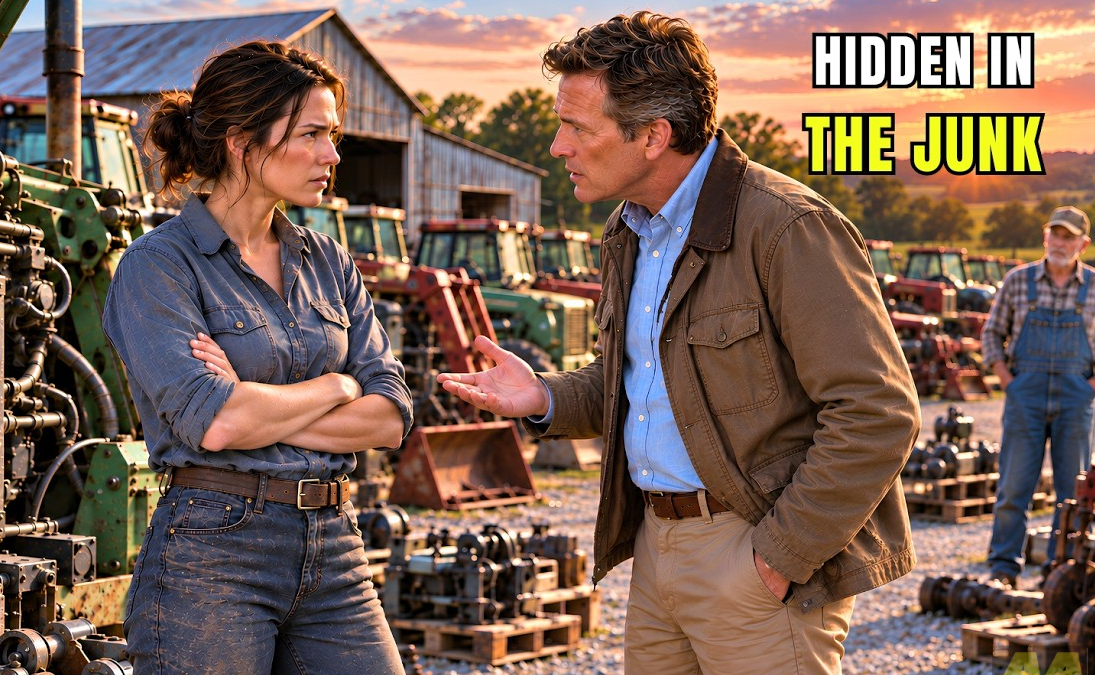
“Three thousand five hundred dollars. That is what I am offering for the whole lot.
Scrap price, because that is exactly what it is.” The buyer’s representative stood beside the rows of machinery and waited for Maya Callaway to look embarrassed.
She did not. Behind them sat eighty pieces of agricultural equipment, all broken in one way or another.
Tractors with open hoods. Loaders with missing panels. Sprayers with tangled wiring. Implements covered in dust and ruSt. Some had been sitting long enough for weeds to grow around their tires.
The farm itself was struggling, with nearly two thousand acres of Georgia land and only a portion of it still producing anything.
“You have not made a single one run,” the man said. “Your neighbors call this place a junkyard.
Your father built something here. You are just burying it.” Maya tightened her hand around the wrench she was holding.
“I know what I am doing.” “No,” he replied. “You know how to hold a wrench.
That is not the same thing. Walk away before you lose what is left.” He drove away that afternoon certain he had just watched a young woman make the worst decision of her life.
Maya remained beside the machines after his truck disappeared. She looked at the rows again.
Then she looked at the notes in her hand. For three weeks, she had been studying eighty failures.
But what exactly had she been searching for among all those broken machines? Maya Callaway had grown up believing that a farm was something you inherited long before you ever inherited the land itself.
It lived in habits. It lived in the smell of diesel in the repair shed before sunrise.
It lived in the sound of a tractor engine changing pitch when something inside it was beginning to fail.
It lived in the way irrigation water moved through a ditch and in the way a farmer could look across a field and know that something was wrong before anyone had taken a soil sample.
The Callaway property had been in the family for three generations. Two thousand acres of Georgia soil stretched from the main buildings toward distant tree lines, with fields that had once been planted almost as far as a person could see.
The irrigation channels had once carried water through nearly every productive section. Internal roads had once been smooth enough for loaded trucks to move quickly between the fields and the barns.
When Maya was a child, the farm had seemed endless. Her father, Elias Callaway, seemed to know every part of it.
He knew where the soil stayed wet after rain. He knew where the eastern fields dried firSt.
He knew which tractors could work all day without overheating. He could hear an engine from fifty yards away and identify a problem before he lifted the hood.
But Maya remembered something else about him. He never looked at a broken machine and saw only the broken part.
When she was twelve, she had stood beside him in the repair shed while he examined a cracked hydraulic fitting.
“What do you see?” Elias had asked. “A broken fitting.” He had shaken his head.
“What else?” Maya had looked again. “The hose is still good.” “What else?” “The connection on the other side is good.”
“What else?” She had been frustrated. “I do not know.” Elias had smiled. “That is why we keep looking.”
He taught her that a failed component did not necessarily make the entire machine worthless.
A transmission could survive an engine failure. A hydraulic pump could remain useful after a gearbox failed.
A frame could remain perfectly sound even when everything attached to it needed replacement. The important question was never simply what had gone wrong.
The important question was what was still usable. Maya did not understand how important that lesson would become until years later.
By the time she was in her twenties, she could diagnose a diesel engine by sound.
She could trace hydraulic problems through a system without a diagnostic computer. She knew how to read parts catalogues and could recognize when a dealer was trying to sell her an assembly she could replace with a smaller component.
None of those skills came from a classroom. They came from standing beside Elias. But the farm had changed.
The costs of hired labor rose. Equipment became more expensive. Repairs that had once been manageable became difficult to justify.
Fields began going out of production one at a time. The eastern sections became overgrown.
Drainage channels filled with silt. Fences weakened. Roads developed deep ruts. Buildings lost sections of roofing.
Elias continued working, but there were only so many hours in a day and only so much a single person could maintain.
The farm did not disappear all at once. It contracted. Slowly. Quietly. Year after year, more land was left waiting.
When Elias finally handed the operation to Maya, he did not give her a speech.
He simply told her the land was hers. He had kept it together as long as he could.
Now she had to decide what came next. Maya walked the entire property during her first week.
Not just the fields that were still being used. Everything. She walked the eastern sections.
She inspected the drainage channels. She drove the internal roads. She entered the old equipment sheds.
By the end of the week, she understood the problem. The land was not worthless.
The land was underused. There was a difference. The farm had nearly two thousand acres, but only a fraction could currently be worked efficiently.
The machinery available to her was not enough to reclaim the reSt. Buying new equipment was out of reach.
Even financing the amount she needed would have put the farm under a burden she did not believe the current production could support.
Maya spent several days running numbers. Every version produced the same result. There was no simple way forward.
Then she received a call from a contact in farm equipment financing. A regional equipment rental company had gone through bankruptcy.
Its entire inventory was being liquidated. Eighty pieces of agricultural machinery and equipment were being sold as one lot.
No individual bidding. No guarantees. No warranties. Everything was being sold as it stood. The price was low because the equipment was in terrible condition.
Maya drove out to inspect it. She expected to see scrap. Instead, she saw what her father had taught her to see.
Possibility. A tractor near the front of the lot had an engine that would not run.
But the transmission was intact. The loader beside it had a failed gearbox. The frame was structurally sound.
Its hydraulic system had recently been serviced and still held pressure. A sprayer had electrical damage.
Its pump assembly looked almost new. Another tractor had a damaged hydraulic system but an excellent engine.
Another had a bad transmission but a useful rear axle. Another had a bent attachment and a nearly perfect power unit.
Maya walked between the machines for hours. She wrote down numbers. She opened panels. She inspected hoses.
She checked casting numbers. She studied serial plates. She made notes about engine families and hydraulic pressure ranges.
Most people who had inspected the lot had looked at each machine separately. Maya began seeing something else.
A system. Eighty broken machines did not necessarily mean eighty useless machines. They represented hundreds of components.
Some were damaged. Some were worn. Some were beyond recovery. But many were still good.
She returned the next day. Then again. She spent three weeks studying the inventory. By the end of that period, she knew what she wanted.
The entire lot. She offered three thousand five hundred dollars. The seller accepted. Getting all eighty machines to the Callaway property consumed nearly everything she had left in available cash.
When the equipment arrived, the farm looked worse than it had before. The machines were arranged behind the main barn.
Rows of damaged tractors, loaders, sprayers, tillers, planters, mowers, and other implements covered the open ground.
Neighbors slowed down when they passed. Some stopped. Some shook their heads. Others laughed. The word junkyard became attached to the property.
Maya heard it more than once. She did not answer. She remembered her father’s question.
What else do you see? The buyer’s representative returned. He stood beside the equipment and made his three thousand five hundred dollar offer.
Maya refused. He told her she was making a mistake. He told her she knew how to hold a wrench but did not understand business.
Then he drove away. Maya watched the truck disappear. She waited until the sound of the engine faded.
Then she walked back into the repair shed. She picked up her notebook. And started working.
For the first three days, she did not repair anything. That confused everyone who saw her.
She numbered every machine. One through eighty. She created a master inventory. Engine. Transmission. Hydraulics.
Frame. Electrical. Axles. Controls. Attachments. Pumps. Wiring. She documented every component. She compared serial numbers with manufacturer information.
She checked compatibility. She wrote down which engines could fit which frames. Which hydraulic pumps could work within compatible pressure ranges.
Which transmissions could be adapted. Which electrical systems could be rebuilt. She was not fixing machines.
She was building a map. On the second night, at eleven o’clock, Maya sat on an overturned bucket in the repair shed.
A flashlight lay beside her. Her notes covered the floor. She had spent hours comparing specifications.
The farm was silent. Outside, eighty broken machines waited in the darkness. Maya looked at the pages.
For the first time, she could see the entire inventory as one collection instead of eighty separate failures.
The next morning, she began taking machines apart. The first tractor donated its engine. Another provided a transmission.
A third contributed a hydraulic assembly. A fourth had the strongest frame. She was not rebuilding one machine.
She was combining survivors. The first completed tractor took shape slowly. When she turned the key for the first time, nothing happened.
She checked the wiring. Tried again. The engine turned. Then stopped. She checked the fuel system.
Adjusted a connection. Tried again. The engine caught. For a few seconds it ran roughly.
Then the idle settled. Maya stayed in the cab with both hands on the controls.
She listened. The engine was running. Elias stood in the doorway. Maya looked over. He said nothing.
Neither did she. They simply listened to the machine. After three weeks of failure, the first tractor had finally become useful again.
Maya marked it complete. Then she moved to the next one. The work accelerated. A loader followed.
Then another. A mower. A tiller. A planter. A sprayer. Not every machine could be restored.
Some were too far gone. Others were better used as sources of components. Maya accepted that.
Her goal had never been to make eighty perfect machines. Her goal was to create as much useful equipment as possible from what she had purchased.
The machines began to run. That changed the farm. But Maya made another important decision.
She would not keep everything. If a rebuilt machine was more valuable to another farmer than it was to the Callaway operation, she would sell it.
Over the following weeks, more than forty machines and implements left the property. Some went to small farms.
Some went to a cooperative two counties away. Some went to private buyers. Maya priced them honestly.
The money returned to the farm. It paid hauling costs. It paid for new parts.
It helped cover seed. It paid for materials. It funded additional repairs. By the time the selling stopped, Maya had kept about thirty four machines.
They were the machines she had deliberately selected. Not the machines nobody wanted. The machines the farm actually needed.
That distinction mattered. The neighbors began noticing. The back field was no longer filled with eighty silent machines.
There were fewer now. And the ones that remained were moving. The loader went to the eastern fields firSt.
Maya remembered those fields from childhood. Her father had once grown crops there. Now brush reached the top of the loader cab.
She began at the fence line and worked inward. Three full days passed before the largest eastern section was cleared.
Under the brush was soil. Good soil. Dark soil. Soil that had been resting for years.
Maya climbed down from the loader and stood there for a long time. She knew what the land could become.
But first, water had to move again. The excavator went to the drainage network. Years of silt had blocked the channels.
Maya cleared them one section at a time. The work was slow. But when the first channel carried water again, the entire eastern system began functioning differently.
Fields that had been unusable became possible. Maya divided the recovered property into zones. She studied soil quality.
Water access. Distance from roads. Existing infrastructure. She did not try to make every acre produce the same thing.
That would have been another mistake. The strongest soil with dependable irrigation went toward higher value crops.
Blueberries. Specialty vegetables. Hot peppers. Culinary herbs. The areas with mature trees became part of a perennial crop strategy.
There were pecan trees on the property that had survived years of limited attention. Maya began managing them properly.
She also discovered old fruit trees that could still be recovered. The outer sections became pasture.
Grass returned. Hay production followed. She brought cattle onto the recovered pasture in numbers the land could support.
The system began connecting. Cattle provided manure. Pasture provided feed. Recovered fields produced crops. The machinery moved between all of them.
The three thousand five hundred dollars had not bought a fleet of perfect machines. It had bought the ability to make the farm function again.
That was worth more. By the end of the second full growing season, the changes were obvious.
The eastern fields were producing blueberries. The specialty vegetables were selling. The pepper crop had developed a reputation.
The herb production was expanding. The pecan orchard was under active management. Restaurant buyers in Atlanta began hearing about the Callaway farm.
Specialty distributors started calling. The farm had become something different. Not larger. Not necessarily more impressive from the road.
More efficient. More connected. More productive. A reputation developed naturally. Maya never advertised herself as a genius.
She never talked about proving the county wrong. She simply kept records. One afternoon, a regional equipment broker approached her.
He wanted the entire fleet. He offered a substantial amount. Maya listened. Then refused. The broker seemed surprised.
“You could make a lot of money selling these.” “I know.” “Then why keep them?”
“Because they are worth more to me working than they are sitting in someone else’s yard.”
He had no answer for that. Maya had learned the difference between price and value.
They were not always the same thing. Later, another opportunity arrived. A regional produce buyer offered Maya a long term supply contract.
The arrangement looked attractive at firSt. Guaranteed purchases. Predictable revenue. A stable buyer. But Maya read every page.
The contract included a broad exclusivity clause. If she signed it, she would be restricted from selling through some of the specialty distributors and restaurant accounts already paying more for her products.
The representative emphasized security. Maya understood why. The contract would reduce uncertainty. It would also limit the farm.
She took the paperwork home. She read it again. Then again. The next morning, before eight o’clock, the representative called.
The offer had a seventy two hour deadline. Maya listened. She did not argue. She said she understood.
Then she placed the phone down. For the next two days, she did something the representative had not expected.
She built another option. She called every restaurant account. She asked about increased volume. She contacted the specialty distributor in Atlanta.
She asked whether they could handle more product. She called buyers she had spoken with months earlier.
She contacted a food processing company two counties away. She asked questions. How much could they take?
How often? At what price? What quality? What packaging? By the end of the second day, the problem had changed.
The farm had more potential buyers than Maya had realized. Several restaurant accounts could expand.
The Atlanta distributor could increase its volume. The processing company wanted peppers and herbs. A hot sauce producer wanted a consistent local supply.
Maya also found a way to use produce that had previously been wasted. Lower grade blueberries could go to processing.
Certain peppers could go to sauce production. Herbs that did not sell fresh could be dried.
Nothing changed about the land. Nothing changed about the crop. Only the system around it changed.
The seventy two hours ended. The regional buyer called. Maya told him she would not sign.
The farm would remain independent. Elias found her at the kitchen table that evening. The contract was still sitting in front of her.
He looked at the papers. Then he looked through the window. Outside, the work lights along the irrigation lines had begun turning on as darkness settled.
“What are you going to do?” He asked. Maya looked at the contract. “Keep doing what we are doing.”
Elias nodded. After a moment, he asked another question. “Why should anyone pay full value for something you do not believe is worth full value?”
Maya looked up. She understood immediately. The question was bigger than the contract. She had spent two years making decisions about the farm according to her own assessment.
She had judged the machines. She had judged the land. She had judged the crops.
She had judged the contracts. But when someone with a larger operation and a polished proposal sat across from her, she had almost allowed his confidence to determine the value of her work.
She closed the folder. “I am not signing it.” Elias smiled. “That sounds like you.”
The farm continued changing. It did not happen perfectly. There were difficult seasons. Weather reduced yields.
Input costs increased. Pests damaged part of the blueberry production. Some crops performed below expectations.
Maya made mistakes. She corrected them. She hired workers and learned that managing people required a different kind of patience than managing machines.
She invested in cold storage. She improved irrigation. She brought in soil specialists. She adjusted fertility programs based on actual measurements instead of assumptions.
The pecan trees slowly returned to stronger production. The farm became more stable. The machines continued working.
Some needed rebuilding again. Others required new components. Maya knew how to handle that now.
She had eighty machines worth of experience behind her. The same equipment that had once made the property look like a junkyard had become the machinery network supporting the farm.
Five years after Maya purchased the lot for three thousand five hundred dollars, Callaway Farm looked completely different.
The internal roads were usable. The irrigation system worked. The eastern fields were productive. The orchards were managed.
The pasture supported livestock. The barns were active. Trucks moved between the fields and loading areas.
The machines still carried the marks of their history. Paint was faded. Metal was scratched.
Some panels were mismatched. Several machines had been rebuilt more than once. None of that bothered Maya.
They worked. That was what mattered. One Tuesday afternoon, the same buyer’s representative drove past the farm.
He remembered the machines. He remembered the three thousand five hundred dollar offer. He remembered Maya refusing it.
He remembered telling her she only knew how to hold a wrench. He slowed his vehicle at the entrance.
The view had changed. Trucks moved along the south road. The irrigation system stretched across fields that had once been covered in brush.
The eastern sections were green. Workers moved between rows. The equipment that had once appeared useless was working across the property.
The representative did not stop. He simply continued down the road. There was nothing left for him to say.
The farm was saying it. That evening, Elias sat on the porch. The sun was dropping behind the trees.
Work lights came on one after another. A truck moved toward the loading area. The pecan trees stood along the eastern boundary.
Maya sat beside him. For a while, they watched the farm without speaking. Finally Elias said, “When I handed this place to you, I thought I was giving you a farm.”
Maya looked at him. “What do you think now?” He looked toward the fields. “I think I gave you land that needed work.”
Maya smiled. “That is still a farm.” “No.” He shook his head. “I gave you land, old equipment, and a lot of problems.”
Maya looked across the property. “You also gave me the repair shed.” “That old shed?”
“And everything you taught me inside it.” Elias was quiet. Maya continued. “You taught me not to stop at what is broken.”
He looked at her. “You remembered.” “I remembered everything.” That was the real inheritance. Not the tractors.
Not the barns. Not the fields. Not even the two thousand acres. It was the way Elias had taught her to see.
A broken machine could still have a good engine. A failed hydraulic system could still have a useful frame.
A neglected field could still have fertile soil. A crop that did not meet one market’s standard could still have value somewhere else.
A contract could look safe and still cost more than it offered. And a farm that looked like it was disappearing could still have a future.
The people who told the story later usually remembered the three thousand five hundred dollars.
They remembered eighty broken machines. They remembered the young woman who bought them. They remembered the farm that eventually became productive again.
But they did not always remember the three weeks before the first repair. They did not remember the notebook.
They did not remember the nights when Maya sat in the shed comparing compatibility charts.
They did not remember eleven o’clock on the second night when she realized she could not rebuild anything until she understood everything.
They did not remember the first tractor failing twice before finally running. They did not remember Elias standing in the doorway listening.
They did not remember the fields covered in brush. They did not remember the blocked irrigation channels.
They did not remember the seventy two hour deadline. They remembered the result. Maya remembered the process.
Five years after the purchase, the thirty four machines she had kept had already earned their original cost many times over through the work they had performed.
But even that was not the number she cared about moSt. She cared about what those machines had allowed her to do.
They had cleared the land. They had opened the drainage. They had prepared the fields.
They had maintained the orchards. They had moved hay. They had planted. They had harvested.
They had connected two thousand acres into one working operation again. The machines were not the wealth.
They were the tools that made the wealth possible. Maya understood that distinction. She had learned it from her father.
One evening, she walked through the equipment yard alone. The old machines stood in rows.
A tractor with a replacement engine. A loader with a rebuilt gearbox. A sprayer with restored wiring.
A mower that had received parts from three different machines. None looked perfect. All of them worked.
Maya rested a hand against the side of the first tractor she had rebuilt. She remembered the morning it finally started.
She remembered Elias standing in the doorway. She remembered the sound of the engine settling into a steady idle.
That sound had been the beginning. Not because the tractor itself was extraordinary. Because it proved the idea.
A machine did not have to be whole to be useful. It only needed the right parts.
The farm did not have to be what it had been. It needed the right system.
Maya turned toward the fields. The eastern section stretched into the distance. The land her neighbors had once seen as neglected was now producing again.
The equipment the buyer’s representative had called scrap was working. The operation Elias had struggled to maintain had become something neither of them could have predicted when he handed it over.
Maya walked toward the house. Elias was still sitting on the porch. He looked at her.
“How is everything?” She looked back toward the equipment yard. “Running.” He smiled. “That is all I wanted to hear.”
The darkness settled slowly across the farm. The lights came on. Water moved through the irrigation lines.
A tractor engine started somewhere beyond the barn. Maya listened. She could tell by the sound that it was running correctly.
She had learned that long ago. Her father had taught her that the first thing you see is not always the most important thing.
Sometimes the value of something is hidden beneath the damage. Sometimes a field is waiting beneath the brush.
Sometimes a machine is waiting beneath the broken parts. Sometimes an opportunity is hidden inside a contract that looks safe.
And sometimes the biggest mistake is not buying something everyone else thinks is worthless. Sometimes the biggest mistake is believing everyone else has already seen everything there is to see.
Maya looked across the two thousand acres of Callaway Farm. She had not rescued the old farm.
She had not restored it to the way it had been. She had built something new from what remained.
And she had done it because, years earlier, Elias had taught her one question that stayed with her long after the repair shed had become hers.
Not what is broken? What is still worth saving?
Disclaimer: This content may be created by Al for entertainment purposes. Any resemblance to real persons, events, or places is coincidental.








