5 Terrifying Demons You Should NEVER Summon!
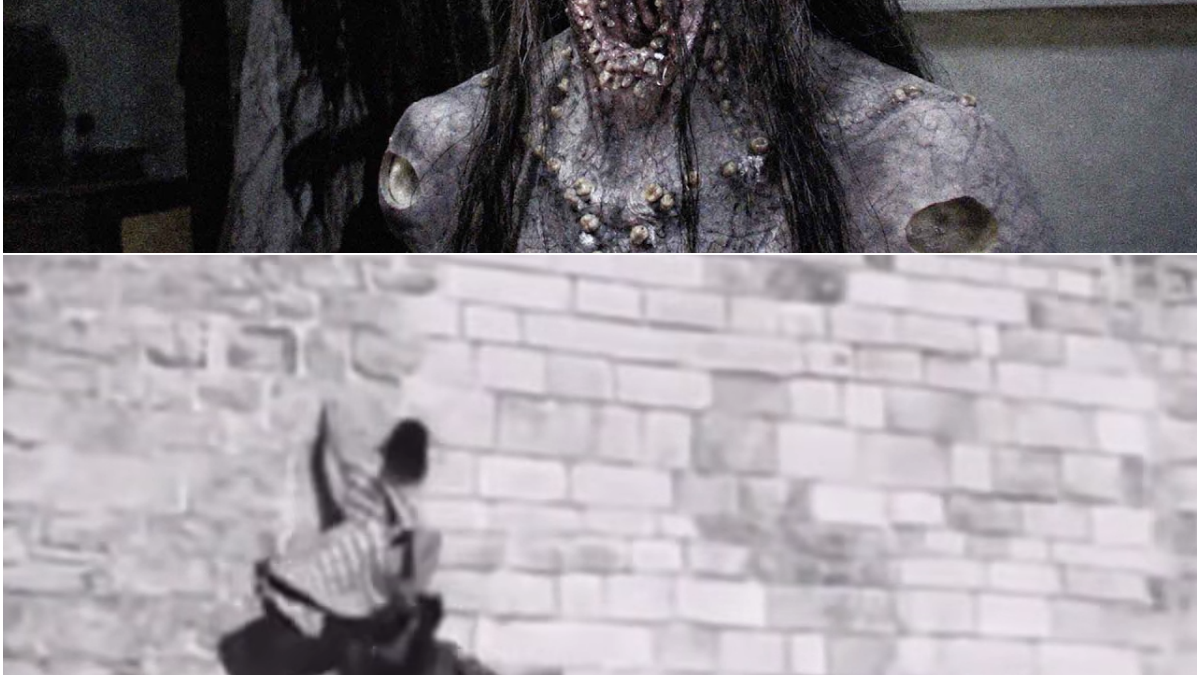
Some stories begin in places where nobody expects anything unusual to happen. A bedroom after midnight.
An old manuscript resting beneath glass. A bronze figure covered in duSt. A house in an ordinary neighborhood where the lights are still on and someone is certain they heard footsteps in an empty room.
Then a name appears, sometimes scratched into an object, sometimes written by a moving planchette, sometimes preserved in a language thousands of years old.
The name is repeated, copied, whispered, and eventually carried into another generation. What makes these stories unsettling is not that anyone can prove the beings behind the names are real.
It is that the names themselves are real. The objects are real. The manuscripts are real.
The people who claimed to encounter something are real. And in some cases, the records left behind are so detailed that the story refuses to disappear.
One name can begin as a line in an ancient ritual and eventually become a character in a modern movie.
Another can appear on a board in a living room and spread across the internet decades later.
Another can survive because archaeologists uncover the very objects that frightened people thousands of years ago.
Five names in particular have traveled through time in remarkably different ways, from ancient Mesopotamian artifacts to a modern house in Gary, Indiana.
But when the stories are stripped away from the legends and the evidence is placed on the table, what exactly remains?
The first name seems almost too modern to belong beside ancient figures carved into bronze.
Zozo. There is no ancient temple dedicated to Zozo that can be pointed to today.
There is no verified Mesopotamian tablet describing a spirit with that name. There is no established medieval tradition that can be traced continuously from one generation to another.
Instead, the trail begins in something far more familiar. A Ouija board. A flat board sits on a table.
Letters are arranged across its surface, along with numbers and simple words. A small planchette rests in the middle.
People place their fingers lightly against it, ask questions, and watch as it begins to move.
For generations, users have debated what causes that movement. Some believe the motion comes from unconscious muscle movements.
Others interpret it through spiritual beliefs. Some approach the board as entertainment. Others become convinced that something external is answering them.
Then there are the stories in which the planchette begins spelling the same unusual name.
Zozo. The name became strongly associated with modern paranormal discussions after Darren Evans described alleged encounters involving it.
His accounts helped bring the name into a much larger conversation, particularly as paranormal forums, websites, videos, and social media allowed stories from different places to spread almost instantly.
People began comparing experiences. Some said the planchette moved unexpectedly. Some described messages that appeared to become more aggressive.
Some said the same name returned after they attempted to end a session. Others claimed that the board behaved strangely whenever they asked about Zozo.
The stories multiplied. And then something important happened. The legend became bigger than its original evidence.
The internet created an environment where one person’s unusual experience could be copied, discussed, dramatized, and eventually repeated by people who had never heard the story in its original form.
A person might read about Zozo and later use a Ouija board while already expecting the name to appear.
If the planchette moved toward the letters, the experience could feel like confirmation. If it did not, the session could simply be remembered as uneventful.
This is one reason modern paranormal legends can become difficult to trace. Once a story becomes popular, the later versions can begin to resemble the earlier versions so closely that people assume there must be a much older tradition behind them.
But in the case of Zozo, researchers who have investigated the history have found the modern trail surprisingly recent.
That does not prove why anyone experienced what they described. It does not prove that every account was invented.
It simply means there is no reliable evidence establishing Zozo as an ancient demon in the way later stories sometimes suggeSt.
The name became powerful because people believed it was powerful. That distinction matters. A legend can influence behavior without requiring supernatural proof.
Someone who believes a board is dangerous may become frightened by every unexpected movement. Someone who expects a certain name may notice it more readily.
Someone who hears hundreds of stories about strange experiences may approach an ordinary object with extraordinary expectations.
And yet the name remains fascinating precisely because its history is so different from the ancient entities that would later be placed beside it.
Zozo did not need a temple. It needed a board, a story, and enough people willing to repeat the story.
Then there is Valac. Here the trail leads much farther back. Valac appears in the Ars Goetia, a famous text associated with European ceremonial magic.
Unlike the modern Zozo legend, Valac has a genuine connection to an old written tradition.
But the historical description is not the one most modern audiences recognize. There is no terrifying nun in the original description.
Instead, Valac is presented as a small child like figure with wings, riding a two headed dragon.
The contrast is almost startling. A name from an old occult text eventually became associated with a completely different visual character through modern horror cinema.
The transformation shows how easily folklore can be reshaped. A name survives. A movie discovers the name.
A filmmaker changes the appearance. An audience encounters the new version. Years later, people remember the movie version as though it were the original tradition.
But the historical Valac was not created as a cinematic nun. The old text describes something very different.
That does not make the old account proof of a supernatural being. It makes the manuscript itself the interesting artifact.
The words existed. The tradition existed. People copied, studied, and interpreted these texts. The supernatural claims belong to the belief system surrounding the material, not to something modern science has established.
Yet the journey of the name is remarkable. A relatively obscure figure from ceremonial literature became recognizable to millions of people who had never opened the text where the name originally appeared.
The transformation also reveals something important about horror. The most memorable monsters are often built from pieces of older traditions.
A writer finds a name. A director finds an image. A story supplies a personality.
An audience supplies fear. Eventually, the new version becomes more famous than the original. Valac is an almost perfect example.
The historical figure and the modern movie creature share a name, but they do not share the same identity.
Then the story moves much farther back in time. Thousands of years before modern horror films, before internet forums, before Ouija boards became popular, people in ancient Mesopotamia were creating physical objects intended to protect themselves from supernatural forces.
One of the names preserved through those objects is Lamashtu. Unlike Zozo, Lamashtu is supported by archaeological evidence.
Ancient people created amulets bearing her image. They inscribed objects. They used protective rituals. They treated the threat represented by Lamashtu as something that required deliberate protection.
Those objects survived long after the people who created them were gone. Today, museums preserve some of them.
The Metropolitan Museum of Art holds objects associated with this tradition. The British Museum also contains artifacts connected with ancient Mesopotamian beliefs about supernatural beings.
That changes the nature of the story. We do not have to ask whether the artifacts existed.
They clearly did. We can examine them. We can study their inscriptions. We can analyze their materials.
We can compare them with other archaeological discoveries. What remains uncertain is the invisible part of the belief.
Did the supernatural being described by the ancient people actually exist? Archaeology cannot establish that.
What archaeology can establish is that people believed strongly enough to create objects specifically intended to protect themselves.
And there is another strange feature of this tradition. Lamashtu was not always confronted through a simple struggle between humans and a supernatural enemy.
Another figure, Pazuzu, could be invoked for protection against Lamashtu. The idea is striking. One feared supernatural figure could be used against another.
The system was not simply divided into good and evil. It was more complicated. Ancient people could imagine supernatural forces with different powers, different dangers, and different relationships to one another.
A protective object might therefore contain imagery associated with a being that modern audiences would assume was purely frightening.
This is where ancient demonology becomes more complicated than modern horror. Modern stories often divide the world into heroes and monsters.
Ancient belief systems could be much more practical. If a particular force was considered dangerous, people wanted protection from it.
If another force was believed to have power over the first, that power could be used symbolically.
The object became a kind of spiritual technology. Its purpose was protection. Its existence is evidence of belief.
It is not evidence that the supernatural claims themselves were objectively true. That distinction is easy to lose when an ancient artifact is displayed behind glass.
The object looks mysterious. The writing is unfamiliar. The figure is strange. The distance of thousands of years gives it an atmosphere that modern objects rarely possess.
But behind the mystery is something very human. People were afraid. People wanted protection. People created objects to make themselves feel safer.
And some of those objects survived. Among the most recognizable names from this ancient world is Pazuzu.
Modern audiences may know the name because of The ExorciSt. But the history of Pazuzu existed long before the film.
For ancient Mesopotamian cultures, Pazuzu was associated with dangerous winds. Archaeologists have discovered bronze figures, pendants, and amulets representing him.
The British Museum holds genuine Pazuzu objects. The Metropolitan Museum of Art also has a bronze pendant showing his head.
These artifacts provide something modern horror rarely needs. A physical connection to the paSt. A person thousands of years ago handled the same kind of object that researchers can now examine in a museum.
The figure was not invented by Hollywood. The name was not invented by modern filmmakers.
The belief existed long before cinema. But the movie changed how millions of people understood the name.
In The Exorcist, Pazuzu became associated with possession and terrifying supernatural events. The cinematic version was powerful because it took an ancient name and placed it inside a modern story.
But there is no archaeological evidence showing that Pazuzu possessed people in the manner presented by the film.
What exists instead is evidence of a complex ancient belief system. There are figures. There are amulets.
There are inscriptions. There are archaeological contexts. There are ancient traditions connecting Pazuzu with dangerous winds and with protective practices involving Lamashtu.
The real history is strange enough without adding details that were never part of it.
In some ways, that makes Pazuzu more interesting. The ancient figure did not need a modern screenplay to exiSt.
The movie simply gave the name a new life. People who had never heard of ancient Mesopotamian religion suddenly recognized it.
The old artifact became connected to a modern image. The ancient tradition became part of popular culture.
And once again, the name traveled farther than the original story. But the final case is different.
It is not thousands of years old. It does not come from an ancient tablet.
It comes from a house in Gary, Indiana. The year was 2011. A family living in the house began reporting unusual experiences.
The accounts included strange sounds, unusual shadows, and behavior they believed could not be explained normally.
The story grew. What began inside one house eventually attracted attention from police, social workers, medical professionals, religious figures, journalists, and paranormal investigators.
One of the names connected with the investigation was Charles Austin, a police captain who initially approached the claims with skepticism.
That reaction was understandable. Unusual stories require unusual evidence. A police officer entering a house does not automatically have a reason to accept a supernatural explanation.
But according to accounts surrounding the case, Austin later described experiences that affected his view of what he had encountered there.
The house became the center of a much larger story. The family reported increasingly strange events.
The number of alleged entities associated with the property grew dramatically in later accounts. Eventually, the claim involved hundreds of demons.
That number helped transform the case from a local story into a national one. Newspapers investigated.
Television programs discussed it. Photographs circulated. One image taken by police became particularly famous because some viewers believed it showed a figure inside the property.
Others saw something completely different. The photograph became part of the debate. Was it evidence of something unusual?
Was it an ordinary person or object? Was the image affected by lighting, perspective, or the quality of the camera?
Those questions remain central to understanding paranormal photographs. A picture can be completely authentic while the interpretation placed on it remains uncertain.
The photograph existed. The camera existed. The police involvement existed. The debate about what appeared in the image was also real.
But none of those facts establishes a supernatural explanation. The same problem appeared throughout the Ammons case.
Different witnesses could report the same event while interpreting it differently. A strange sound could have an ordinary source.
A shadow could be caused by lighting. A frightening experience could feel completely real to the person experiencing it without revealing its cause.
And then there were the psychological and social interpretations. A psychologist who evaluated one of the children connected some of the reported behavior to the family environment rather than a supernatural cause.
Skeptical investigators proposed ordinary explanations for several incidents. That does not erase the records. It does not mean nobody was frightened.
It does not mean every person involved was deliberately inventing a story. It means that different explanations were proposed for the same events.
That is an important difference. A documented claim is not the same thing as a documented supernatural cause.
The house eventually became another chapter in paranormal folklore. The family left. Later occupants did not report the same kind of activity in the same way.
And that detail created another layer of uncertainty. If a location itself were responsible, why would the reports change when the people living there changed?
If the events were connected to the family’s circumstances, why did the experiences appear so extraordinary to those involved?
Those questions do not have one universally accepted answer. And perhaps that is why the story survived.
There is no single piece of evidence that closes the case. Instead, there are records, photographs, interviews, memories, competing explanations, and people who remain convinced that something unusual happened.
The Ammons house therefore occupies a strange position between history and folklore. It is not merely an anonymous internet story.
There were real people. There were real authorities. There were real records. There were real investigations.
But the supernatural interpretation remains unproven. When all five names are placed beside one another, the differences become clear.
Zozo is a modern legend whose most visible history is connected to Ouija board stories and the internet era.
Valac has a genuine connection to old ceremonial literature but was transformed dramatically by modern entertainment.
Lamashtu survives through ancient artifacts that demonstrate the seriousness of Mesopotamian supernatural beliefs. Pazuzu exists in archaeological material from the ancient world and was later transformed into a modern horror icon.
The Ammons case is a modern documented controversy involving a real family, a real house, real investigations, and disputed interpretations.
The evidence is different in every case. That is why they should not be treated as though they all prove the same thing.
A bronze amulet is evidence that someone created a bronze amulet. A manuscript is evidence that someone wrote a manuscript.
A photograph is evidence that a photograph was taken. A witness statement is evidence that a person reported an experience.
None of those automatically establishes the supernatural explanation attached to it. Yet there is something undeniably fascinating about the persistence of these names.
They survive changes in language. They survive changes in religion. They survive changes in technology.
They survive the disappearance of the societies that first used them. A name carved into an ancient object can eventually appear in a modern museum.
A figure once associated with ancient winds can become part of a blockbuster horror story.
A character from an old magical text can be transformed into a cinematic monster. A modern internet legend can spread through thousands of conversations despite lacking an ancient origin.
A house in Indiana can become famous because people cannot agree on what happened inside it.
The pattern is not necessarily proof of anything supernatural. It is evidence of something else.
Human beings remember frightening stories. We preserve names that make us uncomfortable. We give mysterious experiences explanations.
We pass those explanations from one person to another. Sometimes the story becomes simpler as it spreads.
Sometimes it becomes more dramatic. Sometimes a movie changes it completely. Sometimes archaeology brings the original version back into view.
That process can make history difficult to separate from legend. It can also make the legends worth studying.
Lamashtu and Pazuzu are not merely horror characters. They are pieces of ancient cultural history.
Their artifacts tell researchers something about the people who created them. Valac tells us how modern entertainment can reshape an obscure historical figure into something almost unrecognizable.
Zozo shows how quickly a modern legend can develop when the internet gives a story an enormous audience.
The Ammons case shows how difficult it can be to separate personal experience, cultural belief, psychological interpretation, and physical evidence when a frightening event becomes public.
The names continue to circulate because people keep asking the same basic question. What really happened?
That question is important because it does not assume the answer. It leaves room for evidence.
It allows historians to examine artifacts. It allows psychologists to examine behavior. It allows investigators to inspect photographs.
It allows archaeologists to reconstruct ancient traditions. And it allows people to acknowledge that an experience can feel extraordinary even when its cause remains uncertain.
Perhaps that uncertainty is the most enduring part of every story. A Ouija board moves across a table.
A bronze face stares outward from a museum display. An ancient inscription preserves a name.
A movie turns an old figure into something new. A photograph captures a shape in a dark room.
A family tells investigators what they experienced. Years pass. Decades pass. Centuries pass. The names remain.
But names are not proof. Artifacts are not proof of every story attached to them.
A photograph cannot explain itself. A witness cannot automatically establish the cause of an event.
And a legend can become enormous without becoming historically true in every detail. That does not make the stories empty.
It makes them more complicated. They reveal what people feared, what they believed, what they hoped would protect them, and how strongly a mysterious experience can remain in memory.
Perhaps that is why these five names continue to appear long after their original worlds have changed.
Zozo, born from modern paranormal storytelling. Valac, preserved in an old magical tradition and transformed by cinema.
Lamashtu, remembered through ancient protective objects. Pazuzu, preserved in bronze and stone and later carried into modern horror.
And the Ammons house, where a family, investigators, authorities, and skeptics became part of a modern mystery.
None gives us a final answer. None provides scientific proof that demons exiSt. But each leaves behind something that can be examined.
A board. A manuscript. An amulet. A bronze figure. A photograph. A police record. A witness account.
And perhaps that is what makes the stories so difficult to forget. The frightening part is not knowing that the names are real.
The frightening part is knowing exactly where the evidence ends and the mystery begins.
Disclaimer: This content may be created by Al for entertainment purposes. Any resemblance to real persons, events, or places is coincidental.








