3 Park Rangers’ Trail Cams Revealed Something Was Following Them
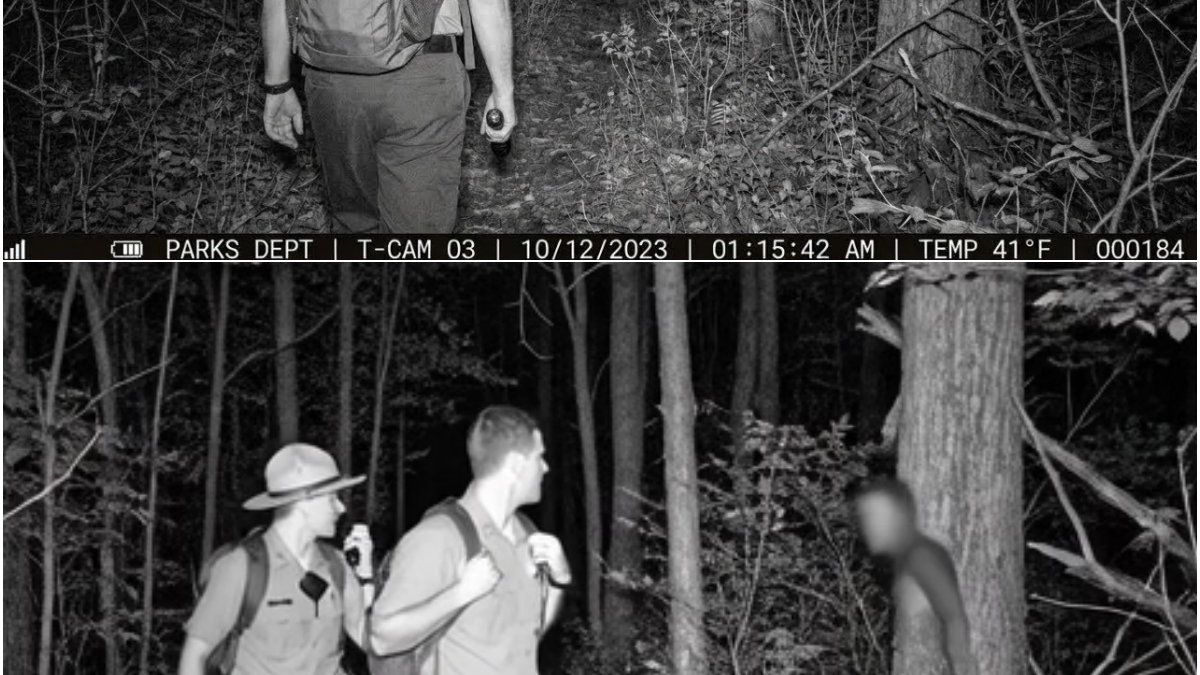
There are places in the wilderness where a person can spend an entire working life without ever seeing another human being, where the roads disappear beneath vegetation and the nearest signal is miles away.
In those places, cameras are supposed to make the job easier. They watch the trails, record the animals, and capture whatever passes while the ranger is somewhere else.
They do not get tired, they do not look away, and they do not forget what they have seen.
But what happens when the photographs begin showing someone who should not be there? What happens when that person appears on cameras miles apart, always shortly after they have been serviced, or when a figure stands outside a tent in the middle of the night wearing clothing that belongs to the person sleeping inside?
Three rangers working in three very different landscapes experienced incidents that began with ordinary assignments and ended with photographs they could not explain.
One was tracking an unfamiliar man across an enormous district. Another found someone standing motionless in flooded reeds, listening for her voice.
The third discovered that two cameras could photograph the same patch of wilderness at the same moment and record entirely different realities.
None of them went into the field looking for anything unusual. They were simply doing their jobs, following schedules, checking equipment, and documenting the land.
But after what happened, each of them had a different understanding of what it meant to be alone.
The first ranger had eleven cameras spread across his district. That number was not unusual for the kind of work he did.
Most were positioned to monitor hog activity, while others were intended to document illegal dumping along logging roads.
The dumping problem occupied more of his time than people might have expected. Trucks came in after dark, unloaded whatever they wanted to get rid of, and disappeared before anyone could identify them.
The cameras were supposed to help establish patterns and provide evidence when necessary. Eleven cameras also meant a constant maintenance schedule.
He serviced three or four each week, replacing batteries, swapping memory cards, and clearing branches or vegetation that had grown into the field of view.
It took approximately six weeks to complete the rotation and return to the first camera.
He had followed that routine long enough that he rarely needed to think about it.
Each location had its own access route, its own maintenance difficulties, and its own place on the schedule.
Some cameras were easy to reach from the logging roads. Others required walking through uneven ground and crossing small drainage channels.
He knew where every one was mounted and what conditions to expect when he arrived.
The first photograph appeared during the second week of September. It came from a camera positioned along a narrow spur road.
The timestamp showed 4:40 in the morning. A man stood on the road approximately forty feet from the lens.
He wore dark clothing and carried no visible backpack. There was no flashlight, and he did not appear to be walking.
He stood sideways to the camera, his weight resting more heavily on one leg, as though he had stopped to look at something beyond the road.
The ranger logged the image as a trespass incident. People sometimes appeared on logging roads at strange hours, and there were plenty of ordinary explanations for someone being out there before sunrise.
He assumed the man was either lost, checking something in the woods, or involved in some activity that did not concern him.
He moved on to the other photographs and did not think about the man again.
Eleven days later, a second image arrived from another camera, four miles away on the opposite side of a creek drainage.
The photograph showed a man standing in almost exactly the same way. The ranger studied the image longer than he had studied the firSt. The camera was infrared, and the picture was grainy, so he could not be absolutely certain that the person was identical.
But the build looked the same. The clothing appeared to match, and the man seemed to favor one leg in precisely the same way.
The timestamp read 4:52 in the morning. He compared the photographs side by side. There was something about the posture that made the two images feel connected.
Neither showed someone moving along a road or examining the surrounding area. Both showed a man standing still, apparently without any particular reason to be there.
Nine days later, a third photograph arrived. This time the camera was six miles south of the second location.
The time was 4:38 in the morning. Again, the man was standing alone. That was when the ranger took out a map.
He marked all three camera locations and wrote the dates and times beside them. The three points covered a considerable portion of his district, which contained approximately 80,000 acres.
There was no obvious geographical pattern. The locations were not arranged along a single road or around one particular feature of the landscape.
At first, the map seemed to offer no explanation. Then he compared the dates with his maintenance records.
Every camera that had photographed the man had been serviced within the previous forty-eight hours.
Not a camera somewhere nearby. Not one that happened to be along the same route.
It was the exact camera he had opened, replaced the memory card in, and closed again.
The ranger checked the sequence more carefully. There were eleven cameras distributed across the district, and the man appeared on whichever ones had most recently been serviced.
The implication was difficult to ignore. The only person who knew his maintenance schedule was himself.
The schedule was not posted publicly, and the individual camera visits were not recorded in a way that would allow someone outside his work to predict them.
He spent a long time trying to find a reasonable explanation. Perhaps the man was simply traveling through the district and happening to cross the cameras shortly after they were serviced.
Perhaps the apparent similarity between the figures was misleading. Perhaps the maintenance schedule and the photographs had coincided by chance.
But the more he examined the records, the harder it became to accept any one of those explanations.
He changed his routine. Instead of servicing the cameras in a familiar sequence, he deliberately moved around the district unpredictably.
He visited distant cameras first, skipped others, and completed maintenance at unusual times. One camera was serviced at two in the afternoon.
Another was serviced at six in the morning. He made a conscious effort to avoid creating any recognizable pattern.
For a while, the photographs stopped. Then, three weeks later, the fourth image appeared. It came from a camera he had serviced the previous day.
The timestamp showed 4:41 in the morning. The same man stood in front of it.
This time, he was only twenty feet from the lens. The ranger examined the image carefully.
The posture was familiar, the clothing looked the same, and the figure appeared to be watching something outside the camera’s field of view.
There was no clear indication that the man had noticed the device, but his position was much closer than before.
The ranger had changed his routine, but the photographs had continued. He began thinking about the places where he had not yet installed cameras.
There was one particular location on the eastern side of the district that had interested him for some time.
It was a bench above a creek where he had noticed hog damage. He had planned to install a twelfth camera there when he had enough time.
He had not told anyone about the plan. It was not part of a work order, it was not written in a maintenance log, and he had not mentioned it to his supervisor.
The location was a low priority, and he intended to get around to it whenever the rest of his work allowed.
In November, on a Tuesday afternoon, he finally decided to visit the bench. He packed the camera and began walking toward the creek.
It was around 4:30 in the afternoon, and the short winter daylight was already fading beneath the trees.
The forest was dim under the canopy, with the last available light filtering through the branches.
When he reached the bench, he saw someone standing approximately fifty yards away. The figure had the same general build as the man in the photographs.
It stood with its weight shifted to one side, in the same posture he had studied so many times on the memory cards.
The ranger stopped. He did not approach. He did not call out or attempt to identify the person.
He simply turned around and started back down the slope as quickly as he could manage.
The terrain was steep and uneven, and his hurry made it difficult to place his feet carefully.
Approximately two hundred yards down, he stepped into a hole and injured his knee. The damage was serious enough to leave him using crutches for a month.
But the injury was not the part of the experience that stayed with him. The camera was still in his backpack.
He had never mounted it. There had never been a camera at that location, and the man could not have been responding to an installed device.
The ranger had not told anyone about his plan to put a camera there. There was no work order, no official record, and no maintenance schedule for that location.
Yet the figure had been standing precisely where he intended to install the next camera.
He could not explain how it might have known. The second account came from a ranger whose work took place in a landscape that could hardly have been more different.
Her district was dominated by flooded timber, reeds, muddy ground, and access roads that became impassable for half the year.
She worked around Cash River, where the water and vegetation made ordinary fieldwork slow and physically demanding.
Her assignment involved monitoring wood ducks, and she had two cameras positioned along a slough.
She camped approximately one hundred yards away, on the only dry patch of ground for half a mile.
She had been doing this kind of work for nine years. It was not glamorous, but she enjoyed it.
Most days involved standing in water, counting birds, recording observations on a waterproof pad, and entering the numbers into a spreadsheet at the end of the week.
The first memory card contained nothing unusual. There were herons, hogs, an otter, and the ordinary activity she expected to see around the slough.
Then she found a photograph of someone standing in the reeds. The figure wore green trousers that matched the color of her field uniform.
She recognized the shade immediately because she had worn it for almost her entire career.
The timestamp was 3:33 in the morning. The figure stood approximately six feet from the camera, facing slightly away from the lens.
Its eyes appeared to be closed. Her first assumption was that it was a colleague.
That was the most reasonable explanation, and she accepted it without much concern. Someone from the refuge might have been conducting work nearby, or another employee might have needed to visit the area unexpectedly.
For approximately four hours, she believed that explanation. Then she reached a levee road where she could get a bar of signal and called the office.
Nobody had been assigned to that slough in eleven days. There were no volunteers, contractors, or survey crews working in the area.
The unit was closed, and anyone entering through the gate needed a key. She began to reconsider the photograph.
The second camera card made the situation much harder to dismiss. It contained forty-one frames from a single night.
The figure appeared in thirty of them. In every one of those thirty photographs, it occupied precisely the same position.
Its body angle, posture, and location in the reeds were identical. It did not appear to shift its weight or move its head.
It remained in place for six hours and eleven minutes. But four of the photographs showed something different.
In those images, the figure was turned toward the camera. The ranger sat with the four photographs for a long time, comparing their timestamps and trying to identify what had changed.
The figure’s body position was almost perfectly consistent across the night, except for those brief moments when it appeared to look toward the lens.
Eventually, she noticed something about the timing. She recorded voice notes every night. They were part of her normal work routine.
She would sit outside her tent, approximately one hundred yards from the camera, and speak aloud about species counts, water levels, and other observations she needed for her report.
She checked the timestamps on her phone against the photographs. Every frame in which the figure faced the camera had been taken within approximately one minute of her speaking.
The figure appeared to turn toward the sound of her voice. The distance between her tent and the camera was about one hundred yards, with water and reeds separating them.
The figure had remained motionless for hours, yet it seemed to react whenever she spoke.
She had no explanation for how it could have detected her voice so consistently, or why it would turn toward the camera at those particular moments.
The following night, the figure was no longer standing in the reeds. The second camera, which faced her camp, captured it at 2:20 in the morning.
It was standing at the entrance to her tent. The green trousers were the same, but the figure now wore a jacket.
Her jacket. It was not simply a similar garment. The ranger recognized the tear in the left cuff, a rip she had received three years earlier when she caught the sleeve on a barbed wire fence.
The damaged fabric was clearly visible in the photograph. At 2:48, another image showed the figure sitting on her cot, facing away from the camera.
It appeared to be sitting quietly, with its body turned toward the interior of the tent.
The ranger had been asleep approximately four feet from the place where the figure was sitting.
When she woke up, the jacket was hanging inside the tent where she always kept it.
Nothing appeared to be missing. But the sleeves were wet up to the elbows, and there was slough mud on both cuffs.
She had not entered the water for two days. She examined the jacket, the floor of the tent, and the area around her cot.
The mud and moisture did not make sense to her, particularly after seeing the photograph of the figure wearing it.
She packed her equipment that afternoon and left without finishing the count. Two days later, another detail emerged from a radio log.
Dispatch had issued a routine welfare check on her call sign because she had returned early and her paperwork was behind schedule.
Someone had answered the check using her call sign from a handheld radio inside the refuge.
The dispatcher who received the response had worked with her for six years. She had not questioned the voice because it sounded like the ranger.
But the ranger had been at home. Her handheld radio had been sitting on her kitchen table.
She could not explain who had answered the call or how the response had sounded so familiar to someone who knew her well.
In the autumn, she transferred to another district. She continued doing fieldwork and had no intention of giving up a job she enjoyed.
But she changed two things about the way she worked. She stopped going into the field alone, and she stopped recording voice notes out loud.
Instead, she wrote everything on her waterproof pad, even when it was dark and difficult to see.
Her handwriting became difficult to read, but she preferred that inconvenience to speaking into the quiet landscape.
The third ranger worked in high country, where the terrain was open in places and difficult to cross in others.
His assignment involved a closed campsite at a saddle approximately ten and a half thousand feet above sea level.
The campsite had been shut for restoration, but people continued walking in, using the old tent pad, and leaving again.
The ranger wanted to document the activity and determine whether anyone was entering the area during the night.
He installed two cellular cameras on opposite sides of the saddle. Both were pointed toward the closed tent pad in the middle.
The cameras were approximately two hundred yards apart, with the same area visible from opposite directions.
He camped on the north side, about eighty yards from the pad. His plan was to remain nearby overnight and inspect the site at first light.
During the night, both cameras triggered at 1:17. The northern camera showed the tent pad empty.
The southern camera showed a tall shape standing near the middle of the same pad.
The timestamps matched to the same minute. Both cameras were aimed at the same two hundred yards of ground, but only one had recorded a figure.
The ranger had been asleep during the entire event. The cellular alerts had arrived, but there was no phone signal in the saddle.
Only the cameras could connect, so he did not see the images until morning. When he woke up, he was no longer where he had gone to sleep.
His tent was pitched approximately forty yards down the slope from the old site. He was still inside his sleeping bag, and the tent remained properly assembled.
The guy lines were attached, the pegs were in the ground, and the structure was standing on a patch of uneven ground he would never have chosen.
The slope was steep enough that he had been lying with his head downhill. The tent door was zipped from the inside, exactly as he remembered leaving it.
His pack was still in the vestibule, and his boots were still beside it. Nothing appeared to be missing.
He remained inside for approximately twenty minutes, trying to understand what had happened. He had gone to sleep on flat ground eighty yards north of the tent pad.
He had awakened forty yards below it, still inside his tent, which had been moved and pitched on a slope.
He repeatedly considered the physical difficulty of moving the tent with him inside it. A pitched tent, with a person in it, weighed approximately eighty pounds and was awkward to handle.
Carrying it forty yards over rough ground and downhill would have required substantial effort. It would also have been difficult to accomplish without waking the person inside.
There was no obvious way to move the tent without disturbing the ground or leaving signs of the journey.
After he finally climbed out, he returned to the original campsite. There were four peg holes in the dirt where the tent had been.
The grass was flattened in a small patch, confirming where he had slept. But there were no drag marks between the original location and the place where the tent now stood.
Not a single visible mark connected the two sites. The ranger gathered his belongings and left the area.
He did not remove the cameras because they were screwed into the trees, and he did not feel ready to deal with them.
Three days later, he returned with a colleague in daylight to retrieve the equipment. They walked into the saddle together and approached the old tent pad.
The ranger wanted to remove both cameras, compare the images, and make sure there was no simple explanation he had overlooked.
At 11:40 in the morning, both cameras triggered while the two men were standing near the pad.
The northern camera showed the ranger and his colleague in broad daylight. Both were visible near the center of the frame, with their packs on the ground.
Nothing else appeared to be standing with them. The southern camera recorded them from behind during the same minute.
But this time, there was a third shape. It stood directly behind the ranger, close enough that if it had been an ordinary person, he believed he should have felt its presence.
His colleague had been looking at him throughout the moment. He saw nothing. The two men pulled down the cameras and walked out of the saddle.
Neither spoke for approximately a mile. Near the trucks, the colleague finally asked whether the ranger wanted him to report anything to the district.
The ranger answered, “No.” His colleague never raised the subject again, and the ranger never asked him what he had thought about the photographs.
He had not returned to the saddle since. The closure remained in place, and another employee took over the maintenance work.
When the district asked him to inspect the restoration plots in July, he used leave instead.
He said he was no longer frightened of whatever had appeared behind him. That part of the experience had become something he could leave in the paSt.
What he could not put aside was the photograph from 11:40 in the morning. Two people had been standing in the saddle, looking around and working together in full daylight.
One camera recorded only the two of them. The other recorded a third figure standing eighteen inches behind the ranger.
The cameras had been positioned to observe the same area from opposite sides. Their timestamps matched, and the men had been present for both images.
Yet the figure appeared in only one. The ranger could not explain why. Three rangers, three districts, and three assignments that began with ordinary work.
One was monitoring hog activity and illegal dumping across 80,000 acres. Another was counting wood ducks in flooded timber.
The third was documenting people entering a campsite that had been closed for restoration. All three had installed cameras to make their work more reliable.
They wanted photographs of animals, trespassers, and activity that might otherwise go unnoticed. Instead, they received images that raised questions about the people or figures appearing in their districts.
The first ranger found the same man on cameras miles apart, and each photograph seemed to follow a maintenance visit.
Changing his schedule did not stop the appearances. When he planned to install a camera at a location he had not mentioned to anyone, he found the figure standing there before the camera had ever been mounted.
The second ranger found someone standing in the reeds for hours, motionless except when she spoke.
Later, the figure appeared at her tent wearing her own jacket, complete with a distinctive tear.
The following radio log showed that someone had answered a welfare check using her call sign while she was at home.
The third ranger had two cameras watching the same campsite. One recorded an empty pad while the other recorded a tall figure.
Later, after his tent appeared to have been moved without leaving marks, the cameras recorded another contradiction.
One showed two people. The other showed those same people with an additional figure standing directly behind one of them.
There were no easy answers in any of the three accounts. A camera can be affected by its position, lighting, motion, and the limits of its sensor.
An unfamiliar figure in an infrared photograph might be difficult to identify, while an apparent absence in another image might have a technical explanation.
But the rangers were not simply describing one strange photograph each. Their experiences involved repeated appearances, unusual timing, familiar clothing, unexpected radio activity, and images that seemed to contradict one another.
The first ranger’s experience raises a question about routine. His maintenance schedule was the one consistent piece of information connecting the locations.
When he changed his pattern, the appearances continued. The final encounter took place at a location he had not publicly identified as his next camera site.
The second ranger’s experience raises a different question about sound and proximity. The figure appeared to respond to her voice across water and reeds, and the photographs placed it near her sleeping area.
The jacket and radio response added details that she could not reconcile with her understanding of the events.
The third ranger’s experience raises questions about observation itself. Two cameras pointed toward the same place, yet their images did not agree.
His tent was later found on a slope, with no visible trail connecting it to the original site.
And the final photographs showed a figure that one camera recorded while the other did not.
Each incident also changed the way the ranger approached the work. The first began varying his routine.
The second stopped recording voice notes and avoided working alone. The third left the saddle to another employee and declined to return when asked.
Their decisions were practical responses to experiences that had made ordinary fieldwork feel different. They had gone into the wilderness expecting the usual difficulties of weather, terrain, equipment, and wildlife.
They were accustomed to working in places where help could be far away and communication could be unreliable.
What they had not expected was to find evidence that seemed to challenge the reliability of their own observations.
A camera is supposed to provide a record that does not depend on memory. It captures a moment while the person responsible for the equipment is somewhere else.
When the ranger returns, the photograph should help establish what happened. But in these accounts, the photographs became another source of uncertainty.
They showed figures that the rangers could not identify, and in some cases they recorded details that seemed impossible to fit into an ordinary sequence of events.
The most unsettling part was not necessarily what appeared in the images. It was what the images suggested about the limits of the people watching them.
The first ranger could not determine how someone might have known which camera he had just serviced.
The second could not explain how a figure wearing her jacket had appeared in the tent while she was asleep.
The third could not understand how the same area could contain an additional figure in one photograph but not the other.
The wilderness around them remained the same. The logging roads still crossed the district. The reeds still filled the slough, and the high saddle still held the closed tent pad.
The cameras remained ordinary pieces of equipment, mounted to trees and powered by batteries. But the meaning of the photographs had changed.
A camera could show what passed in front of its lens, but it could not explain why something was there.
It could record a shape, but it could not establish its identity. It could preserve a moment, but it could not guarantee that the person reviewing it would understand what had happened.
And sometimes, the most important detail in a photograph was not the figure it contained.
It was the figure that appeared in one image and not the other, the camera that recorded something no one had seen, or the location where an animal or person seemed to appear before anyone had reason to expect it.
The three rangers had installed their cameras to make the land easier to understand. Instead, the recordings left them with questions that followed them long after they had left the field.
For anyone working alone in remote country, the practical lesson is simple enough. Keep track of equipment, vary predictable routines when appropriate, and make sure someone knows where you are expected to be.
Reliable communication and a clear record of field activity matter most when the landscape makes ordinary assistance difficult.
But these accounts leave behind a more troubling question, one that no maintenance log or camera placement can settle.
If something can appear in the photographs without being seen by the people standing nearby, how much of what happens in the wilderness might remain unnoticed?
Disclaimer: This content may be created by Al for entertainment purposes. Any resemblance to real persons, events, or places is coincidental.








