3 Park Rangers Took Shelter Together. At 2:11 AM the Register Signed a Fourth Name
There is a rule some old rangers pass around so quietly that you might mistake it for a joke.
They tell you never to read the shelter register out loud after dark. Nobody explains why.
Nobody needs to. You hear it during training, usually from someone who has spent too many winters in the mountains and has learned which warnings are worth remembering.
They laugh when they say it, so you laugh too. You learn the routine, sign your name, collect the books, check the shelters, make your reports, and eventually the warning becomes another piece of old ranger folklore.
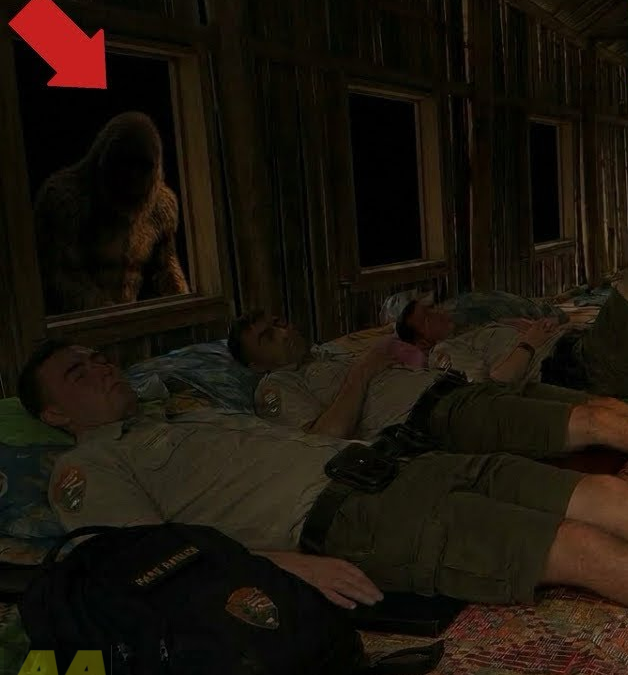
For twelve years, that was exactly what I believed it was. Then one October night, a storm trapped three of us at Granite Lick, and something began writing in a book that had already been signed.
We watched the pen lying still on the page while the sound continued for another five seconds.
When I counted the entries, there were four. We had put three names in that register.
The fourth was written in my handwriting, under a name I had stopped using nine years earlier.
Eleven days later, I found another entry in the same hand belonging to a ranger who had not been anywhere near that shelter when it appeared.
Years of old books showed the same thing happening again and again, always between 2:00 and 3:00 in the morning, always in the same handwriting.
And then I found my own name waiting on a page dated four days in the future.
If a book meant to record where people had already been can write down where they have not yet gone, what exactly is it keeping track of?
I had been laughing at the rule for 12 years. That was how long I had been working in the service, and in all that time register duty had been one of the least interesting jobs anyone could draw.
You drove from shelter to shelter, collected the books, counted the lines, checked whether anyone had left a useful note, and wrote down anything that needed repair.
Sometimes you found a broken latch. Sometimes a missing page. Usually you found nothing at all.
The registers existed because the mountains were too large for anyone to know exactly who was where.
A name and a date could tell a search crew which direction somebody had gone.
A time could tell them whether a hiker had reached a shelter before dark. A note about water could save somebody a long walk.
The books were public records, practical things, and that was all I had ever believed them to be.
Then came October. A front moved in faster than expected. Trees went down across the exit road, and the radio warning was simple.
“Don’t drive it in the dark.” There were three of us at the district that evening.
Me, Colton, and Brandt. We took the shelter at Granite Lick because there was nowhere sensible to go after the road became blocked.
It was an ordinary shelter. Three cots, a cold stove, a table near the door, and the register bolted to that table so nobody could carry it away.
The rain had already started when we arrived. At 9:58, I opened the register and signed us in.
Three lines. Three names. My handwriting on each one. That was how the system worked.
You signed for yourself, and nobody else. Colton leaned over my shoulder and made his usual comment about my handwriting.
“You still write like the paper owes you money.” Brandt laughed. I told him to sign his own line and leave mine alone.
Then we lit the stove, latched the door, and settled in. The register remained open on the table.
You never closed one. It was a public record, and the next person through the door might need it.
The rain continued. After a while, I stopped hearing it. That happens during storms. Your mind accepts the sound and pushes it into the background.
Rain on a roof becomes part of the room. You stop noticing each drop. Brandt woke first at 10:02.
Not because she heard something. Because something stopped. She told me later that it felt like the storm had suddenly gone silent because something outside had paused to listen.
I woke about four seconds after she did. For a few moments, I heard nothing.
Then came a sound from the table. Scratch. Scratch. Scratch. It was small and dry.
A pen moving over paper. Brandt sat upright. Colton was already reaching for his light.
He switched it on and aimed it toward the register. The beam landed directly on the open book.
Nobody was standing there. The three of us were still on our cots. The pen I had used at 9:58 was lying across the page.
And the scratching continued. That was the part nobody believed when I told the story later.
All three of us were looking directly at the pen. It was not moving. Yet we could hear writing.
The sound continued for another four or five seconds after Colton’s light reached the page.
Then it stopped. The shelter became completely silent. Colton whispered, “Tell me you heard that.”
“I heard it.” Brandt did not answer. She was staring at the book. There were four entries.
We had written three. I got out of my cot and walked to the table.
I should have waited until morning. I know that now. Instead, I lifted the book toward the light and counted.
“One.” My name. “Two.” Colton. “Three.” Brandt. Then I looked lower. “Four.” The fourth line was beneath ours.
The date column contained that night. The time column said 2:11. The name was M.
Reyes. I stopped breathing for a moment. It was written in my handwriting. Not handwriting that looked like mine.
Mine. The way I formed every letter. The way I left space between the initial and surname.
The way I wrote the number two. The way I failed to close my fours.
That was something nobody could have copied from a sample written earlier that evening. But the name was not the name I used anymore.
M. Reyes had been my signature before my divorce nine years ago. I stopped using it the week the papers came through.
The only person still calling me that was my mother. Brandt whispered my name. I closed the register.
Nobody slept. At first light, the door was still latched from the inside. The bolt had not moved.
Colton went outside. The clearing was soft with mud, wet enough that a boot should have left a clear impression.
He walked the entire area. There was nothing. Only the tracks we had made the evening before.
No additional prints. No disturbance near the shelter. No sign that anyone had approached the building.
I did what I always did when something frightened me. I filled out paperwork. It sounds ridiculous, but paperwork gives you something ordinary to hold on to.
I photographed the page. Then I requested the older registers from Granite Lick. Eleven days later, the books were sitting in front of me.
I went through every storm night I could find. There were five nights with an extra entry between 2:00 and 3:00 in the morning.
Five. Four of the names meant nothing to me. The fifth did. It belonged to Colton.
The handwriting was his. The date was the previous November. Colton had not been at Granite Lick the previous November.
He had been 200 miles away on medical leave after a tree came through the cab of his truck.
I carried the book to him. He stared at the entry for a long time.
Then he stood up and walked outside. When he came back, he said he was finished with shelter duty.
He never worked a night at one again. He stayed in the service. He took a pay cut and moved to the road crew.
I thought that would be the end of it. It wasn’t. That week I was assigned to vehicle maintenance.
Someone called out, and in a small district that meant somebody else filled the empty shift.
I took the duty night. The contact station was a single room with a radio, a stove, a desk, and a shelf where registers from four shelters were kept until collection.
At 20 to 11, the radio clicked. Not static. Not a voice. A click. Exactly like a pen being clicked.
Twice. I stared at the radio. Then it clicked again. I told myself it was weather.
I turned away. That was when I saw the light on the trail. It was not a flashlight.
It was the soft orange glow of a lantern. It came toward the station at the pace of somebody carrying something in both hands.
There was something wrong with the light. It had no shadow. I could see the lantern.
I could see the trail. But the trees on either side were not casting anything.
The person carrying it appeared a few moments later. A man. He wore the old wool uniform.
The green one. The style had been retired before I was born. He wore a Stetson.
His badges looked polished. His name tag was blank. He carried a book. And he was reading while he walked.
He never looked up. He moved as though he knew the trail so well that he did not need to see it.
I locked the station door. The man stopped at the window. He looked through the glass.
Then he turned his head toward the shelf. It was not a glance. He read the shelf.
His eyes moved from left to right across the register spines as though he were searching for a particular volume.
Then he raised the book in his hands. He tapped it against the window. Once.
Twice. A third time. Patiently. I turned on every light in the station. Then I stood in the center of the room where he could see me.
“Station is closed. Register collection is at 8:00.” The tapping stopped. The man remained still.
Then a voice came through the glass. It sounded like paper turning. “You’re not on the list tonight.”
I did not answer. The man walked to the door. I pressed my back against it.
Nothing pushed from the other side. That was almost worse. He simply stood there. For 40 minutes, he remained outside.
Then he began reading. Names. One at a time. Evenly spaced. About 15 seconds apart.
It sounded like roll call. Some names sounded local. Others sounded very old. They were names I had seen on markers around the mountains, names from before the park existed.
The voice never hurried. It never lost its place. It never repeated a name. I stood against the door and counted.
I could not stop myself. The reading continued. I reached the 50s. Then he said my name.
My full name. Both middle names. I had not heard anyone use my full name in years.
The voice did not pause after it. It continued to the next name. Then another.
Then another. Eventually the reading stopped. I stayed where I was. I don’t know how long.
When I finally looked through the window, the lantern was already far up the trail, moving north toward the shelters.
At 8:00 in the morning, I opened the station. The register from Granite Lick was sitting on the counter.
I had shelved it the previous night. I knew I had. Shelving the books was the job.
I picked it up. The last entry was dated that night. The time was 2:11.
The name column was empty. Instead, there was a single tally mark. One careful stroke.
The kind of mark made by someone who had made many of them. In the comment column were three words.
List complete. I stood there for a long time. Then I checked the station log.
The station log was where we signed ourselves on and off duty. There was an entry for that night.
In my handwriting. Time off duty. 2:11 a.m. I had not written it. I had signed off at 6:15.
I had a photograph of the page with the time visible on my phone. Two logs.
One shift. One said I had stopped being on duty at 2:11. The other said I remained there until 6:15.
That was when I stopped sleeping properly. I pulled the old registers again. At first, I told myself I wanted something ordinary to look at.
I wanted to find messy handwriting. A mistake. Anything that would let me put the whole thing into a category that made sense.
Instead, I found entries between 2:00 and 3:00 in the morning going back 4 years.
They appeared across shelters 20 miles apart. Different books. Different years. Different people. The handwriting was the same.
Always the same. Some names belonged to people I knew. People who had experienced difficult nights in the mountains.
A fall. A severe cold exposure. A man who spent 2 days inside a shelter with a broken ankle.
Every one of those people had eventually walked out. Every one continued working, hiking, traveling, living ordinary lives.
But not one of them had signed another register. Anywhere. I checked. I found their names in older books.
Then nothing. No later entries. No notes. No signatures. They simply stopped writing their names.
Some were still active. Some were still hiking. Some lived nearby. They were fine. They had just stopped putting their names in books.
I spent about a week thinking about that. Eventually I reached a conclusion I did not want.
The register was not simply recording who had visited a shelter. It was keeping a liSt.
A list of people who had somehow become part of something the shelters remembered. I wanted to see whether I was right.
That was the mistake that came next. I drove to Granite Lick on a Tuesday evening in October.
My intention was simple. Take the register. Put it in the incinerator. Make the problem physical.
Something you could remove. I arrived around 7:00 in the last of the light. The shelter looked exactly as it always had.
Three cots. A stove. A table near the door. Nothing unusual. Nothing that told you anything was wrong.
I latched the door behind me. I have thought about that many times since. I don’t know who I believed I was keeping outside.
The register was on the bolted table. Open. Exactly as it always was. I walked to the last written page.
There was an entry waiting there. The time column said 2:11 a.m. The date was 4 days ahead.
The name column was blank. I put my hand on the page. The paper moved beneath my palm.
Not from the wind. It moved as if something were writing on the other side.
I pulled my hand away. Letters appeared. Slowly. A name. Mine. Written in my handwriting.
The date was still 4 days ahead. I stood there staring at it. I had imagined removing the book.
Burning it. Taking it away. Instead, I left it exactly where it was. I did not tear the page.
I have told people that I did. That was not true. I left the book open on the same page because some part of me was afraid of what closing it might mean.
Then I unlatched the door. I walked outside. I reached my truck. I drove home.
I did not stop until I reached pavement. For the next 4 days, I watched the date.
I sat in my truck from 6:00 in the morning until midnight. I was 200 miles from Granite Lick.
My phone was in my hand. Nothing happened. The date passed. Nothing happened. Another morning came.
Nothing happened. Eventually, I realized that whatever had been waiting for me in that book did not need to come to me.
It already knew where I was. Two years have passed since that October night. The register is still on that table.
My name is still on that page. The date beside it has been passed for a long time.
I have never gone back. Other rangers make collection runs. I have never explained why I stopped going.
Sometimes I think about telling them. Then I remember the rule. Never read the register out loud after dark.
For 12 years, I laughed at it. Now I understand why the old rangers never explained it.
A warning like that becomes weaker when you turn it into a story. People hear a story and look for the trick.
They look for the loose board, the prank, the strange weather, the tired mind. But the old rule was never complicated.
It was not about being brave. It was not about believing in anything. It was about not giving the book something it could use.
You sign the name you actually answer to. You sign for nobody who is not standing beside you.
You do not add names because you think you know where someone is. And if you are inside a shelter at night and hear a pen moving across paper, you count the people you can see before you go anywhere near the table.
If the number of people does not match the number of entries, you wait. You wait for daylight.
Because the register will still be there in the morning. The strange part is that I still believe that much.
I still believe the books are useful. I still believe hikers should sign them. I still believe a register can help someone find the direction a person took.
What I no longer believe is that remembering is the only thing a book can do.
I think about Colton sometimes. His name appeared in that old book from the previous November.
He was 200 miles away. His handwriting was perfect. He never signed another register after that.
Then there was the man at the station. The old uniform. The blank name tag.
The lantern without a shadow. He never pushed the door. He never threatened me. He only read.
Name after name. As though the list had existed long before I knew it was there.
And when he reached mine, he did not stop. That detail bothers me more than anything else.
If he had paused, I could have believed the name mattered. But he simply continued.
As if I were only one line among many. As if the list had already been written.
Then there is the entry I found at Granite Lick. My name. My handwriting. A date 4 days ahead.
That is the part I still cannot explain. The date passed. I remained where I was.
The book did not bring me back to Granite Lick. Nothing happened. At least, nothing that I could see.
But sometimes I wonder if that is what the book wanted. Maybe the entries are not instructions.
Maybe they are not predictions. Maybe they are simply acknowledgments. A record that something has noticed you.
A line saying that your name has been heard. A mark saying that the list is complete.
I have gone through those registers more times than I care to admit. There were 11 people who never signed another one.
Every one of them is fine. Every one of them is still walking around. That is the detail I want people to understand.
Nothing obvious happened to them. They did not vanish. They did not become stories in newspapers.
They simply stopped writing their names. Maybe they learned something. Maybe they saw the same rule I did.
Maybe they heard the same sound. Or maybe the mountains simply gave them another reason to leave the books alone.
I don’t know. What I know is this. A register is supposed to be a record of where you have been.
At Granite Lick, I saw a register record where someone was supposed to be. I saw it record a name that belonged to me nine years earlier.
I saw it record Colton when he was 200 miles away. I saw it place my own name beside a date that had not arrived.
And I heard something outside a locked station read names that I had never written there.
So when new rangers ask about the old rule, I don’t laugh anymore. I tell them to sign carefully.
I tell them to check every line. I tell them never to write a name for someone who is not standing beside them.
And if they ask why, I tell them that some records are better left incomplete.
Because the first three entries at Granite Lick belonged to people who were actually there.
The fourth belonged to someone who was not. And when I finally understood what that meant, I realized the most frightening thing was not that the register could write a name.
It was that it knew when to wait. So if you ever find yourself alone in a mountain shelter after dark, with rain against the roof and an open register on the table, remember the rule the old rangers never explain.
Do not read the register out loud. And if you hear a pen moving after you have already stopped writing, count the people in the room before you look at the page.
Because you may already have signed in someone who has not arrived yet?
Disclaimer: This content may be created by Al for entertainment purposes. Any resemblance to real persons, events, or places is coincidental.








