10 Amazon Jungle Mysteries That Still Can’t Be Explained
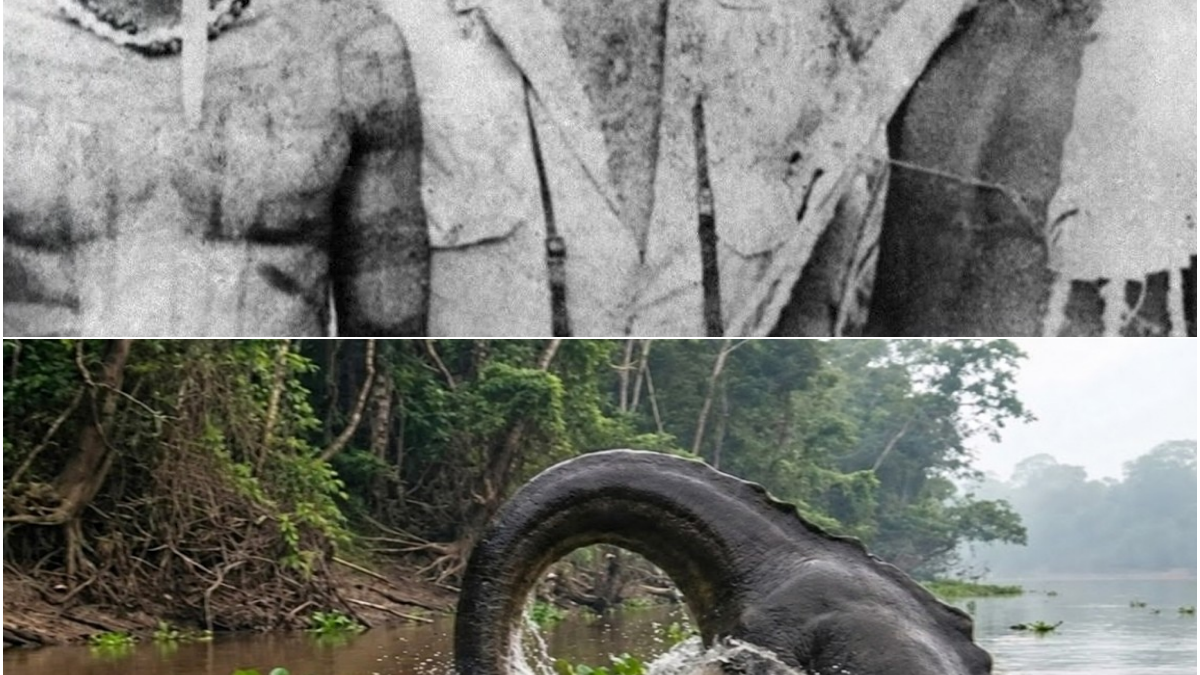
The river did not exist on the map. At least, not as a river anyone could truSt.
The expedition had entered the Amazon believing the worst part would be the unknown. Instead, the jungle seemed to remove one certainty after another.
Rapids tore at the canoes. Food spoiled faster than anyone expected. Illness moved through the camp.
A man disappeared into the foreSt. Another expedition had entered an Ecuadorian cave with more than 100 soldiers, scientists, cavers, and even Neil Armstrong, searching for a legendary metallic library that was supposed to contain engraved golden books.
They returned without the library and were later told they had searched the wrong cave.
In Malaysia, Jim Thompson walked away during an afternoon in 1967 and left behind almost nothing to explain where he had gone.
In French Guyana, 23 year old Raymond Malfrese watched his own strength disappear while his journal entries grew shorter and more desperate.
In the Amazon, Yosi Ginsburg survived roughly 3 weeks alone after being separated from his companions, while two other members of his expedition never returned.
And somewhere in the Congo, stories described a creature powerful enough to stop the flow of rivers.
These were not simply journeys into remote places. They were journeys into landscapes where maps ended, supplies vanished, and familiar rules stopped being reliable.
But when an expedition reaches a place that barely appears on any map, how far can anyone travel before the unknown begins traveling back with them?
The story began beneath the forests of Ecuador. During the 1960s, explorer Hanos Morris claimed that somewhere beneath the Ecuadorian Amazon was a hidden metallic library.
According to his account, the underground chambers contained books made from a goldlike metal, covered with engraved symbols.
The idea sounded impossible. But impossible stories have a habit of becoming larger when people cannot immediately prove them wrong.
The legend attracted attention from explorers, researchers, soldiers, and people fascinated by the possibility that an ancient civilization had left something extraordinary beneath the jungle.
By 1976, the search had grown into a major expedition. More than 100 soldiers, scientists, and cavers entered the region.
And among them was Neil Armstrong. The man who had walked on the Moon was now traveling into the Ecuadorian jungle to investigate a completely different mystery.
The expedition entered the cave system. The underground world was enormous. Explorers encountered chambers that seemed almost impossible in scale.
There were drops of 200 ft. There were strange formations whose shapes appeared unusually regular.
Deep beneath the jungle, the environment felt disconnected from everything above. But the metallic library was nowhere to be found.
The expedition searched. The explorers examined chambers and passages. They continued looking for evidence that could confirm Morris’s story.
Nothing settled the mystery. Eventually, they returned without the legendary books. Then Morris offered an explanation.
They had searched the wrong cave. It was an extraordinary answer to an extraordinary expedition.
More than 100 people had entered the jungle. Scientists had gone underground. Cavers had explored massive chambers.
Neil Armstrong had joined the search. And after all of that, the claim remained that the real cave was somewhere else.
The story never acquired the evidence needed to establish the metallic library as a genuine discovery.
Yet the cave system itself was real. The enormous chambers were real. The underground passages were real.
The depths were real. And that may have been what made the legend so difficult to forget.
There are places beneath the surface where the landscape becomes almost impossible to understand from above.
The jungle hides the entrances. The rock hides the chambers. And the deeper explorers go, the less useful the world above becomes.
But the Ecuadorian cave was not the only place where someone walked into the unknown and failed to come back with a simple explanation.
In 1967, an American silk millionaire named Jim Thompson was spending time in Malaysia’s Cameron Highlands.
Thompson was not entering an unmapped cave. He was not crossing a massive jungle expedition.
He simply went for an afternoon walk. And then he vanished. The disappearance became one of the great mysteries associated with the region.
Search efforts expanded rapidly. Hundreds of soldiers and trackers became involved. Helicopters searched from above.
Teams moved through the surrounding landscape. People examined possible routes and searched areas where Thompson might have traveled.
But the search produced no convincing answer. There were no clear belongings that explained his route.
No reliable trail. No obvious indication of what had happened. Theories multiplied. Perhaps he had suffered an accident.
Perhaps an animal encounter had occurred. Perhaps someone had taken him. Perhaps the disappearance had been planned.
Every explanation seemed to create another problem. The most unsettling feature was its simplicity. Thompson had gone for a walk during the afternoon.
The surroundings were not supposed to be impossible to navigate. Yet the search teams could not establish where he had gone.
The Cameron Highlands were large and rugged, but they were not some completely unknown continent.
Still, the mystery remained. A person could walk into a landscape and somehow leave behind almost nothing that settled the question.
That same problem became even more severe in French Guyana. In 1950, 23 year old French explorer Raymond Malfrese was attempting a solo journey through the rainforeSt.
Unlike Thompson, Malfrese had deliberately entered a difficult environment. His journey was becoming increasingly demanding.
His journal recorded his condition as his strength declined. Food became a serious problem. He survived on whatever he could catch.
The journey that had begun as an expedition gradually became an attempt to continue moving while his physical reserves disappeared.
His journal entries became increasingly important because they were among the few records of what he experienced.
Eventually, Malfrese decided to abandon much of his equipment. Carrying everything was no longer practical.
He needed to move. His goal became reaching the village of Benvanu. The distance was approximately 90 km.
That was a formidable journey under ordinary conditions. Through rainforest while weakened, it became something else entirely.
His final diary entry was dated January 13th, 1950. After that, the record stopped. Malfrese disappeared.
Researchers later discovered his abandoned journals and evidence of a shelter farther along his route.
That evidence suggested he had continued traveling for some time after leaving his original camp.
But no one established exactly what happened afterward. His father, Edgar, refused to accept uncertainty as an answer.
For roughly 12 years, Edgar searched across French Guyana, Brazil, and Suriname. He followed leads.
He examined reports. He traveled through regions where communication was difficult and distances were enormous.
But he never found the answer he was seeking. Decades passed. The mystery remained. Then in March 2026, a court finally changed Malfrese’s legal status 76 years after his disappearance.
Even then, the central question remained unresolved. The journal told researchers where Malfrese had been.
The abandoned equipment showed that he had moved. The shelter suggested that he had survived beyond his final entry.
But the last part of the journey remained hidden. That is one of the cruelest features of expedition records.
Sometimes the closer you get to the end of a journal, the less you actually know.
The entries become shorter. The handwriting may become weaker. The descriptions become simpler. Then there is nothing.
The jungle continues without explanation. Farther west, another landscape has created an entirely different kind of expedition nightmare.
The Darian Gap stretches between Panama and Colombia. It is roughly 100 miles of swamp, mountains, dense vegetation, rivers, mud, and terrain that has resisted the construction of a continuous road.
For travelers, the region represents a break in the normal transportation network. For expeditions, it represents something more severe.
Every kilometer can become an argument with the environment. Equipment gets damaged. Paths disappear. Rivers rise.
Navigation becomes difficult. Modern crossing attempts have reported unusual compass behavior in areas associated with mineral deposits.
Some rivers can rise 10 ft overnight. Local guides know that conditions can change rapidly.
There are also stories of porters refusing to continue into certain areas. One reported phrase has become part of the mythology surrounding the region.
“The forest doesn’t want you past here.” Whether that sentence was ever spoken exactly that way matters less than what it represents.
People who know a jungle intimately understand that the environment has limits. A traveler from outside may look at a map and see a short distance.
Someone who has lived there may see cliffs, flooded ground, dangerous crossings, difficult weather, and places where a single mistake can leave a group stranded.
The Darian Gap has seen journalists, adventurers, migrants, researchers, and expedition teams attempt difficult crossings.
Some journeys have ended with people returning. Others have produced uncertainty. Equipment has been discovered without the people who carried it.
Routes have ended without clear explanations. The jungle does not preserve a neat record. It covers footprints.
It changes riverbanks. It swallows paths. It makes yesterday’s trail difficult to recognize today. In 1981, another expedition entered the Bolivian Amazon.
Yosi Ginsburg traveled with American photographer Kevin Gail, Swiss traveler Marcus Stam, and an Austrian named Carl Rupre.
Rupre claimed to know the jungle. He promised to guide the group toward remote indigenous settlements and possible gold.
The expedition began with expectations of adventure. Instead, it gradually came apart. The group split into two.
Yosi and Kevin attempted to travel down the Tui River. Marcus and Carl headed back through the jungle on foot.
The separation transformed a difficult expedition into several separate struggles. Yosi eventually became separated from Kevin.
He was alone. The jungle around him was enormous. He had limited supplies. He did not know when help would arrive.
For roughly 3 weeks, he survived alone. His experience became one of the most famous survival stories associated with the Amazon.
Every day brought another problem. Food. Water. Navigation. Insects. Weather. Fatigue. The constant uncertainty of not knowing when another person would appear.
Eventually, Yosi was rescued. But Marcus Stam and Carl Rupre were never seen again. Searches were conducted.
Investigators attempted to reconstruct the route. Nothing produced a definitive explanation. No reliable discovery established exactly what had happened to them.
More than four decades later, their disappearance remains unresolved. The story became famous partly because of Yosi’s survival.
But the other half of the expedition remained a question without an answer. Then there was the Congo.
For centuries, communities in the region had told stories of an enormous creature known as the mokèlé-mbèmbé.
The name has often been translated as “one who stops the flow of rivers.” Descriptions vary.
Some accounts portray a massive animal with a long neck and a powerful body. The stories became especially interesting to outsiders because some descriptions sounded vaguely similar to long extinct prehistoric animals.
Expeditions traveled into the Congo to investigate. Some occurred in the 1980s. Others took place in the 2000s.
The reports coming back were often dramatic. Some witnesses described wakes moving through water without an obvious boat.
Others reported enormous tracks. There were accounts of large shapes appearing near rivers and then slipping beneath the surface.
One expedition reported strange sounds that the team could not confidently match to a known animal.
But the Congo posed the same problem as the other locations. The environment was enormous.
Large portions of the forest had never been thoroughly surveyed. Waterways disappeared into dense vegetation.
Travel was slow. Communication was difficult. Even when an expedition entered an area, it could observe only a tiny fraction of the surrounding wilderness.
That left an enormous gap between a report and proof. A strange sound did not necessarily indicate an unknown creature.
A large wake did not necessarily mean something enormous was swimming beneath it. A track could be distorted by mud.
A distant animal could appear much larger than it really was. But the stories continued.
And then there was Michael Rockefeller. He was 23 years old when he traveled to Dutch New Guinea to study the Asmat people.
The Asmat were renowned for their wood carving and had a complex history that included practices involving warfare and ritual headhunting.
Rockefeller was interested in their culture and artistic traditions. During the expedition, his boat overturned miles offshore.
He was separated from his companion. According to accounts, Rockefeller told his partner, “I’m going for help.”
Then he entered the water and attempted to reach shore. He was never seen again.
Search efforts followed. The surrounding waters and coastline were examined. But no definitive explanation emerged at the time.
For decades, the disappearance remained one of the great mysteries connected with exploration. Later investigations produced another possibility.
Testimony from Asmat people suggested that Rockefeller may have reached shore. According to those accounts, events connected with earlier Dutch patrols and the killing of Asmat leaders may have influenced what happened afterward.
The interpretation has never turned into the kind of evidence that removes every uncertainty. But it changed the way many researchers understood the disappearance.
The mystery was no longer simply about a young man who vanished at sea. It became connected with a much larger history involving colonial authority, local communities, and conflicts that outsiders did not always understand.
Sometimes an expedition mystery is not hidden in the jungle. Sometimes it is hidden in the history surrounding the people who live there.
In 1977, another unusual story emerged from Brazil. Residents around Colares and other areas of Pará began reporting strange luminous objects at night.
Witnesses described lights moving through the sky. Some reported beams. The reports became serious enough that the Brazilian Air Force launched Operation Saucer.
Declassified Brazilian records confirm that the military investigated the reports. Personnel documented observations. Witnesses were interviewed.
The investigation became part of the official historical record. Brazil’s National Archives still maintain documentation connected with the operation.
Yet even with military involvement and preserved records, the central mystery was never conclusively resolved.
What exactly were people seeing? Aircraft? Atmospheric phenomena? Misidentified objects? Something else? The surviving records establish that an investigation happened.
They do not provide a universally accepted explanation for every observation. And that distinction matters.
An official investigation does not automatically prove the most extraordinary interpretation of the reports. It proves that authorities considered the reports significant enough to investigate.
The same uncertainty appears again in the expeditions that crossed the New Guinea Highlands. During the 1970s through the 1990s, small teams attempted to cross difficult sections of the highlands toward the coaSt.
The maps were often unreliable. Trails vanished. Valleys appeared where outsiders had not previously traveled.
The environment changed constantly. Expedition journals began to develop a familiar pattern. The first days were filled with descriptions.
Then came the insects. Then the rain. Then food began to spoil. Then the entries became shorter.
Day three could be about leeches. Day six could be about food. By day 10, the journal might contain little more than a few lines.
One British team recorded a progression that became increasingly bleak. Rain. Leeches. Fever. A kilometer of progress in an entire day.
Eventually, rescuers found the expedition in severely weakened condition. Boots were gone. Supplies were exhausted.
One man was missing his pack, including the film. The lesson was difficult but important.
The environment did not need a mythical creature to become dangerous. It could overwhelm an expedition by itself.
A map could be wrong. A trail could disappear. Food could spoil. Rain could destroy equipment.
Illness could slow everyone. And once progress fell from several kilometers a day to one kilometer, the original schedule became meaningless.
That brings the story back to the expedition that followed a river not properly mapped by outsiders.
The man leading it was Teddy Roosevelt. The former president joined a team attempting to map an Amazon tributary that became known as the River of Doubt.
The name itself sounded like a warning. The expedition entered the river system believing that mapping the route would fill a major blank in geographic knowledge.
Instead, almost immediately, the river began testing every assumption they had brought with them. Rapids damaged the canoes.
Food spoiled. Illness spread through the group. The river became harder to navigate. The expedition moved deeper into country that offered fewer opportunities to stop and recover.
Roosevelt suffered a severe injury to his leg. The wound became infected. His condition deteriorated so badly that he eventually asked to be left behind.
The expedition could not simply stop. They had a river to follow. A destination to reach.
And a group that depended upon continued movement. Roosevelt’s son Kermit became ill with malaria.
The strain on the expedition grew. Then one porter attacked another member of the camp and fled into the jungle.
The group could not pursue him. Every additional problem consumed time, food, strength, or equipment.
The river kept moving. So did the expedition. Weeks passed. People became exhausted. Supplies disappeared.
The group lost members along the way. Roosevelt lost roughly 50 lb. The experience affected him for the rest of his life.
Yet the expedition continued. They were attempting to map approximately 900 miles of water through a region that outsiders had not properly charted.
The River of Doubt was no longer simply a line on a map. It had become the central force controlling the expedition.
The rapids determined when they moved. The weather determined when they could stop. The terrain determined where they could camp.
The jungle determined what they could eat. Every mile required another decision. The expedition eventually emerged from the river system.
The map had been changed. The route was no longer simply an unknown line. But the cost of the journey had been enormous.
The River of Doubt became part of the history of exploration because it demonstrated something that maps often hide.
Distance is not the same as difficulty. A line measuring 900 miles can look simple on paper.
In the jungle, every mile can contain a different obstacle. The same principle applies to the Darian Gap.
It applies to the New Guinea Highlands. It applies to the Amazon. It applies to French Guyana.
And it even applies to the caves beneath Ecuador. A map gives you direction. It does not give you certainty.
That is why so many of these expeditions became famous. Not because every mystery contained something supernatural.
Not because every unexplained sighting represented an unknown creature. But because each journey exposed a place where human knowledge had limits.
Hanos Morris entered the story claiming that a metallic library waited beneath the Ecuadorian jungle.
More than 100 people searched for it. Neil Armstrong joined them. They found extraordinary underground chambers.
They did not find the library. Jim Thompson walked into the Cameron Highlands in 1967.
Hundreds of people searched. His route was never established with certainty. Raymond Malfrese entered French Guyana in 1950.
His final diary entry was dated January 13th, 1950. His abandoned journals and shelter provided clues.
The final part of his journey remained unknown. In March 2026, a court formally addressed his legal status 76 years after he disappeared.
The unanswered question remained. Yosi Ginsburg entered the Bolivian Amazon in 1981. He survived roughly 3 weeks alone.
Marcus Stam and Carl Rupre disappeared. The Congo produced stories of mokèlé-mbèmbé. The evidence remained disputed and incomplete.
Michael Rockefeller entered Dutch New Guinea at 23. His boat overturned. He went toward shore.
He was never seen again. Later testimony offered one explanation, but decades of uncertainty had already become part of the story.
Brazil’s Operation Saucer documented investigations into strange lights in 1977. The records remain. The final explanation does not.
And Teddy Roosevelt followed the River of Doubt through a landscape that repeatedly demonstrated how little control an expedition could actually possess.
These stories are separated by continents, decades, cultures, and completely different goals. Yet they share one thing.
Each began with confidence. Someone believed a destination could be reached. A cave could be explored.
A river could be mapped. A person could cross a jungle. A mystery could be solved.
Then the environment changed the terms. The deeper the explorers went, the less useful their assumptions became.
That is why the most frightening part of these stories is not necessarily what might be hiding in the foreSt.
It is the realization that the forest does not need anything mysterious to defeat an expedition.
A river can rise. A trail can vanish. A compass can become unreliable. A diary can become shorter.
A camera can capture something too distant to identify. A person can take one wrong turn.
And sometimes an entire expedition can spend weeks trying to return to a place that looked very close on the map.
The unknown does not always arrive as a creature emerging from the trees. Sometimes it arrives as a blank space.
Sometimes it is a river that nobody has properly charted. Sometimes it is a cave whose passages continue farther than expected.
Sometimes it is a journal that stops halfway through a journey. Sometimes it is a person who walks into a familiar landscape and leaves behind no clear route.
And sometimes it is a question that survives longer than the people who first asked it.
The Amazon still flows. The Ecuadorian caves still exiSt. The forests of French Guyana remain immense.
The Darian Gap remains difficult to cross. The Congo still contains enormous areas that are difficult to survey.
The New Guinea Highlands still rise above the surrounding lowlands. And the River of Doubt still carries water through the landscape Roosevelt struggled to map.
The explorers went looking for answers. Some returned with maps. Some returned with stories. Some returned with evidence.
Some returned with questions. And in a few cases, the only thing left behind was a diary, a piece of equipment, a photograph, or a name that became attached forever to a place where the final answer was never found.
That may be the strangest thing about exploration. The world does not have to hide a monster to remain mysterious.
Sometimes all it has to do is be bigger than the people trying to understand it.
Disclaimer: This content may be created by Al for entertainment purposes. Any resemblance to real persons, events, or places is coincidental.








