She Found The Adoption Papers And Learned Who Really Murdered Her Mother
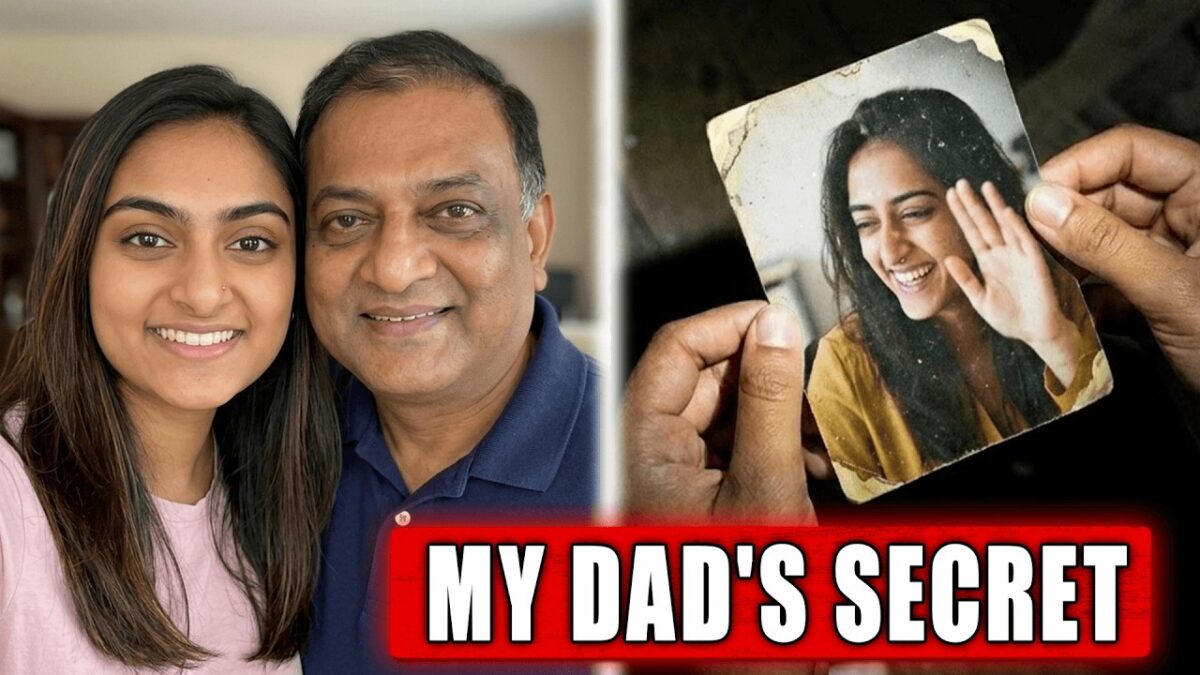
Pria Seagal, 22, came home to Edison, New Jersey for winter break. In the attic, she found a box her mother never mentioned. Medical records, years of failed fertility treatments.
Her mother could never have children. Then she found the photos. Her father, younger, standing next to a woman who wasn’t her mother, a woman who had Priya’s exact same eyes.
Underneath the photos, an adoption certificate, a different name, not Priya Seagal. That woman in the photo had a name, too. and she was murdered 3 weeks after Pria was born.
She counted the exits before she counted the miles. Old habit. Pria Seagal did it every drive back to Edison.
The Sonoko station. The diner where her father used to grab coffee. The water tower with the Ruter sticker someone slapped on it years ago.
half peeled now, two hours from campus. The closer she got, the smaller she felt. 22 years old, a 3.8 GPA, a research position in the biology department.
None of it mattered here. This house still made her 12. Her mother was on the porch before the car stopped.
Mel Seagal did that. Stood in doorways, watched driveways like the house needed a guard. She had a cardigan on even in July.
She kept the thermostat 2° too cold and never said why. You look thin, Mel said. She always said that.
Inside the house smelled like it always did. Sandalwood incense from the morning pua. Turmeric on the stove.
Underneath it faintly dust. Her father had been dead 3 years. Heart attack.
The doctor said 58. Collapsed in the garage next to a car he was restoring for no reason anyone could name. Arvin Seagal had owned four car dealerships across Middle Sex County.
At the funeral, men in suits she’d never met shook her hand and called him a visionary. She still didn’t know half their names. Her mother hadn’t cried much at that funeral.
Priya remembered noticing it, then hating herself for noticing. The attic had been her mother’s idea. Before the new roof, Menel said, handing her a flashlight and a stack of contractor bags.
Anything with mold out. Anything with your father’s name, we keep. Then she went back downstairs.
She never stayed for this part. The first hour was easy. Christmas ornaments, middle school trophies, gold paint flaking off.
Ledgers from the first dealership, ink faded to weak tea, her father’s cramped handwriting running down every column. Pria was good at this, methodical. The same instinct that made her useful in a lab.
Sort until something surfaces. Her adviser called it obsessive. She called it careful.
Something surfaced at 4:40 p.m. behind the water heater vent under a stack of moving blankets nobody had touched since the renovation in 2009. One box different from the rest.
No dust string around the base. No cobwebs anchoring it to the wall. The way every other box in that attic was anchored to something.
Someone had wiped this one down more recently. The tape was newer, cleaner, still had its shine like it had been sealed within the last few years, not the last few decades. She almost left it, almost.
She cut it open with her house key the way she’d opened every other box that afternoon, not expecting anything different. The first folder was medical records, her mother’s name on top, a fertility clinic in New Brunswick. Six years of files, 1998 to 2004.
Hormone panels, follicle counts, IVF cycle after IVF cycle, each one stamped in red ink. Unsuccessful. Pria sat back on her heels.
6 years. 6 years of needles and failed transfers and appointments her mother had never once mentioned. And somewhere in the middle of that timeline, 2003, her own birth year, the file just stopped.
No final entry, no word success anywhere in 6 years of paperwork. Just silence where a pregnancy should have been. She kept digging anyway.
Some part of her already knew she wouldn’t like what came next. The second item was a thin envelope. Her name on the front and block capitals she knew instantly.
Her father’s handwriting, same as the ledgers downstairs. Inside was one document, county stamped, the paper gone soft with age, a certificate of adoption, finalized January 2004. The name listed at birth was not Pria Segel.
She had never heard that name spoken, not once, not by anyone. Downstairs, water ran in the kitchen. A pot clinkedked against the stove.
Ordinary sounds coming from a house that had just quietly detonated above her head. Pria sat in the attic dust, the certificate shaking slightly in her hands, and read the name again. Then again, somewhere in this house was a version of her life nobody had told her about.
And downstairs, a woman who’d raised her for 22 years was waiting for her to come down for dinner. Like nothing had happened at all. She didn’t say anything at dinner.
That surprised her later. She sat across from her mother, ate doll her mother had made from scratch, answered questions about Rutgers, about her research adviser, about a boy named Aaron her mother had heard about from an aunt. She lied about Aaron.
She lied about being tired. She did not mention the box. Men talked about the temple renovation fund, about a cousin’s engagement in Houston.
Ordinary things said in the ordinary voice she used for ordinary things. Priya watched her mother’s hands while she talked. Steady hands.
Hands that had signed an adoption certificate 22 years ago and never once, not in 22 years, mentioned it.
She kept waiting for her mother to bring it up herself to say casually over the doll, “We found something in the attic, didn’t we?” Mal said nothing. She asked if Pria wanted more rice.
Pria went to bed early. She didn’t sleep. At 1:00 a.m., she was back in the attic with a headlamp instead of a flashlight so her hands would be free.
The box was still there. She’d hidden it better this time, pushed behind an old dresser in case her mother went up before Priya came back down for the rest of winter break. There was more inside than she’d let herself look at the first time.
A manila folder, unlabeled, held photographs, old ones, the kind with a date stamped in orange in the corner. Her father, younger, thinner, standing in front of the first dealership sign, the paint still fresh. And in three of the photos, a woman, not her mother, dark hair, late 20s, maybe a wide, easy smile in one shot, standing next to Arvin Seagal outside a building Priya didn’t recognize.
Some kind of office, glass doors, a logo she couldn’t make out. In another photo, just the woman alone, laughing at something off camera, her hand half raised like she was about to wave the camera away. Priya held the photo closer to the headlamp.
the shape of the eyes, the set of the jaw. She’d seen this face before, every single morning in the mirror for 22 years, and never once thought to ask why it didn’t quite match her mother’s. She sat with that for a long moment, just sat there, the attic silent, except for the tick of the house settling around her, and let herself think the things she didn’t want to think.
On the back of one photo in pen, someone had written a name and a date. December 2002. the same cramped handwriting as the adoption certificate.
Her father’s hand again. Underneath the photographs was a folded newspaper clipping, brittle at the creases. The kind of brittle that comes from being folded and unfolded many times before finally being put away for good.
The Home News Tribune dated October 2003. Woman, 26, reported missing from Edison home. Pria read it twice.
A local woman last seen leaving her apartment on a Tuesday evening. No signs of forced entry. Police asking anyone with information to come forward.
A grainy photo ran alongside the article. The same woman from the pictures, younger, in what looked like a work ID photo. Same smile, same eyes, tilted at the same angle Priya saw in the mirror every morning.
The name in the article matched the name written on the back of the photograph. It also matched the name on Priya’s own adoption certificate, the name she’d been born with before someone decided she’d be Priya Seagal. Instead, she sat back against the dresser, the newspaper clipping trembling slightly in her hand, and did the arithmetic her body had already worked out before her mind caught up.
October 2003, the woman goes missing. Priya’s own birthday 3 weeks earlier in September. The adoption finalized 3 months after that in January 2004.
Somebody had given birth to her. Somebody had disappeared 3 weeks later. and her father had kept the clipping, kept it folded inside his own private box, hidden behind a water heater, sealed with tape newer than anything else in that attic, like he’d gone back to it more than once over the years.
Pria sat there until the headlamp battery started to dim, staring at a stranger’s face that was unmistakably her own. She had a name now, a real one, Sunnita. She didn’t know yet whether Sunnita Rothi had ever been found.
Google doesn’t care what time it is. Pria sat cross-legged on her childhood bed at 2 a.m. laptop screen turned down low so the light wouldn’t show under the door and typed the name into the search bar.
Sunnita Rothi Edison, New Jersey, missing 2003. The first few results were nothing. A LinkedIn profile for a different Sunnita Rothy in Ohio.
An event listing. A dead link. She almost gave up.
Then on the second page, an archived article from nj.com dated 14 months after the one from the attic. Body found in Somerset County identified as missing Edison woman. She read it three times before the word settled.
Remains discovered by a contractor clearing brush off Route 206 near a wooded lot slated for a housing development. Identified through dental records, her jaw hadn’t decomposed enough to make that impossible. the article noted almost clinically the way local news sometimes forgets it’s writing about a person.
The medical examiner’s office had ruled the death a homicide. No arrests were ever made. The article was short, four paragraphs, the kind of story that runs once and then disappears because nobody with money or connections was pushing to keep it alive.
Priya read the last line twice. The body had turned up one county over, but the case still belonged to Middle Sex. Sunnita had lived in Edison, disappeared from Edison, and homicide investigations follow the victim’s last known residence as much as the crime scene.
Anyone with information is asked to contact the Middle Sex County Prosecutor’s Office. Cold case, the article called it, even back then. 20 years cold by now.
She didn’t cry. She noticed that about herself distantly, the way you noticed you forgot to eat. She just sat there doing what she always did when something didn’t make sense.
She started building a file. She found an obituary, three lines long, printed a week after the identification, survived by her mother, one sister, extended family in New Brunswick. No mention of a father, a husband, a child.
No mention of Priya, obviously, because on paper officially, Priya didn’t exist yet as anyone’s daughter. She’d been born Priya-shaped and nameless in an official record that wouldn’t be written for another 3 months. She sat with that fact for a while.
Whoever wrote that obituary hadn’t known there was a baby or had known and left it out on purpose. She found something else almost by accident, scrolling through a decade old genealogy forum thread where someone had posted asking about the Rothy family from Edison. A reply dated 2019 from a user named K Malhotra_o.
My cousin Sunnita. Still no answers. If anyone knows anything, please message me.
Priya clicked the profile. Public page barely used. Last post from eight months ago.
A photo of a woman in her 40s standing outside a modest house somewhere with fall leaves on the ground. Tagged Columbus, Ohio. Kavita Malhotra, a cousin alive, findable.
Priya didn’t message her. Not yet. She sat with the cursor blinking in the empty message box for 11 minutes.
Timed because she counted things when she was trying not to feel them. It was a habit from childhood. Her therapist in undergrad had a word for it.
Priya had never used the word. What was she going to say? Hi, I think I might be your cousin’s daughter, the one everyone thought never existed. She didn’t have proof yet.
She had a photograph, a newspaper clipping, an obituary, and a face in the mirror that matched a dead woman’s. That wasn’t proof. That was a theory with a face attached to it.
She needed something a stranger on the internet couldn’t argue with. At 3:00 a.m., she pulled up Ancestry DNA on her phone, put in her billing address as her dorm room instead of the house, and ordered a kit, standard shipping, six days out. She told herself it was for a class project on population genetics, a lie she rehearsed, even though nobody had asked her yet, because she already knew somehow that she’d need the lie eventually.
Her mother would ask questions if a spit kit showed up in Edison. Six days before she’d even have a sample in the mail, weeks more before results. She closed the laptop and lay in the dark, staring at the ceiling of a bedroom that had been hers since she was 3 years old in a house that had just become, in the space of one afternoon, a place she no longer fully recognized.
The kit sat in her dorm mail room for 2 days before she picked it up. She almost didn’t. She spit into the tube in her dorm bathroom with the door locked, sealed it exactly the way the instructions said, and mailed it back the same afternoon.
Then she waited weeks this time, long enough that the whole thing started to feel unreal, like something she dreamed instead of done. Spring semester started. She went to lab, she ran gels, pipetted samples, sat through a seminar on crisper delivery mechanisms, and took careful notes.
And underneath all of it, some part of her brain never stopped running the same loop. Sunnita, the clipping, her father’s handwriting on the back of a dead woman’s photograph. The email came on a Tuesday during office hours while she was supposed to be discussing a lab report.
Your ancestry DNA results are ready. She didn’t open it until she was back in her room, door shut, roommate at class. Her hands were steadier than she expected.
She had rehearsed this moment so many times in her head that the real version felt almost anticlimactic. Ethnicity estimate. South Asian unsurprising.
She scrolled past it. DNA matches. One name near the top.
Flagged close family. Estimated relationship. First cousin once removed.
Roughly 7% shared DNA. Kavita Malhotra. Priya sat very still.
She understood in a distant clinical way how the math worked. A DNA test doesn’t just tell you who you match. It estimates how closely based on how many identical segments show up in both profiles.
Parents and children share roughly half. Siblings share roughly half. A first cousin once removed.
Someone one generation off from a first cousin, a parents cousin instead of your own, shares somewhere around 6 to 7% give or take. small, but not nothing. The system had already done what she couldn’t have done on her own.
Put a number on the connection, cold and exact, the kind of number a lawyer or a judge would have to take seriously. Kavita Malhotra, the same name from the genealogy forum, the cousin from Ohio. Priya messaged her that night.
She didn’t overthink the wording because there was no version of the message that wasn’t going to sound insane. Hi, this might come as a shock. I think I might be related to your cousin Sunnita Rothi.
She stared at the message for a full minute before sending it. Then she sent it before she could change her mind. The reply came faster than she expected.
Kavita had clearly been waiting 20 years for someone to say that name back to her. They talked for 3 hours that first night over messages, then a call. Kavita’s voice cracked twice.
She told Priya about growing up two towns over from Sunnita, about how close they’d been as kids, about the year Sunnita left for a job in Edison and started pulling away from the family. Quieter on the phone, Ky about her work. Ky about a man she wouldn’t name.
She worked for some businessman, Kavita said. Office manager, I think, or something close to it. She never brought him up by name, just my boss.
Toward the end, she stopped visiting altogether. My aunt thought she was embarrassed about something. We didn’t know she was pregnant.
Nobody knew. Priya’s stomach dropped somewhere around office manager. She asked what the business was.
Kavita didn’t remember exactly. Cars, she thought, or something with cars, but she remembered one detail clearly. The kind of detail that sticks in a family’s memory for 20 years because nobody could ever explain it.
In the last months before Sunnita disappeared, she’d started wearing looser clothes. Cousins had joked about it at a wedding. Sunnita had laughed it off.
Kavita sent photographs, dozens of them, scanned from an old album nobody had touched in years. Priya recognized three instantly. The same three from her father’s box.
Same woman, same building with the glass doors and the logo she hadn’t been able to place. She zoomed in on the logo this time. It was a dealership sign.
Her father’s first dealership sign. The same one from the photograph in the attic. The same one from the ledgers she’d sorted through the very first afternoon.
Back when this had still felt like tidying up an old house instead of taking apart her own life. Sunnita Rothy hadn’t just worked in Edison. She’d worked for Arvin Seagal.
Pria went back to the county courthouse the following weekend, not the attic. She’d looked it up first. Adoption records in New Jersey are sealed by default, but a birth adoptee has a legal right once she turns 21 to request the original documents through the state registar.
Pria was 22. She filled out the form online at 6:00 a.m. on a Saturday before her mother woke up using her Ruter’s address again.
The processing time was listed as 8 to 12 weeks. She didn’t have that kind of patience anymore, so she went at it sideways. The certificate from the attic had a case number stamped in the corner, faint, but legible.
Adoption finalizations become part of the public court docket in certain circumstances. She wasn’t sure this counted, but she went to the Middle Sex County Courthouse anyway, and asked a clerk, a tired woman in her 50s, who clearly fielded strange requests all day, whether a case number could be looked up. It could, sort of.
The clerk pulled what was called a docket summary. Not the sealed content of the adoption itself, but the metadata around it. Filing date, the name of the attorney of record, the name of the doctor who’d signed the birth related paperwork.
The attorney’s name meant nothing to Priya. The doctors did. Dr. Ashok Bot.
She recognized the name because it was written in her father’s handwriting on an invoice she’d seen in the ledgers weeks ago. A payment filed under miscellaneous dated January 2004, the same month the adoption was finalized. $12,000, no itemization, no description beyond a single word, consultation.
She drove home from the courthouse with her hands tight on the wheel the entire way, replaying every detail out loud to herself the way she used to talk through a lab protocol before running it. Sunnita worked for her father. Sunnita got pregnant.
Sunnita disappeared 3 weeks after giving birth. A doctor was paid $12,000 unitemized. 3 months later, the same month, a birth certificate was filed listing her as an unknown birth mother who surrendered her parental rights voluntarily.
Except Sunnita hadn’t surrendered anything. Sunnita had been missing, then dead in a wooded lot off Route 206. Somebody had built a paper trail around a woman who couldn’t object to it anymore.
Priya didn’t sleep that night either. She sat with her laptop open, cross-referencing dates until 4:00 a.m. And the picture that came together wasn’t complicated once she stopped looking away from it.
Meanwhile, infertile after 6 years of failed IVF. Arind, a man with money and standing in the community, having an affair with an employee half his age. The employee gets pregnant, the wife can’t.
Somewhere in that math, somebody decided the child could simply be moved from one column to the other quietly with the right doctor and the right paperwork and enough money to make sure nobody asked questions. And somewhere in that same math, Sunnita Rothi stopped being a problem that needed solving. Priya didn’t have proof of that last part yet.
She had motive, money, timing, and a paper trail that rire of something arranged rather than legal. She didn’t have a confession. She didn’t have a body’s cause of death beyond homicide.
Unspecified in a county report from 20 years ago. She had one more source left. The only person in the house who might actually know the difference between what was arranged and what was covered up.
Her mother was awake when Priya came downstairs at 6:00 a.m. sitting at the kitchen table with a cup of chai going cold in front of her like she’d been sitting there a while. The house was quiet in the particular way it gets right before an argument when both people already know one is coming.
You’ve been up there again, Mel said, not a question. Priya set the folder down on the table between them. The photographs, the clipping, the invoice.
Tell me what you knew, Priya said. All of it now. Her mother looked at the folder for a long time before she looked up.
Sit down, she said. This is going to take longer than you think. Men didn’t cry either.
That was the thing Priya noticed first and would keep noticing for years afterward. Nobody in this story cried when you expected them to. I knew about the affair before you were born, Mel said.
I found a receipt, a restaurant we never went to. A night he told me he was in Newark for a supplier meeting. I confronted him.
He didn’t deny it. That wasn’t how he worked. He just told me it was over and I let myself believe it because 6 years of failed IVF makes you very good at believing things.
She wrapped both hands around the cold cup of chai like it was still warm. Then he came to me in December of 2003. told me the woman was pregnant, told me she didn’t want the child, that she’d agreed to give it up, that a doctor he trusted could handle everything quietly, legally, so no one would ever have to know whose baby it really was.
He asked if I wanted to raise her as my own. And you said yes, Priya said, flat, not a question. I said yes.
Men met her eyes for the first time since sitting down. I am not going to pretend I hesitated for very long. I wanted a child so badly.
I had stopped asking myself what it was costing other people. Did you know she was dead? The silence went on long enough that Priya almost repeated the question. Not then, Mal said finally.
I believed what he told me that she’d signed away her rights and moved back to Ohio to start over. I believed it for almost a year. Then the story ran in the paper.
A body route 206. I recognized the name before finishing the first paragraph. And you didn’t go to the police by then.
You were already mine. Priya, you were already sleeping in the room down the hall. What was I supposed to do? Walk into a police station and tell them the man I was married to might have killed the mother of the daughter I’d already fallen in love with? I told myself there was no proof.
I told myself it must have been someone else. I told myself a great many things for 22 years because the alternative was losing you along with everything else. Priya sat very still, letting that settle the way she’d learned to let hard data settle before drawing a conclusion from it.
He’s dead, she said. You could have told me any time in the last 3 years. I know.
Men’s voice cracked just slightly. The first real crack all morning. I told myself that, too.
That it didn’t matter anymore. That digging it up would only hurt you. I was protecting myself as much as you.
I understand that now. Priya drove to Ohio 2 weeks later. She met Kavita in person for the first time in a small house with fall leaves still stuck to the porch steps.
And together they called the Middle Sex County Prosecutor’s Office, laid out everything. The DNA match, the invoice, the docket summary, the timeline that lined up too precisely to be coincidence. A detective named Dana Ferrris caught the case.
She was younger than Priya expected, sharp, unimpressed by wealth or dead men’s reputations. She reopened the file within a week. Cold cases don’t need a living suspect to move forward, she explained.
Sometimes they move forward specifically because the person who could once threaten a witness or lawyer his way out of a subpoena is no longer able to do any of it. The investigation confirmed most of what Priya had already pieced together, plus one detail nobody in the family had known. Dr. Bot had lost his medical license in 2009 for an unrelated matter and was willing to talk.
He confirmed the arrangement. He said Arvin Seagal had told him the birth mother was cooperating fully. He said he never asked what happened to her after the paperwork was filed and in the same breath admitted he probably hadn’t wanted to know.
There would be no trial. The man who very likely killed Sunnita Rati was 3 years in the ground beyond every court in New Jersey. The prosecutor’s office closed the homicide file for the second time.
This time with a name attached instead of a blank space. And Kavita finally got the one thing she’d been asking the internet for since 2019, an answer. Men was never charged.
The statute of limitations on falsifying adoption records in New Jersey had run out over a decade earlier. She kept the house. She kept going to temple.
Priya kept coming home for holidays, though something in the visits had changed permanently now. She still doesn’t know some days whether she forgives her mother or simply hasn’t finished being angry yet. She knows exactly one thing for certain.








