Sheriff’s Wife Vanished in 1987 – 25 Years Later, Her Husband Received a Call From Her Old Number…
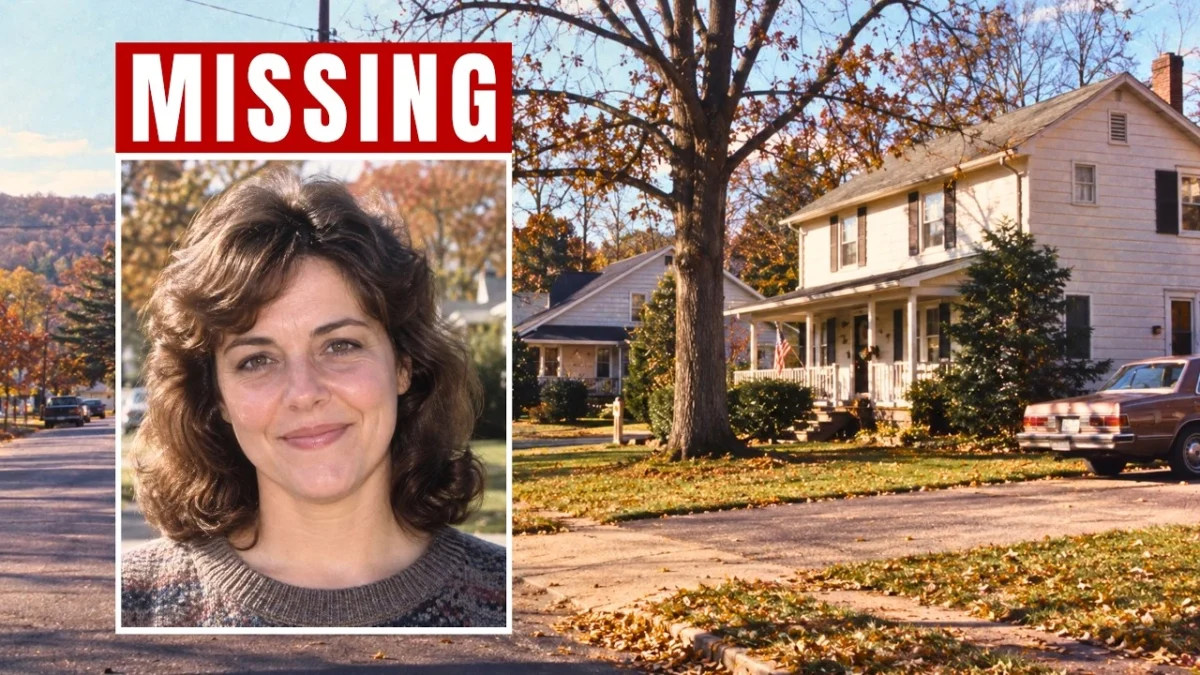
In the autumn of 1987, in a quiet community in Pennsylvania, a sheriff’s wife disappeared without a trace. And despite a massive search, investigators had no answers, and the mystery remained completely unsolved. More than 25 years later, a single phone call from a disconnected number changed everything.
What they found hidden in a distant town revealed a truth no one was prepared for. The town of Oak Haven was the kind of place where people rarely locked their doors. It was a small workingclass community surrounded by thick pine forests, winding rivers, and long stretches of two-lane highways.
Everybody knew everybody, and secrets were hard to keep. For Sheriff Grant Holloway, Oak Haven was a sanctuary. He was 42 years old, a man who had dedicated his entire adult life to law enforcement.
He knew the names of the local shop owners. He knew which teenagers were likely to cause trouble on a Friday night. And he knew how to talk people down when tempers flared.
His job usually involved mediating property disputes, tracking down stolen farm equipment, and dealing with the occasional rowdy patron at the local tavern. It was a peaceful life, and he loved it. But the real center of Grant’s world was his wife, Viven.
Vivien was 39, a woman with a warm smile and a tireless heart. She was a fixture in the community, spending her days volunteering at the local parish, delivering meals to the elderly and organizing charity drives. People naturally gravitated toward her.
She had a way of listening to people that made them feel completely understood. While Grant protected the town with a badge, Viven protected it with kindness. They had been married for 15 years, and while they had never been able to have children of their own, their house was always full of life, laughter, and warmth.
Grant felt entirely safe in his life, and he believed Vivien felt the same way. But in late October of 1987, something began to shift. It was subtle at first.
Grant noticed that Viven was becoming unusually quiet. She would stare out the kitchen window for long periods, lost in thought, her coffee going cold on the counter. When he asked her what was wrong, she would quickly force a smile and brush it off, blaming it on the changing seasons or fatigue from her volunteer work.
Grant didn’t want to push her. He loved her deeply and trusted her completely. He figured whatever was weighing on her mind, she would share it when she was ready.
One evening, about a week before she vanished, Grant came home early from his shift. As he walked down the hallway toward their bedroom, he saw Viven sitting on the edge of the bed. She was holding a small, square photograph in her hands.
She was starring at it with an expression of deep, profound sadness. The moment she heard his footsteps, she jumped, startled, and quickly shoved the photograph into the clear plastic sleeve of her leather wallet. Grant asked her who was in the picture.
Viven looked away, her voice trembling slightly, and told him it was just an old memory from her childhood that had made her feel nostalgic. Grant knew she was lying. He had been a police officer long enough to recognize the subtle signs of evasion.
But this was his wife, not a suspect. He chose not to press the issue. He respected her privacy, believing it was the right thing to do as a loving husband.
Looking back, he would spend the rest of his life wondering if that decision sealed her fate. November 12, 1987 started like any other Thursday. Grant kissed Vivien goodbye at the kitchen door, told her he loved her, and drove his cruiser to the sheriff’s station.
The day was busy. A dispute over a property line on the outskirts of the county kept him occupied for hours, followed by a minor traffic accident on the main highway.
By the time he finally wrapped up his paperwork, it was past 9:00 at night. The sky was pitch black and a bitter autumn chill had settled over the town. Grant drove home expecting to see the warm glow of the porch light waiting for him.
But as he pulled into his driveway, the house was completely dark. The porch light was off. The living room windows were black.
His heart skipped a beat. Viven always left a light on for him. always.
He stepped out of the cruiser and walked to the front door. It was unlocked. He pushed it open, calling her name.
Silence answered him. The house felt terribly cold, as if the heater had been turned off for hours. He walked into the kitchen and flipped on the overhead light.
The room was perfectly clean. There were no signs of a struggle, no broken glass, no overturned chairs, but resting perfectly in the center of the kitchen island was a piece of yellow legal paper. Grant walked over and picked it up.
His heart hammered against his ribs. The handwriting was Vivian’s, but the letters were slanted and rushed, lacking her usual careful loops. The note was incredibly short.
It simply read, “I need to fix something before it’s too late.”
Grant stood frozen in the kitchen, reading the single sentence over and over again. It made no sense. Fix what? Was she talking about their marriage? Was she talking about a mistake she had made at the parish? The wording felt frantic, almost desperate, completely unlike the calm and measured woman he had loved for 15 years.
A terrible knot of anxiety formed in his stomach. He picked up the wall phone and immediately dialed the number for Mara. Vivien’s older sister who lived in a neighboring town about 40 miles away.
Mara answered on the fourth ring, her voice groggy with sleep. Grant apologized for waking her, his voice tight with panic, and asked if Viven was there. Mara said she wasn’t.
Grant read the note to her over the phone. For a long moment, the line was completely silent. Then Mara let out a heavy, shaky breath.
She admitted that Viven had come to visit her earlier that week. Mara said Vivien had been packing around her living room looking terrified and exhausted. Viven had spent the entire afternoon talking about a child.
She wouldn’t give Mara a name and she wouldn’t explain where the child lived, but she kept saying that the child was in terrible danger and that someone needed to step in before something awful happened. Mara had assumed Viven was just getting overly emotionally involved in one of the troubled families. She sometimes helped through her charity work.
She had told Viven to leave it to the authorities. Grant hung up the phone, feeling the ground drop out from under him. Viven hadn’t mentioned anything about a child in danger to him.
If someone in the county was hurting a child, she would have brought it straight to him. He was the sheriff. It was his job to handle things like that.
Why would she hide it from him? Why would she leave a cryptic note and vanish into the cold night? Grant didn’t sleep. He spent the entire night driving the dark roads of Oak Haven, shining his cruiser’s spotlight into ditches, down side streets, and across empty parking lots.
By the time the sun came up, casting a pale gray light over the Pennsylvania woods, he officially opened a missing person’s case. It was the hardest thing he had ever done. He had to stand in front of his own deputies, the men he commanded, and tell them that his wife was gone.
His most trusted deputy, a veteran officer named Earl Maddox, stepped up immediately. Earl had been Grant’s right-hand man for years. He was a steady, reliable presence in the department.
Earl placed a heavy hand on Grant’s shoulder and promised him they would turn over every single rock in the county until Viven was sitting safely back in her kitchen. Earl organized search grids, dispatched patrol cars, and called in search dogs from the state police. The entire town mobilized.
Local farmers brought their trucks to help scour the back roads. Volunteers walked shouldertosh shoulder through the dense pine forests. Just before noon on Friday, the radio on Grant’s desk crackled to life.
A young deputy’s voice came through the static, sounding hesitant and shaken. He had found Viven’s car. It was parked on the shoulder of County Road 9, a desolate, unpaved stretch of dirt that bordered a vast tract of stay-at-oned logging timber.
It was miles away from their house in a direction Viven rarely traveled. Grant grabbed his keys and drove to the scene, his siren screaming, ignoring every speed limit sign in the county. When he arrived, the scene was chillingly quiet.
The blue Ford station wagon was parked at a slight angle, the driver’s side tires resting in the frozen mud. The driver’s side door was closed but unlocked. Grant approached the vehicle, his breath plumbing in the freezing air.
He looked through the window. The keys were still in the ignition. Her purse was sitting on the passenger side floorboard, but the detail that made Grant’s blood run completely cold was draped over the passenger seat.
It was Vivien’s heavy wool winter coat. The temperature outside was hovering just above freezing. The wind cutting through the trees was sharp and biting.
There was absolutely no logical reason for a woman to step out of her car in the middle of a deserted forest in November and leave her winter coat behind. It looked as if she had left the vehicle in a frantic hurry, or worse, that someone had pulled her from the driver’s seat before she had the chance to grab it. Grant opened the door and carefully picked up her purse.
He unzipped the main compartment. Her makeup, her reading glasses, her checkbook, everything was there. He pulled out her leather wallet and flipped it open.
Her cash was untouched. Her driver’s license was securely in its slot. But as his fingers brushed the clear plastic sleeve in the center of the wallet, his heart sank.
The sleeve was completely empty. The small square photograph he had seen her holding on the edge of their bed just days earlier was gone. Whoever had been in that picture, Viven had made sure to take it with her into the freezing woods.
Or someone else had taken it from her to ensure Grant never saw it. The weekend passed in a blur of agonizing searches. Helicopters swept over the tree line.
Dive teams checked the local creeks and quaries. Nothing was found. Not a footprint, not a piece of clothing, not a single clue indicating which direction she had walked.
It was as if the earth had simply opened up and swallowed her hole. Grant stopped eating. He barely slept.
He spent hours starring at the yellow legal paper on his kitchen island, trying to understand what she meant by needing to fix something. Then on Tuesday morning, 5 days after Viven vanished, a phone call came into the station that shattered the timeline of everything Grant thought he knew. The caller was a 19-year-old named Toby, who worked the night shift at a Sinclair gas station out on the main highway, a few miles from where the car was discovered.
Toby had seen Viven’s face on the missing person flyers plastered across town and realized he had interacted with her the night she disappeared. Grant drove to the gas station immediately, his heart pounding with desperate hope. Toby was nervous, wiping his grease stained hands on a rag as Grant approached.
He explained that Viven had pulled up to the pumps around 8:00 that Thursday night. She had come inside to pay with a $10 bill. Toby remembered her because she looked incredibly anxious.
She kept glancing over her shoulder, starring out the large glass windows toward the dark highway as if she was terrified someone was following her. But that wasn’t the detail that stopped Grant’s heart. Toby told the sheriff that Viven hadn’t been alone.
When she walked back out to her station wagon, Toby watched her open the passenger door. Sitting in the front seat was a young girl. Toby guessed she was around six or seven years old.
He remembered the child vividly because she was sitting completely rigid, clutching a bright cherry red backpack tightly to her chest. Viven had leaned into the car, spoken softly to the little girl, and then drove away, heading in the direction of County Road 9. Grant stood in the harsh fluorescent light of the gas station, completely paralyzed by the revelation.
Vivien didn’t have any nieces that age. None of their close friends had a daughter matching that description. Who was this child? Why was Vivien driving down a dark highway with a little girl who looked terrified? He rushed back to the sheriff’s station and locked himself in the basement archives.
The dusty room was filled with filing cabinets containing decades of local records, incident reports, and regional bulletins. If Vivien was trying to protect a child, there had to be a record of a child in danger somewhere. He spent hours pulling files, his eyes burning as he scanned every runaway report, every messy custody dispute, and every domestic disturbance call in a 50-mi radius.
Just after 3:00 in the morning, he found it. It was a Manila folder from a neighboring county roughly 30 m away. The file detailed a missing person report filed nearly two months earlier.
A frantic young mother had called the police claiming her young daughter had been taken in the middle of the night. The girl was 7 years old. But what made the hairs on the back of Grant’s neck stand up was the resolution of the file.
The case had been abruptly closed just 3 days after it was opened. The official investigator’s note claimed the child had simply been sent to live with outofstate relatives and that the mother had overreacted. The case was quietly buried and the child’s name was heavily redacted in the public release.
But Grant looked at the physical description of the girl listed on the original intake form. Sandy blonde hair, blue eyes, small for her age. It matched Toby’s description of the girl at the gas station perfectly.
Someone in the neighboring county had closed a missing child case under highly suspicious circumstances. And two months later, that same child was sitting in Viven’s car the night she disappeared. Grant didn’t wait for morning.
He drove straight to Mara’s house, pounding on her front door until she answered in her bathrobe. He pushed his way into her living room and demanded to know exactly what Viven had told her. He told Mara about the gas station.
He told her about the little girl with the red backpack. He begged her not to hold anything back because his wife’s life depended on it. Mara collapsed onto her sofa, burying her face in her hands.
She sobbed, her shoulders shaking violently. She admitted that she hadn’t told him the whole truth because Viven had made her swear on their mother’s grave to keep it a secret. Viven had told Mara that she was secretly helping a terribly frightened young woman.
The woman had come to Viven for help, claiming that her daughter was being abused by a very dangerous man. The woman had tried to go to the police, but she claimed the man had friends in law enforcement who were looking the other way and protecting him. Viven had promised the mother that she would help them both disappear.
She had promised to find them a safe place where this man could never reach them. Grant stood in the quiet living room, the horrifying reality crashing down on him. His wife hadn’t simply walked away from their marriage.
She hadn’t run out into the woods to end her life. She had driven into the darkness to rescue a child from a monster. And whoever she was trying to save that little girl from had likely realized what she was doing.
The empty car, the missing photograph, the abandoned winter coat. It wasn’t a disappearance, it was an interception. Grant realized with a sickening wave of dread that if Viven was trying to hide a child from someone with law enforcement connections, he couldn’t trust anyone in his own county.
The person who took his wife might have been listening to his police radio right now, tracking his every move. And as he stared at the closed case file in his hands, Grant knew he was no longer just looking for a missing woman. He was hunting a ghost.
And the closer he got, the more dangerous the truth was going to become. The sun was barely rising over the dark Pennsylvania pine trees. When Grant Holloway finally pulled his cruiser out of Mara’s driveway, the world outside his window was painted in cold gray shadows.
But inside his mind, a terrifying new reality was taking shape. For days, he had been operating under the agonizing assumption that his wife had suffered some kind of breakdown or that she had been the victim of a random tragic crime of opportunity on a dark road. But Mara’s confession changed everything.
Viven had not been taken randomly. She had intentionally stepped into the middle of a dangerous situation to protect a frightened mother and a little girl. And the man she was protecting them from was someone with ties to law enforcement.
As Grant drove back toward Oakhaven, the voice of the police dispatcher crackled over his dashboard radio, calling out routine traffic stops and morning shift changes. For the first time in his 20-year career, the sound made his stomach turn. He had always viewed his deputies as brothers.
They were men he trusted with his life. But now, as he listened to their voices on the radio, a heavy, suffocating blanket of paranoia settled over him. If the man hunting that little girl had friends in local law enforcement, Grant could no longer trust his own department.
He could not run this investigation openly. He could not put out an official bulletin for the little girl with the red backpack because doing so might alert the very people who had taken his wife. He was the sheriff of the county.
Yet he had never felt more completely alone. When he arrived back at his empty house, the silence was deafening. The yellow note still sat on the kitchen island.
I need to fix something before it’s too late. Grant walked into the small spare bedroom that Viven used as a home office for her charity work. The room still smelled faintly of her lavender perfume.
He sat down at her wooden desk and began tearing through her meticulously organized files. He opened her daily planners, her parish volunteer logs, and her charity donation receipts. He was looking for any mention of a young mother in trouble.
He spent 3 hours cross-referencing names, his eyes burning from exhaustion. Finally, toward the back of a spiral notebook dated late October, he found a name that stood out. It was written in thick red ink, circled twice, Lydia Crane.
Beside the name, Viven had written a single word, terrified. Grant quietly accessed the county’s public records from his home phone, calling in a favor from a clerk at the tax office under the guise of a routine background check. He learned that Lydia Crane was 24 years old, and worked as a nursing assistant at the Oak Creek Care Center, a small elderly care facility on the edge of town, where Viven frequently volunteered to deliver meals.
Grant changed out of his sheriff’s uniform and put on a plain jacket and jeans. He drove his personal truck to the nursing home, parked in the back lot, and walked inside. The building smelled of strong bleach and overcooked oatmeal.
He found the facility administrator, a stern-looking woman named Mrs. Gable, organizing charts at the front desk. Grant showed his badge quietly, asking to speak about one of her employees off the record. Mrs. Gable sighed heavily and led him into a cramped back office.
When Grant asked about Lydia Crane, the administrator shook her head in frustration. She explained that Lydia had been a reliable, quiet worker, but she had become increasingly erratic in the weeks leading up to November. She was constantly looking out the windows, jumping at loud noises, and refusing to walk to her car alone after dark.
Then, exactly 3 days before Vivian’s abandoned car was found on County Road 9, Lydia had simply stopped coming to work. She never called to resign. She never picked up her final paycheck.
She simply vanished. Grant’s heart pounded against his ribs. He asked Mrs. Gable if anyone had filed a missing person’s report for Lydia.
The administrator looked surprised. She said no. She assumed Lydia had just packed up and moved away as she didn’t have any close family in the area.
Grant left the nursing home feeling a cold sweat forming on the back of his neck. A young woman in his jurisdiction had disappeared 3 days before his wife and absolutely no one was looking for her. Lydia was the perfect prey.
She was isolated, frightened, and invisible to the system, but Viven had seen her. Viven had tried to help her. The investigation was quickly becoming a ghost hunt.
The official search for Viven was scaling down as weeks turned into an agonizing month. The state police dive teams had packed up their gear. The volunteer searchers had gone back to their normal lives.
The official consensus within the department was that Viven had wandered into the deep woods and succumbed to the freezing temperatures and that her body would simply be found when the snow melted in the spring. Grant allowed his deputies to believe that he had accepted this tragic theory. But in secret, he was working every waking hour to track the phantom trail of Lydia Crane.
Just as his secret investigation seemed to hit a dead end, a sudden phone call broke the silence. It came from a man named Arthur Vance, a former county deputy who had retired a few years earlier and moved to a cabin near the state line. Arthur still listened to his police scanner out of habit, and he had been following the rumors about Viven’s disappearance.
He called Grant directly on his home phone late one evening, his voice low and hesitant. Arthur claimed he had a piece of information that had been bothering him for weeks. The morning after Vivian’s car was found, Arthur had been drinking coffee at a diner across the street from the regional Greyhound bus station nearly 50 miles west of Oak Haven.
He swore to Grant that he had seen a woman matching Viven’s exact description walking quickly into the station. He hadn’t called it in at the time because the news of the abandoned car hadn’t fully broken yet, and he figured it was just a coincidence. Grant didn’t wait for morning.
He drove through the night, his headlights cutting through the freezing rain until he reached the regional bus station. It was a run-down brick building surrounded by flickering neon signs and the heavy smell of diesel fuel. He walked inside and found the overnight ticket clerk, an older man with thick glasses reading a paperback novel behind thick security glass.
Grant flashed his badge and pulled a photograph of Viven from his coat pocket. He asked the clerk to look through the old ticket manifests from the morning of November 13th. The clerk grumbled but complied, pulling out a dusty cardboard box of carbon copy receipts.
After 20 minutes of searching, he found a cash purchase for a one-way ticket to Ohio bought around the time Arthur had seen the woman. But when Grant looked at the signature on the receipt, his stomach dropped. It was Viven’s name.
The ticket had been purchased under the name Lydia Crane. Grant pressed his hands against the glass, his voice trembling as he asked the clerk if he remembered the woman. The clerk squinted at the receipt and nodded slowly.
He remembered her because she looked terrified and she had a little girl with her, a little girl holding a red backpack. The clerk said the woman had paid in crumpled bills, grabbed the tickets, and hurried toward the boarding platforms. But then the clerk added a detail that made the blood freeze in Grant’s veins.
He said that about 2 hours after the woman and the child had boarded the bus to Ohio, a man had come into the station looking for them. The man was angry, demanding to know if a woman with a child had bought a ticket. The clerk had refused to tell him, citing company policy.
The angry man had stormed out and peeled out of the parking lot. Grant asked the clerk if he remembered anything about the man or his vehicle. The clerk nodded.
He said the man was driving a dark green utility van and printed on the side of the van in faded white lettering was the logo for the county maintenance department. The exact same department that serviced the Oak Creek Care Center where Lydia worked. The man hunting them wasn’t a stranger.
He was someone who worked inside the county system, someone who had access to county vehicles, county schedules, and likely county police records. And if this man had tracked Lydia to the bus station, it meant Viven had likely acted as a decoy. Viven had left her car on the dirt road, leaving her winter coat behind to draw attention away from the bus station.
She had sacrificed her own safety and perhaps her own life to give Lydia and the child a head start. Grant drove back to Oak Haven in a state of quiet devastation. His wife was a hero, but her heroism had pulled her into a darkness he couldn’t even begin to measure.
By late December, a heavy winter storm had buried the town in 3 ft of snow. The official case file on Vivian Holloway was moved to a filing cabinet in the basement of the station, labeled as inactive, pending new evidence. Grant was sitting at his desk late one Thursday night, starring blankly at the snow falling outside his window when Deputy Earl Maddox walked into his office.
Earl was carrying a small cardboard box. Earl set the box quietly on Grant’s desk, his expression deeply sympathetic. He explained that the state crime lab had finally released the contents of Viven’s purse, which had been taken into evidence the night her car was found.
The lab had processed everything for fingerprints and found nothing useful, so they were returning her personal belongings to the family. Earl patted Grant on the shoulder, told him to go home and get some sleep, and quietly shut the door behind him. Grant sat alone in the dim office, starring at the box.
He didn’t want to open it. He didn’t want to smell her perfume or see her handwriting, but he forced himself to reach out and lift the cardboard flaps. Inside, sitting in a clear plastic evidence bag, was her leather wallet.
Grant picked up the wallet. His hands were shaking as he unsnapped the clasp. He opened it, expecting to see the empty plastic sleeve in the center, just as he had found it in the freezing car on County Road 9.
But the sleeve was not empty. Tucked neatly inside the plastic was a small square photograph. Grant’s breath caught in his throat.
He carefully pulled the picture out and laid it flat on his desk under the harsh glow of his desk lamp. It was the photograph he had seen her holding on the edge of their bed. The photograph that had been missing from the crime scene.
Someone had put it back. He stared at the image, his heart hammering in his chest. The picture showed Vivien standing in a grassy field on a bright, sunny afternoon.
Next to her stood a young woman with nervous, tired eyes. Grant recognized her immediately from the employee file at the nursing home. It was Lydia Crane.
Standing in front of Lydia, holding tightly to her hand, was a little girl with sandy blonde hair wearing a bright red backpack. It was undeniable visual proof that the three of them were connected. Grant flipped the photograph over.
Stamped on the back in faded black ink was a date. October 28, 1987. That was exactly two weeks before Viven vanished.
2 weeks before the frantic note, the abandoned car and the frantic escape to the bus station. They had been planning this for weeks. But the terrifying reality of the photograph wasn’t just what it showed.
It was the fact that it was sitting on his desk. Grant had personally searched Viven’s wallet on the night she disappeared. He knew the photograph was gone, but now, 6 weeks later, it had miraculously reappeared inside an evidence bag that was supposed to be sealed by the state lab.
There was only one logical explanation. Whoever had taken the photograph out of Vivian’s wallet that night had kept it, and that person had access to the local evidence locker before the box was shipped to the state lab. The person who intercepted his wife wasn’t just someone with county connections.
It was someone with a badge working inside his own building, walking the same halls he walked every single day. Grant felt a sickening wave of betrayal wash over him. He carefully slipped the photograph into his own pocket, trusting no one.
He realized that the little girl in the picture was the key to everything. He had to figure out exactly who she was. if he could identify the child, he could identify the man who was hunting her.
The next morning, Grant drove to the county courthouse in a neighboring district, far away from the prying eyes of his own deputies. He spent hours in the basement records room, pulling every family court file, custody dispute, and child welfare report filed in the region over the past year. He was looking for any legal connection between Lydia Crane and a child matching the girl in the photograph.
By midafternoon, his fingers were black with ink from the old carbon files, and his eyes achd from reading dense legal jargon. He finally pulled a thin, unmarked folder from the back of a cabinet. The file detailed a temporary guardianship arrangement initiated by a local family court judge earlier that summer.
The guardian listed in the document was Lydia Crane. But as Grant read the details of the arrangement, the puzzle pieces violently shifted into a terrifying new picture. Lydia was not the child’s mother.
She wasn’t even a blood relative. Lydia had simply been granted temporary emergency custody by the state after the child was removed from a highly volatile home environment. Grant traced his finger down the faded yellow paper to the section listing the child’s true identity.
Her name was not Crane. Her legal name was Megan Hail. He flipped the page, desperately searching for the names of the biological parents.
The father’s name was completely redacted, covered in thick black marker by the court clerk, citing an ongoing domestic threat assessment. But the biological mother’s name was clearly printed on the intake form. Her name was Tessa Hail.
Grant recognized the name immediately. A cold chill ran down his spine, freezing him to the spot. He remembered seeing the name Tessa Hail in the police archives just a few weeks earlier.
Tessa Hail was the frantic young mother from the neighboring county who had filed a missing child report claiming her daughter had been taken in the middle of the night. the same missing child case that had been highly suspiciously closed by local investigators just 3 days later. Grant sat in the dusty courthouse basement, starring at the name on the paper as the horrifying scope of the tragedy finally became clear.
Viven had not been the first woman to disappear. Tessa Hail had been desperately trying to get her daughter back from a dangerous man who manipulated the legal system to take her away. When Tessa realized the police wouldn’t help her, she had gone to Viven for help.
Viven had arranged for Lydia to act as a temporary guardian to keep the child safe and hidden. But the plan had been discovered. Grant realized that Tessah Hail hadn’t simply given up and moved away after her daughter’s case was closed.
Tessa Hail had vanished silently and completely just a few weeks before Viven did. And Lydia Crane had vanished just 3 days before Vivian’s car was found. It wasn’t a single missing person case.
It was a systematic, calculated elimination of every single woman who tried to protect little Megan Hail. And the man responsible was sitting somewhere in the shadows of the county system, watching Grant’s every move, fully aware that the sheriff was now investigating a string of ghosts. And Grant knew with terrifying certainty that if he didn’t find out who redacted the father’s name from the court file, he would be the next person to disappear in the dark.
The winter of 1987 faded into a bitter, muddy spring, and the investigation into Vivian Holloway’s disappearance slowly ground to a halt. Grant tried desperately to keep the case alive. He pushed his deputies to follow every minor lead.
He coordinated with state investigators and he spent every weekend driving across county lines looking for any trace of Lydia Crane, Tessa Hail, or the little girl with the red backpack. But every path he took led to a solid brick wall. The county court judge who had overseen Megan Hail’s temporary guardianship suddenly retired and moved to Florida, refusing to return Grant’s calls.
The nursing home where Lydia had worked threw away her employment records, citing a standard clerical purge. It was as if an invisible hand was moving quietly just ahead of him, sweeping away the footprints before he could even see them. The hardest part for Grant was the profound, suffocating isolation.
He was the sheriff, the man elected to protect the town. Yet, he found himself entirely powerless. He could not openly investigate the county maintenance department without proof.
And he knew that if he started asking the wrong questions, whoever had intercepted Viven would know he was getting close. He spent his days sitting in his office, looking at the men in uniform around him, wondering which one of them had taken the photograph out of his wife’s wallet. He wondered which one of them had tipped off the man in the green van.
The paranoia slowly ate away at him. He stopped sleeping. He stopped trusting his friends.
He stopped being the man Viven had loved. In the summer of 1995, after eight agonizing years of dead ends, Grant finally took off his badge. He packed his belongings into a cardboard box, handed his keys to the county commissioner, and walked out of the sheriff’s station for the last time.
He simply could not wear the uniform anymore. not when he knew the system it represented had likely swallowed his wife whole. The years began to slip away, turning into decades.
The town of Oakhaven changed. New neighborhoods were built over the old logging roads. The diner where the former deputy had seen the woman with the bus ticket was torn down and replaced by a chain pharmacy.
But Grant’s house never changed. It remained exactly as it had been on the night Viven vanished. Her winter coat still hung in the front closet.
Her gardening tools remained neatly stacked in the garage. Her favorite coffee mug sat on the top shelf of the kitchen cabinet. Grant lived out his retirement in absolute quiet, a gray-haired ghost haunting his own life.
He spent his evening sitting in his armchair, starring at the faded photograph of Viven, Lydia, and the little girl, wondering if his wife had suffered or if she had somehow managed to get away. 25 years passed. It was now November of 2012.
Grant was 67 years old, his body aching with arthritis, his heart heavy with a quarter century of unresolved grief. The 25th anniversary of Viven’s disappearance had come and gone a week earlier with little fanfare. A local newspaper ran a small retrospective article on the back page, calling it the town’s oldest unsolved mystery.
Grant had read the article, folded the newspaper, and thrown it in the trash. He had accepted that he would die without ever knowing the truth. Then on a Tuesday evening, a heavy rainstorm rolled into the valley, battering the roof of the old house.
Grant was sitting in the living room, listening to the wind rattled the window panes when the telephone rang. It was the heavy cream colored landline mounted on the kitchen wall. Grant rarely received calls anymore, save for the occasional telemarketer.
He pushed himself out of his chair, his knees popping, and walked into the kitchen. He picked up the receiver and brought it to his ear.
“Hello,” he said, his voice raspy from disuse.
There was silence on the other end, save for the faint sound of static and what sounded like distant highway traffic. Grant was about to hang up when a woman’s voice finally spoke. Her tone was steady, but he could hear a distinct tremor of deep emotion beneath the surface.
“Grant,” the woman said softly.
“I know what you did for me, but you need to stop looking.”
Grant froze, his grip tightening on the plastic receiver. The voice did not belong to Viven. It sounded younger, perhaps in her early 30s, but the words completely paralyzed him.
“Who is this?” Grant demanded, his heart suddenly pounding in his chest.
How did you get this number? The woman on the other end took a shaky breath. It doesn’t matter who I am, Gray. You just need to let it go for your own safety.
Grant felt the blood drain from his face. Gray. It was a private nickname Vivien had used for him when they were alone, teasing him about the premature gray hairs at his temples when he was in his 30s.
No one else in the world knew that name. Absolutely no one. He looked down at the caller ID display screen sitting on the kitchen counter.
The green digital numbers glowing in the dark made his stomach drop into a bottomless pit. The call was coming from Viven’s old personal phone number. The separate line she had kept for her charity work, which Grant had personally canled in 1988, 24 years ago.
Where did you hear that name? Grant’s voice cracked, tears suddenly springing to his eyes. Where is she? Is Viven alive? Talk to me. I’m sorry, the woman whispered, her voice thick with tears.
I can’t tell you that, but I can give you something she left behind. Before Grant could ask another question, the woman quickly rattled off an address in a small town just across the Ohio state border, followed by a four-digit unit number. Then the line clicked and the phone went dead.
Grant stood in the kitchen, the dial tone buzzing loudly against his ear. His hands were shaking so violently he could barely place the receiver back on the hook. He didn’t stop to pack a bag.
He didn’t even put on a heavy winter coat. He grabbed his truck keys, a flashlight, and his old rusted service revolver from the top shelf of his closet. He had not fired the weapon in nearly 20 years, but he was not going to step back into the dark without it.
He drove through the punishing rainstorm for 3 hours, crossing the state line into Ohio. His mind was racing, trying to process the impossibility of the call. How could a disconnected number ring his phone 25 years later? Who was the woman on the other end? And why did she believe he was still actively searching? Just after midnight, he pulled into the address the woman had given him.
It was a sprawling, brightly lit self-s storage facility on the edge of an industrial park, surrounded by chainlink fencing and security cameras. The front gate was surprisingly open. Grant drove his truck down the narrow rows of orange metal doors until he found the unit number the woman had specified.
He stepped out into the freezing rain. The unit was secured with a heavy steel pad lock. Grant shown his flashlight on the dial, realizing it was a four-letter combination lock.
He stood there in the downpour, his mind scrambling for the answer. Then he remembered the nickname. He reached out with trembling fingers and spun the metal dials to spell out G R A Y.
The lock clicked open instantly. Grant pulled the heavy padlock free and grabbed the metal handle of the rolling door. With a loud echoing screech, he pushed the door upward.
The unit was small, only 10 by 10 ft, and it smelled of dry dust and old cardboard. The concrete floor was completely empty except for a single clear plastic bin sitting perfectly in the center of the room. He walked slowly into the unit, the rain echoing loudly on the tin roof above him.
He knelt down beside the bin and unlatched the lid. Inside, resting on top of a stack of faded utility bills and bank statements, was a piece of white construction paper. Grant picked it up.
It was a child’s drawing colored with thick wax crayons. It depicted a simple brown house, a woman with dark hair, and a little girl holding a bright cherry red backpack. Grant flipped the drawing over.
Written on the back in uneven childlike letters were the words, “She said, “We could be safe here.”
His breath caught in his throat. He set the drawing aside and looked deeper into the bin. Beneath it sat a heavy brass key with no identifying markings and a small sealed envelope.
The paper was yellowed and brittle with age. Grant picked up the envelope and held his flashlight close. The name Grant was written across the front.
The handwriting was unmistakable. It was Vivien’s careful looping script. He tore the envelope open with shaking hands and pulled out a single sheet of notebook paper.
The date at the top was November 10, 1987, 2 days before she disappeared. Grant read the letter, his eyes blurring with tears as the words brought his wife’s voice back to him after a quarter of a century of silence. The letter did not ask for forgiveness.
It was an explanation. Viven wrote that she had uncovered something deeply evil hiding inside the county court system. She explained that she had promised to help a desperate mother and a terrified child escape a monster who was using his connections to ensure they could never leave.
But she wrote that the monster had discovered her plan. He had been watching her house. He had been following her car.
The final paragraph shattered Grant completely.
Viven wrote, “Grant must never know what I did.
If he knows, he will try to fight them. He will try to arrest them. And because he wears that badge, they will kill him, too.
I have to make it look like I walked away. I have to leave him behind to keep him alive.
It breaks my heart to leave him in the dark, but it is the only way he survives this.”
Grant collapsed backward, sitting heavily on the cold concrete floor of the storage unit. The flashlight rolled away, casting long shadows against the corrugated metal walls. He wept.
He wept for the 25 years he had spent believing she might have been unhappy. He wept for the agonizing loneliness he had endured, entirely unaware that her disappearance had been an act of profound self-sacrificing love. She hadn’t been running away from their life together.
She had been protecting it. But as the tears finally subsided, a cold, hard anger began to take root in his chest. Viven had sacrificed everything to protect him from a monster.
But Grant was no longer the active sheriff. He no longer wore the badge. He had nothing left to lose.
He picked up the letter, the drawing, and the brass key and placed them in his jacket pocket. He was going to find out exactly who forced his wife to erase her own existence.
The next morning, Grant drove back to Pennsylvania, but he didn’t go home. He drove straight to a specialized assisted living facility on the wealthy side of the county. He walked past the front desk, flashing his old retired sheriff’s credentials and marched down the hallway to room 204.
He pushed the door open without knocking. Sitting in a reclining chair by the window, breathing through a clear plastic oxygen tube, was Earl Maddox. His former most trusted deputy was now 70 years old, frail and pale, his uniform replaced by a faded flannel robe.
Earl looked up, his eyes widening in shock as Grant walked into the room and locked the door behind him. Grant didn’t yell. He didn’t threaten.
He simply pulled the photograph of Viven, Lydia, and Megan from his pocket and held it up in front of Earl’s face. Then he pulled out Viven’s letter and dropped it into Earl’s lap.
“I know what happened, Earl,” Grant said, his voice dangerously calm.
“I know she was protecting a child.
I know someone on the inside was hunting them, and I know you knew about it.”
Earl’s hands began to shake. He looked down at the letter, his eyes filling with tears of profound shame. For a long time, the only sound in the room was the rhythmic hiss of the oxygen machine.
Finally, Earl closed his eyes and let out a long, broken sigh.
“I didn’t want her to get hurt, Grant,” Earl whispered, his voice rattling in his chest.
“I swear to God, I didn’t want anyone to get hurt.”
Earl confessed everything. He told Grant that two days before Vivien disappeared, he had been driving his patrol route and saw Viven’s car parked in the empty lot behind the First Baptist Church, he had pulled in to check on her and found her standing nervously with Lydia Crane. Earl said Vivien had practically begged him to keep the meeting a secret.
She told him Lydia was terrified of her husband, a man who was violently controlling and threatening to hurt the child she was protecting. Grant stepped closer, his jaw tight. Who was the husband, Earl? Give me a name.
Earl looked up, his eyes filled with a terror that had clearly haunted him for 25 years. It was Ray Crane, the head of the county maintenance department. The name hit Grant like a physical blow.
Ray Crane. He knew the man. Ry was the friendly, boisterous contractor who fixed the plumbing at the station, repaired the heating vents in the interrogation rooms, and drank coffee with the deputies in the breakroom.
Ray Crane had master keys to every single county building, including the sheriff’s station. He was friends with the local judges. He hunted with the state police on the weekends.
Ray Crane was the man in the green van at the bus station.
Rey had access to everything,” Earl continued, his voice trembling.
He could read our dispatch logs. He could listen to our radios. When the little girl went missing, the local police brought Ry in for questioning because they knew he had a violent temper.
But the investigator wrote him off as cooperative. They never even did a formal interview because they all knew him. They let a monster walk out the front door because he was one of the boys.
Grant felt sick to his stomach.
“And you knew this.
You knew Ry was dangerous and you let my wife take him on alone.”
“I tried to document it,” Earl cried out, tears spilling down his wrinkled cheeks.
“After I saw them at the church, I came back to the station and wrote an official incident report.
I detailed everything Viven told me. I wrote down that she feared Rey was going to violently take the child back. I signed it, Grant.
But when Viven went missing and I realized Rey was likely behind it, I got scared. If I went after Rey, he would have exposed the entire department. He had dirt on half the judges in the county.
It would have destroyed everything you built. So, I buried the report. Grant stared at the man he had once considered a brother.
He realized that the corruption hadn’t been a massive organized conspiracy. It had been something much worse. It had been a series of small, cowardly choices made by men who were too afraid to do the right thing.
“Where is the report now?” Grant asked, his voice dead and empty.
Earl swallowed hard.
“I gave it to Beatatrice, the old records clerk.
I told her to hide it in the archive so it wouldn’t be destroyed, but so no one would ever find it.”
I thought I thought maybe one day someone braver than me would dig it up. Grant left the nursing home without saying another word. He drove across town to a small, modest house surrounded by overgrown rose bushes.
He knocked on the door until an elderly woman with thick silver hair answered. It was Beatatrice, the retired records clerk. When she saw Grant standing on her porch, she didn’t look surprised.
She looked intensely relieved. Without a word, she led him into her dusty attic. She pulled a taped cardboard box out from under a heavy quilt and handed it to him.
She told him she had taken the box home when she retired, terrified that Ray Crane might eventually burn the archives to cover his tracks permanently. Grant carried the box back to his truck, sitting in the driver’s seat as the rain continued to fall. He opened the cardboard flaps and dug through the old yellowed files until he found a handwritten incident report dated November 11, 1987.
It was signed by Deputy Earl Maddox. It explicitly detailed Viven’s fears about Ray Crane and her belief that he was hunting Megan Hail. It was the smoking gun that could have blown the case wide open 25 years ago.
Instead, it had been buried in an attic. Grant sat in the quiet cab of his truck, surrounded by the physical proof of the betrayal that had ruined his life. But as he looked at the handwritten report, he realized there was still one massive piece of the puzzle missing.
Why was Ray Crane so desperate to get Megan Hail back? The child wasn’t his. The court documents had listed the mother as Tessa Hail. Grant pulled the old photograph out of his pocket once more.
He put on his reading glasses and held the picture up to the dome light of the truck, studying the image of Viven, Lydia, and the little girl. He looked past their faces, studying the background of the grassy field. He noticed something he had missed decades earlier.
In the upper right corner, slightly out of focus, was a brick building with a small metal sign mounted near the door. He squinted, trying to read the blurry letters.
It read, “Franklin County Child and Family Services.”
This photograph hadn’t been taken at a church picnic. It had been taken during a supervised custody meeting at a government facility. And as Grant looked closer at the little girl, Megan, he realized she wasn’t looking at the camera.
Her eyes were darting sideways, looking terrified at a dark shadow stretching across the grass just outside the frame. The shadow of a tall, broad shouldered man. Grant realized that Tessahale was the only person left alive who could explain why Ray Crane was hunting them.
Grant used his smartphone, navigating modern public records databases he had learned to use in retirement. He searched for variations of Tessa Hail’s name, cross-referencing her age and the neighboring county where she had originally filed the missing child report. After 3 hours of searching, he found a property deed registered under a woman named Tessa Vance, living in a rural farming community 200 m away.
The age was an exact match. The sun was setting by the time Grant pulled his truck onto the long gravel driveway of a small farmhouse in the middle of nowhere. The property was surrounded by tall cornstalks, completely isolated from the outside world.
He stepped out of his truck, the cold wind whipping at his coat, and walked up to the wooden front porch. He knocked heavily on the door. He waited.
A minute later, the door slowly opened, held securely by a thick brass chain. An older woman with deep lines of stress etched into her face looked out through the narrow gap. Her eyes were tired and weary.
Grant held up his hands to show he wasn’t armed.
“Tessa?” Grant asked softly.
“My name is Grant Holloway.
My wife was Vivien.”
The woman’s eyes widened in absolute shock. She stared at him for a long, agonizing moment. Then, with a trembling hand, she unhooked the brass chain and opened the door.
She didn’t look relieved to see him. She looked completely terrified.
“You shouldn’t be here,” Tessa whispered, her voice cracking with fear.
“If he knows you found me, he’ll kill us both.
You have no idea what you’ve just done.”
Tessa Vance led Grant into a small, dimly lit kitchen at the back of the farmhouse. The air inside smelled of dried herbs and old wood. She moved with a nervous, rigid energy, constantly glancing out the kitchen window toward the dark, empty cornfields, as if expecting headlights to appear at any moment.
She poured two cups of black tea with shaking hands and sat across from him at a small wooden table. Grant placed the old photograph of Viven, Lydia, and the little girl on the table between them. Tessa stared at the picture and a quiet broken sob escaped her lips.
She reached out and traced the image of the little girl with a trembling finger. She told Grant that the little girl was her daughter, Megan, and she confirmed the horrifying truth that Grant had only begun to piece together. Ray Crane, the county maintenance contractor, had been a monster in plain clothes.
He was a man who used charm and a wide smile to win over the town while ruling his home with terrifying control. When Tessa had finally gathered the courage to pack her bags and leave him, Rey had used his deep connections within the county system to destroy her. Tessa explained that Rey was close friends with several influential deputies and a family court judge.
When Tessa tried to file reports of abuse, the deputies had conveniently lost the paperwork or laughed it off as a simple domestic misunderstanding. When Ry filed for emergency custody, claiming Tessa was unfit and unstable, the judge had granted it immediately without a proper hearing. Tessa had been completely trapped, watching the local justice system hand over to a dangerous man.
Desperate and terrified, Tessa had gone to the local parish to pray, and that was where she met Viven. Tessa told Grant that Vivien was the only person in the entire county who had looked her in the eye and actually believed her. Viven hadn’t offered hollow sympathy.
She had offered a plan. Viven knew she couldn’t fight Rey openly in a corrupt court. So, she decided to circumvent the system entirely.
Vivien arranged for Lydia Crane, Ray’s own terrified sister-in-law, to act as a temporary emergency guardian, creating a legal loophole that got Megan out of Rey’s immediate house while they planned a permanent escape. But the plan had fallen apart. Tessa wiped the tears from her cheeks and revealed the missing piece of the puzzle that had haunted Grant for 25 years.
Viven had orchestrated a final escape plan. Tessa was supposed to meet Lydia and Megan at the regional bus station on the night of November 12th. Viven had purchased the tickets in advance.
They were going to board a bus to Ohio and disappear forever, but Tessa never made it to the station. Tessa’s voice dropped to a terrified whisper as she explained what happened that night. Just an hour before she was supposed to leave for the bus station, a dark Green County maintenance van had pulled up to the end of her street.
It just sat there idling in the dark, its headlights turned off. Tessa knew it was Rey. She knew he had discovered the plan, likely through his friends at the sheriff’s station who were monitoring Viven’s movements.
Tessa had sat on her bedroom floor in the dark, paralyzed by fear, watching the clock tick past the departure time. She believed that if she walked out the front door, Rey would kill her and then he would go straight to the bus station and take Megan. By staying in the house, Tessa believed she was sacrificing herself so that Lydia and Megan could get away.
Grant sat in stunned silence. Tessa had never shown up at the bus station, but the ticket clerk had confirmed that a woman and a child had boarded the bus that night. If Tessa wasn’t there, and Lydia was the one who bought the ticket, who was the woman? Tessa stood up, walked over to a heavy wooden cabinet in the corner of the kitchen, and pulled out a small locked metal cash box.
She used a tiny key on her keyring to open it. Pulling out a single yellowed envelope. She handed it to Grant.
She told him that exactly one year after the disappearance, this envelope had arrived in her mailbox. There was no return address, just a postmark from a small town in northern Michigan. Grant opened the envelope.
Inside was a photocopied sheet of paper. It was an elementary school enrollment record dated September of 1988. Grant scanned the document.
The child registered on the form was a second grader named Sarah Vance. The age matched Megan perfectly, but as Grant’s eyes moved down the page, his heart stopped. The legal guardian listed on the school record was not Lydia Crane.
Lydia’s name was nowhere on the document. The guardian was listed under a different name, but the handwriting filling out the form was unmistakably familiar. The careful looping letters belonged to Viven.
And at the very bottom of the page, written in thick black ink under the emergency contact section was a handwritten note. Do not contact the father under any circumstances. Grant stared at his wife’s handwriting, the reality of her sacrifice washing over him in a massive, crushing wave.
Viven hadn’t just acted as a decoy that night. When Tessa failed to show up at the bus station, Vivien must have realized that Lydia was too terrified to take the child across state lines alone. Lydia had likely panicked and fled, leaving Megan entirely alone.
So, Viven had made a split-second lifealtering decision. She had abandoned her car on the dirt road, leaving her coat behind to stage a chaotic crime scene, drawing all of Ray’s attention and the county’s police resources into the dark woods. Then she had taken the little girl, boarded the bus herself, and vanished.
Viven hadn’t just saved the child, she had raised her. Grant left Tessa’s farmhouse in a state of quiet shock. The rain had finally stopped, leaving the rural road slick and covered in a low, clinging fog.
He sat in his truck, starring at the school record from Michigan. The town listed on the document was called Crest View, a small, quiet suburb nearly 6 hours north of where he was currently parked. But Grant didn’t need to wonder if the address was still valid.
He suddenly understood everything. The woman who had rented the storage unit in Ohio. The woman who had called his house from a disconnected phone number knowing his private nickname.
The woman who had left him the child’s drawing of the red backpack. It wasn’t a stranger. It was the little girl his wife had traded her life to save.
Grant started the engine and turned the truck north. He drove through the night, crossing the state line as the sun began to rise over the cold, gray waters of the Great Lakes. The miles blurred together as a storm of emotions raged inside him.
He felt a profound, overwhelming pride for the incredible bravery of the woman he loved, but it was heavily mixed with a deep, agonizing sorrow for the 25 years of marriage they had lost. He had spent half his life walking the floors of an empty house, starring at a cryptic note, believing he had failed as a husband. All while his wife was living under a false name, carrying a burden she believed he couldn’t share without getting himself killed.
Just after 10:00 in the morning, Grant pulled off the highway and navigated the quiet treeline streets of Crestview, Michigan. It was a picturesque, ordinary town, the kind of place where people walked their dogs in the morning and left their bicycles on the front lawn. He followed the directions he had pulled from public records using the false name from the storage unit rental agreement.
He pulled up to a neat two-story house with white siding and a small fenced in backyard. There was a minivan parked in the driveway and a plastic children’s slide sitting in the grass. Grant turned off the truck.
His hands were shaking so badly he could barely pull the keys from the ignition. He stepped out onto the sidewalk, the cold morning air biting at his face. He walked up the concrete path to the front door and pressed the doorbell.
He waited. He heard the faint sound of footsteps approaching from inside. The deadbolt clicked and the door slowly opened.
Standing in the doorway was a woman in her early 30s. She had sandy blonde hair, tired but kind blue eyes, and she was holding a heavy ceramic coffee mug. She looked at Grant and the mug slipped from her fingers, shattering into pieces on the hardwood floor.
Grant looked into her eyes, immediately recognizing the terrified little girl from the photograph he had carried in his pocket for months. It was Megan. Tears instantly flooded Megan’s eyes.
She covered her mouth with both hands, a stifled sob escaping her throat. She stepped back, allowing Grant to enter the house before quickly closing and locking the door behind him. She led him into a warm, comfortable living room, completely ignoring the broken ceramic on the floor.
She collapsed onto the sofa, weeping quietly as Grant stood awkwardly in the center of the room. I told you to stop looking, Megan whispered, her voice cracking with a mixture of fear and profound relief. I told you it wasn’t safe for you to find us.
Grant took off his hat, his own tears finally spilling over. I had to find you, he said softly. I had to know what happened to my wife.
I had to know why she left me. Megan looked up at him, her eyes completely shattered. She never wanted to leave you, Grant.
She loved you more than anything in the world. She talked about you every single day for 25 years. Grant felt his knees go weak.
He slowly lowered himself into an armchair across from her. He looked at Megan, his heart pounding a frantic rhythm against his ribs.
“Is she here?” he asked, his voice barely a breath.
“Megan, is Vivien still alive?” Megan took a deep shuddering breath and nodded.
“Yes, she’s alive.
The words hit Grant like a physical force. He buried his face in his hands and wept. The agonizing, suffocating weight of not knowing, the terrible visions of her freezing in the woods, the guilt of believing he hadn’t protected her.
It all shattered into a million pieces. His wife was alive. She was breathing.
She was somewhere in this world. When Grant finally looked up, he wiped his face with the back of his sleeve. He looked at Megan, his eyes filled with a desperate need for understanding.
“Why didn’t she ever come back?” he asked, his voice trembling.
“Why didn’t she ever call me? I could have protected you both.
I was the sheriff.
I could have arrested Ray Crane.”
Megan shook her head sadly. She explained the terrible reality that Vivien had carried alone for decades. Viven had known that Grant was an honest, honorable man, but she also knew that the sheriff’s department was compromised from the inside out.
Ray Crane hadn’t just been a contractor. He was deeply embedded in a network of corrupt officials. Megan confirmed what Earl Maddox had confessed.
Rey had deputies quietly scrubbing the investigation files. He had clerks altering public records. He had a judge in his pocket.
Megan explained that if Viven had ever reached out to Grant, Ray’s friends inside the department would have known instantly. They would have tapped Grant’s phones, followed his cruiser, and monitored his mail. Vivien believed with absolute certainty that if Grant knew where they were hiding, Rey would use the police force to track them down.
And if Grant tried to stand in their way, Rey would have killed him without hesitation, and the local authorities would have covered it up as a tragedy in the line of duty. Viven hadn’t stayed hidden because she didn’t trust Grant. She stayed hidden because it was the only mathematical equation that kept all three of them alive.
She had sacrificed her identity, her home, and the love of her life to buy a future for a little girl she barely knew.
She raised me,” Megan said softly, a warm smile breaking through her tears.
“She worked night shifts at a grocery store to pay for my school.
She bought me a red bicycle for my 10th birthday. She sat in the front row when I graduated high school. She gave me a life that Rey would have destroyed.
She was the bravest person I have ever known.”
Grant sat back in his chair, completely overwhelmed. He looked at the framed photograph sitting on the mantle above the fireplace. There were pictures of Megan graduating college, pictures of a wedding, pictures of a baby.
And standing next to Megan in almost every single photograph was an older woman with familiar warm eyes and graying hair. It was Viven. She looked older, her face lined with the weight of the years, but she still possessed the same gentle, beautiful smile Grant had fallen in love with.
“Where is she?” Grant asked, leaning forward.
“I need to see her, Megan.
Please.”
Megan’s smile slowly faded, replaced by a look of deep, heartbreaking sorrow. She looked down at her hands, twisting her wedding ring nervously. She pointed to the heavy winter coat Grant was still wearing.
Do you have the key?” Megan asked quietly.
“The brass key from the storage unit.”
Grant reached into his pocket and pulled out the heavy metal key. He held it up in the morning light. Megan wiped her eyes.
She explained that Viven had recently fallen very ill. Her health had been failing rapidly over the last 6 months, and the doctors had said there wasn’t much time left. As she grew weaker, Viven had finally admitted to Megan that her greatest regret in life was leaving Grant in the dark, wondering if she had abandoned him because she didn’t love him.
Vivien wanted to tell him the truth before she passed away. But she was still terrified of Ray Crane, completely unaware that Grant had retired decades ago and that Rey himself had passed away in a drunk driving accident 5 years earlier. Megan told Grant that she had rented the storage unit and made the phone call on her own, desperate to give the man who had suffered so much the answers he deserved.
But she also knew that Viven needed to explain things in her own words.
“The key opens a safe deposit box at the First National Bank on Main Street,” Megan said, her voice barely a whisper.
Inside that box is everything she wanted you to know. her original identification papers, her journals, and a final letter addressed to you. You need to read it, Grant.
You need to understand exactly what she felt before you walk into her room.”
Megan wrote down the address of the bank on a small piece of paper, followed by a room number at a hospice care facility just 2 miles away. She handed the paper to Grant, her hand lingering on his for a brief moment.
“She’s waiting for you,” Megan said softly.
She’s been waiting for 25 years. Grant left the house, clutching the piece of paper like a lifeline. He drove into the small downtown area of Crest View, his heart pounding in his ears.
He parked outside the brick building of the First National Bank and walked through the heavy glass doors. He showed his retired badge to the branch manager, explained that he was there to access a box under the name Sarah Miller, and presented the brass key. The manager led him down a short flight of carpeted stairs and into the quiet, sterile silence of the bank vault.
The room was lined with hundreds of small metal doors. The manager pointed to box number 412, inserted a master key into one side of the lock, and stepped back to give Grant privacy. Grant stood in front of the metal box.
The silence of the vault was deafening. He took a deep trembling breath, slowly sliding the heavy brass key into the lock. He turned it.
The mechanism clicked with a loud hollow echo. He reached out, grabbed the small metal handle, and slowly pulled the long, heavy drawer out of the wall. He looked down into the box, knowing that the final truth of his wife’s disappearance, the answers he had bled for, and the path to seeing her again, were all resting silently inside.
Grant reached into the dark metal drawer of the safe deposit box and carefully pulled it out, setting it on the small wooden viewing table in the center of the bank vault. The room was completely silent, insulated by feet of solid concrete and steel. He stood there for a long moment, simply listening to the heavy, uneven rhythm of his own breathing.
He was 67 years old. He had spent his entire adult life searching for the answer to a mystery that had broken his heart, ruined his career, and left him entirely alone. And now the truth was sitting just inches from his fingertips.
He looked down into the open box. Resting on the cold metal bottom were three items. The first was a small plastic rectangle.
Grant picked it up. It was Viven’s original Pennsylvania driver’s license, the one that had been missing from her wallet on the night she disappeared. The photograph showed her smiling, her dark hair framing her face, frozen in the year 1987.
Seeing her face as it was on the day she left sent a sharp, agonizing ache through his chest. Beside the license sat a thick stack of receipts from a private telecommunications company. Grant looked at them, suddenly remembering what Megan had explained to him just before he left her house that morning.
He had asked Megan how she had managed to call him from a disconnected phone number. Megan had told him that Viven had never truly let go of him. For 25 years, using the small amount of money she made working night shifts at a grocery store, Viven had paid a private answering service to keep her old charity phone line active.
The service rooted the number to a secure voicemail box that Viven checked every single week. She had kept it active as a silent tether, hopping against hope that if Grant ever uncovered the truth, or if he ever truly needed her, he would have a way to reach into the dark and find her. When Viven became too ill to check the messages herself, she had given the account details to Megan.
She had told Megan that if she ever needed to contact Grant, she had to use that specific number because it was the only way Grant would know the call was real and not a cruel prank. Grant set the receipts down, wiping a tear from his cheek. He looked at the final item in the box.
It was a thick white envelope sealed with a piece of clear tape. Written across the front in her beautiful familiar handwriting was his name, Grant. He picked up the envelope.
His hands were shaking so violently that it took him several tries to peel the tape back. He pulled out three folded sheets of lined notebook paper. The pages were covered in dense handwriting.
He took a deep breath, unfolded the paper, and began to read the final words of the woman he loved. The letter did not begin with an apology. It began with the truth.
Viven wrote about the terrifying week leading up to her disappearance. She explained that she had been working with Lydia Crane to hide little Megan from Rey. But just days before their planned escape, Vivien realized she was being followed.
A county maintenance van had parked down the street from their house three nights in a row. She had seen one of Grant’s own deputies watching her from across the street while she was buying groceries. She realized that Ray Crane had discovered her plan, and he was using his connections inside the sheriff’s office to tighten a net around her.
Grant read the words, his heartbreaking as he imagined his wife living in a state of sheer terror inside their own home, unable to say a word to him. Vivien wrote that she knew Grant was an honest man. She knew that if she told him about Rey, Grant would immediately try to use his badge to protect her and the little girl.
He would go to his deputies, he would go to the local judges and he would try to handle it by the book. But Vivien knew the book was completely corrupted.
She wrote, “If I told you the truth, Grant, you would have stood in front of Ray Crane and his friends, and they would have killed you.
They would have staged an accident or an ambush on a dark road and they would have taken the child anyway. The only way to save Megan and the only way to keep you alive was to take you completely out of the equation. The second page of the letter detailed the agonizing night of November 12th.
Viven explained that when Tessa failed to show up at the bus station, she knew she had to take drastic action. She drove her car to the deserted dirt stretch of County Road 9. She wrote about the terrible moment she turned off the engine knowing she was stepping out of her life forever.
She explained why she had left the car in that specific way.
“I left my winter coat on the seat because I needed you to believe I was taken by force,” she wrote, the ink slightly smudged on the paper as if she had been crying when she wrote it.
I needed you looking in the woods, dragging the creeks, and searching the forests. I needed you to waste days looking in the wrong direction so that I could get Megan on a bus and cross the state line before Rey realized we were gone. It was the crulest thing I have ever done to another human being.
I broke your heart to buy us time.”
Grant leaned heavily against the viewing table, gasping for air as he wept. The sheer magnitude of her sacrifice was almost too much to comprehend. She hadn’t just run away.
She had deliberately engineered a nightmare for the man she loved, knowing it was the only way to save his life. The final page of the letter was a testament to the years she had spent in exile. Viven wrote that she had thought about calling him a thousand times.
She had sat by payoneses in empty parking lots, dialing his number only to hang up before the first ring. She lived in constant fear that if she ever contacted him, Ray’s friends in the department might intercept the call, track the location, and come after them. I have spent 25 years believing I ruined your life, Vivien wrote at the bottom of the last page.
I have carried the guilt of your pain every single day. I do not ask for your forgiveness, Grant. I only ask that you understand I did it because I loved you too much to let you die and I love that little girl too much to let her be destroyed.
If you are reading this, it means I am either gone or I am very close to the end. Please do not hate me. You were the only home I ever truly wanted.
Grant folded the letter and pressed it tightly against his chest. He stood in the silent vault, letting the tears fall freely. He didn’t feel an ounce of hatred.
He didn’t feel anger toward her. He only felt an overwhelming, profound awe for the incredible strength of the woman he had married. She was not a victim.
She was a protector. She had carried a burden meant for an entire police force upon her own shoulders, and she had won. He placed the letter, the license, and the receipts into his coat pocket.
He wiped his face, thanked the bank manager, and walked out into the cold Michigan sunlight. He got into his truck and looked at the small piece of paper Megan had given him. He typed the address into his phone and drove across town.
He navigated through a series of quiet treeline streets until he reached a small, modest apartment complex on the edge of a large public park. The brick buildings were simple and quiet, surrounded by tall pine trees that reminded him deeply of the woods back in Pennsylvania. He parked his truck in the visitor section and walked slowly down the concrete path toward the ground floor units.
He found the door marked with the number Megan had written down. Unit 4B. Grant stood before the painted wooden door for a long time.
His hands were trembling. He took a deep breath, reached out, and knocked softly three times. He heard the faint sound of footsteps inside.
The lock clicked, and the door slowly opened. Standing in the doorway, supporting herself with a silver metal cane, was Viven. She was 64 years old now.
Her dark hair had turned completely silver, falling in soft waves around her face. Her frame, once strong and energetic, was now frail and thin, heavily worn down by time and illness. She was wearing a simple blue sweater, and there was a clear plastic oxygen tube resting beneath her nose.
But as she looked up at him, her eyes widening in absolute shock, Grant saw the exact same warm, beautiful soul he had fallen in love with more than 40 years ago. Viven’s cane slipped from her hand, clattering loudly against the wooden floor. She covered her mouth with both hands, a broken, trembling gasp escaping her lips.
Tears instantly flooded her eyes, spilling over her wrinkled cheeks.
Grant,” she whispered, her voice fragile and thin, carrying the weight of a quarter century of silence.
“I’m here, Vive,” Grant said, his own voice breaking completely.
“I found you.”
He didn’t hesitate. He stepped over the threshold, wrapped his arms around her fragile shoulders, and pulled her tightly against his chest. Viven buried her face in his heavy winter coat, gripping the fabric of his jacket as if she was terrified he might vanish into thin air.
They stood in the narrow entryway of the small apartment, holding each other, weeping together as 25 years of fear, grief, and separation finally shattered and fell away. After a long time, Grant gently pulled back and looked at her. He picked up her cane and helped her walk into the small living room.
The apartment was incredibly modest, furnished with secondhand chairs and simple bookshelves, but scattered across the walls were framed photographs of Megan. There were pictures of Megan’s graduation, her wedding day, and pictures of her holding a baby. Viven had surrounded herself with the visual proof of the life she had sacrificed everything to build.
They sat down together on a small, worn sofa. Viven kept her hand firmly wrapped around his, her thumb gently tracing the knuckles of his hand. She looked down, her expression filled with a deep, painful sorrow.
I thought if you knew you’d come after me, Vivien said quietly, repeating the fear that had dictated her entire life. I thought you would try to arrest Rey. And I was so afraid you’d get hurt.
I couldn’t let them kill you, Grant. I just couldn’t. I read the letter, Vive, Grant said softly, leaning closer to her.
I went to the bank. I know everything you did. Viven looked up at him, her eyes searching his face for any sign of anger or resentment.
“Do you hate me?” she whispered, her voice trembling.
“For what I put you through for leaving you alone in that house?” Grant shook his head slowly, squeezing her hand.
“I could never hate you.
I spent 25 years feeling like I failed you, finding out that you gave up your entire life to protect a little girl and to protect me. It’s the bravest thing I’ve ever heard. You saved us, Vivien.
You saved Megan. You won. Viven closed her eyes, a tear rolling down her cheek.
But I lost you. I lost our life together. Grant reached out and gently wiped the tear from her face.
You didn’t lose me. I’m right here, and I’m not going anywhere ever again. Grant sat with her for hours as the afternoon sun faded into evening.
He told her everything that had happened since she left. He told her about finding the car, the missing photograph, and the frantic search. But then he told her the most important piece of information she had ever heard.
He told her that Earl Maddox had confessed. He told her that the corrupt network inside the county had slowly dismantled itself over the years. And finally, he told her that Ray Crane was dead, having died in a car accident 5 years earlier.
When Grant told her that Rey was dead, Viven let out a long, shuddering breath. It was as if a physical weight, one she had been carrying on her chest for 25 years, was finally lifted. She leaned her head against Grant’s shoulder, closing her eyes, and for the first time in a quarter of a century, she felt completely and entirely safe.
The reunion between Grant and Vivien was not the kind of magical event that erases the past. They could not magically reclaim their youth. They could not pretend that the agonizing years of loneliness hadn’t changed them both.
Their bodies were older. Their steps were slower. And Vivien’s illness was a harsh reality that could not be cured.
The reunion was quiet, deeply painful at times, and undeniably incomplete. But it was real. Grant did not drive back to Pennsylvania.
He called a real estate agent the next morning and listed the house in Oak Haven for sale exactly as it was. He rented a small apartment just down the hall from Viven’s unit in Crest View. For the next 8 months, Grant became her primary caretaker.
He cooked her meals. He walked with her in the park on the days she felt strong enough, and he sat by her bed on the days she couldn’t leave the apartment. During those months, Grant also built a relationship with Megan.
The terrified little girl with the red backpack had grown into a remarkable, intelligent, and deeply compassionate woman. Megan brought her children over to visit on the weekends. Grant, who had spent his life believing he would never be a father, found himself sitting in a small Michigan apartment reading stories to children who viewed Viven as their grandmother.
In the twilight of his life, Grant finally received the family that had been stolen from him. But Grant also knew he had one final duty to perform as a law man. A few weeks after he arrived in Michigan, Grant compiled a heavy envelope of evidence.
He made copies of Viven’s letter, Tessa’s statement, the court records he had uncovered, and the handwritten incident report signed by Earl Maddox. He did not send the envelope to his old department in Oak Haven. Instead, he mailed it directly to the headquarters of the Pennsylvania State Police, addressed to a senior investigator he knew by reputation.
A month later, a team of state investigators quietly descended on the county. The revelation sparked a massive internal review. Old deputies were subpoenaed.
Retired judges were questioned. While Ray Crane was no longer alive to face justice, the corrupt system he had exploited was finally dragged into the light and dismantled. And in a quiet, untelvised meeting at the state capital, the missing person case of Vivien Holloway was officially closed.
The public was simply told that Vivien had been located alive and well, living under a different name due to personal circumstances. The media quickly lost interest, viewing it as just another family dispute resolved quietly behind closed doors. But the state police and the people who mattered knew the truth.
Viven’s name was quietly cleared of any suspicion, and she was officially removed from the national missing person’s database. Vivien Holloway passed away peacefully in her sleep in the late summer of 2013, exactly 10 months after Grant had walked through her front door. She died in her own bed with Megan holding her left hand and Grant holding her right.
She did not die as a frightened woman hiding in the dark. She died surrounded by the people she had sacrificed her life to protect, knowing that her long exile was finally over. After Vivien passed, Grant did not return to his old life.
He bought a small house in Crest View, just a few streets away from Megan. He spent his final years attending little league baseball games, helping Megan’s husband fix up their house and sitting on his front porch watching the season’s chain. He kept the photograph of Viven, Lydia, and Megan on his bedside table right next to the brass key from the storage unit.
He looked at it every night before he went to sleep. The tragedy of the Holloway case was never about a monster waiting in the woods or a random act of violence on a dark highway. It was a story about the devastating weight of a badge, the corruption of a system meant to protect the innocent, and the terrifying choices people make when there is no one left to call for help.
But more than anything, it was a story about the profound, enduring power of love. Grant finally understood that true love wasn’t always about staying together in the light. Sometimes true love was about having the absolute courage to walk away into the dark, carrying a terrible burden in total silence so that the people you love can survive to see tomorrow.
Viven had left him 25 years earlier, but she had never truly abandoned him. She had simply been standing in the shadows, keeping the monsters at bay, waiting for the day when it was finally safe to come home.








