She Was Sponsored By Her Temple To Sing — What She Found In The Donation Ledger Got Her Killed
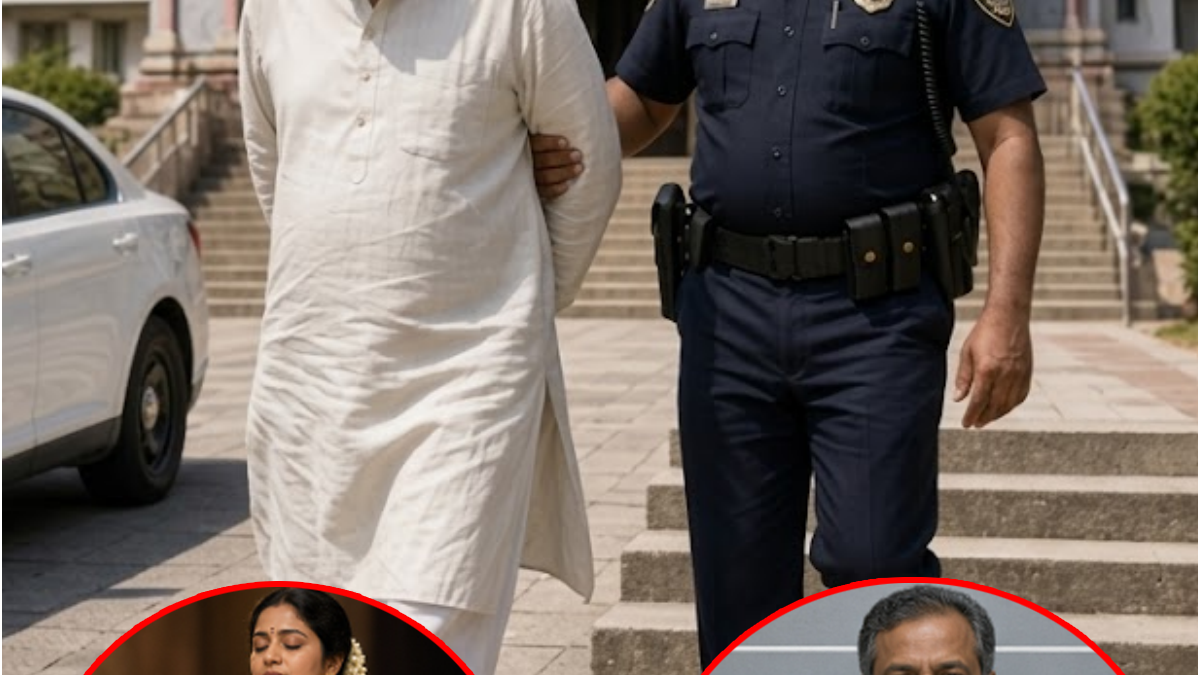
There is a specific kind of trust that forms around a place of worship, a trust that operates almost entirely without documentation, because documentation feels, to the people extending it, faintly beside the point. Nobody counts the cash in the donation box and asks for a receipt. Nobody audits the man who has served as treasurer for eleven years, because eleven years is itself treated as a form of proof. This story is about what happens in the space that trust leaves unexamined, and about a twenty-nine-year-old classical vocalist who was sponsored by her temple to sing in it, and who found, in that unexamined space, something that got her killed.
Lakshmi Venkataraghavan was born in Thanjavur, Tamil Nadu, in 1995, into a family with four generations of Carnatic musicians behind her, a lineage the family discussed the way other families discuss land or a family business — something inherited, something to be tended, something that came with obligations attached before you were old enough to understand what they were. She began formal vocal training at age five under her grandmother, a respected if not widely famous singer in her own right, and continued under a series of gurus in Chennai through her twenties, building a reputation within Carnatic circles as a serious, technically exacting performer more interested in the discipline’s older, less commercially rewarding repertoire than in the crossover concerts that had made stars of some of her contemporaries.
In 2022, the Sri Meenakshi Cultural Temple in a suburb of Atlanta — a large, well-established institution serving several thousand South Indian families across the metro area, with an attached cultural center that ran music and dance instruction alongside its religious functions — began a search for a resident vocalist to lead its devotional music program and train its youth choir, a position that came with an R-1 religious worker visa sponsorship, a category reserved for ministers and workers in religious vocations, requiring the sponsoring institution to demonstrate the position’s genuinely religious character and to commit to specific, documented compensation terms. The temple’s executive committee, after a search that ran the better part of a year, extended the offer to Lakshmi in late 2022.
She landed in Atlanta in March 2023, twenty-eight years old, housed initially in a small apartment the temple leased on her behalf near the cultural center, teaching six days a week — youth choir on weekday afternoons, devotional recitals on weekends, private vocal lessons in whatever hours remained. The choir, by the account of several parents interviewed after the fact, had transformed within months from a loosely attended after-school activity into something the children genuinely looked forward to, a change several attributed less to any specific technique than to the fact that Lakshmi treated an eight-year-old’s off-key attempt at a kriti with the same seriousness she’d have given a professional’s. She called her grandmother every Sunday evening, a fixed habit inherited from a childhood in which Sunday evening had always meant a lesson rather than a phone call, and found, in the ritual of narrating her week to a woman who had taught her to sing in the first place, something close to the structure she’d left behind in Thanjavur.
The temple’s executive committee treasurer, a man named Ramesh Palaniappan, had held the position for eleven years by the time Lakshmi arrived, managing a budget that included several hundred thousand dollars in annual donations, festival collections, and instructional program fees, alongside a modest paid administrative staff of three and a much larger volunteer base that handled most of the temple’s day-to-day operations without compensation. Palaniappan was, by every account gathered after the fact, well liked — a steady, unassuming presence at every major festival for over a decade, the kind of man whose name appeared on the temple’s donor plaque not as a major giver but as a fixture, someone who had simply always been there, who remembered every child’s name and every elder’s preferred seat during evening aarti, whose own modest lifestyle — a fifteen-year-old sedan, a house in a middle-income subdivision — had never once struck anyone as a reason for suspicion rather than a point in his favor.
Lakshmi’s role gave her regular, incidental access to parts of the temple’s operations most instructional staff never saw closely — she helped coordinate the youth choir’s participation in the annual Navaratri festival, which involved reviewing the festival’s projected costs against its collected donations, a task normally handled entirely by the committee but delegated, in the fall of 2023, to a subcommittee that included her because of a scheduling gap nobody had anticipated. In October 2023, reviewing three years of festival financial summaries in preparation for a budget presentation, she noticed a vendor listed repeatedly for “decorative and ritual supplies” at costs that struck her, with a musician’s ear for pattern rather than an accountant’s training, as oddly consistent — the same round figures, the same company name, invoiced at a frequency that didn’t track with the festival calendar at all.
She mentioned it, carefully and without accusation, to the temple’s cultural center director, a woman named Priya Balasubramanian who had hired her the year before and whom she trusted more than she trusted the committee as a body. Priya suggested she raise it directly with Palaniappan, who managed vendor relationships personally and would, presumably, have a simple explanation. Lakshmi did, in a brief conversation after a Sunday service in early November, framed as a genuine question rather than a challenge. Palaniappan told her the vendor was a longtime family friend’s supply business and that the consistent figures reflected a standing annual contract, an explanation that satisfied her enough to let the matter drop, for a while.
It did not satisfy her permanently. In December, with more time on her hands during a lull between festival seasons, she pulled the temple’s publicly available nonprofit tax filings — a routine matter of public record for any registered religious nonprofit — and cross-referenced the vendor’s registered business address against Georgia’s secretary of state business registry. The address matched a residential property. The registered agent for the vendor company was Palaniappan’s own brother-in-law.
Lakshmi did not go to the police in December. She did not, by her own account in a message later recovered from her phone, feel she had enough to bring anyone beyond a suspicion built from public records and a pattern in an expense column. She began instead, quietly, keeping her own notes — a private spiral notebook, found later among her belongings, cataloguing every “decorative and ritual supplies” invoice she could locate across three years of filings, with dates, amounts, and a running total that by the time of her death had reached just over $340,000.
She told her grandmother about it on a Sunday call in early January 2024, the only person she seems to have told the full extent of what she’d found. Her grandmother, in an interview conducted months later, recalled advising her granddaughter to bring it to the full committee rather than confronting Palaniappan alone again — advice Lakshmi apparently intended to follow, having drafted, on her laptop, an outline for a presentation to the executive committee’s January meeting, a meeting she did not live to attend.
Lakshmi Venkataraghavan was found dead in the temple’s music room on the evening of January 9th, 2024, by a volunteer arriving to lock up after the youth choir’s rehearsal had ended. She had been struck once with a heavy brass ritual lamp kept in the room’s storage cabinet, a single blow to the back of the head, consistent, the medical examiner later testified, with someone she had not seen coming and had not had reason to fear.
The temple’s own board, in the days immediately following, characterized the death publicly as a tragic and inexplicable act of violence, likely connected to a robbery, noting that a small cash box used for private lesson fees was missing from the room. DeKalb County police initially pursued that theory, given no immediate sign of forced entry that pointed elsewhere and a community, by every account, in genuine and unified shock.
The investigation’s direction changed in March 2024, when Priya Balasubramanian, going through Lakshmi’s office materials to prepare an inventory for the family, found the spiral notebook and brought it, without hesitation, directly to Detective Angela Mercer of the DeKalb County Police Department rather than to the temple board. Mercer’s team subpoenaed the vendor company’s banking records and found a direct financial relationship between the account and Palaniappan’s own personal finances — regular transfers, timed within days of each “decorative and ritual supplies” payment, totaling, over three years, just over $310,000, a figure close enough to Lakshmi’s own handwritten running total that the coincidence effectively confirmed itself.
Cell tower data placed Palaniappan’s phone at the temple on the evening of January 9th, at a time he had told the initial police canvass he’d been home. A subsequent, more thorough search of the temple’s parking lot security footage — footage the initial investigation had reviewed only for the main entrance and had not pulled from a secondary camera covering the side lot Palaniappan habitually used — showed his car arriving at 7:40 p.m. and leaving at 8:15 p.m., a window that placed him at the temple for the entirety of the period the medical examiner had established for the time of death.
He was arrested on April 2nd, 2024, and charged with murder and, separately, with three years of nonprofit financial fraud. His brother-in-law, the vendor company’s registered agent, cooperated with investigators once his own bank records surfaced and was granted immunity from the fraud charges in exchange for testimony establishing the full scope of the embezzlement scheme, having had, by his own account, no knowledge of what his brother-in-law had done on the night of January 9th and no role in it.
Palaniappan’s trial opened at the DeKalb County Superior Court in October 2024. He did not testify. The defense argued the financial evidence, however damning, did not establish murder, only motive, and that the physical evidence — no fingerprints recovered from the lamp itself, wiped clean — left reasonable doubt about who had actually been in the room at the moment of the killing. The prosecution countered with the parking lot footage, the cell tower data placing his phone nowhere else, and the missing cash box, recovered eventually from a storage unit rented in his name, containing not lesson fees but a partial set of the notebook’s own photocopied pages — Lakshmi had, unbeknownst to anyone until this discovery, scanned her notes and emailed a copy to her own account two days before her death, a digital trail Palaniappan had apparently searched her office for and never found, because it had never physically existed in the room to begin with.
The jury deliberated for three days and convicted him of murder and financial fraud on all counts. He was sentenced in January 2025 to life imprisonment without parole on the murder charge, with a consecutive twelve-year sentence for the fraud counts, a sentence that will never be served consecutively in any meaningful sense but that the judge imposed anyway, she said, “so the record reflects the full weight of what was taken, in more than one form, from this community.”
The temple’s executive committee was dissolved by court order in the related civil proceeding and reconstituted under new bylaws requiring an independent annual audit, a change the temple’s current leadership describes as Lakshmi’s most lasting contribution to the institution she was sponsored to serve, a framing her grandmother, when asked about it by a reporter in Thanjavur, neither confirmed nor rejected, saying only that her granddaughter had wanted to sing, not to be remembered as an auditor, and that both things were now permanently true at once.
We do not, as a rule, have language for the specific kind of betrayal that happens inside an institution built entirely on the assumption that it would never need policing from within. We have language for robbery, for the stranger in the parking lot, for the theory that took hold in the first anxious week before anyone found the notebook. We do not yet have a comfortable way of saying that the greater danger, more often, sits on the committee, has sat there for eleven years, and knows exactly how the books get read by people who trust it not to look too closely.








