She Was Secretly Filing to Leave Her Abusive Husband — He Found the Documents Three Days Before She Could
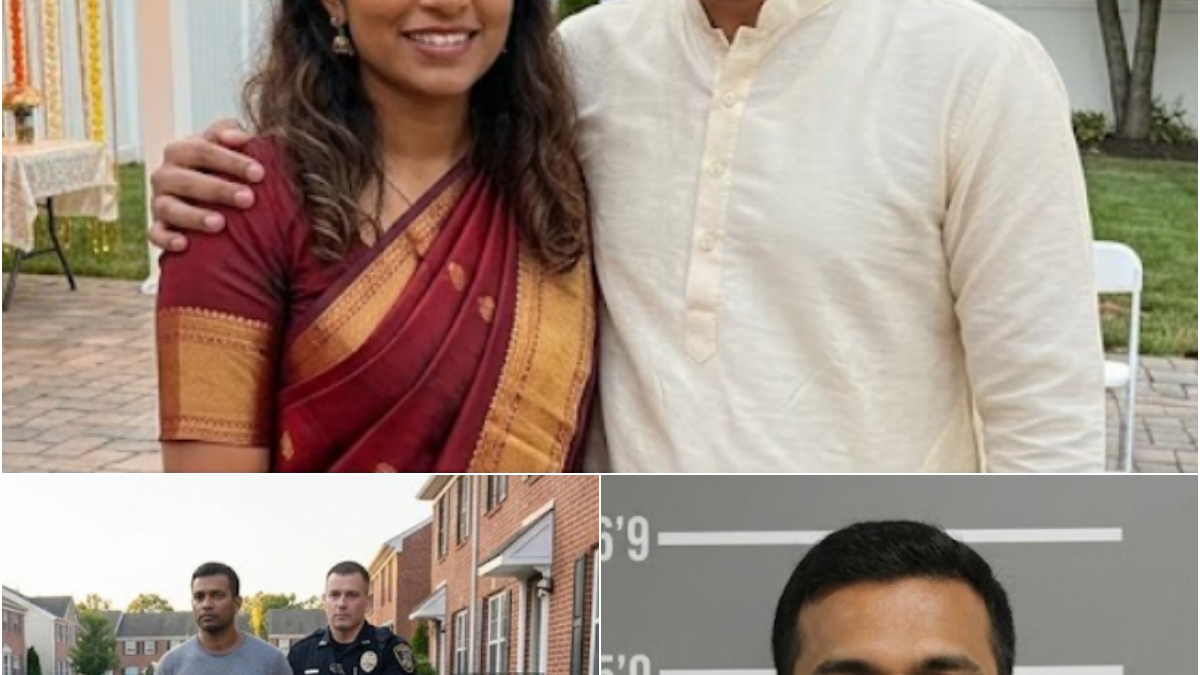
There is a federal law, passed in 1994 and quietly amended several times since, that allows the immigrant spouse of an abusive US citizen or green card holder to self-petition for legal status independently — no cooperation from the abuser required, no need to remain married, no need to wait for him to file anything on her behalf at all. It exists precisely because the alternative, for decades before it, was a closed loop: a woman’s legal status tied entirely to the person hurting her, with leaving him and losing her ability to remain in the country functioning, for practical purposes, as the same decision.
The law is called VAWA, the Violence Against Women Act, and it has helped tens of thousands of people since it passed. It cannot, however, do anything for the gap between the moment someone decides to use it and the moment the petition is actually filed — a gap that, for one woman in suburban New Jersey, turned out to be exactly three days too long.
Divya Raghunathan was born in Coimbatore, Tamil Nadu, in 1994, the younger of two daughters in a family that ran a small chain of textile retail shops across the city. Her elder sister had married and settled in Bangalore several years earlier, close enough that their mother had grown accustomed to weekly visits, a proximity that made the eventual distance to New Jersey feel, in the family’s early planning conversations, like something to be managed rather than mourned. Divya trained as a schoolteacher, taught primary school English and mathematics for four years in Coimbatore, and was, by the account of two former colleagues interviewed after the case became public, known for a particular gentleness with children who struggled, a quality one former colleague described as “patience most of us had to learn on the job, and she just seemed to arrive with.”
She married Sanjeev Raghunathan in 2019, a match arranged through a relative on her mother’s side, Sanjeev being a US permanent resident — a green card holder rather than a citizen, a distinction that would later matter more than either family understood at the time — working as a pharmacist in New Jersey. He was, by all accounts from the courtship period, attentive and generous, flying to Coimbatore twice before the wedding, once for the formal engagement and once, unusually, simply to spend a week with the family, a gesture Divya’s parents took as a sign of genuine intent rather than performance.
The marriage-based immigrant petition took just under two years to process, standard for a green card holder’s spouse rather than a citizen’s, a wait that Divya spent continuing to teach in Coimbatore, exchanging video calls with Sanjeev several times a week, building, from a distance, a picture of the life she expected to step into. She landed in Newark in early 2021, twenty-six years old, moving into a townhouse in a suburb about forty minutes outside the city that Sanjeev had bought two years before the marriage, in his name alone.
The pattern that would later be documented, in painstaking detail, across three years of medical records, a domestic violence hotline log, and the testimony of exactly one friend Divya had managed to make in the US despite everything working against it, began within the first six months. It did not begin, by any account, with violence. It began with isolation — a car Divya was not permitted to drive alone for the first year “until she learned American roads,” a phone plan controlled entirely through Sanjeev’s account with location sharing enabled as a condition he described as concern rather than surveillance, a restriction on which of her Coimbatore friends she was permitted to speak with by video call, justified, each time, by some reasonable-sounding logic that made the restriction difficult to name as a pattern from inside it.
The first documented incident of physical violence occurred in September 2022, according to an emergency room visit at a hospital in Somerset County — a fractured wrist, recorded in the chart as resulting from “a fall,” a description Divya herself provided to the attending physician, who noted in the chart, in language that would later matter enormously to prosecutors, that the injury pattern was “atypical for a simple fall” and that the patient “appeared reluctant to elaborate,” a combination of clinical observations that, under New Jersey’s mandatory reporting protocols, should have triggered an automatic referral to social services and, by the hospital’s own later admission during the investigation, did not.
Divya’s conditional path to independence, such as it was, began in earnest in early 2024, nearly three years into the marriage. She had, by then, made one real friend in the US — a coworker at the part-time retail job Sanjeev had eventually permitted her to take, a woman named Renata Ford who noticed, over eight months of working adjoining shifts, enough small inconsistencies in Divya’s explanations for various bruises and absences to eventually, carefully, ask a direct question on a break in March 2024. Divya did not answer it that day. She answered it, in pieces, over the following two months, in the kind of gradual disclosure advocates in this field describe as typical — a detail offered, tested against the listener’s reaction, and either built upon or retreated from depending on what came back.
Renata connected her, in May 2024, with a domestic violence advocacy organization in Somerset County, which explained, for the first time in language Divya could fully absorb, the existence of the VAWA self-petition process — a pathway that would allow her to apply for legal status independently of Sanjeev, based on documented evidence of the abuse, without needing his cooperation, his knowledge, or even his continued presence in the marriage at all. The advocate assigned to her case, a caseworker named Elena Vasquez, began helping her assemble the documentation the petition required: the emergency room record from September 2022, a second, more recent hospital visit from January 2024, a personal declaration describing the pattern of control and violence in her own words, and letters of support from Renata and, eventually, one from a cousin of Sanjeev’s own who had witnessed an incident at a family gathering the previous Diwali and had, after some hesitation, agreed to put what she’d seen in writing. Vasquez would later testify that Divya’s declaration, drafted and redrafted over three sessions, was among the most detailed and carefully organized she had encountered in nine years of this work — dates, times, specific words remembered, a level of precision Vasquez read, at the time, as evidence of someone determined to be believed, and read afterward, with the case’s outcome known, as evidence of someone who had understood, on some level, exactly how much would be riding on the record she left behind.
The process required care and time. Divya could not risk Sanjeev discovering any of it before the petition was actually filed and her status, at least in the eyes of the law, no longer depended on staying married to him — a discovery that, advocates in this field will tell you without much hesitation, statistically represents one of the most dangerous moments in an abusive relationship, the period in which a victim’s intent to leave has become visible but her actual independence has not yet arrived. Divya met Elena Vasquez at the advocacy organization’s office, never at home, always during shifts she could account for through her retail job’s schedule. She kept the physical documents at Renata’s apartment rather than her own house. She used a phone number Renata had helped her set up separately, on a prepaid plan, for any calls or messages related to the case.
By late May 2024, the petition was substantially complete. Elena Vasquez scheduled a final review appointment for June 3rd, with the intention of filing formally with USCIS the same week.
Sanjeev Raghunathan found out on May 31st, three days before that appointment. The specific mechanism, reconstructed later by investigators from cell phone forensics, involved neither carelessness on Divya’s part nor any direct confrontation — Sanjeev had, unbeknownst to her, installed monitoring software on the family’s shared home Wi-Fi router roughly a year earlier, a capability that allowed him to see, in general terms, which websites devices connected to the network had visited, even when the devices themselves were password-protected or used privately. Divya had, on exactly one occasion, on May 29th, used her own primary phone rather than the prepaid one to look up the Somerset County courthouse’s hours, intending to ask Elena Vasquez a logistical question about the filing location — a single seven-minute browsing session that the router log recorded and that Sanjeev, reviewing the log two days later out of what he later described to police as unrelated, routine curiosity, happened to notice.
What followed over the next three days, reconstructed from text messages, a single recorded voicemail Divya left for Renata on the evening of May 31st that Renata did not hear until the following morning, and the eventual physical evidence, was a period investigators would later describe in their affidavit as “an escalating confrontation the victim appears to have recognized the danger of and been unable to safely exit.” Divya did not return to the advocacy organization’s office in those three days. She did not call Elena Vasquez. She told Renata, in the voicemail, that Sanjeev had been “asking strange questions” and that she was “trying to stay calm until Monday,” a plan that did not survive the weekend.
Divya Raghunathan was found dead in the townhouse on the morning of June 2nd, 2024, by a Somerset County Sheriff’s deputy responding to a welfare check requested by Renata Ford, who had called 911 after receiving no response to repeated messages over the preceding thirty-six hours.
Detective Marcus Webb — a different Marcus Webb than any prior detective in this series, an unrelated coincidence of a common enough American name — was not, in this case, needed to uncover anything hidden. Sanjeev Raghunathan was arrested at the scene, having called 911 himself roughly twenty minutes before the deputy’s welfare check arrived, and made no attempt, from the outset, to claim anyone else had been involved. What the ensuing investigation established was not who had done it, but rather the full shape and duration of what had preceded it — the September 2022 emergency room record, the router logs documenting three years of surveillance, the VAWA petition materials recovered from Renata’s apartment, still substantially complete, and Elena Vasquez’s own case notes, which formed the backbone of the prosecution’s case for establishing not just the fact of the killing but the specific, foreseeable danger the days immediately preceding it had represented.
Sanjeev was charged with murder and, separately, given the documented pattern established through the medical and advocacy records, with three years of ongoing domestic assault predating the killing itself, charges his attorney did not seriously contest given the volume of independently corroborated evidence.
Sanjeev Raghunathan pleaded guilty to murder in November 2024, avoiding trial, and was sentenced in January 2025 to life imprisonment with the possibility of parole after thirty years. During the sentencing hearing, the prosecution read into the record a victim impact statement prepared jointly by Divya’s parents and her sister in Bangalore, delivered by video link, in which her mother described her daughter as someone who had “already made her decision to be free” and asked the court, in closing, to understand the sentence not as closure but as “the only sentence available in a language that has no word for what she actually lost, which was time, not just her life.” The judge, in handing down the sentence, referenced the statement directly, a departure from typical courtroom procedure that two attorneys present described afterward as unusually personal for that particular bench.
His own green card status, as a longtime permanent resident rather than a naturalized citizen, was placed into removal proceedings following his conviction under provisions governing aggravated felonies — a legal irony noted by exactly one local reporter covering the sentencing, that the same immigration system Divya had spent months carefully navigating to free herself from him would, in the end, also eventually remove him from the country regardless, though for reasons that arrived too late to matter to her.
Sanjeev’s parents in Coimbatore, interviewed briefly by a regional Tamil news outlet after the sentencing, expressed sorrow for “both families” and declined to address the specific findings of the investigation, a response Divya’s own mother, in a separate interview given the same week, described without elaboration as “the same silence I have heard from that family since the wedding.”
The VAWA self-petition Divya never got to file was, under a provision the advocacy organization had not needed to explain to her but which existed for exactly this circumstance, posthumously convertible into a different form of relief for her surviving family — specifically, it allowed her parents in Coimbatore, under separate humanitarian provisions available to certain surviving relatives, to pursue a path to visit and eventually remain in the US that would not otherwise have existed for them, a process Elena Vasquez has continued assisting with, unpaid, well outside the scope of her formal caseload, in the eighteen months since.
Renata Ford has continued volunteering with the same domestic violence advocacy organization that first connected Divya to Elena Vasquez, training now, herself, to become an advocate, a decision she has described publicly only once, in a short statement read at a candlelight vigil the organization held in Divya’s memory in June 2025, in which she said she wished she had asked her question on the break room clock a year earlier than she did, and that she has stopped believing there is such a thing as asking too early.
We built a law, three decades ago, to close the loop between an abuser’s control and a victim’s legal status, and it works, more often than not, exactly as intended. What it cannot do — what no law drafted around the moment of filing can do — is protect the space between deciding and finishing, the three days, in this case, in which a decision that had taken months to build safely became visible before it could become official. That gap does not appear anywhere in the statute. It appeared, instead, in a router log nobody thought to hide.








