She Waited 23 Years for Her Visa to Reunite With Her Brother — His Children Accused Her of Elder Abuse to Get Her Deported
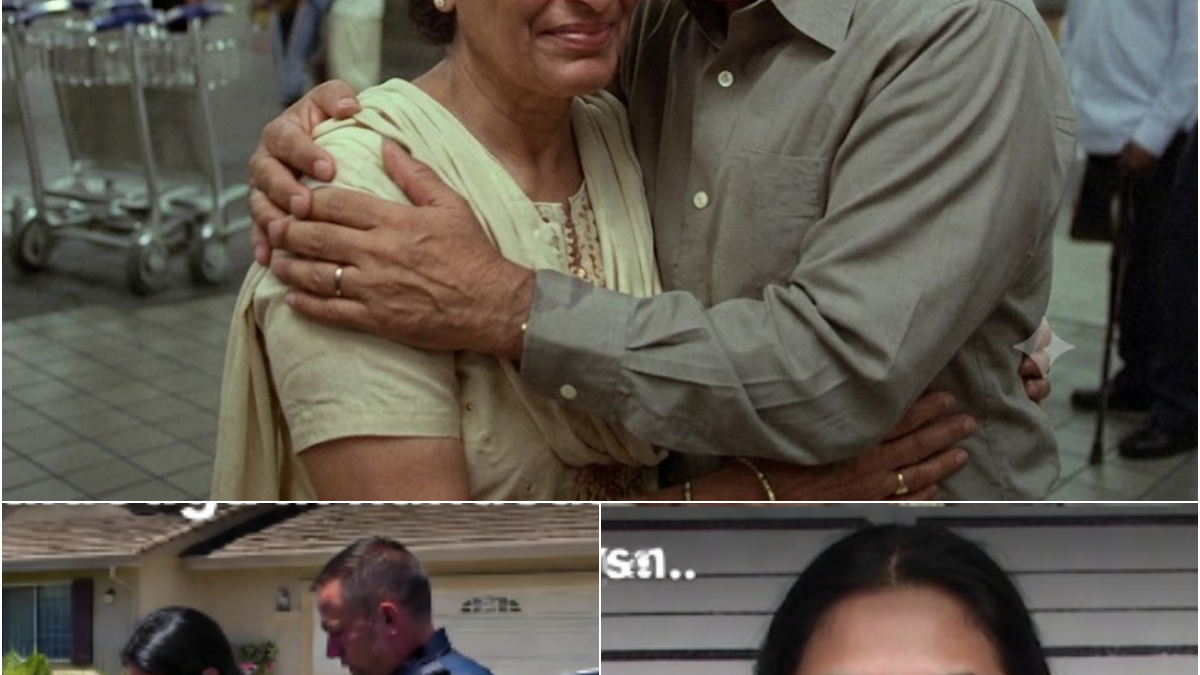
There is a category of family-based immigrant visa, F4, reserved for the siblings of US citizens, that carries the longest wait of any pathway the American immigration system currently offers. For applicants from India specifically, given decades of accumulated demand against a fixed annual allocation, the current wait between filing and an available visa number runs past two decades — long enough that a petition filed for a sibling in early adulthood can sit unresolved until that sibling has become, by the time a visa number finally arrives, someone in late middle age, arriving to a country and a family that has, in the intervening years, become almost entirely unfamiliar.
This is a story about exactly that gap, and about what happened to one woman in the eighteen months after hers finally closed.
Sunanda Bakshi was born in Amritsar, Punjab, in 1962, the second of three children in a family running a modest textile trading business, close-knit in the way families are when the shop and the household occupy the same building and the same rhythm of days. Her older brother, Rajan, left for the United States in 1985 on a student visa, completed a graduate engineering degree, found employment, and became a naturalized US citizen in 1994, settling in Fresno, California, and building, over the following decades, a life that included a wife, two children, and a small but successful civil engineering consultancy. The siblings wrote letters through the late 1980s and into the 1990s, a correspondence Sunanda kept in a shoebox she brought with her decades later when she finally moved, containing, among other things, a 1986 letter in which Rajan had promised, with the easy confidence of a twenty-four-year-old who had no idea what the paperwork would eventually cost either of them, that “it won’t be long before I bring you here too.”
Rajan filed an F4 petition for Sunanda in 1998, four years after his own naturalization, a routine act of family reunification that neither sibling, at the time, expected to take anywhere near as long as it eventually did. Sunanda remained in Amritsar throughout the following decades, working as a schoolteacher, marrying in 2001, and being widowed in 2015 when her husband died of a sudden cardiac event, after which she continued teaching and lived alone, visiting Rajan and his family in California twice during the long wait, on tourist visas, brief reunions that only underscored how much of each sibling’s actual daily life the other had missed — she met her niece and nephew for the first time as teenagers rather than infants, and by the time the visa priority date finally moved, both had children of their own she had only ever seen in photographs.
The visa priority date for Sunanda’s petition finally became current in late 2021, twenty-three years after Rajan first filed it. She completed the required medical exams and consular interview through 2022, delayed further by pandemic-related processing backlogs at the US consulate in New Delhi, and landed in Fresno in March 2023, sixty years old, to join a brother who had, by then, aged into his sixties himself, his health beginning to decline in ways his own adult children had only recently started to fully register.
Rajan’s health, in fact, was the immediate and practical reason his children — Neha, thirty-one, and Vikram, twenty-eight, both born and raised in Fresno — had begun, in the year before Sunanda’s arrival, quietly researching in-home care options for a father whose early-stage Parkinson’s diagnosis, received in 2022, had started to affect his mobility and, increasingly, his ability to manage the consultancy’s day-to-day operations, a business Neha had begun stepping into a managerial role within.
Sunanda’s arrival, from the family’s own initial framing, solved a problem — a sibling, family, trusted, willing and immediately available to help with Rajan’s daily care in a way a hired aide, however qualified, could not replicate. She moved into a converted bedroom in Rajan’s house, took over meal preparation, medication scheduling, and much of his daily physical assistance, and by the account of Rajan’s own longtime physician, provided a level of consistent, attentive care that measurably improved several of his tracked health metrics over her first year in the household.
The tension, when it emerged, centered not on Sunanda’s caregiving itself but on the consultancy’s finances and, more specifically, on a decision Rajan made in late 2023, roughly eight months into Sunanda’s residence, to add her as an authorized signer on a joint household account and, separately, to amend his will to include a modest but real bequest to her — a gesture, he told his own estate attorney at the time, reflecting both gratitude for her care and an acknowledgment of the decades the visa backlog had already cost the two of them, time he had no intention of also shortchanging in whatever years he had left.
Neha learned of the will amendment in January 2024, during a conversation with her father’s estate attorney that had been scheduled for an unrelated purpose. Her reaction, described later by the attorney in a deposition, was immediate and pointed — a concern, expressed at the time in terms of her father’s judgment and cognitive state given his Parkinson’s progression, rather than in terms of Sunanda directly, though the attorney noted that the concern seemed, even then, to track more closely with the bequest’s existence than with any documented change in Rajan’s actual decision-making capacity, which his neurologist’s own records through this period consistently rated as fully intact.
What followed, over the subsequent four months, was a pattern that Rajan’s physician, in later testimony, described as deeply troubling once she was made aware of its full extent: a series of anonymous reports filed with California’s Adult Protective Services beginning in February 2024, alleging that Sunanda was isolating Rajan from his children, mismanaging his medication in ways that worsened rather than improved his symptoms, and exerting undue financial influence over an elderly man whose judgment, the reports claimed, had become compromised by his condition.
Each report triggered a mandatory welfare check and a review of Rajan’s medical and financial records — reviews that, each time, found no supporting evidence: his medication logs, independently verified against pharmacy records, showed consistent, correctly timed administration; his neurologist’s cognitive assessments, conducted twice during this period specifically in response to the reports, found no decline inconsistent with his diagnosis’s expected progression; and his own repeated, unambiguous statements to caseworkers affirmed that Sunanda’s care and the financial decisions he’d made regarding her were entirely his own, made with full understanding and no coercion.
The fourth report, filed in May 2024, added a new and more serious allegation — that Sunanda’s presence in the household violated the terms of her visa status, an accusation without any actual legal basis given her lawful, unconditional F4 permanent residency, but one that nonetheless triggered a separate referral to immigration authorities, a referral that, while ultimately resolved without consequence once reviewed, cost Sunanda several deeply frightening weeks in which she did not know whether the reunification twenty-three years in the making might somehow still be undone by a process she barely understood the mechanics of.
The pattern unraveled in June 2024, when the Adult Protective Services caseworker assigned to the fourth report — a caseworker named Diane Kwan, who had by then handled all four complaints and had grown independently suspicious of their increasingly specific, escalating nature — requested IP address and submission timestamp data from the state’s online reporting portal for all four anonymous filings, a step outside her routine caseload but one her supervisor approved given the pattern’s unusual persistence against a consistently unsupported set of underlying facts.
The records, obtained through the portal’s own administrative logs in July 2024, traced all four reports to devices registered to Neha Bakshi, submitted, in each case, in the days immediately following specific conversations Neha had had with her father’s estate attorney or, in one instance, with Rajan himself about the will amendment and the joint account — a timeline Kwan laid out in a formal report referred to the Fresno County District Attorney’s office that August, characterizing the pattern as a deliberate, repeated effort to use the adult protective services system to remove Sunanda from the household and, ultimately, from the country, through fabricated allegations rather than any genuine welfare concern.
Neha Bakshi was charged in October 2024 with multiple counts of filing false reports and, separately, with witness tampering, tied to a fifth, uncharged incident in which she had, according to text messages recovered under warrant, attempted to coach a family friend into corroborating one of the fabricated allegations to a caseworker. Her trial opened at the Fresno County Superior Court in April 2025. She did not testify. Her attorney argued the reports, however factually unsupported, reflected genuine if misguided concern for her father’s wellbeing rather than any deliberate scheme to defraud the state or harm Sunanda specifically, a position that grew difficult to sustain once the prosecution introduced the recovered text messages alongside the IP address timeline.
The jury deliberated for two days and convicted Neha on all counts. She was sentenced in July 2025 to eighteen months, with the sentence largely suspended in favor of probation and mandated counseling, a comparatively light outcome the sentencing judge explained by noting the absence of any actual financial harm ultimately realized and the defendant’s own documented history of genuine caregiving concern for her father predating the fabricated reports, even as the reports themselves had crossed decisively into criminal conduct.
Rajan Bakshi’s health has continued its expected decline through 2025 and into 2026, managed now through a combination of Sunanda’s continued care and a part-time professional aide the family has jointly agreed to bring in as his needs have grown. Sunanda’s status in the household, and in the country, remains entirely secure — the fourth report’s immigration referral, resolved without incident within weeks of its filing, left no lasting mark on a green card that had, by that point, taken twenty-three years to arrive and was never, in any legal sense, actually at risk.
Neha and Sunanda have not, according to family friends interviewed after the case became public, spoken directly since the charges were filed, though Vikram, who was not implicated in any of the reports and who has said publicly that he was unaware of his sister’s actions until the investigation surfaced them, has continued visiting his father regularly, occasions that Sunanda, by his own account, has made a point of stepping out of the room for, “not out of any anger,” he said, “but because I think she still isn’t sure whether the family that finally got her here actually wanted her, or just wanted what she could be useful for, and I don’t think anything I say is going to answer that for her faster than time will.”
We built a twenty-three-year wait into the law and called it, without much irony intended, family reunification — as though a family, held apart that long, simply resumes on arrival exactly where it left off. What happened in the Bakshi household in the year after Sunanda’s arrival suggests something closer to the truth: that twenty-three years does not preserve a family so much as it produces an entirely new one, arriving into a house full of people who have spent that same span of time becoming strangers to the sibling the law finally let back in.








