She Waited 11 Years to Join Her Father in America — Her Husband’s Antiques Gallery Was Selling Stolen Temple Idols
Look at this bronze figure. Eleventh century, Chola dynasty, a dancing form of Shiva roughly eighteen inches tall, sold at auction in 2019 for $4.3 million to a private collector in Dallas, with a provenance history tracing its ownership back to a Belgian collection assembled, according to the paperwork, in the 1970s. The paperwork was fabricated. The actual provenance, established years later by a specialist unit that spends its time doing exactly this kind of tracing, runs back six years earlier and about nine thousand miles away, to a small, active temple in a village outside Thanjavur, from which the idol had been stolen in 2013 during a night the temple’s own priest still describes, when asked, as the worst of his life.
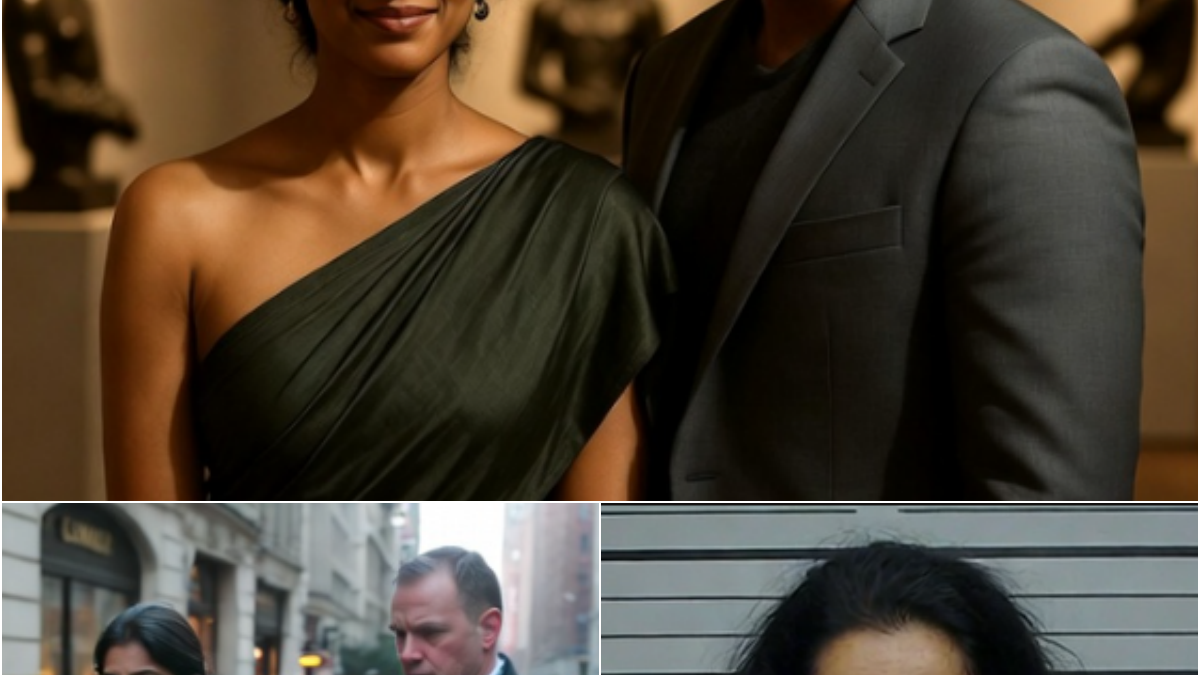
This is Anjali Rao. Her name appears nowhere on that particular sale. It appears on eleven others just like it, over four years, and on the paperwork of a Manhattan gallery that operated, for most of that time, out of a storefront her own father-in-law had helped finance.
Anjali grew up in Chennai, the daughter of Ramesh Rao, a mechanical engineer who had immigrated to the United States in 1991 on an employment-based visa, become a naturalized citizen in 1998, and settled in Cleveland, building a career and a life there while his wife and young daughter remained in Chennai for reasons that had started as practical — his own petition process, a stable job to establish first — and had simply never resolved into an actual reunification before Anjali reached adulthood. Her mother raised her largely as a single parent in practice if not in law, a fact Anjali would later describe, in a pre-sentencing letter to the court, as having taught her early “that family, in our situation, was something you built out of patience and paperwork as much as out of love, and I don’t think I ever stopped believing that the paperwork mattered more than it probably should have.”
Ramesh filed an F3 petition for Anjali — the family preference category covering married sons and daughters of US citizens — in 2012, the year after her own marriage to Suresh Pillai, a Chennai-based art and antiquities dealer whose family had run a modest, ostensibly legitimate gallery specializing in South Indian bronzes and stone carvings for two generations. The match had been arranged through family friends who knew both sides, and Anjali, by her own account, had entered the marriage with real affection for Suresh and considerable pride in a family business she initially understood, in good faith, as exactly what its reputation claimed it to be — a respected, generations-old dealer in legitimately sourced South Indian art. The petition included Suresh as a derivative beneficiary, meaning both would immigrate together once the visa became available. Given the F3 category’s backlog for India, running well over a decade at the time of filing, neither expected the wait to resolve quickly. It resolved, in the end, in 2023 — eleven years after the petition was filed.
Suresh’s gallery business, over the intervening decade, had grown considerably, expanding from the modest retail operation his father had run into something with a genuinely international client base, supplying a growing American and European appetite for South Asian antiquities to collectors and, increasingly, to smaller regional museums building or expanding South Asian art collections. Anjali worked alongside him for most of this period, initially in a limited administrative capacity and, by the early 2020s, in a more substantial role — cataloguing acquisitions, corresponding with international buyers, and, eventually, helping prepare the provenance documentation that accompanied each piece to auction or private sale.
It is the provenance documentation, more than anything else, that would eventually become the case against them both. A meaningful portion of the gallery’s higher-value inventory — bronze and stone temple sculptures, primarily, ranging from the ninth through thirteenth centuries — had not been legitimately acquired through the estate sales and old private collections the paperwork described, but had instead been sourced through a network of small-scale looters operating across rural Tamil Nadu, individuals who identified vulnerable, poorly secured village temples, removed specific pieces during overnight raids, and sold them, through several layers of intermediaries, to dealers like Suresh, who then laundered their origin through fabricated collection histories before offering them internationally.
I don’t think Anjali built this network, and the eventual federal case against her did not allege that she did. What it alleged, and what the evidence would eventually establish clearly enough for a jury, was that she understood, by at least 2019, roughly what a meaningful share of the gallery’s most valuable pieces actually were, and continued, for years afterward, doing the specific documentary work that let those pieces move internationally as though they were something else.
Her own account to investigators, given after her eventual arrest, described a gradual, incremental awareness rather than any single moment of discovery — a piece whose claimed 1970s European provenance didn’t quite match photographic evidence she’d seen of it still standing in an active Tamil Nadu temple as recently as 2015; a conversation with one of Suresh’s regular intermediaries, overheard rather than intended for her, referencing a specific village and a specific night in terms that made the sourcing method difficult to misread; a growing catalogue of pieces whose documentation she herself was asked to write, drawing on templates and reference collection names that, the more closely she looked, seemed to recur suspiciously across dozens of supposedly unrelated acquisitions.
She continued the work anyway, through 2020, 2021, and 2022, the final years of the family’s long wait for the F3 visa to become available — years in which, she later told investigators, the gallery’s income had become the family’s primary financial security, funding not just their own household but her aging mother’s care in Chennai and, not incidentally, the eventual costs of relocating an entire household across the world once the visa finally arrived. I think this is, again, the part of the story worth sitting with rather than rushing past: she was not naive about what she was documenting, by her own admission, for at least three full years. She was also not the person deciding which villages to target, and every dollar she helped launder through a fabricated provenance letter went, in some real sense, toward a life she had been told for over a decade was still eleven years away from actually beginning.
The couple landed in Cleveland in mid-2023, reuniting with Ramesh after more than a decade of a separation neither party had originally intended to last anywhere near that long. Within months, Suresh had begun establishing a US-based extension of the gallery — a small storefront gallery space in Manhattan’s Upper East Side antiquities district, opened in partnership with an established American dealer who had handled several of the gallery’s prior international sales and who provided, critically, both domestic credibility and access to a wealthier tier of American collectors than the Chennai operation alone had reached.
The US expansion is, in the end, what caught them. Homeland Security Investigations maintains a specialized Cultural Property, Art and Antiquities unit, built substantially in response to a series of high-profile prosecutions over the preceding decade involving looted South and Southeast Asian antiquities moving through the American auction and museum market — a unit with established relationships to Indian cultural heritage authorities and a standing practice of cross-referencing incoming high-value South Asian antiquities sales against a growing database of documented temple thefts, compiled in significant part from photographs and inventories Indian temple authorities had themselves begun systematically archiving following a wave of earlier, similar prosecutions.
An HSI analyst flagged the 2019 Chola bronze sale in early 2024, during a routine database cross-reference exercise, matching photographic details of the sculpture against a 2011 inventory photograph taken by a temple restoration survey team in Tamil Nadu — three years before the theft the temple’s own priest had reported to local police in 2013, a report that had, at the time, gone essentially nowhere given the limited resources rural Indian police departments typically have available for this kind of investigation.
The match triggered a full federal investigation, coordinating HSI, the FBI’s art crime team, and India’s Archaeological Survey heritage protection division, which spent much of 2024 building a case that eventually connected eleven separate pieces sold through the gallery’s international and US operations to documented temple thefts across Tamil Nadu between 2011 and 2021, tracing the provenance fabrication back, through both financial records and, in several instances, digital metadata on the fabricated documentation files themselves, to work performed directly by Anjali Rao.
Both Suresh and Anjali were arrested in September 2024, following a coordinated raid on the Cleveland residence and the Manhattan gallery space, and charged in the U.S. District Court for the Southern District of New York with conspiracy to traffic in stolen cultural property, wire fraud, and money laundering. Their trial, tried jointly given the closely overlapping evidence against both, opened in March 2025.
The prosecution’s case rested heavily on the eleven matched pieces and their documented theft histories, on financial records tracing the laundering structure across both the Chennai and Manhattan operations, and on the metadata evidence tying specific fabricated provenance documents directly to files created on Anjali’s own laptop.
Anjali’s attorney argued diminished culpability, framing her role as documentary support performed under the direction and financial control of her husband, within a family business she had married into rather than founded, during years in which her own legal status and financial security remained entirely contingent on the marriage and its economic output continuing uninterrupted. The argument found somewhat more purchase with the jury than similar arguments have in other cases in this pattern — though not enough to avoid conviction, it appeared to meaningfully shape the sentence that followed.
The jury deliberated for five days and convicted both defendants on all counts. Suresh was sentenced in July 2025 to twelve years in federal prison. Anjali was sentenced separately, the following week, to six years — half her husband’s term, a disparity the sentencing judge attributed explicitly to the documented difference in decision-making authority and financial benefit between the two, while still rejecting the defense’s broader argument that her role amounted to mere clerical assistance.
Eight of the eleven identified sculptures have since been formally repatriated to India, returned through a coordinated process involving the Justice Department, India’s Ministry of Culture, and the specific temple communities from which they were originally stolen — including the Chola bronze, returned to its village near Thanjavur in a ceremony in late 2025 that drew several hundred residents, many of whom, the temple’s priest told a reporter covering the event, had never expected to see the figure again in their own lifetimes. The remaining three pieces remain in civil forfeiture proceedings, their current private owners disputing return on grounds the courts have not yet resolved.
Ramesh Rao, whose original 2012 petition had set the entire eleven-year clock in motion, did not attend his daughter’s sentencing, having suffered a stroke earlier that year that has left him in long-term care in a Cleveland facility Anjali, before her own incarceration began, had visited daily. She has said, in the one statement her attorney read on her behalf at sentencing, that she thinks often about the version of the reunion the family had imagined across those eleven years of waiting, and that “no part of it looked anything like this,” a sentence that, read in the courtroom, drew no visible reaction from anyone, including the judge who had just finished deciding exactly how much of the next six years of her life the mismatch would cost her.








