She Reported a Safety Cover-Up at the Theme Park — They Used Her Visa to Silence Her Before Anyone Got Hurt Again
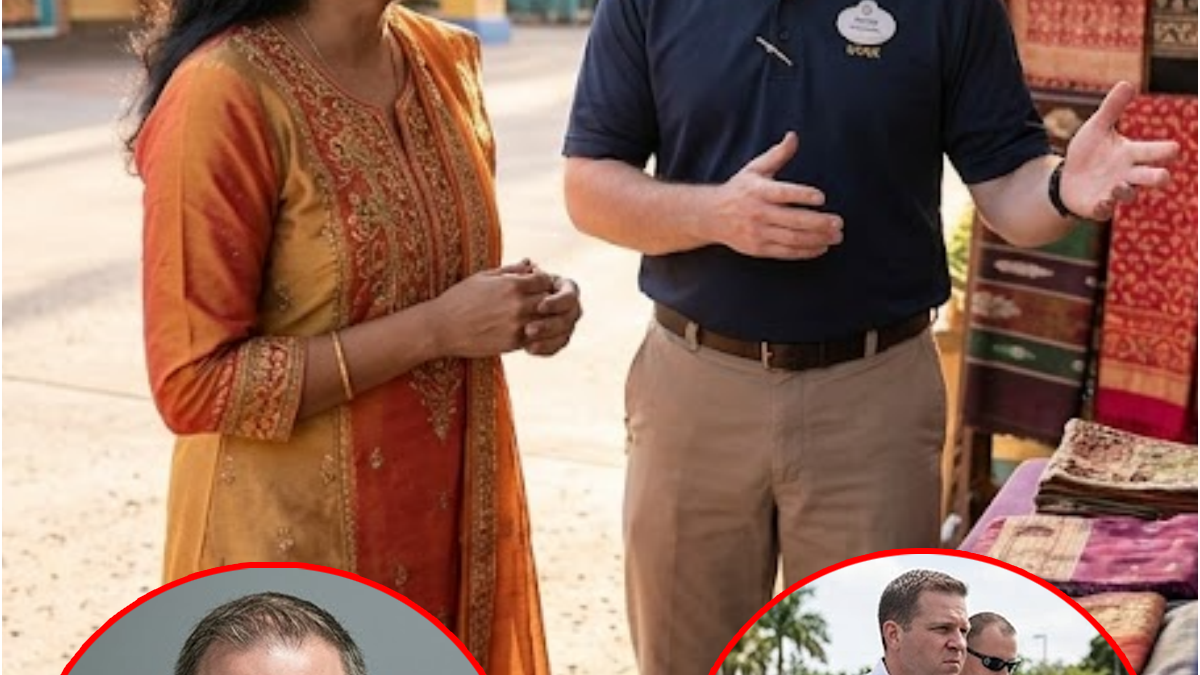
There is a specific and rarely discussed leverage built into any visa sponsored directly by a single employer: the sponsor does not merely control a paycheck. It controls the legal fiction that allows the visa holder to remain in the country at all, and the two forms of control, salary and status, are not actually separable in the way most workplace protections assume they are. This is a story about what happens when that leverage is used not to exploit someone financially, which is the version of this story told most often, but to make sure nobody in a position of legal accountability ever hears what she has to say.
Meghna Rao was born in Mysuru, Karnataka, in 1997, the daughter of two schoolteachers, and studied hospitality and event management at a college in Bengaluru, developing, alongside her formal studies, a genuine enthusiasm for the specific craft of cultural exhibition work — museum-style storytelling, guided cultural programming, the particular skill of making an unfamiliar tradition legible and engaging to visitors encountering it for the first time. A professor from that program later described her, in a reference letter written for the exchange application, as “someone who treats a five-minute pavilion tour with the same seriousness most people reserve for a thesis defense,” a line Meghna herself found faintly embarrassing at the time and would, years later, describe as more accurate than she’d wanted to admit. In 2022, she was selected for a Q-1 international cultural exchange visa placement, a category specifically designed for individuals participating in structured programs that share the history, culture, and traditions of their home country with the American public, sponsoring her for an eighteen-month rotation as a cultural representative at the India-themed pavilion of a major Florida theme park’s international showcase area.
She landed in Orlando in mid-2022, twenty-five years old, delivering guided cultural presentations, coordinating traditional craft demonstrations, and working closely with the park’s broader international programming staff — work she found, by every account from colleagues interviewed after the events that follow, genuinely fulfilling, and work that came with a structural condition she understood clearly from the outset: her Q-1 status, unlike most employment-based categories, was tied not to a role she could theoretically transfer between employers, but to this specific cultural exchange program, administered entirely by this specific employer, terminable, functionally, at the sponsor’s own discretion. She had signed an acknowledgment of this condition during her pre-departure orientation in Bengaluru, one clause among many, and had thought little of it at the time, focused instead, as she told a fellow exchange participant during the long flight to Orlando, on “finally getting to do the thing I actually trained for, instead of just talking about doing it.”
The pavilion sat adjacent to one of the park’s marquee thrill attractions, a large-scale mechanical ride that had opened three years before Meghna’s arrival and had, by 2023, developed a documented history of intermittent mechanical faults in its restraint locking mechanism — a history known internally to the park’s ride maintenance division through a series of incident reports filed across 2022 and early 2023, none of which had resulted in visitor injury, and all of which, according to internal maintenance logs later subpoenaed by investigators, had been resolved through temporary manual overrides rather than the full mechanical recertification the incidents, taken together, should have triggered under both the manufacturer’s own safety protocol and Florida’s state ride-safety inspection requirements.
Meghna’s own involvement began almost by accident, in April 2023, when a mechanical fault during her own lunch break shift rotation — cultural staff occasionally assisted with basic crowd management near adjacent attractions during peak hours — resulted in a restraint bar failing to fully lock on one ride vehicle, caught and manually corrected by an attentive ride operator before the vehicle departed the loading platform, a near-miss that produced no injury but that Meghna, present and paying close attention, found genuinely alarming, particularly once she overheard the ride operator’s radio call to maintenance reference “the same issue as last month” in a tone suggesting this was neither the first nor a fully resolved occurrence.
Meghna raised the incident with her own direct supervisor within the cultural programming division, who, to her supervisor’s credit, escalated the concern to the park’s broader safety compliance office rather than dismissing it — a channel that, unbeknownst to either of them at the time, led directly to a safety compliance manager named Brad Kessler, who had, over the preceding eighteen months, developed a working understanding with the ride’s maintenance division to manage the restraint mechanism’s known issues through manual override protocols rather than the costly, multi-week recertification process a full mechanical review would have required, a decision Kessler had made, according to internal emails later recovered by investigators, specifically to avoid the ride’s closure during the park’s highest-revenue summer season.
Kessler’s response to Meghna’s escalated report, delivered through her supervisor rather than directly, characterized the incident as “an isolated operator error, already addressed,” a characterization Meghna found difficult to reconcile with what she had personally heard over the ride operator’s radio. She raised the discrepancy a second time in May 2023, this time in writing, in an email to both her supervisor and the park’s separate, nominally independent employee ethics hotline — a decision that, in the specific closed ecosystem of the park’s sponsorship structure, Kessler learned about within days, given that the ethics hotline’s intake process routed workplace safety concerns back to the relevant division head for initial review before any independent investigation began, a structural flaw that gave Kessler direct visibility into exactly who had reported him and precisely what they had said.
What followed, over the subsequent six weeks, was documented in detail in Meghna’s own contemporaneous notes, recovered later by investigators and corroborated independently by two coworkers who witnessed portions of it directly: a sudden and specific increase in scrutiny of Meghna’s own job performance, including two written disciplinary notices for minor scheduling infractions of a kind her supervisor privately acknowledged, in a later deposition, “we genuinely never enforced this strictly for anyone else on the cultural programming team, before or since.”
The second disciplinary notice, issued in late June 2023, cited a technical violation of the cultural exchange program’s specific conduct guidelines — an unauthorized absence from a scheduled cultural presentation slot, which Meghna’s own timecard records, preserved independently on her personal phone, showed had in fact been a pre-approved schedule swap with a colleague, approved through the park’s own internal scheduling system weeks in advance. The disciplinary notice nonetheless proceeded through the park’s HR structure to a formal review in July 2023, a review that, under the specific terms of Q-1 sponsorship, carried consequences well beyond an ordinary employee’s workplace record: a termination for cause under a Q-1 cultural exchange sponsorship does not merely end employment. It ends, immediately and without the standard sixty-day grace period afforded to most other employment-based visa categories upon termination, the underlying legal basis for the visa holder’s presence in the country at all, typically requiring departure within a matter of days.
Meghna was terminated on July 14th, 2023, and given, per the program’s own stated policy, five business days to depart the United States. She left, by her own account, in a state of genuine shock and fear rather than any clear plan for what to do next, returning to Mysuru with a termination record that would complicate any future US visa application and no formal avenue, from outside the country, to pursue the safety concern that had, by her own understanding, precipitated the entire sequence.
What she did preserve, before her hurried departure, was a set of screenshots — the original disciplinary emails, her own contemporaneous notes on the April near-miss and the radio call she’d overheard, and, critically, a photograph she had taken of an internal maintenance whiteboard during an unrelated visit to the ride’s backstage area in May, showing a handwritten notation reading “manual override — recert pending,” dated to a period nearly four months before her own report and confirming that the park’s maintenance staff had known about the unresolved issue well before her own involvement began.
She sent this material, in August 2023, to a Florida-based consumer safety journalist who had previously covered ride safety issues at other parks, a contact she found through a general internet search rather than any specific expertise in whistleblower channels. The journalist sat on the material for several months, unable to independently verify enough of it to publish without corroboration from inside the park.
Corroboration arrived, tragically, in February 2024, when the same ride’s restraint mechanism failed again — this time without the intervention that had prevented injury during Meghna’s own near-miss the previous April — resulting in a visitor sustaining a fractured wrist and shoulder injury during an abrupt, unrestrained motion partway through the ride cycle. Florida’s state ride-safety inspection agency opened a formal investigation, and the journalist, recognizing the connection to the material Meghna had sent months earlier, published her account alongside the new incident in March 2024, prompting both a state regulatory inquiry and, separately, a US Department of Labor investigation into whether Meghna’s Q-1 termination had constituted unlawful retaliation for a protected safety disclosure — a possibility federal whistleblower statutes covering workplace safety reporting extend to, in principle, regardless of a worker’s visa status, though the practical remedies available to someone already outside the country proved considerably more limited than the statute’s language suggested in theory.
The Department of Labor’s investigation, completed in late 2024, found substantial evidence supporting Meghna’s retaliation claim, including the internal emails establishing Kessler’s direct knowledge of her report and his role in initiating the disciplinary process that led to her termination. Kessler was terminated by the park in April 2024, once the state investigation’s findings became public, and was separately charged that August by Florida state prosecutors with falsification of safety inspection records, tied to the maintenance logs showing repeated manual overrides represented, in the park’s own official compliance filings, as completed recertifications.
Kessler pleaded no contest to the falsification charges in January 2025 and was sentenced to eighteen months, largely suspended, with a permanent bar from holding any safety compliance role in Florida’s amusement industry. The Department of Labor’s retaliation finding resulted in a formal order requiring the park to pay Meghna back wages and damages, a monetary remedy that, while real, could not restore the visa status or the specific cultural exchange opportunity the retaliation had cost her, and that arrived, in the end, roughly eighteen months after she had already rebuilt an entirely different career path back in Mysuru, working now in corporate event management for a hospitality group that, she has said in the one interview she has given about the case, “hired me, when I finally told them the whole story, specifically because of it, not in spite of it — which is more than I can say for how long it took anyone in Florida to reach the same conclusion.”
The visitor injured in the February 2024 incident has since settled a separate civil claim against the park, the terms of which remain confidential.
We tend to imagine whistleblower retaliation as a slow campaign of professional sabotage — a bad performance review, a missed promotion, the ordinary, survivable friction of an uncomfortable workplace. For a worker whose legal presence in the country depends entirely on the same employer she is reporting, retaliation can instead be instantaneous and total, a single termination letter that ends not just a job but, within days, an entire life built around it. Meghna Rao was right about the ride. It took a stranger’s fractured wrist, ten months later, for anyone with the authority to matter to agree with her.








