She Kept Her Dying Mother in America Past Her Visa — Immigration Law Doesn’t Have an Exception for Love
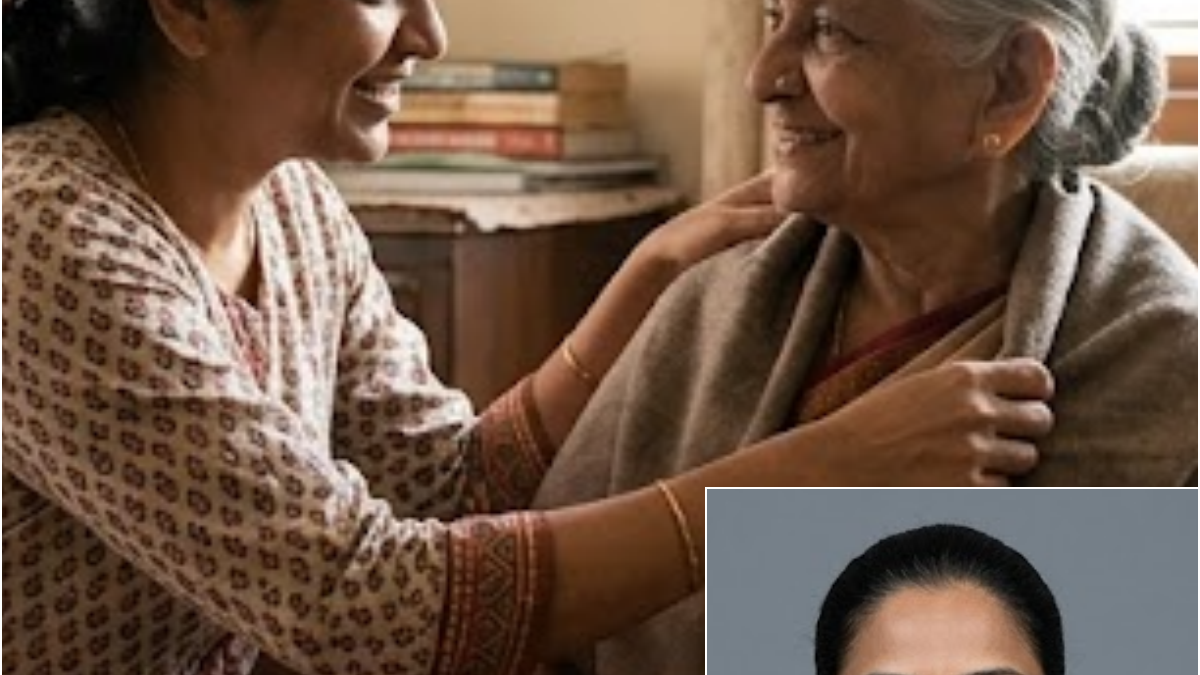
Federal immigration law makes no formal distinction between smuggling a stranger across a border for profit and quietly letting your own elderly mother’s tourist visa lapse because moving her, in her condition, felt like it might kill her faster than staying ever could. Both fall under the same statute, 8 U.S.C. § 1324, harboring an alien known to be unlawfully present, and both carry, on paper, the same maximum penalty. The law does not ask why. It asks only whether the person knew, and whether they acted anyway.
This is a story about a woman who knew, and who acted anyway, for nearly four years, and about what it eventually cost her once the law caught up with a decision she had never once regretted making.
Lavanya Krishnan was born in Bhubaneswar, Odisha, in 1985, the daughter of a state government administrator and a classical Odissi dancer of modest local renown, and began her own training in the form at age five under her mother’s direct instruction, a lineage she would later describe, in interviews given throughout a career that eventually took her far beyond Odisha, as “the only inheritance either of us ever really cared about passing down.” Her mother, Sarala, had given up a more ambitious performing career of her own in the 1970s to raise Lavanya and manage the household, a sacrifice neither of them discussed directly for most of Lavanya’s childhood but which shaped, unmistakably, the ferocity with which Sarala pushed her daughter’s own training forward, driving her to rehearsal before dawn and sitting through every recital, however minor, in the front row without exception. Lavanya trained through her twenties under increasingly prominent gurus in Bhubaneswar and Delhi, built an international touring career through her thirties, and by 2018 had become one of the most internationally recognized Odissi choreographers of her generation, with residencies and commissioned works staged in London, Singapore, and, increasingly, across several major American performing arts institutions.
In 2019, on the strength of that international career — extensive press coverage, major awards from both Indian and international arts bodies, and a body of original choreographic work widely cited by other practitioners in the field — Lavanya self-petitioned for an EB-1A immigrant visa, the category reserved for individuals who have achieved sustained national or international acclaim at the very top of their field, a standard higher than the O-1 nonimmigrant category and, notably, requiring no employer sponsorship at all, since the petition rests entirely on the individual’s own documented extraordinary ability. Her petition, assembled with letters from choreographers and arts critics across four countries, was approved in early 2020, and she relocated to a home base in the Washington, D.C. area, from which she continued touring and began building a permanent dance company and teaching studio, work she had, by every account from her earliest American students, thrown herself into with the same unrelenting discipline her mother had once instilled in her.
Lavanya’s mother, Sarala Krishnan, then seventy-one and living alone in Bhubaneswar following her husband’s death in 2016, had been diagnosed in 2019 with a progressive form of vascular dementia, a condition Lavanya had spent much of that year trying to manage remotely — arranging home care assistance, coordinating with Sarala’s physicians, and making increasingly frequent trips back to India between her own touring commitments. By mid-2021, with Sarala’s condition worsening and remote care arrangements proving harder to sustain reliably, Lavanya brought her mother to the United States on a B-2 tourist visa, intending, at the time, a stay of several months while she explored longer-term care options.
The several months became longer. Sarala’s cognitive decline accelerated sharply over the following year, reaching a point, by early 2022, at which her physicians in both India and the US advised, with considerable unanimity, against any air travel at all given the combination of her dementia and a secondary cardiac condition that had emerged alongside it — a medical reality that placed Lavanya, roughly nine months into her mother’s authorized six-month tourist visa stay, in a position her immigration attorney at the time described to her plainly: there was no visa category available for an elderly, non-employable dependent parent of an EB-1A green card holder outside the standard family petition process, which, filed at that point, would itself take years to resolve, years Sarala’s own prognosis did not suggest she had.
Lavanya did not file for any extension or waiver once her mother’s authorized stay lapsed in late 2021. She continued, instead, to simply keep her mother in the country, moving her into her own home, hiring a private caregiver — a woman named Rosa Delgado, herself undocumented, referred through an informal network of home care workers common in the D.C. area, paid in cash, and never asked directly about her own immigration status, a specific and deliberate omission Lavanya’s later attorney would characterize as “willful blindness that the government was not required to prove was anything more calculated than it plainly was.”
For nearly four years, from late 2021 through 2025, Sarala Krishnan lived in the country without any lawful status, her presence known to Lavanya’s own close circle of family and friends but never disclosed to any government authority, her medical care managed through a combination of Lavanya’s own insurance coverage extended informally to cover a dependent who was not, in any formal sense, eligible for it, and a small network of physicians willing to treat her without asking the specific documentation questions that might otherwise have surfaced the arrangement.
Lavanya’s own account, given later to investigators, described the decision less as a single choice than as a slow accumulation of smaller ones, each individually reasonable given the immediate medical stakes in front of her, that had compounded, by the time she stepped back and looked at the whole of it, into something she understood clearly enough to know was illegal and had simply decided, each time the question arose, that the alternative — sending her mother back into a plane, and a home care system in Bhubaneswar she no longer trusted, and a decline she believed her own presence was the only thing meaningfully slowing — was not a choice she was willing to make instead.
The arrangement surfaced in March 2025, when Sarala suffered a serious cardiac event requiring emergency hospitalization at a Virginia hospital, where intake staff, processing her admission, found no valid immigration documentation on file and, under the hospital’s own compliance protocols for reporting undocumented patients receiving extended, non-emergency follow-up care, referred the case to ICE’s Homeland Security Investigations division — a referral hospital compliance officers later told investigators was routine procedure rather than any specific suspicion, triggered automatically once Sarala’s extended post-cardiac-event care plan made her presence and lack of status a matter the hospital’s own billing and compliance systems flagged independently of anyone’s intent to report her specifically.
HSI agents interviewed Lavanya in April 2025, and she did not attempt to minimize or deny the arrangement once confronted with it — she confirmed, in detail, the full four-year timeline, the decision not to pursue any extension or waiver process, and, when asked directly, Rosa Delgado’s role and the fact that she had never verified her caregiver’s work authorization. This candor, her eventual attorney would argue, reflected less a calculated cooperation strategy than simple exhaustion with an arrangement she had maintained, by that point, for nearly four years without ever fully resolving her own feelings about its illegality.
Lavanya was charged in May 2025 with harboring an alien in violation of federal law, a charge tied specifically to the sustained, multi-year concealment of her mother’s unlawful presence rather than to the initial visa overstay itself, which by law falls to the overstaying individual and is handled through separate civil immigration proceedings rather than criminal prosecution. A second, related count addressed her employment of Rosa Delgado without verifying work authorization, a violation typically handled as a civil infraction but elevated here given its combination with the harboring charge into a broader pattern the indictment characterized as sustained.
Sarala Krishnan herself, whose own presence had triggered the entire case, was placed into separate civil removal proceedings, though her attorney immediately petitioned for a medical deferral given her documented condition — a request granted in June 2025, allowing her to remain in the country, formally now under a temporary humanitarian parole status, while her daughter’s criminal case proceeded and while a separate, newly filed family petition for her own permanent status worked its way, with no particular urgency the law is capable of granting it, through the ordinary queue.
Lavanya’s case resolved without trial. In September 2025, she pleaded guilty to a single reduced count of harboring, in an agreement her attorney negotiated specifically around the absence of any financial motive, any exploitation of Rosa Delgado’s labor beyond ordinary paid caregiving work, and the extensive documented medical necessity underlying the original decision — factors the presiding judge, in accepting the plea, described from the bench as distinguishing this case meaningfully, though not legally, from the harboring statute’s more typical application to smuggling networks and labor exploitation operations.
She was sentenced in November 2025 to time served plus three years of probation, a sentence reflecting both the mitigating circumstances and the fact that she had, by the time of sentencing, already spent several months under supervised release conditions awaiting the case’s resolution. Her own EB-1A status, untouched by the misdemeanor-adjacent resolution of a felony charge reduced substantially at plea, remains intact. Rosa Delgado, interviewed separately by HSI agents and found to have no knowledge that her employer’s harboring of a family member constituted a related federal offense, was not charged, though her own immigration status, once surfaced through the investigation, was referred separately to ICE, and she has since retained her own attorney to pursue whatever relief, if any, remains available to her after over a decade of otherwise unremarked-upon residence in the country.
Sarala Krishnan’s condition has continued to decline through the period since the case’s resolution, and Lavanya, no longer concealing her mother’s presence but rather managing it now through the slow, uncertain machinery of a humanitarian parole status that requires periodic renewal and offers no permanent guarantee, has largely stepped back from touring to remain near her mother full time, a career sacrifice she has described, in the one interview she has given about the case since its resolution, not as a regret but as “the second inheritance I didn’t expect — learning exactly how much of what this country asks of a daughter in my position, it was never actually prepared to make easy.”
The harboring statute exists, in its original design and its overwhelming majority of actual application, to prosecute exactly the kind of exploitative smuggling and trafficking networks that make up the darker material in a story like this one, and it does that work, on the whole, appropriately. What it does not do, because no statute of this kind is built to, is distinguish, on its own terms, between a network profiting from someone else’s desperation and a daughter who simply decided that a form’s expiration date mattered less to her than the person the form was attached to. The law reached the same conclusion about both. It took Lavanya Krishnan considerably longer, and considerably more grief, to reach it herself.








