She Helped Police Catch Her Attacker — Then ICE Tried to Deport Her While She Waited for a Visa Number
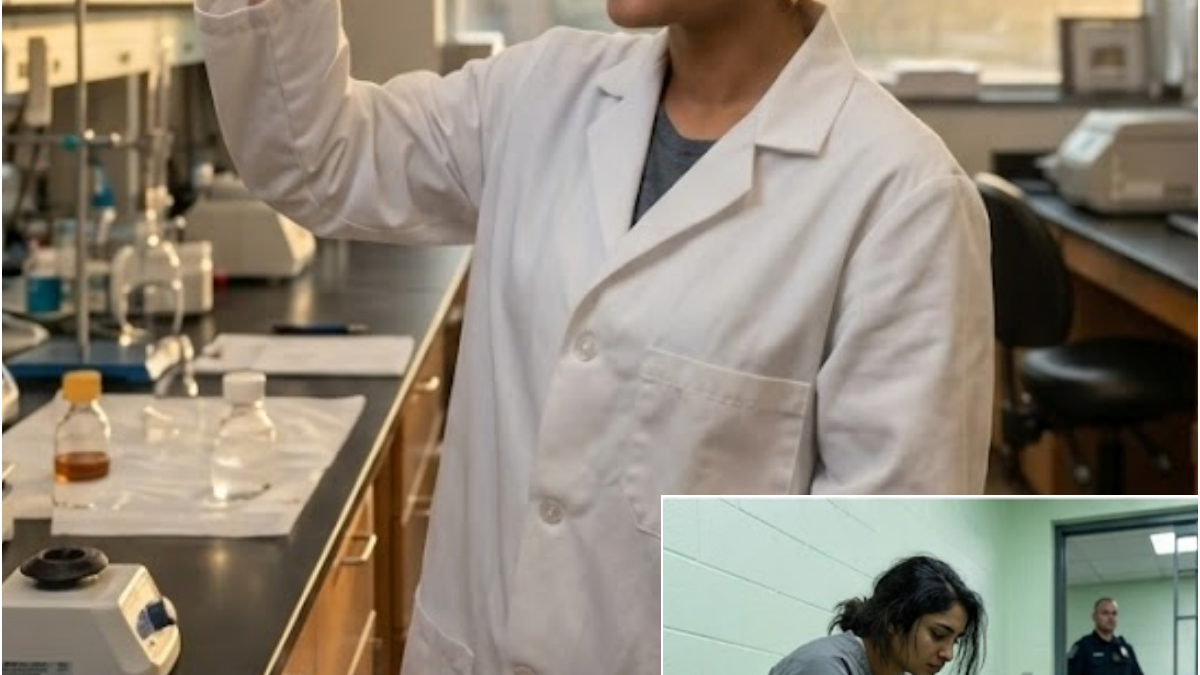
There is a visa category built entirely around a specific kind of gratitude the American legal system owes certain people: the U nonimmigrant visa, created in 2000 for victims of serious crimes who cooperate with law enforcement, intended to encourage exactly the kind of cooperation that lets police solve cases they otherwise couldn’t. It comes with an annual cap of 10,000 visas. As of the period this story takes place in, the actual backlog of approved, waiting applicants numbered in the hundreds of thousands, with wait times for an actual visa number stretching past a decade in some cases — a gap the government bridges, in theory, with something called deferred action, a temporary protection against removal that is supposed to hold a case in place while its number comes up.
In theory is doing a great deal of work in that sentence. This is a story about what happened when the theory and the paperwork briefly stopped agreeing with each other, for one graduate student in Ohio who had done, by any reasonable measure, everything the system had asked of her.
Ishita was born in Kolkata, West Bengal, in 1998, the daughter of two university professors, in a household that treated academic achievement less as an aspiration than as an assumed baseline. Dinner table conversation, by her own later description to a college friend, ran more often to unresolved research questions than to family gossip, a habit she carried with her rather than resented. She completed a bachelor’s degree in chemical engineering at Jadavpur University in 2020 and was admitted, that same year, to a master’s program in materials science at Ohio State University on an F-1 student visa, arriving in Columbus in August 2021 after a year’s delay caused by pandemic-related travel restrictions, a year she spent completing coursework remotely from her parents’ apartment in Kolkata, attending lectures at odd hours across an eleven-and-a-half-hour time difference that left her, by her own account, more or less permanently jet-lagged before she’d ever boarded a plane.
She was, by every account from her advisor and cohort, an exceptional student — the kind who stayed in the lab past midnight not because a deadline demanded it but because the problem itself hadn’t let go of her yet. Her advisor, a professor named Dr. Wendell Park, would later describe her, in a letter written on her behalf during the events that follow, as “the most methodologically rigorous student I have supervised in eighteen years, and also, not incidentally, one of the kindest — she is the person in the lab who notices when a first-year is struggling and says something about it before anyone asks her to.” She lived in a small apartment about a mile from campus, walked to and from the lab most evenings because the walk itself had become, she told a friend, one of the only times in her day her mind was allowed to wander rather than solve something, and had, by early 2023, begun a PhD track in the same department, with a research focus on battery materials that had already generated two co-authored publications before her twenty-fifth birthday.
On the evening of March 14th, 2023, walking home from the lab at approximately 10:40 p.m., Ishita was attacked near the intersection of Woodruff Avenue and High Street by a man later identified as Dominic Reyes, twenty-six, who attempted to forcibly take her bag and, when she resisted, struck her repeatedly and stabbed her twice, once in the shoulder and once, more seriously, in the abdomen, before fleeing on foot. A passing resident heard the struggle and called 911. Ishita underwent emergency surgery at Ohio State University Wexner Medical Center and survived, though the recovery, by her own later account, took the better part of a year to fully complete, both physically and in ways that outlasted the physical entirely.
Ishita cooperated with the Columbus Division of Police from the moment she regained consciousness in the hospital, providing a detailed description that, combined with nearby security camera footage a detective recovered within forty-eight hours, led to Dominic Reyes’s identification and arrest eleven days later. She testified before a grand jury in May 2023, testified again at trial in November 2023, and sat through three days of cross-examination in which the defense attempted, without much success, to suggest her identification was unreliable given the low light and the trauma of the moment. Reyes was convicted of attempted murder and aggravated robbery and sentenced in January 2024 to eighteen years in prison.
A victim advocate assigned to her case through the county prosecutor’s office, a woman named Carol Denby, mentioned the U visa program to Ishita during the trial’s preparation phase, explaining that her extensive cooperation — the grand jury testimony, the trial testimony, the willingness to be cross-examined at length about the worst night of her life — qualified her, on its face, as strongly as any case Denby had personally handled in eleven years of victim advocacy work. Ishita’s immigration attorney, retained on Denby’s recommendation, filed the U visa petition in February 2024, supported by a signed law enforcement certification from the lead detective on the case attesting, in detail, to the extent and value of her cooperation.
USCIS approved the underlying petition — meaning it formally recognized Ishita as meeting every substantive requirement for a U visa — in August 2024. What it could not do, because the annual cap had already been exhausted for that fiscal year and the years before it, was issue her an actual visa number, placing her instead on a waiting list that, by 2024, extended past 2033 for new approvals at the rate visas were being allocated. In its place, USCIS granted her deferred action and work authorization, a protection meant to function, in practical terms, as a bridge — lawful presence, permission to work, permission to continue her PhD, all without an actual visa number attached, for as long as the wait continued.
The gap appeared in April 2025, fourteen months into Ishita’s deferred action period, when her F-1 student status — the visa she had originally entered the country on, and which had technically remained her underlying status even as her U visa petition worked its way through USCIS — came up for its routine annual reporting requirement through her university’s international student office. A clerical mismatch, never fully explained in any subsequent account from either the university or the Department of Homeland Security, resulted in her SEVIS record — the database tracking international students’ visa status — being flagged as “terminated,” a status change that, under a records-sharing arrangement between SEVIS and ICE’s Enforcement and Removal Operations database, triggered an automatic referral for removal proceedings, entirely independent of and unaware of her separately pending, approved-but-unnumbered U visa status sitting in an entirely different USCIS system that the two databases, as it turned out, did not automatically cross-reference against each other.
Ishita was detained by ICE agents outside her apartment on the morning of April 22nd, 2025, on her way to a lab meeting, and transported to a detention facility in Youngstown, Ohio, roughly two hours from Columbus. She was not permitted to bring her phone. Her attorney, unreachable through any channel Ishita herself controlled, did not learn of the detention until that evening, when a lab colleague, alarmed at her unexplained absence, contacted the university’s international office and was told, cryptically, only that “a status issue” had been flagged.
What followed, over the next eleven days, became, briefly, a matter of local and then national news attention — a graduate student with an approved U visa petition, a documented history of extensive cooperation in a violent felony prosecution, and a personal letter of support from the very detective who had built the case against her attacker, held in immigration detention on the basis of a clerical database error that neither ICE’s own removal operations division nor the detention facility’s intake staff had the authority, in the moment, to independently verify or correct without escalation through channels that moved, Ishita’s attorney would later say publicly, “roughly as fast as the U visa backlog itself, which is to say, not fast at all.”
Carol Denby, the original victim advocate, learned of the detention through a mutual contact at the prosecutor’s office and began, within hours, contacting every official channel available to her — the county prosecutor’s own office, which issued a formal letter to ICE the following day confirming Ishita’s cooperation and the case’s outcome; Ohio’s congressional delegation, three of whose offices opened inquiries within the week; and a university-affiliated immigration law clinic, which filed an emergency motion for release pending the resolution of the underlying SEVIS error.
Ishita was released from the Youngstown facility on May 3rd, 2025, eleven days after her detention, once ICE’s own internal review confirmed the SEVIS termination had been a records error rather than any actual change in her status, and once her attorneys successfully established, through the emergency motion, that her separately pending U visa deferred action should have independently shielded her from removal proceedings regardless of the SEVIS flag — a legal argument that, notably, a supervising ICE official later privately acknowledged, according to one of the congressional offices involved, “should not have required eleven days and a congressional inquiry to reach the correct conclusion.” Denby, who had driven to Youngstown twice during the eleven days simply to sit in the visitation room with her, later said the hardest part of the entire ordeal to explain to people outside the immigration system was not the detention itself but the sheer number of separate offices — county, state, federal, university — that each had to independently agree the error existed before any single one of them felt authorized to fix it.
The university’s international student office issued a formal apology and revised its SEVIS reporting procedures within the month, a change that, according to a statement it released, was intended to add a manual verification step before any status change affecting a student with a separately pending immigration matter could be transmitted automatically. ICE’s Enforcement and Removal Operations office, for its part, issued no public statement specific to Ishita’s case, though a spokesperson, responding to a reporter’s inquiry weeks later, acknowledged in general terms that “database reconciliation between SEVIS and ERO systems remains an area of ongoing improvement,” a sentence that named nothing and explained little.
Ishita returned to her PhD program in May 2025, resuming her research after what her advisor described, carefully, as “a leave of absence neither of us asked for and neither of us has fully finished discussing.” She continues to wait, as of this writing, for an actual U visa number — a wait that, given current allocation rates, her attorney estimates will not resolve before the early 2030s at the soonest, a decade in which she intends, she has said publicly on the one occasion she agreed to speak with a reporter about the case, to finish her doctorate, publish her research, and hope that whatever database error nearly ended all of it the first time does not find a second opportunity to try again.
Dominic Reyes, from prison, filed a series of increasingly agitated communications in the months following the news coverage of Ishita’s detention — letters to a local television station and, in one instance, an attempted contact with Ishita’s own attorney’s office, apparently under the mistaken belief that publicity around her immigration case might somehow reopen or undermine his own conviction. Ohio prosecutors reviewed the communications, determined they crossed into witness intimidation, and added a new charge, resolved in a separate proceeding in late 2025, that extended his existing sentence by an additional three years — a small, almost incidental postscript to a case that had already, by every formal measure, been closed.
The U visa program exists because someone in 2000 understood a simple, durable truth: that crime victims who fear deportation more than they fear staying silent will, overwhelmingly, choose silence, and that this silence makes everyone less safe, not just the victims themselves. Twenty-five years later, the program still rests on that same correct premise, sitting inside a backlog and a set of disconnected databases that were never designed to hold a decade’s worth of waiting without occasionally, as they did here, forgetting entirely what the waiting was for. Ishita Chatterjee did everything the law asked a cooperating victim to do. For eleven days in the spring of 2025, that turned out not to be quite enough, and the only reason it eventually was again had very little to do with the system working as intended, and a great deal to do with a prosecutor’s office, three congressional staffers, and a law clinic deciding, individually and then together, that eleven days was already ten too many.








