She Enrolled in a “University” to Keep Her Student Visa — Nobody Told Her It Was Built by Federal Agents to Catch People Like Her
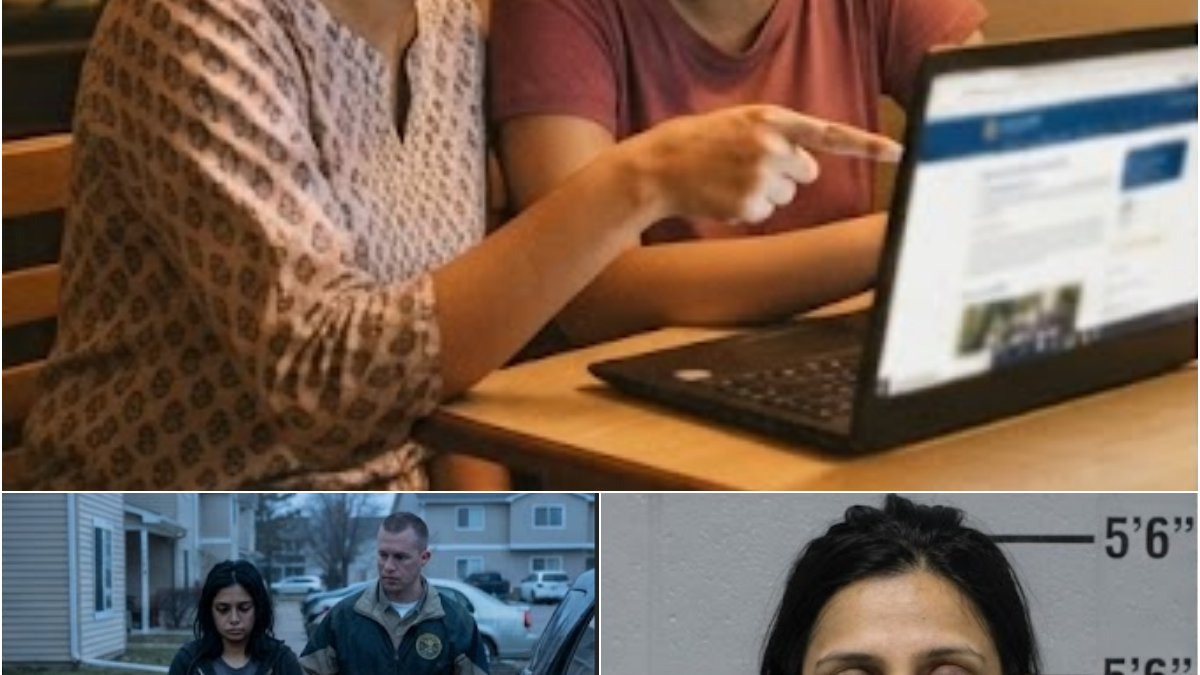
I want to say upfront that I don’t think Priyanka Oberoi set out to break the law. I think she set out to survive a semester, and then another one, and somewhere in there the two things stopped being different from each other. Make of that what you will.
Priyanka came to the University of Farmington — a name I’ve changed, because the real one is still a live sore spot for a lot of people who got caught in the same net she did — in January 2023, on an F-1 student visa, to study for a Master’s in Business Analytics. She was twenty-six. She’d worked three years at a mid-tier IT services firm in Gurugram before that, saved what she could, and taken out a loan from a cousin in Toronto to cover the first year’s tuition, on the understanding that she’d pay it back once she landed a job on Optional Practical Training after graduation. Her parents sold a small plot of agricultural land near Karnal to cover the rest. This is not a detail I’m including for color. It’s the reason everything after it happened the way it did.
The problem was the university itself. Farmington was, on paper, a legitimate institution — accredited-sounding name, a campus address in suburban Michigan, a website with stock photos of students laughing on a quad that did not, strictly speaking, exist in the way the photos implied. What it actually was: a Department of Homeland Security sting operation, staffed by undercover ICE agents posing as administrators, built specifically to identify foreign nationals who wanted to stay in the country on a student visa without attending any actual classes, because there were no actual classes. No professors. No lectures. Just an enrollment fee, a valid I-20 form issued through the school’s SEVP certification, and, for the several hundred people who enrolled, the appearance of full-time student status renewed every term for a fee.
I don’t think Priyanka knew this when she enrolled. I want to be clear about that, because a lot of what came after got flattened, in news coverage, into a story about people who knowingly bought fake diplomas, and that’s not quite what happened to her, or to most of the roughly six hundred students swept up when the operation ended. She found the school through a consultancy in Gurugram that specialized in placing Indian students in “flexible” American graduate programs — flexible being the word used, deliberately, to signal something the consultancy never said outright, which was that the coursework was minimal to nonexistent and the real product being sold was the visa status itself.
She paid the first semester’s fee, received her I-20, and flew to Detroit in January 2023 expecting, at minimum, some version of a classroom. What she got was an orientation session in a rented conference room, an online portal with a handful of self-paced modules nobody checked, and an administrator — an undercover agent, though obviously she had no way of knowing this — who told her, with a straight face, that Farmington’s academic model was “employer-integrated,” meaning students were encouraged to work full-time off-campus while completing coursework asynchronously. This was, on its face, a violation of F-1 visa terms, which strictly limit on-campus work to twenty hours a week during the school year and permit off-campus employment only through specific, authorized programs like CPT or OPT. Priyanka knew this. She’d read the visa conditions carefully before she left India. But she’d also just spent a year’s family income to be here, and an administrator at her own accredited school was telling her, in an official capacity, that this was fine.
I don’t think that excuses what she did next. I do think it explains it.
She found a job within three weeks — a data entry and light analytics role at a logistics company in Warren, Michigan, arranged, again, through the same network of consultants who’d placed her at Farmington, working roughly fifty hours a week for cash, off the books, no W-2, no pay stub, paid every two weeks in an envelope by a manager who never asked to see a work authorization document because nobody involved wanted a paper trail. She sent money home. She paid down the cousin’s loan faster than planned. She told her parents, on their weekly calls, that the program was rigorous and demanding, which was true in exactly the wrong sense — demanding of her time at a job that had nothing to do with her degree, and not remotely rigorous academically, because there was no academic component to be rigorous about.
By the fall of 2023, Priyanka had settled into a routine that worked, on its own terms. She logged into the Farmington portal once a week to mark modules complete. She worked her fifty hours at the logistics company. She’d made friends with a small cluster of other Farmington students, most of them in the same position — working full-time, paying tuition for a service that was really just visa paperwork, sending money home, and not talking about the arrangement too directly with each other, because naming it out loud made it feel like what it was.
It was one of these friends, a young man named Rohit Aggarwal, who brought her the referral offer in November 2023. The consultancy in Gurugram was expanding its Farmington pipeline and would pay a $500 finder’s fee, per successful enrollment, to any current student who referred a new one — a friend, a cousin, anyone back home considering a US graduate program who might want the same “flexible” arrangement. Rohit had already referred two people and collected a thousand dollars for it. He suggested Priyanka do the same. She had a specific cousin in mind, a young woman named Neha, twenty-three, recently graduated with an engineering degree and struggling to find work in a saturated Indian tech market, who’d asked Priyanka more than once, in their calls, what it was actually like studying in the US.
I think this is the moment the story stops being about a desperate graduate student trying to survive her own bad luck and starts being about something else. Because Priyanka knew, by November 2023, exactly what Farmington was — not a diploma mill exactly, not a program with no rigor exactly, but a way to buy status with no education attached, work illegally under its cover, and refer other people into the same arrangement for a fee. She knew what she was recommending to Neha. She made the referral anyway, in December 2023, and collected her $500 four weeks later when Neha’s enrollment was confirmed and her I-20 issued.
She referred two more people over the following four months — a family friend’s son and a former colleague from her Gurugram job — collecting $1,500 total in referral fees on top of her under-the-table wages, all of it flowing into an arrangement she now actively recruited others into rather than merely benefited from herself.
The operation ended on January 31st, 2024, when Homeland Security Investigations executed simultaneous arrests and administrative actions against Farmington’s enrolled student population nationwide, part of a coordinated federal action that had, by that point, been running as an undercover sting for close to eighteen months. Priyanka learned the university didn’t exist, in the sense she’d believed it existed, from a knock on the door of her shared apartment in Warren at six-forty in the morning, delivered by two HSI agents who informed her that her I-20 had been issued by an institution operated entirely by federal law enforcement for the purpose of identifying exactly the kind of visa fraud she had, according to their file, both committed and profited from through referrals.
What happened to the roughly six hundred students caught in the sweep split, over the following months, into two distinct tracks, and the split mattered enormously to who ended up where. The Department of Homeland Security’s own internal assessment, once congressional scrutiny forced some transparency about the operation, acknowledged that a substantial share of enrolled students appeared to have believed, at least initially, that Farmington was a legitimate school being run with unusually loose academic standards — genuinely misled by the recruitment agents and consultancies who’d steered them there, rather than knowing participants in a status-buying scheme. Those students, for the most part, had their visas terminated and were placed into standard removal proceedings, a serious consequence but a civil immigration one, not a criminal case.
The other track — smaller, but not small — was reserved for students investigators could show had gone further: worked extensively and knowingly off-authorization, and, in a subset of cases the government treated as materially more serious, profited directly from recruiting additional students into the fraud. Priyanka’s financial records, subpoenaed from the Warren logistics company’s own informal payroll notes and from her personal bank account, showed both the pattern of unauthorized income over thirteen months and the three referral payments, each one time-stamped against a new student’s enrollment date in a way that left no ambiguity about what the transfers were for. Her own text messages with Rohit Aggarwal, recovered from her phone, included a message from October 2023 in which she wrote, in Hindi, “log soch rahe hain yeh asli hai” — people think this is real — a sentence prosecutors would later read into the record as evidence that she understood, months before she made her first referral, exactly what she was and wasn’t representing to the people she brought in.
She was charged in March 2024 with visa fraud and conspiracy to commit visa fraud, the second charge specifically tied to the referrals, in the Eastern District of Michigan. Her attorney argued, with some genuine force, that Priyanka herself had been a victim of the same deceptive consultancy pipeline that had misled hundreds of others, and that the government’s own sting had, by design, created and then prosecuted the very fraud it staged — an entrapment argument that had worked, partially, for a handful of other defendants in related Farmington cases, reducing some charges or securing pretrial diversion. It did not work for Priyanka, because the referral payments were the detail the entrapment argument couldn’t absorb. The government hadn’t invented the referral scheme. The consultancy had, and Priyanka had chosen to participate in it a second and third time after she’d already learned, by her own admission in the recovered messages, what the arrangement actually was.
Her attorney tried a second line of argument at a pretrial hearing in May 2024, pointing to the government’s own conduct — the fact that HSI agents, in their capacity as fake Farmington administrators, had personally encouraged students toward off-campus work and had, in at least two documented instances, responded to student questions about the legality of the arrangement with reassurances rather than warnings. The judge allowed the argument to be raised as a mitigating factor at sentencing but declined to dismiss the conspiracy charge on that basis, noting in a written order that the government’s encouragement of unauthorized employment, however ethically uncomfortable, did not extend to the referral fee scheme, which the consultancy in Gurugram had designed and operated independently, with no evidence the undercover agents knew about or sanctioned it. The distinction struck several of the courtroom observers, including a reporter who’d covered the broader Farmington sweep from its first week, as the kind of thing that looks clean on paper and considerably less clean once you picture two students on a video call deciding whether five hundred dollars was worth what they both, by then, understood it to mean.
She pleaded guilty in July 2024 to one count of conspiracy to commit visa fraud, in exchange for the government dropping the standalone fraud charge and not pursuing separate charges related to the unauthorized employment itself, which under a different prosecutorial approach could have added years. She was sentenced in October 2024 to time served plus five years of supervised release, permanently barred from any future US visa or green card petition under the aggravated immigration fraud provisions, and ordered to forfeit the $1,500 in referral income, which the court noted, almost as an aside, was a strange thing to spend a federal sentencing hearing itemizing, given that it represented roughly one two-hundredth of what she’d lost in tuition, in her cousin’s loan, in the sold family land, and in three years she will not get back.
Rohit Aggarwal, who had referred two students to Priyanka’s three and collected the same per-referral fee, reached a similar plea agreement two months later. Neha, the cousin Priyanka had personally referred, was deported to India in May 2024 under the civil track, her own case treated as a case of deception rather than complicity, since investigators found no evidence she’d known what Farmington actually was before enrolling — a distinction that meant she went home with a five-year immigration bar and nothing else, while the cousin who’d vouched for the school to her carries a federal conviction that will follow her for the rest of her life.
Priyanka’s parents, back in Karnal, learned about the sentencing from a phone call she made from a legal aid office in Detroit, three days after it happened, because she’d needed those three days to figure out how to say it. Her father, according to a cousin who was in the room for that call, said almost nothing, and her mother asked only one question, which was whether Priyanka would be allowed to come home. The answer, under the terms of the aggravated fraud bar, is that she can go home whenever she likes. She simply cannot come back. The land near Karnal that paid for a year of tuition at a school built by federal agents to catch people exactly like her is, as of this writing, still unsold, still nominally in the family’s name, farmed by a tenant who pays them a modest annual rent — the one piece of the arrangement that, in the end, nobody managed to take from them.
I don’t think Priyanka Oberoi is a villain in any straightforward sense. I think she is what happens when a system built to catch fraud generates real victims and real perpetrators standing so close together that a federal court, at the end of the day, drew the line between them using a set of $500 payments that could just as easily have gone the other way, to someone else, in someone else’s story. I don’t think that makes the line wrong. I do think it’s worth sitting with how thin it was.








